

Every year, our production lines in Indonesia process thousands of rolls of rattan cane webbing 1. Yet one complaint keeps coming back from buyers worldwide: the color they see on screen never quite matches what arrives at their warehouse. That mismatch can stall a furniture project, frustrate end customers, and eat into margins fast.
To avoid color variation when sourcing rattan cane webbing online, request physical samples before bulk ordering, verify your supplier uses single-batch sourcing and rigorous grading, communicate specific color standards with reference photos, and choose a wholesaler with their own rattan processing facility for tighter quality control.
Color consistency in natural rattan is not impossible. It just takes the right steps. Below, we break down the exact strategies that protect your investment and keep every roll looking the same.
How can I ensure the Grade A rattan webbing I see online matches my bulk order?
We ship rattan webbing to over a dozen countries, and the number one lesson from our export experience is simple: screen colors lie. Monitor settings, lighting, and photo editing all distort the true shade of rattan cane webbing.
To ensure Grade A rattan webbing matches your bulk order, request unedited photos under natural light, ask for a physical swatch, confirm single-batch production, and verify the supplier grades raw rattan by color uniformity before weaving begins.
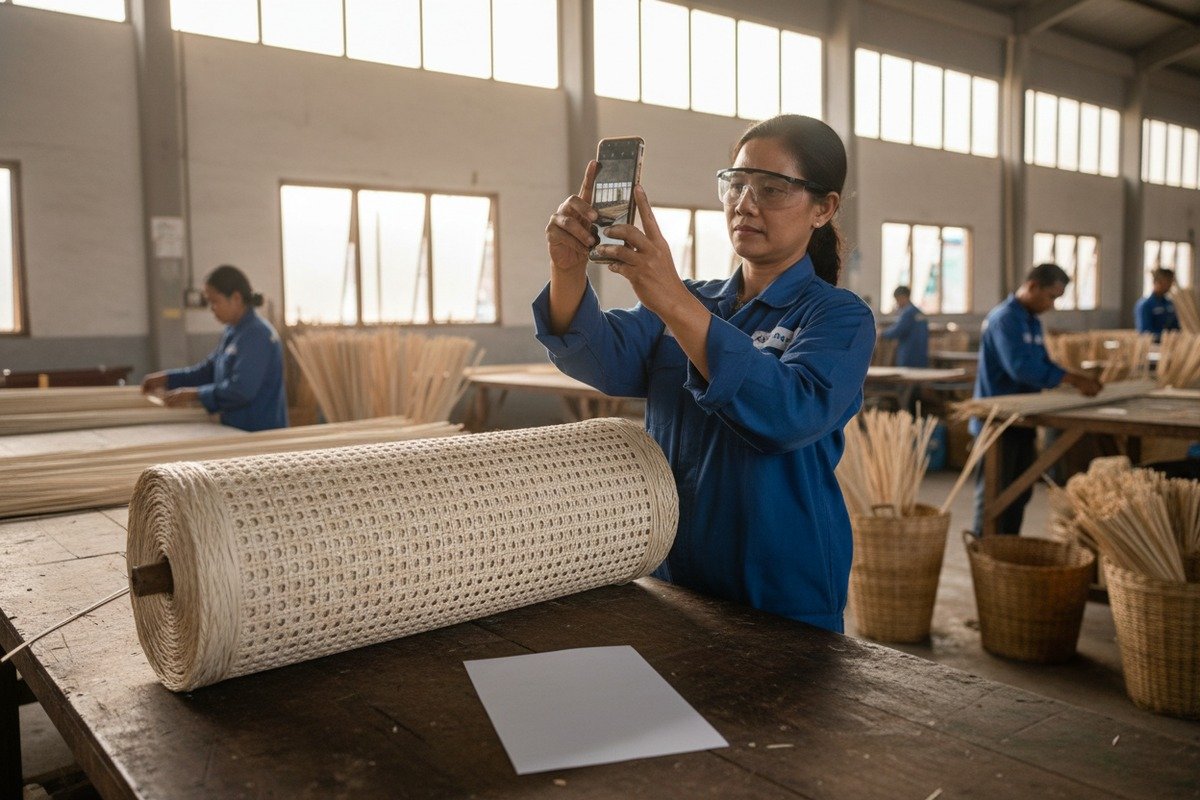
Why Screen Colors Are Unreliable
Your laptop screen displays colors using RGB light 2. Natural rattan reflects light differently depending on the environment. A roll that looks pale cream on a supplier's website may appear honey yellow in your warehouse. This is not the supplier's fault. It is physics.
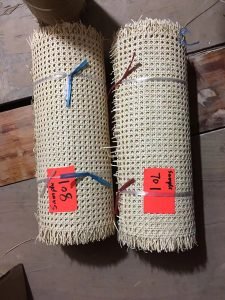
The fix is straightforward. Ask your supplier for raw, unedited photos taken outdoors or near a window. Request that they place a white sheet of paper next to the roll. That white reference gives your eyes a reliable anchor point.
What "Grade A" Actually Means for Color
شرائط قصب الروطان من الدرجة الأولى 3 refers to the top tier of sorting. It means fewer knots, smoother strands, and more uniform thickness. But here is what many buyers miss: Grade A does not automatically guarantee color uniformity. A supplier can sort for structural quality but not for shade.
At our rattan processing facility, we sort twice. Once for structural grade. Once for color band. This double-sort process adds labor cost but eliminates the shock of opening a container and finding three different shades inside.
Steps to Verify Before You Pay
| الخطوة | إجراء | لماذا هو مهم |
|---|---|---|
| 1 | Request unedited photos under natural light | Removes digital color distortion |
| 2 | Ask for a 30×30 cm physical sample 4 | You see and touch the real product |
| 3 | Confirm single-batch fulfillment | Prevents mixing rolls from different harvest periods |
| 4 | Check grading criteria in writing | Ensures "Grade A" includes color sorting, not just structure |
| 5 | Ask about rattan species and origin | Indonesian rattan is lighter and more uniform than Vietnamese alternatives |
Single-Batch Sourcing Is Non-Negotiable
Rattan is harvested from different forests, in different seasons, by different collectors. Each batch carries its own natural hue. When a supplier pulls rolls from two or three batches to fill your order, color shifts are almost guaranteed. batch consistency 5
Always ask: "Will my entire order come from one production batch?" If the supplier hesitates, that is a red flag. Our warehouse teams tag every roll with a batch code so buyers can trace exactly where their material came from.
Species and Origin Matter More Than You Think
Indonesian rattan, particularly from Kalimantan and Sulawesi, produces lighter, more flexible cane with a creamy straw tone. Vietnamese rattan tends darker and rougher. Chinese-processed rattan sometimes mixes species, which introduces unpredictable color swings.
Since Indonesia's 2011 raw rattan export ban 6, processors like us who operate facilities directly in Indonesia have a sourcing advantage. We control the raw material from harvest to finished roll. That control is what makes color consistency possible.
Why should I request a physical sample to verify color consistency before my shipment leaves China?
In our years of exporting rattan webbing from our Foshan headquarters, we have seen buyers skip the sample step to save time. Almost every one of them regretted it. A $15 sample shipment can prevent a $15,000 dispute.
Requesting a physical sample before shipment lets you verify actual color, texture, and weave density under your own lighting conditions. It creates a documented benchmark that holds your supplier accountable and protects you from costly returns or project delays.
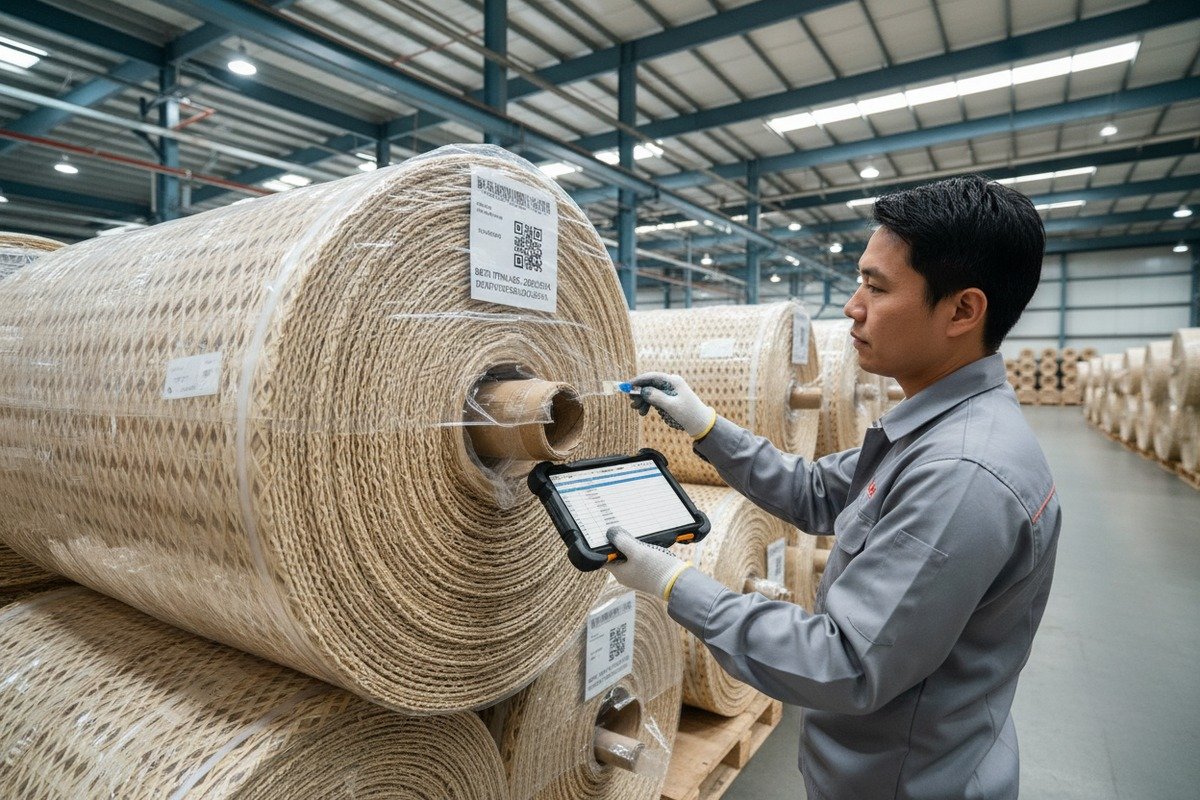
The True Cost of Skipping Samples
Let's do the math. A sample costs roughly $10–$30 including express shipping. A mismatched container of 500 rolls can cost you rework fees, customer complaints, and lost contracts. The ratio is absurd. Yet many purchasing managers treat samples as optional.
When we send samples from our warehouse, we include the batch number, the date of production, and a photo of the sample cut from the roll. This paper trail becomes your proof if the bulk order deviates.
How to Evaluate a Sample Properly
Do not judge the sample under fluorescent office lights. Take it outside. Natural daylight reveals the true hue. Hold the sample next to the wood or material it will be paired with in your final product.
Here is a quick evaluation checklist:
| Evaluation Point | ما الذي تبحث عنه | علامة حمراء |
|---|---|---|
| Color under daylight | Consistent cream, straw, or honey tone | Green or gray patches |
| Color under indoor light | Slight warm shift is normal | Drastic change from daylight appearance |
| الملمس | Smooth, even strands | Rough spots, splinters |
| إحكام النسيج | Uniform gaps in open mesh | Loose or uneven spacing |
| رائحة | Mild, natural woody scent | Chemical or musty odor |
| المرونة | ينحني دون تشقق | Brittle or stiff strands |
Bleached vs. Natural: Sample Both
If you are deciding between natural and bleached rattan webbing, sample both. Natural rattan carries a greenish or yellowish organic tone. Bleached rattan appears whiter and brighter. But bleached rolls can show uneven spots where strand density varies, because thicker strands absorb the bleaching agent differently.
Our processing team in Indonesia uses a steam-based bleaching method rather than heavy chemical baths. This produces a more even result and aligns with the eco-friendly standards many European buyers now require.
Document Everything
Take photos of your approved sample with a date stamp. Send those photos back to your supplier with a written note: "This is the approved color standard for PO #XXXX." This step sounds basic, but it gives you legal standing if the shipment does not match.
We keep an approved sample library for our repeat clients. When they reorder, our quality team pulls the reference sample and matches it against the new production run before packing. This system has cut our color complaints by over 80%.
Timing Your Sample Request
Request samples at least two to three weeks before you plan to finalize your purchase order. Express shipping from China to most destinations takes three to five business days. You need extra time to compare, decide, and communicate any adjustments. Rushing defeats the purpose.
Also, ask your supplier if the sample comes from current stock or old inventory. You want a sample from the same batch that will fill your order. Old samples from a different harvest season are unreliable references.
What specific color standards should I communicate to my supplier to avoid mismatched rolls?
When our sales team receives an order that simply says "natural color," we know trouble is coming. "Natural" means different things to different people. To one buyer, it means pale cream. To another, it means golden honey. Vague color language is the root cause of most mismatch disputes.
Communicate color standards by sending a Pantone reference or approved physical sample, specifying acceptable tolerance ranges, noting whether you want natural, semi-bleached, or fully bleached finish, and defining whether greenish or yellowish undertones are acceptable for your project.
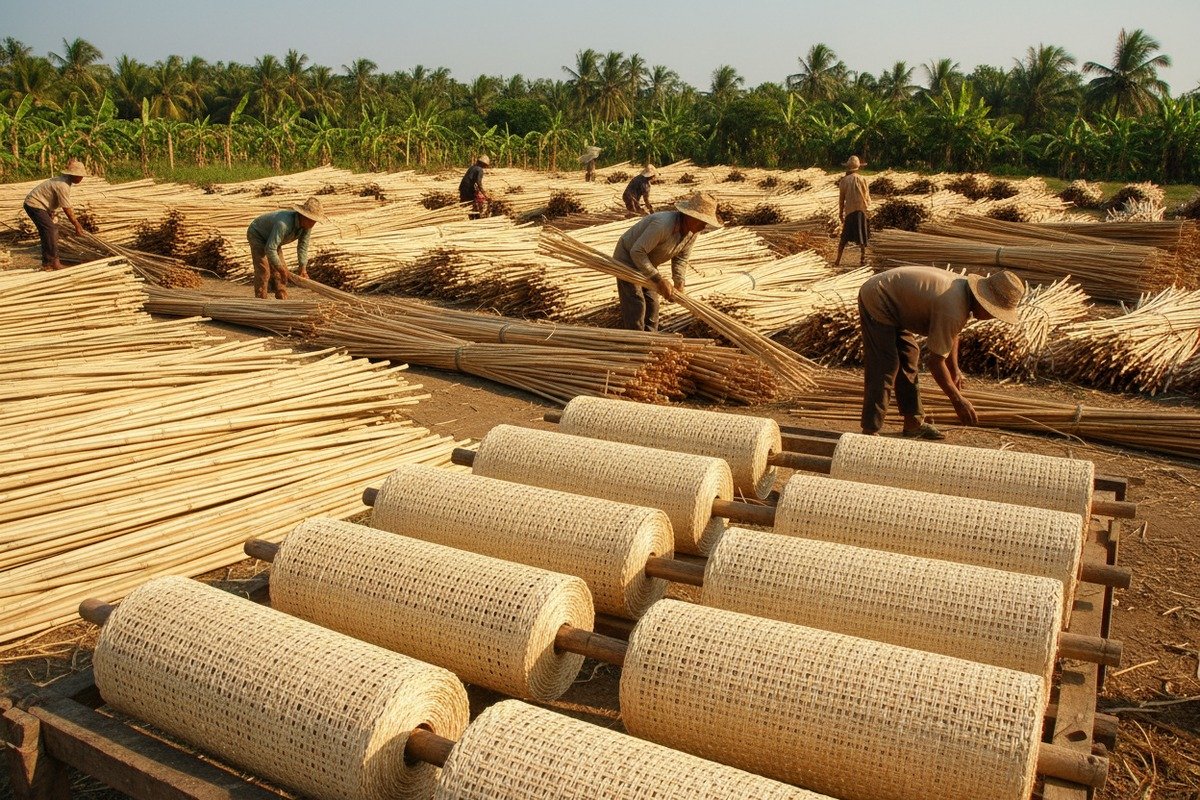
The Language of Rattan Color
Rattan is not manufactured plastic. Its color comes from organic cellulose, and it shifts based on species, soil, season, and processing. That said, the industry has informal color categories that help narrow expectations.
| Color Category | وصف | الاستخدام النموذجي |
|---|---|---|
| Natural Green | Straw base with soft green tint, unprocessed | Rustic, bohemian furniture |
| Natural Yellow | Warm golden to honey tone, lightly dried | Traditional woven chairs, cabinets |
| Semi-Bleached | Slightly lighter than natural, faint yellow | Transitional decor, Scandinavian style |
| Fully Bleached | White to off-white, steam or chemical treated | Modern minimalist, coastal design |
| Smoked/Stained | Darkened via smoking or applied stain | Vintage restorations, walnut-toned furniture |
Using Pantone or RAL Codes
Pantone and RAL are universal color systems. Pantone and RAL codes 7 Sending a Pantone code like Pantone 7527 C (warm cream) or Pantone 468 C (golden straw) gives your supplier a precise target. It will not be an exact match—rattan is not ink on paper—but it narrows the range dramatically.
If you do not have access to Pantone swatches, take a clear photo of the color you want next to a white sheet of A4 paper in daylight. Email it to your supplier with a note: "Color should fall within this range. Slightly warmer is acceptable. Greenish tint is not."
Define Your Tolerance
No natural product will be pixel-perfect. You need to set a tolerance band. For example: "Acceptable variation is ±10% from the approved sample. Rolls outside this range will be rejected."
Put this in your purchase contract. Not in a casual email. Not in a WeChat message. In the signed contract. This protects both parties and sets clear expectations for quality inspection before shipping.
Specify Undertone Preferences
Undertone is the hidden color beneath the surface shade. Natural rattan can lean green or yellow. Bleached rattan can lean blue-white or warm-white. If your furniture line pairs rattan with oak, you likely want warm undertones. If it pairs with white lacquer, cooler undertones work better.
Tell your supplier which undertone you prefer. Use plain words: "We need warm, yellowish tones. No green. No gray." Simple language prevents confusion, especially when working across language barriers.
Address Aging Expectations Upfront
Even perfectly matched rolls will shift over time. Natural rattan darkens. Bleached rattan yellows. التعرض للأشعة فوق البنفسجية 8 accelerates both. If your end customer expects the color to stay the same for years, you need to set realistic expectations—or apply a UV-protective sealer before installation.
Our team recommends a clear matte polyurethane or linseed oil treatment for indoor use, and a marine-grade UV sealer for outdoor applications. These slow the aging process and give buyers a longer window of color stability.
How do I find a wholesaler who can guarantee uniform color across all my rattan materials?
Our clients in the Netherlands and Australia often tell us the same story. They tried three or four suppliers before finding one who could deliver consistent color roll after roll. The search is frustrating, but the right wholesaler does exist. You just need to know what to look for.
Find a wholesaler who guarantees uniform color by choosing one with their own rattan processing facility, verifying they source from a single region and species, confirming they perform color-specific grading, and checking their track record through references and sample testing.
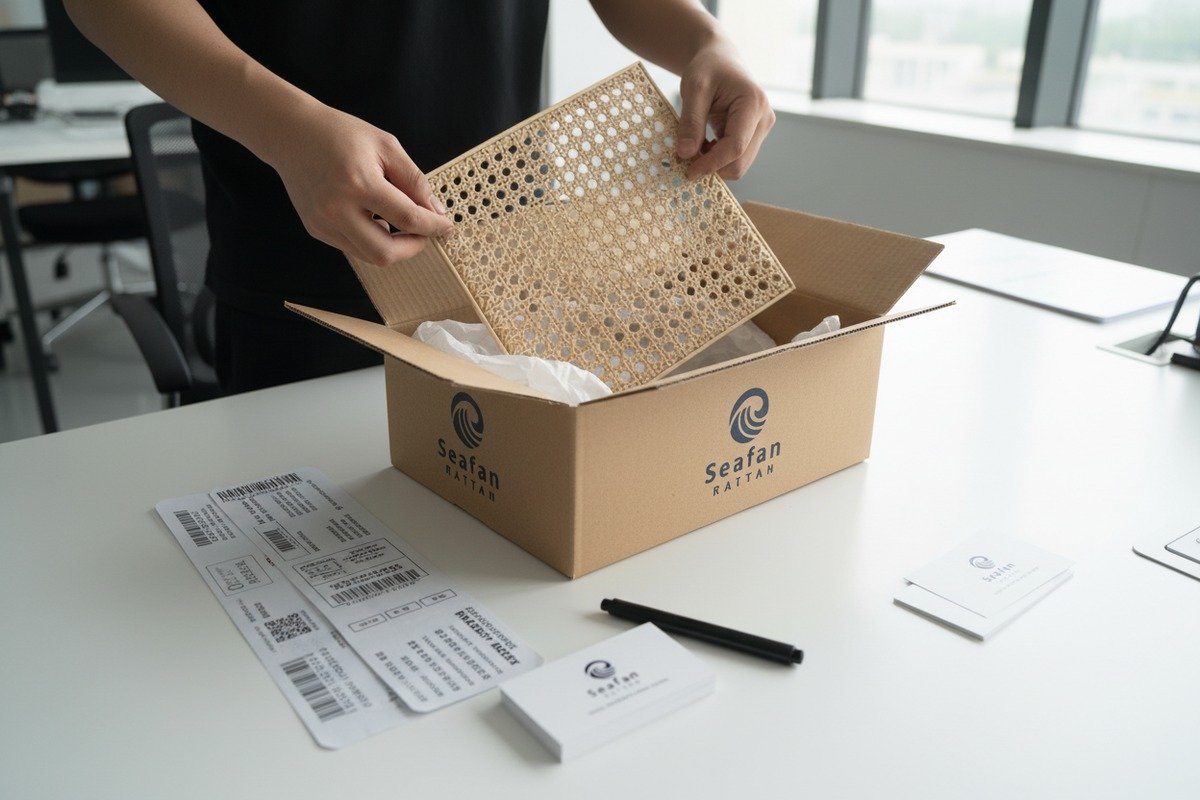
Own Factory vs. Trading Company
This is the single biggest factor. A trading company buys from multiple small workshops. Each workshop uses different rattan, different processing, different drying times. The result is a patchwork of shades in your container.
A wholesaler with their own factory—especially one that controls raw material sourcing—can enforce color standards at every stage. Our three factories, including the Indonesia-based processing facility, give us direct oversight from raw cane to finished roll. That vertical integration 9 is what makes consistency repeatable.
Questions to Ask Before You Commit
Before you place a large order with any supplier, ask these questions. Their answers will tell you everything.
- Do you own your processing facility, or do you subcontract?
- Where is your raw rattan sourced? Single region or multiple?
- Do you sort for color, or only for structural grade?
- Can you fulfill my entire order from one production batch?
- Will you provide a pre-shipment inspection report with photos?
- Do you keep reference samples for repeat orders?
- What is your return or compensation policy for color deviation?
If a supplier cannot answer these clearly, move on.
Indonesian Sourcing: The Gold Standard
Indonesia produces the world's best rattan for color consistency. The country's 2011 export ban on raw rattan means that processing now happens in-country, which creates a shorter, more controlled supply chain. Indonesian rattan species tend to be lighter, smoother, and more uniform than alternatives from Vietnam or other Southeast Asian sources.
Vietnamese rattan is not necessarily bad. It is simply darker and rougher by nature, which makes color matching harder across large orders. If your project requires a specific light, creamy tone, Indonesian-origin material is the safer choice.
The Role of Post-Processing
Even well-sorted rattan can benefit from post-processing treatments that even out minor color differences. Light sanding, steam conditioning, and controlled drying all contribute to a more uniform appearance.
Some buyers also apply a light wash stain after receiving their rolls. This is a valid strategy for custom projects, but it requires skill. Porous strands absorb stain unevenly if not properly prepped. If you plan to stain, test on a small section first and allow 24 hours of drying before judging the result.
Consider Synthetic Alternatives for Absolute Uniformity
If your project demands zero color variation—for example, a hotel chain that needs 2,000 identical headboards—synthetic rattan webbing may be the practical choice. Synthetic Alternatives 10 Synthetic options made from PVC, polyethylene, or paper fiber are manufactured to exact color specifications. They do not age, yellow, or shift.
The tradeoff is authenticity. Synthetic rattan lacks the organic warmth and tactile character of natural cane. Many high-end furniture brands and interior designers still insist on natural material for its irreplaceable aesthetic. The choice depends on your market and your tolerance for subtle variation.
بناء علاقة طويلة الأمد
Color consistency improves with repeat orders from the same supplier. Over time, your supplier learns your preferences, keeps your reference samples on file, and allocates matching batches for your account. Jumping between suppliers to save a few cents per meter almost always costs more in rework and returns.
We maintain dedicated client profiles at our Foshan headquarters. Each profile includes approved color samples, Pantone references, packaging specs, and shipping preferences. When a repeat order arrives, our team already knows exactly what to deliver.
خاتمة
Color variation in rattan cane webbing is manageable when you sample first, communicate precise standards, and partner with a vertically integrated wholesaler who controls sourcing and processing from harvest to shipment.
ملاحظات سفلية
1. Replaced with a working URL from the same domain that defines rattan cane webbing. ↩︎
2. Provides a detailed explanation of the RGB additive color model. ↩︎
3. Defines quality grades for natural rattan webbing, including Grade A. ↩︎
4. Highlights why physical samples are crucial for validating product quality and accuracy. ↩︎
5. Replaced ‘Single-Batch Sourcing’ with ‘batch consistency’ to better reflect the article’s context of avoiding color variation through consistent production runs. The new URL discusses the importance of batch-to-batch consistency and its impact on color shifts. ↩︎
6. The original URL is now working and provides relevant information about the Indonesian raw rattan export ban. ↩︎
7. Explains the differences and applications of Pantone and RAL color systems. ↩︎
8. Replaced with an authoritative source that defines UV resistance and its importance for materials. ↩︎
9. Replaced with a working URL from the same domain that discusses the benefits of vertical integration for supply chain and business success. ↩︎
10. Discusses synthetic rattan as an alternative for achieving color uniformity and durability. ↩︎

 English
  Español de México
  العربية
  Deutsch
  Français
  Русский