
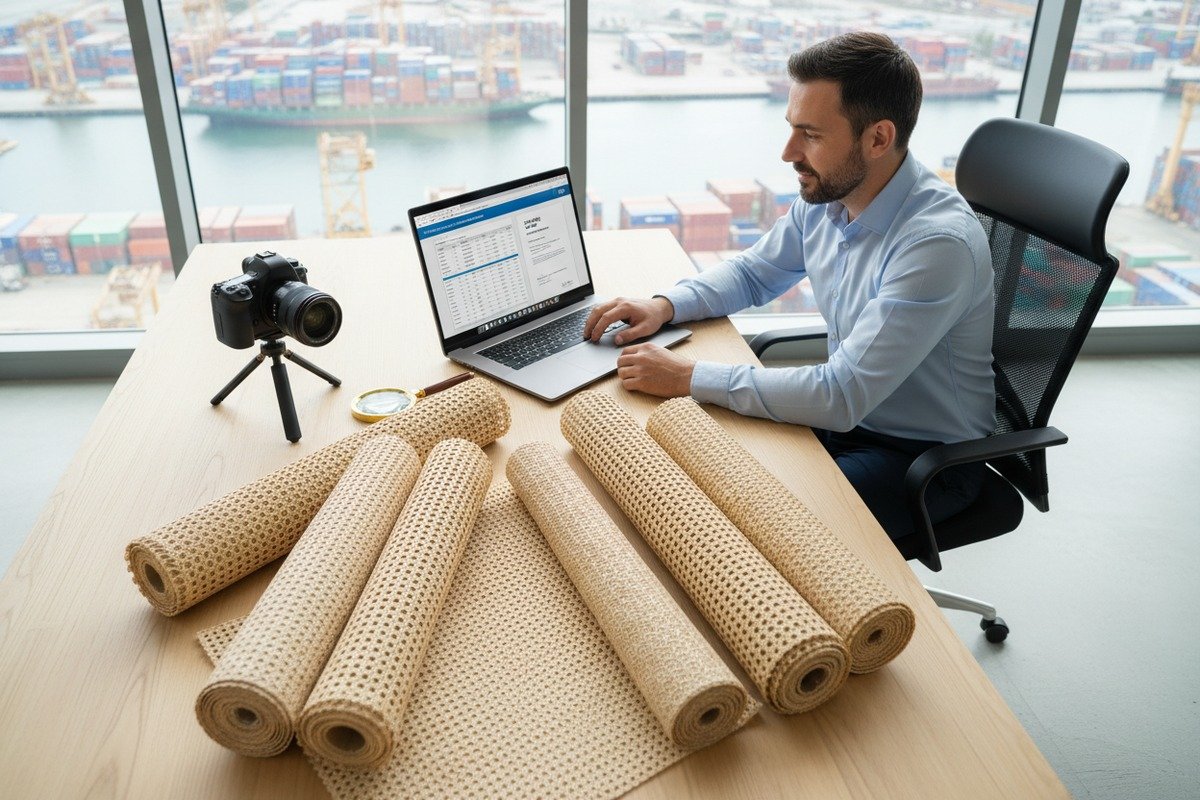
Every year, we ship hundreds of containers of rattan cane webbing 1 from our facilities, and one question keeps coming back from new buyers: “How do I know I’m getting real value?” The truth is, too many purchasing managers learn the hard way OEKO-TEX® 2. They chase the lowest price, only to receive brittle, uneven webbing that falls apart after one season. Damaged rolls, inconsistent color, and hidden shipping costs eat into margins fast.
To evaluate value for money in rattan cane webbing, compare material grade, weave uniformity, durability, packaging quality, and total landed cost—not just the unit price. Request samples, verify supplier certifications like FSC and ISO 9001, and assess the supplier’s production capacity and lead times before committing to bulk orders.
In this guide, we break down the exact steps you should take to protect your budget and secure consistent quality قوة الشد 3. Each section below targets a specific part of the evaluation process, from checking material grade to understanding why factory-direct sourcing matters.
How do I know if I am getting the best price-to-quality ratio for my rattan cane webbing?
We have seen buyers compare quotes from five or six suppliers and still pick the wrong one. The problem is rarely about finding the cheapest option. It is about understanding what you are paying for—and what corners a supplier might be cutting to hit that low number.
The best price-to-quality ratio comes from balancing material grade, weave consistency, strand thickness, and total landed cost. Grade A natural rattan with uniform mesh spacing and consistent color will outperform cheaper alternatives in lifespan and customer satisfaction, reducing your cost per year of use.
What Makes Up the "True" Price?
Most buyers focus on the FOB price per roll. That is only part of the picture. True cost includes the unit price, shipping fees, import duties 4, packaging waste, defect rates, and replacement frequency. When we prepare quotes at our Foshan headquarters, we walk clients through each line item so nothing is hidden.
For example, a roll of Grade A natural rattan cane webbing with 1/2" mesh might cost $5.50 per meter at wholesale. A Grade B roll from another supplier might be $3.80. But if the Grade B roll has a 12% defect rate and breaks down 40% faster, your effective cost per usable meter is actually higher.
How to Compare Quotes Fairly
Here is a simple framework we recommend to our wholesale partners:
| عامل | ما الذي يجب فحصه | لماذا هو مهم |
|---|---|---|
| سعر الوحدة | Price per meter or per roll | Baseline cost comparison |
| Material Grade | Grade A, B, or C classification | Directly affects durability and appearance |
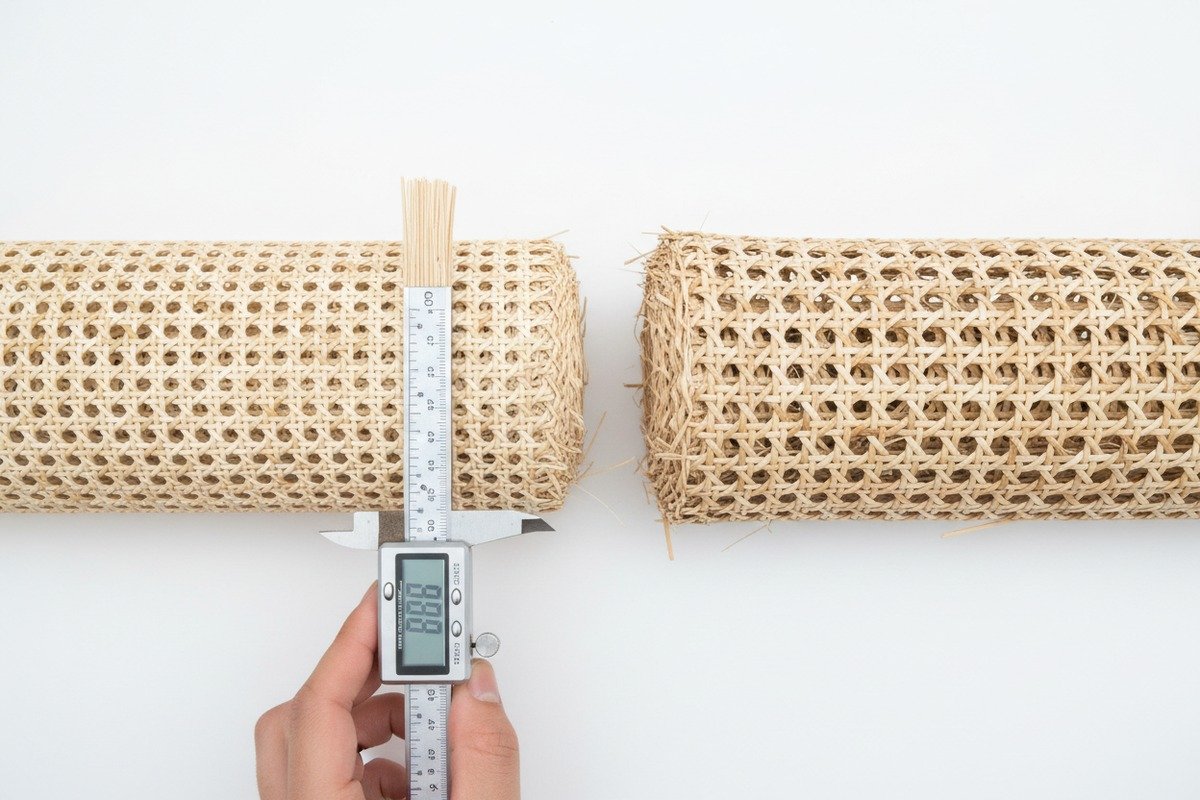
| Weave Uniformity | Consistent strand spacing and thickness | Irregular weaves cause rejects on your production line |
| معدل العيوب | Percentage of unusable material per shipment | Hidden cost that inflates your real spend |
| Shipping & Duties | Total landed cost 5 at your warehouse | Can add 15-30% on top of FOB price |
| مرونة الحد الأدنى للطلب | Minimum order quantity per pattern/size | Affects cash flow and storage costs |
Retail vs. Wholesale Pricing Reality
Retail prices for Grade A natural rattan cane webbing at 24" width range from $6.81 to $22.70 per unit, depending on quantity and seller. Shipping alone can add $9.89 per order domestically. At wholesale volumes, the per-unit cost drops sharply. But you need to ask the right questions. Does the quote include palletizing? Is fumigation included? What about documentation for customs?
The Color and Texture Test
When evaluating samples, look for minimal color variation across the roll. Natural rattan has organic differences, but large patches of dark or discolored strands suggest poor sorting during production. At our Indonesian processing facility, raw rattan goes through boiling, bleaching, and drying stages specifically to achieve consistent tone. Skipping or rushing these steps saves the factory money but costs you quality.
Flexibility matters too. Bend a strand gently. Quality rattan should flex without cracking. If it snaps, the moisture content is wrong—either over-dried or improperly processed. This single test tells you more about value than any price sheet.
What steps should I take to verify the material grade before I place a bulk wholesale order?
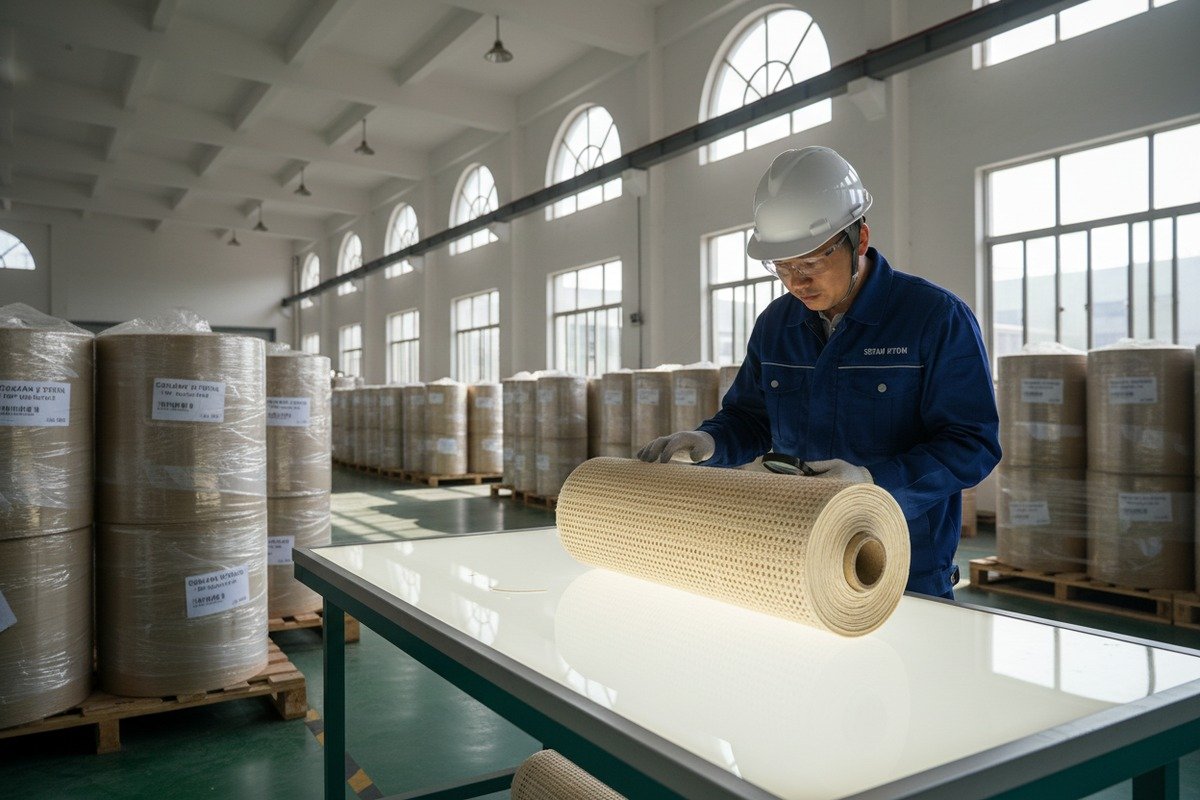
Before we ship a single container, our quality team runs every batch through a multi-point inspection. But not every supplier does this. If you are placing a bulk order—especially for the first time—you need your own verification process. Skipping this step is the fastest way to burn your budget.
Before placing a bulk order, request physical samples, inspect weave uniformity and strand thickness, verify flexibility through a bend test, confirm certifications such as FSC and ISO 9001, and ask the supplier for detailed production process documentation including sorting, boiling, bleaching, and quality control steps.
Step 1: Request Samples Before You Commit
Never place a bulk order based on photos alone. Ask for at least three sample pieces: one from the beginning of a roll, one from the middle, and one from the end. This reveals consistency. A good supplier will not hesitate to send samples. At our facilities, we encourage this because it builds trust and avoids disputes later.
Step 2: Conduct a Physical Inspection
Here is a checklist we share with our wholesale clients:
| نقطة الفحص | ما الذي تبحث عنه | علامة حمراء |
|---|---|---|
| سمك الخيوط | Even diameter across strands | Thin or uneven strands mixed in |
| Mesh Spacing | Consistent hole-to-hole measurement (standard: 1/2") | Irregular gaps or bunched weave |
| Color | بيج فاتح موحد إلى أصفر قشي | Dark spots, patches, or green tones |
| المرونة | ينحني دون تشقق | Snaps or splinters when bent |
| تشطيب السطح | Smooth, matte, fibrous texture | Rough edges, loose fibers, or peeling |
| رائحة | Mild, natural wood scent | Musty or chemical smell |
Step 3: Ask About Production Process
A transparent supplier will explain their production steps clearly. For natural cane webbing, the standard process involves raw material sorting, separation of usable cane from the rattan core, thinning to desired thickness, boiling, bleaching, drying, and quality control. Each step affects the final grade. If a supplier cannot or will not describe their process, that is a warning sign.
Step 4: Verify Certifications
Third-party certifications remove guesswork. شهادة FSC 6 confirms responsible forest management. ISO 9001 7 validates quality management systems. OEKO-TEX® ensures no harmful chemicals were used in processing. We hold these certifications across our operations because they matter to our buyers—and to their end customers.
Step 5: Order a Trial Batch
Even after samples pass inspection, consider starting with a smaller trial order. This tests the supplier's packing quality, lead time accuracy, and communication responsiveness under real conditions. Our typical production capacity runs about 20 rolls per day per specialized weaving machine, so we can turn trial orders around quickly without disrupting larger commitments.
Natural vs. Synthetic: Picking the Right Grade for Your Application
Not all projects need natural rattan. Our product range includes natural rattan for indoor furniture with that warm, artisanal look. We also produce synthetic PE rattan webbing for outdoor applications where weather resistance is critical. The grade verification process differs slightly for each material type. Natural rattan demands more attention to moisture content and biological consistency. Synthetic PE webbing focuses on مقاومة الأشعة فوق البنفسجية 8, color fastness, and tensile strength.
Understanding your end application before ordering prevents costly mismatches. A purchasing manager ordering natural rattan for an outdoor restaurant project will face rapid degradation and unhappy clients. PE plastic webbing costs more upfront but eliminates replacement cycles in exposed environments.
How can I reduce my total costs by evaluating the durability and packaging of my rattan imports?
When we analyze return and complaint data from our export markets—the Netherlands, USA, Australia, and others—the two biggest cost drivers after unit price are product durability failures and packaging damage during transit. These are silent margin killers. Most buyers only discover them after the container arrives.
You can reduce total import costs by selecting the appropriate rattan type for your application's durability demands, insisting on reinforced packaging with moisture barriers, and standardizing webbing sizes across product lines to qualify for better bulk rates and minimize cutting waste on your production floor.
Durability: Matching Material to Application
Choosing the wrong material type is the most expensive mistake in rattan sourcing. Here is how the three main material categories compare on durability:
| نوع المادة | Best Application | العمر المتوقع (داخلي) | Expected Lifespan (Outdoor) | Relative Cost |
|---|---|---|---|---|
| Natural Rattan (Grade A) | Indoor furniture, decor, cabinets | 8-15 years | 1-3 years | متوسط |
| Plastic Cane Webbing | Indoor furniture, cost-sensitive projects | 5-10 years | 2-4 years | منخفض |
| PE Plastic Cane Webbing | Outdoor furniture, commercial settings | 10+ سنوات | 5-8 years | أعلى |
Natural rattan delivers beautiful aesthetics—that warm, earthy palette of light beige and straw yellow with organic strand variations. But it is vulnerable to moisture and UV exposure. For outdoor projects, PE plastic cane webbing mimics the natural look while resisting weather, extending the product's lifespan dramatically. The higher initial cost pays for itself through reduced replacement cycles.
Packaging: The Overlooked Cost Center
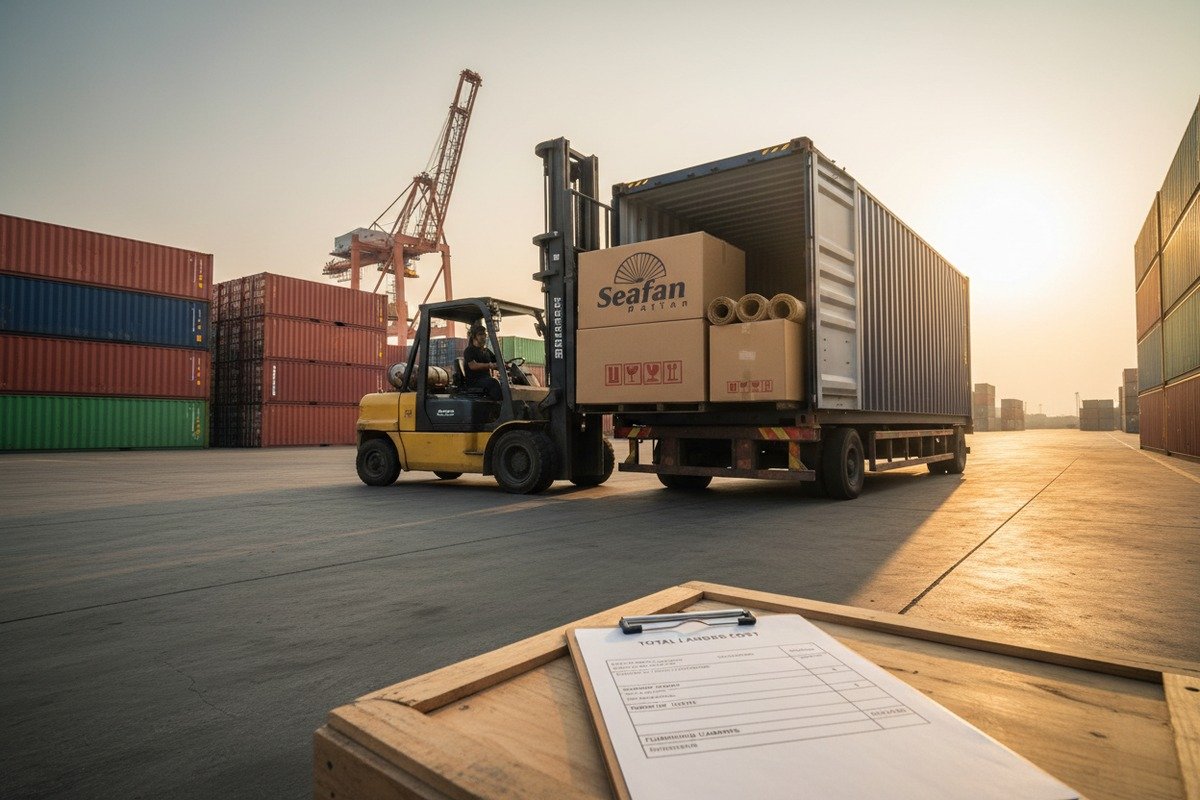
Poor packaging leads to crushed rolls, moisture damage, and mold. We have seen competitors ship rattan webbing in thin plastic wrap with no edge protection. By the time it reaches a warehouse in Spain or the USA, 5-10% of the shipment is unusable. That is pure waste.
At our facilities, we use reinforced cardboard cores, moisture-barrier wrapping, and corner protectors for palletized orders. Each roll is individually wrapped before being grouped. This adds a small amount to the packaging cost but eliminates damage claims and replacement shipments.
How to Evaluate Packaging Before Ordering
Ask your supplier these specific questions:
- What is the inner wrapping material? (Plastic film, wax paper, or nothing?)
- Are rolls shipped on reinforced cardboard cores or thin tubes?
- Is the pallet stretch-wrapped and corner-protected?
- What moisture control measures are used for ocean freight?
- Can you provide photos of packed goods before shipping?
Standardizing Sizes to Cut Waste
If your furniture factory uses three different widths across its product lines, you are ordering three separate SKUs. This fragments your volume and reduces your leverage for bulk discounts. We often advise clients to standardize on one or two widths where possible. A 60cm width might work for both chair caning and cabinet panel inserts with minor trimming.
Standardization also simplifies inventory management 9. Fewer SKUs mean less storage complexity, fewer minimum order quantities to meet, and faster reorder cycles. Over a year, this alone can reduce procurement costs by 8-15%.
Roll Length and Waste Reduction
Natural rattan rolls typically come in 15-meter lengths for close-woven varieties. Synthetic PE rolls often come in 30-meter lengths for hexagonal and square patterns. Synthetic widths range from 40cm to 100cm. Understanding these standard dimensions helps you plan cuts efficiently and reduce offcut waste on your production floor.
Why is sourcing from a supplier with their own Indonesian factory better for my business's bottom line?
Over the years, we have built our supply chain from the ground up. Our self-invested rattan processing facility in Indonesia sits at the source of raw material. This was not a decision we made lightly—it required significant capital. But it fundamentally changed the value we deliver to wholesale clients, and it is worth explaining why this matters for your bottom line.
Sourcing from a supplier with their own Indonesian factory eliminates middlemen, reduces raw material costs by 15-25%, ensures direct quality control from harvest to finished product, shortens lead times, and provides supply chain stability that protects your business from seasonal shortages and price spikes.
Eliminating the Middleman Chain
The traditional rattan supply chain looks like this: Indonesian harvester → local collector → regional broker → exporter → international trader → you. Each link adds margin. By the time webbing reaches your warehouse, you may be paying markups from three or four intermediaries. When your supplier owns the factory in Indonesia, the chain shortens dramatically. We source raw rattan, process it, weave it, and export it. Fewer hands mean lower costs and greater accountability.
Direct Quality Control at the Source
Quality problems in rattan almost always originate in the earliest stages—harvesting and initial processing. If your supplier buys pre-made webbing from someone else's factory, they have limited ability to control the raw material selection, sorting standards, or processing parameters. They are essentially reselling.
With our own facility, our team oversees every step: selecting mature rattan poles, separating usable cane from the core, thinning strands to precise thickness, and running boiling and bleaching cycles under controlled conditions. This is where Grade A quality is actually made—not at a trading company's warehouse.
Supply Chain Stability
Rattan is a seasonal material. Harvesting depends on weather, forest access, and local labor availability. During peak demand periods, suppliers without their own factory scramble to secure stock. Prices spike. Lead times stretch. Your production schedule suffers.
Factory ownership provides buffer stock, dedicated production lines, and priority access to raw materials. supply chain stability 10 We maintain relationships with harvesting communities in Kalimantan and Sulawesi that ensure consistent supply even during difficult seasons. This stability translates directly to predictable pricing and reliable delivery for our clients.
Faster Lead Times and Custom Orders
Trading companies receive your order, pass it to a factory, wait for production, inspect (maybe), and ship. This relay adds weeks. When you order from us, the instruction goes straight to the production floor. Our specialized weaving machines produce approximately 20 rolls per day. A standard bulk order can ship within days rather than weeks.
Custom sizing is another advantage. Need a non-standard width? A specific weave pattern? A particular bleach level? These requests are simple adjustments at our own facility. Through a third party, they become expensive special orders with long turnaround times.
ميزة الاستدامة
Operating our own factory means we control labor practices, environmental compliance, and sourcing ethics directly. We maintain FSC-certified sourcing channels and implement waste reduction measures in our processing. For buyers selling into European or North American markets where sustainability matters to end consumers, this traceability is a competitive advantage. You can confidently tell your clients where the rattan comes from and how it was processed.
Long-Term Partnership Value
When you work with a factory-direct supplier, the relationship deepens over time. We learn your specifications, your preferred packaging, your seasonal ordering patterns. This institutional knowledge reduces errors, speeds up communication, and enables better pricing as volume commitments grow. Over 30 partner factories in Foshan support our broader product range, but the Indonesian facility is the backbone of our rattan cane webbing supply—and the reason our clients stay.
خاتمة
Evaluating value for money in rattan cane webbing requires looking beyond unit price. Verify material grade, assess durability for your application, demand quality packaging, and prioritize factory-direct suppliers. These steps protect your margins and build a reliable supply chain.
ملاحظات سفلية
1. Replaced HTTP 404 with a working and authoritative Wikipedia page specifically about caning in furniture, which covers rattan cane. ↩︎
2. Official information on OEKO-TEX standards for textile safety. ↩︎
3. Defines tensile strength as a fundamental material property. ↩︎
4. Replaced HTTP 403 with an authoritative definition and explanation of import duties from the Corporate Finance Institute. ↩︎
5. Explains the components of total landed cost in supply chain. ↩︎
6. Provides details on the Forest Stewardship Council certification. ↩︎
7. Official information on the ISO 9001 quality management standard. ↩︎
8. Explains the concept of UV degradation in materials. ↩︎
9. Provides information on efficient inventory management practices. ↩︎
10. Replaced HTTP 404 with an authoritative article on supply chain stability from IMEC, a manufacturing excellence center. ↩︎

 English
  Español de México
  العربية
  Deutsch
  Français
  Русский