
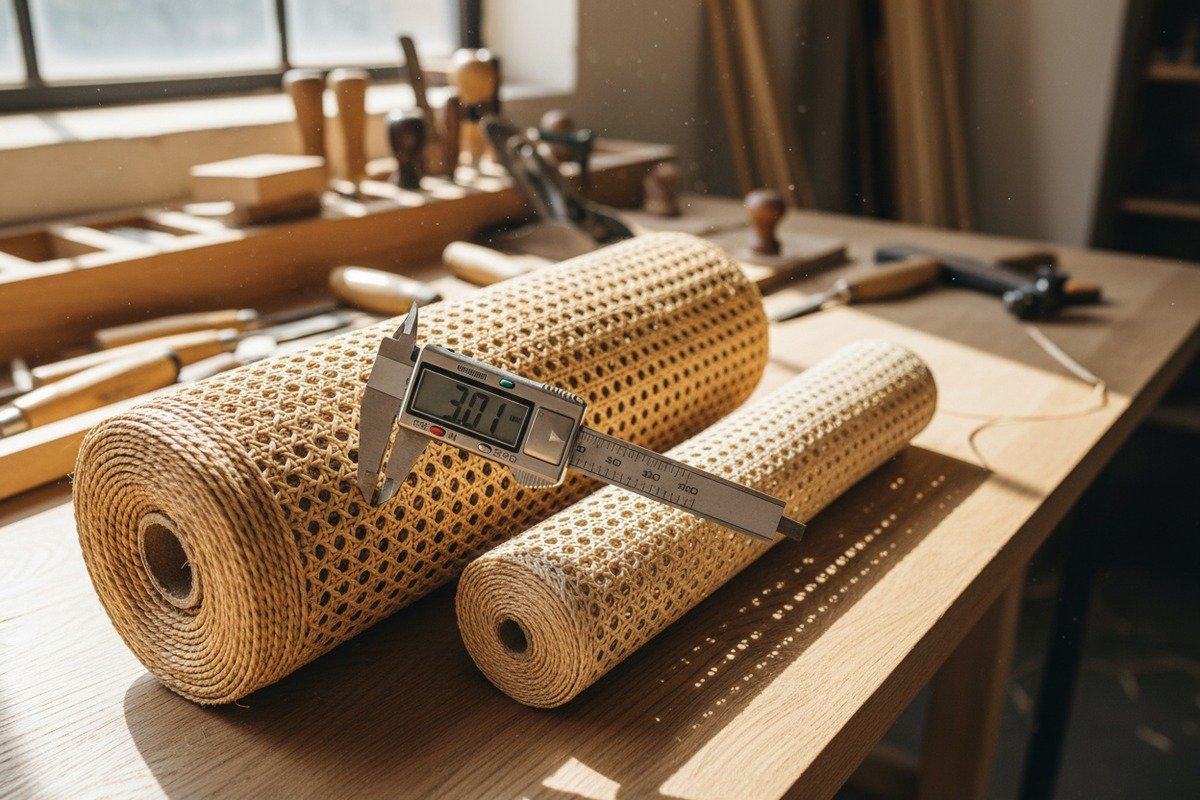
Every week, our production team in Nanhai fields questions from furniture factories and wholesalers about one persistent problem: rattan cane webbing 1 that looks right on samples but fails in real-world use. The root cause, more often than not, traces back to thickness. A few fractions of a millimeter can mean the difference between a chair seat that lasts a decade and one that sags within months. This is a problem we have spent years solving across our three factories.
Natural rattan cane webbing thickness directly impacts durability, flexibility, tensile strength, aesthetic appearance, and application suitability. Thicker cane webbing (2–3mm) provides superior structural support and longevity, while thinner cane (under 2mm) offers greater pliability for decorative uses but sacrifices load-bearing performance and long-term resilience.
Understanding how thickness shapes every aspect of your final product is critical whether you source for furniture restoration 2, cabinet inserts, or full-scale chair production. Let’s break it down section by section so you can make smarter purchasing decisions.
How do I choose the right rattan thickness for my furniture manufacturing needs?
Selecting the wrong thickness is one of the costliest mistakes we see from first-time buyers. In our experience exporting to over a dozen countries, from the Netherlands to Thailand, thickness choice depends on three things: your end product, your نمط النسيج 3, and your installation method.
To choose the right rattan thickness, match the cane gauge to your application: use 2.5–3mm thick cane for load-bearing furniture like chair seats and headboards, and 1.6–2mm thin cane for decorative panels, cabinet inserts, and intricate curved designs requiring high pliability.
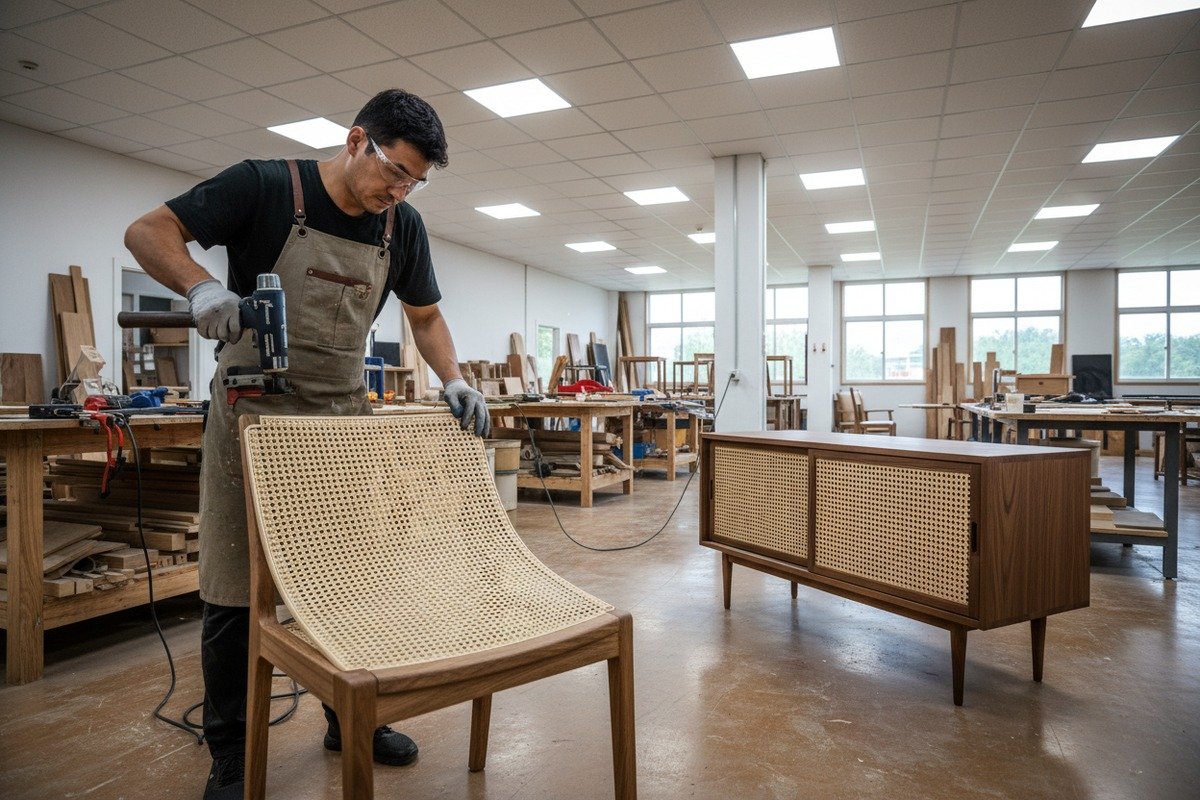
Start With Your End Product
The first question is always: what will the webbing support? A dining chair seat bears human weight daily. A cabinet door insert bears almost none. These two products demand very different thicknesses.
For structural seating, we recommend cane strips in the 2.5–3mm range. These have the density and قوة الشد 4 to resist sagging under repeated use. For decorative inserts, wall panels, or room dividers, thinner cane around 1.6–2mm works well. It bends easily, installs faster, and creates a lighter visual effect.
Match Thickness to Weave Pattern
Weave pattern and thickness are linked. You cannot force a thick 3mm cane strip into a fine hexagonal open weave designed for 2.5mm material. The geometry will not work. Here is how common patterns align with thickness:
| نمط النسج | Ideal Thickness | أفضل حالة استخدام |
|---|---|---|
| Close weave (tight basketweave) | 1.6–2mm | Chair seats, vintage restoration |
| Hexagonal open weave (1/2" mesh) | 2.5mm | أبواب الخزائن، ألواح الرأس |
| Radio weave (6×6) | 2–2.5mm | Decorative panels, screens |
| Square open grid | 2–3mm | فواصل الغرف، ألواح معمارية |
Consider Your Installation Method
Thickness also determines how the webbing fits into your furniture frame. Pre-woven sheet cane installed with a spline into a groove needs at least 1 inch of overlap. If the cane is too thick, it bunches inside the groove. Too thin, and it pulls free under tension.
For hand-caned chairs with drilled holes, the standard is 1/4-inch holes spaced 1/2 inch center-to-center. The cane strip must be thin enough to thread through but sturdy enough to hold tension. Generally, 2mm cane is the sweet spot for this method.
Our team always recommends ordering a small sample roll before committing to a bulk order. We ship trade samples to clients in Turkey, Australia, and the USA specifically for this reason. Testing thickness fit before production saves time and money.
Moisture Content Matters Too
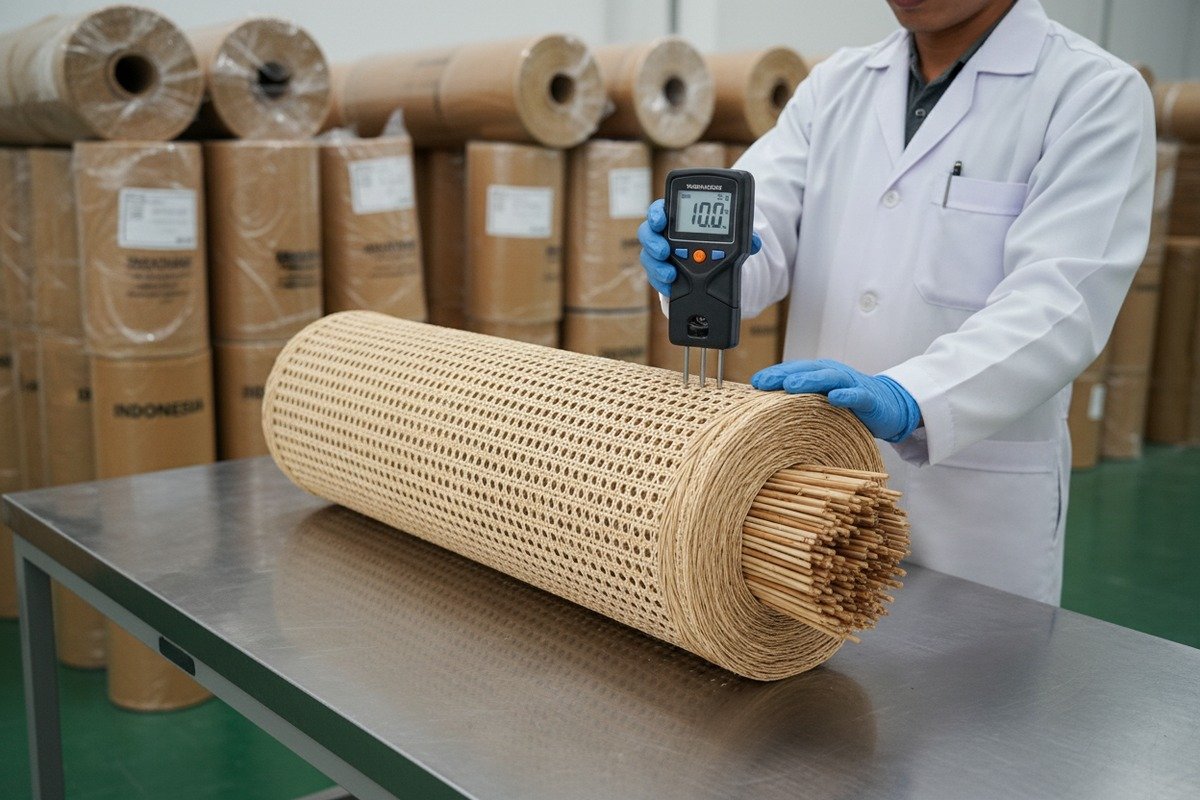
Even at the right thickness, cane with poor محتوى الرطوبة 5 will fail. Premium grades hold 8–12% moisture. This keeps them flexible enough to weave without cracking. Low-quality cane often arrives overly dry or too damp, which causes splitting during installation regardless of thickness.
Will a thinner cane webbing affect the long-term durability of my chair seats?
This is the question we hear most from purchasing managers at furniture factories. They want to cut material costs by going thinner, but they worry about warranty claims. After years of processing rattan at our own facility in Indonesia, we can say the answer is nuanced.
Yes, thinner cane webbing (under 2mm) significantly reduces long-term durability in chair seats. It has lower tensile strength, sags faster under body weight, and is more prone to breakage and moisture damage compared to 2.5–3mm cane, which resists stretching and maintains structural integrity for years.
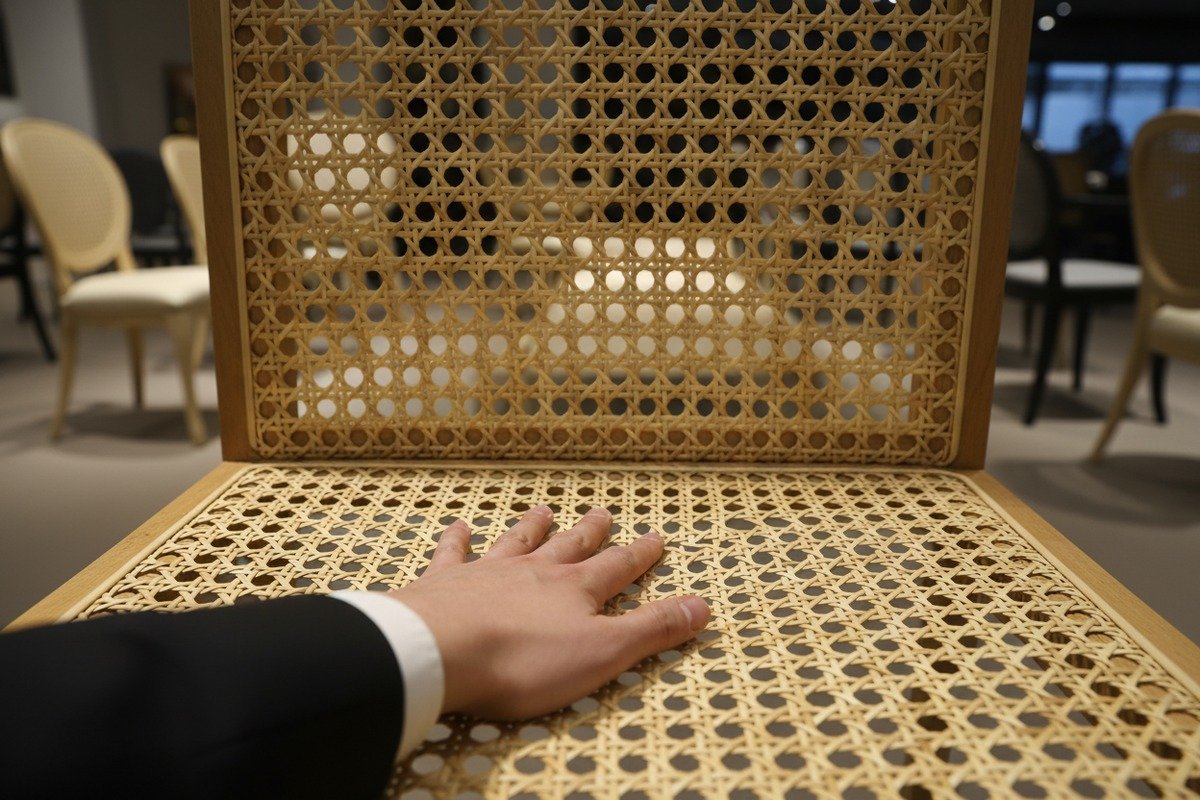
How Thickness Impacts Tensile Strength
Tensile strength is the force a material can withstand before breaking. In rattan cane, this correlates directly with the cross-sectional area of each strip. A 3mm strip has roughly 80% more cross-sectional area than a 1.6mm strip. That translates to dramatically higher load capacity.
While independent lab data on rattan tensile strength by millimeter thickness is limited, supplier specifications and our own internal testing consistently show that cane below 2mm begins to stretch noticeably under sustained loads above 10 kg distributed across a standard chair seat. Over months of daily use, this stretching compounds into visible sagging.
The Sagging Timeline
Sagging is the most common durability complaint. Here is a general timeline based on our observations across thousands of chair seats produced for export clients:
| Cane Thickness | Onset of Visible Sagging | Expected Functional Lifespan |
|---|---|---|
| Under 1.6mm | 3–6 months with daily use | 1–2 years |
| 1.6–2mm | 6–12 months with daily use | 2-4 سنوات |
| 2–2.5mm | 12–24 months with daily use | 5-8 سنوات |
| 2.5–3mm | 24+ months with daily use | 8-15 سنة |
These numbers assume indoor use with proper moisture levels and no extreme weight loads.
Breakage and Brittleness
Thin cane is not just weaker. It is also more brittle once it dries out. Natural rattan loses moisture over time, especially in air-conditioned or heated environments. When a 3mm strip dries slightly, it still has enough material mass to flex without cracking. A 1.6mm strip in the same conditions becomes fragile. Individual strands snap under normal stress.
We have seen this pattern repeatedly with clients who initially chose thin cane for dining chairs. Within a year, individual strands break at the weave intersections where stress concentrates. Repairing individual strands in thicker webbing is straightforward. In thinner webbing, one broken strand often cascades into a larger tear because the surrounding thin strands cannot compensate for the lost tension.
Environmental Sensitivity
Thin cane also absorbs and releases moisture faster than thick cane. This makes it more susceptible to warping, shrinkage, and expansion cycles. In humid climates like Thailand or the Philippines, thin cane can absorb too much moisture and go slack. In dry climates like parts of Saudi Arabia or Australia, it dries out and cracks.
For these regions, we consistently recommend 2.5mm or thicker cane for any seating application. Decorative panels can still use thinner material since they bear no load.
When Thin Cane Still Works
Thin cane is not inherently bad. It excels in specific applications. Cabinet door inserts, wall art frames, lampshade covers, and lightweight decorative screens all benefit from the delicate, refined appearance of thin cane. It also costs less per square meter, which matters for high-volume decorative applications.
The key is matching thickness to purpose. Thin for decoration. Thick for structure. Problems arise only when this rule is ignored.
How can I ensure the thickness remains consistent across my entire bulk order?
Thickness inconsistency is the silent killer of bulk rattan orders. We have had clients in Spain and Greece come to us after receiving shipments from other suppliers where the cane varied by over a millimeter within the same roll. That kind of variation ruins production efficiency and final product quality.
To ensure consistent thickness across bulk orders, request AAA or A-grade cane webbing with documented thickness tolerances, demand trade samples before committing, verify the supplier's quality control process includes caliper measurements at multiple roll points, and insist on uniform moisture content between 8–12% for dimensional stability.
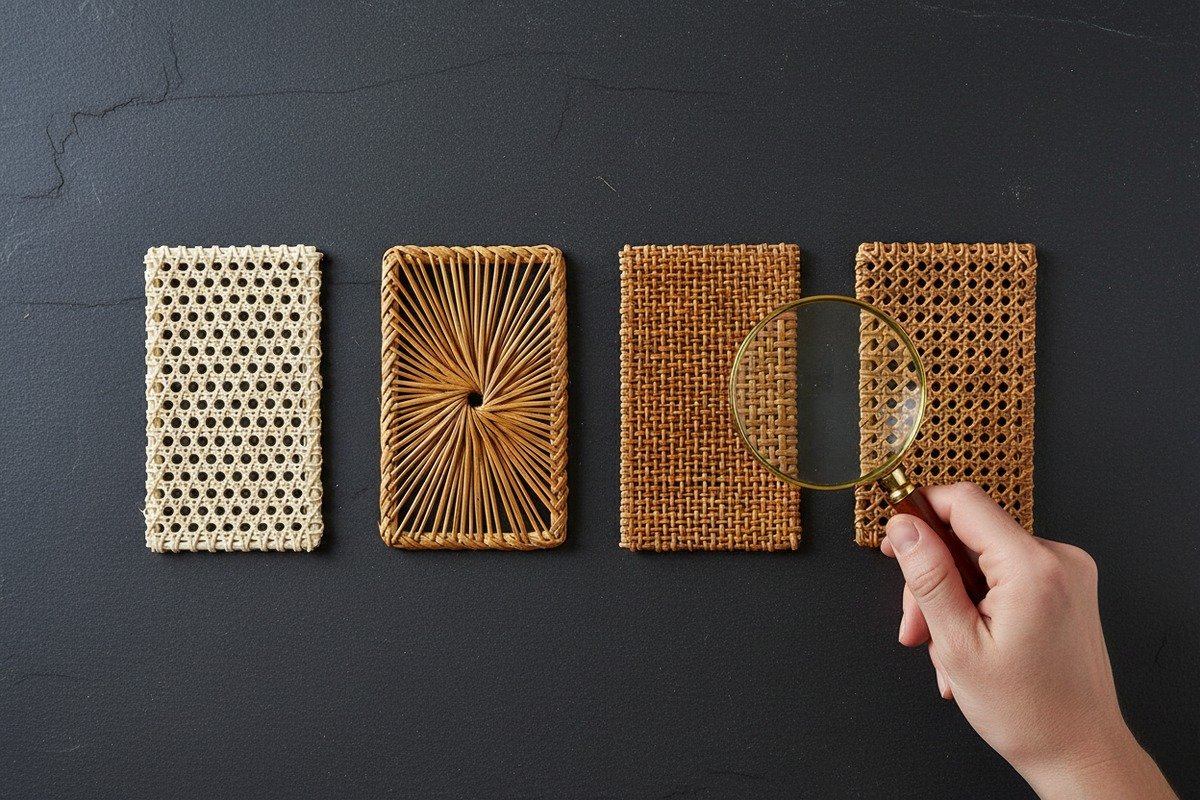
فهم نظام التصنيف
Not all rattan cane is created equal. The industry uses a grading system that directly reflects thickness uniformity. Here is how grades break down:
| Quality Grade | Thickness Uniformity | تشطيب السطح | محتوى الرطوبة | Typical Price Level |
|---|---|---|---|---|
| AAA بريميوم 6 | Highly uniform, ±0.2mm | Smooth, no rough spots | 8–10% | الأعلى |
| A Grade | Consistent, ±0.3mm | Minor texture variation | 8–12% | مرتفع |
| B Grade | Moderate variation, ±0.5mm | Occasional rough patches | Variable | متوسط |
| C Grade | Irregular, tapered strips | Rough, uneven surface | Often too high or low | منخفض |
When our team in Indonesia processes rattan for our AAA and A grade rolls, every batch goes through caliper checks at multiple points along the roll length. We measure at the beginning, middle, and end of each roll. Any roll that falls outside tolerance gets downgraded or rejected.
لماذا يحدث عدم الاتساق
Rattan is a natural material. Each vine grows differently. The outer peel that becomes cane webbing varies in thickness based on the vine's age, growing conditions, and the position on the vine where the strip was peeled.
Lower-cost suppliers often skip the sorting step. They peel strips from mixed-age vines, bundle them together, and weave without matching strip thickness. The result is webbing that looks acceptable on a small sample but shows significant variation across a 40-inch wide, 50-foot roll.
How to Protect Your Order
Here are the practical steps we recommend to every purchasing manager:
First, always request a trade sample before placing your bulk order. We ship samples to clients worldwide so they can measure thickness with a الفرجار الرقمي 7, test flexibility, and check surface quality. A sample costs very little compared to a failed bulk shipment.
Second, specify your required thickness tolerance in writing on your purchase order. Do not assume the supplier knows your standards. State it clearly: "2.5mm ±0.2mm across all rolls."
Third, ask about the supplier's عملية مراقبة الجودة 8. A credible supplier can describe their inspection methods. At our facilities, we use digital calipers at multiple checkpoints and maintain moisture-controlled storage to prevent post-production dimensional changes.
Fourth, insist on consistent packaging. Rolls stored in humid conditions can swell unevenly. Rolls stored too dry can shrink and crack. Proper packaging with moisture barriers protects thickness consistency during shipping, especially for long-distance ocean freight to markets like the USA or Australia.
The Real Cost of Inconsistency
When thickness varies within a roll, your production line slows down. Workers must adjust tension settings, trim uneven edges, and discard sections that do not fit the groove or hole spacing. We have calculated that a 0.5mm variation within a single roll can increase production waste by 10–15% and labor time by 20%. For a furniture factory running hundreds of chairs per month, that adds up fast.
Paying a modest premium for AAA or A-grade material almost always saves money in total production cost. This is why our repeat clients in the Netherlands and the USA consistently order premium grades even when cheaper options exist.
Does the thickness of the rattan webbing impact my final product's aesthetic and quality grade?
When we showcase finished furniture pieces at trade exhibitions, buyers touch the webbing before anything else. They run their fingers across the weave. They look at the grain. They notice whether the surface is smooth or rough, tight or loose. Thickness drives all of these visual and tactile impressions.
Yes, rattan webbing thickness directly impacts aesthetics and perceived quality. Uniform thick strips (2–3mm) create tight, even weaves with rich grain patterns and a premium feel, while inconsistent or overly thin strips produce loose weaves, visible gaps, rough textures, and an overall lower quality appearance that downgrades the final product.
Visual Impact of Thickness
The human eye picks up on weave uniformity instantly. When each cane strip is the same thickness, the weave creates a consistent geometric pattern. Light reflects evenly across the surface. Shadows fall in regular intervals. The result looks intentional, crafted, and premium.
When strip thickness varies, the pattern becomes uneven. Some squares or hexagons are tighter than others. The surface undulates instead of lying flat. From a retail perspective, this is the difference between a product that sits on a premium shelf and one that gets marked down.
Grain and Color Consistency
Thicker cane strips showcase the natural grain of rattan more prominently. The outer peel of the نخيل الروطان 9 has a distinctive, slightly glossy surface with fine longitudinal lines. On a 2.5–3mm strip, this grain is clearly visible and contributes to the organic, warm aesthetic that buyers in markets like the USA and Europe actively seek.
On strips thinner than 1.6mm, the grain becomes faint. The surface appears more matte and flat. Color variation also increases with thin strips because the peeling process exposes slightly different layers of the rattan bark, creating a patchy appearance.
Texture and Touch
For furniture that people physically interact with, texture matters. Chair seats, armrests with rattan wrapping, and headboards all get touched regularly. Properly processed thick cane feels smooth and solid under the hand. It has a satisfying firmness. Thin cane feels papery and insubstantial. It can also develop rough edges over time as the thin material frays.
How Thickness Affects Quality Grading of Finished Products
Many furniture retailers and distributors use their own quality grading systems for finished products. The rattan webbing contributes significantly to the overall grade. Here is how different aspects of thickness influence typical quality assessments:
Surface evenness depends on uniform strip thickness. Weave tightness depends on appropriate thickness for the pattern. Color uniformity depends on consistent peeling depth, which correlates with thickness control. Edge finish depends on strip integrity, which is stronger in thicker cane.
The Premium Market Trend
The current market trend strongly favors natural, sustainable materials with visible craftsmanship. This trend benefits thicker, uniform cane webbing. Buyers in the Netherlands, Australia, and the USA specifically request AAA and A-grade webbing for products positioned as eco-friendly and artisanal. The organic texture of thick natural cane communicates authenticity in a way that thin, mass-produced alternatives cannot.
We have seen this play out in our own order patterns. Over the past three years, demand for our premium-grade rolls in 24–40 inch widths has increased steadily. Clients use them for high-end dining chairs, boutique hotel headboards, and custom cabinetry. The thickness premium they pay is justified by the retail markup their finished products command.
Open weave patterns, particularly hexagonal and octagonal designs using 2.5mm cane, have become especially popular for contemporary interior design 10. These patterns balance visual lightness with material substance. The individual strands are thick enough to show natural grain while the open spaces create airiness and breathability. It is a combination that photographs well for e-commerce, which matters enormously in today's furniture market.
For restoration work, thin close-weave cane around 1/16 inch remains the standard. Vintage chair enthusiasts want the original look. But even here, thickness uniformity within that thin gauge is critical. Period-correct restoration demands precision that only premium-grade thin cane can deliver.
خاتمة
Rattan cane webbing thickness is not a detail to overlook. It shapes durability, aesthetics, production efficiency, and your product's market position. Choose the right gauge, demand consistent grading, and your finished products will reflect the quality your buyers expect.
ملاحظات سفلية
1. Found a comprehensive guide on what cane webbing is, its origins, and applications. ↩︎
2. Highlights the use of rattan cane webbing in furniture restoration. ↩︎
3. Provides a comprehensive guide to different rattan weave types and their characteristics. ↩︎
4. Replaced with a Wikipedia article specifically defining and explaining ultimate tensile strength. ↩︎
5. Replaced with a Wikipedia article on water content, which is synonymous with moisture content. ↩︎
6. Explains the rattan grading system and characteristics of premium grades. ↩︎
7. Replaced with a Wikipedia article that describes calipers, including digital calipers. ↩︎
8. Explains the definition and importance of quality control in manufacturing. ↩︎
9. Replaced with a Wikipedia article on rattan, which describes rattan palms. ↩︎
10. Replaced with a Wikipedia article providing a comprehensive overview of interior design. ↩︎

 English
  Español de México
  العربية
  Deutsch
  Français
  Русский