
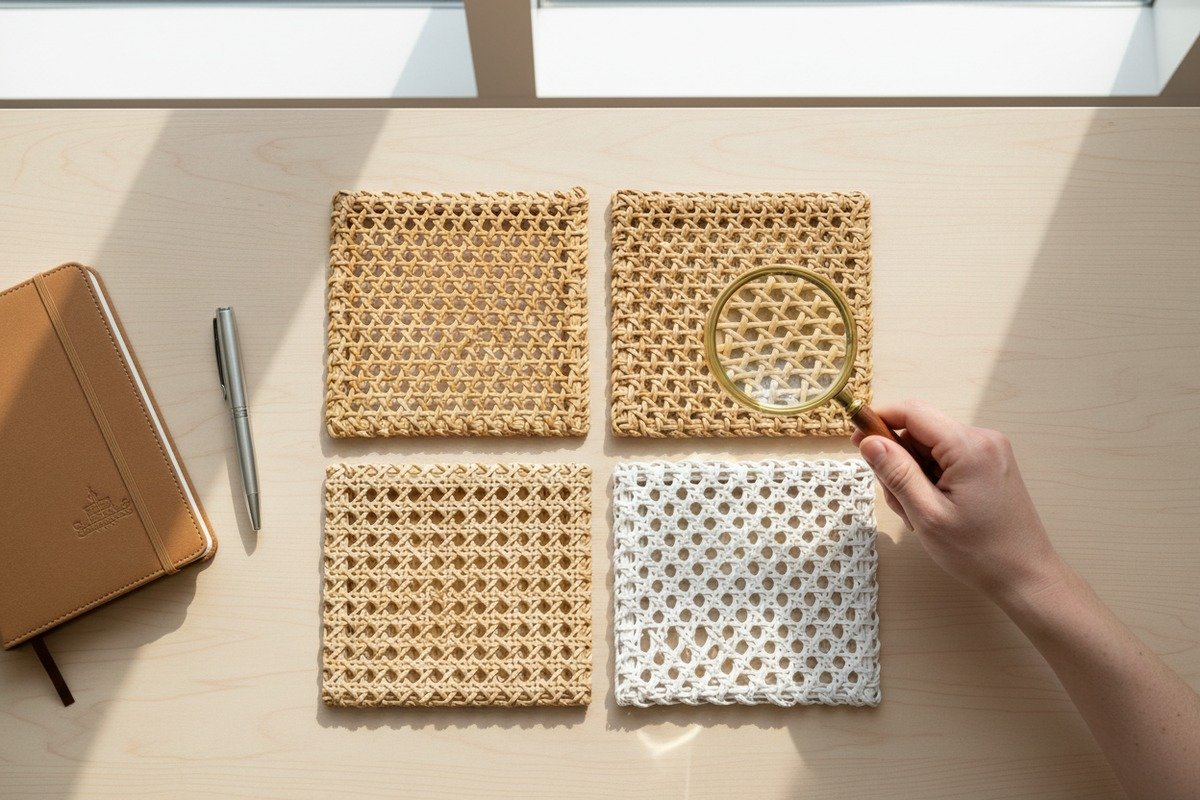
Every year, our production floor in Foshan processes thousands of rattan webbing orders—and nearly every successful bulk deal started with a single sample swatch that convinced the buyer to move forward.
Rattan cane webbing wholesalers provide samples through small swatches or sample packs, typically cut from production offcuts in sizes ranging from 6×6 to 12×12 inches, shipped for a nominal fee of $5–20 plus courier costs, allowing buyers to evaluate weave pattern, color, texture, flexibility, and grade before committing to bulk orders.
Whether you are a مصنع أثاث 1 sourcing Grade A cane webbing or a material wholesaler building your catalog, understanding the sample evaluation process saves you from costly mistakes. Let’s walk through exactly how it works—from requesting your first sample book to testing custom-sized pieces on your furniture frames.
How can I request a physical sample book of different rattan weave patterns?
We ship sample books to buyers in over 20 countries, and the most common question we hear is: "How do I even start?" The process is simpler than most people think, but a few details make all the difference Grade A cane webbing 2.
To request a physical sample book, contact the wholesaler via their website, email, or WhatsApp with your project details—specify the weave patterns, material type (natural or synthetic), grade preference, and shipping address. Most wholesalers prepare a curated sample book within 1–3 days and ship it via international courier.
Step-by-Step: The Sample Request Process
The journey from inquiry to holding a sample in your hands follows a predictable path rattan weave patterns 3. Here is how it typically works at our facility and across most reputable wholesalers in the industry.
First, you reach out. Most buyers contact us through our website at www.rattanwholesaler.com, via email, or through WhatsApp. We find that WhatsApp is the fastest channel, especially for buyers in Thailand, the Middle East, and Europe. When you reach out, include these key details: the weave patterns you are interested in, the intended application (furniture backs, cabinet doors, room dividers), your preferred material (الروطان الطبيعي 4 cane, synthetic plastic rattan, or bleached cane), and the quality grade you need.
Second, the wholesaler confirms availability. Not every pattern is in stock at every moment. For example, our hexagonal "radio weave" and dense square basketweave are always available, but a complex geometric diamond motif may require a short production lead time for samples.
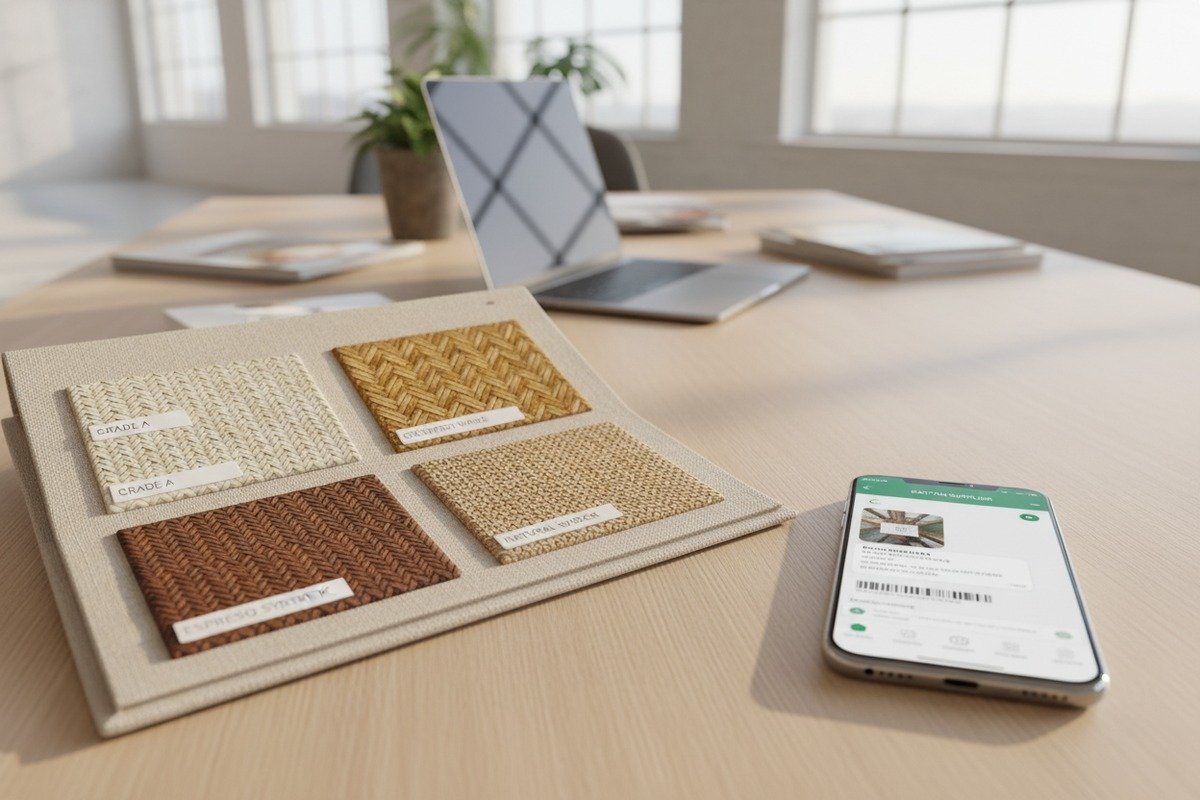
Third, the sample book is prepared. This is where things get interesting. A well-organized sample book is not just random swatches thrown in an envelope. It includes labeled pieces with pattern names, grade markings, and sometimes a small tape measure reference for scale. At our Seafan Rattan facility, we cut samples from the same production batch that will supply your bulk order, so what you see is what you get.
What Should a Good Sample Book Include?
| Component | وصف | لماذا هو مهم |
|---|---|---|
| Weave pattern swatches | 6×6 inch or 8×8 cm pieces of each pattern | Lets you feel the texture and see the weave density |
| Grade labels | A, B, C, or D marking on each swatch | Shows quality tier so you can compare cost vs. quality |
| Material type indicator | Natural cane, synthetic, or bleached | Prevents confusion when ordering in bulk |
| Color reference card | Shows natural variation range | Helps set realistic expectations for batch consistency |
| Roll specification sheet | Lists available widths (4–6 ft) and lengths (20–100 ft) | Lets you calculate material needs before ordering |
Digital Catalogs vs. Physical Samples
Many wholesalers now offer high-resolution digital catalogs 5 with 3D renderings. These are useful for initial screening. You can narrow down your choices before requesting physical samples. Some even provide digital material libraries compatible with CAD or SketchUp, so designers can virtually place the webbing into their furniture models.
However, digital images cannot replace physical samples. Natural rattan has organic variations—slight color shifts, texture differences, and flexibility that a screen simply cannot convey. We always recommend getting physical swatches, even if you have reviewed digital files first.
How Long Does Shipping Take?
Sample preparation typically takes 1–2 days. International courier 6 delivery (DHL, FedEx, or UPS) adds 3–7 business days depending on your location. Buyers in the Netherlands, USA, and Australia usually receive samples within a week of confirmation. For Southeast Asian markets like Thailand or the Philippines, delivery is often faster—sometimes just 2–3 days.
How do I evaluate the quality and durability of the rattan webbing samples I receive?
When a sample pack arrives at your office, the real work begins. Over the years, we have seen buyers make costly mistakes by only glancing at a sample instead of systematically testing it.
Evaluate rattan webbing samples by checking weave tightness, strand uniformity, color consistency, flexibility, and surface finish. Soak the sample in water for 15–20 minutes to test pliability and stretch. Inspect for defects like burrs, broken strands, or fungal spots. Compare samples across grades to match your quality and budget requirements.
فحص الجودة ذو النقاط الخمس
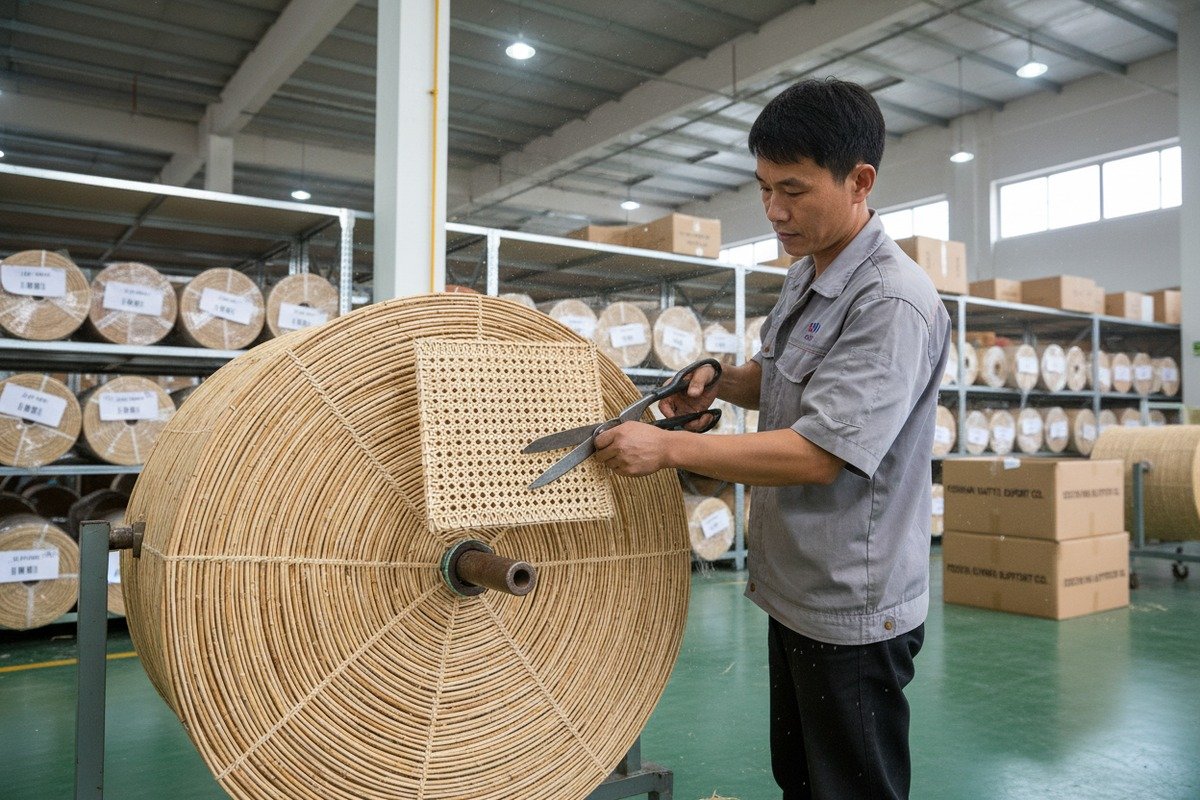
When we train new quality inspectors at our factory, we teach them a five-point system. إحكام النسيج 7 You can use the same approach when evaluating samples at your desk.
1. Weave Tightness and Consistency. Hold the sample up to the light. Are the gaps between strands uniform? In a hexagonal open-mesh pattern, each hexagon should be roughly the same size. In a close weave, there should be no visible gaps. Uneven tension during weaving creates loose spots that weaken the panel over time.
2. Strand Quality. Run your fingers across the surface. Grade A rattan cane should feel smooth with no burrs or rough spots. The strands should be uniform in width and thickness. Grade B or C samples may have minor inconsistencies, which is acceptable for budget projects but not for premium furniture.
3. Color Uniformity. Natural rattan has a warm palette—light beige, straw yellow, and cream tones. Some variation is normal and even desirable for an organic look. But large dark patches or greenish spots can indicate improper drying or fungal issues during storage. Bleached rattan should appear consistently white or off-white without blotchy areas.
4. Flexibility Test. This is critical. Gently bend the sample. Quality rattan cane should flex without cracking or snapping. If it feels brittle, the material may have been over-dried or poorly cured. For natural cane webbing, soak a small piece in water for 15–20 minutes. It should become noticeably more pliable—this is exactly how it behaves during installation.
5. Surface Finish. Check whether the rattan has been properly processed. Our production line includes thinning, singeing, boiling, and fumigation steps 8. Singed cane has tiny surface hairs burned away for a cleaner feel. Fumigated cane resists insects and mold. Ask your wholesaler about these processing steps if the sample feels rough or shows signs of insect activity.
Quality Grade Comparison Table
| Grade | توحيد الخيوط | Surface Smoothness | اتساق اللون | معدل العيوب | أفضل استخدام |
|---|---|---|---|---|---|
| A (Premium) | Excellent – uniform width and thickness | Very smooth, singed and polished | High – minimal natural variation | Less than 2% | أثاث راقٍ، مشاريع مصممين |
| B (Standard) | Good – minor width variations | Smooth with occasional rough spots | Moderate – some tonal shifts | 5–8% | Mid-range furniture, retail products |
| C (Economy) | Fair – noticeable variations | Lightly processed, some burrs | Variable – wider tonal range | 10–15% | Budget furniture, DIY projects |
| D (Basic) | غير متناسق | Minimal processing | Significant variation | Over 15% | Non-visible applications, backing panels |
Natural vs. Synthetic: A Practical Comparison
If you received both natural and synthetic rattan samples, here is what to look for. Natural rattan—made from the outer peel of the rattan palm—has an authentic, artisanal feel. It absorbs moisture, which makes it slightly expandable during installation. But it requires proper curing and fumigation to resist mold and insects.
Synthetic rattan, usually made from durable plastic designed to mimic natural wood fibers, comes in patterns like chevron "wave" designs. It is easier to handle—no soaking needed—and resists moisture better. However, it lacks the organic warmth and texture variations that make natural rattan so appealing for bohemian and mid-century furniture styles.
Both have their place. The key is matching the material to your project's environment. Indoor furniture? Natural cane is usually the better choice. Outdoor or high-humidity settings? Synthetic may be more practical.
Testing for Installation
Do not just look at the sample—try installing it. Cut a small piece to fit a test frame. For natural cane, soak it first, then staple or glue it into the frame. Check how it shrinks as it dries. Good-quality cane tightens up neatly. Poor-quality cane may warp or pull unevenly.
Will I be charged for the rattan samples or just the international courier fees?
This question comes up in nearly every first conversation with a new buyer. Our purchasing managers in Thailand, India, and the Netherlands ask about it right away, and for good reason—sample costs add up when you are evaluating multiple suppliers.
Most rattan cane webbing wholesalers provide samples for free or charge a nominal fee of $5–$20 to cover cutting, labeling, and packaging costs. The buyer typically pays international courier shipping fees separately, which range from $25–$80 depending on destination and carrier. Some wholesalers refund the sample fee once a bulk order is placed.
Understanding the Cost Breakdown
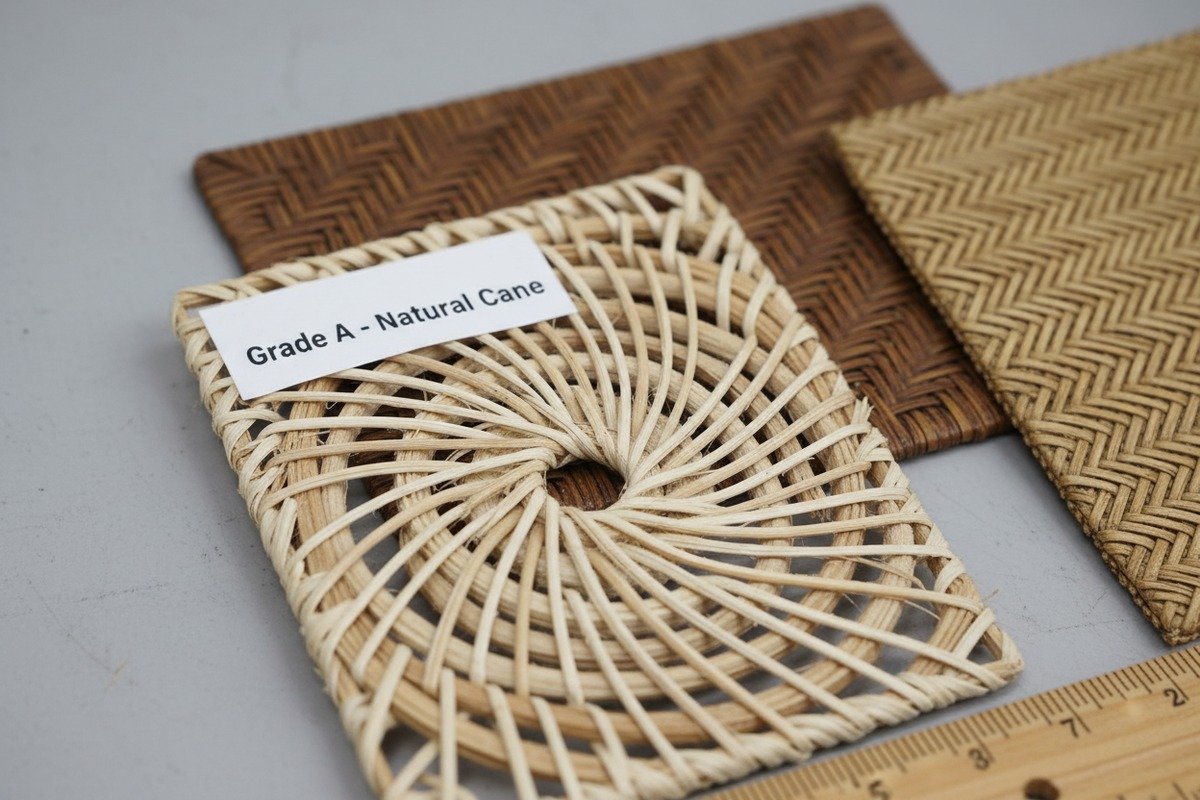
Let's be transparent about how sample costs work. At our Seafan Rattan facility, samples are cut from production offcuts 10—leftover pieces from full roll production. This means the raw material cost is minimal. What you are really paying for is the labor to cut, label, and package the swatches, plus the courier fee to get them to your door.
Here is a realistic cost breakdown based on our experience shipping samples worldwide:
| مكون التكلفة | النطاق النموذجي | ملاحظات |
|---|---|---|
| Sample material | Free – $5 | Cut from production offcuts, minimal waste |
| Cutting and labeling | $0 – $5 | Labor cost for preparing a curated sample pack |
| التعبئة والتغليف | $2 – $5 | Protective cardboard tube or flat mailer |
| International courier (Asia to USA) | $35 – $60 | DHL/FedEx, 3–5 day delivery |
| International courier (Asia to Europe) | $30 – $55 | DHL/FedEx, 3–5 day delivery |
| International courier (Asia to Middle East) | $25 – $45 | DHL/FedEx, 2–4 day delivery |
| International courier (Asia to Southeast Asia) | $15 – $30 | Faster transit, lower cost |
Free Samples vs. Paid Samples: The Debate
There are two schools of thought in our industry, and both have merit.
The free sample approach says that providing free samples builds trust, especially with first-time buyers in new markets. When a purchasing manager in Turkey or Greece receives a free sample book, it signals generosity and confidence in product quality. This approach works well for establishing long-term relationships.
The paid sample approach says that charging a small fee ($5–$15) filters out non-serious inquiries. Wholesalers who offer completely free samples sometimes receive dozens of requests from people with no intention of placing an order. A modest charge ensures the requester is genuinely evaluating materials for a real project.
At Seafan Rattan, we take a middle path. We provide the sample material at no cost, but we ask the buyer to cover the courier fee. If the buyer places a bulk order, we credit the courier cost toward their first invoice. This approach respects both parties' time and resources.
When Samples Lead to Bulk Orders
Industry anecdotes suggest that 30–50% of sample requests convert to bulk orders. That conversion rate goes up significantly when the sample accurately represents the production quality. This is why we cut samples from the same batches used for full rolls—what you evaluate is what you receive at scale.
Some Etsy sellers and small-scale resellers offer tiny free swatches, sometimes as small as 4×4 inches. These are useful for color matching but too small for installation testing. If you are a serious buyer—a furniture factory or material wholesaler—request a larger sample (at least 6×6 inches) even if it costs a few dollars more.
Tips to Minimize Sample Costs
Be specific in your request. Instead of asking for "all available patterns," narrow it down to 3–5 patterns that match your project. This reduces packaging weight and shipping costs. Also, consider consolidating sample requests with your regular shipments if you already have an ongoing relationship with the wholesaler.
Can I get custom-sized rattan cane samples to test on my specific furniture designs?
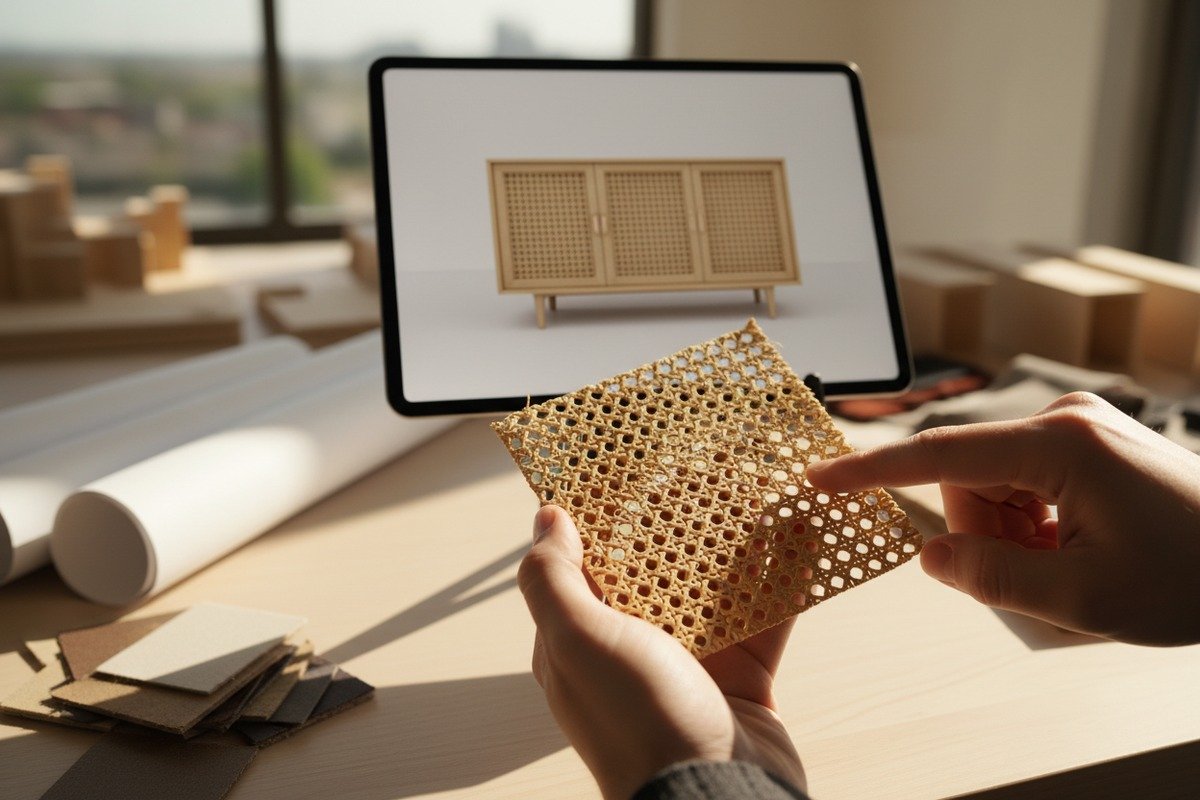
One of the most rewarding parts of our work is helping buyers solve real design problems. A purchasing manager once contacted us from the Netherlands—she needed a specific weave pattern cut to an unusual trapezoidal shape for a custom cabinet door. That is exactly the kind of challenge custom samples address.
Yes, most established rattan cane webbing wholesalers offer custom-sized samples tailored to your specific furniture dimensions and design requirements. You can request particular weave patterns, material grades, staining finishes, and exact measurements. Custom samples typically take 2–5 additional days to prepare and may carry a slightly higher fee than standard swatches.
Why Standard Samples Are Not Always Enough
A 6×6 inch swatch tells you a lot about material quality, but it cannot tell you how the webbing behaves on a full-sized chair back or a 24-inch-wide cabinet panel. When rattan cane is stretched across a larger frame, its tension, drape, and visual appearance change. Weave patterns that look tight on a small swatch may appear more open when pulled across a bigger surface.
This is why custom-sized samples matter, especially for furniture factories producing proprietary designs. If your chair back is 18 inches wide and 22 inches tall, you need a sample cut to at least that size—plus a few inches of overhang for stapling and trimming.
ما الذي يمكن تخصيصه؟
Custom samples go beyond just size. Here is what you can specify:
Weave pattern. Choose from hexagonal open-mesh (radio weave), dense square basketweave, chevron wave, diamond motif, or close weave. If you have a proprietary pattern in mind, some wholesalers can produce it with a minimum order and provide a sample first.
Material type. Natural rattan cane, bleached rattan cane, or synthetic plastic rattan. Each behaves differently during installation and has a distinct visual character.
Grade. Request Grade A for premium projects or Grade B/C for cost-sensitive applications. Getting samples of multiple grades side by side helps you make an informed cost-quality tradeoff.
Finish and color. Natural rattan can be stained in various tones—walnut, oak, dark espresso, or custom colors. Staining tutorials have become popular online, and many wholesalers now offer pre-stained samples so you can skip the DIY step and see the exact finished look.
Size and shape. Rectangular, square, or even custom-cut shapes to match unique frame geometries.
Custom Sample Request Checklist
Before you contact a wholesaler for custom samples, prepare the following information:
- Exact dimensions (width × height) with tolerance range
- Weave pattern name or reference photo
- Material type (natural, bleached, synthetic)
- Quality grade preference
- Finish requirements (raw, stained, lacquered)
- Quantity of sample pieces needed
- Shipping address and preferred courier
- Project timeline and bulk order estimate
Having this information ready speeds up the process significantly. When our team receives a detailed request, we can often confirm availability and pricing within hours, not days.
Installation Testing with Custom Samples
Once you receive your custom-sized sample, test it exactly as you would during production. For natural cane webbing, follow this process:
- Soak the sample in warm water for 15–20 minutes until it is fully pliable.
- Place it over the frame opening, ensuring the weave pattern is aligned and centered.
- Staple or glue the edges to the frame, starting from the center of each side and working outward.
- Trim excess material with a sharp utility knife.
- Apply reed binding or a decorative spline over the raw edges.
- Allow the cane to dry completely (12–24 hours). It will tighten and become taut.
This test reveals everything—how the weave pattern looks at scale, how the cane handles tension, whether the color matches your frame material, and how the finished product feels to the touch.
The Rise of Hybrid Samples
A notable trend for 2025 and beyond is the growing demand for hybrid natural-plastic webbing samples. These combine the authentic look of natural rattan with moisture-resistant synthetic backing, making them suitable for bathrooms, outdoor covered patios, and high-humidity environments. If your furniture line includes pieces for varied environments, ask your wholesaler about hybrid options during the sample stage.
Social media has also changed how samples are shared and evaluated. Hashtags like #rattanwebbing on Instagram and Pinterest drive visual sample sharing, allowing designers to see real-world installations before even requesting a physical piece. Several of our buyers first discovered our products through social media posts showing our webbing on finished furniture.
خاتمة
Requesting and evaluating rattan cane webbing samples is the smartest first step in any bulk sourcing decision—it protects your investment and ensures the material matches your exact quality, design, and performance expectations.
ملاحظات سفلية
1. Explains the industry and operations of furniture manufacturing. ↩︎
2. Details the quality standards and characteristics of Grade A rattan webbing. ↩︎
3. Illustrates various types of rattan weave patterns and their applications. ↩︎
4. Provides information on the characteristics and sustainability of natural rattan. ↩︎
5. Explains what digital product catalogs are and their importance. ↩︎
6. Describes the services and process of international courier shipping. ↩︎
7. Highlights weave tightness as a key factor in rattan webbing quality. ↩︎
8. Details the fumigation process for rattan to ensure quality and preservation. ↩︎
9. Provides an overview of rattan cane webbing as a material. ↩︎
10. Discusses the use of production offcuts in manufacturing for waste reduction. ↩︎


 English
  Español de México
  العربية
  Deutsch
  Français
  Русский