
Every week, we receive messages from buyers across Thailand, Australia, and the Middle East asking the same question: “Is my rattan cane webbing drying out because I’m not oiling it enough?” It’s a worry we understand well — after processing and shipping thousands of rolls from our factories in Indonesia and Foshan, we’ve seen firsthand what happens when natural rattan doesn’t get the care it needs الغابات الاستوائية 1. The fibers crack. The weave splits. And a beautiful piece of furniture ends up in the trash far too soon.
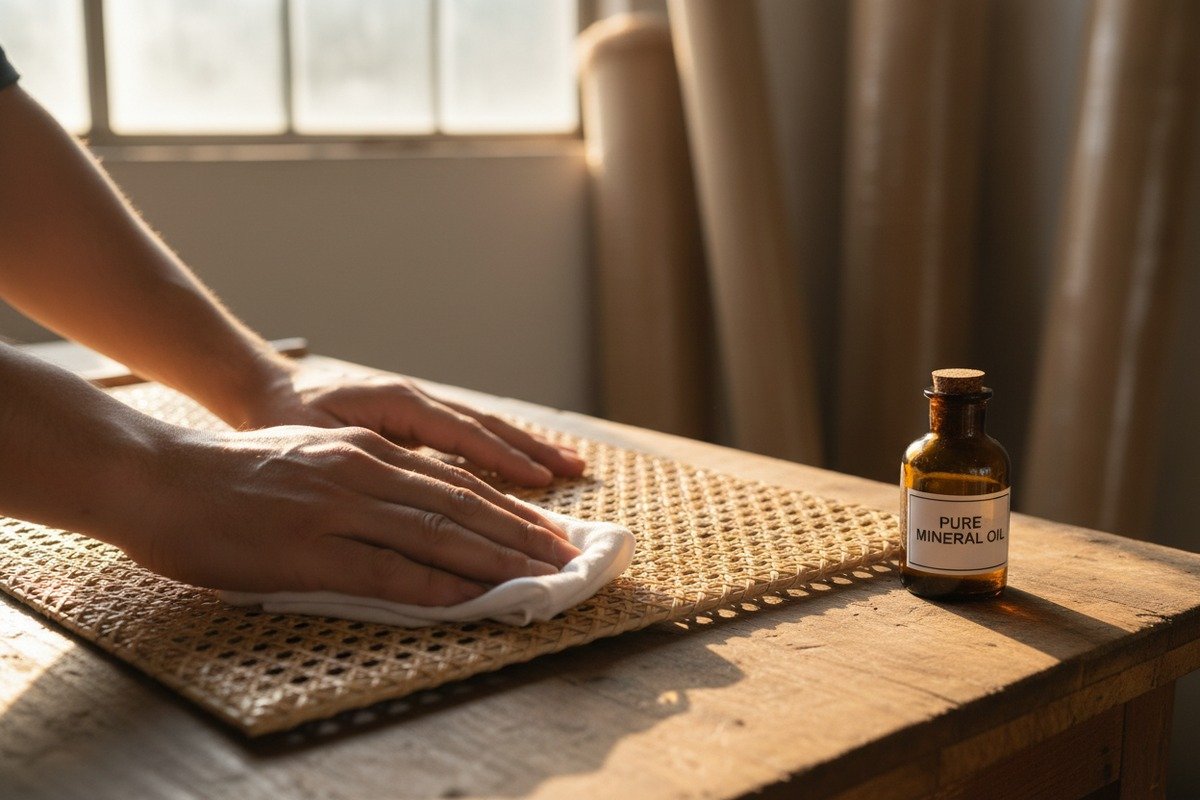
Natural rattan cane webbing does benefit from occasional oiling, but it does not require frequent or heavy applications. Applying a light coat of mineral oil or linseed oil roughly three to four times per year is enough to keep the fibers flexible, prevent brittleness, and extend the material’s lifespan significantly.
But there’s more to it than just grabbing a bottle of oil and wiping it on حماية من الأشعة فوق البنفسجية 2. The type of oil, the method of application, and even the climate you live in all play a role. Let’s break down everything you need to know to keep your rattan cane webbing in top shape.
How often should I oil my natural rattan cane webbing to prevent it from becoming brittle?
One of the most common mistakes we see among our wholesale clients — especially those distributing to dry climates like Saudi Arabia or inland Australia — is either over-oiling or completely neglecting their rattan products.
You should oil your natural rattan cane webbing approximately three to four times per year, or roughly once every season. In very dry climates, you may increase this slightly, but avoid weekly or monthly oiling, as excess oil attracts dust and can make the fibers sticky or discolored over time.
لماذا يجف الروطان
الروطان الطبيعي هو highly porous material 3. It absorbs and releases moisture from the air around it. When the air is dry — think winter heating, desert climates, or rooms with constant air conditioning — the fibers lose moisture. They shrink. They become rigid. And eventually, they crack.
This is not a manufacturing defect. It is the nature of the material. Rattan is a living fiber, harvested from palm species 4 in tropical forests. At our processing facility in Indonesia, the raw rattan arrives with a moisture content around 70–80%. We dry and treat it carefully before weaving, but the material still depends on ambient humidity 5 to stay supple after it reaches your home or warehouse.
The Seasonal Oiling Rule
Think of oiling as a seasonal ritual. Here's a simple schedule:
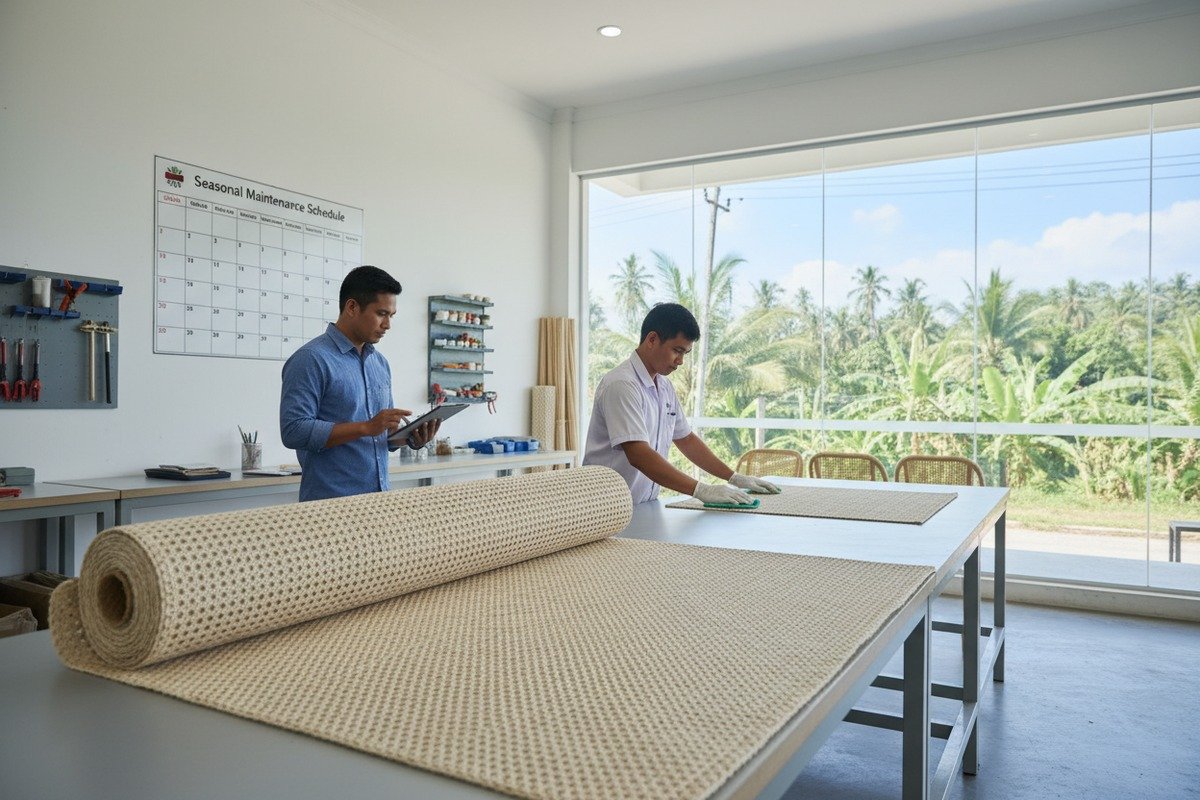
| الموسم | إجراء | ملاحظات |
|---|---|---|
| الربيع | Light oiling | Prepares rattan after dry winter months |
| الصيف | Dust and inspect | Oil only if visibly dry; humidity often sufficient |
| الخريف | Light oiling | Prepares for upcoming dry indoor heating season |
| الشتاء | Oil and humidify | Most critical time; indoor heating dries air rapidly |
Signs Your Rattan Needs Oil Now
Don't just follow a calendar blindly. Look at the material. If it feels rough to the touch, looks lighter than usual, or shows tiny hairline cracks along the weave, it's telling you it needs moisture. Another trick we share with our clients: press a fingernail gently into the cane. If it leaves a visible mark that doesn't bounce back, the fiber is too dry.
Over-Oiling: A Real Risk
More is not better. When rattan is saturated with oil, it becomes a magnet for dust and dirt. The pores get clogged, and the material can't breathe. Over time, this leads to a sticky film that actually accelerates deterioration. One or two thin coats, wiped dry, is always enough.
We've had a buyer from the Netherlands who was applying coconut oil weekly to their display furniture. Within six months, the rattan turned dark, felt greasy, and started developing a musty smell. Once we walked them through the seasonal approach, their newer pieces looked great for years.
What are the best types of oil I can use to maintain the luster of my rattan materials?
When we consult with furniture factories and wholesalers about rattan care, the oil question always comes up. And the answer is not one-size-fits-all. The right oil depends on your desired finish, your climate, and how the rattan piece will be used.
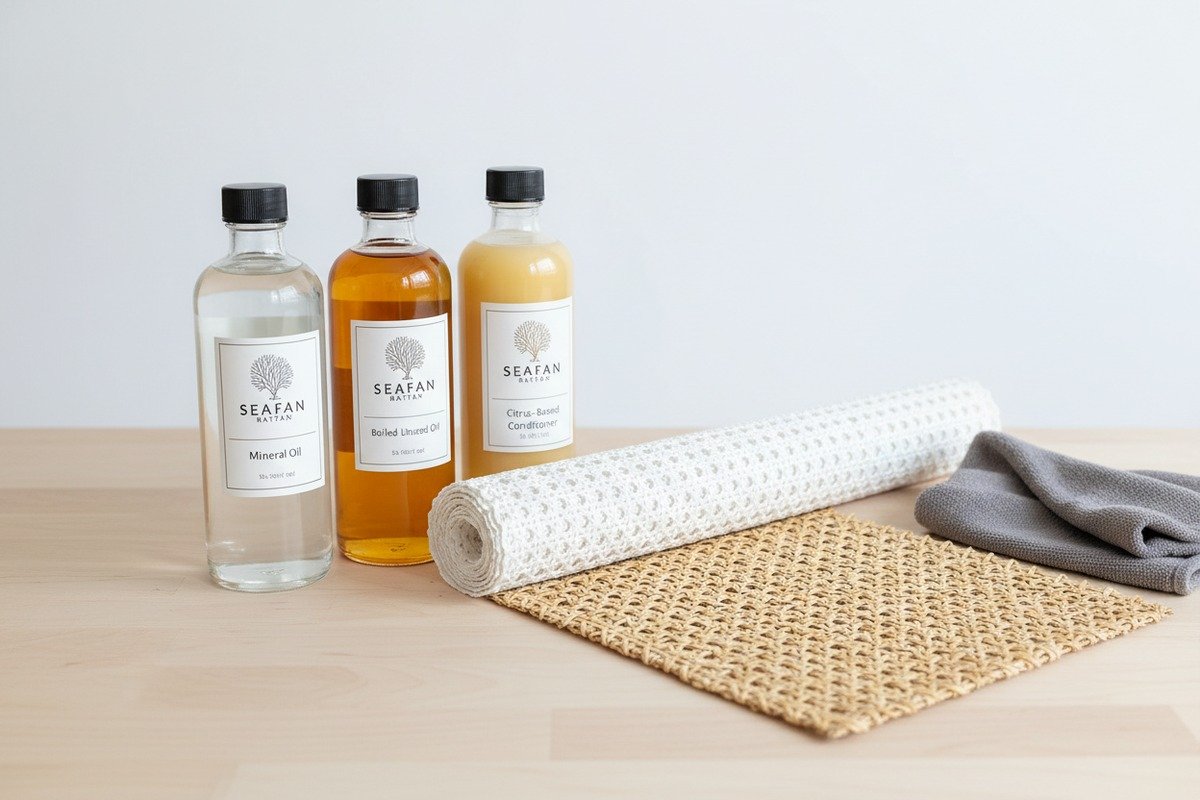
The best oils for maintaining natural rattan cane webbing include mineral oil, boiled linseed oil, and lemon or orange oil. Mineral oil is ideal for a clean, non-yellowing finish. Boiled linseed oil deeply nourishes very dry rattan. Citrus-based oils add a light sheen and pleasant scent while conditioning the fibers gently.
Oil Comparison Table
Not all oils perform the same way on rattan. Here's a breakdown we often share with our B2B clients:
| نوع الزيت | التشطيب | الأفضل لـ | Drying Time | Yellowing Risk | ملاحظات |
|---|---|---|---|---|---|
| زيت معدني 6 | Clear, matte | Light-colored rattan, bleached cane | 12-24 ساعة | لا شيء | Food-safe; very neutral |
| زيت بذر الكتان المغلي 7 | Warm, slightly amber | Very dry or aged rattan | 24-48 ساعة | معتدل | Deepens color; use sparingly |
| Lemon/Orange Oil | Light sheen | General maintenance, indoor pieces | 6-12 ساعة | منخفض | Pleasant scent; mild conditioning |
| صابون مورفي الزيتي (مخفف) | Subtle satin | Cleaning + light conditioning | 12-24 ساعة | منخفض | Not a true oil; more of a cleaner-conditioner |
| Coconut Oil | Glossy | لا ينصح به للروطان | بطيء | مرتفع | Attracts dust; can cause mold in humid areas |
| Tung Oil | Semi-gloss | Top-side finish only | 24–72 ساعة | منخفض | Hardens; do not apply to underside |
Mineral Oil: The Safe Choice
For most of our clients — especially those reselling to end consumers or supplying hotel furniture — mineral oil is the go-to recommendation. It doesn't change the color of the rattan. It doesn't yellow over time. And it's easy to apply evenly without leaving streaks.
We often suggest زيت معدني صالح للطعام 8 because it's free from additives. A small bottle goes a long way. You only need a thin layer, and the rattan absorbs it quickly.
Boiled Linseed Oil: The Deep Treatment
When rattan has been neglected or stored in a dry warehouse for months, it needs more than a surface treatment. Boiled linseed oil penetrates deeper into the fibers. It restores flexibility to cane that has already started to stiffen.
But here's the caution: boiled linseed oil will darken the rattan. If your product is a bleached or light-colored cane webbing, this may not be the right choice. It's best reserved for darker, natural-toned pieces or restoration projects.
Citrus Oils: Light and Fresh
Lemon oil and orange oil are popular in retail settings because they smell great and leave a pleasant, natural sheen. They condition the rattan without heavy saturation. For our clients in Thailand and the Philippines who display rattan products in showrooms, citrus oils are a practical everyday option.
ما يجب تجنبه
Stay away from heavy cooking oils like olive oil or coconut oil. These sit on the surface, attract dust and insects, and can go rancid in warm climates. We've seen rattan furniture in tropical warehouses develop mold within weeks because someone used coconut oil as a conditioner.
Also avoid spray-on furniture polishes that contain silicone. They create a slick coating that prevents the rattan from breathing and can cause the fibers to become brittle underneath.
Will regular oiling help my rattan webbing resist cracking and splitting in dry climates?
From our export records, the highest rate of cracking complaints come from buyers in two types of regions: desert climates like the Middle East and places with harsh, heated winters like northern Europe and parts of the USA. The pattern is clear, and it's not about product quality — it's about environment.
Yes, regular oiling significantly helps rattan webbing resist cracking and splitting in dry climates. Oil replenishes the moisture that dry air strips from the fibers, keeping them pliable rather than rigid. However, oiling alone is not enough — pairing it with humidity control and UV protection provides the most effective defense against climate-related damage.
How Dry Air Damages Rattan
Rattan fibers are like tiny sponges. In a humid room, they absorb moisture and stay flexible. In a dry room — especially one heated by forced air or radiators — the moisture evaporates out of the cane faster than it can be replaced. The result is shrinkage. As individual strands of the weave shrink unevenly, stress points form. That's where cracks and splits begin.
This process can happen in as little as a few weeks if the humidity drops below 30%. For context, many heated homes in winter sit at 20–25% الرطوبة النسبية 9 without a humidifier. That's drier than the Sahara on some days.
The Combined Defense Strategy
Oiling is one layer of protection. But it works best as part of a system. Here's what we recommend to our wholesale clients who supply dry-climate markets:
| Defense Layer | What It Does | How Often |
|---|---|---|
| Light oiling | Replenishes moisture in fibers | 3-4 مرات في السنة |
| Humidifier in room | Maintains ambient moisture around 40–55% RH | Continuous during dry months |
| Avoid direct sunlight | Prevents UV-accelerated drying and fading | Always |
| Avoid heat sources | Keeps rattan away from radiators, fireplaces, vents | Always |
| UV-protectant spray | Adds invisible barrier against sun damage | Once or twice per year |
Regional Considerations
We've learned a lot from shipping to different markets. In Florida, the issue isn't dryness — it's salt air and UV exposure. The salt crystals build up in the weave and grind the fibers when the cane flexes. In Dubai, it's extreme dryness combined with air conditioning running around the clock. In Russia, it's the intense indoor heating from October to April.
Each region needs a slightly different approach. For salt-prone areas, we suggest wiping down the webbing with a damp cloth monthly to remove salt buildup before applying oil. For ultra-dry environments, we advise our clients to include a care instruction card with every piece of furniture that specifically mentions humidifier use.
What Happens When You Don't Oil
We once received a return inquiry from a buyer in Turkey. They had stored a large order of cane webbing sheets in an unheated, unhumidified warehouse over the winter. By spring, nearly 40% of the sheets had visible cracking along the edges. The rattan itself was Grade A quality — the environment simply destroyed it.
That experience led us to include moisture-barrier packaging and care guidelines with every bulk order we ship to dry-climate destinations. Prevention is always cheaper than replacement.
Can You Reverse Cracking?
Minor surface cracks can sometimes be softened by gentle oiling and rehydration. Soak a cloth in warm water, lay it over the damaged area for a few minutes, then apply a thin coat of boiled linseed oil. Let it dry for 48 hours. This can restore some flexibility.
But deep splits? Those are permanent. Once the fiber has fractured through, no amount of oil will fix it. This is why we tell our clients: prevention is everything. Don't wait until you see cracks. Oil on a schedule, manage your humidity, and keep rattan out of direct sun.
How do I properly apply maintenance oil to ensure my rattan products stay in Grade A condition?
Through years of working directly with furniture factories and material wholesalers, we've developed a straightforward oiling process that our clients use across dozens of countries. It's simple, but the details matter — especially if you want to keep your rattan looking and performing like the day it was woven.
To properly oil rattan cane webbing, first dust it thoroughly, then apply a thin coat of oil to the underside using a soft cloth, wipe the top side lightly, remove all excess, and allow 24–48 hours of drying time in a well-ventilated area. Always oil the underside first, as it is the most vulnerable to drying and should never be sealed with varnish.
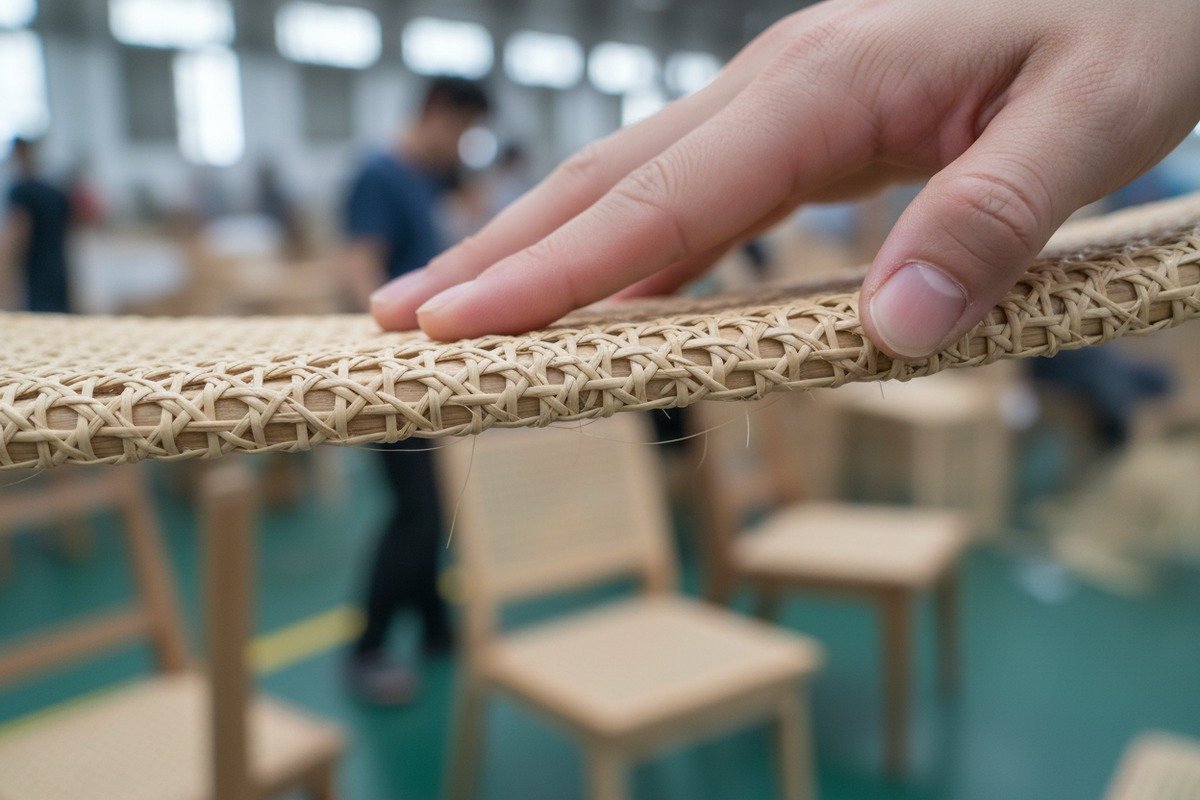
Step-by-Step Oiling Guide
Here is the exact process we recommend. Follow each step in order.
Step 1: Dust the surface. Use a soft-bristle brush or vacuum with a brush attachment. Remove all dirt, crumbs, and debris from both sides of the webbing. Dirt trapped under oil becomes a permanent stain.
Step 2: Choose your oil. Refer to the oil comparison table above. For most applications, mineral oil or lemon oil is the safest choice. If the rattan is very dry, use boiled linseed oil.
Step 3: Apply to the underside first. Dip a soft, lint-free cloth into the oil. Wring it out so it's damp, not dripping. Wipe it across the underside of the cane webbing in smooth, even strokes. The underside is where drying hits hardest and where you want the most moisture replenishment.
Step 4: Lightly oil the top side. Use even less oil on the visible surface. You want a thin, barely-there coat. Too much oil on the top attracts dust and can darken the weave unevenly.
Step 5: Wipe off all excess. Take a clean, dry cloth and go over both sides. The rattan should feel slightly conditioned, not wet or greasy. If your cloth picks up a lot of oil, you used too much.
Step 6: Dry for 24–48 hours. Place the piece in a well-ventilated room. Do not sit on caned chairs or use the piece during this time. The cane will tighten slightly as it dries — this is normal and beneficial.
Critical Rule: Never Seal the Underside
This is the single most important rule in rattan care, and it's the one most often broken. Never apply varnish, shellac, polyurethane, or any hard finish to the underside of cane webbing. The underside needs to breathe. It needs to exchange moisture with the air. Sealing it traps moisture inside the fibers, which leads to brittleness, mold, and premature failure.
You can apply a light sealant or varnish to the top side if desired — especially for high-traffic furniture. But sand lightly with fine-grit sandpaper first so the finish adheres properly. And always leave the underside raw and breathable.
Tools You'll Need
Here's a quick checklist:
- Soft-bristle brush or vacuum with attachment
- Lint-free cotton cloths (at least 3: one for oil application, one for wiping excess, one for drying)
- Chosen oil in a small bowl or container
- Fine-grit sandpaper (220 grit) — only if you plan to apply topside varnish
- Newspaper or drop cloth to protect your work surface
أخطاء شائعة يجب تجنبها
Many end users and even some furniture makers make errors that shorten the life of their rattan. Here are the most frequent ones:
- Using spray-on furniture polish. These contain silicone that seals pores and causes long-term damage.
- Applying oil in direct sunlight. The heat causes the oil to evaporate before it can absorb. Always oil indoors or in shade.
- Skipping the underside. The top gets all the attention, but the underside dries out faster and is more prone to cracking.
- Not wiping off excess. Leftover oil pools in the weave intersections and becomes sticky, attracting dirt and potentially mold.
- Using water instead of oil. Water can re-tighten loose cane temporarily, but it doesn't condition the fibers. For maintenance, oil is essential.
Maintaining Grade A Quality Over Time
At our Foshan headquarters, we grade every batch of rattan webbing before it ships. Grade A means tight, even weave with no visible defects, consistent color, and full fiber flexibility. To keep your rattan at that standard after purchase, the oiling routine above is your best tool. Combined with regular dusting, smart placement away from sun and heat, and prompt repair of any minor snags, your rattan can look Grade A for many years.
We always tell our clients: rattan is not a "set it and forget it" material. It's natural, it's alive in a sense, and it rewards a little bit of care with a very long lifespan.
خاتمة
شريط قصب الخيزران الطبيعي 10 thrives with simple, seasonal care — not daily fussing. Oil it lightly a few times a year, control your indoor humidity, and always let the underside breathe.
ملاحظات سفلية
1. Describes rattan’s natural habitat in tropical forests. ↩︎
2. Explains the importance and methods of UV protection for wood. ↩︎
3. Explains how porous materials like wood react to moisture changes. ↩︎
4. Provides general information about rattan as a palm species. ↩︎
5. Explains the concept of ambient humidity and its impact on materials. ↩︎
6. Replaced HTTP 404 with an authoritative Wikipedia page providing a general definition of mineral oil. ↩︎
7. Explains boiled linseed oil’s properties and its use for wood. ↩︎
8. Replaced HTTP 404 with a working URL on the original domain, providing a comprehensive guide to food-grade mineral oil. ↩︎
9. Defines relative humidity and its importance for materials. ↩︎
10. Explains what rattan cane webbing is and its properties. ↩︎


 English
  Español de México
  العربية
  Deutsch
  Français
  Русский