
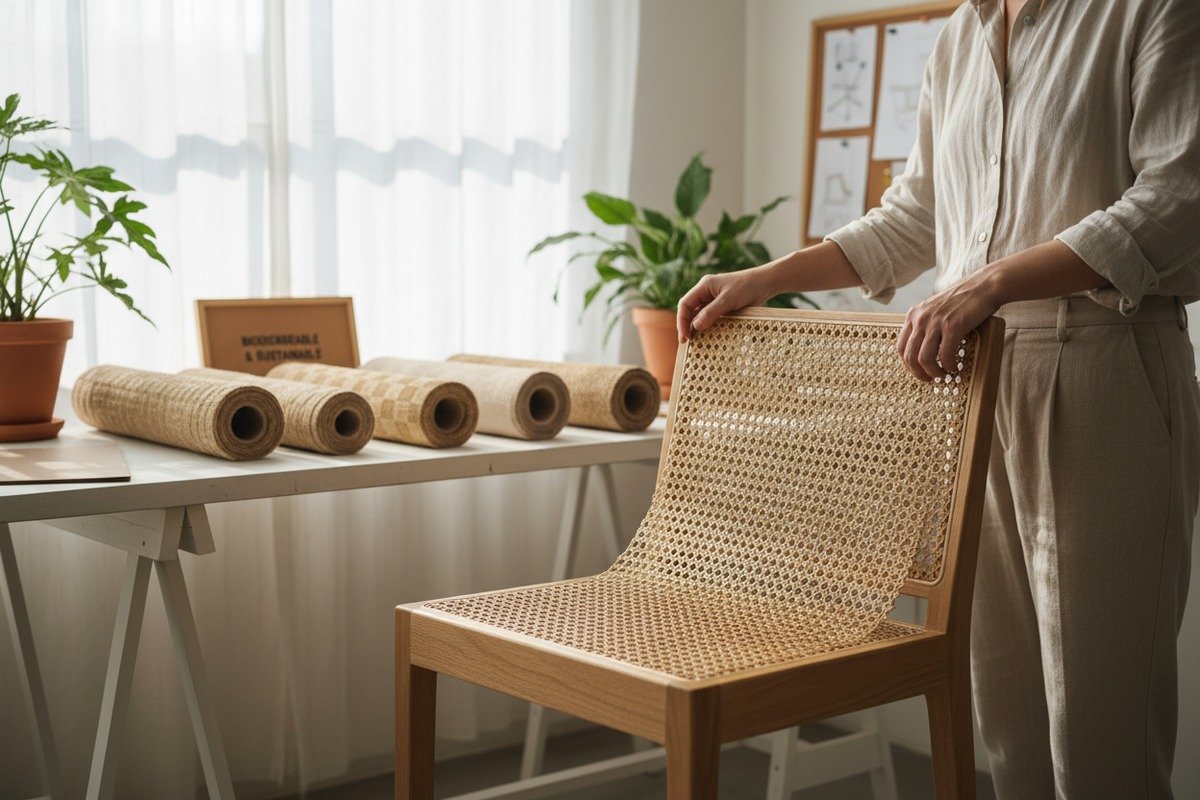
Every week, our sales team fields the same question from furniture factories and wholesalers across Europe, the Middle East, and Southeast Asia: is the rattan cane webbing they are buying genuinely renewable?
Yes, natural rattan cane webbing is both renewable and eco-friendly. Rattan palms mature in just two to seven years, require no deforestation for harvesting, and produce a fully biodegradable material that leaves no toxic residue at the end of its life cycle. Its low processing demands and lightweight nature further reduce its overall carbon footprint.
But the full story is more nuanced than a simple “yes.” The source of the rattan, how it is processed, and the certifications behind it all matter. Below, we break down every angle so you can make informed sourcing decisions.
How can I be sure the rattan cane webbing I source is truly renewable?
Over the past decade, our procurement team in Indonesia has visited dozens of rattan plantations and wild-harvest sites. The difference between a well-managed source and a poorly managed one is stark—and it directly impacts whether your material is genuinely renewable.
To confirm your rattan cane webbing is truly renewable, verify that the supplier can trace the material back to responsibly managed forests or plantations, ideally backed by FSC certification or equivalent green accreditation. Supply chain transparency, documented harvest cycles, and third-party audits are the most reliable indicators of genuine renewability.
Why Rattan Grows Back So Fast
الخيزران هو climbing palm 1. It does not grow like a tree. It sends out long, flexible stems through the forest canopy. These stems can reach full maturity in as little as two to seven years. Compare that to hardwoods like teak or oak, which need 20 to 30 years—sometimes longer. This rapid growth cycle is the foundation of rattan's renewability claim.
When a rattan stem is harvested, the root system stays alive. New stems grow from the same base. This means the plant is not destroyed during harvesting. The forest stays intact. No clear-cutting is needed.
How to Verify Your Supply Chain
Not all rattan is harvested responsibly. Some regions suffer from over-harvesting. Here is a practical checklist we share with our B2B clients:
| Verification Step | ما الذي تبحث عنه | علامة حمراء |
|---|---|---|
| Supplier documentation | Harvest permits, origin certificates | No paperwork available |
| الشهادات | FSC, PEFC 2, or local equivalent | Claims without proof |
| Plantation vs. wild harvest | Managed plantations offer more control | Unregulated wild harvest areas |
| Traceability | Clear chain of custody from forest to factory | Multiple unnamed middlemen |
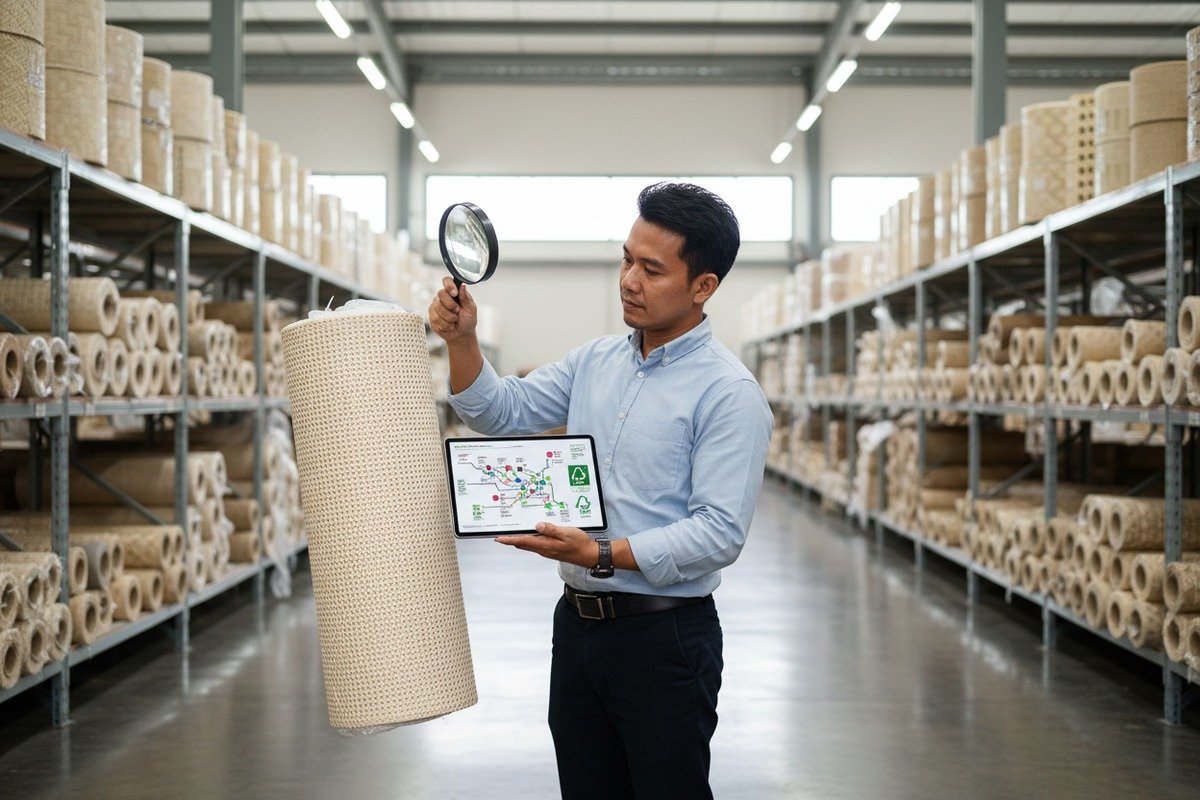
| On-site audit | Willingness to allow factory or plantation visits | Refusal to provide access |
The Role of Certifications
شهادة FSC 3 is the gold standard. It confirms that the rattan was harvested from responsibly managed sources. However, the rattan industry does not yet have a widely adopted, standardized global certification scheme. This is a real gap. At our rattan processing facility in Indonesia, we work directly with local harvesters to maintain traceability even when formal certifications are not available. We document harvest locations, volumes, and regrowth timelines.
Wild Harvest vs. Plantation Rattan
Wild-harvested rattan grows naturally in tropical forest understories. When managed well, this provides economic incentives for local communities to protect forests rather than clear them. Plantation rattan offers more predictable supply and quality. Both can be sustainable, but both can also be mismanaged. The key is transparency.
Some suppliers mix wild and plantation rattan without disclosing this. If your product line depends on sustainability claims, ask your supplier to specify the source type. We always label our shipments with origin data so our wholesale partners can communicate accurately with their own customers.
Why should I choose natural rattan over synthetic materials for my eco-conscious projects?
When we first started producing both natural and synthetic rattan webbing at our Foshan facilities, we assumed clients would always pick synthetic for durability. We were wrong. The shift toward natural rattan has been dramatic, especially among European and Australian buyers.
Natural rattan outperforms synthetic alternatives in eco-conscious projects because it is fully biodegradable, emits no volatile organic compounds, requires far less energy to produce, and supports tropical forest preservation. Synthetic rattan, typically made from PE plastic, offers weather resistance but contributes to plastic pollution and cannot decompose naturally.
Material Comparison at a Glance
Understanding the core differences helps purchasing managers make better decisions. Here is how the two materials stack up:
| الخاصية | Natural Rattan Cane Webbing | Synthetic Rattan (PE Plastic) |
|---|---|---|
| قابل للتحلل البيولوجي | نعم، بالكامل | لا |
| انبعاثات المركبات العضوية المتطايرة | لا شيء (غير معالج) | Possible, depending on production |
| Carbon footprint (production) | منخفض | معتدل إلى مرتفع |
| المتانة في الهواء الطلق | Limited (moisture sensitive) | ممتاز |
| Lifespan indoors | Decades with proper care | Decades |
| End-of-life disposal | Compostable or recyclable | Landfill or specialized recycling |
| الجمالية | Warm, organic, textured | Uniform, less natural feel |
| التكلفة | Competitive | Similar or slightly lower |
The Biodegradability Advantage
This is the single biggest differentiator. Natural rattan cane webbing breaks down naturally. It leaves no toxic residue. When a piece of rattan furniture reaches the end of its useful life, you can compost it, repurpose it, or recycle the material. Synthetic rattan sits in a landfill for hundreds of years. For brands marketing to eco-conscious consumers, this distinction is not just a talking point—it is a measurable environmental benefit.
Indoor Air Quality
Untreated natural rattan does not emit VOCs. المركبات العضوية المتطايرة 5 This matters for furniture used in bedrooms, living rooms, and children's spaces. Many consumers now check for VOC levels before buying. If your product line targets health-conscious or family-oriented markets, natural rattan gives you a clear edge.
When Synthetic Makes Sense
We do not dismiss synthetic rattan entirely. For outdoor furniture exposed to rain, humidity, and UV light, PE-based synthetic rattan performs better. Natural rattan is sensitive to moisture and temperature swings. It can crack or warp in harsh outdoor conditions. The honest answer is: use natural rattan where you can, and synthetic only where you must.
Cost Considerations for Wholesalers
Some buyers assume natural rattan costs significantly more. In reality, the pricing gap is narrow—especially when you buy at wholesale volumes. Our Grade A natural cane webbing is competitively priced against mid-tier synthetic alternatives. And the marketing premium you can charge for a genuinely eco-friendly product often more than offsets any cost difference.
What is the environmental impact of the processing methods used for my rattan webbing?
Running our own rattan processing facility in Indonesia taught us something important: the raw material can be perfectly sustainable, but bad processing can undo all of that. The chemicals, energy, and waste generated during manufacturing all count.
The environmental impact of rattan processing varies significantly. Minimal processing—peeling, splitting, drying, and weaving—keeps the carbon footprint low and avoids harmful chemicals. However, some manufacturers apply synthetic finishes, chemical bleaches, or petroleum-based coatings that introduce VOCs, reduce biodegradability, and compromise the material's eco-friendly credentials.

How Natural Rattan Webbing Is Made
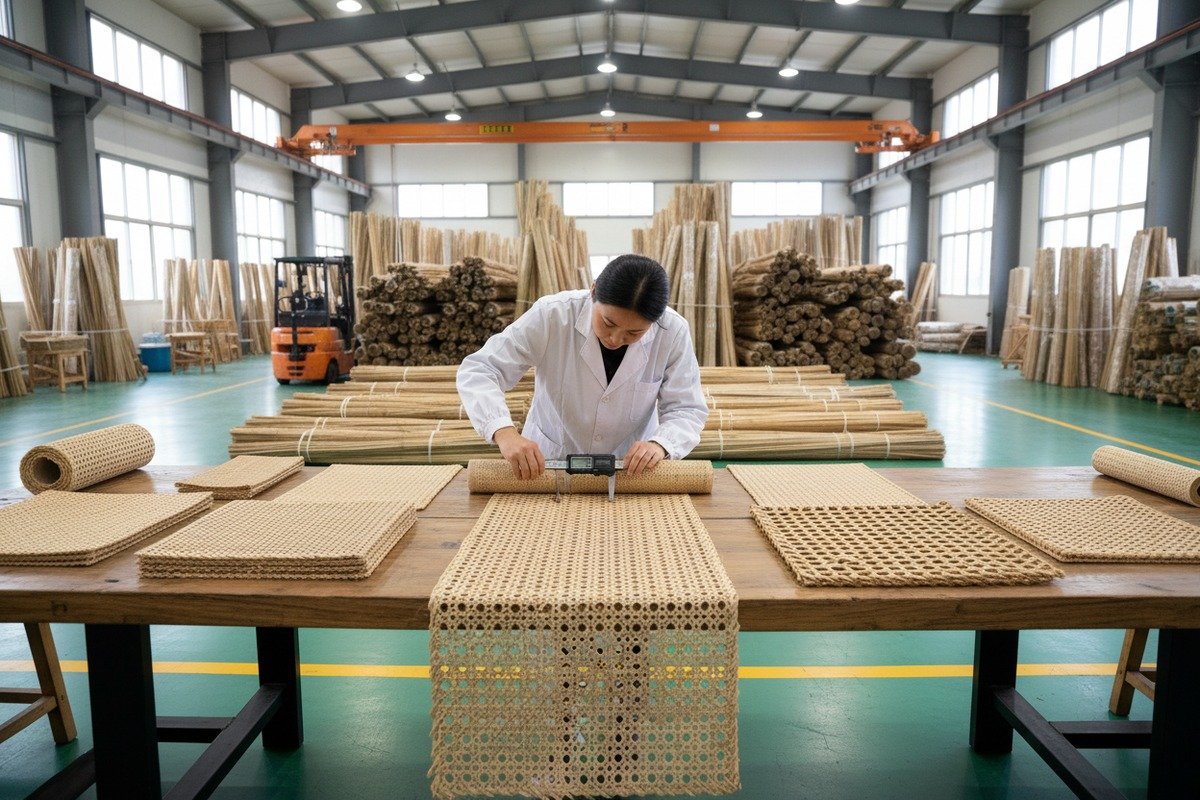
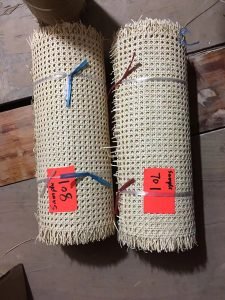
The basic process is straightforward. The outer skin of the rattan stem is peeled off by machines. This skin is cut into thin, flexible strips. The strips are dried—usually sun-dried in traditional operations. Then they are woven into webbing sheets or rolls. In this basic form, no chemicals are needed. No heavy machinery is required. Energy consumption is minimal.
Where Problems Can Arise
Problems appear when manufacturers add treatments. Here are the most common processing steps that impact sustainability:
| Processing Step | التأثير البيئي | Eco-Friendly Alternative |
|---|---|---|
| التبييض الكيميائي | Introduces chlorine or peroxide into wastewater | Sun bleaching or light hydrogen peroxide wash |
| Synthetic lacquer coating | Adds VOCs, reduces biodegradability | Natural oil finishes (linseed, tung oil) |
| Fumigation (anti-mold) | Uses sulfur dioxide or methyl bromide | Heat treatment or controlled drying |
| Dyeing with synthetic dyes | Wastewater contamination | Natural or water-based dyes |
| Adhesive bonding | Petroleum-based glues emit VOCs | Water-based or plant-based adhesives |
At our facility, we use heat treatment instead of chemical fumigation for mold prevention. We offer uncoated and natural oil-finished options for clients who need to maintain full biodegradability. These choices cost a little more, but they preserve the material's environmental integrity.
Transportation Footprint
Rattan grows in tropical regions—primarily Indonesia, Vietnam, the Philippines, and parts of Africa. If your factory or warehouse is in Europe or North America, the material must be shipped thousands of miles. This transportation adds to the carbon footprint.
However, rattan is lightweight. A 20-foot container of rattan webbing weighs far less than the same container filled with hardwood panels or metal components. Lower weight means lower fuel consumption per unit. We optimize container loading to maximize volume efficiency, which further reduces per-unit shipping emissions.
What to Ask Your Supplier
If processing impact matters to your brand, ask these questions before placing an order:
- What chemicals are used during processing?
- How is mold prevention handled?
- Are finishes natural or synthetic?
- What is done with processing wastewater?
- Can the supplier provide material safety data sheets 7?
These questions are not unreasonable. Any responsible manufacturer should be able to answer them clearly. We provide processing documentation to all our wholesale and OEM clients upon request.
How does incorporating natural rattan into my product line improve my brand's sustainability rating?
We have seen this play out with our clients firsthand. A furniture factory in the Netherlands switched from MDF panels with printed rattan patterns to genuine natural cane webbing inserts. Within one season, their sustainability score from a third-party auditor improved measurably—and their sales rose.
Incorporating natural rattan into your product line improves your brand's sustainability rating by reducing reliance on non-renewable materials, lowering your products' carbon footprint, supporting biodegradable end-of-life disposal, and providing verifiable eco-credentials that resonate with increasingly environmentally aware consumers and third-party rating agencies.
What Sustainability Ratings Actually Measure
Third-party sustainability assessments look at several factors. Natural rattan scores well across most of them:
- قابلية تجديد المواد الخام: Rattan's two-to-seven-year growth cycle earns high marks.
- Carbon footprint: Lightweight material with low processing energy.
- قابلية التحلل البيولوجي: Full marks for untreated natural rattan.
- Supply chain ethics: Points awarded for supporting rural communities in developing regions.
- Toxicity: No VOCs in untreated form.
Consumer Demand Is Real
This is not just about certifications on paper. Consumer behavior is shifting. Buyers—especially in Europe, Australia, and North America—actively seek products with genuine eco-friendly attributes. A 2023 survey by NielsenIQ 8 found that products with sustainability claims grew 1.7 times faster than those without. Rattan gives your product line a tangible, visible, and authentic sustainability story.
The Aesthetic Advantage
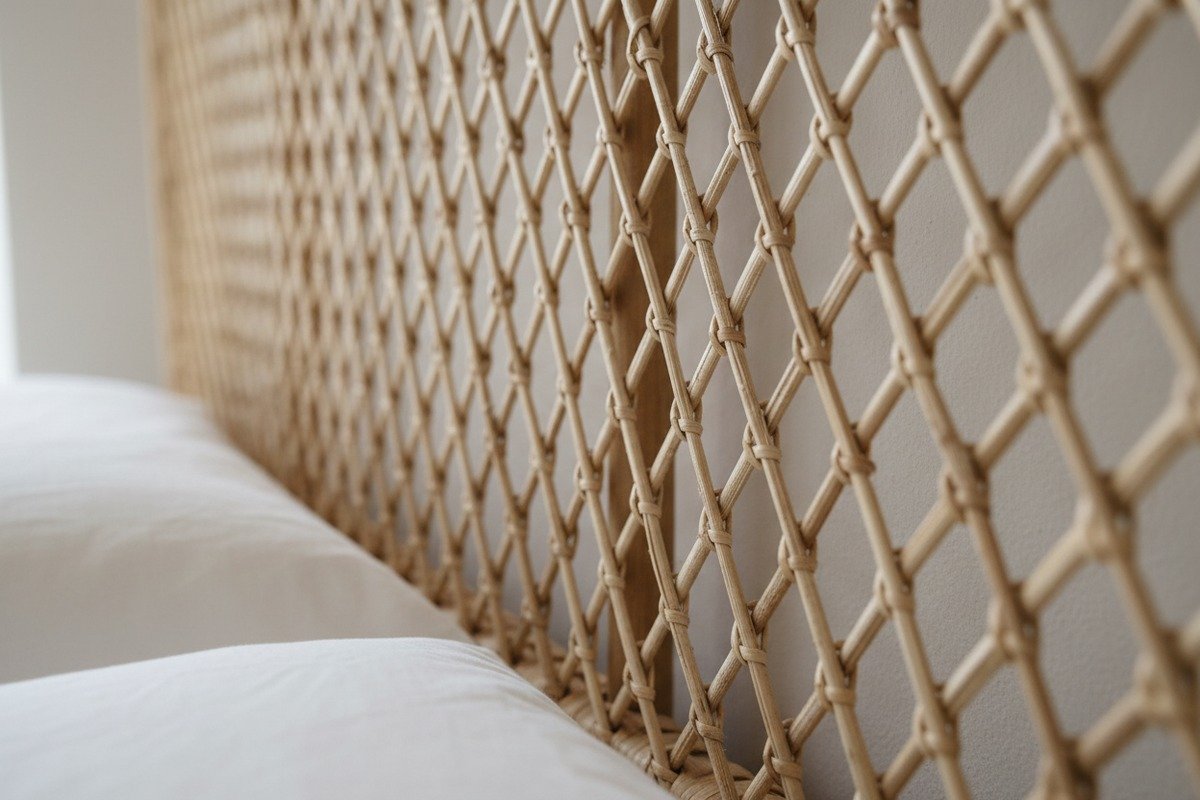
Sustainability does not have to mean boring. Natural rattan cane webbing adds warmth, texture, and character to furniture. The organic look fits mid-century modern, boho, Scandinavian, and farmhouse styles. It works in cabinet doors, headboards, room dividers, wall panels, and chair seats. This versatility means you can use one material across multiple product categories, simplifying your supply chain and reducing waste from using many different materials.
Building a Credible Sustainability Story
Here are practical steps to turn your rattan sourcing into a brand asset:
- Document your supply chain. Know where your rattan comes from and how it is processed.
- Request certifications. FSC or equivalent. If not available, request origin documentation and processing details.
- Communicate transparently. Share the story on your product pages. Include material origin, processing method, and end-of-life options.
- Avoid greenwashing. Do not claim "100% sustainable" if your rattan has synthetic coatings or unknown origins. Be honest about trade-offs.
- Partner with your supplier. We work with clients to create material fact sheets and sustainability documentation they can use in their own marketing and compliance reporting.
القيمة طويلة الأجل
Properly maintained rattan webbing lasts for decades. This longevity reduces replacement frequency. Fewer replacements mean less material consumption, less manufacturing energy, and less waste. For brands that calculate lifecycle sustainability metrics 9, this durability is a significant advantage. A rattan-paneled cabinet door that lasts 15 years has a fraction of the environmental impact of a synthetic alternative replaced every five years.
Competitive Positioning
More retailers and distributors now require sustainability data from their suppliers. If you are a furniture material wholesaler or a factory supplying to major retail chains, having natural rattan in your catalog strengthens your position. It shows you are ahead of regulatory trends and consumer expectations. We have clients who won new contracts specifically because they could supply verified natural rattan webbing with full traceability.
خاتمة
Natural rattan cane webbing is genuinely renewable and eco-friendly—but only when sourced responsibly, processed cleanly, and supported by transparent documentation from your supplier.
ملاحظات سفلية
1. Replaced with a working FAO document on rattan taxonomy, biology, and ecology, which describes rattan as a climbing palm. ↩︎
2. Official site for the Programme for the Endorsement of Forest Certification, another forestry standard. ↩︎
3. Official source for Forest Stewardship Council certification, a key standard for sustainable forestry. ↩︎
4. Provides general botanical information and characteristics of rattan palms. ↩︎
5. Defines VOCs and explains their impact on indoor air quality and health. ↩︎
6. Provides information on the environmental issue and impacts of plastic pollution. ↩︎
7. Explains the purpose and importance of Material Safety Data Sheets (MSDS/SDS) for chemical safety. ↩︎
8. Supports claims about consumer demand and purchasing behavior related to sustainability. ↩︎
9. Defines Life Cycle Assessment (LCA) as a tool for measuring environmental impact. ↩︎

 English
  Español de México
  العربية
  Deutsch
  Français
  Русский