
I see buyers ask for one solution for all climates and tastes. That fails fast. I match rattan grade, weave, and finish to each market so products last and sell.
Rattan webbing works best when I pick Grade C for strength, Grade B for visible parts, and plastic options for harsh climates. I tune color and pattern to each region’s style.
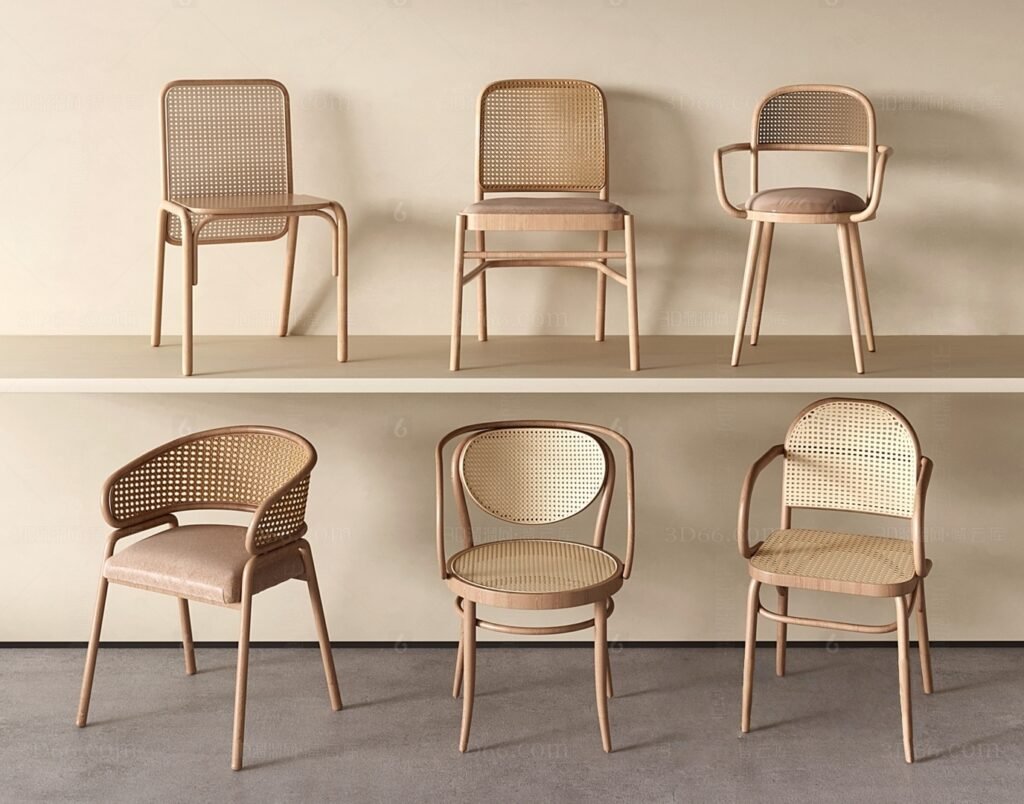
I will share how I build SKUs for the Middle East, Russia, and Central Asia. I will also share when I switch to outdoor plastic webbing to cut labor and extend life.
In Middle East market?
Heat, sun, and dust punish natural rattan. Projects still want light, airy panels and calm textures in neutral tones.
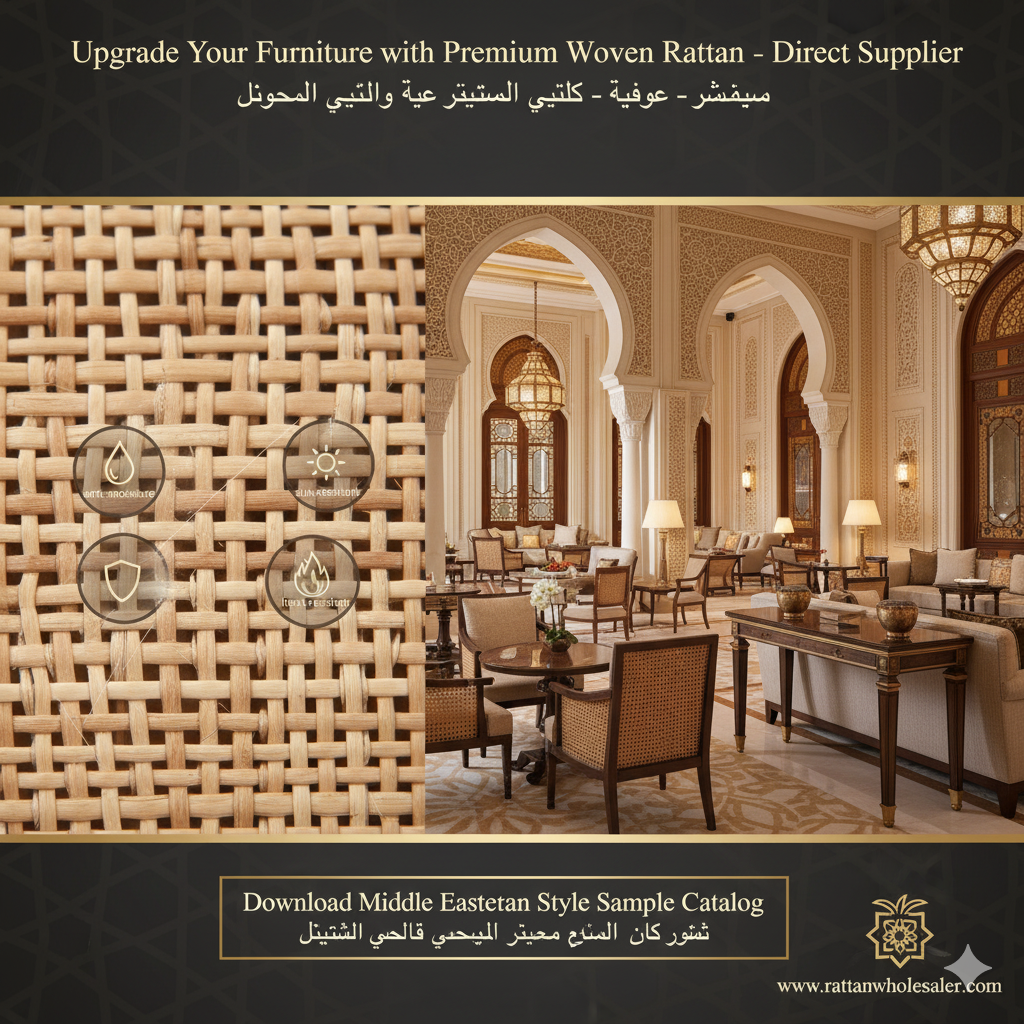
I use outdoor plastic cane webbing for most seating and screens. I keep natural rattan for indoor touch points. I choose light beiges and warm sands. I specify UV-safe finishes and KD frames.
Dive deeper: Middle East setup and selections
In the Middle East, I plan first for sun and heat. I choose outdoor plastic rattan webbing for any piece that sees a window, terrace, or lobby with high sun. I ask for UV 2000+ hour test data and 70°C heat tolerance. I keep frames in solid wood or aluminum. I use stainless steel fasteners. I leave a 5mm expansion gap for panels. For indoor dining chairs, I use Grade C chair cane for seats under a dark stain, because the green peel hides well and the fibers hold. For cabinet doors and wall panels in hotels, I pick pre-woven plastic mats in matte beige, desert sand, or tea brown. These colors match marble and light woods used in the region. I mix webbing with glass or aluminum trims to echo modern interiors. I ship KD to cut freight and make site work easy. Cleaning is simple with soft soap and water, which matters in dusty cities.
Suggested specs table
| Use Case | Material Choice | Grade/Type | Color/Finish |
|---|---|---|---|
| Poolside loungers | Outdoor plastic cane panels | UV + heat resistant | Sand, teak, coffee |
| Lobby screens | Pre-woven plastic panels | Tight weave | Matte beige |
| Indoor dining chairs | Natural chair cane for seats | الدرجة ج | Dark walnut stain |
| Boutique café cabinets | Cane webbing doors | Plastic or Grade B | Light oak tone |
| Terrace armchairs | Mixed natural wrap + plastic back | Plastic panel + C core | Coffee brown, matte |
In Russia market?
Cold winters and dry indoor heat stress natural cane. Buyers like darker woods and classic forms with a modern edge.
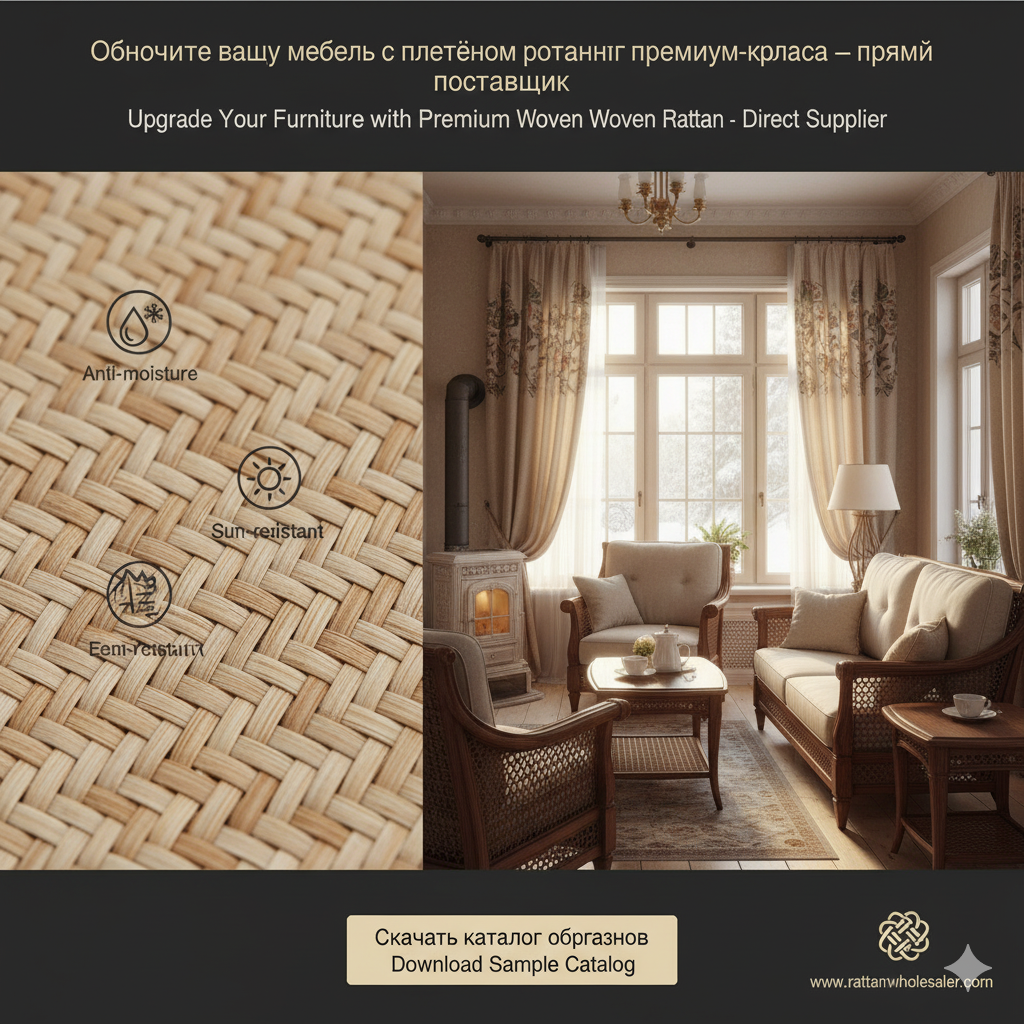
I use natural Grade C for strength under dark stain. I keep Grade B for visible backs and arms. I add plastic webbing where humidity swings are big. I focus on tight weaves for warmth.
Dive deeper: Russia setup and selections
In Russia, I design for seasonal swings. Winter brings dry indoor air from heating. Summer can add humidity. Natural rattan moves with moisture, so I balance the build. I use Grade C for frames and seats because it is strong and cost-smart. I stain dark walnut or black to hide peel and to match the market taste for deeper tones. For cabinet doors and headboards, I use Grade B cane webbing for a cleaner face. I seal both sides of the panel to slow moisture exchange. For large projects in malls or offices, I switch to plastic rattan webbing in matte finishes. This keeps color uniform and reduces cracking risk in overheated spaces. I use tighter patterns and square lattice to feel warmer and more solid, which Russian buyers like in winter interiors. I specify felt pads and stable substrates to prevent panel buzz or rattle. I ship in winter-safe packaging to avoid shock cracks on arrival.
Suggested specs table
| Use Case | Material Choice | Grade/Type | Color/Finish |
|---|---|---|---|
| Dining chair seats | Natural chair cane | الدرجة ج | Black/dark walnut |
| إدخالات أبواب الخزائن | Cane webbing | الدرجة ب | Medium brown |
| Office screens | Plastic cane panels | Matte, tight | Charcoal, coffee |
| Home headboards | Cane mat or square lattice | B or Plastic | Walnut, low gloss |
| Café bar fronts | Mixed rattan + wood | Plastic panel | Dark oak tone |
In Central Asia market?
Temperature swings are large and logistics are long. Buyers want durable pieces with natural looks and simple service.
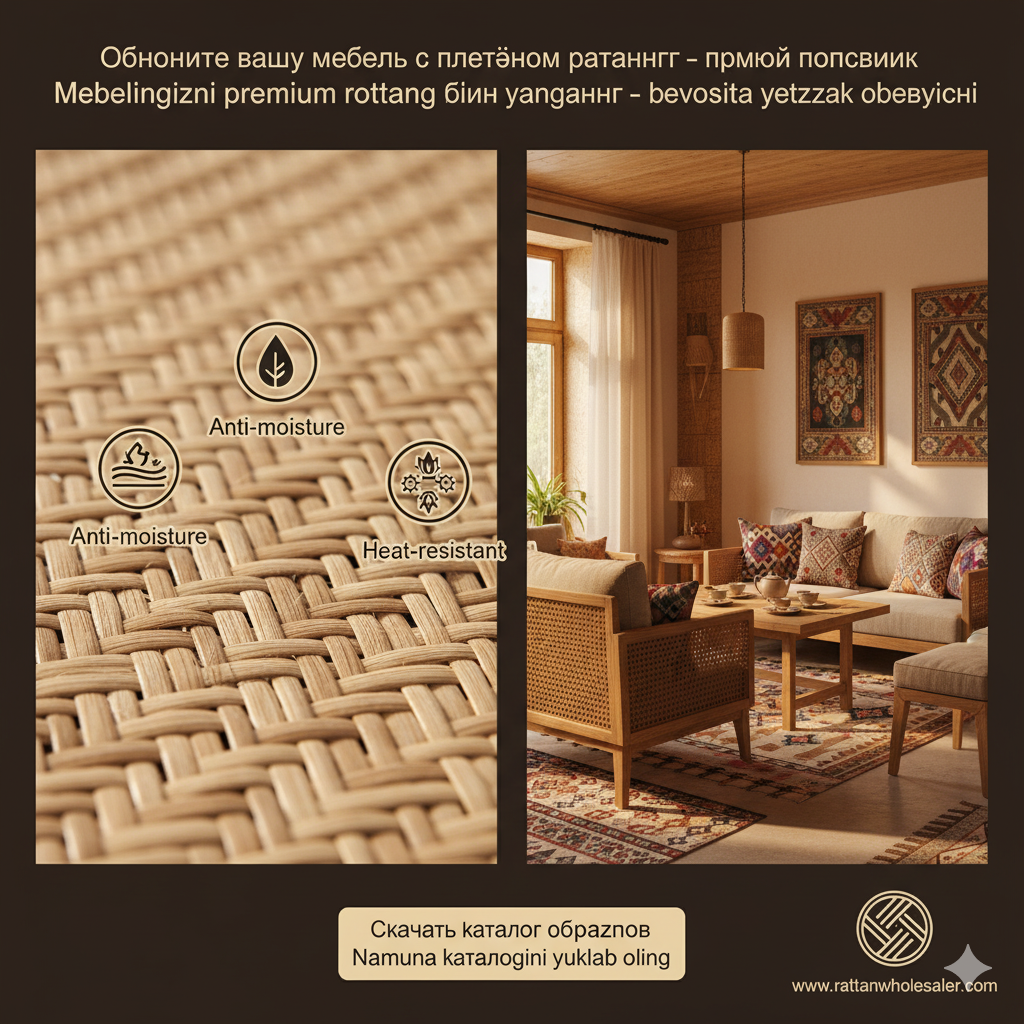
I choose Grade C for structure. I use pre-woven plastic panels for large faces to control cracking. I keep colors in natural straw, light walnut, and tea brown. I ship KD to cut freight.
Dive deeper: Central Asia setup and selections
In Central Asia, I focus on durability and transport. Roads are long and climates shift from hot days to cold nights. Natural rattan can crack when humidity jumps, so I limit large natural panels. I use pre-woven plastic rattan for doors, screens, and headboards. I keep natural Grade C for chair seats and wraps because it handles tension well. I select square or hex weaves that allow airflow in dry regions. I avoid glossy finishes. I use matte coats that hide dust and minor scratches. For cafés and hotels, I recommend panels that can be removed and replaced on site with simple tools. I standardize sizes to speed maintenance. I mark each KD frame with a simple code. I pack with corner guards and foam to stop vibration damage. I offer spare panels in the first shipment. This makes local service easy and keeps projects running with low downtime.
Suggested specs table
| Use Case | Material Choice | Grade/Type | Color/Finish |
|---|---|---|---|
| Hotel room headboards | Pre-woven plastic panels | Tight weave | Straw, tea brown |
| Restaurant chairs | Natural chair cane seats | الدرجة ج | Dark stain |
| Corridor wall panels | Plastic rattan webbing panel | KD, screw-fixed | Light walnut |
| Home cabinets | Cane webbing inserts | B or Plastic | Matte clear |
| Outdoor cafés | Outdoor plastic cane webbing | UV + heat resistant | Coffee, bamboo tone |
What grades and materials should I pick across these markets?
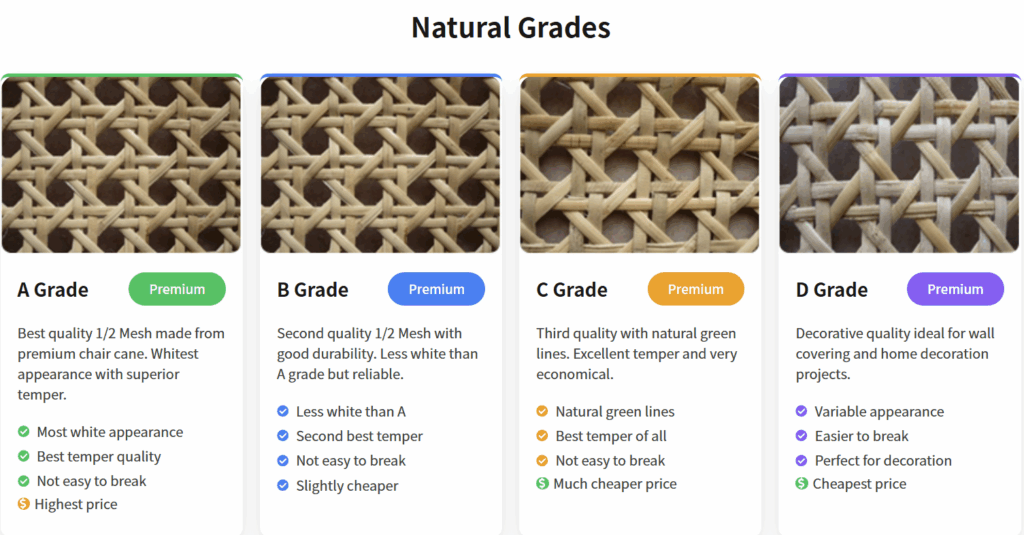
Many buyers overpay for Grade A or break parts with Grade D. I choose by load and visibility. I use plastic when climate or color control must be perfect.
Use Grade C for seats and frames. Use Grade B for visible faces and arms. Use Grade D only for decor. Use plastic webbing for large panels, tight timelines, and harsh climates.
Dive deeper: Cross-market material logic
I always start with function. If a part takes load, I use Grade C. If a part is visible and not under load, I use Grade B or plastic. If a part is only decorative, I use Grade D. Since 2018, raw Indonesian cane supply has been tight and costs are high. Many clients cannot accept long lead times. I developed plastic rattan cane webbing that costs half of natural. I now carry 15+ colors and 20+ patterns. I mix color and weave to match project palettes: rattan webbing + wood, rattan webbing + glass, and rattan webbing + aluminum. In 2025, I added 10+ outdoor plastic webbing types with test reports for UV and heat. Outdoor weaving used to burn labor. With pre-woven panels, I cut hand weaving by up to 80%. This works well for KD outdoor furniture so shipping stays low and assembly is fast in all three markets.
Quick selection table
| Part/Condition | Pick This | Why |
|---|---|---|
| Load-bearing seats/backs | Grade C natural | Strong, cost-smart |
| Visible cabinet faces | Grade B or Plastic | Cleaner look |
| Large hotel orders | Plastic panels | Color repeat, fast install |
| High UV or heat | Outdoor plastic | Long life, low maintenance |
| Decor walls and ceilings | Grade D | Beautiful, low load |
خاتمة
I tune rattan webbing to each market: plastic outdoors and large panels, Grade C where strength matters, Grade B where faces show. I match colors and ship KD to save cost.
 English
  Español de México
  العربية
  Deutsch
  Français
  Русский