
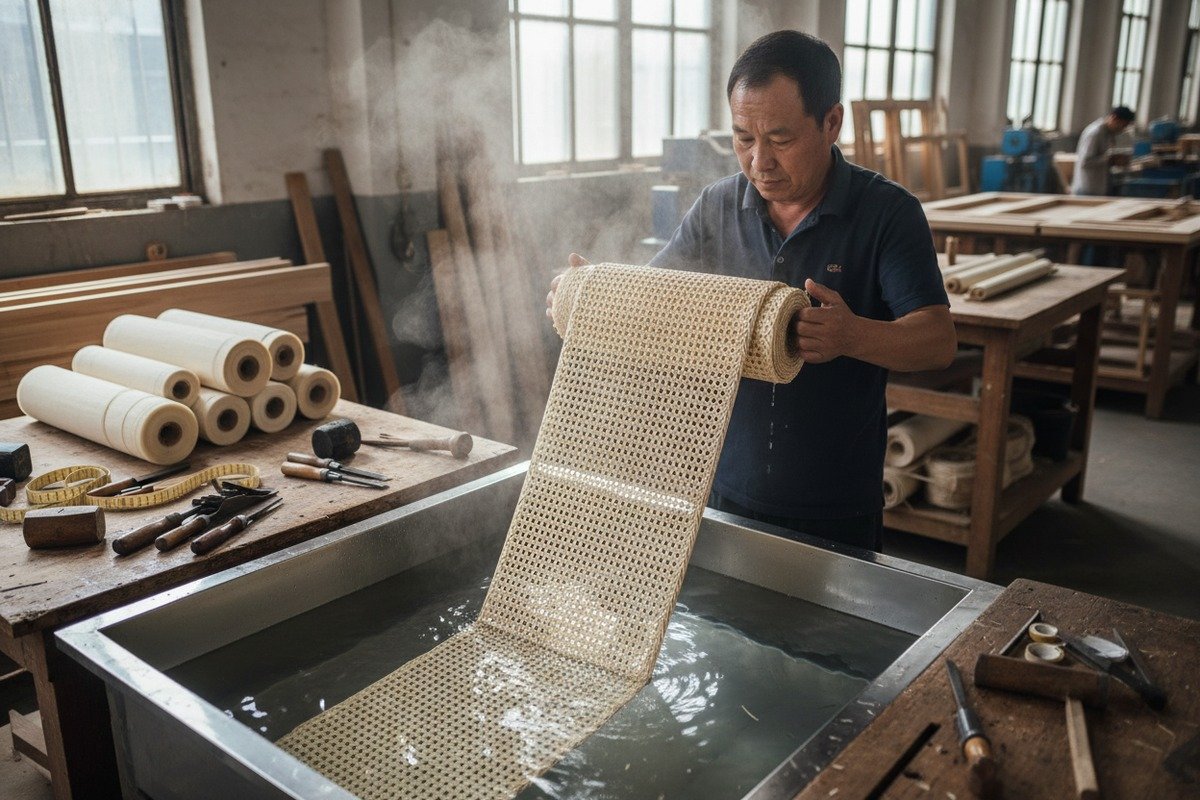
Every year, our production team in Foshan fields hundreds of questions from furniture factories and wholesalers who struggle with sagging, cracking, or uneven cane webbing after installation. The root cause is almost always the same — they skipped the soaking step or did it incorrectly.
Yes, you should soak natural rattan cane webbing before installation. Soaking in warm water for 15 to 30 minutes makes the cane pliable, prevents cracking, and allows the material to shrink as it dries — creating a taut, professional finish. Synthetic rattan webbing does not need soaking.
This guide breaks down exactly how long to soak, when soaking helps or hurts, and how to tell if your specific webbing needs it. Let’s walk through each question step by step.
How long should I soak my rattan cane webbing to make it pliable?
One of the most common calls we get at our Nanhai warehouse is from buyers asking why their cane webbing cracked during stapling. Nine times out of ten, they either soaked it too briefly or not at all.
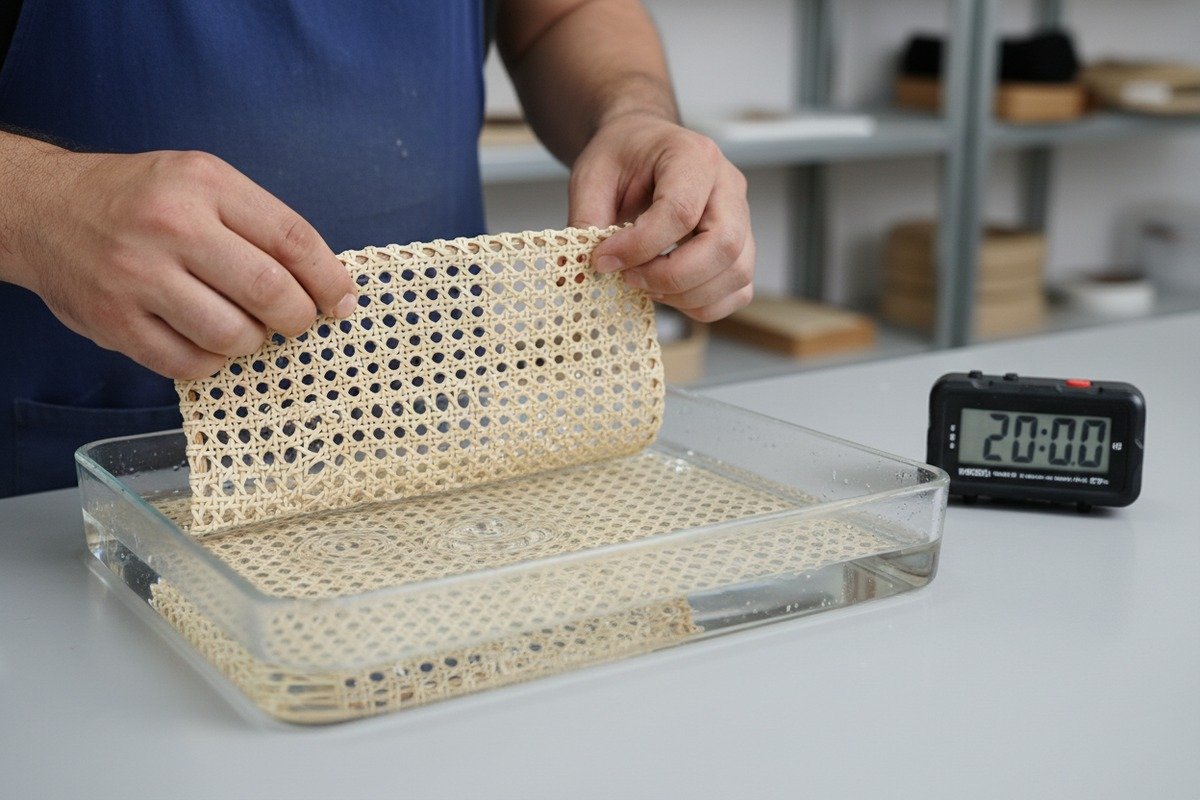
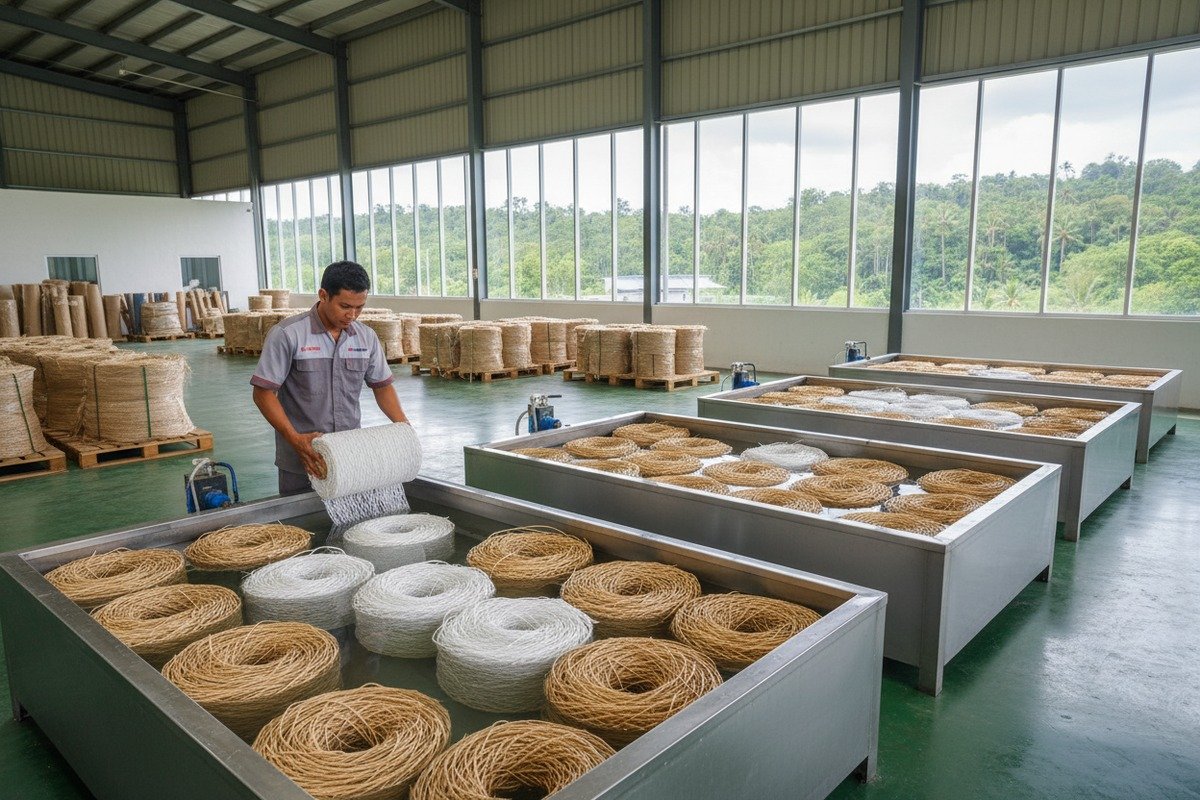
Soak natural rattan cane webbing in warm water for 15 to 30 minutes to achieve ideal pliability. For thicker or extremely stiff material, you may extend soaking up to 3 to 4 hours. Always pat the webbing lightly dry before fitting it to your frame while still damp.
Why Warm Water Matters
الخيزران هو مادة مسترطبة 1. That means it absorbs and releases moisture from its environment. When you submerge natural cane in warm water, the fibers swell and soften. This makes the webbing flexible enough to stretch, bend, and conform to curved or flat frames without snapping.
Cold water works too, but it takes longer. Warm water opens the fiber structure faster. Think of it like soaking dried pasta — warm water speeds up the process.
The Standard Soak Time
For most natural rattan cane webbing — including the classic شبكة سداسية مفتوحة "نسيج الراديو" 2 and dense square basketweave patterns we supply — 15 to 30 minutes in warm water is enough. The cane should feel supple and easy to bend without resistance.
Here is a quick reference:
| Webbing Type | وقت النقع الموصى به | درجة حرارة الماء |
|---|---|---|
| Thin open-mesh cane (radio weave) | 15–20 minutes | دافئ (ليس ساخنًا) |
| Medium basketweave cane | 20-30 دقيقة | دافئ |
| Thick or very stiff natural cane | 30 minutes – 4 hours | دافئ |
| Bleached rattan cane | 15–25 minutes | Lukewarm to warm |
| Synthetic / PE plastic webbing | No soaking needed | N/A |
How to Soak Properly
Roll your webbing loosely and submerge it in a bathtub, large tray, or even a section of PVC pipe if you only need a narrow strip. Make sure the entire piece is underwater. Don't fold it — folding creates creases that are hard to remove.
After soaking, lift the webbing out and pat it with a clean towel. You want it damp, not dripping. Install it immediately while it is still wet. This is critical. If you let it dry before installation, you lose all the benefits of soaking.
A Word on Spline
If you are using the spline-and-groove method 3, the spline itself also needs a brief soak — but only 5 to 15 minutes. Over-soaking the spline makes it too soft to hold firmly in the groove.
Will soaking the rattan help me achieve a tighter tension on my furniture?
When we ship natural cane webbing to furniture factories in the Netherlands and Australia, we always include a note about soaking for tension. It surprises many first-time buyers how much difference this one step makes.
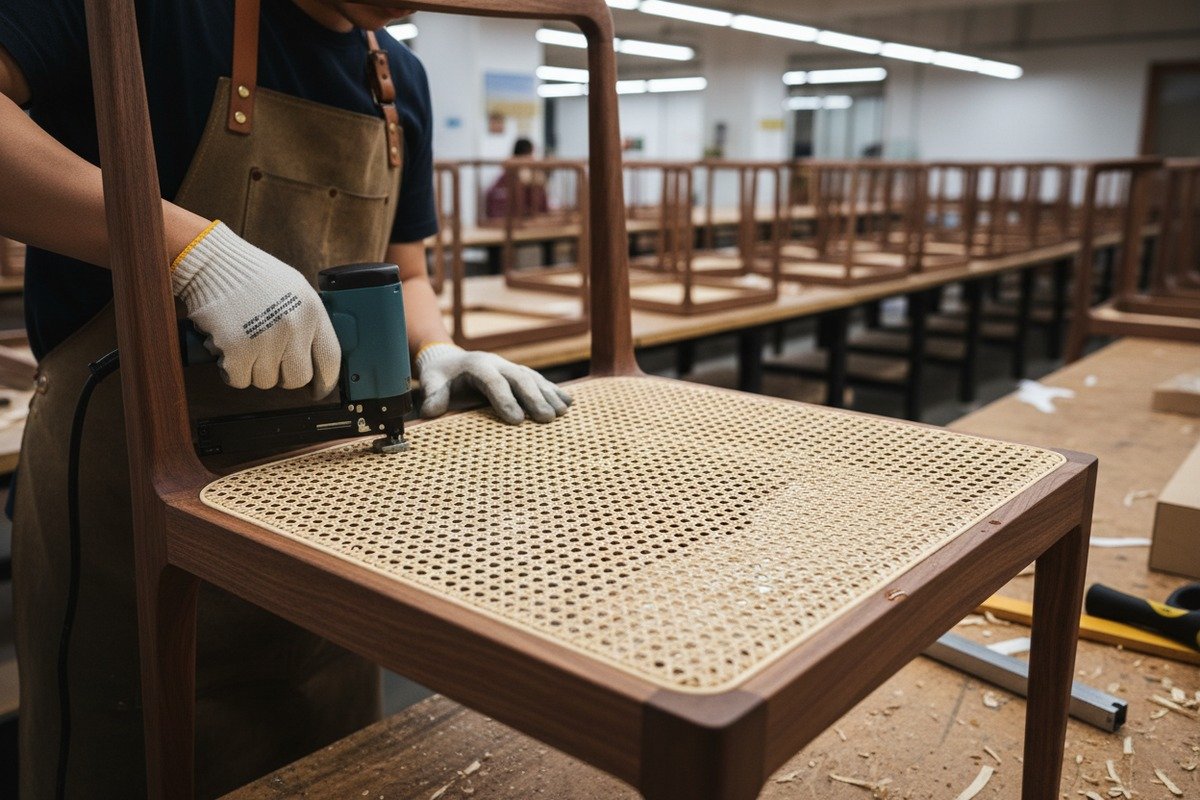
Absolutely. Soaking is the key to achieving tight, sag-free tension. Wet rattan cane expands slightly during soaking, and as it dries after installation, it contracts and shrinks — pulling itself taut across the frame. This natural shrinkage creates a drum-like firmness that dry installation simply cannot match.
The Science Behind the Tension
Natural rattan cane is made up of plant fibers 4 that respond to moisture. When soaked, the fibers absorb water and expand. You stretch this expanded material across your frame and secure it. Then, as the water evaporates over the next 24 to 48 hours, the fibers contract. This contraction pulls the webbing tighter than you could ever achieve by hand alone.
Professional restorers 5 estimate that wet installation tightens the final result by 20 to 30 percent compared to dry installation. That is a significant difference, especially on chair seats and cabinet doors where sagging is visible and annoying.
Wet Installation vs. Dry Installation
Here is a comparison to help you decide:
| عامل | Wet Installation (Soaked) | Dry Installation (No Soak) |
|---|---|---|
| Final tension | Tight and taut after drying | Loose, often sags over time |
| Risk of cracking | منخفض جدًا | High — dry cane snaps easily |
| Ease of stretching | Easy, cane bends freely | Difficult, cane resists bending |
| Professional finish | نعم | Rarely |
| Recommended for natural cane | Always | Only for synthetic webbing |
| Drying time after install | 24–48 hours | N/A |
Tips for Maximum Tension
- Pull evenly. When stretching soaked cane across a frame, pull from the center outward. This distributes tension evenly and prevents one side from being tighter than the other.
- Use clamps or wedges. Hold the cane in place while it dries. For spline installations, press the cane into the groove with wedges before tapping in the spline.
- Staple at close intervals. If you are using a staple gun, place staples every 1 to 1.5 inches along the frame edge. This prevents the cane from pulling free as it shrinks.
- Dry in a cool room. Avoid heat sources like radiators, hair dryers, or direct sunlight. Heat causes uneven drying, which leads to warping and weak spots. Let the cane air-dry naturally in a cool, well-ventilated space.
What About Synthetic Webbing?
لدينا synthetic PE plastic rattan webbing 6 — the kind with chevron or wave patterns — does not shrink when it dries because it does not absorb water. It is manufactured to be pliable from the start. So for synthetic webbing, you install it dry. The tension you set during stapling is the tension you get. There is no bonus tightening effect.
This is one of the key trade-offs between natural and synthetic cane. Natural cane rewards patience with a superior finish. Synthetic cane gives you convenience and consistency.
What happens if I soak my rattan cane for too long before installation?
We learned this lesson the hard way in our own production facility. Early on, a batch of bleached rattan cane was left in a soaking tank overnight by accident. The next morning, the strands were dark, soft, and tore easily.
Over-soaking natural rattan cane webbing weakens the fibers, causes discoloration, and can lead to a poor installation. Soaking beyond 30 to 60 minutes for standard cane risks darkening the material, leaching natural tannins, and making the strands so soft they lose structural integrity and tear during stretching.
Signs You Have Over-Soaked
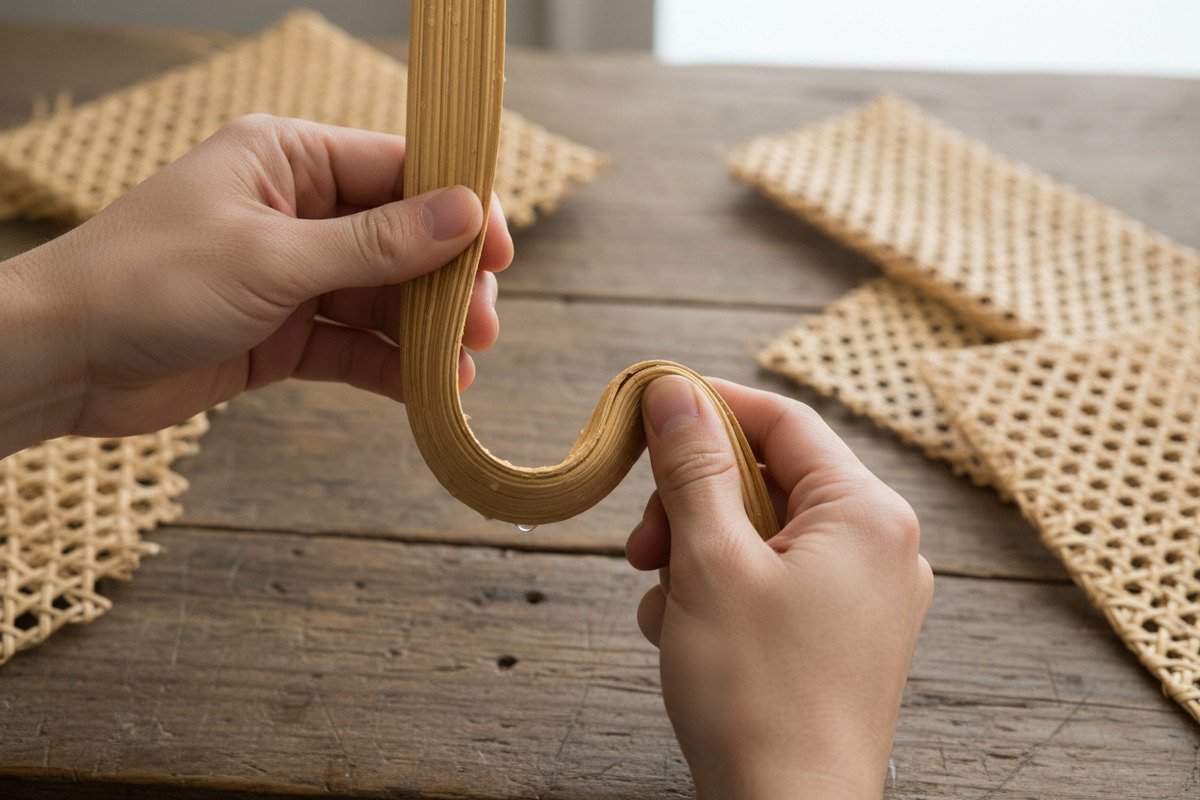
How do you know if you have gone too far? Look for these signs:
- Color change. The cane turns noticeably darker — from light beige to a grayish or yellowish-brown tone. This happens because water leaches out natural tannins 7 from the cane fibers.
- Mushy texture. The cane feels overly soft and limp. It should be pliable, not mushy. You want it to bend easily but still hold its shape when you let go.
- Easy tearing. If you can tear a strand with light finger pressure, it has been soaked too long. Properly soaked cane is flexible but still strong.
- Swollen weave. The pattern of the weave looks stretched or distorted because the fibers have absorbed too much water.
Over-Soaking Risks by Duration
| Soak Duration | Condition of Natural Cane | مستوى الخطر |
|---|---|---|
| 0–15 minutes | Slightly pliable, still somewhat stiff | Low — may need more time |
| 15–30 دقيقة | Ideal pliability, good color retention | None — recommended range |
| 30–60 دقيقة | Very pliable, slight color change possible | Moderate — acceptable for thick cane |
| 1–4 hours | Soft, minor darkening, still usable for heavy-duty installs | معتدل إلى مرتفع |
| 4+ hours | Weakened fibers, noticeable discoloration, tearing risk | High — not recommended |
| Overnight | Structural damage, significant darkening, unusable | Very high — discard and start fresh |
Water Chemistry Matters
Something most guides overlook is water quality. In our experience supplying to buyers across different regions — from Saudi Arabia to Spain — we have noticed that hard water 8 (high mineral content) can affect soaking results. Minerals in hard water may deposit on the cane surface, leaving a slight residue or altering the absorption rate. If your tap water is very hard, consider using filtered or distilled water for soaking.
What To Do If You Over-Soak
If you catch it early — say, you soaked for 2 hours when 30 minutes was enough — remove the cane immediately and let it air-dry for 15 to 20 minutes. It may still be usable if it has not started tearing. Test a small section by stretching it gently. If it holds without breaking, proceed with installation but work quickly.
If the cane has been soaking overnight or longer, it is best to discard it and use a fresh piece. Trying to install weakened cane leads to sagging and failure within weeks. The cost of new webbing is far less than the cost of redoing an entire project.
Bleached Rattan Is More Sensitive
Our bleached rattan cane webbing, which has already been chemically treated to achieve its lighter color, is more sensitive to over-soaking. The bleaching process 9 slightly weakens the outer layer of the fibers. So for bleached cane, stick to the lower end of the soaking range — 15 to 20 minutes maximum. And use lukewarm water, not hot.
How can I tell if the rattan webbing I bought needs to be soaked?
When we prepare shipments at our Foshan headquarters, we label every roll clearly — natural or synthetic. But not every supplier does this. And once the packaging is open, it can be confusing.
The simplest way to tell is by material type. Natural rattan cane webbing — made from real plant fibers — always needs soaking before installation. Synthetic or PE plastic webbing, which mimics the look of rattan but is made from plastic, does not need soaking and should be installed dry.
Visual and Tactile Identification
If you are unsure whether your webbing is natural or synthetic, here are some quick tests:
Look at the color. Natural rattan has organic variation — some strands are slightly darker or lighter than others. You will see subtle imperfections, knots, and shifts in tone. Synthetic webbing has uniform, consistent color throughout.
Feel the texture. Natural cane feels fibrous and slightly rough. It has a matte finish with tiny ridges along each strand. Synthetic webbing feels smoother — almost waxy or plasticky — and may have a slight sheen.
Try bending a strand. Dry natural rattan resists bending and may crack or splinter if forced. Dry synthetic webbing bends easily and bounces back without damage. This is the clearest test. If a dry strand bends without any resistance, it is likely synthetic and does not need soaking.
Smell it. Natural rattan has a mild, earthy, woody smell. Synthetic webbing smells like plastic or has no scent at all.
The Burn Test (Use With Caution)
If you have a small scrap piece, you can do a burn test 10. Hold a flame to the edge of a single strand:
- خيزران طبيعي smells like burning wood or grass. It chars and turns to ash.
- Synthetic webbing melts, shrinks away from the flame, and smells like burning plastic.
Only do this with a scrap piece, in a well-ventilated area, and with caution.
When Natural Cane Might Not Need Full Soaking
There are rare situations where you might skip or reduce soaking:
- Dry gluing method. If you are using contact adhesive to glue cane webbing directly onto a panel (common in decorative applications), the cane should be dry. Moisture interferes with adhesive bonding. In this case, you sacrifice the tightening effect of drying but gain a clean glue bond.
- Very humid environments. In tropical climates — like those of our buyers in Thailand and the Philippines — the ambient humidity keeps natural cane somewhat pliable even without soaking. A light misting with a spray bottle may be enough instead of full submersion.
- Pre-conditioned cane. Some suppliers pre-condition their cane webbing with moisture-retaining treatments. If your cane feels flexible out of the box, a shorter soak (10 to 15 minutes) may suffice.
Climate Considerations
In extremely dry climates — such as in parts of Saudi Arabia or inland Australia — natural cane arriving from our Indonesian processing facility may be particularly stiff and dry from the shipping journey. In these cases, you might need to soak closer to the 30-minute mark, or even up to an hour, and mist the cane lightly during installation to prevent premature drying.
After removing the cane from water, let it sit in the installation room for 5 to 10 minutes. This brief acclimation period helps the cane adjust to the room's temperature and humidity. It leads to more predictable shrinkage and a more stable final tension.
Quick Decision Guide
Ask yourself two questions:
- Is this natural cane or synthetic? Natural cane → soak. Synthetic → install dry.
- Am I using glue or mechanical fastening (staples/spline)? Glue → install dry regardless. Staples or spline → soak natural cane.
These two questions cover 95 percent of situations. When in doubt, soak. It is always safer to soak natural cane and not need the full effect than to skip soaking and end up with cracked, sagging webbing.
خاتمة
Soaking natural rattan cane webbing is a small step that makes a big difference in your final result. Get the timing right, match the method to your material, and your furniture will look and feel professional for years.
ملاحظات سفلية
1. Wikipedia provides an authoritative definition of hygroscopy, which is the phenomenon of attracting and holding water molecules. ↩︎
2. Describes the specific ‘Radio Box Weave’ pattern of cane webbing. ↩︎
3. Details a common technique for installing cane webbing in furniture. ↩︎
4. Provides information on the properties and composition of natural plant fibers. ↩︎
5. Highlights a professional furniture restoration company with extensive experience. ↩︎
6. Explains the characteristics and advantages of synthetic PE plastic webbing. ↩︎
7. Describes what tannins are, their occurrence in plants, and their properties. ↩︎
8. The U.S. Geological Survey (USGS) provides an authoritative definition of hard water as water with a high amount of dissolved calcium and magnesium. ↩︎
9. Provides an overview of textile bleaching processes and their objectives. ↩︎
10. Explains how to perform a burn test to identify fabric fiber content. ↩︎

 English
  Español de México
  العربية
  Deutsch
  Français
  Русский