
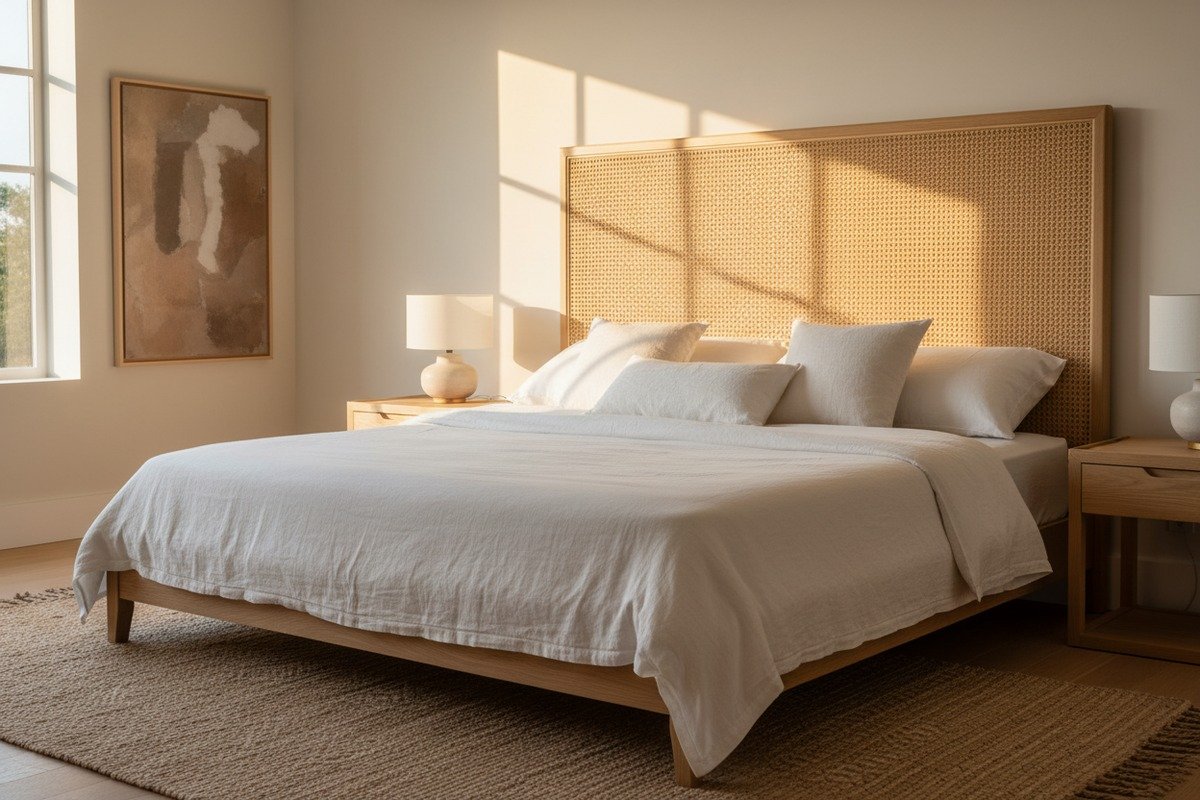
Every year, our production team fields dozens of inquiries from furniture factories struggling with the same problem: how to create headboards that look premium without blowing their material budgets natural durability 1. The demand for natural, textured finishes in bedroom furniture keeps climbing, yet many manufacturers hesitate to commit to rattan cane webbing 2 because they are unsure about its durability, consistency, and scalability for mass production.
Yes, rattan cane webbing is an excellent material for manufacturing high-quality headboards. It offers natural durability, aesthetic warmth, and design flexibility. When sourced in premium grades and paired with proper frame construction, rattan webbing delivers a luxury finish that meets both residential and hospitality standards.
In the sections below, we will walk through how to select the right grade, choose the best weave patterns, find a trustworthy wholesaler, and keep your sourcing costs competitive. Each step matters if you want your headboards to stand out in the market.
How do I choose the best grade of rattan cane webbing to ensure my headboards meet high-quality standards?
When we inspect incoming rattan rolls at our Foshan warehouse, the difference between Grade A and lower tiers is immediately visible. Inconsistent strand thickness, discoloration, and weak spots can ruin an entire production batch, and many factory buyers only discover this after cutting and stretching the material.
To choose the best grade, look for uniform strand diameter, consistent color with minimal dark spots, tight weave tension, and flexibility without cracking. Grade A rattan cane webbing should bend smoothly after soaking and shrink evenly when drying, creating a taut, professional finish on your headboard frames.
What Defines a "Grade" in Rattan Cane Webbing?
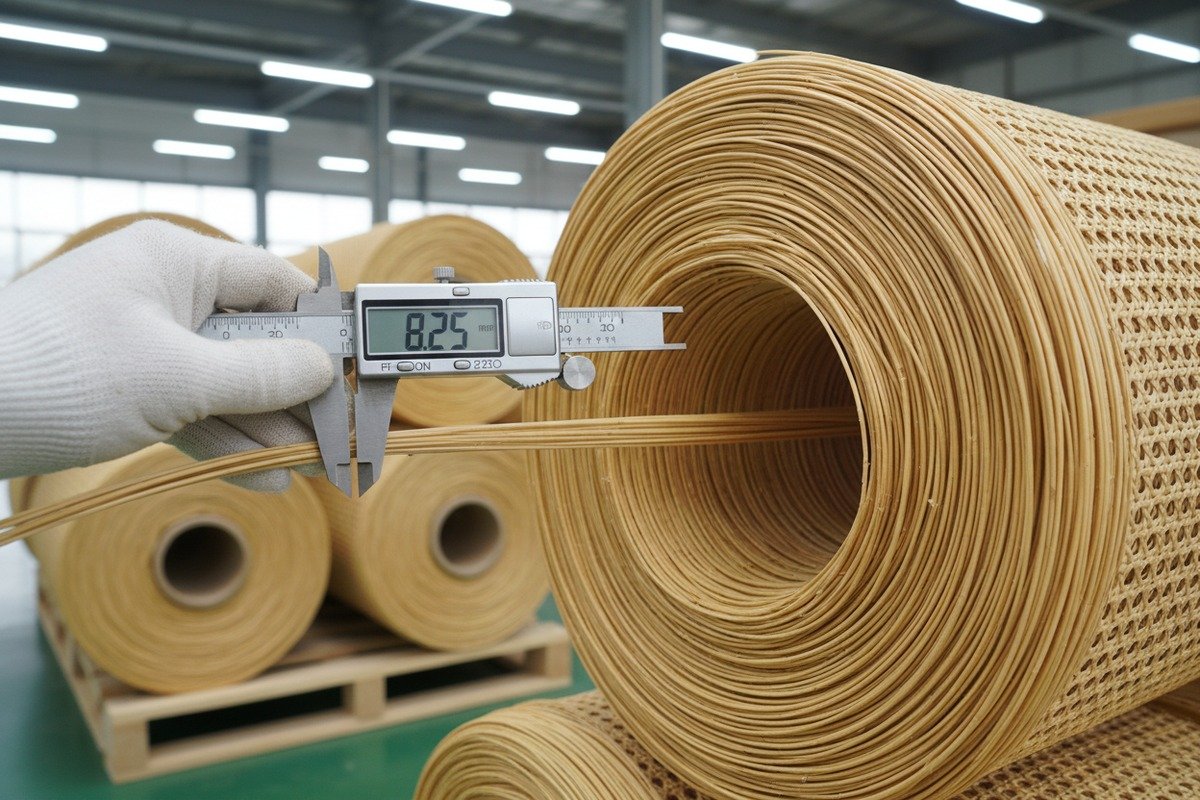
Grading is not an official international standard. It is a trade convention used by wholesalers and producers. The grading considers strand uniformity, color consistency, weave tightness, and قوة الشد 3. At our rattan processing facility in Indonesia, we sort raw cane into three commercial tiers before weaving begins.
مادة من الدرجة الأولى 4 has strands that are nearly identical in width. The surface is smooth, with a natural straw-yellow tone and very few blemishes. Grade B material shows slight color variation and occasional thin spots. Grade C is functional but cosmetically imperfect — suitable for hidden or painted applications, but not ideal for exposed headboard panels.
Key Quality Indicators to Check Before You Buy
Before placing a bulk order, always request a sample roll. Here is what to examine:
- قطر السلك: Measure with calipers at five random points. Variation should be under 0.3 mm.
- اختبار الغمر: Submerge a 12-inch square piece for 30 minutes. It should expand evenly and feel pliable, not mushy.
- Dry shrink test: After soaking, staple the piece to a test frame. It should tighten within 24 hours without warping or tearing.
- توحيد اللون: Lay the sample on a white surface under natural light. Reject rolls with more than 10% dark or green-tinted strands.
Rattan Grade Comparison Table
| عامل الجودة | Grade A | الدرجة ب | الدرجة ج |
|---|---|---|---|
| توحيد الخيوط | Excellent (< 0.3 mm variation) | Good (0.3–0.6 mm variation) | Inconsistent (> 0.6 mm variation) |
| اتساق اللون | 90%+ uniform straw yellow | 75–89% uniform | Below 75% uniform |
| Flexibility after soak | Smooth bend, no cracking | Minor stiffness in places | Cracking at tight bends |
| Shrink tension | Even and taut | Mostly even, slight sag | Uneven, visible loose spots |
| أفضل استخدام | Exposed luxury headboards | Mid-range furniture, painted panels | Hidden structural layers, budget items |
| Price range (per meter) | أعلى | معتدل | أقل |
Why Grade Matters for Headboard Longevity
A headboard takes daily stress. People lean against it, adjust pillows, and bump it when moving furniture. Low-grade webbing can sag within months. Grade A material, properly installed in a solid wood frame with a rabbet groove, maintains its tension for years. We have seen hotel clients use our Grade A hexagonal webbing for over five years with no visible wear.
One common mistake is assuming that all rattan labeled "natural" is the same quality. The species of نخيل الروطان 5, the harvest season, and the processing method all affect the final product. Cane harvested during the dry season tends to be denser and more consistent. Ask your supplier about the origin and processing details — a transparent answer is a good sign of reliability.
What are the most popular rattan weave patterns I should use for my custom furniture designs?
Our design consultants work with furniture factories across Europe, the Middle East, and Southeast Asia, and pattern selection is one of the first conversations we have with every new client. The weave pattern you choose defines the entire visual identity of a headboard — and it also affects airflow, structural strength, and manufacturing complexity.
The most popular rattan weave patterns for custom headboards are hexagonal (French cane), square basketweave, octagonal, radio weave, and diamond geometric. Hexagonal is the top seller for its open, airy look, while square basketweave suits modern minimalist designs that need a denser, more solid appearance.
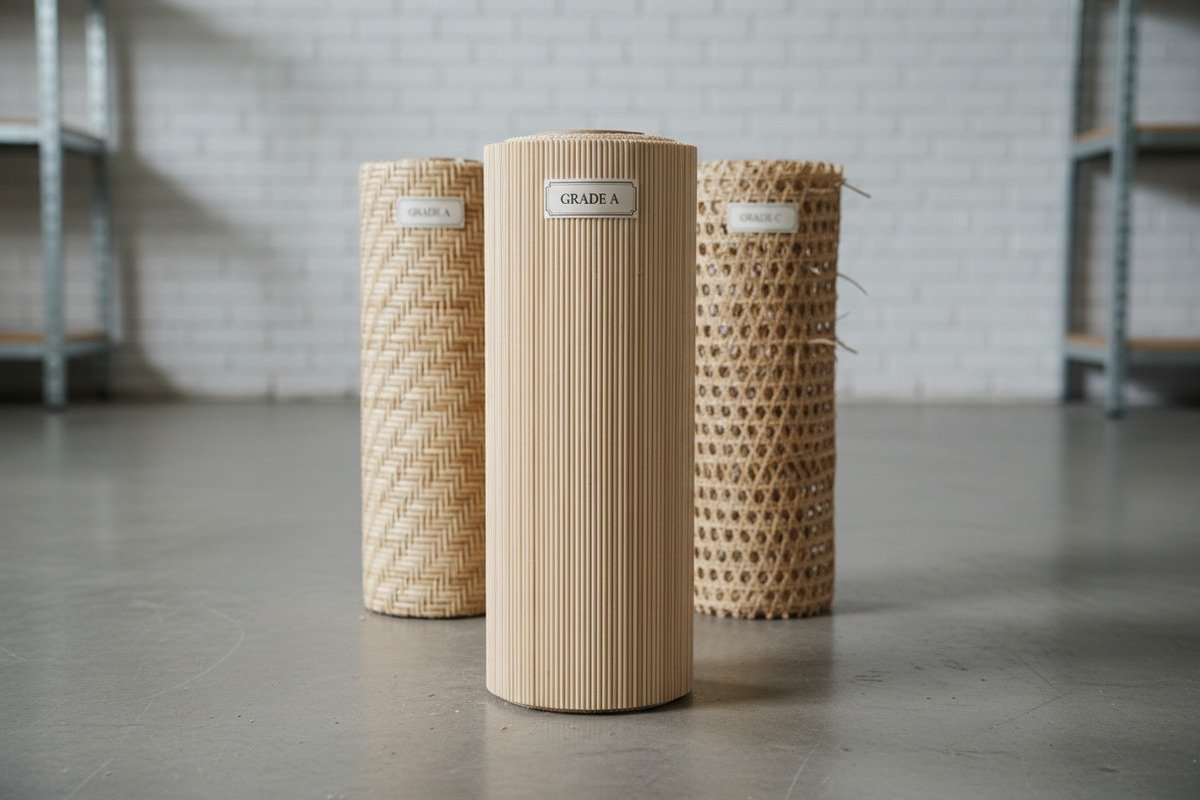
Hexagonal (French Cane) Weave
This is the classic. The open hexagonal mesh lets light and air pass through, making it perfect for headboards in warm climates or spaces with a bohemian or coastal theme. It is also the easiest pattern to stretch and install because the open structure allows even tension distribution. Most of our hotel clients in Thailand and Dubai choose this pattern for its timeless elegance.
سلة مربعة منسوجة
Square basketweave 7 creates a tighter, more opaque surface. It works well for modern and Scandinavian-inspired interiors where clean lines dominate. Because the weave is denser, it provides slightly more structural resistance when leaned against. However, it requires more material per square meter, so it costs a bit more per panel.
Other Popular Patterns
Radio weave features a radiating circular pattern that adds a retro mid-century feel. Octagonal weave offers a middle ground between open and closed designs. Diamond geometric patterns deliver a bold, artisanal look that stands out in bespoke or luxury collections.
Weave Pattern Comparison Table
| نمط | Openness | أفضل تطابق للأسلوب | Ease of Installation | Material Usage | Popularity Rank |
|---|---|---|---|---|---|
| Hexagonal (French cane) 8 | مرتفع | Bohemian, coastal, classic | سهل | منخفض | 1 |
| Square basketweave | منخفض | Modern, Scandinavian, minimalist | معتدل | مرتفع | 2 |
| نسج الراديو | متوسط | Mid-century, retro | معتدل | متوسط | 3 |
| مثمن | متوسط | Transitional, contemporary | معتدل | متوسط | 4 |
| Diamond geometric | منخفض إلى متوسط | Luxury, artisanal, bespoke | Difficult | مرتفع | 5 |
| 3×3 closed weave | منخفض جدًا | ريفي، مزرعة | سهل | مرتفع جدًا | 6 |
Matching Patterns to Market Demand
If you manufacture headboards for the European market, hexagonal and square patterns dominate orders. The US market leans toward a mix of hexagonal for coastal styles and radio weave for mid-century modern bedrooms. Middle Eastern buyers often prefer denser weaves combined with dark wood stains for a richer appearance.
When choosing a pattern, also think about your production workflow. Open weaves are more forgiving during stretching and stapling. Dense weaves require more precise alignment to avoid visible distortion. If your factory is scaling up production and training new workers, starting with hexagonal is the safest option.
We also see a growing trend toward mixing weave patterns within a single piece of furniture. A headboard might feature a hexagonal center panel framed by solid wood, with a narrow strip of square basketweave as an accent border. This kind of design differentiation can justify a higher retail price point.
Synthetic vs. Natural Weave Patterns
Synthetic rattan matting mimics natural cane patterns — including chevron waves and tight basketweaves — and offers greater moisture resistance for outdoor or humid environments. However, for bedroom headboards, most buyers still prefer natural rattan for its authentic texture, subtle color variations, and eco-friendly appeal. Synthetic options work best as secondary product lines or for markets where humidity is a major concern.
How can I find a reliable wholesaler that provides consistent rattan quality for my factory's production?
Over the past 15 years, our team has watched many furniture factories cycle through three or four rattan suppliers before finding one they can trust. The core frustration is always the same: the first sample looks great, but the bulk shipment arrives with color mismatches, inconsistent strand widths, or rolls that are shorter than specified. This inconsistency halts production lines and damages client relationships.
To find a reliable rattan wholesaler, verify their factory ownership or direct partnerships, request multiple batch samples over time, check their export history and client references, and start with a small trial order before committing to large volumes. Consistency across batches is the single most important quality indicator.

Why Batch Consistency Is the Real Test
A single sample tells you what a supplier can produce. But you need to know what they consistently produce. We recommend requesting samples from at least three different production batches, spaced a few weeks apart. Compare them side by side for color, strand thickness, and weave tightness. If all three match closely, you have a strong candidate.
At our own operations, we maintain batch records for every roll produced at our Indonesia facility. Each roll is tagged with harvest date, processing date, and quality inspection results. This traceability is something you should ask every potential supplier about.
علامات حمراء يجب الانتباه إليها
- No factory visit allowed: A trustworthy wholesaler will welcome factory audits or video tours.
- Vague origin details: If they cannot tell you where the rattan is harvested and processed, the supply chain is not transparent.
- Minimum order quantities that are too low: Extremely low MOQs can mean the supplier is a trader, not a producer, adding markup without quality control.
- No return or dispute policy: Reliable partners stand behind their product with clear terms.
Supplier Evaluation Checklist
| معايير التقييم | ما الذي تبحث عنه | علامة حمراء |
|---|---|---|
| ملكية المصنع | Self-owned or verified partner factories | No factory details provided |
| Sample consistency | Matching quality across 3+ batch samples | Samples vary significantly |
| Export history | Proven shipments to your target market | No verifiable export records |
| إمكانية التتبع | Batch tagging with harvest and processing dates | Cannot identify material origin |
| سرعة الاتصال | Responses within 24 hours, clear answers | Slow, evasive, or vague replies |
| مرونة الحد الأدنى لكمية الطلب | Reasonable minimums with trial order options | Rigid terms, no trial allowed |
| دعم ما بعد البيع | Clear dispute resolution, replacement policy | No return or quality guarantee |
The Value of a One-Stop Supplier
Working with a supplier who covers multiple rattan product categories — cane webbing, rattan poles, wicker sheets, seagrass matting — simplifies your procurement process. You deal with one logistics chain, one quality standard, and one point of contact. This is exactly the model we built at Seafan Rattan, with over 30 partner factories in Foshan covering the full spectrum of rattan materials.
For purchasing managers like our client Ranoo in Thailand, having a single WhatsApp contact who can handle everything from hexagonal webbing to rattan poles for frame accents saves hours of coordination time every week.
Starting with a Trial Order
Never commit your full quarterly volume to a new supplier on the first order. Place a trial order of 50–100 meters. Run it through your full production process. Check how the webbing handles soaking, stretching, stapling, and drying on your specific frame designs. Only after this real-world test should you negotiate larger volumes and long-term pricing.
Price pressure is a constant in furniture manufacturing. When we sit down with factory owners at trade fairs in Guangzhou or Istanbul, the conversation always circles back to one question: how do we keep material costs down without sacrificing the finish quality that our buyers expect? Rattan cane webbing is a natural product, so prices fluctuate with harvest seasons, logistics costs, and currency exchange rates. But there are proven strategies to protect your margins.
To source premium rattan at competitive prices, buy directly from producers with their own processing facilities, consolidate orders across multiple rattan categories, negotiate volume-based pricing tiers, and time your purchases to align with post-harvest seasons when raw material supply peaks and prices dip.

Direct Sourcing vs. Trading Companies
The biggest price difference in rattan comes from supply chain layers 9. A roll of Grade A hexagonal webbing that costs $3.50 per meter from a factory-direct source might cost $5.50 or more through a trading company. Traders add margin without adding quality control. When you work directly with a producer — especially one with both raw material processing (like our Indonesia facility) and finished product manufacturing (like our Foshan workshops) — you eliminate at least one markup layer.
Seasonal Pricing Patterns
Rattan harvesting follows tropical wet and dry seasons 10. In Indonesia, the primary harvest runs from May through September. Prices tend to be lowest from July through October, when processed stock is abundant. Placing your largest orders during this window can reduce material costs by 8–15% compared to ordering during the low-supply months of January through March.
Volume Consolidation Strategy
If your factory uses multiple rattan products — cane webbing for headboards, rattan poles for bed frames, wicker panels for side tables — consolidating these into a single order from one supplier gives you leverage. We offer tiered pricing to clients who combine categories, because consolidated shipments reduce our logistics costs too. It is a genuine win for both sides.
Cost Optimization Strategies Table
| Strategy | Potential Savings | Effort Level | مستوى الخطر |
|---|---|---|---|
| Buy factory-direct | 15–30% vs. traders | Medium (supplier vetting) | منخفض |
| Seasonal order timing | 8–15% during peak harvest | Low (planning) | منخفض |
| Volume consolidation | 5–12% through tiered pricing | Low (order planning) | منخفض |
| Long-term contract | 10–20% with price lock | Medium (commitment) | متوسط |
| Mixed-grade ordering | 10–15% on non-visible components | منخفض | Low (if grades are clear) |
| Shared container shipping | 5–10% on logistics | Medium (coordination) | منخفض |
Mixed-Grade Ordering
Not every part of a headboard needs Grade A webbing. If your design includes a front-facing panel and a rear backing, you can use Grade A for the visible side and Grade B or C for the back. This approach can cut your average material cost per unit by 10–15% without any visible quality difference to the end customer.
Negotiating Long-Term Agreements
If your production volume is predictable, consider signing a 6-month or 12-month supply agreement with locked pricing. This protects you from seasonal price spikes and gives the supplier planning certainty, which they value. In return, you often get a 10–20% discount over spot-market pricing. We sign these agreements regularly with our European and Middle Eastern clients, and both sides benefit from the stability.
Packaging and Shipping Optimization
Rattan webbing is lightweight but bulky. Rolls take up container space fast. Work with your supplier to optimize roll sizes for your specific container dimensions. Tighter rolling, vacuum compression for certain weave types, and efficient pallet stacking can fit 15–20% more product per shipment. This reduces your per-meter freight cost and protects your margins further.
Do not overlook packaging durability either. Rattan that arrives damp or crushed is rattan you cannot use. Insist on moisture-barrier wrapping and rigid core tubes. The small upfront packaging cost prevents expensive material losses.
خاتمة
Rattan cane webbing is a proven, high-quality material for headboard manufacturing when you choose the right grade, weave pattern, supplier, and sourcing strategy. Build smart partnerships and your production margins will follow.
ملاحظات سفلية
1. Highlights rattan’s inherent strength, flexibility, and resistance to wear and tear. ↩︎
2. Explains what rattan cane webbing is, its origins, and manufacturing process. ↩︎
3. HTTP 403 ↩︎
4. Describes the characteristics of premium rattan grades, including uniformity and appearance. ↩︎
5. HTTP 404 ↩︎
6. Details the importance of consistent strand width in the production of quality cane webbing. ↩︎
7. Showcases square basketweave patterns in rattan products, emphasizing texture and design. ↩︎
8. Describes hexagonal cane webbing, a popular pattern for furniture and crafts. ↩︎
9. Explains the strategic, tactical, and operational levels within supply chain management. ↩︎
10. Describes the characteristics of tropical wet and dry climates, including seasonal rainfall patterns. ↩︎
 English
  Español de México
  العربية
  Deutsch
  Français
  Русский