
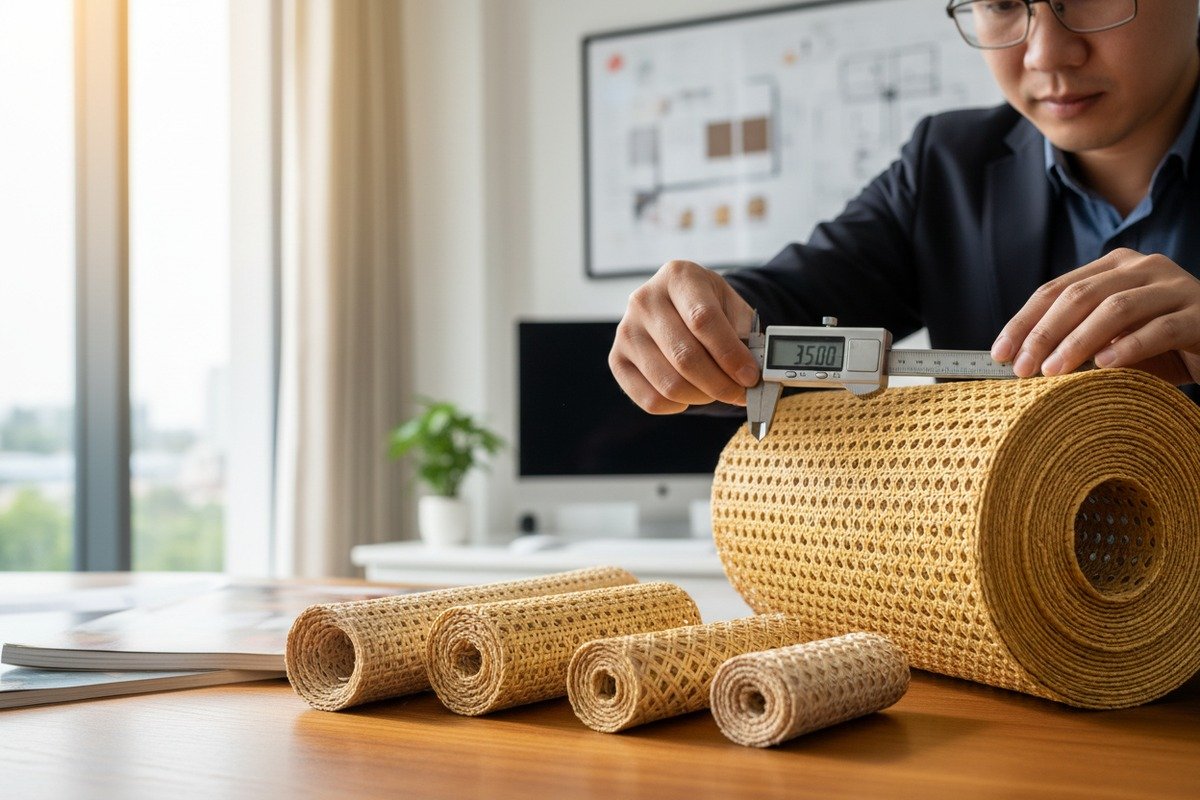
Every week, our sales team fields calls from buyers who received rattan cane webbing 1 that cracked, discolored, or fell apart within months. The frustration is real. When you source the wrong material, your entire production line suffers — and so does your reputation with end customers.
When sourcing rattan cane webbing, look for material origin, grade consistency, weave pattern uniformity, strand thickness, color matching, durability treatments, precise sizing, and damage-proof packaging. These details directly determine product lifespan, aesthetic quality, and your total procurement cost.
This guide breaks down each critical detail so you can inspect, compare, and choose with confidence. Whether you run a furniture factory or manage wholesale distribution, these checkpoints will save you time, money, and headaches.
How can I identify high-quality Grade A rattan cane webbing for my furniture projects?
From our production floor in Indonesia, we see firsthand how raw rattan quality varies wildly between harvests. Grade A rattan 2 Buyers who skip proper inspection end up rejecting entire shipments. The cost of rework and delays hits hard, but it is entirely avoidable.
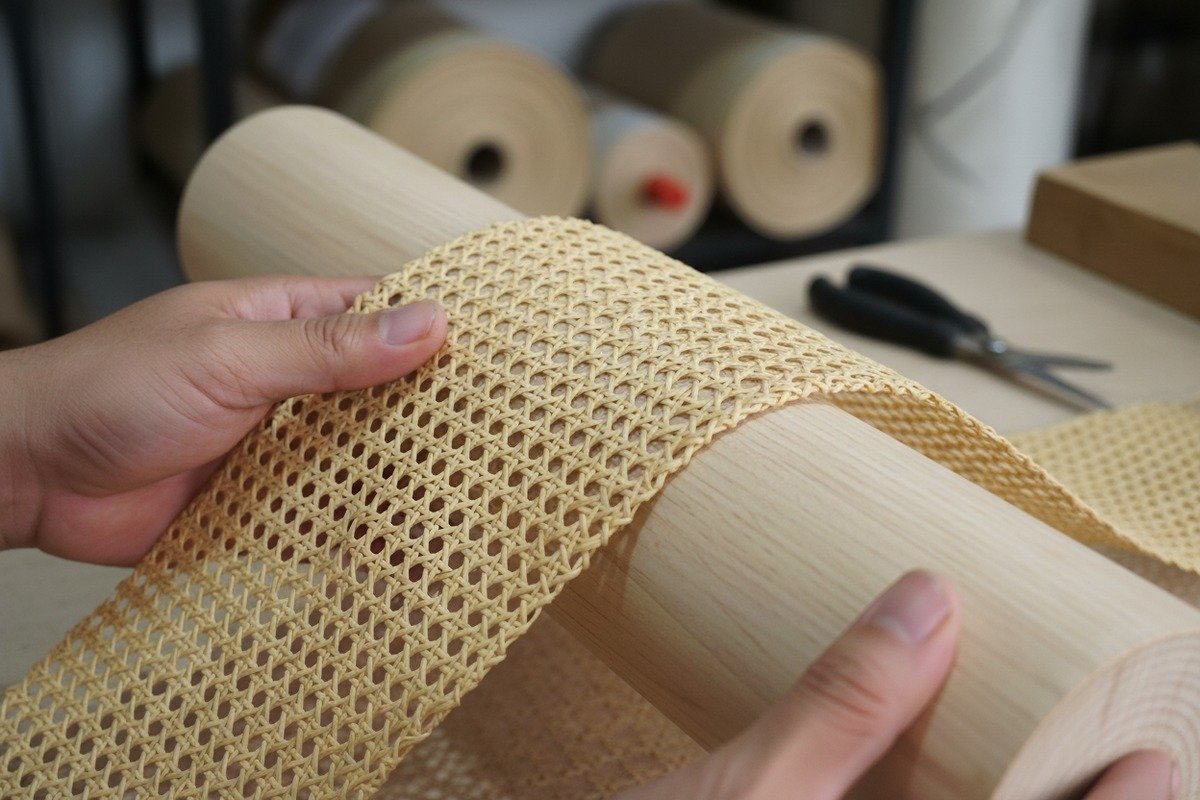
Grade A rattan cane webbing shows uniform strand thickness, consistent light beige to straw-yellow color, smooth polished surfaces free of nodules, minimal nodes, tight and even weave tension, and high flexibility without cracking when bent around a 2-inch radius.
Why Material Origin Matters Most
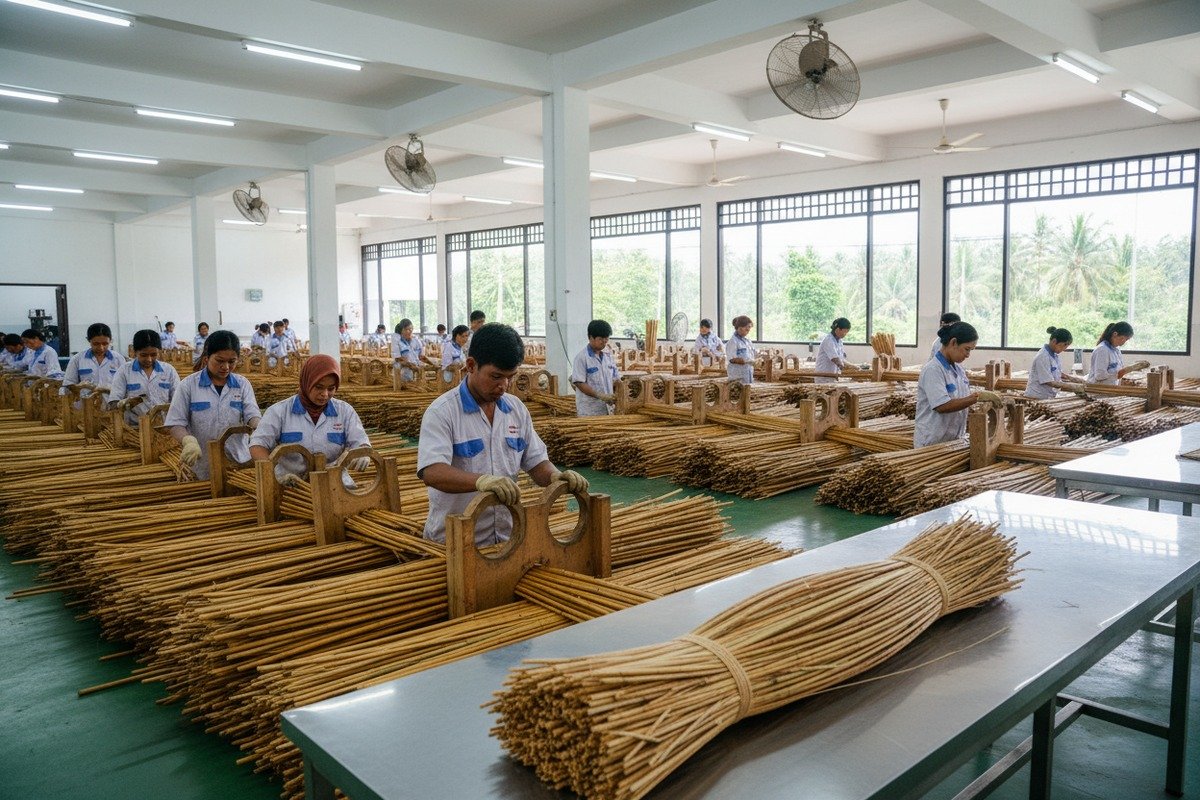
Not all rattan is equal. Indonesia is the world's top rattan producer. The Indonesian government banned raw rattan exports in 2011. This means the best raw material stays in-country for processing. Our own rattan processing facility in Indonesia gives us direct access to premium species like Rotin Tohiti 3, which offers a golden-brown color, medium diameter of 1–2 inches, and minimal nodes.
Vietnamese rattan provides a budget-friendly option. It works for cost-sensitive projects. But its color tends to be less consistent. Chinese-sourced rattan is generally the lowest quality tier. We tested multiple origins over the years. Indonesian rattan outperforms every time in tenacity, color, and long-term durability.
The Production Process You Should Understand
Knowing how rattan cane webbing is made helps you spot defects. Here is the step-by-step flow:
- Harvesting — Mature palms aged 5–7 years are cut by hand from sustainable farms.
- Sorting — Workers sort stalks by diameter for consistency.
- Polishing and sanding — Machine polishing removes nodules and creates uniform thickness.
- التقشير — The outer skin (peel) is separated from the inner core. Skilled separation is critical.
- Splitting — Strands are thinned and split into consistent widths, either by hand or machine.
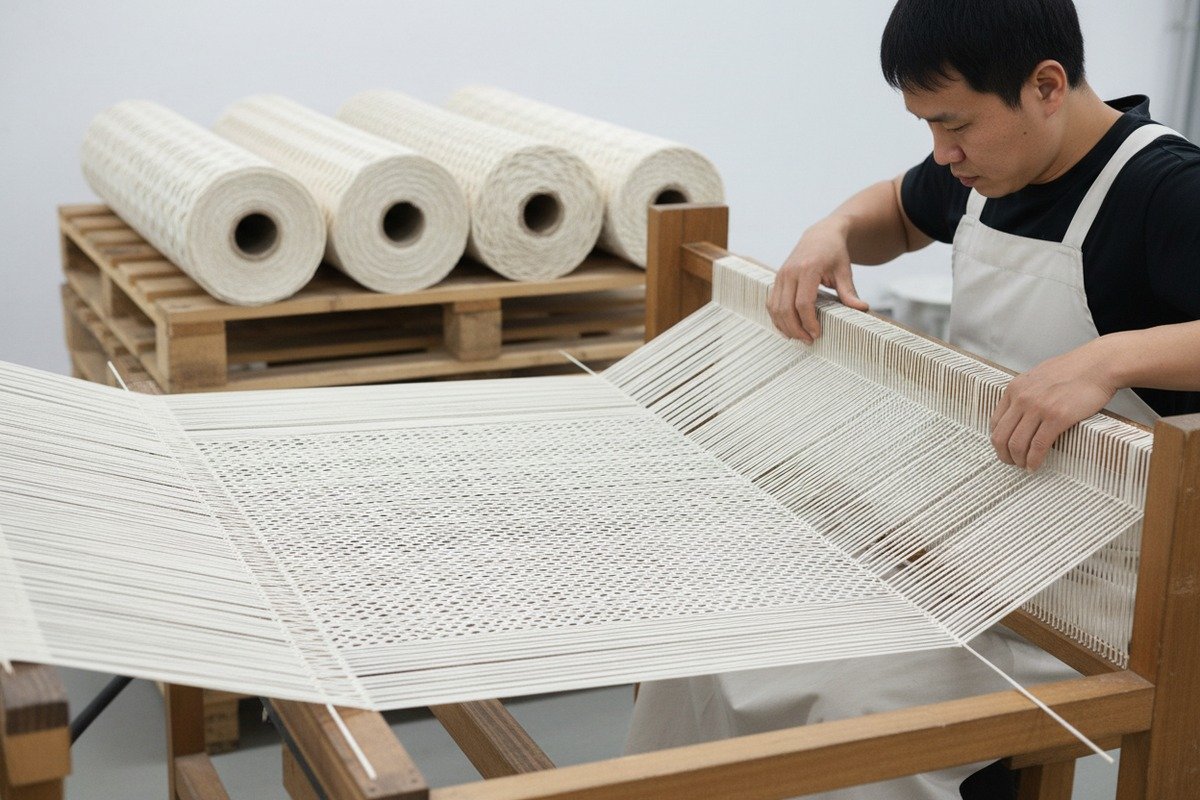
- Weaving — Strands are woven into geometric patterns and rolled into strips like fabric.
Each step affects the final product. Poor polishing leaves rough surfaces. Uneven splitting creates weak spots. Always ask your supplier to describe their process.
Inspection Checklist for Grade A Quality
Use this table when evaluating samples:
| نقطة الفحص | معيار الدرجة الأولى (Grade A) | علامة حمراء |
|---|---|---|
| سمك الخيط | موحد عبر اللفة | Visible thick-thin variation |
| Color | Consistent beige/straw-yellow | Dark spots, mold stains, or bleach marks |
| تشطيب السطح | Smooth, no nodules | Rough patches, splinters |
| Node presence | Minimal, barely visible | Frequent, raised nodes |
| المرونة | ينحني دون تشقق | Snaps or splinters at low bend angles |
| شد النسيج | Even, tight pattern | Loose strands, uneven gaps |
Natural vs. Synthetic: Which Grade Fits Your Project?
Natural rattan cane webbing suits indoor furniture and decor. It offers a warm, rustic look with organic variations in each strand. Synthetic PE rattan mimics the natural aesthetic but resists UV, rain, and humidity. For outdoor or commercial use, synthetic wins on durability.
Both types come in multiple weave patterns. Hexagonal open-mesh 4 "radio weave" is the classic choice. Dense square basketweave offers a tighter look. Diamond and herringbone patterns provide geometric visual interest. Match the pattern to your project's aesthetic and structural needs.
If your project involves curves or intricate shapes, test the webbing's bending radius before committing. Natural cane soaked in cool water for 15–20 minutes becomes pliable. Synthetic webbing typically flexes without pre-treatment.
What pricing factors should I consider to keep my procurement costs competitive?
Running three factories and working with over 30 partner facilities in Foshan, we track every cost variable that affects rattan webbing pricing. Many buyers focus only on unit price per meter. That approach leaves money on the table — or worse, leads to hidden costs that erode margins.
Key pricing factors include raw material origin, rattan grade, weave complexity, roll dimensions, order volume, shipping method, import duties, and packaging requirements. Balancing these variables lets you optimize total landed cost rather than just unit price.
Raw Material Cost Drivers
Indonesian rattan costs more than Vietnamese or Chinese alternatives. The 2011 export ban restricted raw supply, pushing prices upward. But the quality premium often justifies the cost through fewer rejects and higher end-product value.
Rattan prices also fluctuate seasonally. Harvesting happens during dry seasons. Monsoon periods reduce supply and drive prices up. Lock in pricing during stable supply periods when possible.
Understanding Price Tiers
Here is a general breakdown of how different factors affect your per-meter cost:
| عامل | Low Cost Impact | High Cost Impact |
|---|---|---|
| الأصل | Vietnamese / Chinese rattan | Indonesian premium rattan |
| Grade | Grade B or C (minor defects) | Grade A (flawless strands) |
| نمط النسيج | Simple open-mesh | Complex herringbone or diamond |
| عرض اللفة | Standard widths (18", 24") | عروض مخصصة |
| حجم الطلب | Small batch (under 100 meters) | Bulk order (1,000+ meters) — unit cost drops |
| التعبئة والتغليف | Basic shrink wrap | Reinforced cartons with moisture barriers |
Bulk Buying Strategies
Bulk orders yield significant discounts. But only buy in bulk if you have proper storage. Rattan must be kept dry and ventilated. Excess moisture causes mold. Excessive dryness causes cracking.
Standardize your product sizes across different furniture models. This lets you order fewer SKUs in higher volumes, which brings down per-unit costs. For example, if three chair models use similar seat dimensions, standardize webbing cuts so one roll size serves all three.
Shipping and Logistics
International shipping adds 10–25% to total cost for small orders. الشحن البحري 5 is the most economical option for large volumes. Air freight makes sense only for urgent, small-batch needs.
Work with your supplier on container optimization. Rolls pack efficiently when palletized properly. Our logistics team routinely helps buyers plan container loads to maximize space and minimize per-unit shipping cost.
Factor in import duties 6 for your country. Some markets apply different tariff rates to natural vs. synthetic rattan. Check with your customs broker before ordering.
Can I customize the width and roll length to fit my specific manufacturing requirements?
When we set up production runs for clients in the Netherlands, Australia, and the US, sizing requirements vary dramatically. A cabinet manufacturer in Spain needs narrow 14-inch rolls. A hospitality furniture maker in Dubai needs 36-inch widths. One size never fits all.
Yes, reputable rattan webbing suppliers offer customized widths and roll lengths to match your exact manufacturing specs. Standard rolls typically come in 50-foot lengths with widths from 14 to 36 inches, but custom dimensions are available for bulk orders with minimum order quantities.
How to Calculate the Right Size
Precise sizing prevents waste. For chair seats, measure groove to groove in both directions. Add 4 inches total to each dimension. This extra material allows for tucking and securing.
إليك مرجع سريع:
| Seat Measurement (groove to groove) | Add | Webbing Cut Size | Roll Width Needed |
|---|---|---|---|
| 14" × 14" | +4" each direction | 18" × 18" | 18" minimum |
| 16 بوصة × 16 بوصة" | +4" each direction | 20" × 20" | 20" minimum |
| 18" × 20" | +4" each direction | 22" × 24" | 24" minimum |
| 24" × 24" | +4" each direction | 28" × 28" | 28" minimum |
To convert inches to feet for ordering: add the width and length in inches, add 4 inches total, then divide by 12.
Standard vs. Custom Rolls
Standard rolls typically come in 50-foot lengths. This works well for most production runs. But if your production line cuts pieces at 22 inches each, a 50-foot roll yields roughly 27 pieces with minimal waste. If your cut size does not divide evenly, you generate scrap.
Custom roll lengths solve this problem. We produce rolls in custom lengths so each roll yields a precise number of cuts. This reduces waste to near zero. The slight per-unit premium for custom lengths pays for itself through material savings.
Width Options and Lead Times
Standard widths ship faster because we keep them in stock. Custom widths require a dedicated production run. Expect 2–4 weeks of additional lead time for non-standard sizes.
Plan your orders around production schedules. If you know your Q3 requirements by April, place custom orders early to avoid rush charges.
Communicating Specifications Clearly
Send your supplier a detailed specification sheet. Include:
- Exact width in inches or centimeters
- Roll length in feet or meters
- Weave pattern name or photo reference
- Grade requirement (A, B, or C)
- Intended use (indoor/outdoor)
- Quantity per shipment
- Desired delivery date
Clear specs prevent misunderstandings. We have seen orders delayed by weeks because a buyer specified "18 inches" without clarifying whether that was finished width or raw width before trimming. Be precise. Ask your supplier to confirm specs in writing before production begins.
How do I ensure my supplier provides durable packaging to prevent damage during transit?
We learned the packaging lesson early. A shipment of premium Grade A webbing to a client in Russia arrived with crushed edges and moisture stains. The product was perfect when it left our warehouse. The packaging failed. That single incident cost us a re-shipment and weeks of trust-building. Since then, we redesigned our entire packaging system.
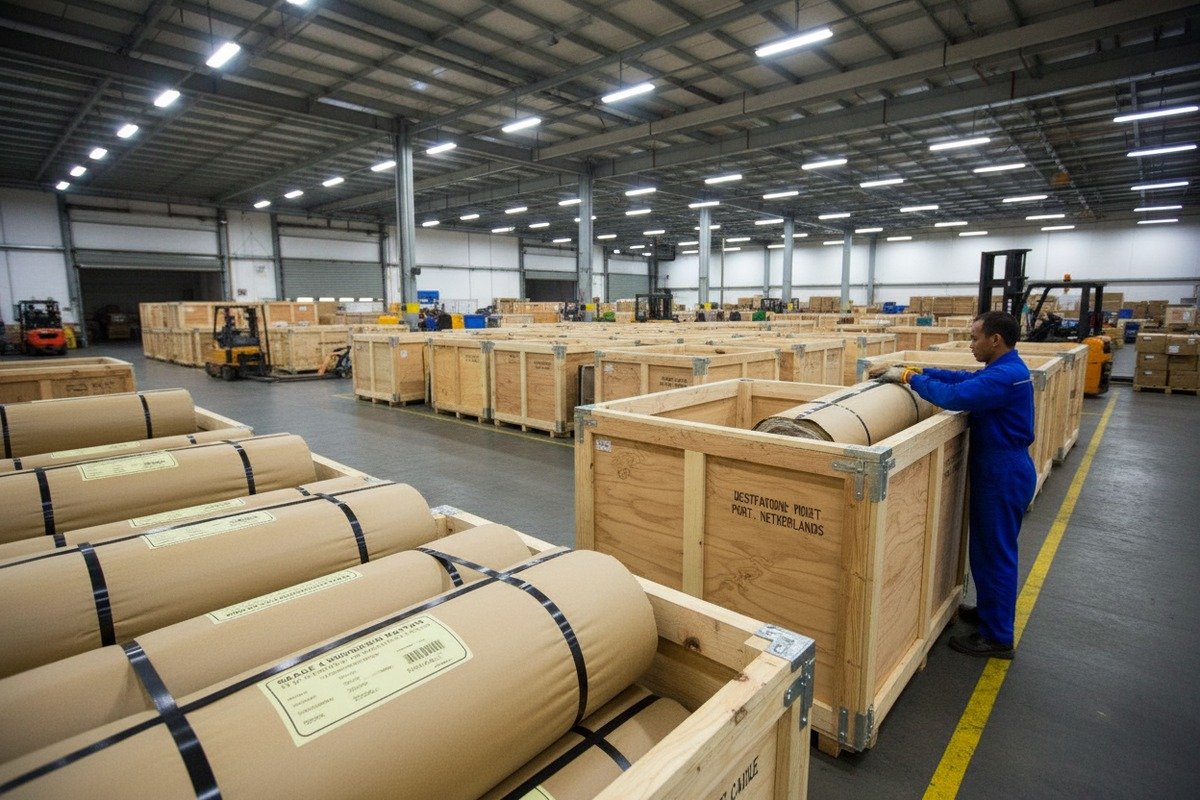
Ensure your supplier uses reinforced cardboard cartons or wooden crates, internal moisture-barrier wrapping, corner protectors, and shrink-wrapped palletization. Request packaging specs in writing before shipment. Inspect packaging photos at the warehouse before containers are sealed.
Why Rattan Webbing Is Vulnerable in Transit
Natural rattan absorbs moisture. If a container crosses climate zones — say, from tropical Indonesia to a cold European port — condensation forms inside. This is called "مطر الحاوية 7." Without moisture barriers, webbing absorbs this condensation. Mold grows within days. The product arrives discolored and unusable.
Physical damage is the other risk. Rolls stacked without support crush under weight. Edges get bent. Weave strands snap. Once damaged, rattan webbing cannot be repaired to Grade A standard.
Packaging Standards to Demand
Here is what proper packaging looks like at each layer:
الطبقة الداخلية: Each roll should be individually wrapped in plastic film or a moisture-barrier bag. Silica gel desiccant packets inside the wrap absorb residual moisture.
Mid layer: Wrapped rolls placed inside reinforced corrugated cartons. Use double-wall cartons for international shipping. Corner protectors prevent edge crushing.
الطبقة الخارجية: Cartons palletized, shrink-wrapped, and strapped. For sea freight, pallets should be elevated on heat-treated wood to prevent ground moisture contact.
بروتوكول فحص ما قبل الشحن
Do not rely on your supplier's word alone. Request the following before the container is sealed:
- Photos of individual wrapped rolls
- Photos of packed cartons with labeling visible
- Photos of palletized cartons inside the container
- Container seal number matched to your bill of lading
Many B2B buyers hire third-party inspection companies to verify packaging at the warehouse. This costs a few hundred dollars but prevents thousands in damage claims.
Moisture Content and Acclimation
Ask your supplier to verify محتوى الرطوبة 8 of the webbing before packing. Ideal moisture content for natural rattan is between 8–12%. Too dry, and it cracks during transit vibration. Too wet, and mold risk increases.
Once you receive the webbing, let it acclimate to your workshop environment for 48–72 hours before installation or cutting. This prevents shrinking or warping after the finished product reaches your customer.
Repairability Considerations
Even with perfect packaging, minor damage can occur. Some weave types are easier to patch than others. Open-mesh hexagonal weave allows individual strand replacement. Dense basketweave is harder to repair without visible seams. Factor repairability into your material choice, especially for high-value furniture lines.
خاتمة
Sourcing rattan cane webbing well comes down to knowing your material, your numbers, your sizes, and your packaging. Get these details right, and you build a سلسلة التوريد 9 that delivers quality every time.
ملاحظات سفلية
1. Replaced with a comprehensive guide on what cane webbing is, its source material, and production process. ↩︎
2. Explains rattan grading standards (A, B, C). ↩︎
3. Describes characteristics and origin of Rotin Tohiti rattan. ↩︎
4. Replaced with a working product page for ‘Open Hexagonal Webbing’ from the original domain. ↩︎
5. Replaced with a clear definition and explanation of sea freight from Halcon Primo Logistics. ↩︎
6. Explains what import duties are and how they work. ↩︎
7. Explains the causes and effects of container rain. ↩︎
8. Replaced with a general and authoritative definition of water content (moisture content) from Wikipedia. ↩︎
9. Replaced with an authoritative definition of supply chain management from ASCM. ↩︎

 English
  Español de México
  العربية
  Deutsch
  Français
  Русский