
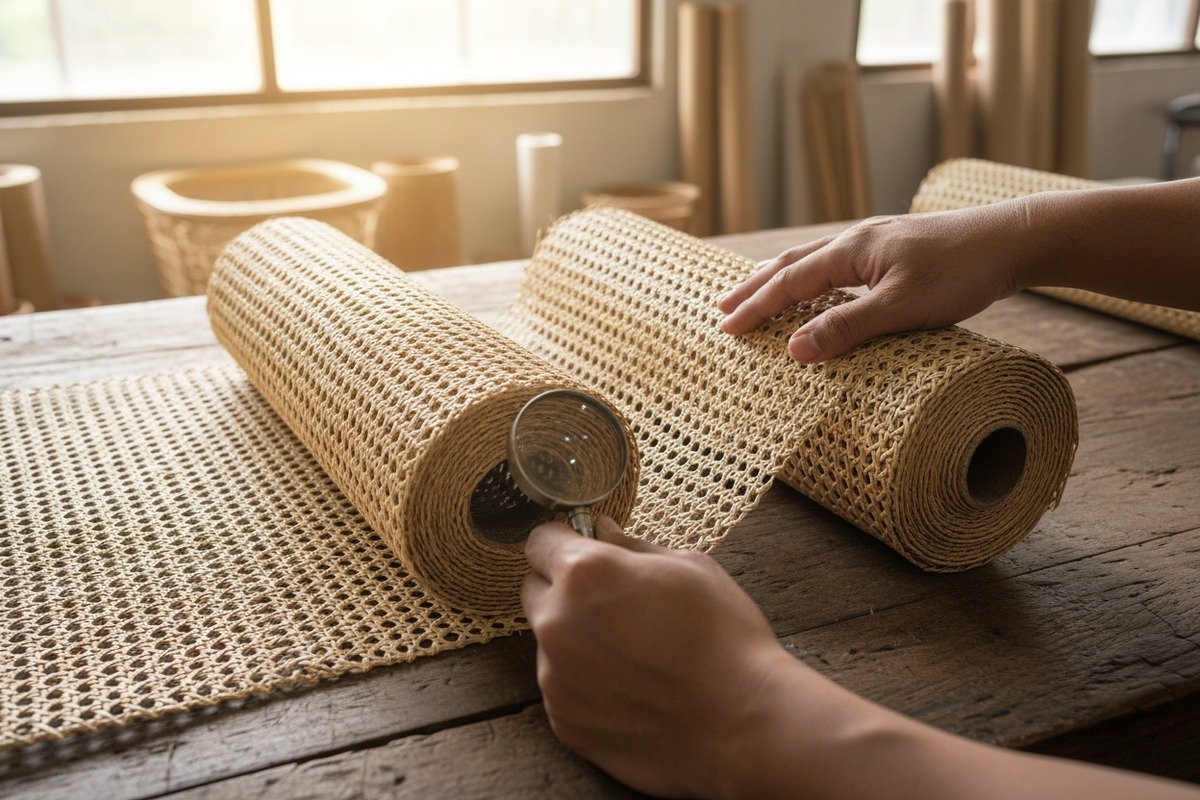
كل أسبوع، مراقبة الجودة 1 sorts through thousands of meters of rattan cane webbing 2 at our processing facility in Indonesia. The single biggest question buyers ask us—especially furniture factories and material wholesalers placing their first large orders—is how Grade A and Grade B actually differ. It is a fair question because both grades come from the same tropical rattan palm 3, and on a computer screen they can look nearly identical. But once you hold them side by side, the differences in texture, color uniformity, weave tightness, and long-term durability become clear. Choosing the wrong grade for your project can lead to customer complaints, returns, and wasted production time.
Grade A natural rattan cane webbing features smoother, denser fibers with uniform color and virtually no defects, while Grade B has a coarser texture, minor imperfections like black spots or color variation, and slightly less durability. Grade A suits premium furniture; Grade B works well for budget or decorative applications.
Below, we break down the visual cues, durability implications, cost considerations, and decision-making framework so you can pick the right grade for every project. Let us walk through it step by step.
How can I visually identify the quality differences between Grade A and Grade B rattan webbing?
When our sorting team in Indonesia separates rattan peels after the initial processing, the visual differences between grades become obvious within seconds. The challenge is that most buyers never visit the factory floor. They receive samples or view product photos online, which can mask real quality gaps. Knowing exactly what to look at—and where to look—saves you from costly surprises after a container arrives at your warehouse.
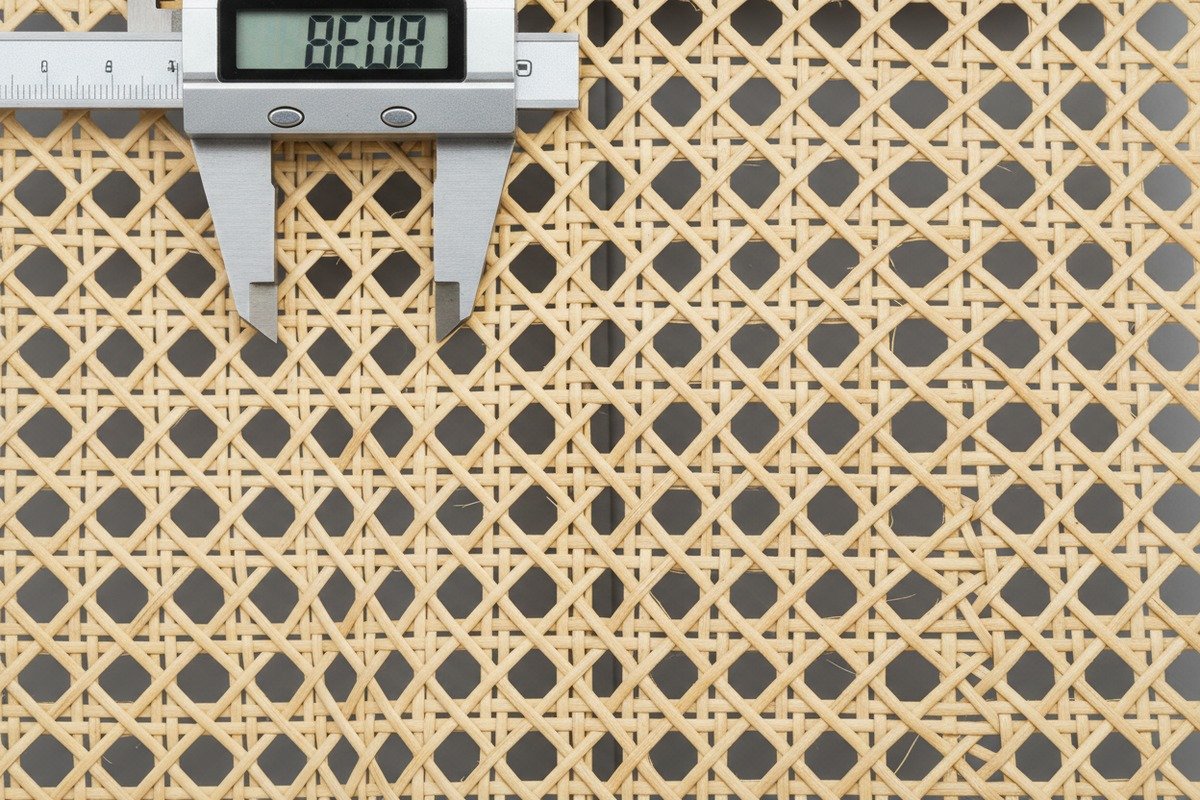
Grade A rattan webbing shows a consistent honey-golden color, a smooth satin-like surface, and tight uniform weave gaps, while Grade B may display greenish tones, visible nodules, minor cracks, and slightly irregular weave spacing. Examining fiber density and color consistency is the fastest way to tell them apart.
Surface Texture and Fiber Quality
The first thing to check is the surface. Run your fingertip across the webbing. Grade A feels smooth and almost polished because it comes from the finest outer peel of mature rattan canes. The fibers are dense and lie flat against each other. Grade B, by contrast, feels slightly rougher. You may notice tiny ridges, small nodules, or spots where the fiber lifts away from the surface. These are not necessarily structural failures—they are simply signs that the peel was thinner, younger, or taken from a less uniform section of the cane.
توحيد اللون
Color is the second reliable indicator. Grade A webbing has a warm, even tone across the entire roll. It ranges from light beige to a rich honey-gold, depending on whether it has been bleached or left natural. Grade B webbing tends to show patches of slightly different shades. You might see a faint greenish hue in certain strands, or small dark spots where the cane had minor insect contact or surface oxidation. After finishing with lacquer or stain 4, Grade A takes color beautifully and evenly. Grade B can look uneven under a clear coat because the finish highlights underlying color differences rather than hiding them.
اتساق النسيج
The weaving process itself reveals grade differences. At our partner factories, skilled weavers complete a 16-inch-wide roll of Grade A in roughly one full day using the manual "LaHua" technique. This method involves threading each strand with precision. In Grade A rolls, the gaps between strands are uniform. Hexagonal patterns form clean, symmetrical shapes. In Grade B rolls, you might find slightly loose strands, minor asymmetry in pattern openings, or occasional splicing points where a broken strand was joined. None of these make the product unusable, but they are visible to a trained eye—and to a discerning end consumer.
| الميزة | Grade A | الدرجة ب |
|---|---|---|
| ملمس السطح | Smooth, satin-like | Slightly rough, minor ridges |
| Color | Uniform honey-golden or light beige | Patches of green, dark spots possible |
| Weave gaps | Even and symmetrical | اختلافات طفيفة |
| Nodules/knots | Virtually none | Occasional small nodules |
| Fiber density 5 | High, compact strands | Moderate, slightly looser |
| Splicing visibility | Rare and nearly invisible | More frequent, sometimes visible |
Practical Tip for Buyers
Always request a physical sample before placing a bulk order. Photos can be misleading due to lighting and camera settings. When you receive a sample, check both the front and back sides. Grade A looks clean on both faces. Grade B sometimes has a noticeably rougher back surface, which matters if both sides of the webbing will be visible in the finished piece—like a room divider or a cane-paneled cabinet door.
Will choosing Grade B rattan impact the durability and finish of my furniture projects?
Over the past fifteen years, we have shipped rattan webbing to furniture makers across more than twenty countries. One pattern we see again and again is that buyers who switch from Grade A to Grade B to cut costs sometimes come back with complaints—not about breakage on day one, but about problems that emerge after six months to a year. The real question is not whether Grade B works. It does. The question is how long it works and how well it looks after repeated use.
Grade B rattan is structurally functional but less durable than Grade A. It is more prone to splintering during installation, absorbs finishes unevenly, and shows wear faster under heavy use. For high-traffic furniture like dining chairs, Grade A significantly outperforms Grade B in both longevity and appearance retention.
Structural Strength Differences
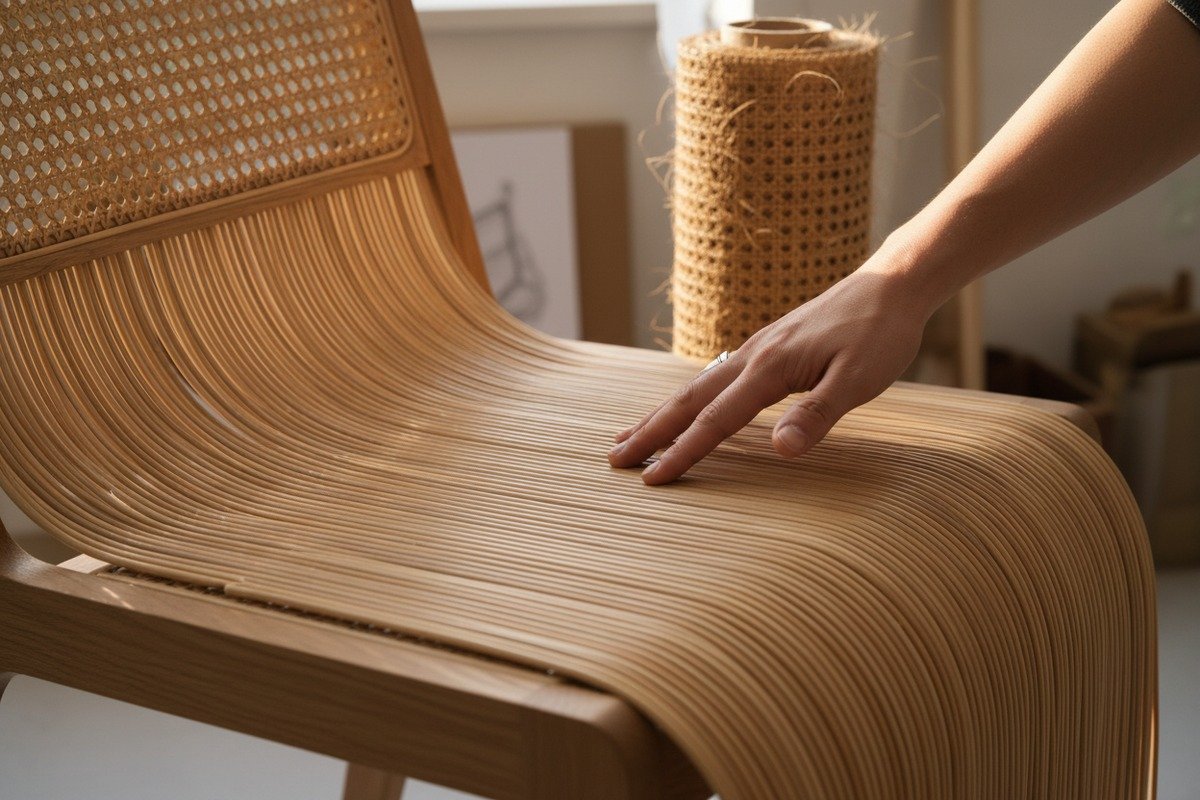
Grade A rattan peels are thicker and come from the outermost layer of the cane, where the fiber density is highest. This gives them superior قوة الشد 6. When stretched across a chair seat frame, Grade A webbing resists sagging longer. Grade B peels are thinner. They still hold weight effectively at first, but under repeated stress—someone sitting and standing hundreds of times—the fibers begin to loosen sooner.
In our internal testing, Grade A webbing on a standard dining chair frame maintained its tension for over three years of simulated daily use. Grade B showed noticeable sagging after roughly eighteen months under the same conditions. For a decorative wall panel that bears no weight, this difference is irrelevant. For a seat or backrest, it matters greatly.
Finishing and Surface Treatment
How a finish adheres to rattan depends heavily on surface consistency. Grade A's smooth, uniform surface allows stains, lacquers, and oils to absorb evenly. The result is a rich, consistent appearance. Grade B's rougher texture and occasional nodules cause finishes to pool in low spots and thin out over raised areas. This creates a blotchy look under clear or semi-transparent coatings.
Many manufacturers who use Grade B solve this problem by applying opaque paint or heavy-pigmented finishes that mask surface irregularities. This works, but it also hides the natural beauty of the rattan—which is often the whole reason a designer specified cane webbing in the first place.
Installation Handling
During installation, rattan webbing is soaked in water to increase flexibility before being stretched and stapled to a wooden frame. Grade A webbing handles this process well. It bends without cracking and holds staples firmly. Grade B is more likely to splinter at the edges during cutting and can crack at stress points during stretching. Experienced installers can work around these issues, but less skilled workers—or DIY enthusiasts—may waste material or produce a subpar result.
| Performance Factor | Grade A | الدرجة ب |
|---|---|---|
| Tensile strength | مرتفع | معتدل |
| Sag resistance (chair seat) | 3+ years | ~18 months |
| Finish absorption | Even and consistent | Uneven, may appear blotchy |
| Splintering during install | نادر | More common at cut edges |
| Recommended finish type | Clear lacquer, light stain | Opaque paint, heavy stain |
| Best applications | Dining chairs, headboards, luxury cabinets | Decorative panels, budget screens, hidden areas |
The Maintenance Factor
Grade A webbing requires less maintenance over its lifespan. Its denser fibers resist dust accumulation, and its smoother surface is easier to wipe clean. Grade B's rougher texture tends to trap dust and can develop a slightly dull appearance faster. In humid climates 7—like Southeast Asia, the Middle East, or coastal Australia—Grade A also responds better to anti-mildew treatments, which bond more effectively to its uniform surface.
Is the higher cost of Grade A rattan cane webbing worth the investment for my business?
When we quote prices to new wholesale clients, the reaction to Grade A pricing is almost always the same: a pause, followed by the question, "How much cheaper is Grade B?" Depending on the pattern and roll width, Grade A typically costs 20% to 50% more than Grade B. That gap can feel significant when you are ordering hundreds or thousands of meters. But price per meter is only one part of the equation. The real calculation involves waste rates, rework costs, customer satisfaction, and the market positioning of your finished products.
Grade A rattan costs 20–50% more per meter than Grade B, but the investment often pays for itself through lower waste during production, fewer customer returns, and the ability to command premium pricing on finished furniture. For businesses targeting mid-to-high-end markets, Grade A delivers stronger margins overall.
Understanding the True Cost
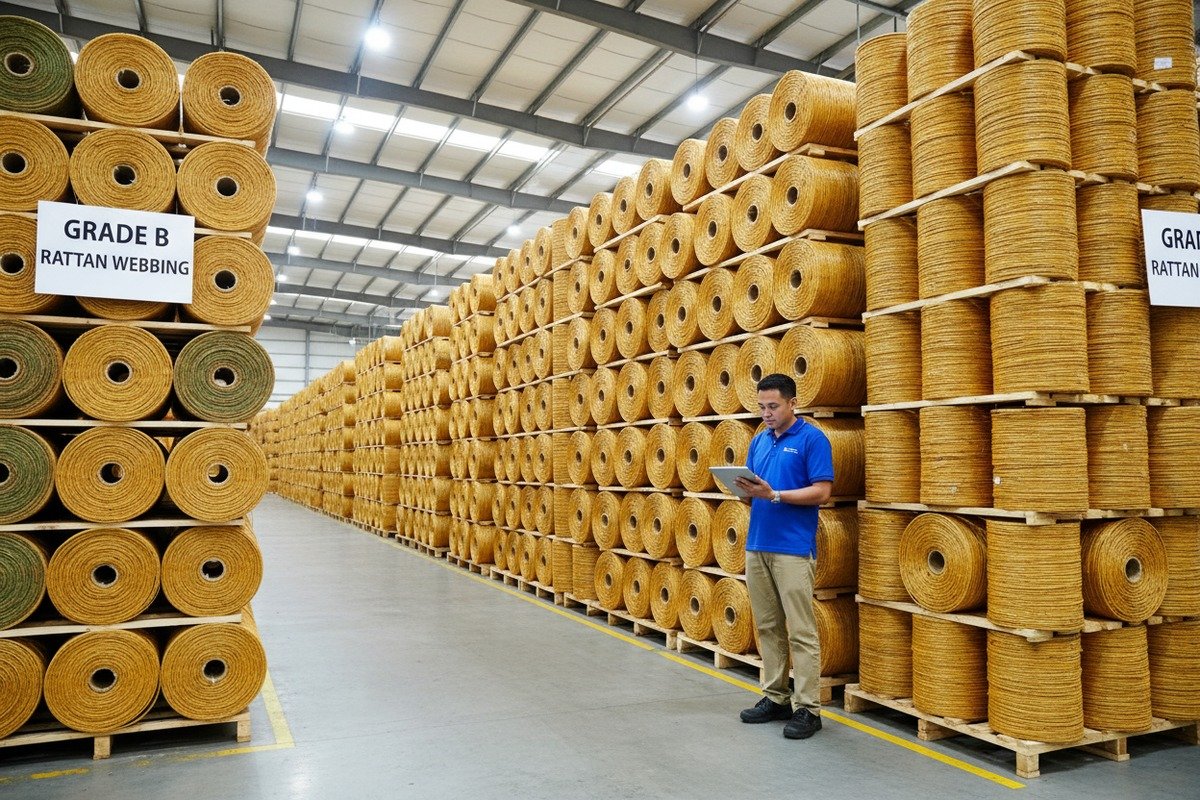
The sticker price of rattan webbing is not the total cost. When a furniture factory uses Grade B, the production line encounters more issues. More pieces splinter during cutting. More sections show color inconsistency that requires sorting or rejection. More finished units need touch-up work or get flagged during final quality inspection. All of these add labor time and material waste.
Based on feedback from our factory clients in Europe and the Middle East, the effective waste rate for Grade B webbing in production settings runs around 8–12%. For Grade A, waste typically stays below 3–5%. When you factor in the cost of wasted material plus the labor to rework or replace defective sections, Grade A's higher purchase price often narrows significantly—or even reverses.
Pricing Power on Finished Products
Furniture made with Grade A rattan commands higher retail prices. This is not just perception; it reflects genuine quality that end consumers can see and feel. A cane-paneled sideboard using Grade A webbing might retail for $800–$1,200, while the same design with Grade B might sell for $500–$700. The cost difference in raw webbing between those two products may be only $15–$30 per piece, but the retail price difference can be $200–$500.
For wholesalers who supply furniture makers, offering verified Grade A stock allows you to serve premium clients and defend your margins against competitors who race to the bottom on price.
When Grade B Makes Financial Sense
Grade B is not a bad product. It is a different product for a different purpose. If you manufacture budget-friendly furniture for mass-market retail 8, Grade B keeps your costs low without sacrificing basic function. If you produce items where the rattan is not the focal point—like the back panel of a bookshelf or the interior of a cabinet—Grade B is perfectly adequate. The key is matching the grade to the application and the end customer's expectations.
| عامل التكلفة | Grade A | الدرجة ب |
|---|---|---|
| Purchase price per meter | Higher (baseline +20–50%) | Lower (baseline) |
| Production waste rate | 3–5% | 8–12% |
| Rework labor cost | الحد الأدنى | معتدل |
| Finished product retail price | Premium tier ($800–$1,200 example) | Mid-range ($500–$700 example) |
| Customer return risk | منخفض | معتدل |
| Brand positioning | High-end, luxury, designer | Budget, mass-market, functional |
A Note on Sustainability and Market Trends
There is a growing demand for eco-friendly, sustainably sourced rattan 9 in markets like the Netherlands, Australia, and the US. Buyers in these regions increasingly ask for certifications and traceability. Grade A rattan, sourced from managed forests in Indonesia and processed with biodegradable treatments, aligns well with this trend. Offering certified Grade A product can open doors to eco-conscious brands and hospitality projects 10 that Grade B simply cannot access.
How do I decide which rattan grade is best suited for my specific manufacturing needs?
Over the years, we have helped hundreds of buyers—from small workshop owners in Thailand to large furniture factories in Spain—make this exact decision. The answer is never one-size-fits-all. It depends on your end product, your target customer, your production capabilities, and your tolerance for quality variation. Here is a practical framework we use when advising our wholesale clients.
Choose Grade A when your finished product targets premium markets, uses visible rattan as a design feature, or requires long-term durability. Choose Grade B for budget lines, concealed applications, or decorative projects where minor imperfections are acceptable. Many manufacturers use both grades strategically across different product lines.
Step 1: Define Your End Product
Start with the finished piece. A dining chair seat that will bear weight daily for years demands Grade A. A decorative room divider in a boutique hotel that guests admire but never touch can work beautifully with Grade B. A headboard for a luxury bedroom line needs Grade A for its visual impact. A planter cover sold at a weekend craft market can use Grade B without any issue.
The rule is simple: the more visible, the more touched, and the more load-bearing the application, the stronger the case for Grade A.
Step 2: Know Your Customer
Your buyer's expectations define the grade you need. If you sell to interior designers, hospitality groups, or premium furniture brands, they expect flawless material. Even one visible defect can trigger a rejection. Grade A is the only safe choice here.
If you sell to mass-market retailers or DIY craft supply stores, Grade B meets the quality bar. These customers prioritize price and availability over perfection. They understand that natural materials have inherent variation and accept minor cosmetic differences.
Step 3: Evaluate Your Production Process
Factories with highly skilled workers and tight quality control systems can extract good results from Grade B material. They know how to sort out the worst sections, orient the webbing to hide imperfections, and apply finishes that minimize visual flaws. Less experienced production teams—or businesses outsourcing assembly—benefit from the consistency of Grade A, which reduces the skill required to produce a quality outcome.
Step 4: Consider the Hybrid Approach
Many of our most successful clients use both grades. They specify Grade A for their flagship product lines and Grade B for their entry-level offerings. This approach maximizes margins across the product range while ensuring each line meets its target customer's expectations. Some even use Grade A for visible surfaces and Grade B for hidden structural panels within the same piece of furniture—a smart cost optimization strategy.
Step 5: Request Samples and Test
Never commit to a large order based on specifications alone. Request sample rolls of both grades from your supplier. Test them through your actual production process—cutting, soaking, stretching, stapling, and finishing. Evaluate the results side by side. This hands-on comparison will tell you more than any product description or grading chart ever could.
Quick Decision Guide
Ask yourself these five questions before ordering:
- Will the rattan be visible in the finished product? If yes, lean toward Grade A.
- Will the rattan bear weight or face daily contact? If yes, choose Grade A.
- Is your target market premium or luxury? If yes, Grade A is essential.
- Is cost reduction the primary goal? If yes, Grade B may be appropriate.
- Can your production team handle inconsistent material? If no, stick with Grade A.
خاتمة
Choosing between Grade A and Grade B rattan cane webbing comes down to your product, your customer, and your quality standards. Both grades have a place in smart manufacturing. Match the grade to the application, test before you commit, and partner with a supplier who can deliver consistent quality at the grade level you need.
ملاحظات سفلية
1. Describes the role and importance of quality control in manufacturing. ↩︎
2. Replaced 404 link with a working, relevant page from the same domain that explains what cane webbing is. ↩︎
3. Explains what rattan is and its origin as a tropical palm. ↩︎
4. Explains the differences between wood stain and lacquer as finishing agents. ↩︎
5. Replaced 403 link with an authoritative academic source explaining fiber density. ↩︎
6. Replaced 404 link with a highly authoritative source (Britannica) defining tensile strength. ↩︎
7. Describes characteristics and distribution of humid subtropical climates. ↩︎
8. Defines mass market and its characteristics in retail. ↩︎
9. Discusses certifications like FSC for sustainably sourced rattan. ↩︎
10. Replaced 404 link with a relevant page that defines and describes hospitality projects. ↩︎

 English
  Español de México
  العربية
  Deutsch
  Français
  Русский