
Confusion between rattan cane webbing and rattan peel costs buyers time, money, and sometimes entire production runs.
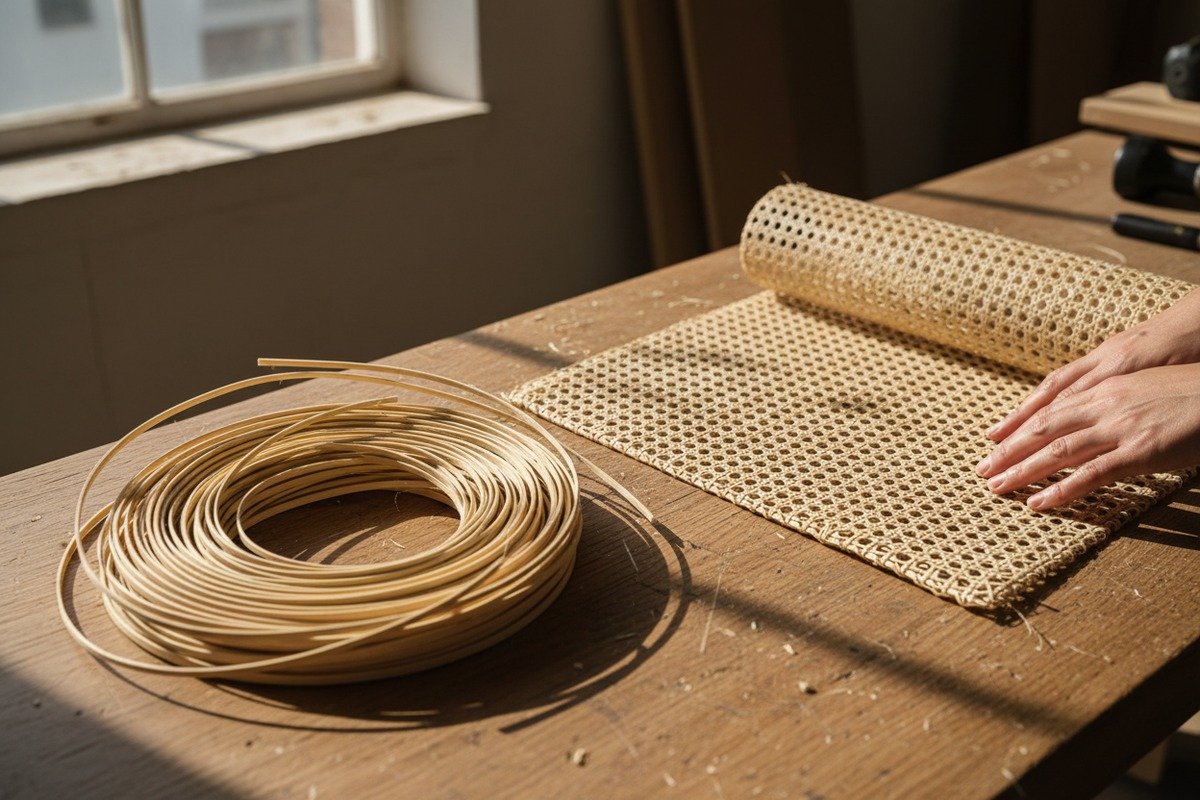
Rattan cane webbing and rattan peel both come from the outer bark of the rattan palm, but they differ in form and use. Rattan peel is the raw, thin strip of bark, typically 2–10 mm wide, used for binding and hand-weaving. Rattan cane webbing is a pre-woven panel made from thinned peel strips, designed for furniture inserts like chair seats and cabinet doors.
Understanding these two materials is the first step to choosing the right one for your project. Let me walk you through each key difference so you can make a confident decision.
How can I distinguish between rattan cane webbing and rattan peel for my furniture projects?
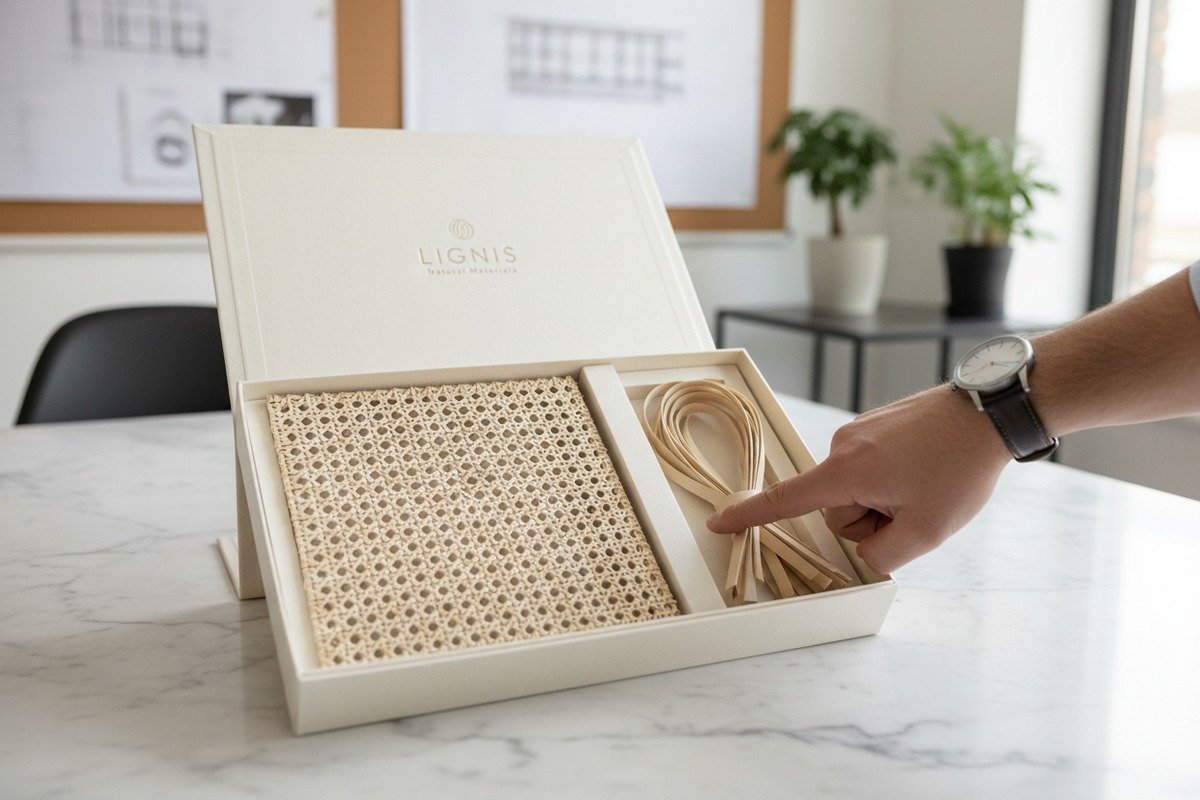
When we ship sample boxes to new clients, confusion between these two materials is the single most common question our sales team receives.
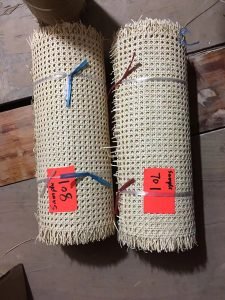
You can distinguish rattan cane webbing from rattan peel by their form: rattan peel arrives as individual flat or semi-circular strips of raw bark, while rattan cane webbing comes as a ready-made woven sheet or roll with a visible pattern such as hexagonal open-mesh or square basketweave, ready for direct installation into furniture.
Where Both Materials Come From
Rattan is a climbing palm, not a vine or a tree. It grows in الغابات الاستوائية 1 across Southeast Asia, especially Indonesia, Vietnam, and the Philippines. A single rattan plant can grow up to 200 meters long. Harvesters cut the mature canes and transport them to processing facilities.
At the processing stage, workers split the rattan pole lengthwise. The outer layer—the protective bark or skin—is carefully removed. This outer layer is what we call rattan peel, also known as rattan skin or cane strip. The remaining inner portion is the لب الروطان 2, sometimes called reed or rattan pole.
Visual and Physical Differences
The easiest way to tell them apart is simply to look at and touch each one.
Rattan peel comes as individual strips. They are thin, flat or slightly curved, and have a natural shine on the outer surface. The strips feel smooth on one side and slightly rough on the other. They are flexible and can be bent without breaking when properly conditioned.
Rattan cane webbing, on the other hand, is a finished textile. It looks like a woven fabric made of cane. The strips have been thinned down even further and interlaced into patterns. Common patterns include the classic شبكة مفتوحة سداسية 3 (often called radio weave), dense square basketweave, and complex diamond motifs. The webbing comes in rolls or flat sheets.
Quick Identification Table
| الميزة | Rattan Peel | Rattan Cane Webbing |
|---|---|---|
| Form | Individual strips | Pre-woven panels or rolls |
| العرض | 2–10 mm per strip | Full sheets (varies by roll size) |
| السطح | Shiny on one side, raw on the other | Uniform woven pattern |
| المرونة | Highly pliable as single strips | Flexible as a sheet, but structured |
| Ready to install? | No — requires hand-weaving | Yes — cut and press into grooves |
| Common look | Raw, organic, artisanal | Orderly, decorative, refined |
A Common Source of Confusion
The word "cane" causes most of the mix-ups. In some markets, "cane" refers to the raw peel strip itself. In others, "cane" refers to the webbing. And in still others, "cane" means the whole rattan pole. Through years of exporting to markets like the Netherlands, Spain, the USA, and Australia, we have learned that the safest approach is to always clarify with a photo or sample. A simple image removes all doubt.
Another frequent mistake is confusing "wicker 4" with a material. Wicker is a weaving technique, not a material. You can make wicker furniture from rattan, willow, bamboo, or even synthetic fibers 5. Rattan cane webbing is one result of a wicker-style process, but the terms are not interchangeable.
Regional Differences in Appearance
At our rattan processing facility in Indonesia, we see firsthand how the species and origin affect appearance. Indonesian rattan peel tends to be lighter in color and smoother in texture. Vietnamese rattan peel is often slightly darker and rougher. These differences carry over into the webbing made from each source. The choice depends on your design needs and your clients' preferences.
Which material is better suited for my specific manufacturing and weaving requirements?
Over the past decade, our team has helped hundreds of furniture factories and wholesalers match the right rattan material to their exact production workflow.
Rattan peel is better suited for hand-weaving, binding furniture joints, and creating bespoke patterns, giving artisans full creative control. Rattan cane webbing is better for manufacturers who need fast, consistent panel installation into pre-routed grooves for chair seats, cabinet doors, and headboards, saving significant labor time.
When to Choose Rattan Peel
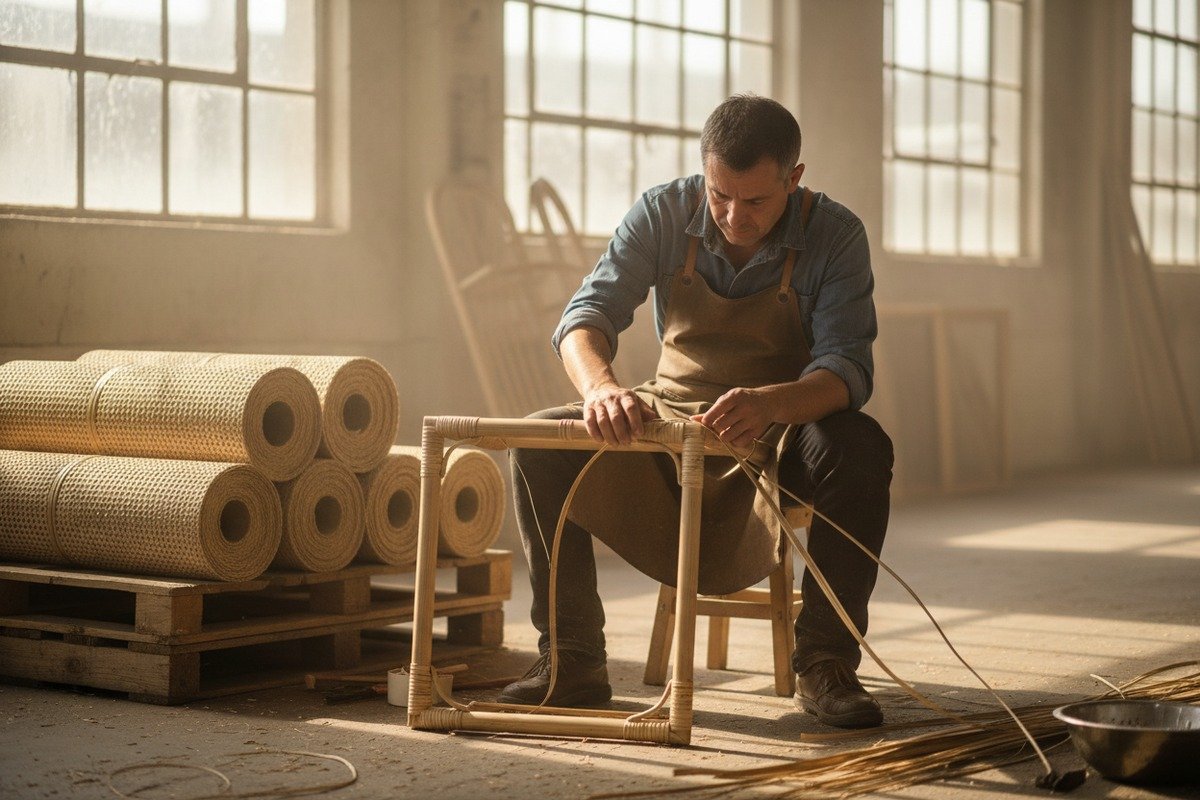
Rattan peel is the right choice when your production process involves skilled weavers who create patterns by hand. This is common in artisanal furniture shops, basket makers, and workshops producing one-of-a-kind pieces. The peel gives the craftsperson maximum freedom. They can wrap it around joints, weave it tightly for solid surfaces, or create open patterns as they see fit.
Peel is also ideal for binding and wrapping. If you make rattan furniture with visible joints, wrapping those joints with peel strips adds both strength and a clean aesthetic. The peel's natural mold resistance also helps in humid climates.
Before working with rattan peel, soak the strips in water for about 15 minutes. This makes them soft and easy to bend without cracking.
When to Choose Rattan Cane Webbing
Rattan cane webbing is the right choice when speed and consistency matter. In a factory setting, pre-woven webbing eliminates the need for skilled hand-weavers at each workstation. A worker cuts the webbing to size, soaks it for approximately 3 hours, and presses it into a pre-routed groove using a أوتاد القصب 8. The result is a uniform, professional finish every time.
This approach is standard for أثاث مودرن من منتصف القرن 9, Scandinavian-style chairs, and decorative cabinet doors. The webbing creates an airy, lightweight look that is very popular in current interior design trends.
Production Efficiency Comparison
| عامل | Rattan Peel (Hand-Weaving) | Rattan Cane Webbing (Panel Install) |
|---|---|---|
| Skill required | High — trained weavers needed | Low — basic training sufficient |
| Installation time per piece | 2–6 hours depending on pattern | 30–60 minutes per panel |
| Pattern flexibility | Unlimited — any custom design | Limited to available weave patterns |
| Consistency across units | Varies by weaver skill | متسق للغاية |
| هدر المواد | Low if weaver is skilled | Moderate — trimming required |
| Soaking time before use | ~15 minutes (strips) | ~3 hours (panels) |
| الأفضل لـ | Artisanal, bespoke, binding | Factory production, decorative panels |
Synthetic Options for Outdoor Use
One important consideration is environment. Neither natural rattan peel nor natural cane webbing performs well outdoors. Direct sunlight, rain, and humidity changes cause cracking, sagging, and mold. For outdoor furniture, synthetic rattan webbing is the better option. Made from UV-resistant plastic 10 like PE rattan, these synthetic versions mimic the look of natural cane while withstanding weather.
At our facilities, we supply both natural and synthetic versions. We have seen a sharp rise in demand for synthetic cane webbing from clients in the Middle East and Australia, where outdoor furniture must endure extreme heat and sun.
Complementary Use
Many furniture designs use both materials together. The core or pole forms the structural frame. The webbing fills the panels. And the peel wraps the joints or adds decorative accents. Understanding each material's role helps you design better products and order the right quantities.
How do the strength and flexibility of rattan peel compare to pre-woven cane webbing?
Strength questions come up in almost every initial conversation with our wholesale clients, especially those supplying furniture factories for the first time.
Rattan peel strips are highly pliable with strong tensile strength, making them excellent for bending, binding, and tight wrapping around joints. Pre-woven cane webbing gains structural integrity from its interlocking weave pattern but is more fragile under heavy point loads. Peel excels in flexibility; webbing excels in distributed surface coverage.

Understanding Tensile Strength vs. Load-Bearing Capacity
These are two different things, and mixing them up leads to product failures.
Tensile strength refers to how much pulling force a material can withstand before it breaks. A single rattan peel strip has impressive tensile strength for its size. You can pull it firmly, bend it around a tight corner, and it will hold. This is why peel has been used for centuries to bind and lash furniture joints.
Load-bearing capacity refers to how much weight a surface can support. A single peel strip cannot hold the weight of a person. But when many strips are woven together into cane webbing, the load is distributed across the entire woven surface. This is how a cane chair seat works—the webbing shares the load across dozens of interlocking strands.
However, cane webbing still has limits. It is not as strong as a solid wood seat or a rattan core frame. Heavy point loads—like a sharp furniture leg placed on top of cane webbing—can puncture or tear the weave. The webbing works best when supported by a frame and subjected to distributed weight.
Flexibility in Practice
Rattan peel is one of the most flexible natural materials available for furniture work. After soaking, it can be bent into very tight curves without snapping. This makes it perfect for wrapping, spiraling around poles, and creating curved basket forms.
Cane webbing is flexible as a sheet—you can curve it gently around a rounded surface. But it cannot handle sharp bends. If you try to fold webbing at a 90-degree angle, the strands will crack. For curved furniture panels, you need to work with the webbing's natural flex range and use appropriate framing.
Strength and Flexibility Comparison
| الخاصية | Rattan Peel Strip | Pre-Woven Cane Webbing |
|---|---|---|
| Tensile strength (per strip) | High — resists pulling and bending | Moderate — individual strands are thinner |
| قدرة التحمل | Very low (single strip) | Moderate — distributes weight across weave |
| Flexibility (tight bends) | Excellent — bends around corners | Limited — cracks at sharp angles |
| Flexibility (gentle curves) | ممتاز | Good — can conform to gentle contours |
| Impact resistance | Good — absorbs shock due to pliability | Poor — point impacts puncture the weave |
| Moisture effect on strength | Soaking increases pliability | Soaking needed for install; over-wetting weakens |
| Lifespan under normal indoor use | Up to 30 years with care | Up to 30 years with care |
The Context-Dependent Strength Debate
Some sources describe rattan peel as "delicate," while others call it "strong and durable." Both are correct depending on context. A single thin strip is delicate compared to a rattan pole. But that same strip is remarkably durable for its weight and thickness. In the same way, cane webbing is strong enough for a chair seat but fragile if mishandled during shipping.
In our experience packing orders for clients in the USA and Europe, packaging durability is a real concern. Webbing rolls need careful wrapping to avoid crushing the weave during transit. We use reinforced cardboard tubes and protective outer layers to keep the webbing pristine on arrival.
Environmental Impact on Strength
Humidity is the biggest enemy for both materials. High humidity causes cane webbing to sag. Low humidity causes it to tighten and potentially crack. Rattan peel handles humidity slightly better because the natural outer skin has water-repellent properties. But neither material should be placed in direct sunlight or near heating vents.
Both materials can last up to 30 years with proper indoor care. Rattan itself regrows in 5–7 years, giving it a strong sustainability advantage over hardwoods.
How can I ensure I am sourcing the highest quality rattan materials for my wholesale business?
Running three factories and managing over 30 partner workshops in Foshan has taught our team that quality control starts long before the material reaches your warehouse.
To source the highest quality rattan materials, verify the origin species (Indonesian rattan is typically lighter and smoother, Vietnamese rougher and darker), inspect for consistent strip width and color uniformity, request Grade A samples before bulk orders, and confirm the supplier has integrated processing capabilities from raw cane harvesting through final product finishing.
Start with the Source
Not all rattan is equal. The species of rattan palm, the region where it grows, and the age at harvest all affect the final product. Indonesian rattan is widely regarded as the benchmark for quality due to its lighter color, smoother texture, and superior flexibility. Vietnamese rattan has its own strengths—certain species produce a rougher, more rustic look that some designers prefer.
When evaluating a supplier, ask where their raw rattan comes from. A supplier who owns or directly controls their processing facility in the growing region has far more quality control than one who buys finished goods from middlemen. Our own rattan processing facility in Indonesia gives us direct oversight from the raw pole stage through peeling, splitting, and webbing production.
Key Quality Indicators
Here are the specific things to check when evaluating rattan peel and cane webbing:
For Rattan Peel:
- Strip width consistency: Every strip in a batch should be within 0.5 mm of the stated width.
- Color uniformity: Natural variation is expected, but dramatic color shifts within a single batch indicate mixed sources or uneven drying.
- Surface smoothness: The shiny outer side should be free of deep scratches, splits, or insect damage.
- Flexibility test: A properly processed strip should bend 180 degrees after soaking without cracking.
For Rattan Cane Webbing:
- Weave tightness: The pattern should be consistent with no gaps, loose strands, or skipped intersections.
- Roll flatness: The webbing should unroll flat without curling at the edges.
- Strand uniformity: All strands in the weave should be similar in thickness and color.
- Edge finish: The cut edges should be clean, not fraying or unraveling.
Supplier Evaluation Checklist
Ask these questions before placing your first order:
- Do you own or control processing facilities at the rattan source?
- Can you provide Grade A samples before I commit to a bulk order?
- What species of rattan do you use, and from which region?
- Can you supply both natural and synthetic versions?
- What is your quality control process at each production stage?
- How do you package rolls and sheets for international shipping?
- Can you provide specific sizing to match my furniture dimensions?
- What is your minimum order quantity?
- Do you offer third-party quality inspection reports?
- What is your lead time from order confirmation to shipping?
Packaging and Shipping Matter
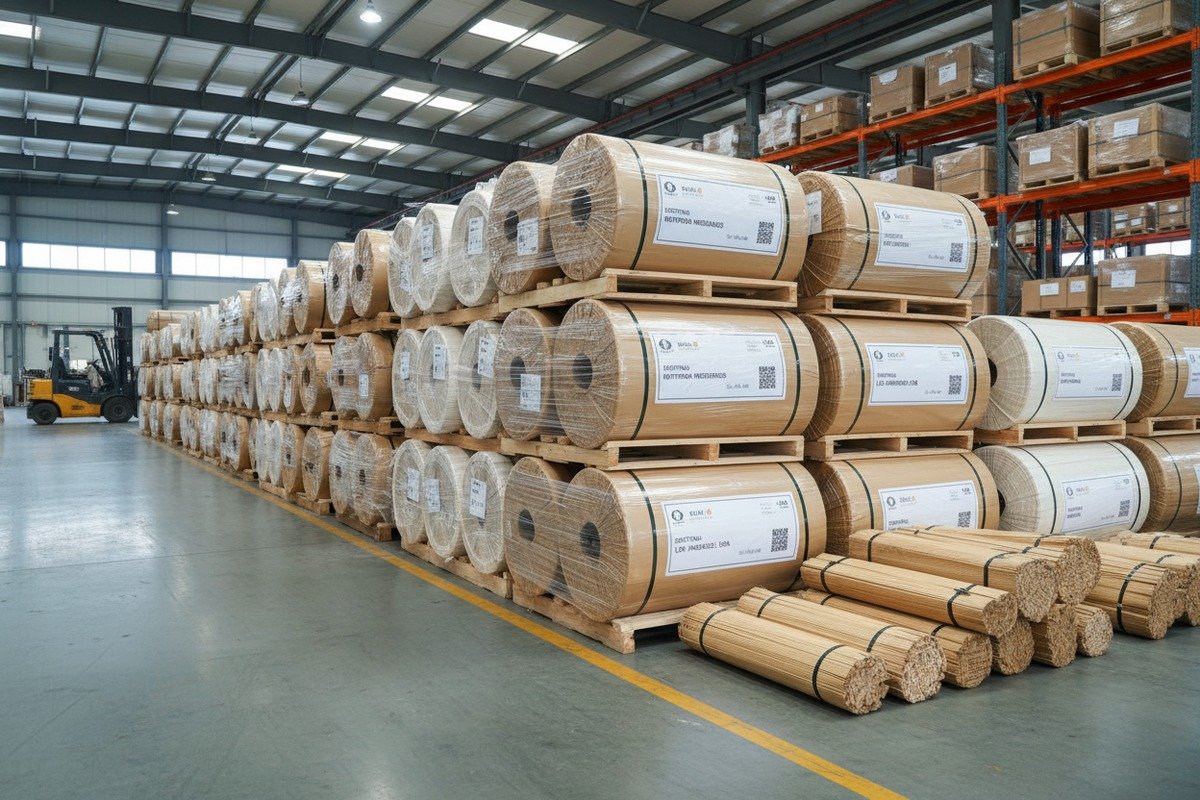
Even the best rattan material can arrive damaged if packaging is poor. Cane webbing rolls are especially vulnerable. Crushed or dented rolls cannot be repaired. At our facilities, we use rigid cardboard tubes inside each roll, wrap them in moisture-barrier film, and secure them in reinforced cartons. For peel strips, we bundle them tightly and wrap them to prevent tangling.
We have learned from experience shipping to countries like Saudi Arabia, Russia, and Australia that packaging must survive rough handling and long transit times. Cutting corners on packaging always costs more in the long run through returns and complaints.
بناء علاقة توريد طويلة الأجل
Quality sourcing is not a one-time event. The best results come from building a relationship with a supplier who understands your specific needs. Share your quality standards clearly. Provide feedback on every shipment. Visit the factory if possible. A trusted supplier becomes a partner who protects your brand reputation.
For wholesale buyers who need both rattan peel and cane webbing along with other rattan materials, a one-stop supplier simplifies logistics, reduces shipping costs, and ensures material compatibility across your product line.
خاتمة
Rattan peel and rattan cane webbing serve different roles. Choose the right form for your project, verify your source, and your furniture will last decades.
ملاحظات سفلية
1. This source discusses rattan’s growth in tropical rainforests and its sustainable harvesting. ↩︎
2. Provides a clear definition, properties, and uses of rattan core. ↩︎
3. Describes hexagonal open-mesh as a common rattan cane webbing pattern for furniture. ↩︎
4. Wikipedia defines wicker as a weaving method, not a material, clarifying a common misconception. ↩︎
5. Authoritative source providing a comprehensive definition of synthetic fibers. ↩︎
6. Wikipedia provides a comprehensive overview of rattan palms, their species, and origins. ↩︎
7. Authoritative source defining weaving and its various techniques. ↩︎
8. Explains reed spline’s role in securing cane webbing into furniture grooves during installation. ↩︎
9. Highlights the use of rattan in mid-century modern furniture design and its enduring popularity. ↩︎
10. Details PE rattan as a UV-resistant plastic, ideal for durable outdoor furniture. ↩︎

 English
  Español de México
  العربية
  Deutsch
  Français
  Русский