
Import rules and unclear pricing stall builds. I set clean papers and quote price tiers that match your sizes and patterns.
You need a business ID, consignee and tax details, HS codes, and clean import documents. Prices scale by width, mesh density, diameter, and pattern complexity. I show quantity breaks, list uplifts for FSC and FR, and apply tier discounts to mixed‑SKU orders when total m² hits the bracket.
I will share the import basics I use with new buyers. Then I will explain how size and complexity change price per m², how quantity tiers work, how FSC, FR, and special finishes affect unit prices, and how I treat mixed‑SKU orders against the same tier.
Do wider rolls, denser meshes1, and larger diameters cost more per m²?
Bigger sizes and tighter patterns use more material and time. The price reflects that.
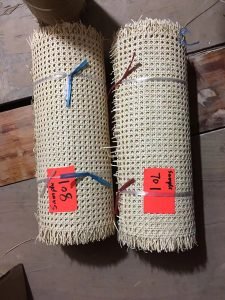
Yes. Wider rolls, denser meshes1, and larger core diameters cost more per m². Open hex weaves price lower. Closed or double‑warp meshes price higher. I quote clear ladders by width and pitch.
Dive deeper: Width, density, diameter, and grade
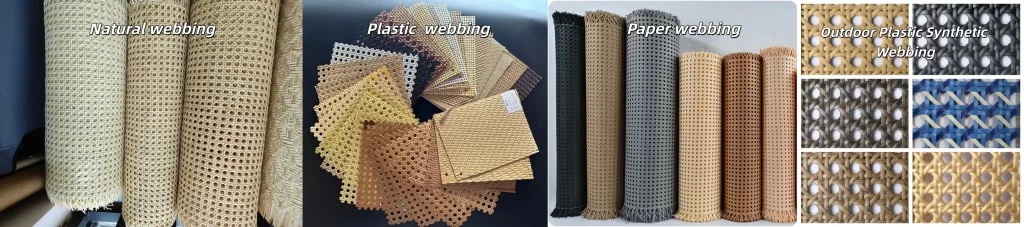
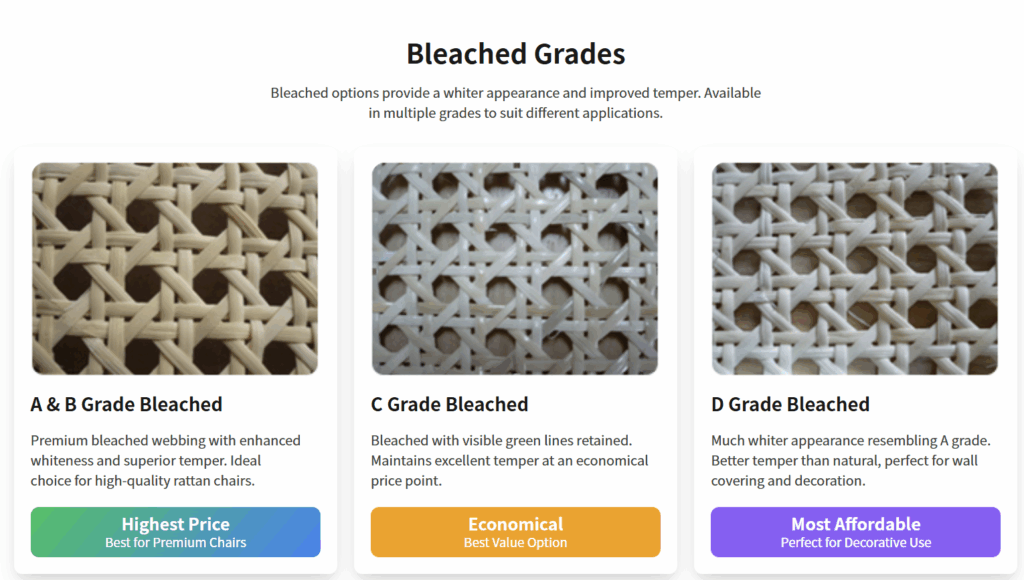
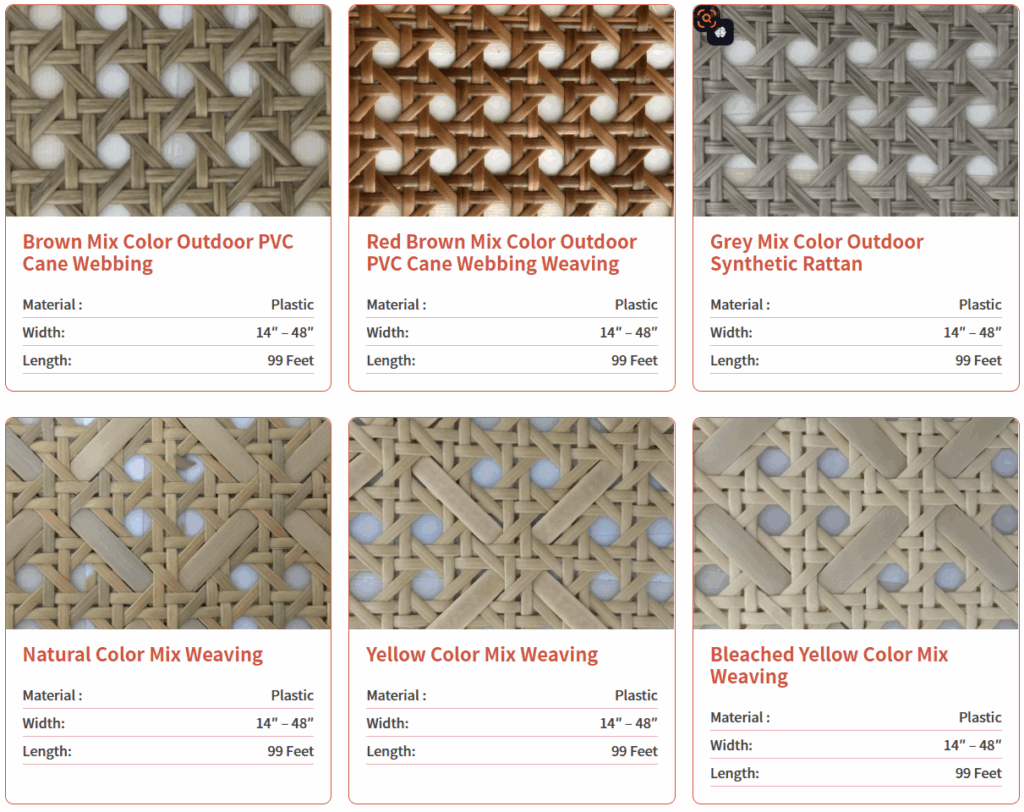
I price natural rattan cane webbing by usable width and pattern pitch. A 45–60 cm roll sits at a lower price per m² than 90–120 cm because waste rises with width and loom time increases. Open hex with larger holes is faster and cheaper. Tight mesh with small holes needs more strands and slower weaving, so it costs more. Rattan cores and chair cane price by diameter and grade. Larger diameters take higher‑quality poles and have more rejection, so unit cost rises. I match grades A, B, C, and D to use. I push Grade C for dark‑stain chair seats and backs because it is strong and cost‑effective. Grade A fits premium light finishes where color must be clean. Grade D is for decoration only. I show optional plastic rattan cane webbing at about half the natural price with many colors, and I flag outdoor plastic lines that handle heat with a small uplift for UV compounds.
Can I see price breaks by quantity and pattern complexity?
Bulk orders lower cost. Complex patterns soften less as labor stays high.
Yes. I publish tier pricing by total m² and pattern class. Simple weaves drop faster with volume. Complex meshes drop slower. I quote mixed tiers for multi‑SKU projects.
Dive deeper: Tier brackets, pattern classes2, and how I apply them
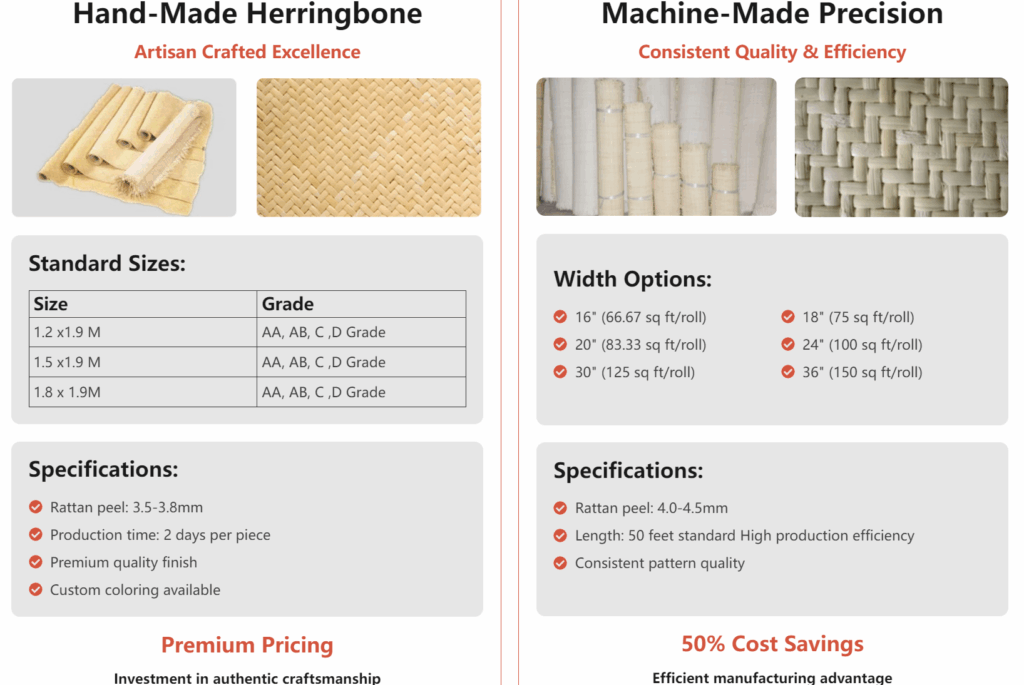
I use clear brackets, for example 50–199 m², 200–499 m², 500–999 m², and 1000+ m². I group patterns by complexity. Class S covers open hex and simple basket weaves. Class M covers medium‑tight meshes and decorative stripes. Class C covers closed meshes and double‑warp designs. Class S gets the best volume drop because the loom speed is high and waste is low. Class C gets smaller drops because labor and QC stay heavy even at scale. I calculate tiers by the total m² across SKUs in one PO. If you split POs but ship together, I can still apply the higher tier. I include optional cut fees for custom widths and note waste factors for very wide rolls. I send a table that shows base price, tier discounts by class, and the net unit price at your planned volume so you can plan budgets room by room.
How do FSC1, FR, and special finishes affect unit pricing?
Certs and coatings add cost. I show each uplift so you can choose where to apply them.
FSC1 adds a premium. FR and special finishes add material and process cost. I line‑item each uplift, keep volumes in the same tier, and confirm lead time impact before PI.
[^3] FR finish pricing impacts](https://rattanwholesaler.com/wp-content/uploads/2025/09/outdoor-rattan-cane-webbing-1024x1024.jpg "Certifications and finish uplifts")
Dive deeper: Typical uplifts, lead times, and where they make sense
FSC3 sourcing adds cost due to certified raw cane and factory segregation. I see about 8–15% uplift depending on width and pattern. Lead time can extend by 10–20 days when certified lots are tight. FR treatment4 depends on your market’s standard and whether you need FR on natural cane, panels, or plastic webbing. FR for plastic webbing adds a resin or coating change and testing, so I quote a defined uplift and a test fee if labs are needed. Special finishes like dark stain, honey, walnut, or matte clear add steps and yield loss. Water‑based low‑VOC coats hold price steady. Solvent or high‑build coats add more. I advise where you need these: guest rooms may need FSC3; public areas may need FR; chair seats in dark colors can use Grade C to control cost. I map finishes to SKUs so you keep premiums only where audits demand them.
Will mixed‑SKU orders get the same tier discount as single‑SKU orders?
Projects use many widths and patterns. I reward total volume, not just one SKU.
Yes. I apply tier discounts to mixed SKUs when the total m² meets the bracket. I keep each SKU’s base tied to its complexity, then apply the same tier rate to all lines.
Dive deeper: How I calculate tiers across lines and avoid overpaying
I sum the total m² across webbing widths, mesh types, cores, and chair cane in one purchase order. I set base prices per SKU using size and class. I apply one tier discount percentage to all SKUs when the total meets the bracket. If one SKU is Class C and another is Class S, each keeps its class base, but both get the same tier percentage off. I document this in the PI and the quote sheet so your finance team sees the math. If your project runs phases, I can hold the higher tier for 60–90 days to capture later call‑offs under the same PO framework. I also add a combined tier for outdoor plastic webbing so you can mix indoor and outdoor lines and still land the discount. This approach keeps prices fair and protects budgets across complex hotel and furniture builds.
خاتمة
You need clean import papers and clear price ladders. I price by size and complexity, show volume tiers, list FSC and FR uplifts, and apply the same tier to mixed SKUs.
-
Exploring this resource will provide insights into the advantages and applications of denser meshes, enhancing your understanding of their value. ↩ ↩ ↩ ↩
-
Exploring pattern classes will give you insights into how complexity affects pricing and help you make informed decisions. ↩
-
Explore how FSC certification influences costs and sustainability in sourcing materials. ↩ ↩
-
Learn about the costs and implications of FR treatment for various materials in your projects. ↩

 English
  Español de México
  العربية
  Deutsch
  Français
  Русский