
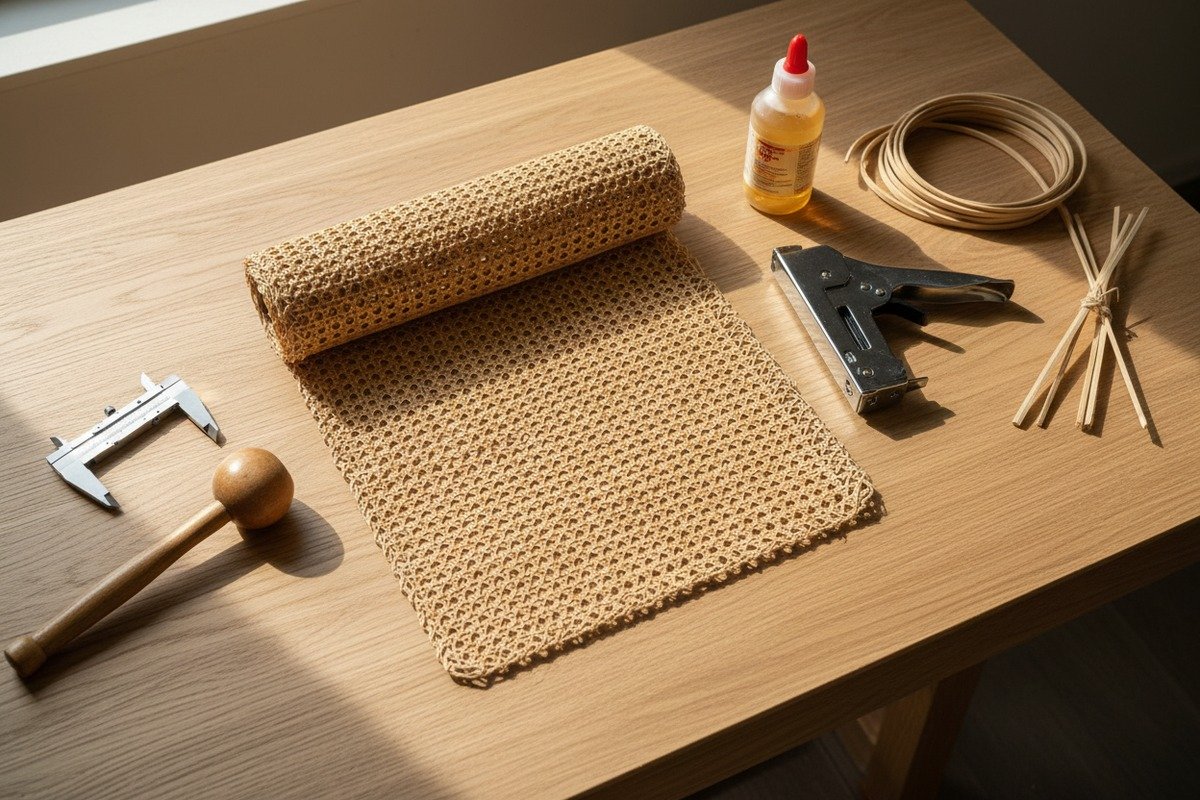
Every week, we ship rattan cane webbing 1 to furniture factories and wholesalers around the world. And every week, someone asks us: what exactly do I need to install it properly staple gun 2? It is a fair question. Pick the wrong spline or skip a key fastener, and you end up with sagging panels, cracked cane, or a job you have to redo from scratch. The frustration is real, and we have seen it too many times.
To install natural rattan cane webbing, you need reed splines sized to match your frame’s groove (typically 3/16 to 1/4 inch wide), along with wood glue or hide glue for the spline method. For flat-frame applications without grooves, use a staple gun with staples placed every 2–3 inches, optionally combined with wood glue for extra hold.
Below, we break down each critical decision you need to make—from picking the right spline size to sourcing materials that will not let you down. Let’s get into the details.
How do I choose the right spline size to fit my rattan cane webbing grooves?
We have tested hundreds of spline and groove combinations across our production lines in Foshan and Indonesia. The single biggest installation mistake? Choosing a spline that does not match the groove. It sounds simple, but a loose spline means loose webbing. A too-tight spline cracks the frame or tears the cane. The problem is avoidable once you know the rules.
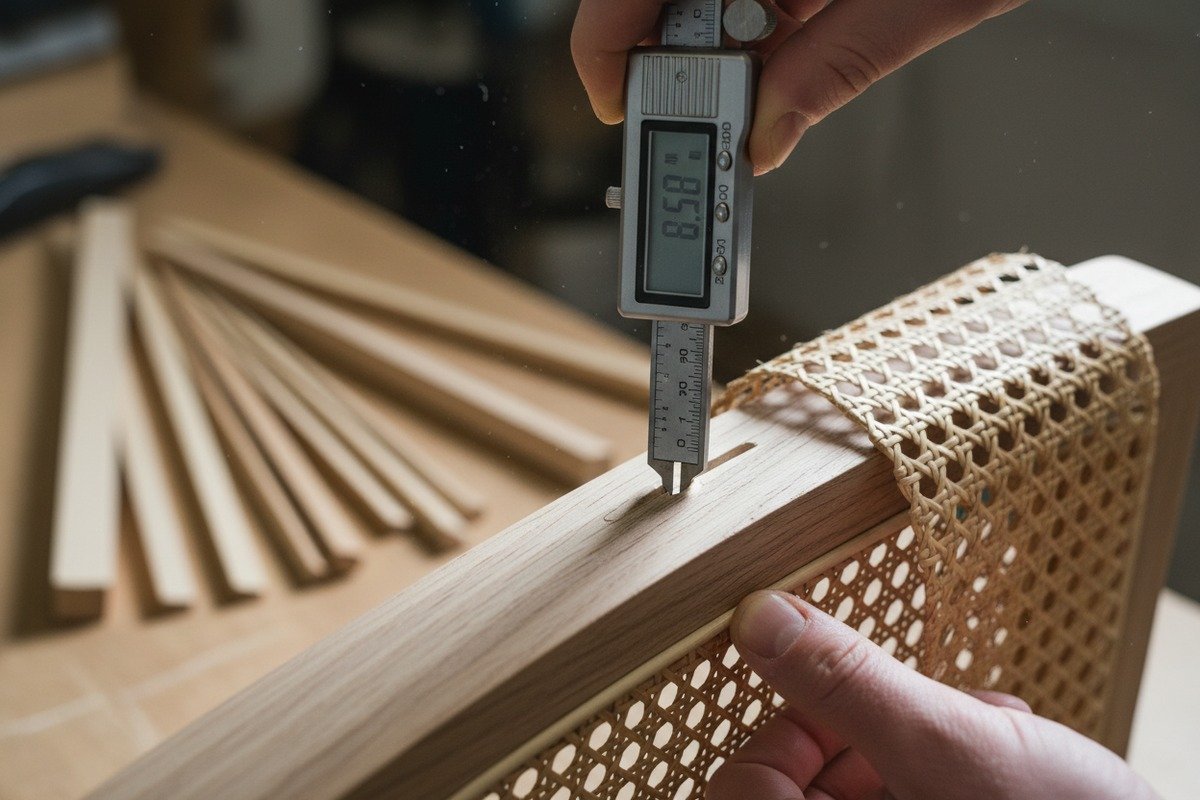
The right spline size depends on your groove's width and depth. Measure the groove first—most standard furniture frames use a groove 3/16 to 1/4 inch wide and about 1/4 inch deep. Then select a reed spline with a wedge profile that fills the groove snugly when pressed in with the cane webbing layered underneath.
Why Groove Dimensions Matter More Than You Think
A groove is not just a slot. It has a width, a depth, and a shape. groove dimensions 3 Some grooves are perfectly square at the bottom. Others have a slight taper. The spline must match all three dimensions. If the spline is too narrow, it will not create enough pressure to hold the webbing taut. If it is too wide, you risk splitting the wood frame or deforming the cane.
Here is a quick reference we share with our wholesale clients:
| Groove Width | Recommended Spline Width | Spline Depth | Best Use Case |
|---|---|---|---|
| 3/16 inch (4.8 mm) | 3/16 inch | 1/4 inch | Smaller frames, decorative panels |
| 1/4 inch (6.35 mm) | 1/4 inch | 1/4 inch | Standard chairs, cabinet doors |
| 5/16 inch (7.9 mm) | 5/16 inch | 5/16 inch | Large openings, heavy-duty seats |
How to Measure Your Groove Accurately
Use a caliper or a small ruler. Insert a piece of scrap spline to test the fit before committing. The spline should slide in with firm hand pressure but not require excessive force. When the cane webbing is layered into the groove beneath the spline, the fit will naturally become tighter.
The Wedge Profile Matters
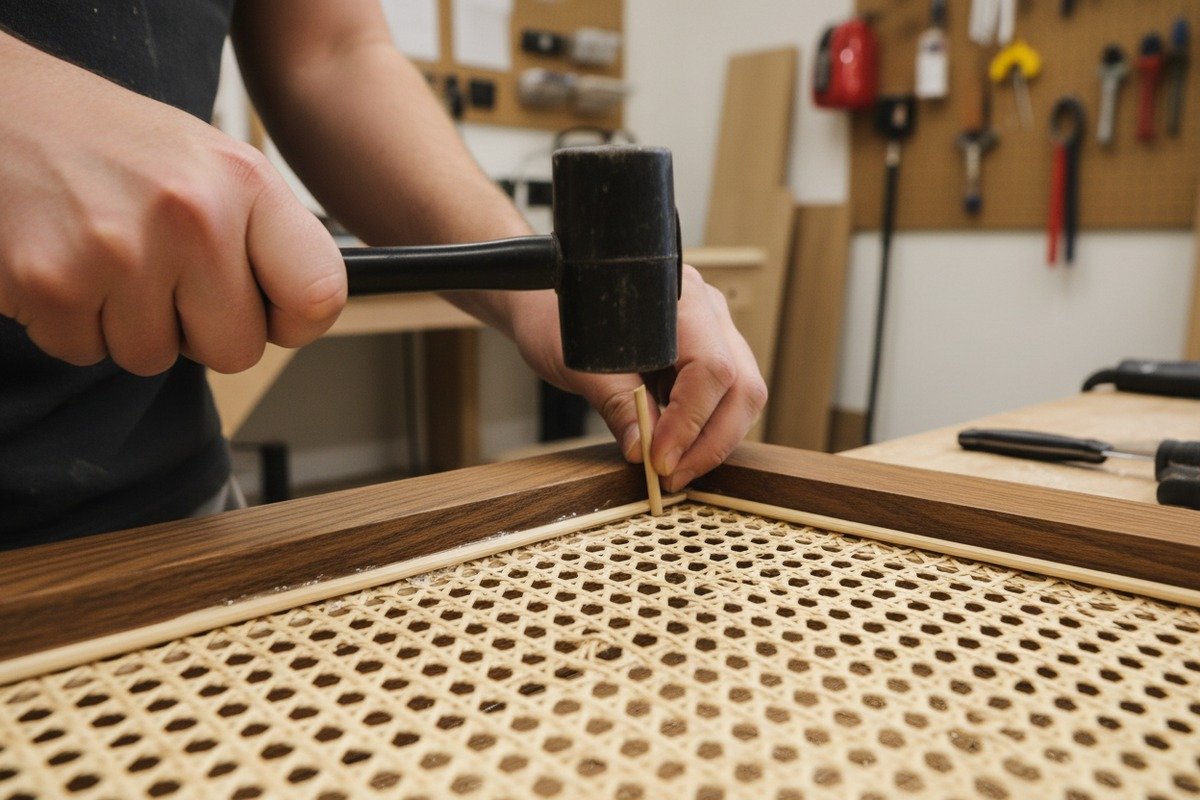
Not all splines are flat strips. Quality reed spline 4s have a slight wedge or taper. This wedge shape is what creates the locking action. As you tap the spline deeper into the groove, it compresses the cane webbing against the groove walls. This is the mechanism that keeps everything drum-tight. A flat spline without a taper simply does not grip as well.
From our experience exporting to markets like the US, Netherlands, and Australia, we always recommend ordering a sample spline before placing a bulk order. Even a 0.5 mm difference in width can change the installation outcome. Our team routinely sends spline samples alongside cane webbing rolls so that buyers can verify the match before production begins.
Soak the Spline Before Installation
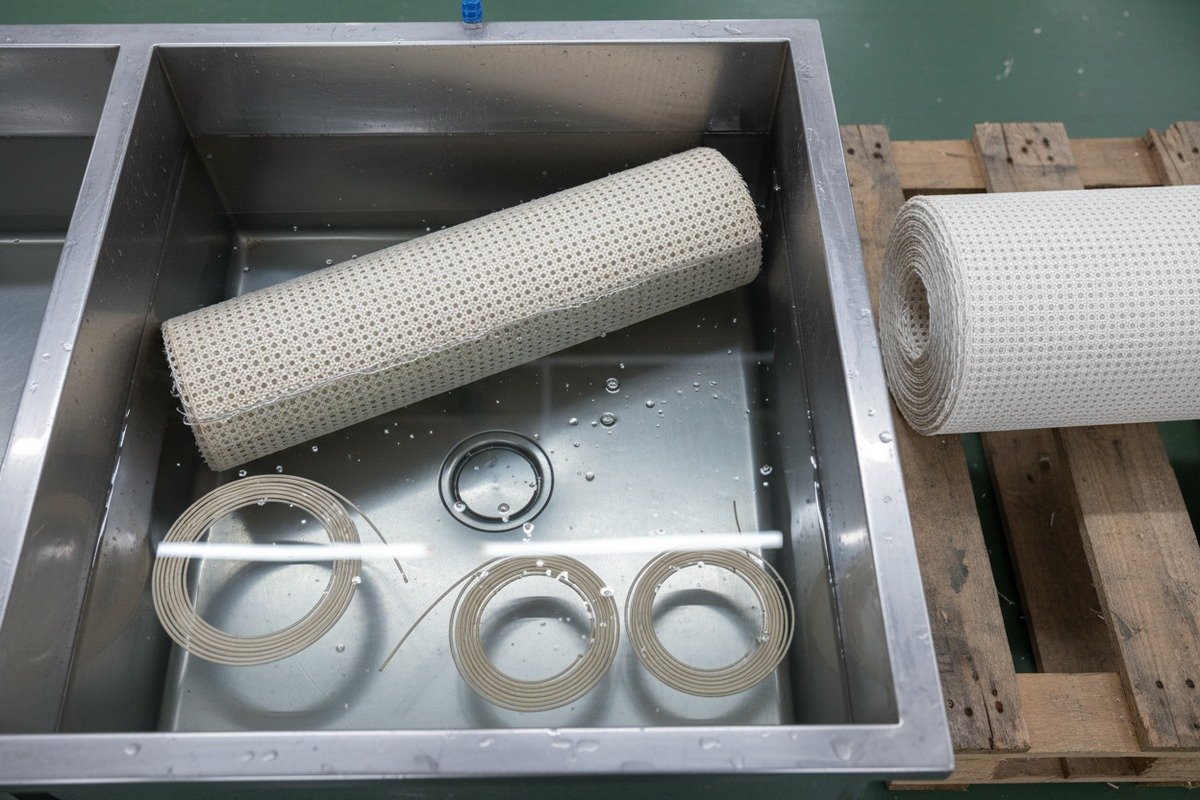
Just like the cane webbing, the reed spline must be soaked in warm water for at least 15–20 minutes. A dry spline is brittle and will snap at corners. A soaked spline bends smoothly and seats into the groove without cracking. This step is non-negotiable.
Which fasteners should I use to keep my natural rattan webbing from sagging over time?
Sagging is the number one complaint we hear from furniture factories that rush the fastening step. When we train new partner factories in Foshan, the first lesson is always about fastener selection. The wrong fastener does not just fail—it damages the cane and the frame in ways that are hard to fix.
For grooved frames, use reed splines combined with wood glue or hide glue applied inside the groove. For flat frames without grooves, use a staple gun with staples placed every 2–3 inches along the edges, ideally paired with wood glue. Both methods prevent sagging when executed correctly, but the spline method offers superior long-term tension.
Spline Method vs. Staple Method: A Direct Comparison
These are the two primary approaches. Each has a place. The choice depends on your frame type and the application.
| الميزة | Spline + Glue Method | Staple + Glue Method |
|---|---|---|
| Frame requirement | Routed groove required | Flat frame, no groove needed |
| Durability | Excellent—holds tension for years | Good—may loosen under heavy use |
| Skill level | Intermediate | Beginner |
| Installation time | 45–90 minutes + 1–2 days drying | 20–40 minutes |
| Best for | Chair seats, cabinet doors, headboards | Decorative panels, end tables, light-use items |
| Reversibility | Yes, with hide glue 6 | Difficult once stapled and glued |
How Glue Prevents Sagging
Glue is the unsung hero of cane webbing installation. In the spline method, a thin bead of wood glue 7 or hide glue is applied inside the groove before the spline is tapped in. The glue bonds the spline, the cane, and the wood frame together into one unit. Without glue, the spline can gradually work itself loose, especially on furniture that gets daily use.
For the staple method, a layer of wood glue spread on the frame edge before stapling adds significant holding power. The staples provide immediate mechanical grip. The glue cures over 24–48 hours and creates a permanent bond.
Which Glue Type Should You Pick?
Hide glue is traditional. It is reversible with steam and heat, which makes future repairs easier. This is the top choice for antique restoration and high-end custom furniture.
White wood glue (like Elmer's or Titebond) is stronger and more accessible. It creates a permanent bond. This is the go-to for production furniture and modern DIY projects. However, be careful not to over-apply—excess glue oozes through the cane weave and leaves visible marks.
Staple Spacing and Tension
When using staples, spacing matters. Place staples every 2–3 inches along the edge. Start from the center of one side and work outward. Then move to the opposite side and pull the webbing taut before stapling. Repeat for the remaining two sides. This cross-pattern approach ensures even tension across the entire panel.
We always remind our clients: install the cane while it is still damp from soaking. Natural rattan shrinks as it dries. This shrinkage is what gives you that final, drum-tight finish. If you install dry cane, it will stay loose forever.
Where can I source high-quality rattan splines that won't crack during my installation?
Cracked splines waste time, waste material, and delay production. We see this issue constantly when buyers source splines from random suppliers without checking quality first. In our own rattan processing facility in Indonesia, we grade every batch of reed spline before it ships. Not all splines are created equal.
Source rattan splines from established rattan material wholesalers who process their own reed stock, such as suppliers in Indonesia or China with dedicated rattan facilities. High-quality splines are made from mature rattan reed, have a consistent diameter, and flex without cracking when soaked. Always request samples before bulk ordering.
What Makes a Spline Crack?
Cracking happens for three main reasons:
- The reed is too young. Immature rattan reed lacks the fiber density needed to bend at corners without snapping.
- The spline was not soaked properly. Dry reed is brittle. Even high-quality splines crack if you skip the soaking step.
- Inconsistent diameter. Poorly processed splines have thin spots that become weak points during bending.
Where to Look for Reliable Suppliers
The global rattan supply chain 8 starts in Southeast Asia—primarily Indonesia, Vietnam, and the Philippines. Indonesia produces the highest volume of raw rattan. Processing hubs in China, particularly in Foshan's Nanhai district, refine these materials into finished splines, cane webbing, and other rattan products.
Here is a sourcing comparison we share with our B2B clients:
| Sourcing Channel | الإيجابيات | السلبيات | الأفضل لـ |
|---|---|---|---|
| Direct from Indonesian mills | Lowest cost, large MOQ | Longer lead times, quality varies | High-volume furniture factories |
| Chinese rattan wholesalers (e.g., Foshan-based) | Quality control, full product range, moderate MOQ | Slightly higher than mill-direct | Wholesalers, mid-to-large factories |
| Online marketplaces (Alibaba, Amazon) | Easy access, small MOQ | Quality inconsistent, limited grading | Small DIY shops, sample orders |
| Specialty craft suppliers (HH Perkins, etc.) | Curated quality, US-based shipping | Premium pricing | Individual restorers, small workshops |
How We Grade Splines at Our Facility
At our Foshan headquarters, we inspect every spline batch for three things: fiber density, moisture content, and bend test performance. We soak a random sample and bend it around a 90-degree corner jig. If more than 2% of the sample cracks, the batch is downgraded. This is the kind of quality control that prevents installation headaches downstream.
Natural Reed vs. Synthetic Splines
Some suppliers offer synthetic or plastic splines. These do not crack, and they resist moisture. But they lack the natural flexibility of reed. Synthetic splines can feel overly rigid and do not compress into grooves the same way. For most traditional furniture applications, natural reed remains the better choice. Synthetic splines work well in outdoor or high-moisture environments where natural reed would degrade.
Tips for Buyers Placing Bulk Orders
Always request a bend-test video or certificate. Ask about the rattan's origin species—Calamus manan 9 and Calamus caesius are the most common and most reliable. Confirm that the spline width matches your groove specification to the nearest 0.5 mm. And always order 10–15% extra to account for waste and corner breakage during installation.
We have had clients order our Grade A open-weave cane webbing and then pair it with bargain-bin splines from an unverified supplier. The result? The spline cracked on the second corner, the glue oozed through the weave, and the finished piece looked anything but premium. Quality matching is not optional—it is essential.
To ensure your fasteners and splines match premium rattan webbing, source all components from a single supplier or verified supply chain. Verify that spline dimensions precisely fit your groove, use compatible glue types (hide glue for restoration, wood glue for production), and test a complete assembly before committing to a full production run.
The One-Stop Sourcing Advantage
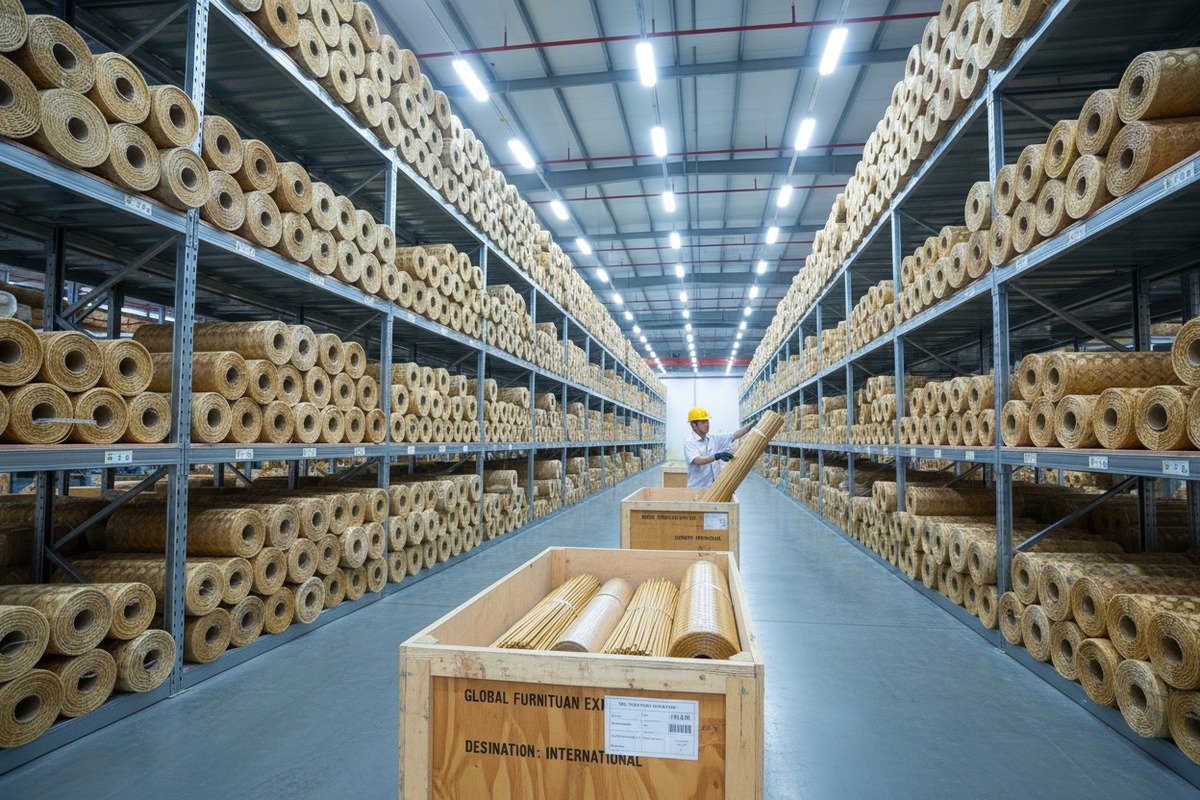
When you buy your cane webbing, splines, and recommended adhesives from one supplier, you eliminate compatibility guesswork. Our supply chain in Foshan covers over 30 partner factories. This means we test our splines against our webbing before anything ships. The groove fit, the tension, the bend performance—all verified in-house.
For buyers who source from multiple vendors, mismatches are common. A spline from Supplier A might be 0.3 mm wider than what Supplier B's webbing can accommodate. That tiny difference causes buckling or tearing during installation.
Material Compatibility Checklist
Before you start any installation or production run, verify these five points:
- Spline width matches groove width within 0.5 mm tolerance.
- Spline depth is equal to or slightly less than groove depth to allow room for the cane layer.
- Glue type is appropriate for the end use (hide glue for reversibility, wood glue for permanence).
- Cane webbing has been soaked for the correct duration—30 minutes for staple installs, 1–3 hours for spline installs on tight weaves.
- All materials are from the same quality tier. Do not pair Grade A webbing with ungraded splines.
Testing Before Full Production
We always recommend building one sample unit first. Install the cane, seat the spline, apply the glue, let it cure for 48 hours, and then inspect. Check for:
- Sagging or looseness
- Glue bleed-through on the visible face
- Spline cracks at corners
- Even tension across the panel
If any of these issues appear, adjust your materials or technique before scaling up. This single test unit can save thousands of dollars in rework costs.
Packaging and Storage Affect Quality Too
Even the best splines degrade if stored improperly. Reed splines should be kept in a cool, dry environment away from direct sunlight. Excessive humidity causes mold. Excessive dryness makes them brittle. We vacuum-seal our spline shipments and include silica gel packets for export orders going to humid climates like Thailand and the Philippines.
Similarly, rattan cane webbing rolls should be stored flat or loosely rolled. Tightly wound rolls can develop permanent creases that are difficult to remove even after soaking. Our packaging uses reinforced cardboard cores and stretch wrap to maintain roll integrity during transit—a direct response to the packaging durability concerns our buyers have raised.
A Note on Sustainability
Natural rattan is one of the most sustainable furniture materials available. It grows rapidly, requires no pesticides, and is harvested without killing the parent plant. When you choose natural reed splines over synthetic alternatives, you are making a choice that aligns with the global push toward eco-friendly materials 10. Many of our European clients—especially in the Netherlands and Spain—now require sustainability certifications as part of their procurement process. We provide documentation for all raw materials sourced through our Indonesian facility.
خاتمة
Successful rattan cane webbing installation comes down to three things: the right spline, the right fasteners, and consistent material quality. Match your components, test before production, and source from a supply chain you trust.
ملاحظات سفلية
1. Explains the material and manufacturing process of rattan cane webbing. ↩︎
2. Describes the function and various types of staple guns. ↩︎
3. Provides specific information on groove dimensions relevant to cane webbing installation. ↩︎
4. Reputable woodworking supplier with a clear product description. ↩︎
5. Explains the mechanical principle of a wedge and its application. ↩︎
6. Explains the unique properties and traditional uses of hide glue. ↩︎
7. Provides an overview of various types of wood glues and their applications. ↩︎
8. Provides an overview of the global rattan supply chain and its challenges. ↩︎
9. Offers botanical information on a significant rattan species. ↩︎
10. Discusses the characteristics and benefits of eco-friendly materials in furniture. ↩︎

 English
  Español de México
  العربية
  Deutsch
  Français
  Русский