
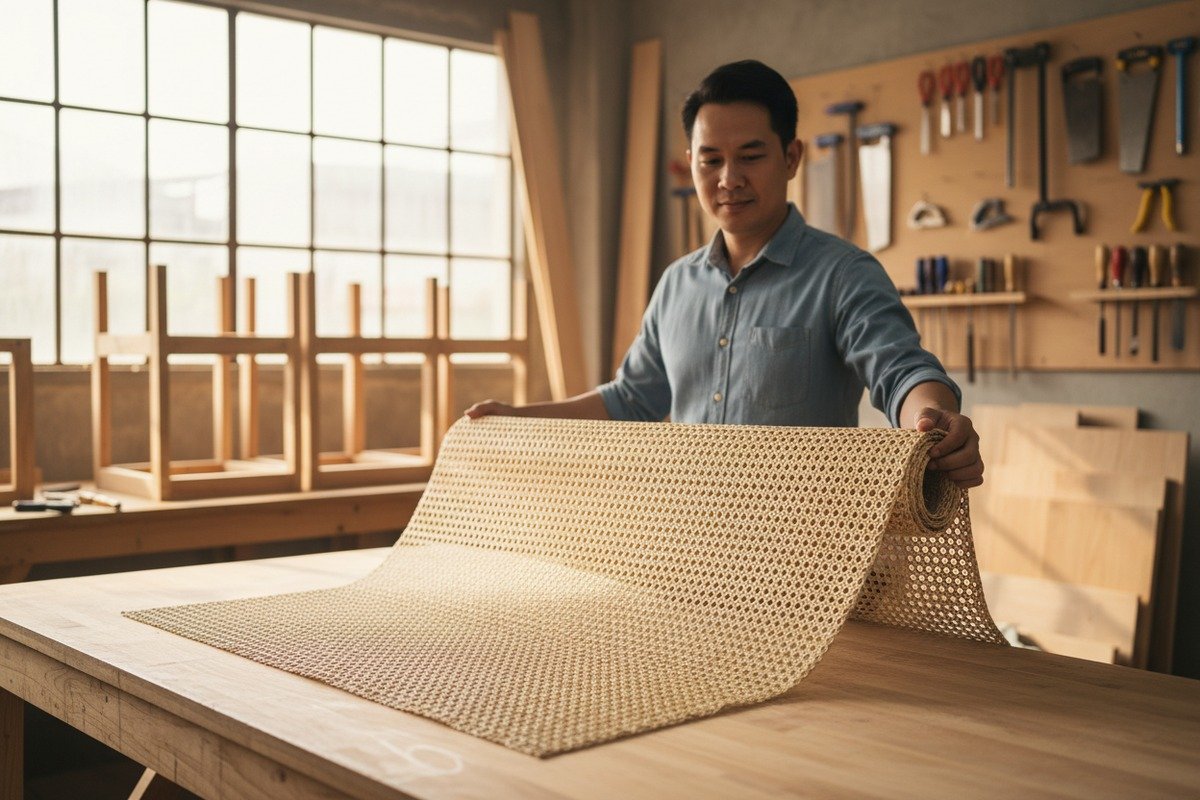
Every week, our sales team fields calls from buyers who ordered the wrong rattan webbing grade 1 on their first import and ended up with material that cracked, looked uneven, or simply didn’t match the furniture style they were building. The frustration is real. Choosing a grade sounds simple, but with labels like AAA, A, B, C, and D floating around, plus variations in origin, finish, and weave, the decision can cost you thousands if you get it wrong.
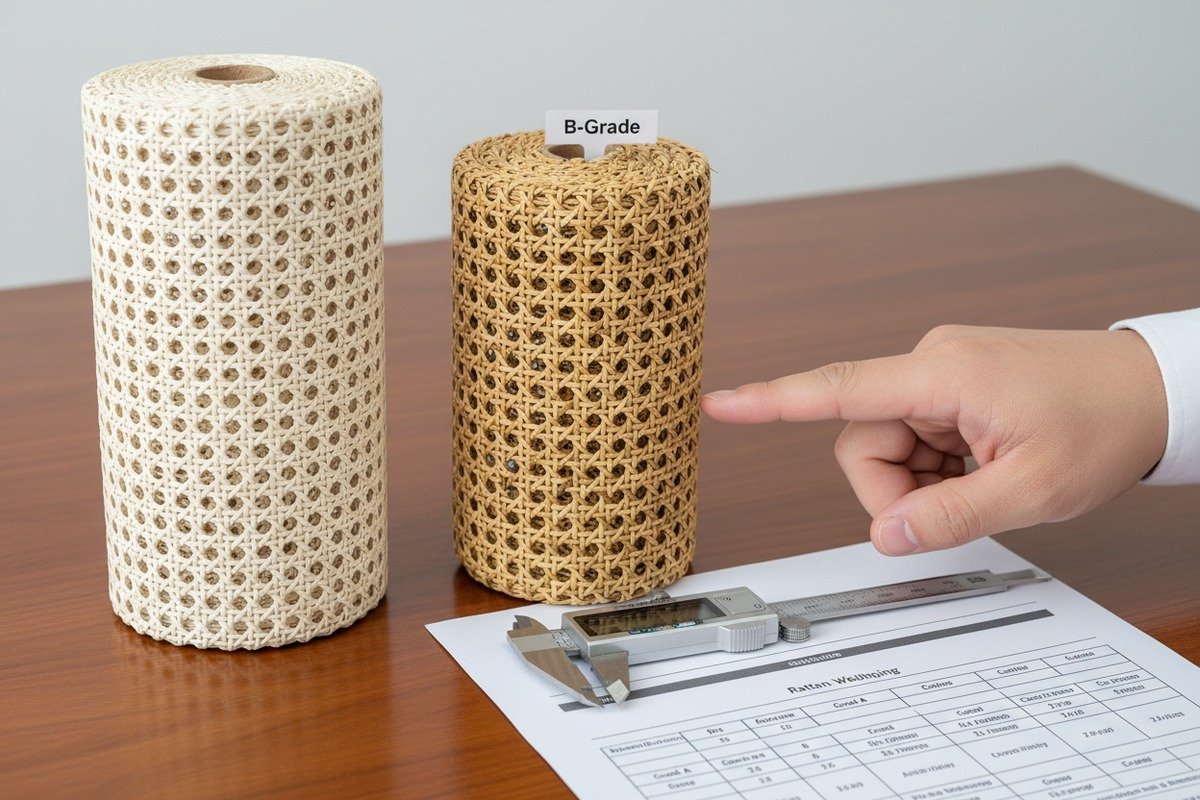
For most first-time buyers, B-grade rattan cane webbing offers the best balance of quality, aesthetics, and cost-effectiveness. It provides smooth texture with only minor surface defects, good elasticity for furniture applications, and a price point that protects your margins while still delivering a professional finished product.
This guide breaks down every grade, compares origins and finishes, and gives you a clear decision framework B-grade rattan cane webbing 2. Whether you run a furniture factory, wholesale operation, or material supply business, you will know exactly what to order by the end of this article.
How do I determine if Grade A rattan webbing is the right choice for my furniture brand?
When we ship Grade A rolls from our Indonesian processing facility, the difference is visible the moment you unroll the sheet premium or luxury market segment 3. But "visible" does not always mean "necessary" for your specific product line. Many buyers overspend on Grade A when their end product does not demand it.
Grade A rattan webbing is the right choice if your furniture brand targets the premium or luxury market segment, where customers expect flawless surface texture, uniform color, high elasticity, and zero visible defects. For mid-range furniture lines, Grade A may increase costs without proportional return.
ما الذي يحدد شبكة الخيزران من الدرجة الأولى؟
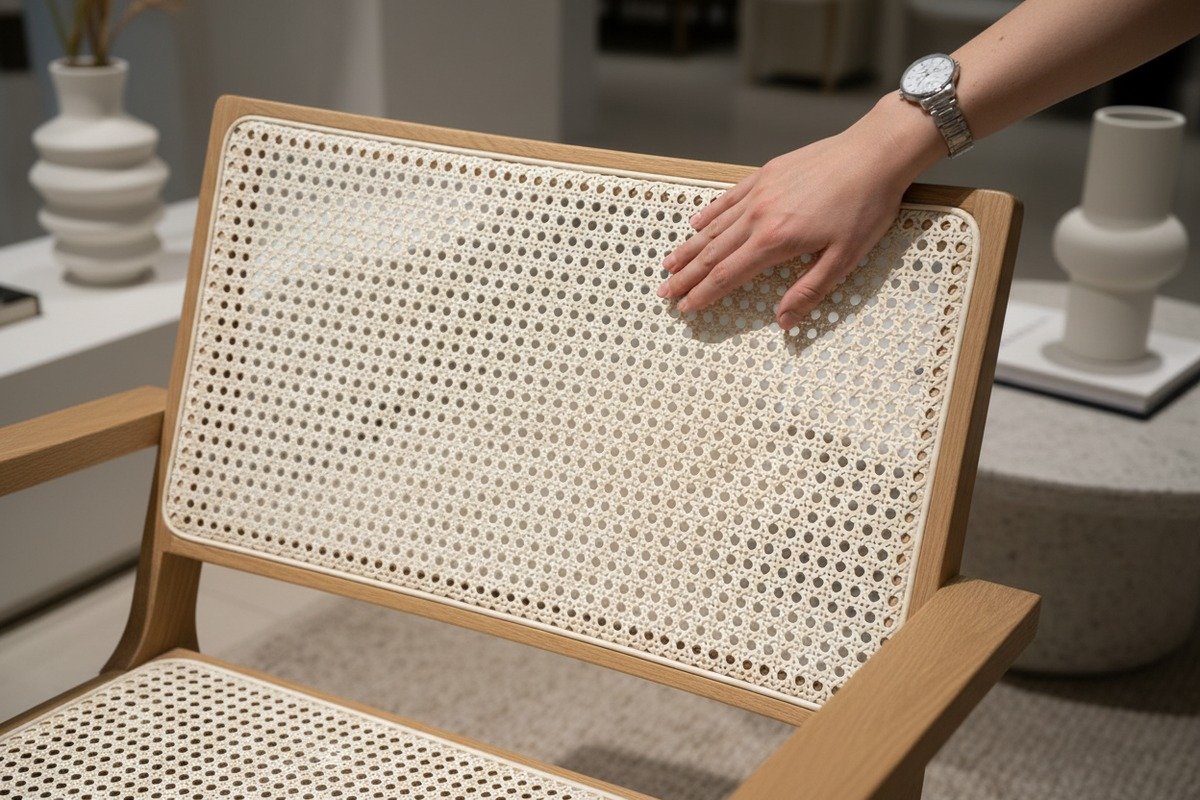
Grade A sits just below the rare AAA tier. It features a smooth, almost silky surface with consistent straw-to-cream coloring. There are no cracks, no dark blemishes, and the elasticity allows it to stretch during installation without snapping. In our production line, Grade A sheets pass through three separate quality inspections 4 before they are rolled and packed.
The fibers are tight. The weave pattern holds shape under tension. And when your factory installs it on a chair seat or cabinet door, it stays taut for years.
When Grade A Makes Financial Sense
Not every project justifies Grade A pricing. Here is a simple breakdown we share with our wholesale clients:
| عامل | Grade A Recommended | Grade A Not Necessary |
|---|---|---|
| Retail price of finished furniture | Above $500 per unit | Below $300 per unit |
| Target market | Luxury, designer, custom | Mid-range, mass market |
| Visible surface area | Large, prominent panels | Small inserts, hidden backs |
| Customer expectations | Zero-defect tolerance | Minor texture variation accepted |
| Brand positioning | Premium or artisan | Value-driven or functional |
If your brand sells headboards at $800 or custom dining chairs at $600, Grade A pays for itself. Your end customers will inspect the weave closely. They will run their hands across it. Any roughness or color inconsistency will feel "cheap" to them, and returns will eat your margin.
But if you produce café chairs for commercial buyers or budget-friendly cabinet inserts, Grade A is overkill. The extra cost per square meter adds up fast across a 500-unit production run.
Grade A vs. AAA: Is the Top Tier Worth It?
AAA-grade rattan webbing 5 is the absolute finest available. On platforms like Etsy, AAA 24-inch-wide rolls sell for roughly $112 per meter. At our wholesale level, the price is lower, but it is still significantly more than Grade A.
The differences between AAA and A are subtle. AAA has near-perfect color uniformity across an entire roll. Grade A may show very slight natural variation between sections. For most furniture applications, even luxury ones, Grade A is sufficient. AAA is typically reserved for showroom display pieces, museum restorations, or ultra-high-end custom orders where every centimeter is scrutinized.
The Risk of Over-Grading
We have seen buyers order Grade A for their entire product line, then struggle with pricing their finished furniture competitively. Over-grading is a real trap. Your material cost jumps 30–50% compared to B-grade, but if your market will not absorb that increase, your profit disappears.
The smarter approach is to use Grade A selectively. Reserve it for your flagship products. Use B-grade for your bread-and-butter items. This is exactly what many of our clients in the Netherlands and Australia do, and it works.
Which rattan grade will help me stay within my budget without compromising my product quality?
Our production team in Foshan processes all grades from AAA down to D, and the conversations we have most often with first-time buyers center on one question: how low can I go on grade without my customers noticing? The answer depends on your product, your finish, and your installation method.
B-grade rattan cane webbing is the optimal choice for budget-conscious buyers who refuse to compromise on quality. It offers good elasticity, a slightly coarser texture than Grade A, and only minor surface defects that become virtually invisible after staining or finishing, typically at 30–40% lower cost.
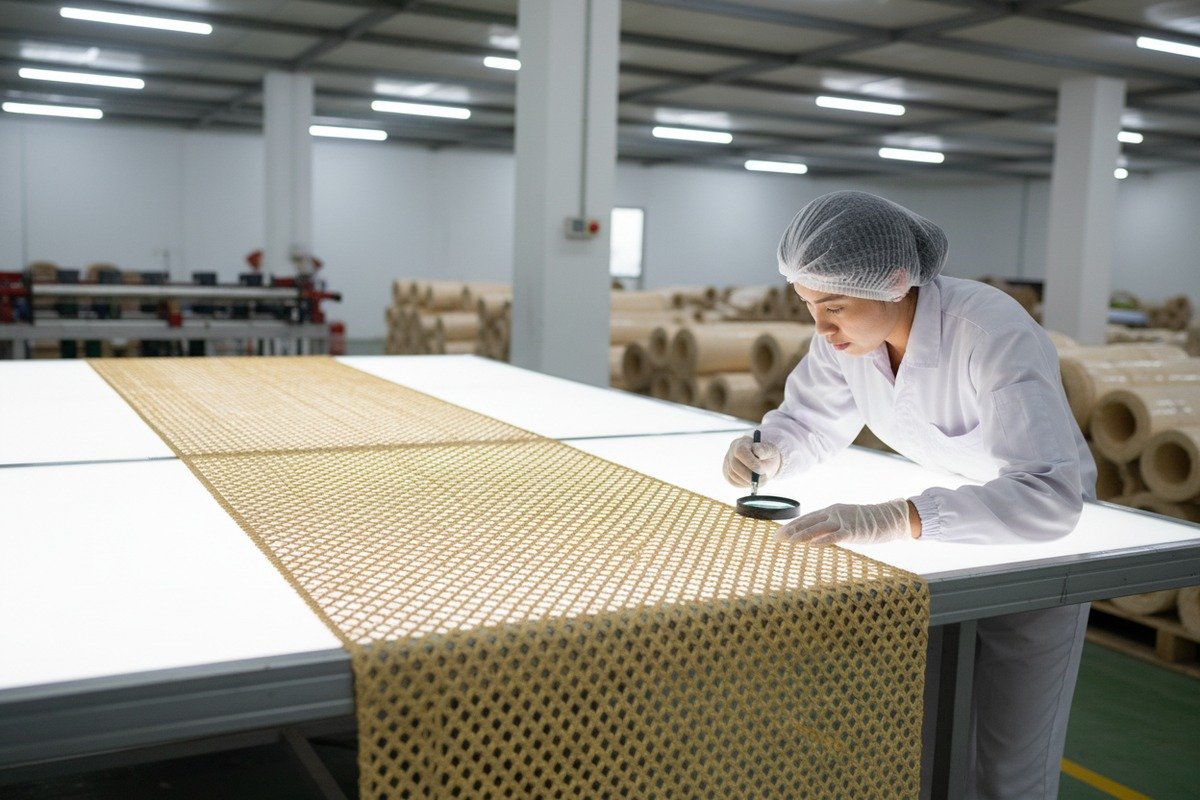
The Grade-by-Grade Cost and Quality Breakdown
Understanding what each grade actually delivers helps you make a confident decision. Here is the comparison table we provide to our wholesale clients:
| Grade | ملمس السطح | Defect Level | المرونة | توحيد اللون | أفضل حالة استخدام | Relative Cost |
|---|---|---|---|---|---|---|
| AAA | Ultra-smooth | لا شيء | ممتاز | مثالي | Museum pieces, showrooms | $$$$$ |
| A | Smooth | Negligible | مرتفع | Very consistent | Luxury furniture, custom work | $$$$ |
| B | خشن قليلاً | Minor (small blemishes) | جيد | Mostly consistent | Mid-range furniture, DIY restoration | $$$ |
| C | Rough | Moderate (visible marks) | متوسط | Variable | Budget furniture, concealed panels | $$ |
| D | Very rough | Significant (cracks possible) | ضعيف | غير متناسق | Disposable items, temporary decor | $ |
Why B-Grade Wins for First-Time Buyers
B-grade rattan has a secret advantage that many new importers overlook. Its minor عيوب السطح 6, small color shifts, and occasional texture variations are almost entirely hidden once you apply a stain, lacquer, or paint. If your factory finishes the webbing after installation, B-grade looks nearly identical to A-grade on the finished product.
We have run side-by-side tests at our facility. A walnut-stained B-grade panel and a walnut-stained A-grade panel are nearly indistinguishable at arm's length. The savings on a 500-square-meter order can reach thousands of dollars.
C-Grade: When "Good Enough" Actually Is
C-grade rattan gets a bad reputation, but it has legitimate uses. For cabinet backs that face a wall, for the underside of bench seats, or for interior panels that will be covered by cushions, C-grade performs adequately. The rougher texture does not matter when nobody sees or touches it.
However, C-grade is not ideal for visible, load-bearing surfaces 7. Its average elasticity means it may sag over time on large chair seats. And its color variation can look uneven on light-finished furniture. Use it strategically, not as your primary material.
D-Grade: Avoid for Any Serious Application
We are transparent with our clients about D-grade. It exists in the market, and it is cheap. But its poor toughness and tendency to crack make it unsuitable for furniture that needs to last. We have seen returns spike when factories try to cut costs with D-grade on visible applications. The short-term savings are wiped out by warranty claims and customer complaints.
Matching Grade to Finish Strategy
Your finishing plan should directly influence your grade selection. If you plan to use a dark stain like walnut or espresso, B-grade's minor defects disappear. If you want a natural, unfinished look, you need A-grade or higher because every imperfection will be visible.
الروطان المبيض 8 also changes the equation. Bleaching smooths the surface slightly and whitens the color, which can elevate a B-grade sheet's appearance closer to A-grade territory. Many of our European clients specifically request bleached B-grade for Scandinavian-style furniture, and the results are excellent.
The first time one of our Thai clients, a purchasing manager for a mid-sized furniture brand, received samples from three different suppliers, she could not tell which was Grade A and which was Grade C. That is a common experience. Without knowing what to look for, all rattan webbing can look "similar enough" in photos. The differences reveal themselves in your hands and under close inspection.
To distinguish premium from budget rattan, examine five key indicators: surface smoothness (run your fingers across the weave), fiber elasticity (gently flex the sheet), color uniformity (check for blotchy or uneven tones), defect density (count cracks, dark spots, or rough nodes), and weave tightness (inspect pattern consistency across the full width).
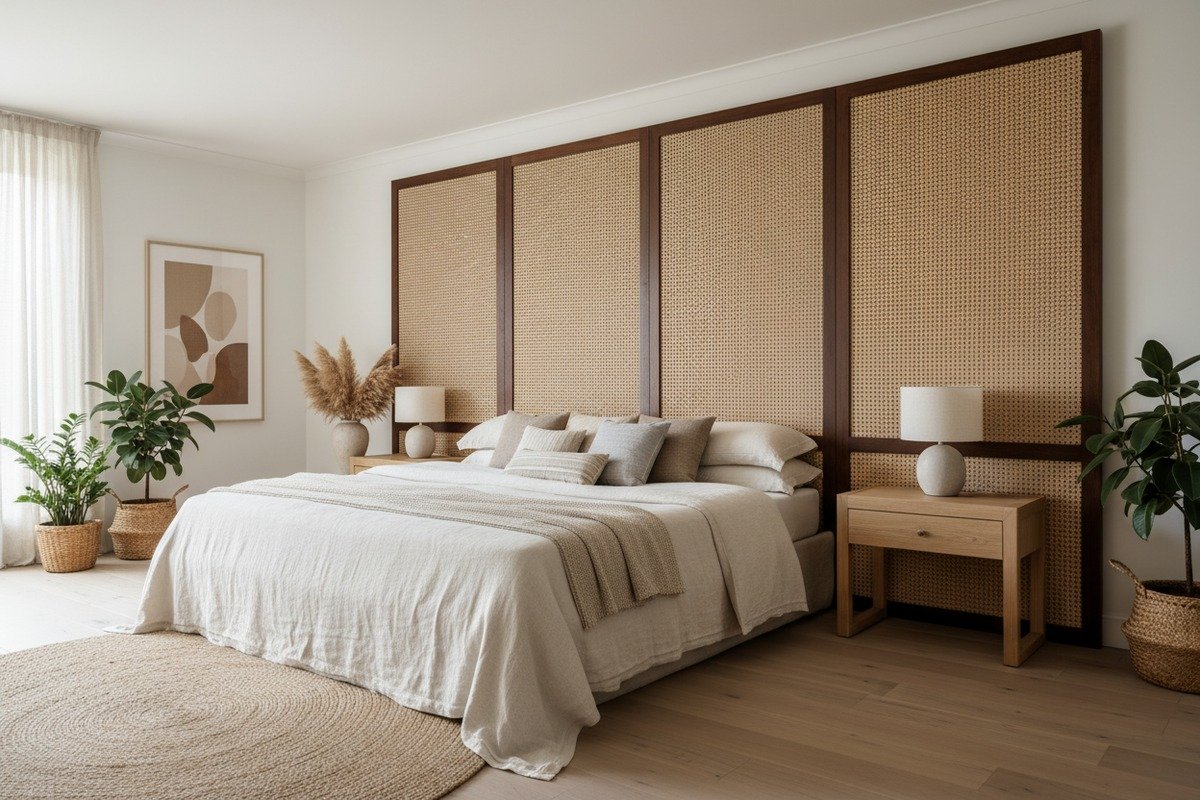
The Five-Point Inspection Method
Before committing to a large order, always request physical samples. Photos are unreliable because lighting, angles, and camera settings can mask defects. Here is the inspection method our quality control team uses, and we recommend every buyer adopt it.
1. Surface Smoothness Test. Run your palm flat across the webbing. Premium grades (A and above) feel almost silky. B-grade has a slight texture but no sharp catches. C-grade will snag on rough skin or fabric. D-grade may have splinters.
2. Elasticity Flex. Hold one edge of the webbing and gently push the center. Premium rattan flexes smoothly and springs back. Budget grades resist initially, then give suddenly, or they flex but do not return to their original shape.
3. Color Scan. Lay the sample flat under natural light. Premium rattan shows consistent straw-yellow or cream tones across the entire piece. Budget rattan will have patches of darker or greenish areas, especially near nodes.
4. Defect Count. On a 30cm x 30cm sample, count visible defects: cracks, dark spots, rough patches, broken strands. Premium grades should have zero to one. Budget grades typically show five or more.
5. Weave Pattern Check. Look at the mesh pattern from a 45-degree angle. Premium webbing has perfectly even spacing. Budget webbing may have gaps, overlaps, or misaligned intersections.
Origin Matters: Indonesian vs. Vietnamese Rattan
The raw material's origin significantly affects quality. Our own processing facility is in Indonesia for a specific reason: Indonesian rattan species 9, particularly Manau and Rotin Tohiti, produce thicker, more consistent fibers with higher natural elasticity.
| Characteristic | Indonesian Rattan | Vietnamese Rattan |
|---|---|---|
| Fiber consistency | High, uniform diameter | Variable, less uniform |
| المرونة | ممتاز | جيد |
| توحيد اللون | Very consistent | تباين معتدل |
| Node regularity | Even, smooth nodes | Irregular, may affect weave |
| نطاق السعر | أعلى | أقل |
| Best suited for | Professional, high-end work | Budget projects, DIY |
| Common species | Manau (up to 4" diameter), Rotin Tohiti (1-2") | Various, thinner species |
Vietnamese rattan is not "bad." It is simply less consistent. For a first-time buyer testing the market, Vietnamese rattan at B-grade can be a smart entry point. But if you are building a brand reputation on quality, Indonesian-origin material is the safer long-term choice.
Natural vs. Bleached: More Than Just Color
This is a decision that trips up many first-time importers. Natural rattan comes in greenish, yellowish, or warm straw tones. These variations are part of the organic character. Bleached rattan is steamed to achieve a whiter, more uniform appearance.
Natural rattan pairs beautifully with warm wood finishes like mahogany, walnut, and oak. It suits bohemian, rustic, and artisanal furniture styles. Bleached rattan works best with minimalist, Scandinavian, and modern designs where clean, uniform surfaces are expected.
The processing matters too. Quality bleaching uses steam, not harsh chemicals. Always ask your supplier about their bleaching method. At our facility, we use a controlled steaming process that whitens the cane without weakening the fibers or introducing chemical residues.
Cane Webbing vs. Rattan Core: Know What You Are Buying
A common confusion for first-time buyers is the difference between شبكة القصب 10 and rattan core material. Cane comes from the outer peel of the rattan palm. It is thin, pliable, and ideal for weaving into sheets and webbing. Rattan core is the inner, thicker part of the stem. It is used for furniture frames and structural elements.
If you are ordering webbing for chair seats, headboard panels, or cabinet inserts, you want cane webbing. If someone quotes you "rattan" at an unusually low price, verify whether they are selling cane webbing or rattan core strips. The two are not interchangeable.
What specific quality standards should I demand from my rattan supplier to protect my investment?
After shipping rattan webbing to over 30 countries, our team has learned that the buyers who succeed long-term are the ones who set clear quality standards before their first order. Vague requests like "send me good quality" lead to mismatched expectations. Specific, measurable standards protect you.
Demand these quality standards from your rattan supplier: documented grade specifications with defect tolerances, physical samples before bulk orders, consistent roll dimensions (width accuracy within ±5mm), moisture content below 14%, intact packaging with moisture barriers, and a clear returns policy for material that fails inspection upon arrival.
Your Pre-Order Checklist
Before you place any order, work through this checklist with your supplier. If they cannot answer these questions clearly, that is a red flag.
Sample verification. Request 30cm x 30cm samples of the exact grade, finish, and weave pattern you intend to order. Do not accept "similar" samples. The production batch must match the sample.
Roll dimension consistency. Standard widths include 14 inches, 24 inches, and 36 inches. Standard roll lengths run 50 feet or measured in meters. Confirm exact dimensions and tolerances. A roll labeled "24 inches" that arrives at 23 inches will not fit your production jigs.
محتوى الرطوبة. Rattan is a natural material. If it ships with too much moisture, it will shrink after installation and sag. If it is too dry, it becomes brittle. Industry standard is 10–14% moisture content. Ask your supplier to measure and document this before shipping.
Packaging Standards That Prevent Damage
Packaging is where many first-time imports go wrong. Rattan webbing is pliable but not indestructible. Poor packaging leads to creased rolls, broken strands, and moisture damage during ocean freight.
At our facility, we use the following packaging protocol for export orders:
- Each roll is wrapped in plastic film to prevent moisture absorption.
- Rolls are placed in cardboard tubes or rigid boxes to prevent crushing.
- Outer cartons are reinforced and sealed with moisture-barrier tape.
- Pallets are wrapped and strapped for container loading.
Ask your supplier to share photos of their packaging before shipment. If they ship rolls loosely in bags without rigid protection, expect damage.
Weave Patterns and Specifications to Confirm
The most popular weave for furniture applications is the hexagonal open-mesh pattern, commonly called "radio weave" or octagonal mesh, in a standard 1/2-inch spacing. This is the classic rattan look you see on mid-century modern chairs and bohemian cabinet doors.
Other options include tight square basketweave for a denser look and diamond motifs for decorative accents. Confirm the exact pattern name, mesh size, and a reference photo with your supplier. "Standard weave" means different things to different factories.
Setting Up a Quality Agreement
For orders above $5,000, we recommend a written quality agreement. This does not need to be a complex legal document. A simple one-page agreement covering the following points will protect both parties:
- Grade specification with reference sample number
- Acceptable defect rate per roll (e.g., fewer than 2 defects per linear meter for Grade A)
- Dimensional tolerances for width and length
- Moisture content range
- متطلبات التعبئة والتغليف
- Inspection rights before shipment
- Replacement or refund terms for non-conforming material
Our team provides this type of agreement to all first-time clients. It sets expectations clearly and gives you documented recourse if something goes wrong.
Installation Considerations That Affect Your Grade Choice
One final factor that many buyers overlook: your installation process affects how the webbing performs. Natural cane webbing requires soaking in warm water for 15–30 minutes before installation. This increases pliability and allows the sheet to stretch into the frame. As it dries, it tightens and creates a drum-like tautness.
If your factory workers are inexperienced with natural cane, synthetic rattan webbing might be a safer starting point. Synthetic does not require soaking, does not shrink, and offers consistent behavior regardless of humidity. However, it lacks the authentic warmth and organic character that natural rattan delivers.
For natural cane, higher grades (A and B) handle the soaking and stretching process better. C-grade can be more unpredictable, sometimes tearing at stress points during installation. This is another reason B-grade is our standard recommendation for first-time buyers. It forgives minor installation mistakes better than C-grade while costing far less than A-grade.
You will also need spline, wedges, and appropriate adhesives. Factor these accessories into your budget. A beautiful webbing sheet installed with the wrong spline size or cheap glue will fail prematurely regardless of grade.
خاتمة
Choosing the right rattan cane webbing grade comes down to matching your product's market position with the right material. For most first-time buyers, B-grade natural rattan in a standard 1/2-inch mesh and 24-inch width is the smartest starting point. Request samples, set clear quality standards, and work with a supplier who can document every specification. Your first import sets the foundation for everything that follows.
ملاحظات سفلية
1. Explains different grades of natural rattan webbing. ↩︎
2. Details characteristics and uses of B-grade rattan mesh sheets. ↩︎
3. Describes characteristics and expectations of the luxury furniture market. ↩︎
4. Explains the process and importance of quality inspections in manufacturing. ↩︎
5. Provides information on the highest grade of rattan cane webbing. ↩︎
6. Defines surface defects and their occurrence in materials. ↩︎
7. Discusses material suitability and standards for weight-bearing furniture components. ↩︎
8. Explains the process and aesthetic of bleached rattan cane webbing. ↩︎
9. Lists and describes common rattan species found in Indonesia. ↩︎
10. Defines cane webbing and its primary uses in furniture and crafts. ↩︎

 English
  Español de México
  العربية
  Deutsch
  Français
  Русский