
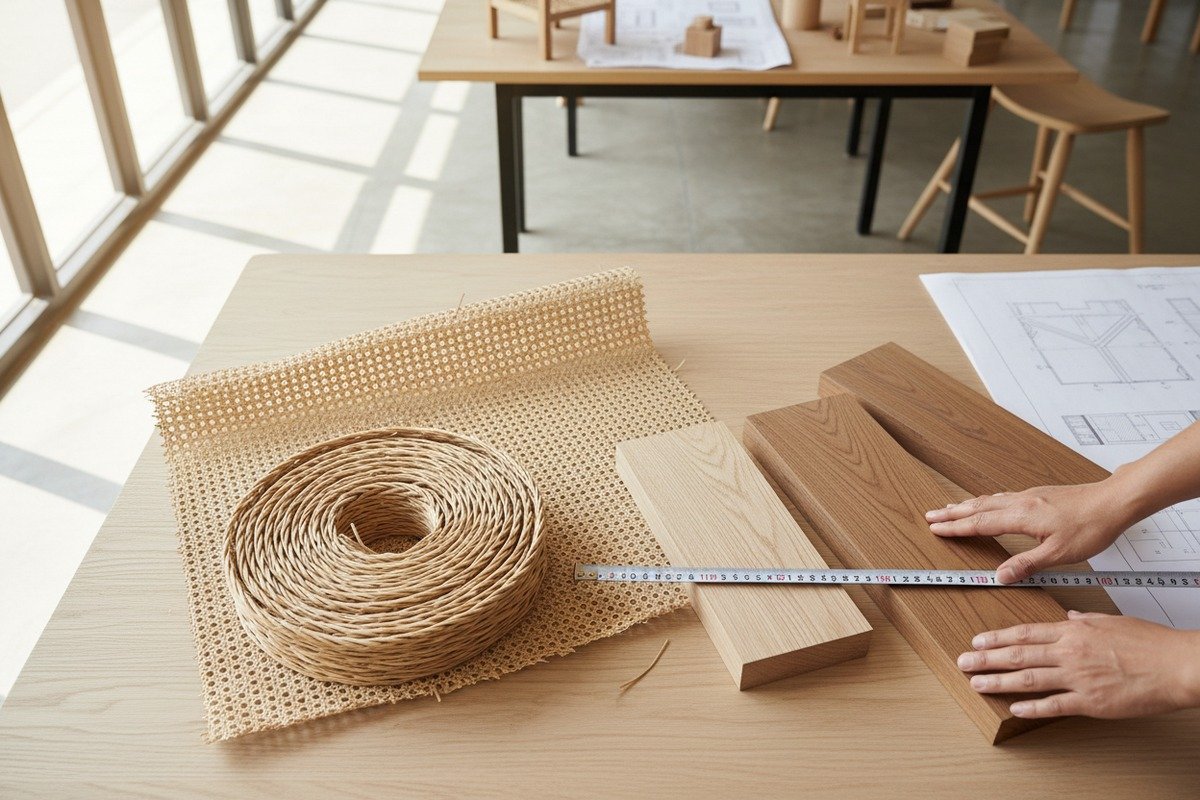
Every week, our production team in Foshan fields the same question from furniture factories across Europe and the Middle East: “Which wood should we use for our rattan cane panels?” It sounds simple, but the wrong frame choice leads to cracked joints, sagging webbing, and costly returns. The problem is real, and it gets worse when humidity shifts between seasons.
The best wood frames for natural rattan cane webbing are hardwoods like white oak, European ash, and teak. These species offer low moisture movement, excellent screw-holding strength, and reliable dimensional stability, which keeps hand-woven rattan webbing taut and beautiful for years of daily use.
In this guide, we break down wood species, frame construction, aesthetic pairings, and export-grade durability. Whether you run a furniture factory or a material wholesale business, the details below will help you make a confident choice.
Which wood species provide the best structural stability for my natural rattan cane projects?
Choosing wood for a rattan frame is not just about looks. Over the years, we have tested dozens of species across our three factory lines and tracked how each one performs after six, twelve, and twenty-four months of use. The results were eye-opening.
Hardwoods like white oak, hard maple, ash, and beech provide the best structural stability for rattan cane projects. Their high density, low shrinkage rates, and strong screw-holding capacity prevent frame warping that loosens rattan webbing over time, making them ideal for chairs, headboards, and cabinet doors.
Why Density Matters for Rattan Frames
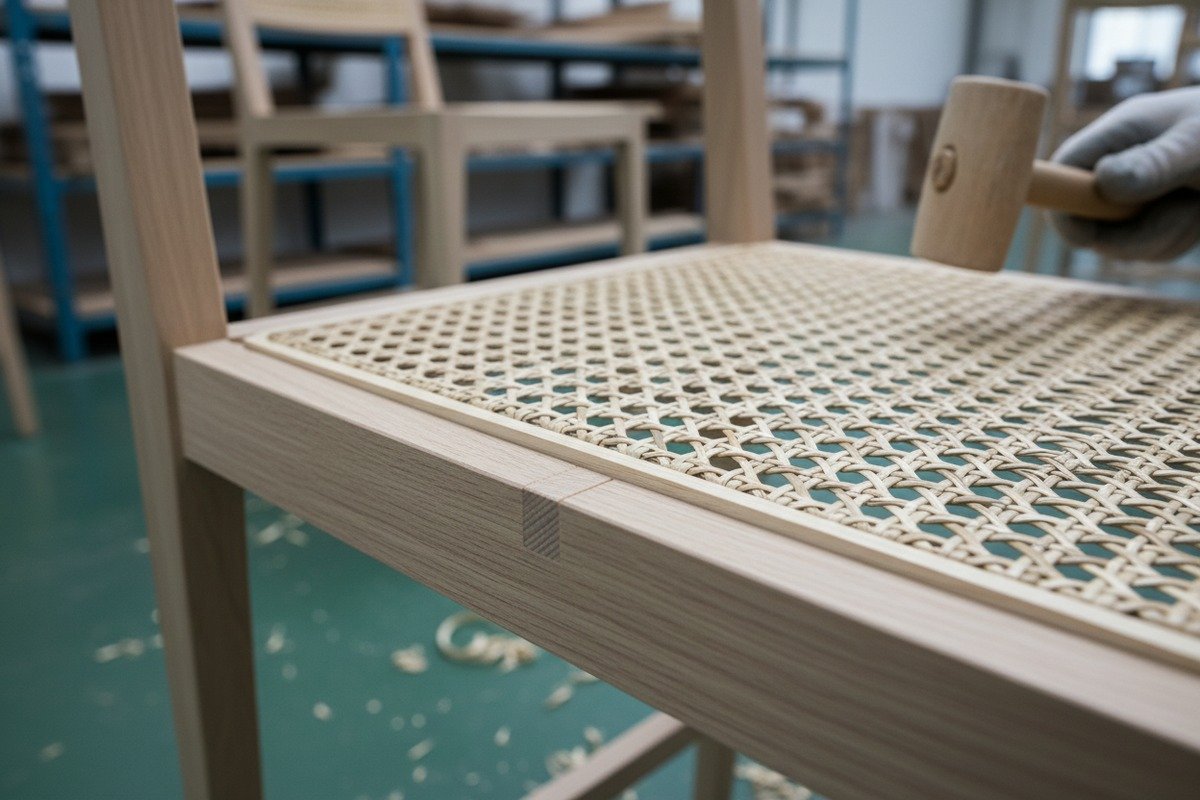
Wood density is directly linked to how well a frame holds its shape under load. When someone sits on a rattan chair, the frame absorbs stress at every joint. Softwoods like pine or spruce may be cheaper, but they dent easily. They also lose screw grip faster. This means the rattan webbing gradually sags as joints loosen.
Hardwoods resist this. White oak, for instance, has a Janka hardness 1 of about 1,360 lbf. Ash sits around 1,320 lbf. Both are dense enough to hold mortise-and-tenon 2 or dowel joints firmly for years.
Shrinkage and Moisture Movement
شريط قصب الخيزران الطبيعي 3 is sensitive to humidity. But many people forget that wood moves too. If the frame expands and contracts too much, it puts uneven tension on the webbing. This causes rippling or tearing at the edges.
The key metric here is volumetric shrinkage 4. Lower is better. Here is a comparison of common frame woods:
| Wood Species | Janka Hardness (lbf) | Volumetric Shrinkage (%) | مقاومة الرطوبة |
|---|---|---|---|
| White Oak | 1,360 | 12.7 | High (natural tannins) |
| European Ash | 1,320 | 11.5 | معتدل |
| Hard Maple | 1,450 | 12.0 | معتدل |
| European Beech | 1,300 | 14.0 | منخفض |
| الساج | 1,070 | 7.0 | Very High (natural oils) |
| Pine (Softwood) | 690 | 12.1 | منخفض |
Teak stands out for its low shrinkage and natural oil content. However, it costs significantly more. For most indoor furniture, ash and oak hit the sweet spot between price and performance.
Grain Structure and Workability
A good rattan frame needs clean routed grooves for spline installation. Open-grain woods like oak and ash cut cleanly with standard router bits. Tight-grain woods like maple also work well but may require sharper tooling.
Beech is popular in Europe, especially for bentwood chairs. It bends easily under steam, which is useful for curved rattan frames. But beech absorbs moisture faster than oak or ash. So it needs a proper finish to stay stable.
From our factory floor experience, ash is the most forgiving wood for new production lines. It machines well, accepts stains evenly, and holds rattan splines firmly.
How do I select a wood frame that can handle the tension of my hand-woven rattan webbing?
When our Indonesian rattan processing facility ships hand-woven cane sheets to furniture makers, we always remind them that the webbing is only as strong as the frame holding it. A poorly built frame turns premium rattan into a short-lived product.
To handle hand-woven rattan tension, select a frame with robust joinery such as mortise-and-tenon or dowel joints, a minimum rail thickness of 20 mm, and a clean spline groove routed at consistent depth. The wood must be kiln-dried to 8–12% moisture content before assembly.
Understanding Rattan Tension Forces
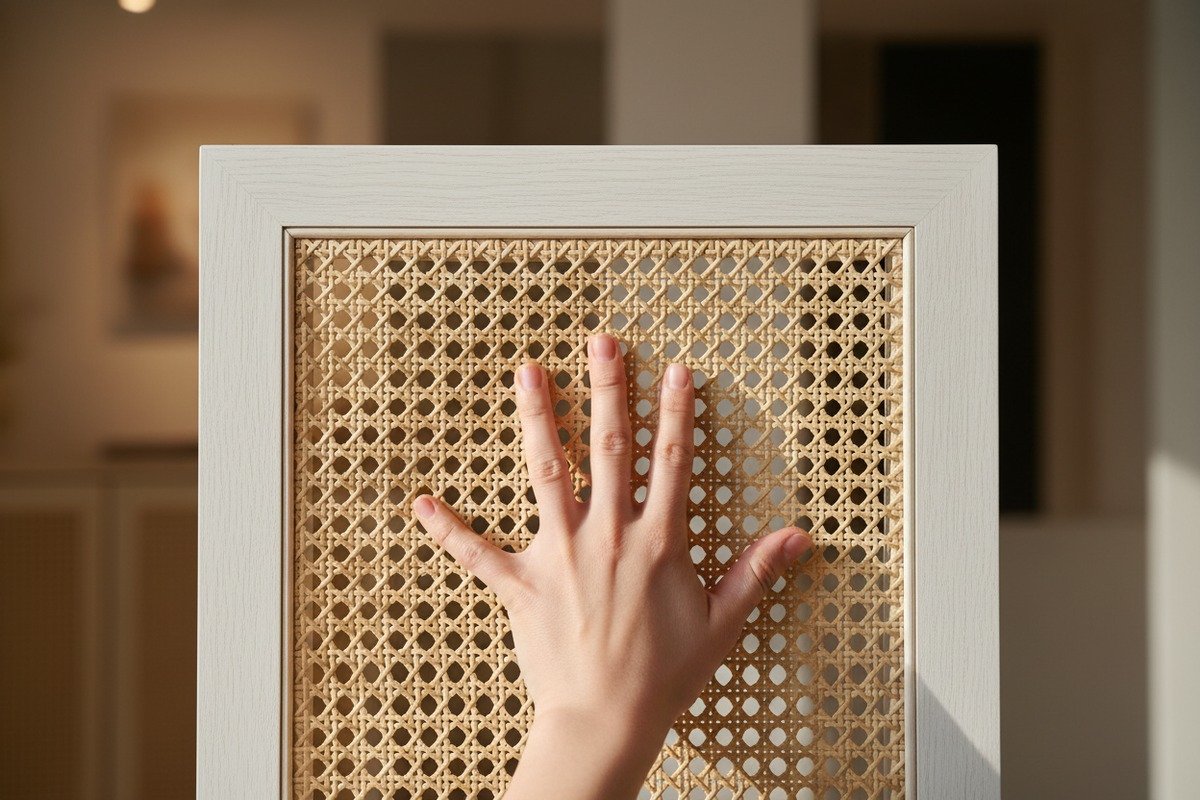
When you stretch natural rattan cane webbing across a frame and lock it with a spline, the webbing pulls inward. This creates constant inward force on every rail. If any rail is too thin or any joint is weak, the frame bows inward. Over months, you get a warped frame and loose cane.
Hand-woven rattan, which is installed strand by strand through drilled holes, creates even more localized stress. Each hole is a potential failure point. The wood around each hole must be strong enough to resist splitting.
Joinery That Holds
The joint is the weakest link in any frame. Here is how common joinery methods compare for rattan applications:
| Joinery Type | Strength Rating | أفضل حالة استخدام | Ease of Production |
|---|---|---|---|
| Mortise-and-Tenon | ممتاز | Chairs, headboards | معتدل |
| Dowel Joints | جيد جدًا | Cabinet doors, panels | سهل |
| Pocket Screws | مقبول | DIY projects only | سهل جدا |
| Biscuit Joints | مقبول | Light panels | سهل |
| Finger Joints | جيد | Frame extensions | معتدل |
For commercial furniture, mortise-and-tenon remains the gold standard. It resists racking forces, which are the sideways forces that occur when someone shifts weight in a chair. Dowel joints work well for flat panels like headboards or room dividers where racking is minimal.
We strongly advise against pocket screws for any rattan furniture meant for resale. They work for quick prototypes, but they will not withstand the sustained tension of cane webbing in a real-world setting.
Frame Dimensions and Groove Specifications
Rail thickness matters. For pressed cane webbing (the type that uses a spline), we recommend a minimum rail width of 25 mm and a groove depth of 10 mm. The groove width should match the spline diameter, typically 4–5 mm for standard webbing.
For hand-woven cane, the frame rail should be at least 20 mm thick to allow drilling without splitting. Holes are typically spaced 12–15 mm apart, center to center. Hardwoods handle this drilling pattern far better than softwoods.
Moisture Content Is Non-Negotiable
Kiln-dried wood 5 is essential. If the frame wood has moisture content above 12%, it will shrink as it dries in a heated indoor environment. This shrinkage loosens joints and distorts grooves. We have seen entire batches of frames rejected at customs in Europe because the wood was not properly dried before assembly.
استخدم مقياس رطوبة من نوع الدبوس 6 to check every batch. The target is 8–12% for indoor furniture. For outdoor applications (where you might use synthetic rattan), the acceptable range is wider, but proper sealing is then required.
What are the most aesthetic wood and rattan pairings for my modern furniture collections?
Design trends shift fast. Our sales team tracks requests from buyers in the Netherlands, Spain, Australia, and the US, and we see clear patterns in what sells. Color, texture, and weave pattern all play a role in which wood frame looks best with rattan cane webbing.
For modern furniture, pair light-toned woods like white oak or ash with bleached rattan for a Scandinavian aesthetic, or match walnut and mahogany with natural golden rattan for warm, luxurious appeal. The weave pattern should complement the wood grain's visual weight.
Color Theory in Wood-Rattan Pairing
Natural rattan cane webbing comes in several tones. The most common are natural golden, bleached white, and smoked brown. Each pairs differently with wood.
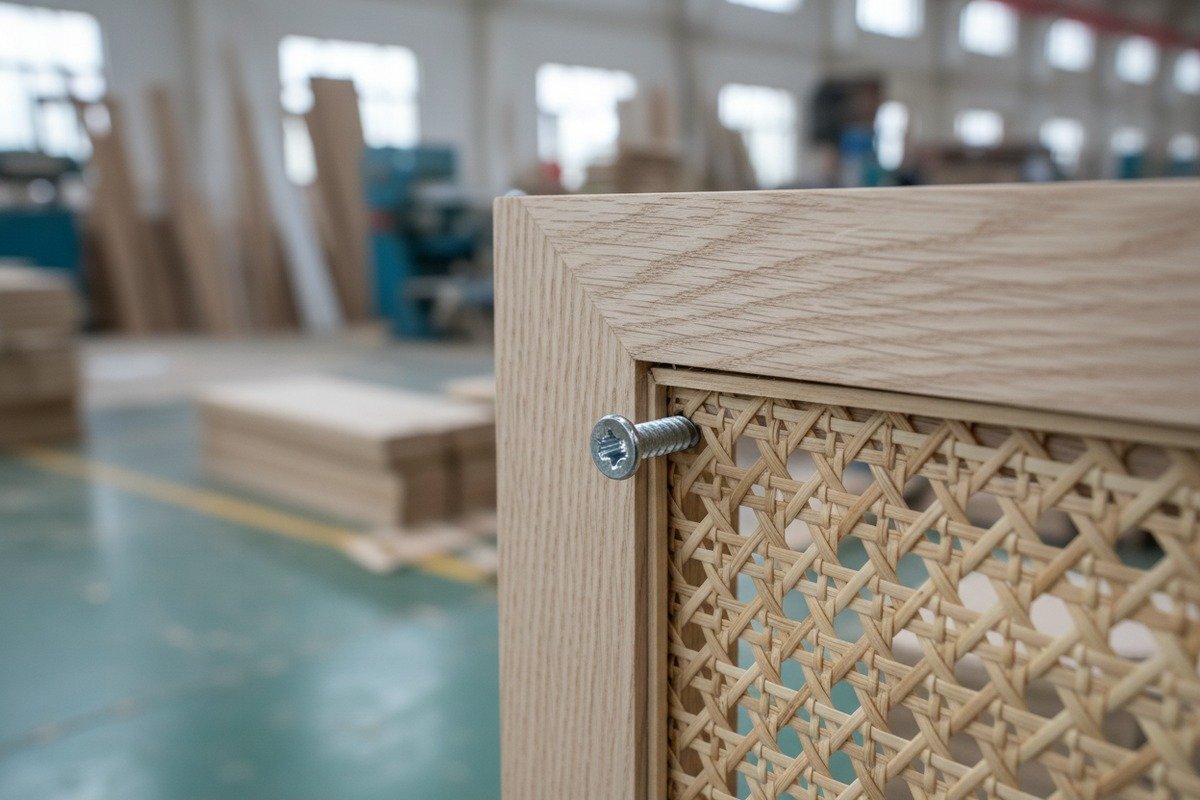
Light woods like ash and maple create a tonal match with bleached rattan. This gives a clean, airy look that is very popular in Scandinavian and Japanese-inspired interiors. Scandinavian aesthetic 7 The overall effect is calm and minimal.
Dark woods like walnut and mahogany create contrast with natural golden rattan. This contrast draws the eye and adds visual richness. It works well for statement pieces like headboards, sideboards, and accent chairs.
Weave Pattern and Visual Weight
Not all rattan weaves look the same in a frame. Open hexagonal weave has a light, airy feel. Dense radio weave feels solid and textured. The weave you choose should match the visual weight of the wood.
Here is a simple pairing guide:
| Rattan Weave Type | Visual Weight | Best Wood Pairing | Ideal Furniture Type |
|---|---|---|---|
| Open Hexagonal Cane | Light | White Oak, Ash, Maple | Cabinet doors, room dividers |
| نسيج الراديو | متوسط | Oak, Beech, Cherry | Chair backs, headboards |
| Close Weave (Basketweave) | Heavy | Walnut, Mahogany, Teak | Sideboards, bench seats |
| Square Grid (Open) | Light | Ash, Birch, Poplar | Decorative panels, screens |
Finish Compatibility
The frame finish must not clash with the rattan. Natural oil finishes 8 like Danish oil or tung oil enhance wood grain without adding a plastic sheen. They complement the organic, matte texture of natural rattan perfectly.
Lacquer finishes create a glossy surface. This can work with bleached rattan in a modern context, but it clashes with natural golden rattan, which has a matte, raw appearance.
Painted frames, especially in matte black or matte white, are trending in 2024 and 2025. A matte black frame with natural rattan creates a bold, contemporary look. A matte white frame with bleached rattan delivers a soft, coastal vibe. Both are strong sellers in the European and Australian markets, based on the order patterns we see.
Grain Texture Considerations
Wood grain adds a second layer of texture alongside the rattan weave. Strongly figured woods like oak or ash have prominent grain lines that echo the woven pattern of rattan. This creates visual harmony.
Smooth, featureless woods like MDF or certain plywoods look flat next to textured rattan. If budget demands engineered materials, we recommend oak veneer plywood. It gives you the grain texture of real oak at a lower cost, while still pairing well visually with cane webbing.
One mistake we see often is pairing heavily stained wood with natural rattan. A dark walnut stain on cheap pine looks unnatural. The rattan picks up on that dissonance. If you want a dark frame, use a genuinely dark wood species rather than staining a light one.
Should I use solid ash or oak frames to guarantee the durability of my rattan furniture exports?
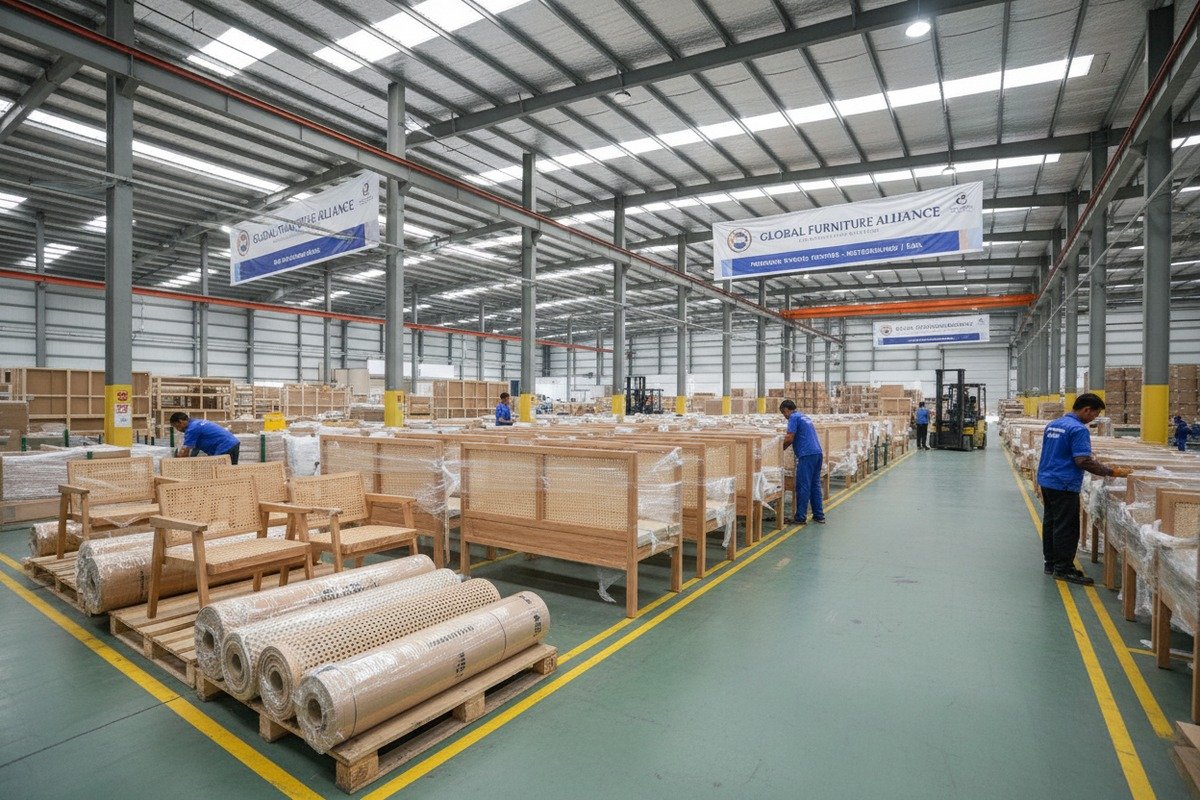
This is the question we hear most from purchasing managers preparing for large export orders. When you ship rattan furniture across the ocean to Turkey, the Netherlands, or the US, the frame must survive weeks in a container and years in the buyer's home. The stakes are high.
Both solid ash and solid oak are excellent choices for export-grade rattan furniture. Oak offers superior moisture resistance and hardness, making it ideal for humid destinations. Ash provides better flexibility and shock absorption, suited for chairs and high-use seating. Choose based on your target market and product type.
Ash vs. Oak: A Direct Comparison
Both ash and oak are top-tier frame woods for rattan furniture. But they are not interchangeable. Each has strengths that suit different product categories and export markets.
Ash is flexible. It absorbs shock well. This makes it the preferred wood for chair frames, where the frame flexes slightly under body weight. Ash also bends well under steam, which is useful for curved designs. It has a lighter color and a straight, even grain that stains predictably.
Oak is harder and more rigid. It resists denting and wear better than ash. White oak, in particular, has closed pores that block moisture penetration. This makes it ideal for furniture heading to humid climates like Southeast Asia or the Middle East. Red oak is more porous and less suitable for high-humidity destinations.
Export-Specific Considerations
When exporting rattan furniture, you must consider more than just the wood's physical properties. Shipping conditions, destination climate, and buyer expectations all matter.
Container temperatures can swing dramatically during ocean transport. A container sitting on a dock in Dubai in summer can reach 60°C internally. Wood with improper moisture content will crack. Kiln-drying to 8–10% and sealing all surfaces, including hidden faces, is critical.
Phytosanitary requirements 9 also differ by country. Most destinations require ISPM-15 compliant heat treatment 10 for solid wood packaging. Some markets extend this to the furniture itself. Ash and oak both respond well to heat treatment without significant structural loss.
From our experience shipping to over a dozen countries, here is a practical comparison:
| عامل | Solid Ash | Solid White Oak |
|---|---|---|
| Janka Hardness | 1,320 lbf | 1,360 lbf |
| Steam Bending | ممتاز | جيد |
| مقاومة الرطوبة | معتدل | مرتفع |
| Weight | متوسط | Medium-Heavy |
| Stainability | ممتاز | جيد جدًا |
| Price Point (Relative) | معتدل | متوسط إلى مرتفع |
| Best Export Markets | Europe, Australia | Middle East, SE Asia, US |
| Best Product Type | Chairs, stools | Headboards, cabinets, tables |
متى يجب التفكير في البدائل
Solid ash and oak are not always the right answer. For lightweight products like hanging rattan panels or decorative screens, lighter woods such as poplar or birch plywood can reduce shipping costs significantly. For outdoor rattan furniture, teak remains unmatched due to its natural resistance to rot and insects.
Mango wood is an emerging alternative. It is a fast-growing, sustainably sourced hardwood with decent density. Several of our buyers in the Netherlands have started using mango wood frames for mid-range rattan collections. It aligns with the eco-conscious branding that European consumers expect.
However, for guaranteed durability across diverse climates and applications, ash and oak remain the safest bets. They are proven. They are available. And they pair beautifully with every type of natural rattan cane webbing we produce, from open hexagonal cane to dense basketweave.
Quality Control Tips for Export Frames
Before rattan webbing installation, inspect every frame. Check for the following: moisture content between 8–12%, no visible cracks or knots near spline grooves, consistent groove depth across all rails, and smooth sanded surfaces free of mill marks. One defective frame in a container can lead to a full shipment claim. We learned this early, and we built our inspection checklists around it.
خاتمة
The right wood frame turns natural rattan cane webbing into furniture that lasts. Choose ash or oak for proven reliability, match the grain and finish to your design vision, and never skip moisture testing before assembly.
ملاحظات سفلية
1. Defines the Janka hardness test for measuring wood resistance to denting and wear. ↩︎
2. Describes a traditional, strong woodworking joint. ↩︎
3. Explains what natural rattan cane webbing is and its origin. ↩︎
4. Explains how wood’s volume changes with moisture content. ↩︎
5. Defines kiln-dried wood and explains its importance for wood stability in furniture. ↩︎
6. Replaced HTTP 404 with a guide explaining how moisture meters work, including pin-type meters, from an authoritative source. ↩︎
7. Outlines the core principles and characteristics of the Scandinavian design aesthetic. ↩︎
8. Explains the benefits and types of natural oil finishes for wood. ↩︎
9. Explains international regulations to prevent pest spread through wood in trade. ↩︎
10. Details the international standard for treating wood packaging material to prevent pest spread. ↩︎
 English
  Español de México
  العربية
  Deutsch
  Français
  Русский