
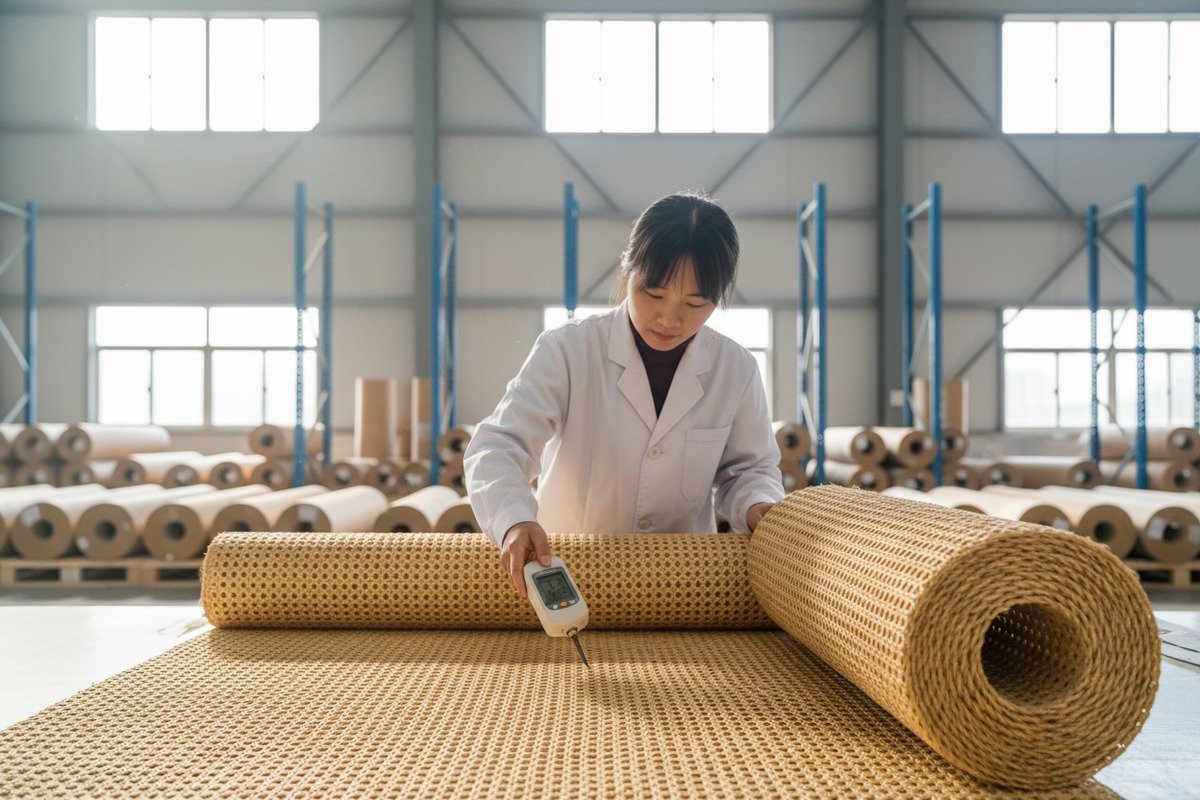
Im Laufe der Jahre haben unsere Produktionslinien Tausende von Rollen verarbeitet Rattan-Rohrgeflecht 1. Eine Lektion sticht über alles andere hervor: Die Härtung macht das Endprodukt oder bricht es.
Die Härtung von Rattanrohrgeflecht bezieht sich auf die kontrollierte Reaktion des Materials auf Hitze und Feuchtigkeit während der Verarbeitung. Sie bestimmt direkt die Haltbarkeit, Flexibilität und einfache Installation. Eine ordnungsgemäße Härtung verhindert Rissbildung, Durchhängen und Verziehen, wodurch Fehlerquoten und langfristige Kosten für Möbelhersteller, die in großen Mengen einkaufen, reduziert werden.
In diesem Artikel erläutern wir, warum die Härtung in jeder Phase – von der Produktion bis zur Installation – wichtig ist und wie Sie dieses Wissen nutzen können, um besseres Rattanrohrgeflecht für Ihre Fabrik oder Ihr Großhandelsgeschäft zu beschaffen.
Wie beeinflusst die Temperierung von Rattanrohrgeflecht die langfristige Haltbarkeit meiner Möbel?
Wir haben Rattanrohrgeflecht in über ein Dutzend Länder versandt. Die mit Abstand häufigste Beschwerde, die wir früher von Käufern hörten? Rissbildung und Sprödigkeit innerhalb weniger Monate nach der Installation.
Die Temperierung von Rattanrohrgeflecht kontrolliert direkt seine langfristige Haltbarkeit. Richtig temperiertes Rohr widersteht Rissen, Spalten und vorzeitigem Altern, da die Fasern eine ausgewogene Feuchtigkeit und Flexibilität behalten. Schlechte Temperierung führt zu sprödem Geflecht, das bei regelmäßiger Beanspruchung versagt und die Lebensdauer von Möbeln erheblich verkürzt.
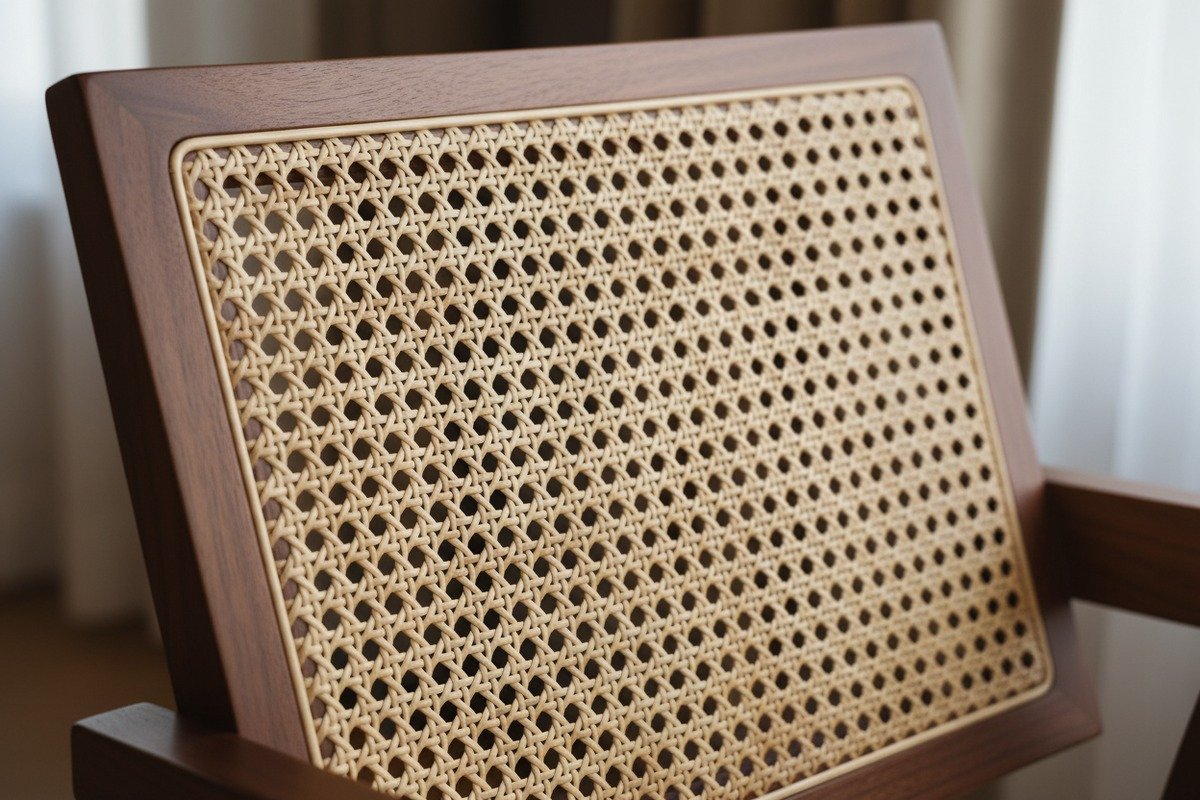
Was genau ist Rattan-Härtung?
Härtung ist keine einzelne Eigenschaft. Sie ist das Ergebnis der Ernte, Trocknung und Behandlung von Rattan vor dem Weben. Rohes Rattan stammt von der äußeren Rinde des rattan palm 2. Nach der Ernte von nachhaltigen Farmen in Indonesien, Malaysia oder den Philippinen wird das Rohr in dünne Stränge gespalten. Diese Stränge werden dann getrocknet und manchmal für etwa 30 Minuten in Salzwasser bei 60–70 °C eingeweicht. Dieser Prozess kontrolliert die Feuchtigkeitsgehalt 3 und die Fasenspannung im Material.
Wenn es richtig gemacht wird, wird das Rattan biegsam, aber fest. Es biegt sich, ohne zu brechen. Es behält seine Form unter Druck. Wenn es schlecht gemacht wird – überstürzte Trocknung, übersprungene Einweichung oder inkonsistente Hitze – wird das Rohr entweder zu steif oder zu weich. Beide Extreme verursachen später Probleme.
Wie die Härtung die Lebensdauer beeinflusst
Ein gut gehärtetes Stück natürliches Rattanrohrgeflecht kann bei Innenmöbeln mit minimaler Wartung 10–15 Jahre halten. Ein schlecht gehärtetes kann bereits nach 6 Monaten Risse aufweisen. Der Unterschied liegt im internen Feuchtigkeitshaushalt 4. Übermäßig getrocknetes Rohr verliert seine natürlichen Öle und wird spröde. Untergetrocknetes Rohr behält zu viel Wasser und lädt Schimmel und Fäulnis ein.
Hier ist ein Vergleich, wie sich die Härtungsqualität auf die langfristige Leistung auswirkt:
| Faktor | Gut temperierter Rohrsstock | Schlecht temperierter Rohrsstock |
|---|---|---|
| Rissbeständigkeit | Hoch — Fasern biegen sich unter Belastung | Niedrig — bricht unter leichtem Druck |
| Schimmelrisiko | Minimal — ausgeglichene Feuchtigkeit | Hoch — überschüssige Feuchtigkeit eingeschlossen |
| Farbkonstanz | Allmähliche, gleichmäßige Verdunkelung im Laufe der Zeit | Ungleichmäßige Verfärbung, dunkle Flecken |
| Lebensdauer (Innenbereich) | 10–15 Jahre | 6 Monate bis 2 Jahre |
| Wartung erforderlich | Leichte Ölung ein- bis zweimal im Jahr | Häufige Reparatur oder Austausch |
Die Rolle der Rattan-Reife
Nicht jedes Rattan ist gleich. Die Pflanze benötigt 5 bis 7 Jahre, um die volle Reife zu erreichen. Junges Rattan hat schwächere Fasern und reagiert schlecht auf das Tempern. Reifes Rattan hat dichtere Zellwände, die Feuchtigkeit gleichmäßig speichern. Deshalb beziehen wir in unserer Verarbeitungsanlage in Indonesien nur Rattan, das sein volles Wachstum erreicht hat. Es kostet zwar im Voraus mehr, aber es lässt sich besser tempern und hält im fertigen Produkt wesentlich länger.
Natürlich vs. Synthetisch: Eine Temper-Perspektive
Synthetisches Rattan 5 (PE oder Kunststoff) hat keine Härte im herkömmlichen Sinne. Es wird bei kontrollierten Temperaturen extrudiert, sodass die Konsistenz eingebaut ist. Aber es hat seine eigene Schwäche: Es kann unter hoher Hitze schrumpfen oder sich verformen. Natürliches Rohr, wenn richtig gehärtet, behält seine Form in warmen Umgebungen besser bei. Der Kompromiss ist Feuchtigkeitsempfindlichkeit. Natürliches Rohr nimmt Wasser auf. Synthetisches nicht. Ihre Wahl hängt von der Endanwendung ab – drinnen oder draußen.
Warum sind die Flexibilität und Spannung des Materials für den Produktionsprozess meiner Fabrik entscheidend?
Als wir anfingen, Möbelhersteller in Europa und im Nahen Osten zu beliefern, haben wir schnell etwas gelernt. Selbst gut aussehendes Rohrgeflecht kann zu Produktionsalpträumen führen, wenn Flexibilität und Spannung nicht stimmen. Produktionsprozess 6
Flexibilität und Spannung sind entscheidend, da sie bestimmen, wie leicht Rattanrohrgeflecht beim Möbelbau geschnitten, gedehnt und befestigt werden kann. Zu steifes Geflecht reißt bei der Montage. Zu lockeres Geflecht hängt sofort durch. Die richtige Härte sorgt für eine reibungslose, effiziente Produktion mit weniger Ausschuss.
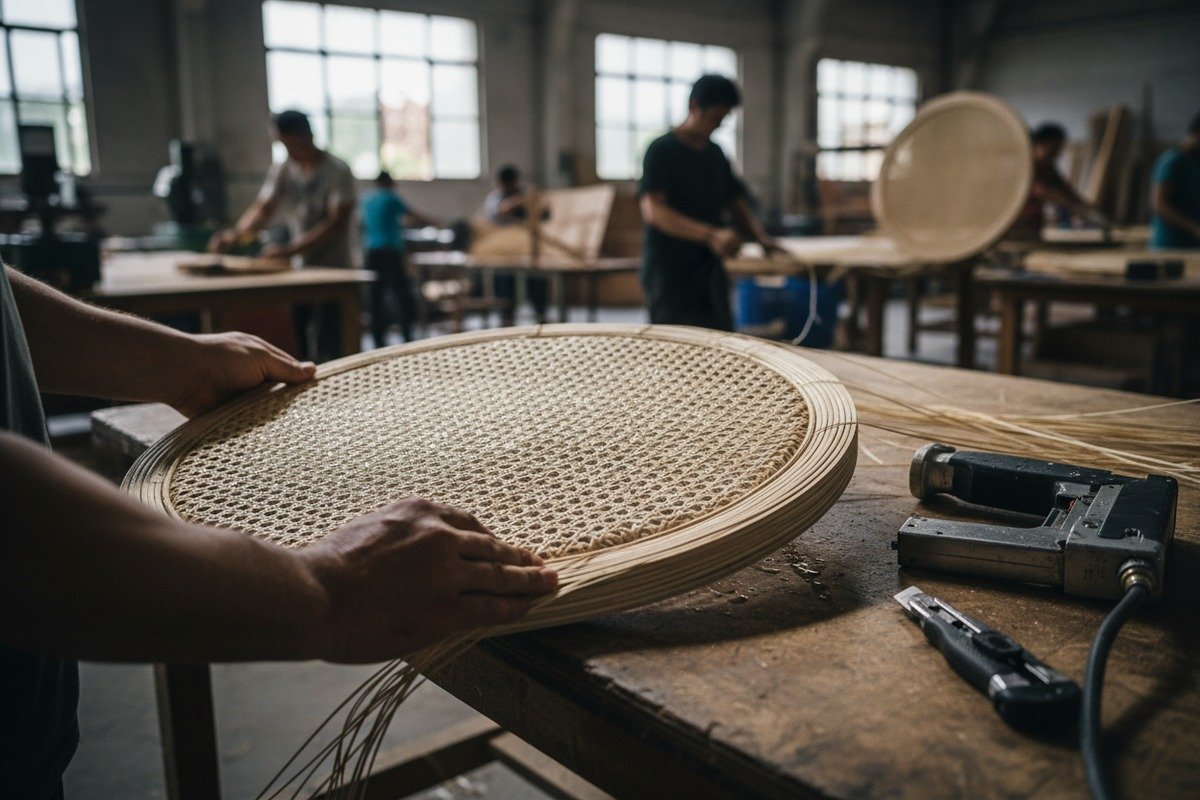
Warum Fabriken auf Bearbeitbarkeit Wert legen
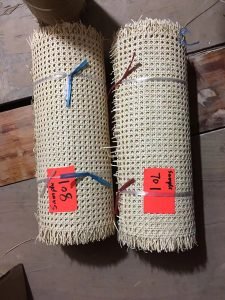
Eine Möbelfabrik läuft auf Effizienz. Jede Minute, die mit schwierigem Material verbracht wird, ist verlorenes Geld. Rattanrohrgeflecht wird in Rollen geliefert – typischerweise 15 Meter für Naturrohr und bis zu 30 Meter für Synthetik. Die Arbeiter müssen es abrollen, zuschneiden, einweichen (für Naturrohr) und auf Rahmen spannen.
Wenn die Härte nicht stimmt, wehrt sich das Geflecht. Steifes Rohr weigert sich, sich an gebogene Rahmen anzupassen. Es spaltet sich an den Rändern, wenn es geheftet oder genagelt wird. Zu weiches Rohr dehnt sich zu weit und kann keine Spannung halten. Beide Szenarien führen zu Ausschuss, Nacharbeit und verzögerten Bestellungen.
Der Vor-Einweich-Schritt
Natürliches Rattanrohrgeflecht muss vor der Installation in warmem Wasser eingeweicht werden. Vor-Einweich-Schritt 7 Dies ist nicht verhandelbar. Das warme Wasser – idealerweise zwischen 60–70°C – reaktiviert die Fasern und macht das Rohr biegsam. Einige unserer Kunden geben eine kleine Menge Salz ins Wasser, was hilft, die Fasern gleichmäßig zu entspannen. Nach etwa 30 Minuten Einweichen wird das Geflecht noch feucht über den Rahmen gespannt. Beim Trocknen zieht es sich zusammen und strafft sich auf natürliche Weise. Hier zahlt sich gute Härte aus. Gut gehärtetes Rohr zieht sich gleichmäßig zusammen. Schlecht gehärtetes Rohr zieht sich ungleichmäßig zusammen und erzeugt Falten und lose Stellen.
Produktionseffizienz: Ein realer Vergleich
Wir haben die Fehlerraten in drei unserer Partnerfabriken in Foshan über sechs Monate verfolgt. Fabriken, die gehärtetes Geflecht der Klasse A verwendeten, verzeichneten deutlich weniger Ausschuss.
| Metrik | Gehärtetes Gurtband der Güteklasse A | Standard-/Nicht klassifiziertes Gurtband |
|---|---|---|
| Fehlerrate (pro 100 Einheiten) | 2–3 Einheiten | 12–18 Einheiten |
| Durchschnittliche Installationszeit | 8 Minuten pro Paneel | 14 Minuten pro Paneel |
| Nacharbeitungsrate | Weniger als 1% | 8–12% |
| Materialabfall | 3–5% | 15–20% |
| Beschwerden von Arbeitern | Selten | Häufig (Rissbildung, ungleichmäßige Dehnung) |
Spannungskonsistenz beim Weben
Die Temperierung beeinflusst das Gurtband auch, bevor es Ihre Fabrik erreicht. Während des Webprozesses selbst muss die Strangspannung konstant sein. Wenn die Stränge eine ungleichmäßige Feuchtigkeit oder Steifigkeit aufweisen, weist das gewebte Blatt straffe und lockere Stellen auf. Dies können Sie erkennen, indem Sie ein Blatt flach hinlegen und nach Wellen oder Unebenheiten suchen. Ein gut temperiertes Blatt liegt perfekt flach. Dies überprüfen wir bei jeder Charge, bevor sie unser Werk verlässt.
Abstimmung der Temperierung auf das Rahmendesign
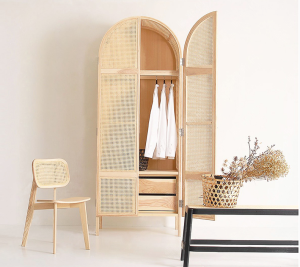
Unterschiedliche Möbeldesigns erfordern unterschiedliche Flexibilitätsgrade. Ein Stuhlsitz trägt eine schwere tägliche Last. Er benötigt Gurtband mit höherer Spannung. Eine Schranktür trägt fast keine Last. Sie kann leichteres, dekorativeres Gurtband verwenden. Das Verständnis dieser Übereinstimmung hilft Fabriken, das richtige Produkt auszuwählen und zu vermeiden, ihre Stücke zu über- oder unterentwickeln.
Kann ich durch die Konzentration auf die Rattan-Temperatur eine gleichbleibende Qualität bei meinen Großbestellungen sicherstellen?
Einer unserer langjährigen Kunden in Thailand, ein Einkaufsmanager, der Rattanrohrgewebe für Möbelfabriken beschafft, erzählte uns einmal, dass seine größte Frustration nicht der Preis war. Es war die Inkonsistenz zwischen den Chargen.
Ja, die Konzentration auf die Rattan-Temperatur ist eine der effektivsten Methoden, um eine gleichbleibende Qualität bei Großaufträgen zu gewährleisten. Durch die Festlegung von Kriterien im Zusammenhang mit der Temperierung – Feuchtigkeitsgehalt, Flexibilitäts-Benchmarks und Standards für die Webspannung – schaffen Sie messbare Qualitätskontrollen, die die Abweichungen zwischen Rollen, Chargen und Lieferungen reduzieren.
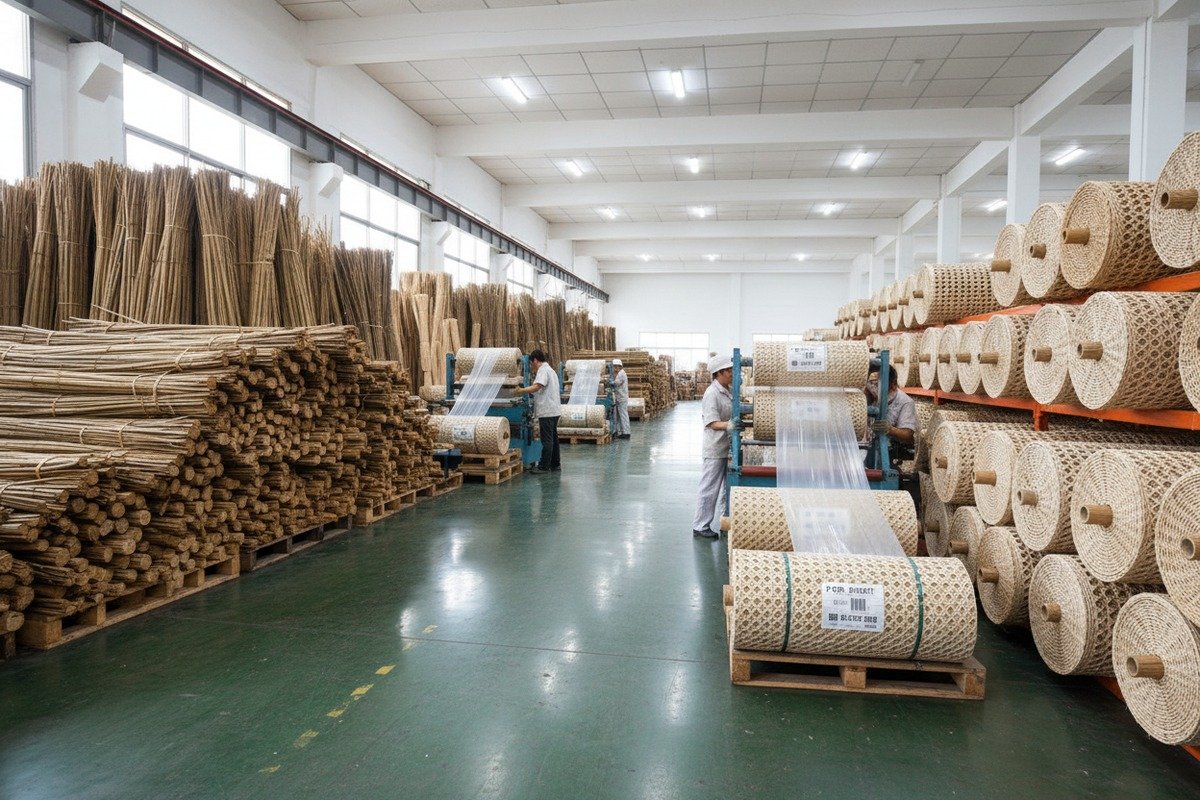
Warum Inkonsistenz auftritt
Rattan ist ein Naturmaterial. Keine zwei Palmen wachsen identisch. Die Erntebedingungen variieren je nach Jahreszeit und Region. Die Trocknungszeiten schwanken je nach Wetter. Diese Variablen fließen alle in die Temperierung ein. Ohne strenge Prozesskontrollen kann sich jede Charge leicht anders anfühlen. Eine Rolle kann steif sein. Die nächste kann zu weich sein. Die Farbe kann von hellbeige zu dunklerem Strohgelb wechseln. Für eine Fabrik, die Produktionslinien betreibt, ist diese Variation ein ernstes Problem. Sie verlangsamt die Arbeit. Sie verändert das Aussehen der fertigen Produkte. Sie löst Kundenbeschwerden aus.
Festlegung von Temperaturspezifikationen
Die Lösung besteht darin, klare Temperaturspezifikationen in Ihren Bestellungen zu definieren. Hier ist, was wir unseren Käufern empfehlen:
| Spezifikation | Empfohlener Standard | Why It Matters |
|---|---|---|
| Feuchtigkeitsgehalt | 8–12% bei Lieferung | Unter 8% = spröde. Über 12% = Schimmelrisiko. |
| Flexibilitätsprüfung | Biegt sich um 90°, ohne zu reißen | Gewährleistet die Verarbeitbarkeit während der Installation |
| Gleichmäßigkeit der Strangbreite | ±0,3 mm Toleranz | Verhindert sichtbare Musterunregelmäßigkeiten |
| Farbbereich | Hellbeige bis strohgelb | Hält fertige Produkte visuell einheitlich |
| Rollenlänge | 15m ± 0,5m (natürlich) | Gewährleistet eine konsistente Materialplanung |
| Webspannung 8 | Keine sichtbaren Wellen im flach liegenden Zustand | Verhindert Durchhängen und Faltenbildung in Rahmen |
Wenn diese Spezifikationen in Verträge aufgenommen werden, haben beide Seiten klare Benchmarks. Wir können sie vor dem Versand testen. Ihr QC-Team kann sie bei Ankunft überprüfen. Streitigkeiten sinken. Rücksendungen sinken. Vertrauen wächst.
Die Rolle von Lagerung und Versand
Tempering hört nicht auf, wichtig zu sein, nachdem das Rohr unsere Fabrik verlassen hat. Wie das Material gelagert und versendet wird, beeinflusst seinen Zustand bei Ankunft. Rattanrohrgeflecht sollte kühl und trocken gelagert werden. Luftfeuchtigkeit über 70 % kann zur Feuchtigkeitsaufnahme führen. Temperaturen über 35 °C können es austrocknen. Wir verpacken unsere Rollen in feuchtigkeitskontrollierter Verpackung und raten unseren Kunden, sie drinnen, fern von direkter Sonneneinstrahlung, zu lagern.
Bewertungssysteme sind wichtig
Nicht alle Lieferanten verwenden das gleiche Bewertungssystem. Einige bewerten überhaupt nicht. In unserer Anlage bewerten wir Geflecht anhand von fünf Faktoren: Gleichmäßigkeit der Stränge, Oberflächenglätte, Farbkonstanz, Webdichte und Flexibilität. Klasse A erfüllt alle fünf Kriterien auf höchstem Niveau. Klasse B kann leichte Farbabweichungen oder geringe Oberflächenrauheit aufweisen. Klasse C ist funktional, aber nicht für Premium-Möbel geeignet. Das Verständnis des Bewertungssystems Ihres Lieferanten – und dessen Bestehen darauf – ist für die Konsistenz von Großmengen unerlässlich.
Aufbau einer Feedback-Schleife
Wir ermutigen unsere Käufer, uns Feedback zu jeder Lieferung zu geben. Fotos von Mängeln. Notizen, wie sich das Material während der Installation verhalten hat. Diese Daten helfen uns, unseren Tempering-Prozess Charge für Charge zu optimieren. Mit der Zeit verbessert sich die Konsistenz. Die Beziehung wird zu einer Partnerschaft, nicht nur zu einer Transaktion.
Wie vermeide ich häufige Durchhängeprobleme bei meinen Rattanstühlen, indem ich die richtige Temperierung wähle?
Durchhängen ist die häufigste Beschwerde, die wir von Möbelkäufern hören. Durchhängende Probleme 9 Ein Stuhl sieht im Ausstellungsraum perfekt aus. Sechs Monate später hängt die Sitzfläche durch. Der Kunde gibt der Möbelmarke die Schuld. Die Marke gibt der Fabrik die Schuld. Die Fabrik gibt dem Material die Schuld.
Sie können ein Durchhängen vermeiden, indem Sie Rattan-Rohrgeflecht mit richtig kontrollierter Temperierung wählen – insbesondere Rohre, die auf 8–12% Feuchtigkeit getrocknet, unter gleichmäßiger Spannung gewebt und vor der Installation richtig eingeweicht wurden. Durchhängen ist fast immer auf unzureichende Temperierung während der Produktion oder unsachgemäße Installation zurückzuführen.
Warum Rattan-Stühle durchhängen
Durchhängen geschieht aus drei Hauptgründen. Erstens war das Rohr bei der Installation zu feucht, sodass es beim Trocknen nie seine volle Spannung entwickelte. Zweitens war die Webspannung ungleichmäßig, was zu schwachen Zonen führte, die sich unter Körpergewicht dehnen. Drittens wurde das Rohr während der Verarbeitung nicht richtig gehärtet, wodurch es zu weich oder zu elastisch war, um seine Form unter Last zu halten.
Alle drei sind Probleme im Zusammenhang mit der Härtung. Und alle drei sind vermeidbar.
Die Wissenschaft von Spannung und Trocknung
Wenn natürliche Rohrgeflechte eingeweicht und dann über einen Stuhlrahmen gespannt werden, trocknen sie und ziehen sich zusammen. Diese Kontraktion ist es, die die straffe, trommelartige Oberfläche erzeugt, die Sie wünschen. Aber das Ausmaß der Kontraktion hängt von der Härtung des Rohrs ab. Übermäßig getrocknetes Rohr hat sein Kontraktionspotenzial bereits verloren. Es kann sich nicht weiter straffen. Untergetrocknetes Rohr hat zu viel Feuchtigkeit abzugeben, und es kann sich übermäßig zusammenziehen, wodurch Spannungsspitzen entstehen, die schließlich versagen.
Das ideale Fenster ist eng. Das Rohr sollte mit einem Feuchtigkeitsgehalt von 8–12 % in Ihrer Fabrik ankommen. Nach dem Einweichen sollte es gespannt und in einer kontrollierten Umgebung getrocknet werden – nicht in direktem Sonnenlicht, nicht in der Nähe von Heizungen. Die Trocknung an Raumluft ist am besten.
Sitzfläche vs. Rückenlehne: Unterschiedliche Belastungsprofile
Nicht alle Teile eines Stuhls sind der gleichen Belastung ausgesetzt. Die Sitzfläche nimmt die meiste Strapaze auf. Ein durchschnittlicher Erwachsener übt beim Hinsetzen eine konzentrierte Kraft von 50–80 kg aus. Die Rückenlehne nimmt viel weniger auf – vielleicht 10–20 kg Anlehnungsdruck. Das bedeutet, dass die Sitzflächenbespannung eine bessere Härtung und eine straffere Installation als die Rückenlehne benötigt.
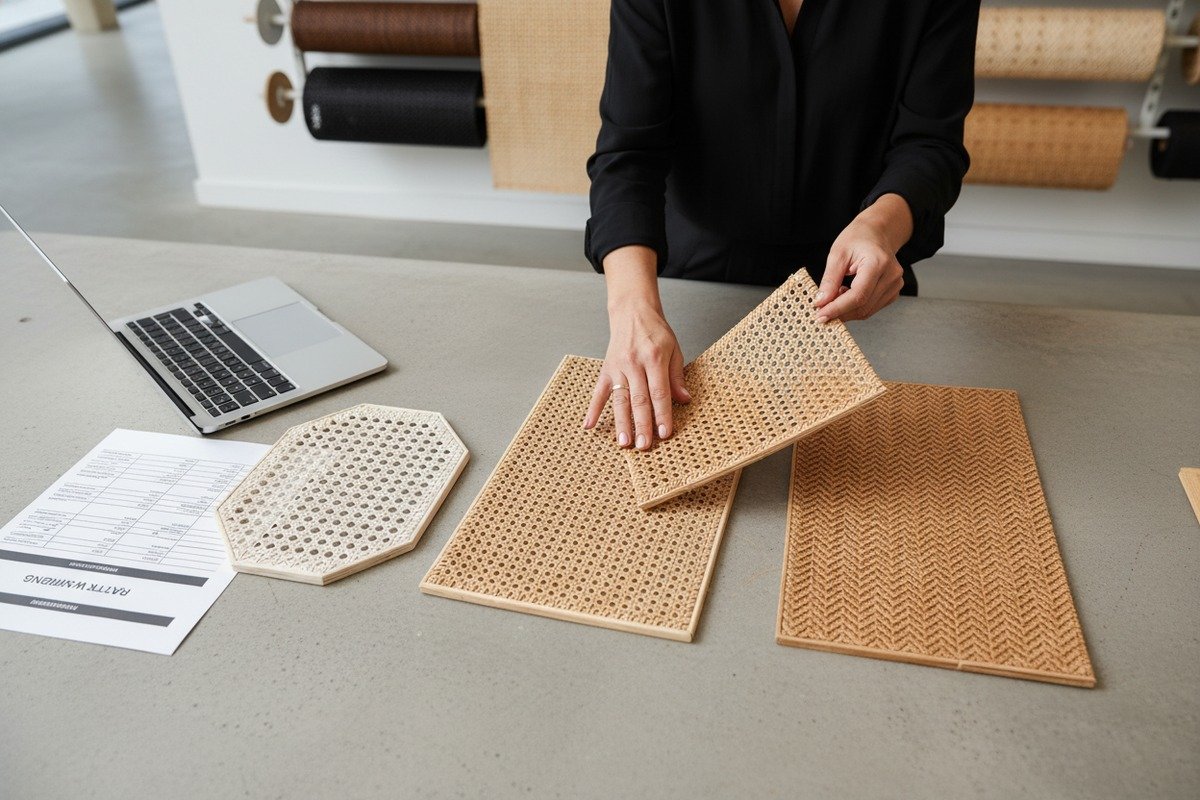
Wir empfehlen unseren Käufern oft, dichtere Webmuster 10– wie z. B. enges Korbflechtmuster – für Sitzflächen und offenere Muster wie das sechseckige Radio-Geflecht für Rückenlehnen und dekorative Paneele zu verwenden. Das dichtere Geflecht verteilt das Gewicht besser und widersteht dem Durchhängen länger.
Installations-Best-Practices
Selbst perfekt gehärtetes Rohr kann durchhängen, wenn es falsch installiert wird. Hier sind die wichtigsten Schritte, die wir mit unseren Fabrikkunden teilen:
- Weichen Sie das Geflecht 20–30 Minuten lang in warmem Wasser (60–70 °C) ein. Nicht zu lange einweichen.
- Spannen Sie es noch feucht über den Rahmen. Ziehen Sie von allen Seiten gleichmäßig.
- Mit Dübel oder Klammern befestigen. Lassen Sie keine Schlupf.
- Lassen Sie es 24–48 Stunden lang natürlich bei Raumtemperatur trocknen.
- Setzen Sie sich nicht auf den Stuhl und belasten Sie ihn nicht, bis das Rohr vollständig trocken ist.
Das Überspringen von Schritt 5 ist ein häufiger Fehler. Wenn jemand auf dem Stuhl sitzt, bevor das Rohr vollständig getrocknet und geschrumpft ist, entsteht eine dauerhafte Dehnung, die zu einem Durchhängen führt.
Auswahl des richtigen Musters für tragende Lasten
Das Webmuster ist ebenso wichtig wie die Härtung. Hier ist eine kurze Anleitung:
| Webmuster | Beste Verwendung | Durchbiegungswiderstand | Visueller Stil |
|---|---|---|---|
| Enges quadratisches Korbflechtmuster | Stuhlsitze, stark belastete Oberflächen | Hoch | Klassisch, dicht |
| Sechseckiges offenes Netz (Radio-Webart) | Stuhllehnen, Schranktüren, dekorative Paneele | Mittel | Bohème, luftig |
| Diamantgeometrisch | Zierpaneele, Kopfteile | Mittel-Niedrig | Handwerklich, kunstvoll |
| Chevron-Welle (synthetisch) | Sitzflächen für Gartenmöbel | Hoch (synthetisch) | Modern, texturiert |
Wann synthetische Alternativen in Betracht gezogen werden sollten
Wenn Ihr Endprodukt ein Gartenstuhl ist, der Regen, Sonne und Feuchtigkeit ausgesetzt ist, wird natürliches Rattanrohr – selbst gut getempert – Schwierigkeiten haben. Feuchtigkeitsaufnahme lockert mit der Zeit die Fasern. In diesen Fällen ist synthetisches PE-Rattanband die bessere Wahl. Es nimmt kein Wasser auf. Es hängt nicht durch Feuchtigkeitsänderungen durch. Es schrumpft bei extremer Hitze, halten Sie es also von Feuerstellen und direkter Flamme fern. Aber für Esszimmerstühle im Freien, Liegestühle auf der Terrasse und Sitzgelegenheiten am Pool hält es seine Form weitaus besser als natürliches Rattanrohr.
In unseren Lagern in Foshan führen wir sowohl natürliche als auch synthetische Optionen. Wir helfen unseren Kunden bei der Auswahl, basierend auf ihrem Endmarkt. Luxusmöbel für den Innenbereich in Europa? Natürliches Rattanrohr mit A-Qualitäts-Temperatur. Resortmöbel für den Außenbereich im Nahen Osten? Hochwertiges synthetisches PE mit UV-Stabilisatoren. Die richtige Wahl verhindert Durchhängen und schützt den Ruf Ihrer Marke.
Conclusion
Die Temperierung von Rattanrohrband ist kein Nebendetail. Sie ist die Grundlage für Produktqualität, Produktionseffizienz und Kundenzufriedenheit bei der Möbelbeschaffung. Wählen Sie sie mit Bedacht, und Ihr Unternehmen profitiert jahrelang.
Fußnoten
1. Erklärt, was Rattanrohrband ist und woher es stammt. ↩︎
2. Bietet botanische Informationen über die Rattanpalmenarten. ↩︎
3. Die ursprüngliche URL hatte einen unbekannten HTTP-Status. Dieser Wikipedia-Link bietet eine klare und maßgebliche Definition des Wassergehalts (Feuchtigkeitsgehalts) in Materialien. ↩︎
4. Beschreibt, wie der Feuchtigkeitsgehalt Holzeigenschaften und Haltbarkeit beeinflusst. ↩︎
5. Beschreibt synthetisches Rattan, seine Zusammensetzung und Vorteile. ↩︎
6. Definiert Herstellungsprozesse und ihre Bedeutung in der Produktion. ↩︎
7. Erklärt die Notwendigkeit und Methode des Einweichens von Rattan vor der Verwendung. ↩︎
8. Die ursprüngliche URL gab einen HTTP 403-Fehler zurück. Diese Ersetzung befasst sich direkt mit dem Einfluss der Kettenspannung auf die Gewebestruktur und -eigenschaften, was für die ‘Webspannung’ sehr relevant ist. ↩︎
9. Erklärt häufige Gründe für das Durchhängen von Möbeln und deren Vermeidung. ↩︎
10. Die ursprüngliche URL war eine 404. Diese Ersetzung beschreibt verschiedene Arten von Stoffwebarten und erwähnt, dass einige Webarten, wie z. B. Köper, dichter gewebt, schwerer und stärker sind, was mit ‘dichteren Webmustern’ übereinstimmt. ↩︎
 English
  Español de México
  العربية
  Deutsch
  Français
  Русский