
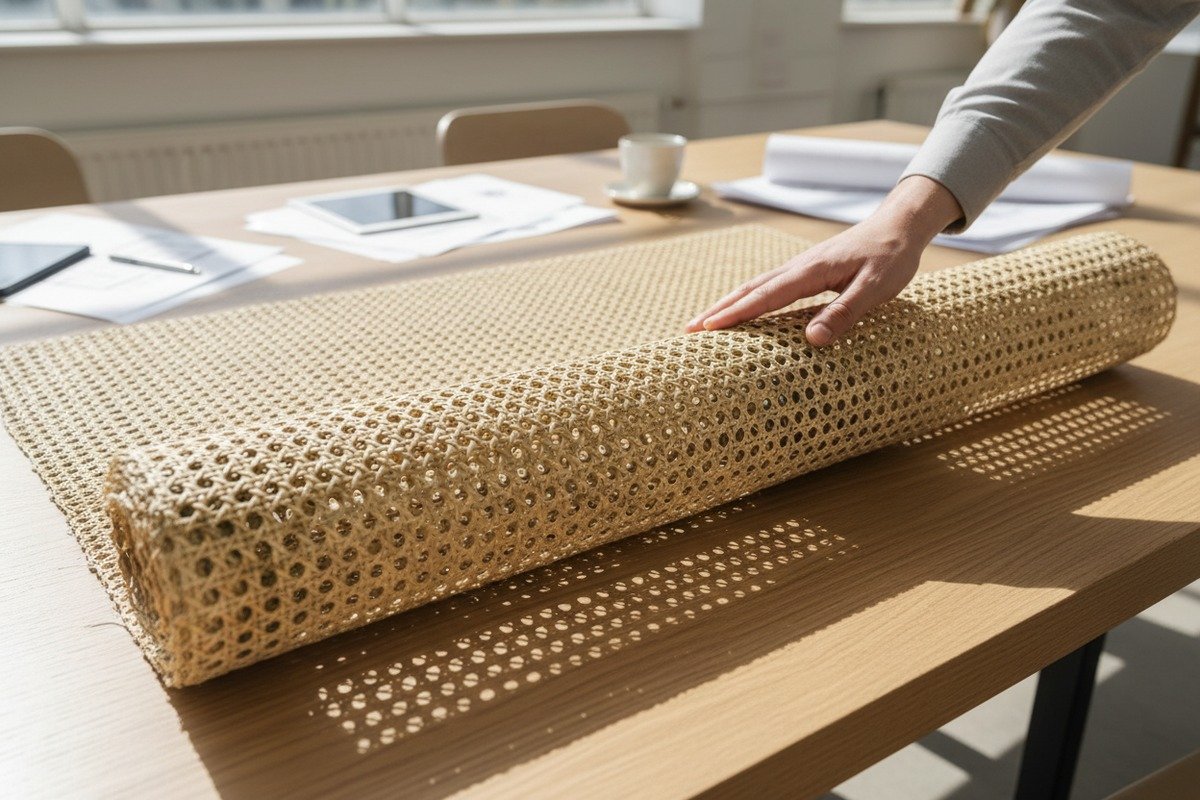
Every week, our customer service team at Seafan Rattan receives emails from buyers worried about green streaks on the Rattan-Rohrgeflecht 1 they just received. They wonder if something went wrong during production, if the material is damaged, or if they need to file a complaint. It is a fair concern — nobody wants to receive materials that look defective rattan plant’s outer skin 2. But the truth is, most buyers asking this question are seeing something perfectly natural.
Yes, natural green streaks on rattan cane webbing are completely normal. They reflect the authentic color of the rattan plant’s outer skin after harvesting. These soft green tints are not defects, mold, or signs of damage. They indicate minimal processing and genuine natural material, and they will gradually fade into a warm golden tone over time.
In this article, we will explain exactly why these green streaks appear, how they change over time, how to tell them apart from mold, and what they mean for the quality grade of your order chlorophyll to break down 3. Whether you are a furniture factory buyer or a materials wholesaler, this guide will give you the clarity you need.
Why does my natural rattan cane webbing have visible green streaks?
When we process raw rattan at our facility in Indonesia, the first thing new workers notice is how green the freshly harvested cane looks golden or amber patina 4. Many buyers who only see finished rattan furniture expect a uniform golden color. The gap between expectation and reality causes unnecessary worry.
The green streaks on natural rattan cane webbing come from the plant's original pigmentation. When the outer skin of the rattan vine is peeled and woven, it retains chlorophyll and natural plant pigments. These green tints are the authentic, unprocessed color of the cane material and indicate a genuine, minimally treated product.
How Rattan Gets Its Color
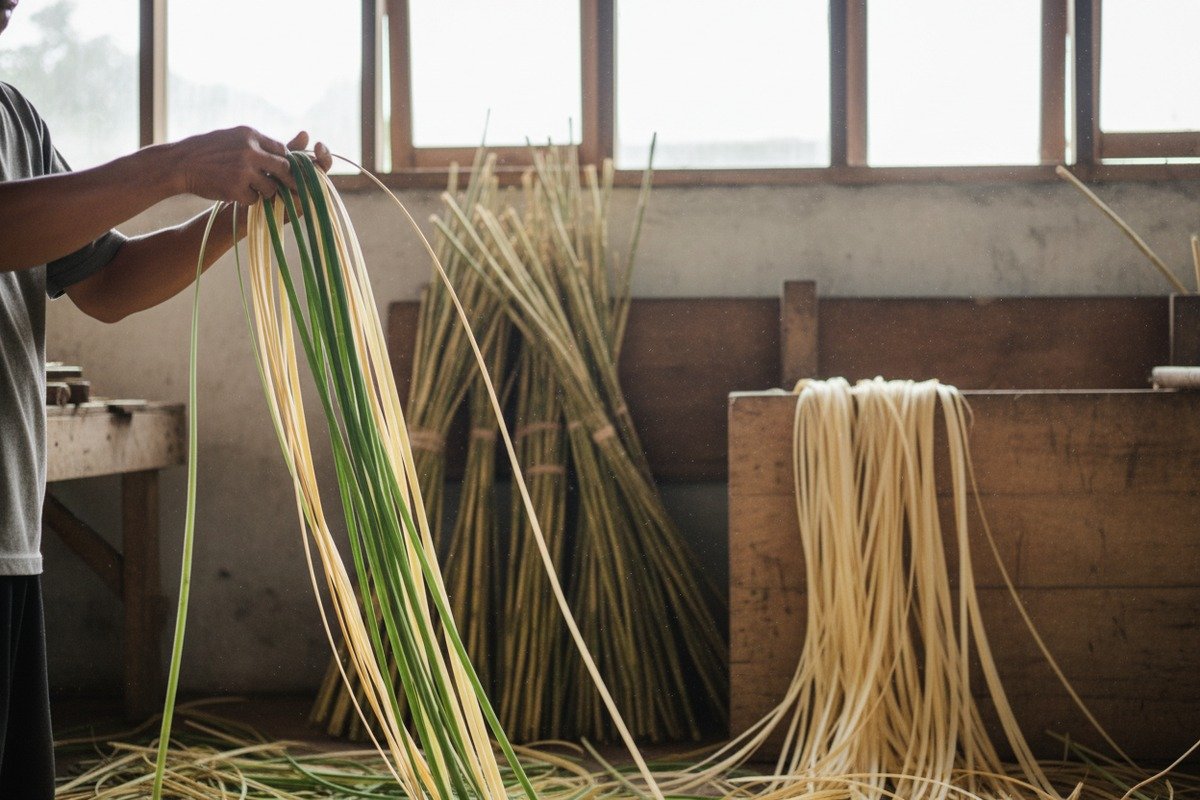
Rattan ist eine Kletterpalme 5 that grows in tropical forests across Southeast Asia. Its outer skin — the part used for cane webbing — contains chlorophyll, the same pigment that makes leaves green. When we harvest and peel the rattan vine, that outer layer naturally carries green and yellowish tones. The exact shade depends on several factors: the age of the plant, the species, how much sunlight it received during growth, and the time between harvest and processing.
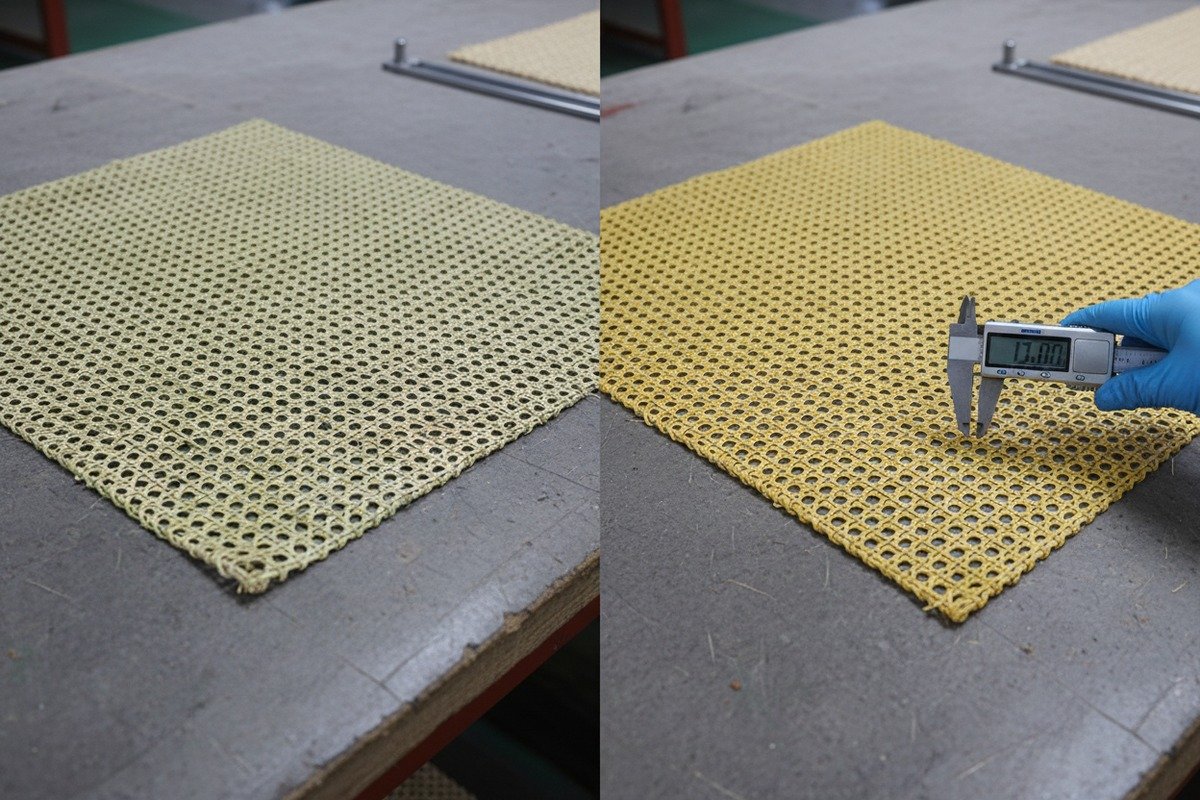
At our rattan processing facility, we sort the peeled cane strips into two main color categories: greenish and yellowish. Both are completely natural. The greenish strips simply retained more of the plant's original pigment. The yellowish strips either came from more mature sections of the vine or lost some chlorophyll during drying.
Greenish vs. Yellowish Cane: What Is the Difference?
Many of our wholesale clients — especially those in the Netherlands, Australia, and the US — ask us to explain the difference between greenish and yellowish natural cane. Here is a simple comparison:
| Merkmal | Greenish Natural Cane | Yellowish Natural Cane |
|---|---|---|
| Farbe | Light straw with visible green tints | Uniform warm yellow or golden |
| Processing Level | Minimal — natural state after peeling | Additional sorting to remove green strips |
| Labor Required | Standard | Higher — requires hand-sorting by skilled workers |
| Kosten | Niedriger | Higher due to extra labor |
| Aussehen | Organic, varied, earthy | Clean, uniform, polished |
| Popularity | Growing — valued for natural aesthetic | Traditional — preferred for classic furniture |
The key takeaway is simple. Greenish cane is not inferior to yellowish cane. It is simply less processed. When our team in Foshan prepares orders for clients who specifically request yellowish cane webbing, our craftsmen must meticulously go through the woven sheets and remove or replace every green-tinted strip. This is painstaking work. That extra labor is reflected in the price.
What About Bleached Cane?
Some buyers want an even more uniform look. In those cases, we offer bleaching options. Fully bleached cane webbing removes nearly all natural color variation, resulting in a pale, consistent tone. Semi-bleached cane keeps a slight yellowish warmth while reducing the visibility of green streaks. Both options are available, but they do alter the material's natural character. For buyers who appreciate the organic look, we always recommend sticking with the natural greenish or yellowish variants.
Will the green tint on my rattan material fade as it ages?
One of the most common follow-up questions we hear from purchasing managers — like our long-term client Ranoo in Thailand — is whether the green tint will stay forever. It is a practical concern, especially when they need to match the cane webbing to a specific furniture design or interior style.
Yes, the green tint on natural rattan cane webbing will fade over time. Exposure to air, light, and normal environmental conditions causes the chlorophyll to break down gradually. The cane transitions from a greenish-straw color to a warm buttery tan, and eventually develops a rich golden or amber patina with age.
The Natural Aging Timeline
The speed of color change depends on the environment. Based on feedback from our clients across different climates and our own observations in our showroom, here is a general timeline:
| Time Period | Color Stage | Was passiert |
|---|---|---|
| 0–2 weeks | Fresh greenish-straw | Cane retains most of its original green pigment |
| 2–8 weeks | Fading green, warming yellow | Chlorophyll breaks down; green tints soften |
| 3–6 months | Light buttery tan | Most green has disappeared; warm uniform tone |
| 1–3 Jahre | Golden honey | Develops a classic rattan look with warm depth |
| 5+ years | Deep amber or brown | Full patina achieved; rich vintage appearance |
This progression is entirely natural. It is the same process that happens with wood, leather, and other organic materials. The patina is part of what makes natural rattan so appealing in interior design.
Factors That Speed Up or Slow Down Fading
Several factors influence how quickly the green tint fades:
Sunlight. Direct UV exposure 7 accelerates the breakdown of chlorophyll. Rattan placed near windows or in well-lit rooms will lose its green tint faster. However, excessive direct sunlight can also cause uneven fading or make the cane brittle over time. We always advise our clients to recommend indirect light for the best long-term results.
Humidity. In humid environments like Südostasien 8 or coastal areas, the cane may retain moisture longer, which can slow the natural drying and color transition slightly. In dry climates, the process tends to happen faster.
Air circulation. Good airflow helps the cane dry evenly and transition to its warm golden tone more quickly. Cane webbing stored in sealed plastic packaging for extended periods may retain its green tint longer simply because it has not been exposed to air.
Surface treatments. Applying oils, lacquers, or varnishes can slow the natural color change. Some furniture makers deliberately seal the cane early to preserve a lighter tone. Others let it age naturally for a richer look.
What Our Clients Do
Most of our furniture factory clients do not worry about the green tint at all. They know it will fade during their own production process — cutting, framing, and finishing all take time, and by the time the furniture reaches the end consumer, the cane has already begun transitioning. Some wholesalers, however, prefer to air out the webbing rolls in a well-ventilated warehouse for a few weeks before reselling. Either approach works perfectly fine.
Is the green color on my rattan webbing a sign of mold or a natural characteristic?
This is the question that causes the most anxiety among our buyers. We understand completely. When you are importing container loads of rattan cane webbing for your factory or warehouse, the last thing you want is a mold problem. Over our years of exporting to more than a dozen countries, we have developed clear guidelines to help our clients tell the difference instantly.
The green color on rattan cane webbing is almost always a natural characteristic, not mold. Natural green streaks are evenly distributed, smooth to the touch, and integrated into the cane's surface. Mold, by contrast, appears as fuzzy, raised spots — often in patches — and produces a musty odor. The two are easy to distinguish on close inspection.
How to Tell Natural Green Streaks from Mold
The distinction is straightforward once you know what to look for. Here is a quick reference guide we share with all our new clients:
| Merkmal | Natural Green Streaks | Schimmel oder Mehltau |
|---|---|---|
| Aussehen | Smooth, flat, part of the cane surface | Fuzzy, raised, sits on top of the surface |
| Verteilung | Evenly spread across multiple strips | Concentrated in patches or spots |
| Farbe | Soft green blending into straw tones | Dark green, black, or white fuzzy spots |
| Textur | Same as the rest of the cane — smooth | Powdery or cottony to the touch |
| Geruch | Clean, slightly woody or grassy | Muffig, feucht, sauer |
| Wipes off? | No — it is part of the material | Yes — mold can often be wiped or brushed off |
| Location pattern | Random across the weave | Often near edges or areas that trapped moisture |
What Causes Actual Mold on Rattan?
Mold needs three things to grow: moisture, warmth, and organic material. Rattan provides the organic material, so the key risk factors are excess moisture and warm temperatures. This is why packaging and shipping conditions matter so much.
At our facilities, we take several steps to prevent mold during transit. We ensure the cane webbing is properly dried before packing. We use moisture-absorbing desiccant packets 9 inside the packaging. And we advise our logistics partners on proper container ventilation. Despite all this, if a container sits in a humid port for an extended period or gets exposed to rain, moisture can still become a problem.
What to Do If You Suspect Mold
If you receive rattan cane webbing and you are unsure whether the green color is natural or mold, here is what we recommend:
- Look closely. Use a magnifying glass if needed. Natural green is flat and smooth. Mold is raised and textured.
- Riechen Sie daran. Natural cane smells clean and slightly woody. Mold smells musty.
- Try wiping it. Dampen a white cloth and gently rub the green area. If color transfers and the spot changes, it may be mold. Natural pigment will not wipe off.
- Check the packaging. Was the packaging damp or damaged? Were the desiccant packets saturated? These are clues.
- Contact your supplier. Send clear photos. A reputable supplier will be able to identify the issue quickly.
We always tell our clients: when in doubt, send us photos. Our quality control team can usually determine within minutes whether the green is natural pigmentation or a moisture-related issue. In the vast majority of cases — well over 95% based on our experience — the green is entirely natural.
Prevention Is Better Than Cure
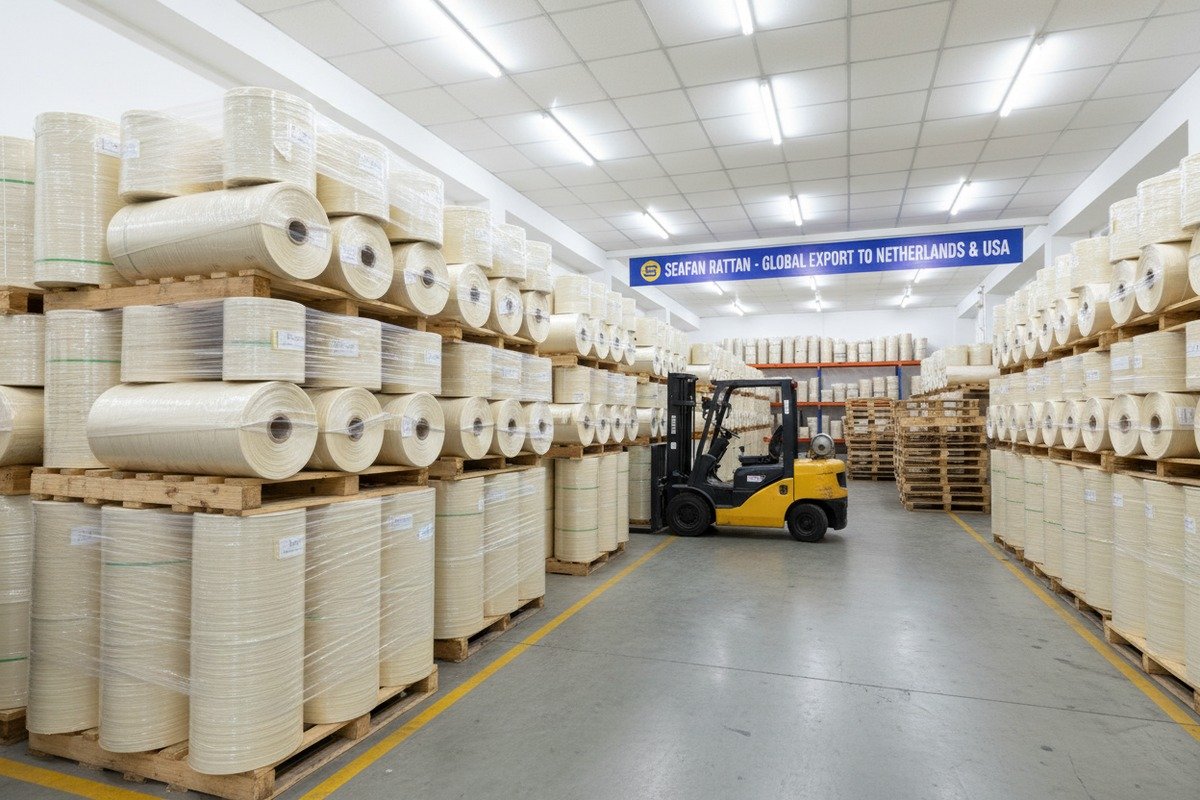
For wholesale buyers who store rattan cane webbing in warehouses, we recommend keeping the material in a cool, dry, well-ventilated space. Avoid stacking rolls directly on concrete floors, which can transfer moisture. Use pallets or shelving. And if you operate in a high-humidity region, consider climate-controlled storage for long-term inventory.
How do these green streaks affect the quality grade of my rattan order?
When we prepare quotations for our B2B clients, one of the first questions purchasing managers ask is about grading. They want to know exactly what they are paying for. This is especially true for clients who demand Grade A quality and specific sizing. So where do green streaks fit into the grading picture?
Natural green streaks do not lower the quality grade of rattan cane webbing. Grading is determined by factors like weave consistency, strand thickness uniformity, structural integrity, and the absence of breaks or holes. The presence of natural green tints is a color characteristic, not a quality defect, and it does not affect the material's performance or durability.
How We Grade Rattan Cane Webbing
At our three factories and across our network of over 30 partner facilities in Foshan, we follow a consistent grading system. Here is how it works:
Güteklasse A cane webbing has tight, even weave patterns. The strands are uniform in thickness. There are no broken or missing strands. The edges are clean and straight. The material lays flat without warping. Color may include natural green tints or uniform yellow tones — both qualify as Grade A.
Güteklasse B may have minor inconsistencies in strand spacing. There could be occasional slight variations in strand thickness. The overall structure is still sound and functional. Color variation, including green streaks, is present and acceptable.
Güteklasse C is budget-friendly material with more visible imperfections. There may be noticeable gaps in the weave, occasional broken strands, or slight warping. This grade is suitable for projects where appearance is less critical.
What Actually Affects Grading
The factors that genuinely impact quality grading have nothing to do with green color. They include:
- Weave tightness and pattern consistency. Are the openings uniform? Is the pattern symmetrical?
- Strand quality. Are the individual cane strips smooth, even, and free of splits?
- Structural integrity. Does the webbing hold its shape? Can it withstand normal handling and installation?
- Edge finishing. Are the edges clean, or are there loose or frayed strands?
- Cleanliness. Is the material free of debris, dust, or actual contamination?
Green streaks are simply not part of this evaluation. A roll of cane webbing with green tints can be — and very often is — Grade A.
Communicating with Your Supplier
If color uniformity is important for your specific project, the right approach is to specify your preference when placing the order. You can request yellowish cane, semi-bleached cane, or fully bleached cane. Each option comes at a different price point because of the additional processing involved.
What we do not recommend is rejecting a shipment of natural cane webbing solely because it has green tints. That would be like rejecting natural marble because it has veining. The variation is the nature of the material.
For clients who need exact color matching — for example, when producing a large furniture line where consistency across hundreds of pieces matters — we always recommend ordering samples first. We send physical samples so buyers can see and feel the material before committing to a full container order. This simple step prevents misunderstandings and ensures everyone is aligned on expectations.
A Note on Customer Education
Many of our wholesale clients tell us that their own customers — the furniture makers and interior designers downstream — sometimes question the green tints too. We encourage our B2B partners to educate their customers proactively. A simple note in your product description or a printed card included with the shipment can go a long way. Something like: "This product is made from natural rattan cane. Soft green tints are a natural characteristic of the material and will fade to a warm golden tone over time."
This kind of transparency builds trust and reduces returns. It also positions the natural variation as a feature — which it genuinely is.
Conclusion
Natural green streaks on rattan cane webbing are a normal, expected characteristic of genuine natural material 10. They fade over time, they are not mold, and they do not affect quality grading. Embrace them as a sign of authenticity.
Fußnoten
1. Provides a general overview and definition of rattan, including its use in webbing. ↩︎
2. Explains the botanical structure of rattan, relevant to its outer layer. ↩︎
3. Explains the natural process by which chlorophyll breaks down over time. ↩︎
4. Explains patina as a natural surface change on materials due to aging and exposure. ↩︎
5. Replaced HTTP 403 with an authoritative Wikipedia page defining rattan as a climbing palm. ↩︎
6. Authoritative source explaining chlorophyll and its role as a primary plant pigment. ↩︎
7. Scientific source explaining the effects of UV radiation on chlorophyll in plants. ↩︎
8. Replaced HTTP 404 with an authoritative Wikipedia page mentioning Southeast Asia as a primary region for rattan. ↩︎
9. Provides a definition and explanation of desiccants and their function. ↩︎
10. Defines natural materials, aligning with the article’s description of rattan. ↩︎
 English
  Español de México
  العربية
  Deutsch
  Français
  Русский