
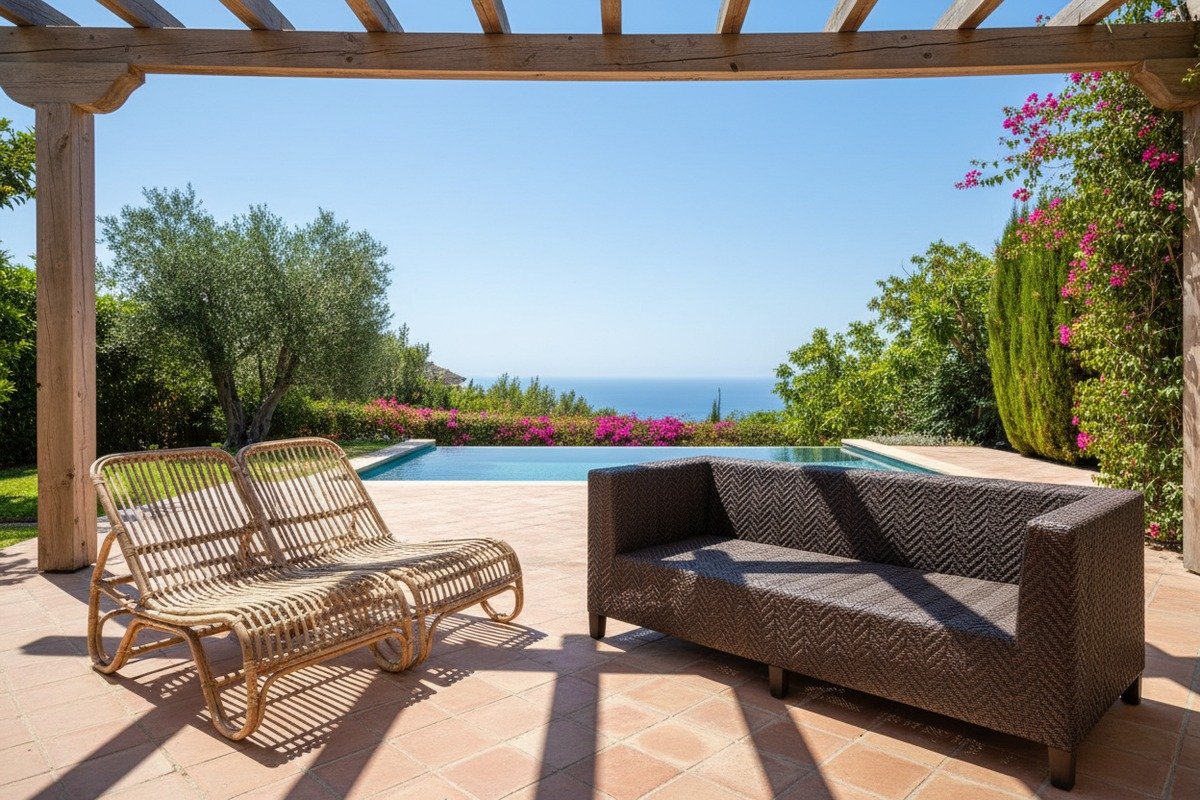
Every year, our customer service team fields dozens of calls from buyers whose beautiful Rattan-Rohrgeflecht 1 pieces have turned pale and brittle after a summer on the patio.
Natural rattan cane webbing cannot reliably withstand prolonged direct sunlight. UV rays cause it to fade, dry out, crack, and eventually decay. Synthetic rattan webbing, engineered with UV stabilizers, performs far better outdoors and resists sun damage for five to ten years with proper care.
Below, we break down exactly how long natural and synthetic rattan webbing lasts in the sun, what damage to expect, how to protect your pieces, and which grade of webbing holds up best. Whether you are a furniture factory sourcing materials or a wholesaler advising your own clients, this guide will help you make smarter decisions.
How long will my rattan cane webbing furniture last if I leave it in direct sunlight?
When we ship rattan cane webbing rolls to furniture makers in Spain or Australia, the first question is always about outdoor durability under harsh summer sun.
Natural rattan cane webbing left in direct sunlight will show visible fading and stiffness within a few months. Without protection, it may crack and break within one to two years. Synthetic rattan webbing, by contrast, can last five to ten years outdoors with minimal maintenance.
Natural Rattan: A Ticking Clock in the Sun
Natural rattan cane webbing is made from the outer bark of climbing palm plants 2. It is a beautiful, organic material. But it was never designed to sit under blazing UV rays day after day.
Here is what happens over time. In the first few weeks, the surface starts to lose its sheen. By month three, you will notice the warm honey color fading to a dull, washed-out tone. After six months to a year of constant sun, the fibers dry out. They lose flexibility. The woven strands become stiff and start to snap when you press on them.
We have seen this firsthand on returned samples from clients in the Middle East and Australia. Pieces that looked stunning in the showroom turned chalky and fragile after a single summer season outdoors. The weave tension loosens as fibers shrink and expand with daily temperature swings, leading to sagging that cannot be reversed.
Synthetic Rattan: Built for the Elements
Synthetic rattan webbing, typically made from PE plastic or resin, is engineered for outdoor use. UV-Stabilisatoren 3 are mixed into the material during manufacturing. This means the color is embedded throughout, not just on the surface. It resists fading far longer.
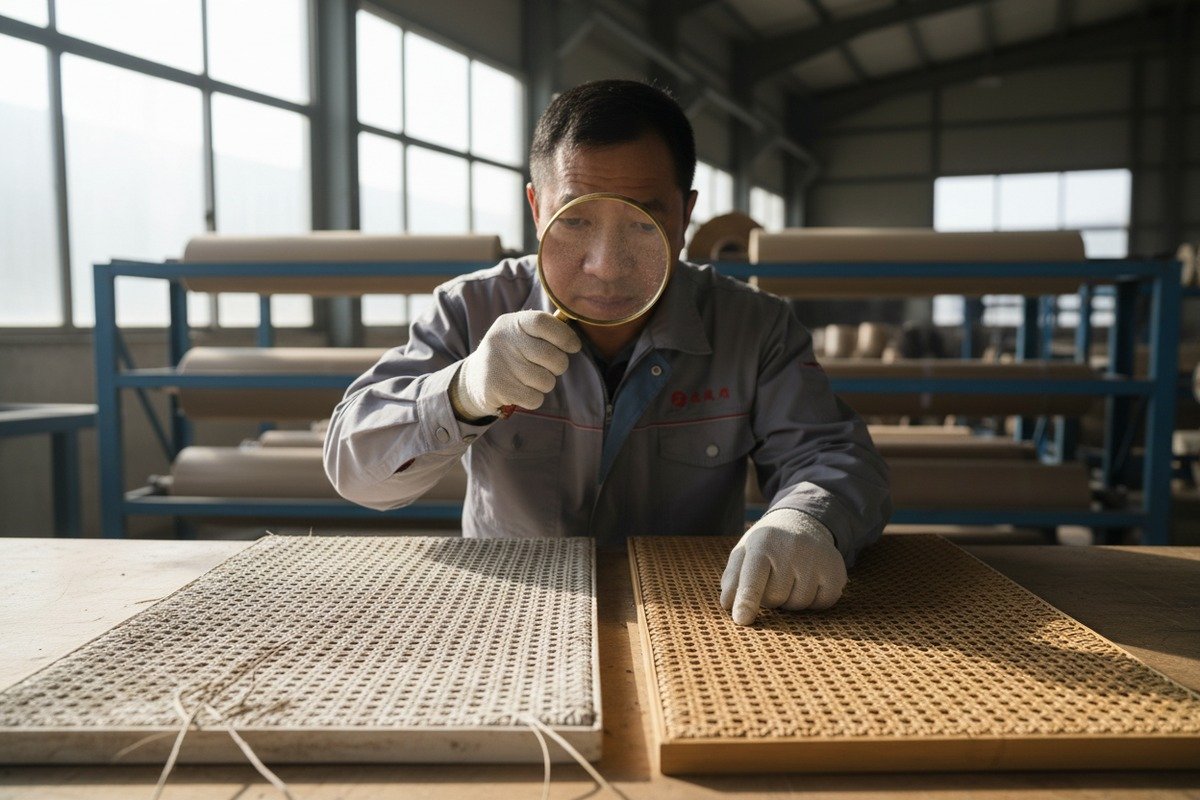
In our production facility, we test synthetic webbing panels under accelerated UV exposure 4. Quality synthetic fibers hold their color and flexibility for years. With basic cleaning and occasional shade, five to ten years of outdoor use is realistic.
Lifespan Comparison Table
| Faktor | Natural Rattan Cane Webbing | Synthetisches Rattangeflecht |
|---|---|---|
| Visible fading onset | 1–3 months in direct sun | 3–5 years in direct sun |
| Brittleness and cracking | 6–12 months | 5–8 Jahre |
| Total outdoor lifespan | 1–2 years (unprotected) | 5–10 Jahre |
| Lebensdauer im Innenbereich | Decades with care | Decades with care |
| Maintenance frequency | Monthly oiling recommended | Seasonal cleaning sufficient |
Why Historical Rattan Pieces Survive Centuries
You may have seen antique rattan chairs in museums that are over a hundred years old. This seems to contradict everything above. But look closer. Those pieces were kept indoors. They were shielded from direct sun and rain. Under controlled indoor conditions, natural rattan is remarkably durable. The key enemy is not time. It is UV exposure and moisture cycling.
So the answer is simple. If your rattan cane webbing furniture will live indoors, it can last a lifetime. If it will sit in direct sunlight, expect rapid decline unless you choose synthetic or take serious protective steps.
Will the sun cause my rattan webbing to fade or become brittle over time?
From our years of exporting rattan webbing to over a dozen countries, we have collected firsthand feedback on exactly how sun damage unfolds across different climates.
Yes, direct sunlight will cause natural rattan webbing to fade noticeably and become increasingly brittle over time. UV rays break down the organic fibers, stripping color and moisture. The material turns stiff, cracks under pressure, and eventually disintegrates if left unprotected.
How UV Rays Attack Natural Rattan
Ultraviolet light 5 is invisible, but its effects on rattan are very visible. UV rays penetrate the surface of natural cane fibers and break the chemical bonds that hold the material together. This process is called photodegradation 6.
The first sign is color change. Natural rattan starts with a warm golden or honey tone. UV exposure bleaches this pigment. You will see a gradual shift to pale yellow, then to a grayish white. Lighter-toned rattan webbing shows this discoloration even faster because there is less natural pigment to lose.
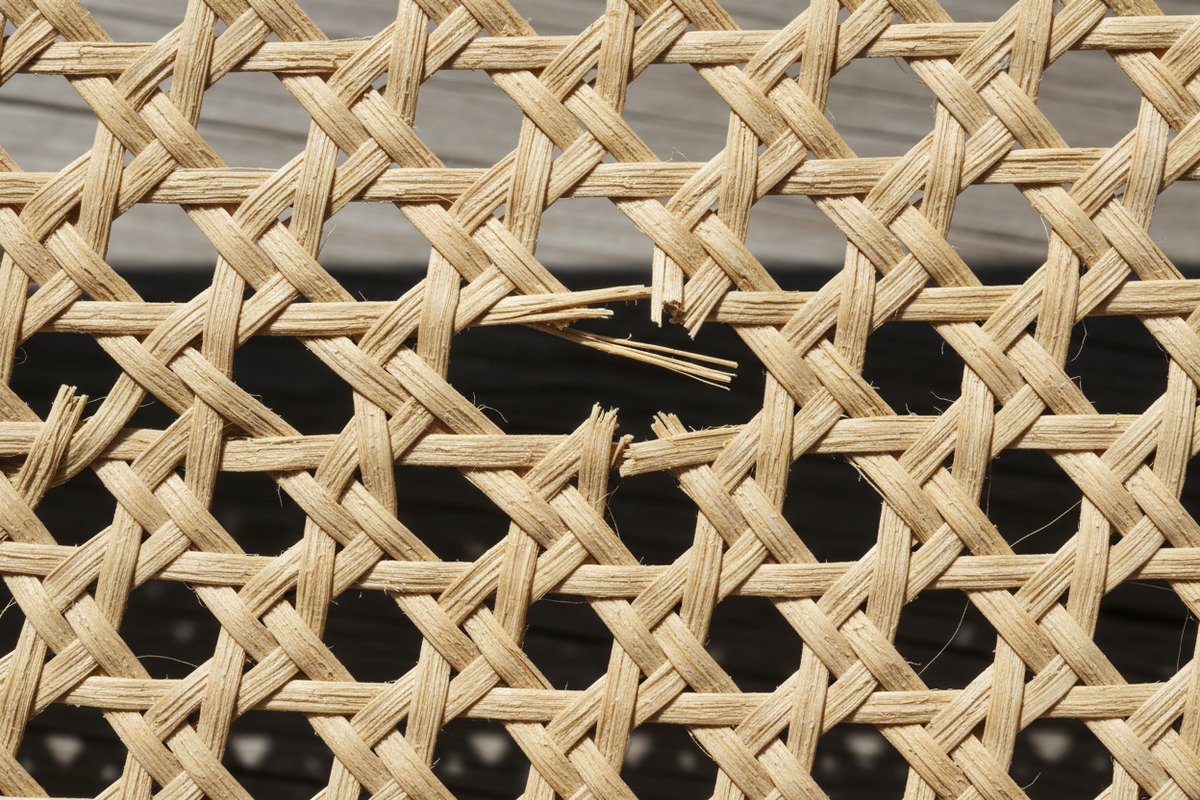
The second sign is texture change. Healthy rattan feels smooth and slightly flexible. Sun-damaged rattan feels rough and dry. Run your hand across it and you might feel splinters. The fibers have lost their natural moisture and oils. They shrink unevenly, which causes the weave to distort and sag.
Brittleness: The Silent Killer
Fading is cosmetic. Brittleness is structural. When rattan dries out from sun and heat exposure, it loses the ability to flex. This is critical because cane webbing relies on tension. Each strand must hold its shape under the weight of a person sitting on a chair or pressing against a cabinet door.
Once brittleness sets in, strands snap. First one, then several. The weave unravels. Repair is possible but costly and time-consuming. Prevention is always cheaper.
Temperature Cycling Compounds the Damage
Direct sunlight does not just deliver UV rays. It also creates heat. During the day, rattan expands as it warms. At night, it contracts as it cools. This daily expansion and contraction cycle stresses the weave. Over weeks and months, the tension loosens. The webbing sags and can no longer hold its original taut, clean appearance.
Signs of Sun Damage at Each Stage
| Phase | Timeframe (Direct Sun) | Visual Signs | Structural Signs |
|---|---|---|---|
| Early | 1–3 months | Slight color lightening, dullness | No visible structural change |
| Moderat | 3–6 months | Noticeable fading, uneven tone | Stiffness when pressed, minor sagging |
| Schwerwiegend | 6–12 months | Gray or white discoloration | Cracking, snapping strands, loose weave |
| Critical | 12+ months | Chalky surface, peeling fibers | Structural failure, irreversible damage |
What About Synthetic Webbing?
Synthetic rattan webbing fades far more slowly because UV stabilizers are mixed directly into the material. However, it is not immune forever. Extreme heat over many years can cause plasticizer degradation. The material becomes stiffer gradually. Premium-grade synthetic fibers resist this much longer than budget options. When we advise clients building outdoor furniture lines, we always recommend investing in higher-grade synthetics to avoid warranty claims down the road.
How can I protect my rattan furniture from UV damage and heat?
Our technical team works closely with furniture factories across Europe and the Middle East, helping them develop care guides that ship with their finished products. Protection is always easier than repair.
To protect rattan furniture from UV damage and heat, keep it in shade or indirect light, apply UV-protective varnish or natural oils like linseed oil regularly, use furniture covers when not in use, and rotate pieces periodically to ensure even exposure and prevent localized fading or weakening.
Shade Is Your First Line of Defense
The single most effective protection for rattan cane webbing is shade. If you can position your furniture under a pergola, awning, covered porch, or large umbrella, you will dramatically extend its lifespan. Even partial shade makes a meaningful difference. Moving a piece from full sun to dappled light can double or triple its outdoor life.
For indoor pieces near large windows, consider UV-filtering window film or sheer curtains. South-facing and west-facing windows deliver the most intense sunlight. Simply shifting a rattan chair a meter away from the glass can reduce UV exposure significantly.
Protective Coatings and Oils
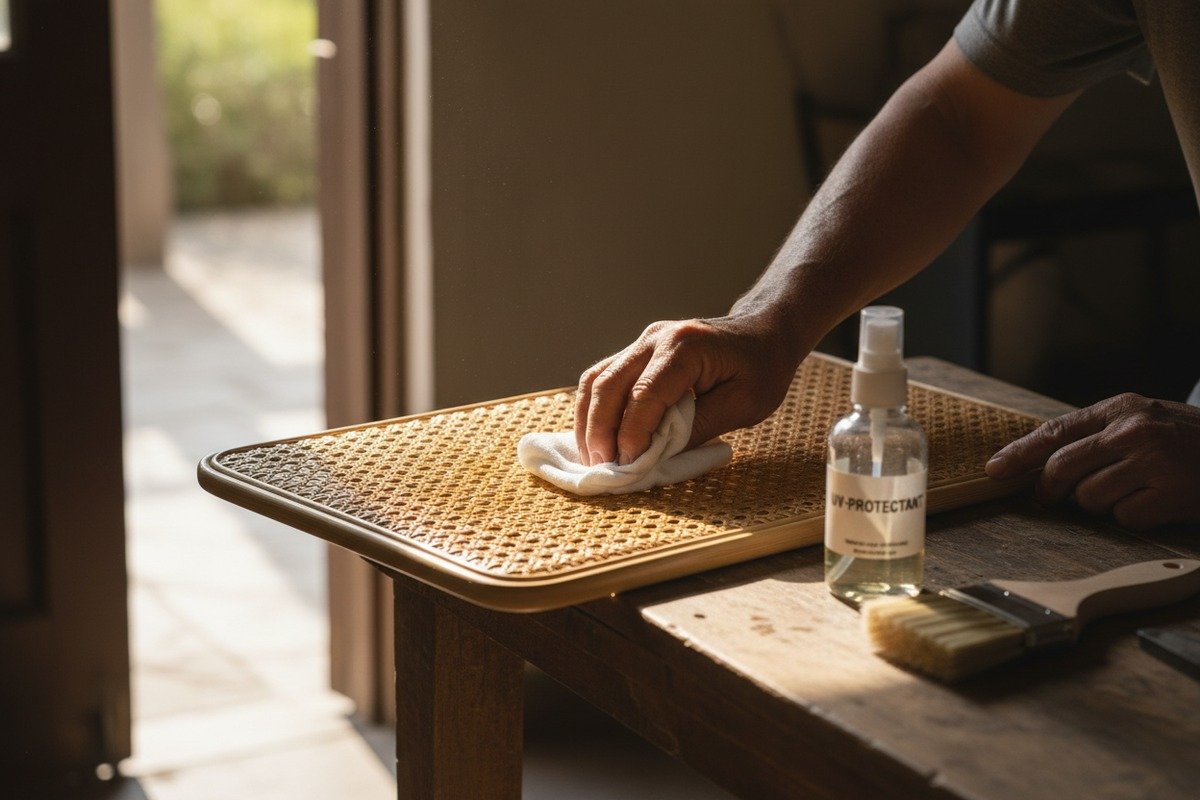
For natural rattan cane webbing, surface treatments create a barrier against UV and moisture loss. Marine-grade sealant 7 Here are the most common options we recommend to our buyers:
- Leinöl: A traditional choice. It penetrates the fibers, restores moisture, and adds a subtle sheen. Apply every two to three months for outdoor or sun-adjacent pieces.
- Tungöl: Similar to linseed but dries harder. Good for pieces that see more handling.
- UV-protective varnish or lacquer: Creates a hard shell on the surface. Offers strong UV blocking. Must be reapplied annually as it can crack and peel over time.
- Marine-grade sealant: The strongest option. Designed for boats and outdoor use. Expensive but very effective.
Maintenance Routine for Maximum Lifespan
Regular care prevents the small problems that lead to big failures. Here is a simple schedule:
| Aufgabe | Häufigkeit | Details |
|---|---|---|
| Dust with soft cloth or brush | Wöchentlich | Removes debris that traps moisture |
| Wipe with damp cloth (not soaking wet) | Biweekly | Prevents dirt buildup in weave gaps |
| Apply linseed or Tungöl 8 | Alle 2–3 Monate | Keeps fibers flexible and moisturized |
| Inspect for cracks or loose strands | Monatlich | Catch damage early before it spreads |
| Apply UV varnish or sealant | Jährlich | Refreshes the protective barrier |
| Use furniture covers when not in use | Always (outdoors) | Blocks sun, rain, and dust simultaneously |
| Rotate furniture position | Monatlich | Ensures even sun exposure across all sides |
Furniture Covers and UV-Blocking Fabrics
Do not underestimate a good furniture cover. Modern covers made from UV-blocking fabric can shield your rattan webbing from ninety percent or more of harmful rays. Look for covers rated UPF 50+ 9. When we supply rattan webbing panels to outdoor furniture brands in the Netherlands and Australia, many of them bundle matching covers with the finished product. It is an easy add-on that protects the investment.
Ein Hinweis zur Luftfeuchtigkeit
Sun protection alone is not enough if you live in a humid climate. Rattan absorbs moisture from the air. Too much moisture causes mold and mildew. Too little causes drying and cracking. The ideal environment is moderate humidity, around forty to sixty percent. If your rattan furniture moves between air-conditioned interiors and humid outdoor spaces, the constant shift can stress the material. Try to keep conditions as stable as possible.
Should I choose a specific grade of rattan webbing to better withstand the sun?
When clients from Turkey or Saudi Arabia request rattan webbing for sunroom installations or semi-outdoor cafes, our sales team always starts the conversation with material grade and intended placement.
Yes, the grade of rattan webbing you choose significantly affects its sun resistance. Grade A natural rattan is denser and more uniform, offering slightly better durability, but no natural grade truly resists prolonged UV. For sun-exposed applications, premium-grade synthetic rattan webbing with embedded UV stabilizers is the most reliable choice.

Rattan-Qualitätsstufen verstehen
Not all rattan cane webbing is equal. Grading depends on several factors: the thickness and uniformity of the cane strands, the tightness of the weave, the presence of defects like knots or discoloration, and the moisture content at time of processing.
Grade A rattan comes from the best sections of the rattan palm. The strands are consistent in width, smooth in texture, and free of blemishes. This material holds its shape better and resists cracking slightly longer than lower grades. But even Grade A natural rattan will fade and dry out in direct sun. The advantage is time, not immunity.
Grade B and Grade C rattan may have minor imperfections. Strands can be uneven. The weave may be slightly looser. These grades are perfectly fine for indoor use where sun exposure is minimal. But outdoors, their weaker spots fail first. Cracks form at knots. Thin strands snap before thick ones. The damage looks uneven and patchy.
Natural vs. Synthetic: The Grade That Matters Most
For any application involving regular sun exposure, the most important choice is not which grade of natural rattan to buy. It is whether to use natural or synthetic material at all. Here is how we explain it to our wholesale buyers:
| Kriterien | Grade A Natural Rattan | Grade B/C Natural Rattan | Premium Synthetic Rattan | Budget Synthetic Rattan |
|---|---|---|---|---|
| UV-Beständigkeit | Niedrig | Sehr gering | Hoch | Moderat |
| Fading timeline (direct sun) | 2–4 months | 1–2 months | 4–6 Jahre | 2–3 years |
| Flexibility retention | Moderat | Niedrig | Hoch | Moderat |
| Aesthetic authenticity | Ausgezeichnet | Gut | Gut | Mäßig |
| Cost per square meter | Mittel | Niedrig | Hoch | Mittel |
| Empfohlene Verwendung | Indoor, shaded areas | Nur für den Innenbereich | Outdoor, sunrooms, patios | Semi-outdoor, covered areas |
Das Webmuster ist ebenfalls wichtig
The weave pattern also affects how rattan webbing performs in the sun. Open-mesh patterns, such as the classic hexagonal "radio weave," allow air to circulate through the material. This helps reduce heat buildup and slows down thermal expansion stress. Dense square basketweave patterns trap more heat on the surface, which accelerates drying.
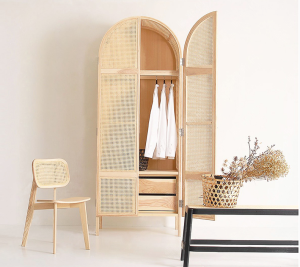
When we advise furniture factories designing outdoor product lines, we often suggest open-weave synthetic panels. They look elegant, breathe well, and handle sun exposure better than tight-weave alternatives.
Stiffened and Treated Panels
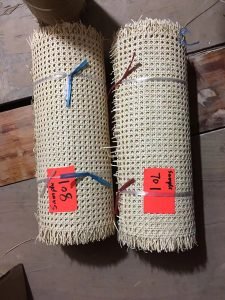
A growing trend we see in our export orders is stiffened rattan webbing panels. These are pre-treated natural or synthetic panels infused with resins or adhesives that add rigidity and some UV resistance. They are popular in DIY projects, cabinet doors, and lighting fixtures. While the treatment helps, it does not make natural rattan sun-proof. Think of it as adding a few extra months of protection, not years.
For true outdoor durability, we steer our clients toward synthetic webbing with factory-applied UV coatings. These products leave our facility ready for sun exposure without any additional treatment by the end user.
Sourcing Tip for Buyers
If you are a furniture material wholesaler or procurement manager, always ask your supplier about UV testing data. Reputable manufacturers, including our own facility, can provide accelerated weathering test results. These tests simulate years of sun exposure in controlled conditions. They give you a realistic picture of how the material will perform. Do not rely on appearance alone. A beautiful roll of natural rattan can look identical to a UV-treated roll until both are placed in the sun.
Conclusion
Choosing between natural and synthetic rattan cane webbing comes down to where your furniture will live. Keep natural rattan indoors or shaded, invest in synthetic for sun-exposed spaces, and maintain either with regular care.
Fußnoten
1. Explains what rattan cane webbing is and its origin. ↩︎
2. Provides a general overview of climbing palm plants. ↩︎
3. Details how UV stabilizers protect plastics from sun damage. ↩︎
4. Explains the standard for simulating UV exposure in laboratory settings. ↩︎
5. Replaced with a Wikipedia link for a comprehensive explanation of ultraviolet light. ↩︎
6. Replaced with a Wikipedia link for an authoritative definition of photodegradation. ↩︎
7. Explains the properties and applications of marine-grade sealants. ↩︎
8. Compares tung oil to linseed oil and its suitability for wood. ↩︎
9. Defines UPF 50+ rating and its significance for UV protection in fabrics. ↩︎
10. Details the properties and uses of linseed oil for wood finishing. ↩︎
 English
  Español de México
  العربية
  Deutsch
  Français
  Русский