

Years of shipping rattan webbing to furniture factories across five continents have taught our team one clear lesson: choosing the right application matters more than the material itself chair seats and backrests 1. Many buyers invest in premium Rattan-Rohrgeflecht 2 but struggle to match it with the furniture type that truly showcases its strengths. The result? Wasted material, underwhelming designs, and missed market opportunities.
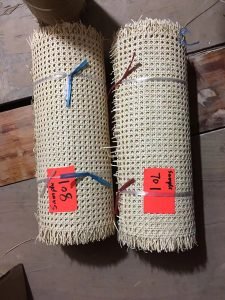
The best furniture applications for rattan cane webbing include chair seats and backrests, cabinet and wardrobe door panels, headboards and bedheads, sofa accent panels, room dividers, and side tables. Each application leverages rattan’s lightweight durability, natural breathability, and timeless aesthetic appeal across modern, boho, and mid-century design styles.
Below, we break down the top furniture applications by category cabinet and wardrobe door panels 3. Each section covers practical selection tips, pattern recommendations, and real production insights drawn from our factory floor experience. Whether you run a boutique furniture brand or manage procurement for a large-scale operation, this guide will help you make confident material decisions.
How can I incorporate rattan cane webbing into my modern cabinet and wardrobe designs?
When our design team works with European cabinet makers, we often see the same challenge: they want the warmth of natural rattan but worry it will look outdated headboards and bedheads 4. The truth is, rattan cane webbing is one of the most adaptable materials for modern storage furniture when you pair it with the right frame and weave pattern.
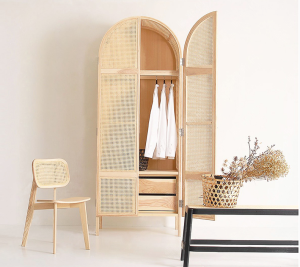
You can incorporate rattan cane webbing into modern cabinets and wardrobes by using it as door panel inserts framed in clean-lined wood or metal, choosing open hexagonal or radio weave patterns for a contemporary look, and pairing light-toned webbing with matte black or walnut frames for striking contrast.
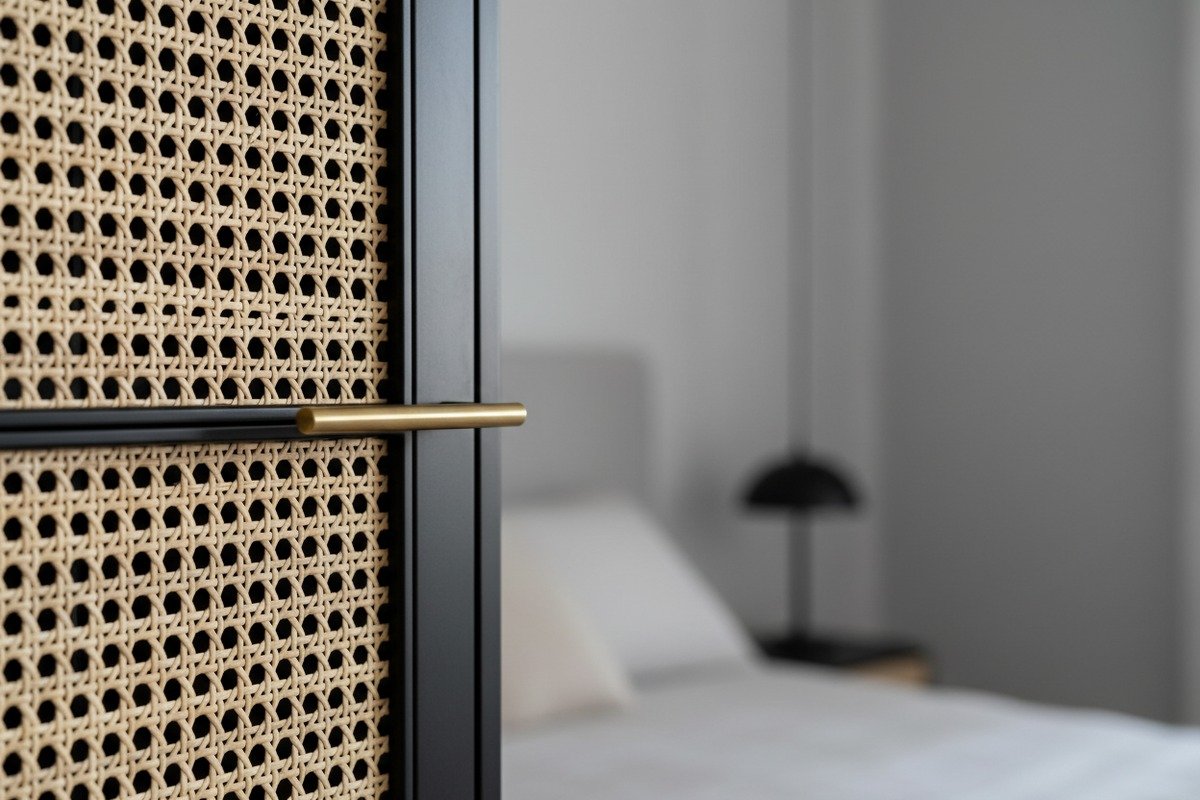
Why Cabinets and Wardrobes Work So Well with Rattan
Cabinets and wardrobes need airflow. Clothes stored behind solid doors can trap moisture and develop odors open hexagonal or radio weave patterns 5. Rattan cane webbing solves this problem naturally. Its woven structure allows air to circulate while keeping contents semi-concealed Zugfestigkeit 6. This is why hospitality designers in humid climates—from Dubai resorts to Thai boutique hotels—specify rattan-fronted wardrobes for guest rooms.
The visual effect is equally important. A flat, solid cabinet door is forgettable. A rattan-inset door adds texture, depth, and warmth instantly. In our experience exporting to Spain and the Netherlands, buyers consistently report that rattan cabinet doors become the focal point of kitchen and living room spaces.
Choosing the Right Pattern for Cabinet Applications
Not every weave pattern suits cabinet doors equally. Here is a comparison to guide your selection:
| Webmuster | Visual Transparency | Best Cabinet Style | Airflow Level |
|---|---|---|---|
| Hexagonal / Radio Weave | High – contents partially visible | Open shelving, display cabinets | Ausgezeichnet |
| Dense Square Basketweave | Low – contents mostly hidden | Bedroom wardrobes, bathroom vanities | Moderat |
| Diamond Geometric Motif | Medium – decorative focal point | Living room sideboards, bar cabinets | Gut |
| Chevron Wave Design | Low to Medium – textured surface | Modern kitchen cabinets, entryway storage | Moderat |
Frame Material Pairing Tips
The frame around your rattan panel defines the overall style. Here are the combinations we see performing best in 2025 furniture markets:
- Oak or ash wood + natural rattan = Scandinavian minimalism
- Matte black metal + bleached rattan = Industrial modern
- Walnut or teak + natural rattan = Mid-century modern revival
- Painted MDF + synthetic rattan matting = Budget-friendly contemporary
Our factories in Foshan regularly cut rattan sheets to custom dimensions for cabinet makers who need precise panel sizes. When ordering for cabinet projects, always add 20–30mm to each side for stapling or groove insertion. This avoids the common mistake of cutting panels too small for the frame rebate.
Installation Basics for Cabinet Doors
Installation is straightforward. Most furniture factories use one of two methods:
- Staple and trim method — Stretch the webbing across the back of the door frame, staple it in place, then cover the edges with a reed spline or thin wooden trim strip.
- Groove and spline method — Route a channel into the frame, press the webbing into the groove using a reed spline, then glue or pin the spline in place for a cleaner finish.
Both methods are production-friendly and require no specialized equipment beyond standard woodworking tools. For high-volume runs, we recommend pre-cutting webbing sheets to template sizes before shipping to your assembly line.
What are the most durable rattan webbing patterns for my chair and sofa production?
Durability questions come up in almost every conversation we have with chair manufacturers. When we supply rattan webbing to factories in Australia and Turkey, production managers want to know one thing before anything else: will it hold up under daily use?
The most durable rattan webbing patterns for chair and sofa production are the close-weave square basketweave and the traditional octagonal cane pattern, both offering superior tensile strength and even weight distribution. For seating surfaces, these tight-weave patterns resist sagging and stretching far better than open-mesh designs.
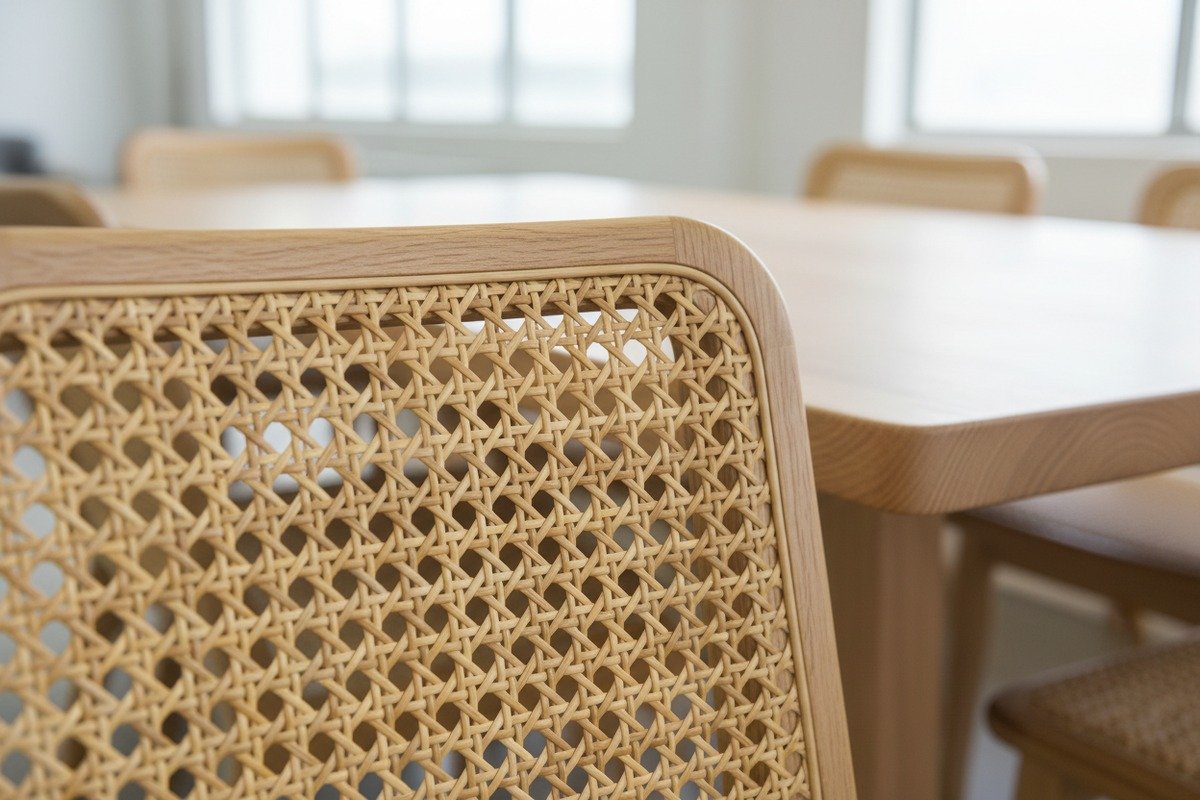
Understanding Durability in Woven Rattan
Durability in rattan webbing depends on three factors: weave density, strand thickness, and material grade. A tight weave distributes body weight across more contact points. Thicker strands resist snapping under pressure. And Grade A natural rattan 7—harvested from mature plants with consistent fiber structure—outperforms lower grades in every stress test we have conducted.
Chairs and sofas put rattan under more mechanical stress than any other furniture type. Every time someone sits down, the webbing flexes. Over thousands of cycles, a loose or open-weave pattern will stretch and sag. That is why we always advise chair producers to choose close-weave patterns for seat panels and reserve open-weave designs for backrest accents where stress is lower.
Pattern Durability Comparison for Seating
| Webmuster | Strand Density | Gewichtskapazität | Best Use in Seating | Lifespan Under Daily Use |
|---|---|---|---|---|
| Close Square Basketweave | Sehr hoch | Up to 120 kg | Chair seats, dining chairs | 8–12 years |
| Traditional Octagonal Cane | Hoch | Up to 100 kg | Stuhlpolster und Rückenlehnen | 7–10 years |
| Hexagonal Radio Weave | Mittel | Up to 70 kg | Chair backs, decorative panels | 5–8 Jahre |
| Open Diamond Weave | Niedrig | Up to 50 kg | Accent panels, armrest inserts | 4–6 years |
These estimates assume indoor use with no direct sun exposure. Our testing at the Foshan facility uses a repeated compression rig that simulates five years of average sitting in about 60 days. Close basketweave consistently shows the least deformation after testing.
Sofa Applications: Where Rattan Adds Value
Full rattan sofa seats are rare in modern production. Most sofa manufacturers use rattan webbing as an accent material—armrest panels, side inserts, or back frame panels visible above the cushion line. These applications experience less direct pressure, so you have more freedom with pattern selection.
For sofa armrest inserts, the chevron wave pattern from our synthetic rattan matting 8 line offers a compelling option. It combines visual texture with the durability of engineered plastic fibers. This is ideal for commercial environments like hotel lobbies and restaurant lounges where furniture faces heavy traffic.
Reinforcement Techniques for Production
Even the best rattan webbing benefits from proper reinforcement in chair and sofa frames:
- Pre-soak natural rattan in water for 20–30 minutes before stretching. This makes the fibers pliable and reduces cracking during installation.
- Apply a thin coat of clear lacquer or sealant after installation. This locks the fibers in place and adds moisture resistance.
- Use a plywood or MDF backer panel behind the webbing on chair seats if you need extra rigidity. Cut ventilation holes in the backer to maintain airflow.
- Reinforce edges with hardwood splines rather than soft pine. Hardwood holds staples better and prevents the webbing from pulling free over time.
Our production engineers in Indonesia refined these techniques over two decades of supplying chair-grade rattan to European and American markets. They make a measurable difference in product longevity.
In our showroom conversations with luxury furniture brands from the US and Europe, headboards are always the product category where material quality shows most. A headboard is the largest single visual element in a bedroom. Every imperfection in the rattan weave is magnified at that scale.
You should choose premium rattan cane webbing for high-end headboards because Grade A material delivers uniform color, consistent strand thickness, and tight weave integrity across large panels—qualities that define luxury perception. Premium webbing also resists yellowing and maintains its natural luster for years, protecting your brand reputation.
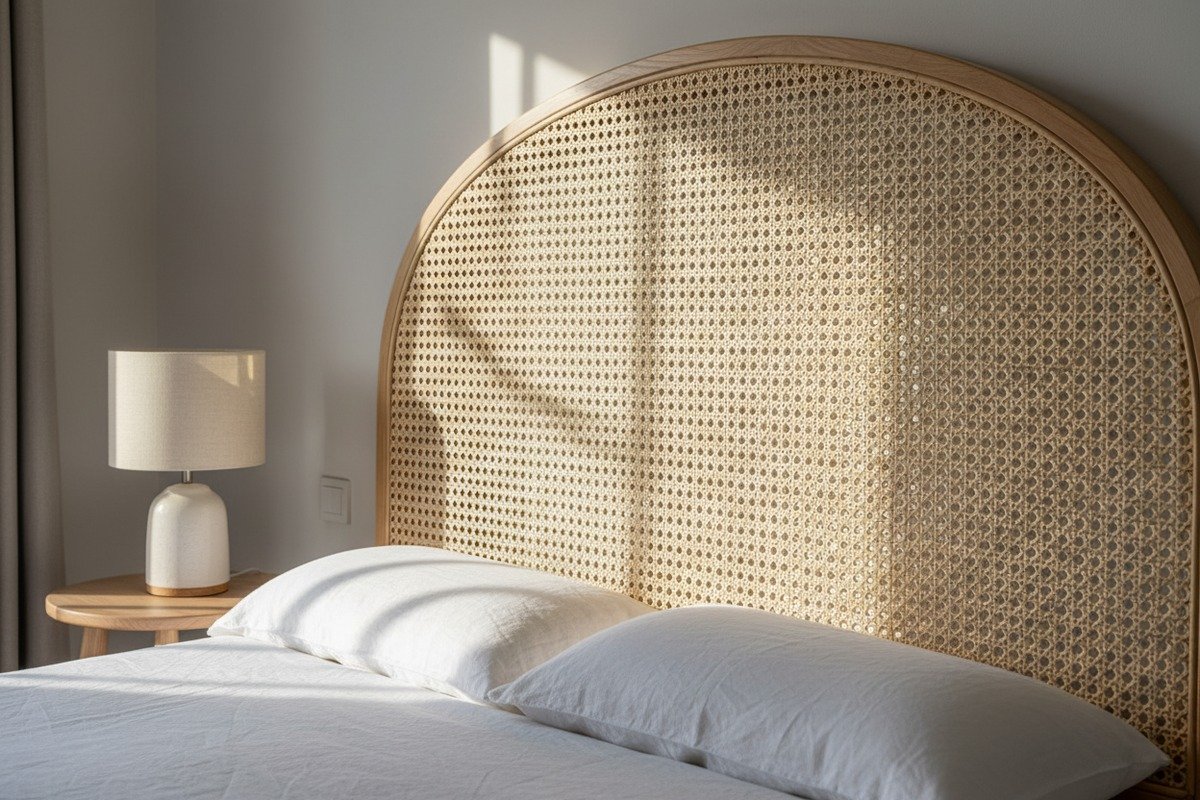
The Headboard Opportunity in 2025
Headboards represent one of the fastest-growing segments for rattan cane webbing. Boutique hotels, Airbnb designers, and residential interior decorators are all embracing the natural-texture trend. A well-crafted rattan headboard communicates warmth, sustainability, and artisanal quality in a single piece.
From our sales data, headboard orders now account for roughly a quarter of all rattan webbing shipped to our European and Australian clients. This was nearly zero five years ago. The growth tracks directly with the broader consumer shift toward sustainable materials and away from synthetic upholstery.
What Makes "Premium" Different from Standard Grade?
Not all rattan webbing is created equal. Here is what separates premium from standard:
| Qualitätsfaktor | Premium / Grade A | Standard / Grade B-C |
|---|---|---|
| Farbkonstanz | Uniform cream to light straw | Noticeable dark spots, uneven tones |
| Strand Thickness | Consistent across entire sheet | Variable — thinner strands mixed in |
| Weave Tightness | Even tension, no gaps | Occasional loose strands or spacing errors |
| Oberflächenbeschaffenheit | Smooth, minimal splinters | Rougher texture, more fiber fuzz |
| Sheet Flatness | Lies flat without curling | May curl at edges or warp slightly |
| UV-Beständigkeit | Treated or naturally resistant | More prone to yellowing within 1–2 years |
For headboards, these differences are not subtle. A standard-grade sheet might look acceptable on a small cabinet panel. But stretch it across a king-size headboard frame—roughly 2000mm wide by 1200mm tall—and every inconsistency becomes visible from across the room.
Design Approaches for Rattan Headboards
There are three main design approaches we see among our headboard clients:
Full-panel headboards use a single large sheet of rattan webbing stretched across a rectangular frame. This is the most popular style. It works best with premium natural or bleached rattan because the entire surface is exposed.
Segmented headboards divide the frame into two or three vertical or horizontal sections, each filled with a separate rattan panel. This allows mixing patterns—for example, a dense basketweave center flanked by open radio weave sides.
Accent headboards use rattan as just one element within a larger upholstered or wood headboard. A strip of rattan across the top or a circular rattan medallion in the center adds texture without committing to a full natural look.
Color Options: Natural vs. Bleached
Our bleached rattan cane webbing 9 has gained significant traction in the headboard market. The bleaching process lightens the natural straw color to a clean white or ivory tone. This broadens style compatibility—bleached rattan pairs naturally with Scandinavian, coastal, and all-white bedroom palettes.
Natural rattan, on the other hand, offers warmer tones that complement wood-heavy interiors, bohemian styling, and mid-century modern bedrooms. Both options are available in premium grades. The choice depends on the end customer's interior design direction.
Packaging Matters for Large Panels
One pain point we have solved for headboard clients is packaging. Large rattan sheets for headboards must arrive without creases, cracks, or fold damage. We ship headboard-grade sheets flat in rigid cardboard boxes with foam corner protectors. For overseas shipments, we add moisture-barrier wrap to prevent warping during ocean transit. This attention to packaging directly addresses the durability concerns that some buyers raise about natural rattan.
How do I select the right grade of rattan webbing for my large-scale commercial furniture projects?
Running three factories and coordinating with over thirty partner workshops in Foshan has given our team a unique perspective on grade selection at scale. When a procurement manager orders 5,000 square meters of rattan webbing for a hotel chain or retail furniture line, the grading decision affects everything—from production reject rates to end-customer complaints.
To select the right grade for large-scale commercial projects, match the rattan grade to the furniture's visibility, stress level, and target price point. Use Grade A for high-visibility luxury pieces like headboards and display furniture, Grade B for mid-range items like dining chairs, and Grade C for concealed or budget applications where appearance is secondary.
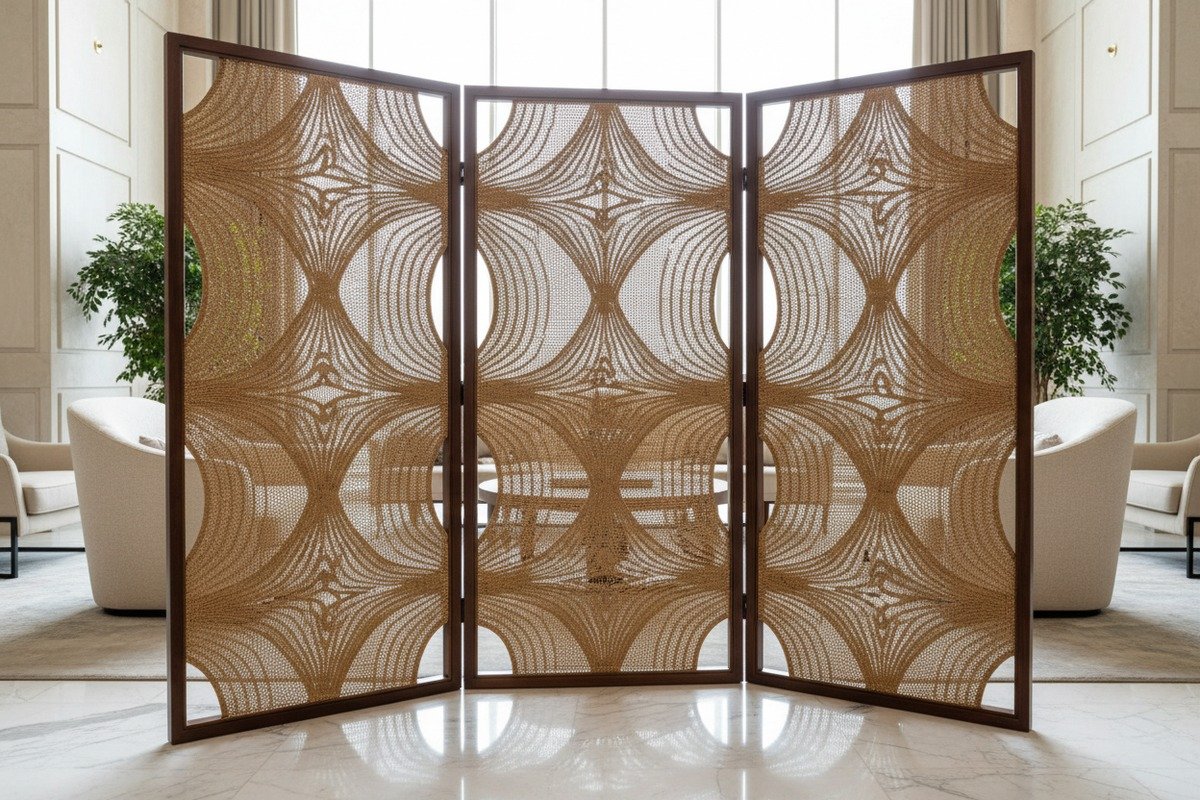
The Grade System Explained
Rattan webbing grades are not standardized across the global industry. Different suppliers use different terminology. At our facilities, we classify natural rattan cane webbing into three tiers based on visual quality, structural integrity, and consistency:
Güteklasse A — The top 15–20% of production output. Uniform color. Consistent strand diameter. No broken strands, dark spots, or weave gaps. Suitable for exposed, large-format applications.
Güteklasse B — The solid middle range, roughly 50–60% of output. Minor color variation. Occasional thinner strands. Fully functional with small cosmetic imperfections that are invisible on smaller panels. Ideal for standard production furniture.
Güteklasse C — The remaining output. Noticeable color inconsistency. Some weave irregularities. Best for concealed applications (e.g., internal shelf panels, backing material) or budget product lines where price sensitivity outweighs visual perfection.
Abgleich von Güteklasse und Anwendung
| Application Type | Empfohlene Güteklasse | Grund |
|---|---|---|
| Hotel headboards, luxury retail displays | Güteklasse A | Maximum visual impact, brand-critical quality |
| Dining chairs, mid-range cabinets | Güteklasse B | Good balance of quality and cost |
| Internal drawer panels, concealed backing | Güteklasse C | Cost efficiency, appearance not critical |
| Restaurant/cafe furniture (high traffic) | Grade A or synthetic | Durability under heavy use justifies premium |
| DIY kits, consumer retail packs | Güteklasse B | Acceptable quality at accessible price |
| Outdoor or semi-outdoor accent furniture | Synthetische Rattanmatte | Weather resistance required |
Cost Implications at Scale
Grade selection directly impacts your unit cost. Grade A webbing typically costs 30–50% more per square meter than Grade C. On a 5,000-square-meter order, that difference is significant. But so is the cost of returns, rework, and brand damage from using lower-grade material on high-visibility products.
We advise our commercial clients to use a blended approach. Specify Grade A only for the panels that face the customer. Use Grade B or C for structural or hidden elements. This strategy keeps total material cost competitive while maintaining the visual quality that sells furniture.
Quality Control for Large Orders
Large-scale orders require systematic Qualitätskontrolle 10. Here is the process we follow at our Indonesian rattan processing facility:
- Raw material sorting — Incoming rattan cane is sorted by diameter and color before weaving begins.
- Loom inspection — Weavers check tension and pattern alignment every 50cm during production.
- Post-weave grading — Finished sheets pass through a light table inspection where graders classify them as A, B, or C.
- Pre-shipment audit — Before packing, a random sample of 10% of sheets is re-inspected against the client's approved sample.
This four-step process keeps our defect rate below 2% on Grade A orders—a benchmark that gives our clients confidence when placing large commitments.
Synthetic vs. Natural: When to Switch
For commercial projects in high-humidity environments, outdoor-adjacent spaces, or ultra-high-traffic settings, our synthetic rattan matting line offers a practical alternative. These woven plastic sheets mimic the look of natural rattan—including chevron, basketweave, and geometric patterns—while offering complete moisture resistance and UV stability.
The trade-off is tactile authenticity. Natural rattan has a warmth and organic irregularity that synthetic cannot fully replicate. For premium indoor projects, natural is always the better choice. For pool-side furniture, covered patios, or commercial spaces that require frequent hosing down, synthetic wins on practicality.
Conclusion
Rattan cane webbing earns its place in cabinets, chairs, headboards, and commercial furniture through proven durability, natural beauty, and design versatility. Matching the right weave pattern and material grade to each application is the key to maximizing both product quality and production efficiency.
Fußnoten
1. Offers practical information on installing cane webbing in furniture, specifically mentioning its use for chair seats and backrests. ↩︎
2. Provides a comprehensive overview of rattan cane webbing, its origins, characteristics, and applications. ↩︎
3. Discusses the use of cane webbing as a panel material in doors and cabinet backs, with installation details. ↩︎
4. Features a range of rattan headboards, showcasing their application as bedheads in various styles. ↩︎
5. Explicitly defines and differentiates between square (radio) and hexagon cane webbing patterns. ↩︎
6. Provides a clear and authoritative definition of tensile strength from Britannica. ↩︎
7. Details the grading system for rattan, specifically defining Grade A quality. ↩︎
8. Defines synthetic rattan and highlights its properties and uses as an alternative to natural rattan. ↩︎
9. Compares bleached and natural rattan cane webbing, describing the aesthetic and characteristics of bleached rattan. ↩︎
10. Offers a definition and explanation of quality control as part of quality management. ↩︎
 English
  Español de México
  العربية
  Deutsch
  Français
  Русский