
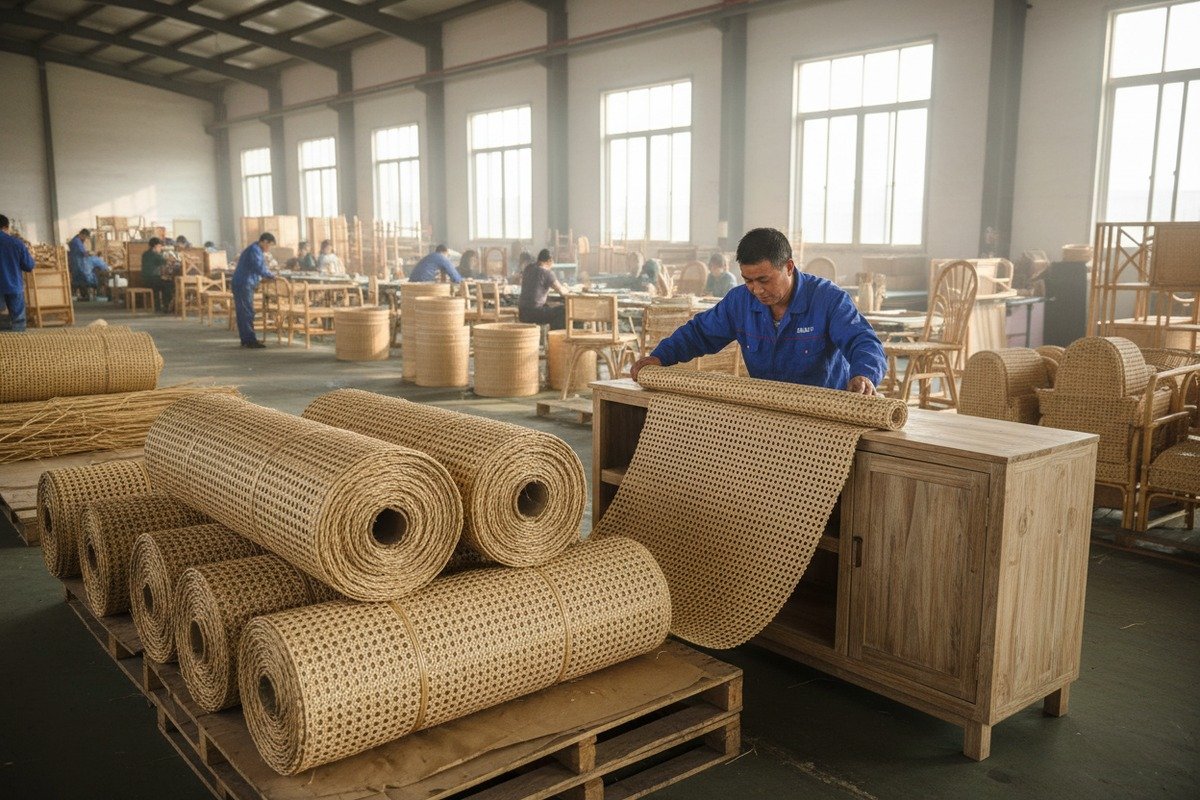
Every week at our Foshan warehouse, we sort thousands of square meters of Rattan-Rohrgeflecht 1 by grade. The reality? Not every sheet earns a premium label. Grade D sits at the bottom of the grading scale, and many buyers dismiss it outright. But that quick dismissal can mean missed opportunities — and wasted budget.
Grade D natural rattan cane webbing works best in budget furniture production, concealed panel applications, rustic or vintage-style product lines, high-volume commercial installations, temporary event setups, and DIY craft projects where visual perfection is not critical but cost savings and natural texture still matter.
Below, we break down the four most profitable scenarios for Grade D rattan. Whether you run a Möbelfabrik 2, manage a building project, or source materials wholesale, this guide will help you put every meter of cane webbing to smart use.
How can I lower my production costs by choosing Grade D rattan for budget-friendly furniture?
Production managers we work with across Southeast Asia and the Middle East constantly ask us one question: how do I cut material costs 3 without switching to plastic? Grade D natural rattan cane webbing answers that question — but only if you know where to place it in your product.
Grade D rattan can reduce your material costs by 40–60% compared to Grade A or AAA. You achieve this by using it in hidden structural panels, drawer bottoms, cabinet backs, and non-load-bearing inserts where the surface is not visible to the end user.
Understanding the Price Gap
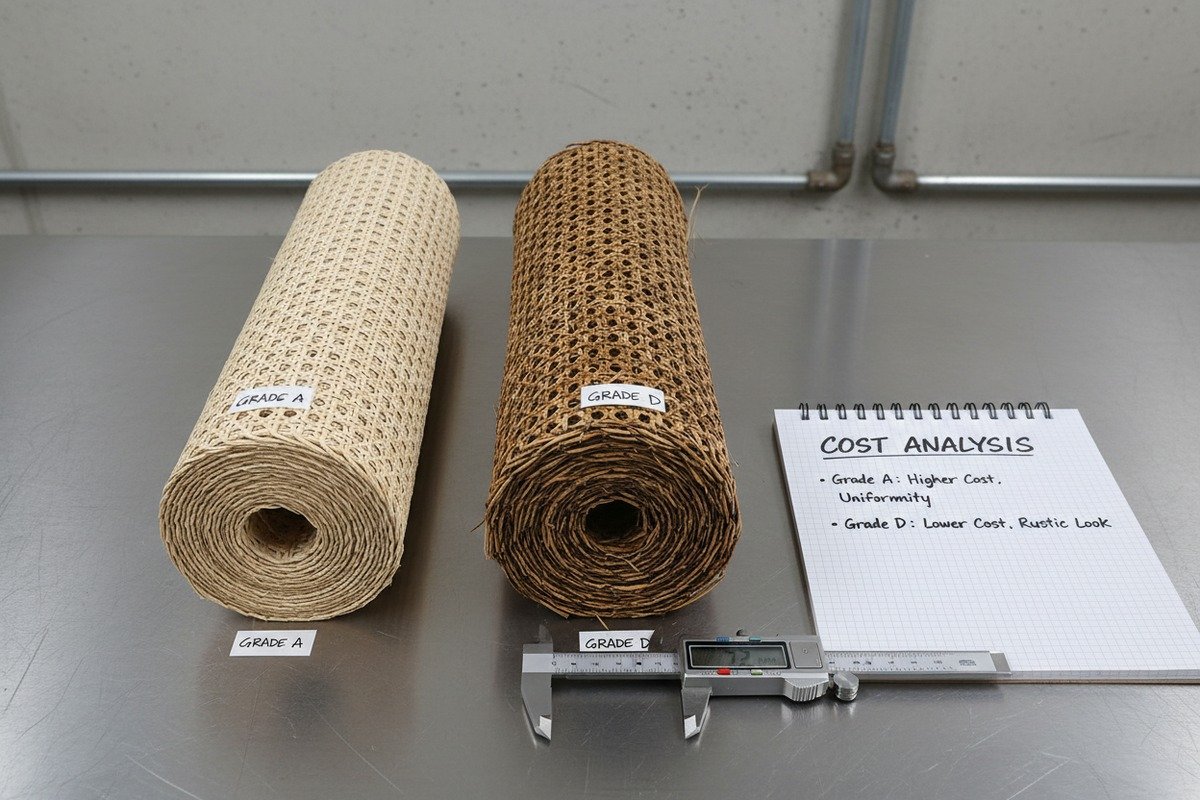
The cost difference between Grade D and premium rattan is significant. When we quote clients from our Indonesian processing facility, Grade D rolls come in at roughly one-third the price of Material der Güteklasse A 4 per square meter. This gap exists because Grade D strips come from rejects, immature cane, and offcuts. They have irregular thickness, rough surfaces, knots, and blotchy color. But none of that matters if the panel hides behind upholstery or sits inside a cabinet.
Here is a quick comparison to show where the savings land:
| Faktor | Grade AAA/A | Klasse D |
|---|---|---|
| Price per sq meter (wholesale) | $12–$18 | $4.50–$7 |
| Strip uniformity | Hochgradig einheitlich | Irregular, varied thickness |
| Oberflächenbeschaffenheit | Smooth, polished | Rough, knots/scars visible |
| Farbgleichmäßigkeit | Rich, even tone | Dull, grayish, blotchy |
| Feuchtigkeitsgehalt | 8–12% (stable) | >12% (prone to warping) |
| Zugfestigkeit 5 | High (full load-bearing) | ~50–70% of premium |
Where to Use Grade D in Budget Furniture
The trick is placement. Our team has helped clients design product lines where Grade D fills 30–40% of total rattan usage. The key areas include:
- Drawer bottoms and backs — completely hidden once the drawer is inserted.
- Cabinet back panels — pushed against the wall, never seen.
- Under-seat supports — covered by cushions or upholstery.
- Internal shelf liners — decorative but not structural.
- Bed frame inserts — hidden beneath mattresses.
Practical Tips for Furniture Factories
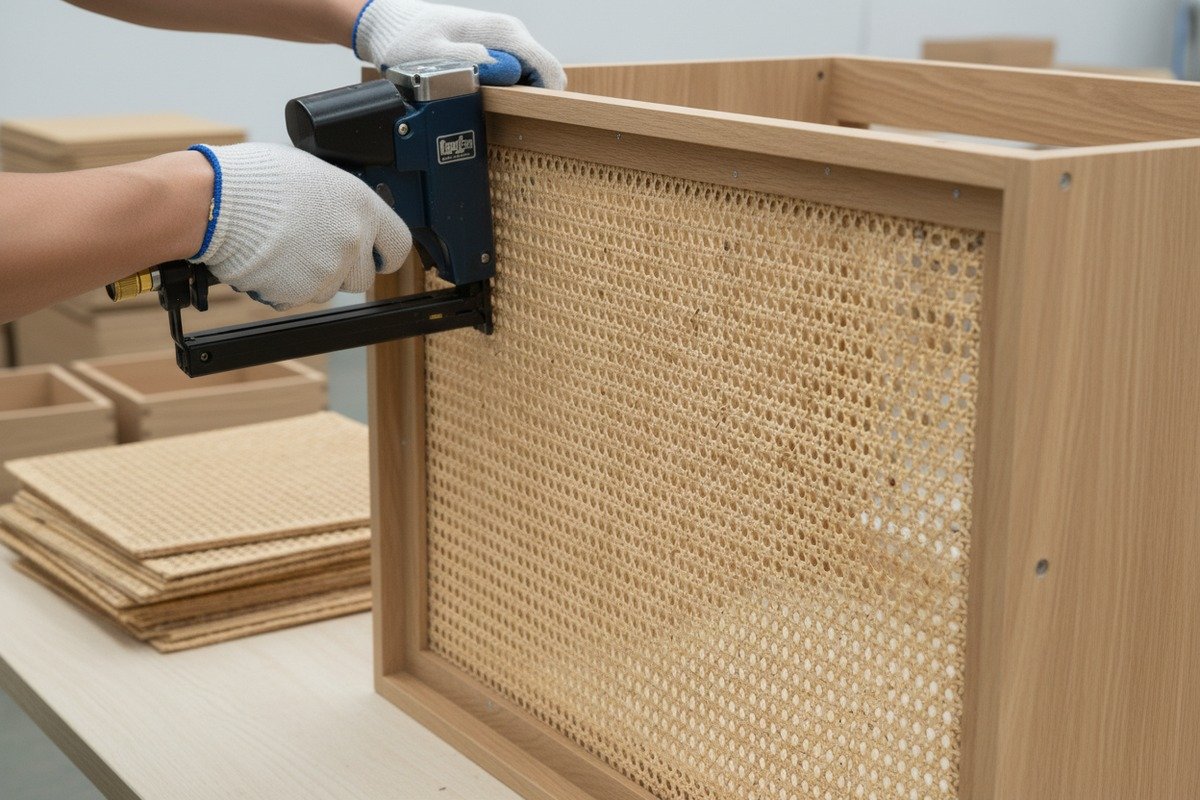
From our experience shipping to factories in Turkey and Spain, a few rules make Grade D work smoothly. First, always soak Grade D in warm water for 15–20 minutes before cutting or stretching. The brittle strips crack easily when dry. Second, use staples or spline for securing — not just glue. Third, pair Grade D with a sturdy hardwood frame 6. The frame carries the load. The webbing just fills the panel. Fourth, seal or coat the surface with a matte varnish after installation. This reduces moisture fluctuation and slows warping.
Blending Grades for Maximum Savings
Smart buyers mix grades within a single product. Use Grade A on the visible front of a chair seat. Use Grade D on the underside support panel. One of our Australian clients reduced per-unit material cost by 35% with this blended approach — without any drop in customer satisfaction ratings.
Which specific furniture designs are best suited for my Grade D natural rattan cane webbing?
When we consult with furniture designers from the Netherlands and the US, the conversation always starts the same way: "Which pieces can handle lower-grade cane without looking lower-grade?" The answer depends on the design, the load, and how much of the rattan stays visible.
Grade D rattan cane webbing suits headboards, room dividers, cabinet door inserts, decorative wall panels, lightweight side tables, and storage baskets best — designs where the webbing faces minimal stress, supports little weight, and either hides behind glass or gets partially covered.
Best-Fit Furniture Categories
Not every piece of furniture treats rattan the same way. A dining chair seat takes daily body weight and friction. A headboard panel just leans against the wall. That difference matters enormously for Grade D. Here are the categories ranked by suitability:
| Möbeltyp | Load Demand | Visibility Level | Grade D Suitability |
|---|---|---|---|
| Kopfteilpaneele | Sehr gering | Medium (partially hidden) | Ausgezeichnet |
| Schranktür-Einsätze | Niedrig | Medium (behind glass optional) | Ausgezeichnet |
| Room dividers/screens | Sehr gering | High but forgiving | Gut |
| Decorative wall panels | Keine | High but texture-focused | Gut |
| Storage baskets/bins | Niedrig | Mittel | Gut |
| Side table shelves | Low–medium | Mittel | Moderat |
| Sitzflächen von Stühlen | Hoch | Hoch | Schlecht |
| Rocking chair backs | Hoch | Hoch | Schlecht |
Headboards: The Perfect Match
Headboards are the single best application for Grade D. They bear no weight. They sit behind pillows most of the time. And their large flat panels consume a lot of material — so the cost savings add up fast. We have shipped containers of Grade D webbing to a Thai client who manufactures headboards exclusively for budget hotel chains. The texture adds warmth. The imperfections disappear at arm's length.
Cabinet and Closet Inserts
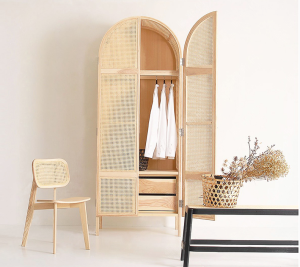
Kitchen cabinets, bathroom vanities, and wardrobe doors with small rattan inserts are trending. The panel sizes are small — typically 30cm x 40cm. Grade D strips handle these dimensions without structural risk. If the cabinet door also has glass overlay, the rattan becomes a background texture. Its rough patches and knots actually add visual depth through the glass.
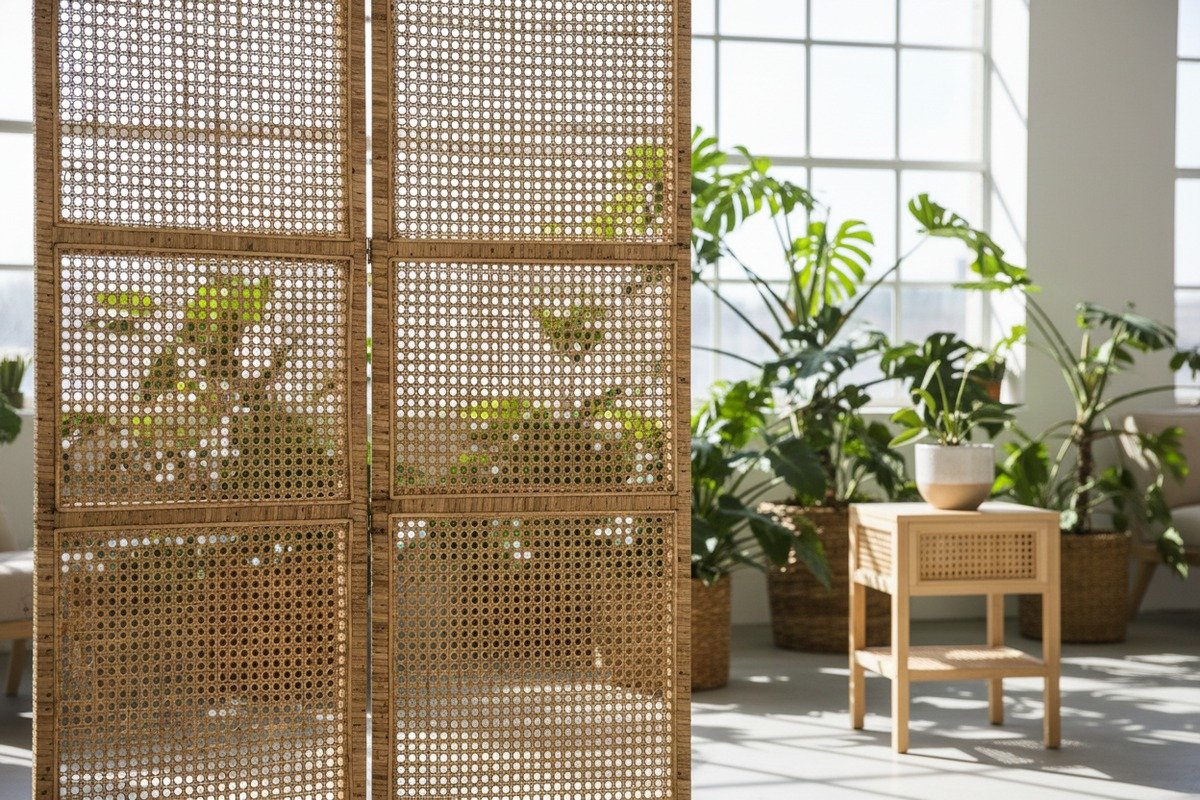
Room Dividers and Screens
Folding room dividers use large panels of webbing stretched across wooden frames. The webbing is not load-bearing. It just blocks sightlines and diffuses light. Grade D handles this well, especially in open-weave or basic square mesh patterns. Complex patterns like hexagonal or octagonal weaves demand uniform strips that Grade D cannot deliver. Stick with simple weaves.
Designs to Avoid
Any design where the rattan carries human weight daily — dining chairs, lounge chairs, rocking chairs — is not suitable for Grade D. The tensile strength sits at only 50–70% of premium grades. Brittle strips snap under repeated flex. We always advise clients to reserve Grade A or AAA for these applications.
Can I leverage the rustic imperfections of Grade D to enhance my vintage-style product lines?
Our design team in Foshan has noticed a clear shift over the past two years. More buyers from Europe and North America specifically request materials with "character." Knots, color variation, and rough texture are no longer flaws — they are features. This changes the game for Grade D rattan entirely.
Yes, Grade D's natural imperfections — knots, scars, uneven color, and rough texture — align perfectly with vintage, bohemian, farmhouse, and wabi-sabi aesthetics. Staining, distressing, or leaving the material raw can turn budget cane into a deliberate design statement for rustic product lines.
The Rustic Aesthetic Advantage
Premium Grade A rattan looks polished. It looks manufactured. That is exactly what some designers want to avoid. The vintage and farmhouse furniture market 7 in 2025–2026 prizes imperfection. Consumers browsing Etsy, Amazon Handmade, and boutique furniture shops actively seek pieces that look "lived-in." Grade D delivers that look without any artificial distressing process.
The dull, grayish tone of Grade D rattan mimics aged cane. The uneven strip widths create an organic, handwoven appearance — even when the webbing is machine-produced. Knots and scars add focal points that designers would otherwise have to create artificially on higher-grade material.
Finishing Techniques That Work
How you finish Grade D determines whether it reads as "rustic charm" or "cheap material." Here are proven techniques from our production line:
| Technik | Effect | Am besten geeignet für |
|---|---|---|
| Dark walnut stain | Hides color inconsistency, adds warmth | Farmhouse tables, cabinet fronts |
| Whitewash / lime wash | Creates coastal, shabby-chic look | Beach house furniture, wall panels |
| Raw / unsealed | Maximum natural texture | Bohemian decor, market displays |
| Matte clear coat | Preserves imperfections, adds protection | Vintage headboards, screens |
| Chalk paint overlay | Fully conceals surface, adds vintage vibe | Upcycled or refurbished pieces |
Tapping into the DIY and Upcycling Market
Der DIY furniture restoration 8 market exploded after 2024. TikTok and YouTube tutorials featuring budget cane webbing on thrift-store chairs and dressers have driven millions of views. Grade D is the material of choice for these creators. It is cheap. It ships in small quantities. And its imperfections match the "imperfect on purpose" philosophy of the upcycling community.
We now supply Grade D in small-lot packs — as low as 0.5 meter rolls — specifically for this market segment. Our e-commerce clients in the US report a 30% increase in sales of budget cane webbing for headboard and panel projects since early 2025.
Pairing Grade D with Reclaimed Wood
One of the strongest visual combinations in rustic furniture is Grade D rattan set into a reclaimed wood frame. The weathered wood and the rough cane share the same visual language. They look like they belong together. A Grade A panel in a reclaimed frame would actually look wrong — too perfect, too smooth. Grade D is the natural partner for salvaged and distressed materials.
Know the Limits
Rustic does not mean careless. Even in vintage product lines, Grade D needs proper installation. Soak it. Stretch it evenly. Secure it tightly. The rustic look should come from the material's inherent character — not from a poorly installed panel that buckles or sags. Buyers at vintage markets still expect functional furniture. The charm is in the texture, not in structural failure.
What are the best ways to use Grade D rattan in my high-volume commercial building projects?
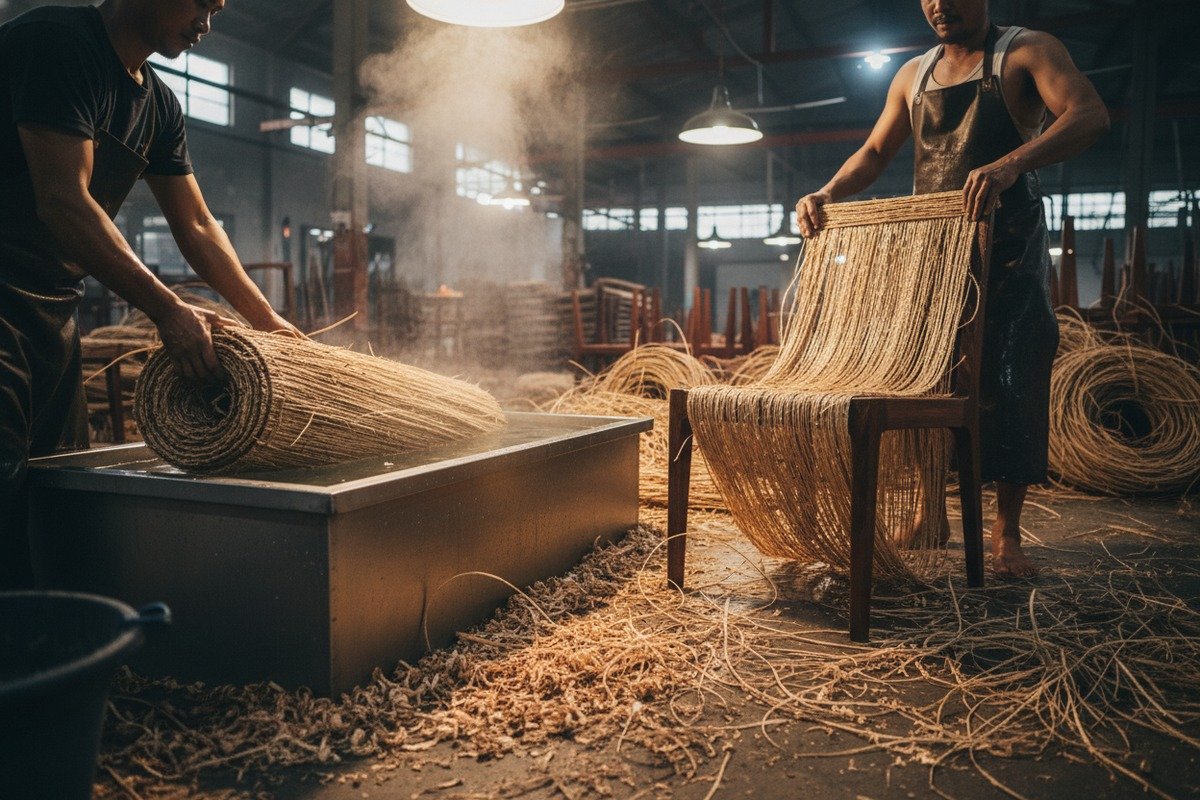
When our construction material clients from Saudi Arabia and the UAE place large orders, every dollar per square meter counts. A hotel lobby needing 2,000 square meters of decorative cane paneling cannot use Grade A pricing. That is where Grade D enters the conversation — and where its low cost and renewable profile create real value at scale.
In high-volume commercial projects, Grade D rattan works best as concealed ceiling panels, wall cladding underlays, temporary partition infills, acoustic diffusion layers, and decorative screens in areas with low foot traffic — applications where the material is either hidden behind a finish layer or viewed from a distance.
Commercial Applications That Make Sense
Commercial buildings consume enormous quantities of material. The economics of Grade D become compelling at this scale. A single hotel renovation might require webbing for 200 room headboards, 50 lobby panels, and 100 restaurant partition screens. Switching even half of those panels from Grade A to Grade D can save tens of thousands of dollars.
Here are the most practical commercial applications:
Ceiling and Wall Panels
Suspended ceiling tiles and wall cladding in hospitality and retail spaces often incorporate natural materials for warmth. Grade D rattan, stretched behind a protective mesh or acrylic sheet, provides texture visible from 2–3 meters away. At that distance, knots and color variation blend into an organic pattern. Nobody inspects a ceiling tile up close.
Temporary and Seasonal Installations
Trade show booths, pop-up retail spaces, festival stages, and seasonal hotel decor all need natural-looking materials that last weeks or months — not years. Grade D is ideal here. It costs little. It looks warm and inviting under event lighting. And it can be discarded or composted after use without guilt, because it is a renewable, biodegradable material.
Acoustic and Layered Applications
Some architects use rattan webbing as a diffusion layer in front of acoustic foam. The cane breaks up sound reflections while adding visual texture. Grade D performs this function identically to Grade A. Sound waves do not care about knots or color. When the webbing sits 5–10 cm in front of a wall, its imperfections become invisible in the shadow gap.
Scaling Up: Logistics and MOQ
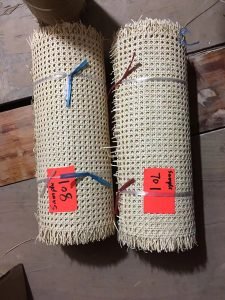
For commercial projects, we ship Grade D in bulk rolls — 24-inch widths, up to 50 meters per roll. Minimum order quantities are flexible, starting at just a few hundred square meters. Our Indonesian factory processes Grade D continuously because it comes from the reject stream of Grade A production. Supply is consistent, and lead times are shorter than premium grades.
| Commercial Use Case | Volume Needed | Grade D Savings vs. Grade A | Risikostufe |
|---|---|---|---|
| Hotel headboards (200 rooms) | ~400 sq m | ~50% cost reduction | Niedrig |
| Restaurant partition screens | ~150 sq m | ~45% cost reduction | Niedrig |
| Lobby decorative wall panels | ~100 sq m | ~40% cost reduction | Niedrig–Mittel |
| Retail pop-up booth walls | ~60 sq m | ~55% cost reduction | Sehr gering |
| Ceiling tile underlays | ~300 sq m | ~60% cost reduction | Sehr gering |
Sustainability Angle for Green Building Certifications
Many commercial projects now target LEED or BREEAM certification 9. Natural rattan — even Grade D — qualifies as a renewable, rapidly regenerating material sourced from managed plantations in Indonesia and Southeast Asia. Using reject-grade material actually strengthens the sustainability narrative: you are utilizing the full yield of the rattan harvest, reducing waste in the supply chain. Our clients in the Netherlands have used this argument successfully in their green building documentation.
What to Watch Out For
Grade D in commercial settings requires proper environmental control. Air-conditioned interiors with stable humidity (40–60%) keep the webbing dimensionally stable. Uncontrolled environments — outdoor covered terraces, unheated warehouses — cause the high moisture content in Grade D to fluctuate, leading to warping and shrinkage. Always install Grade D indoors, and always seal it with at least one coat of protective finish.
Fire safety also matters. Natural rattan is combustible. In commercial buildings, check local fire codes. Many jurisdictions require flame-retardant treatment 10 for natural materials used in wall and ceiling applications. Grade D takes flame-retardant spray just as well as any other grade — but factor this treatment into your project cost and timeline.
Conclusion
Grade D natural rattan cane webbing is not a compromise — it is a strategic material choice. Used in the right scenarios, it delivers real savings, authentic texture, and sustainable value across furniture production, vintage design, and commercial construction.
Fußnoten
1. Provides a comprehensive guide to rattan cane webbing, its definition, and uses. ↩︎
2. Explains the complex process of furniture manufacturing from design to shipping. ↩︎
3. Offers strategies for manufacturers to reduce material costs and optimize consumption. ↩︎
4. Details rattan grading, including characteristics of Grade A material for quality assessment. ↩︎
5. Defines tensile strength as the maximum load a material can support without fracture. ↩︎
6. Discusses the importance of hardwood frames for furniture quality, strength, and durability. ↩︎
7. Explores the characteristics and appeal of farmhouse furniture style in the market. ↩︎
8. Provides a guide to refinishing wood furniture, suitable for DIY enthusiasts. ↩︎
9. Found an authoritative comparative analysis of LEED and BREEAM certification standards. ↩︎
10. Explains flame retardant treatment for materials, its methods, and importance for fire safety. ↩︎
 English
  Español de México
  العربية
  Deutsch
  Français
  Русский