
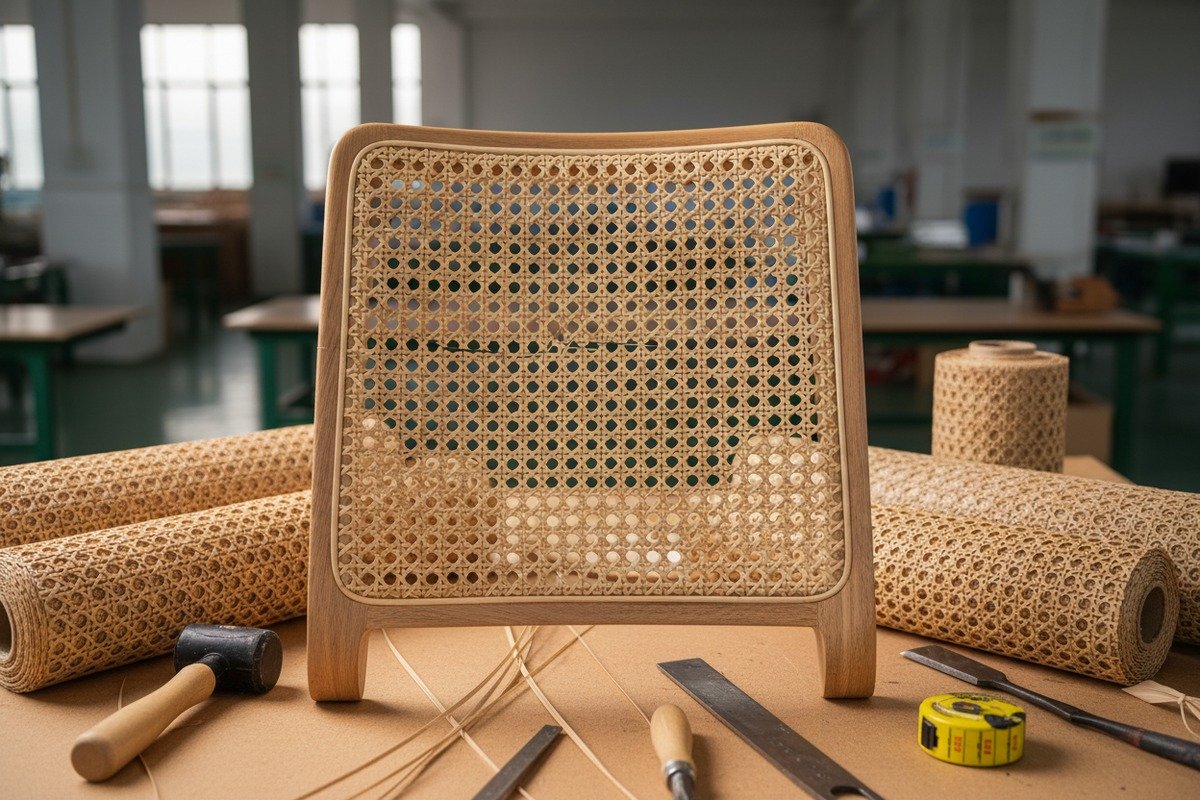
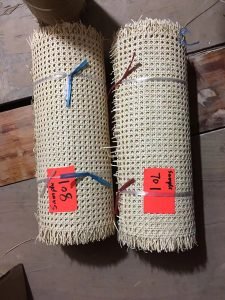
Every week, our customer service team hears the same frustrated stories from first-time buyers. A beautiful roll of natural rattan cane webbing 1 arrives at their workshop, and within hours, it’s cracked, sagging, or stuck halfway into the groove. Having spent over a decade supplying rattan materials from our processing facility in Indonesia to furniture makers across more than a dozen countries, we’ve seen every installation mistake in the book — and we know most of them are completely preventable.
Beginners installing natural rattan cane webbing should avoid skipping the soaking process, over-tensioning wet cane, using incorrect spline sizes, neglecting surface preparation, and rushing the drying phase. These common errors cause cracking, sagging, warping, and premature failure that force costly reinstallation.
This guide breaks down the most frequent mistakes we see and gives you clear, actionable fixes. Whether you’re restoring a vintage chair or building something new, read on to save yourself time, money, and a lot of frustration.
How long should I soak my natural rattan webbing to prevent it from sagging or snapping?
When we ship rattan cane webbing to our clients in the US, Australia, and Europe, we always include soaking guidelines in the package. Yet soaking remains the single most misunderstood step. Too many beginners either skip it entirely or guess the timing, and the results are heartbreaking.
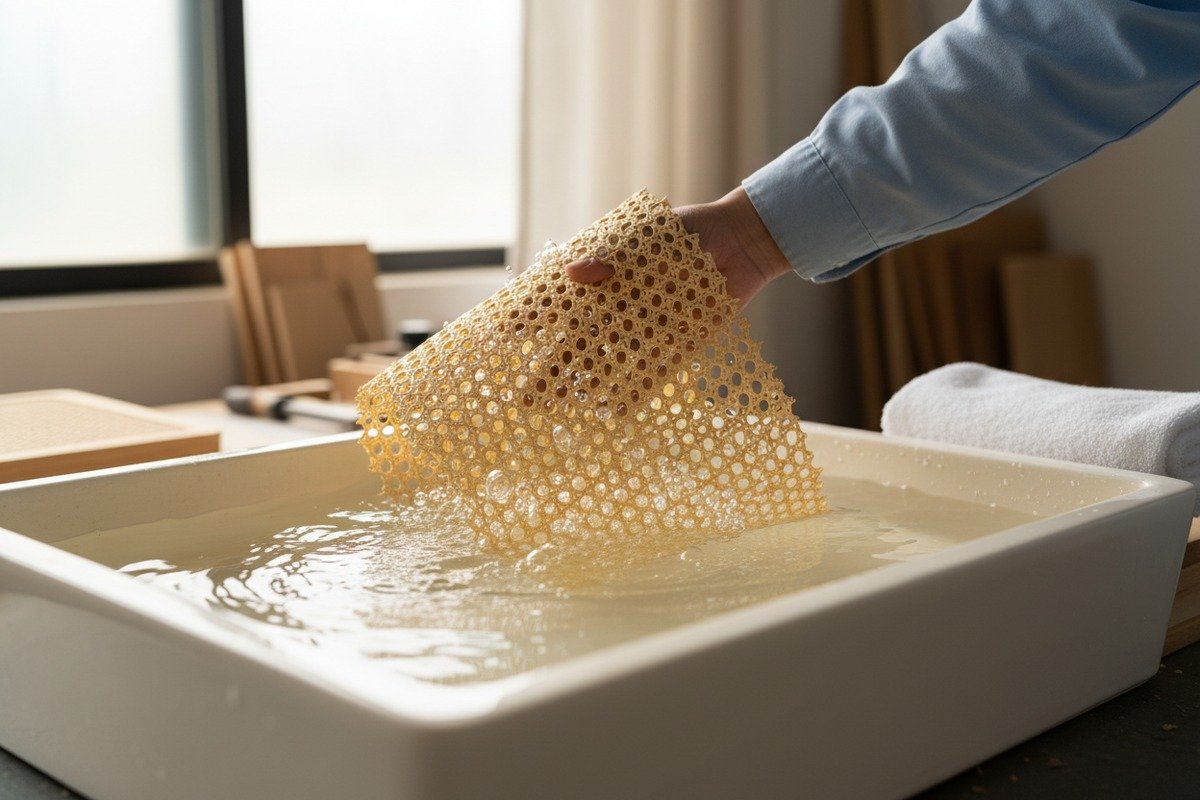
For standard natural rattan cane webbing, soak the material in room-temperature or lukewarm water for 30 to 60 minutes. Thicker sheet cane may need up to 3 to 4 hours. Never use hot water, and always pat the cane dry with a towel before installation to prevent slippage.
Why Soaking Matters
Natural rattan is the outer bark of the rattan palm 2. It's rigid when dry and pliable when wet. If you try to bend, stretch, or press dry cane into a groove, it will crack. The fibers simply cannot flex without moisture. Soaking allows water to penetrate the cell structure 3, making the material soft and workable.
But there's a catch. Over-soaking is just as dangerous as under-soaking. If you leave rattan in water for too long — say, overnight — the fibers absorb excessive moisture. This leads to a mushy texture that tears easily during handling. It can also encourage mold growth if the cane sits in warm, stagnant water.
The Temperature Trap
Many online tutorials suggest warm water to "speed things up." This is partly true, but hot water is a different story. Water above 50°C (122°F) can warp the cane's natural structure and cause uneven shrinkage 4 once it dries. Stick with cool or lukewarm water. Think of it like bath temperature — comfortable to the touch, never scalding.
Post-Soak Handling
After soaking, remove the cane and lay it flat on a clean towel. Pat both sides gently. You want the surface damp, not dripping. Excess surface water makes the cane slippery, which causes it to shift during stapling or wedging. It also dilutes glue if you're using a groove-and-spline method.
Soaking Time Reference Table
| Cane Type | Recommended Soak Time | Water Temperature | Anmerkungen |
|---|---|---|---|
| Thin open-weave cane | 20–30 minutes | Cool to lukewarm | Check flexibility by gently bending a corner |
| Standard sheet cane webbing | 30–60 minutes | Lukewarm | Most common for chair seats and backs |
| Thick or double-woven cane | 2–4 hours | Lukewarm | Test every 30 minutes; do not exceed 4 hours |
| Pre-woven radio weave | 30–45 minutes | Cool | Delicate pattern; handle with care |
A Common Mistake We See
One of our wholesale clients in Thailand once reported that an entire batch of cane was "defective" because it kept snapping. After some back-and-forth, we discovered the workshop staff had been soaking the cane for only 10 minutes. The material was still mostly dry inside. Once they extended the soak to 45 minutes, every piece installed perfectly. The lesson? Don't rush the soak. Set a timer and test the cane's flexibility before you begin.
Also, keep the soaked cane wrapped in a damp towel while you work. Rattan dries out faster than you think, especially in air-conditioned rooms or dry climates. If it starts to stiffen mid-installation, mist it lightly with a spray bottle. Never re-submerge a partially installed piece.
How can I avoid over-tensioning my cane webbing so it doesn't warp my furniture frame?
Through years of filling bulk orders for furniture factories across Europe and the Middle East, our team has learned that tensioning is where skill meets science. Pull too hard and you ruin the frame. Don't pull enough and the seat sags within weeks.
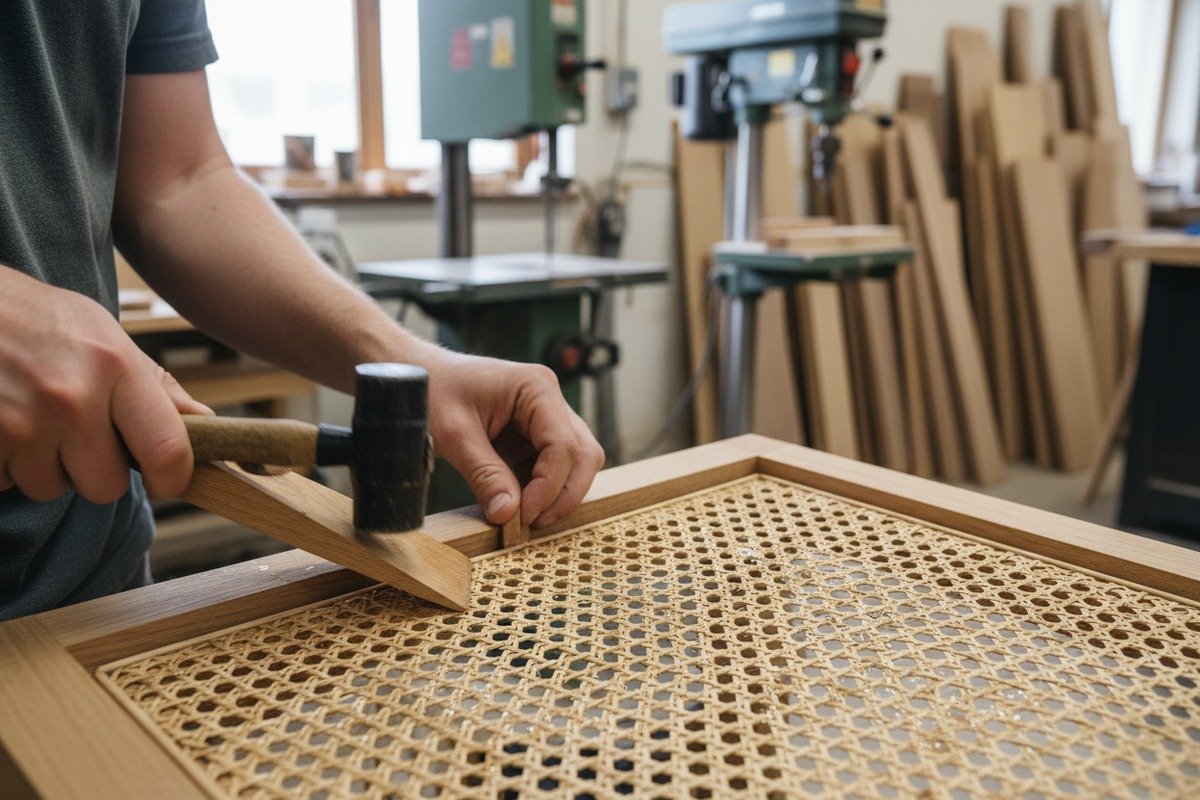
To avoid over-tensioning, pull the damp cane webbing just taut enough to remove visible wrinkles, then stop. Wet rattan naturally shrinks and tightens as it dries, so leaving slight slack is essential. Over-pulling wet cane will create gaps, distort the weave pattern, and even bend lightweight wooden frames.
Understanding Shrinkage
This is the key concept most beginners miss. Natural rattan cane shrinks as it loses moisture. If you stretch the cane drum-tight while it's wet, it will shrink further as it dries. That extra tension can pull staples out of the wood, crack the cane at stress points, or literally warp a thin wooden frame inward.
The goal is to install the cane with gentle, even tension — just enough to eliminate wrinkles and sags, but not so much that it's under strain. Think of it like stretching a fitted bedsheet: snug, not tight.
Working From the Center Out
A major cause of uneven tension is working from one side only. If you staple or wedge the entire left edge first, then pull from the right, you'll create diagonal stress lines across the weave. The correct method is to work from the center outward.
Here is a step-by-step approach:
- Secure the center of one edge (top or bottom).
- Move to the opposite edge and pull the center point gently taut. Secure it.
- Repeat for the left and right center points.
- Now work outward from each center point toward the corners, alternating sides.
This ensures balanced tension across the entire surface.
Tension Comparison: Staple vs. Spline Method
| Factor | Staple/Nail Method | Spline Groove Method |
|---|---|---|
| Tension control | Manual pull by hand; harder to keep even | Wedges push cane into groove; more consistent |
| Risk of over-tensioning | Higher, especially for beginners | Lower, since groove depth limits stretch |
| Frame warping risk | Moderate on thin frames | Low if groove is properly routed |
| Best for | Flat panels, cabinet doors, headboards | Chair seats, curved frames, traditional restoration |
| Longevity | Staples can loosen over 2–5 years | Spline holds for 10+ years if glued properly |
Signs of Over-Tensioning
Watch for these warning signs during installation:
- The weave pattern distorts — hexagons become ovals, squares become diamonds.
- The wooden frame bows inward visibly.
- You hear small cracking sounds from the cane.
- The cane lifts off the frame edges instead of lying flat.
If you notice any of these, stop immediately. Remove the last few staples or wedges, mist the cane lightly, and re-secure with less force.
The "Leave Slack" Philosophy
There's an ongoing debate in the cane restoration community. Some guides say "pull as tight as possible." Others say "leave it slightly loose." From our experience supplying material to professional restorers, the "leave slight slack" approach wins every time. The natural drying process does the tightening for you. Trust the material. It knows what to do.
One practical test: after securing all edges, press the center of the cane with your palm. It should give about 5–10 mm. If it doesn't move at all, it's too tight. If it sags more than 15 mm, it's too loose.
What mistakes am I making if my rattan spline doesn't fit securely in the groove?
Our factory in Foshan processes thousands of meters of spline material every month, and we've tested compatibility with dozens of groove profiles. When a spline won't seat properly, the problem almost always traces back to three things: wrong size, poor groove prep, or dry installation.
If your rattan spline doesn't fit securely, you're likely using a spline that's too thick or too thin for your groove, installing it dry instead of damp, or failing to clean old glue and debris from the channel. The spline should press snugly into the groove without excessive force or visible gaps.
Getting the Size Right
Spline sizing is not one-size-fits-all. Grooves on vintage chairs are often different widths than modern reproductions. If the spline is too thick, it won't seat fully — it will stick up above the surface and eventually pop out. If it's too thin, it rattles around in the groove and can't hold the cane in place.
Before you buy spline, measure your groove width and depth with calipers or a ruler. The spline should be slightly smaller than the groove so that when the cane webbing is folded into the channel, the spline fits over it snugly.
Spline Sizing Guide
| Groove Width | Recommended Spline Diameter | Anmerkungen |
|---|---|---|
| 3 mm (1/8") | 2.5 mm spline | Common on small decorative panels |
| 4 mm (5/32") | 3.5 mm spline | Standard for many modern chairs |
| 5 mm (3/16") | 4–4.5 mm spline | Most common for vintage chair restoration |
| 6 mm (1/4") | 5–5.5 mm spline | Used on heavy-duty frames and benches |
Always order spline about 2 inches longer than the total groove perimeter. You'll trim the excess after installation. For corners, miter the spline at 45 degrees or bend it gently if it's damp enough.
Cleaning the Groove
Old adhesive, splintered wood, and cane fragments are the hidden enemies of a clean spline installation. If the groove is clogged, the spline simply cannot reach the bottom. Use a flathead screwdriver, a chisel, or a specialized groove-cleaning tool to scrape out all debris. Follow up with a stiff brush and compressed air if available.
We've had clients send us photos of "defective" spline that turned out to be perfectly fine — the groove was just packed with decades of old glue. A 10-minute cleaning job solved the problem entirely.
Wet the Spline, Too
This is a mistake that catches beginners off guard. You remembered to soak the cane, but did you soak the spline? Dry spline is rigid and brittle. It cracks when you try to press it into corners, and it doesn't compress enough to create a snug fit.
Soak your spline for 15 to 20 minutes before use. It should feel flexible enough to bend around a 90-degree corner without snapping. Once installed, the spline dries and expands slightly in the groove, locking everything into place.
Using the Right Tools
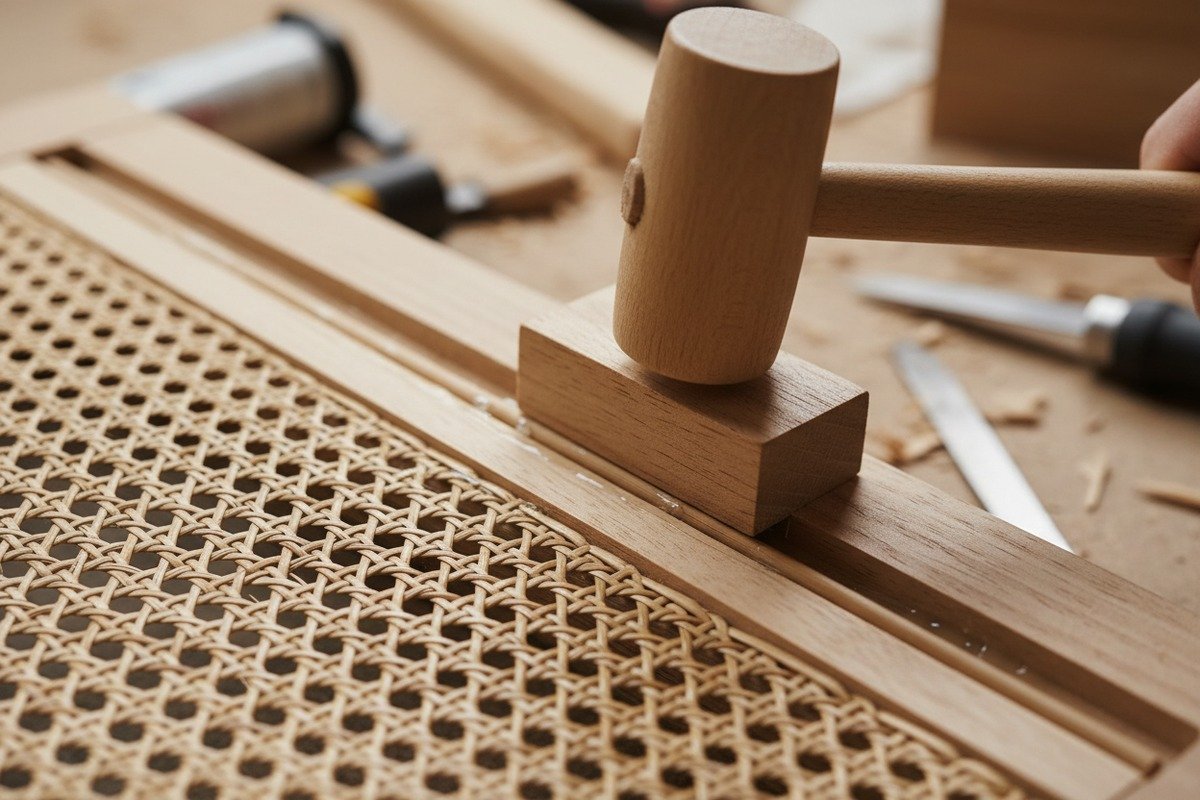
A dedicated spline roller 5 (also called a spline wheel) is inexpensive and makes a huge difference. Trying to push spline in with a screwdriver or the back of a butter knife — yes, we've heard both — leads to uneven seating. The roller distributes pressure evenly along the groove.
If you must use a hammer and wedge, tap gently and move along the groove in small increments. Never hammer the spline in one spot aggressively. This cracks both the spline and the cane underneath.
Glue Application
Apply a thin line of clear-drying wood glue or hide glue 6 inside the groove before pressing the spline in. Avoid acrylic-based adhesives — they dry white or opaque and make future removal nearly impossible. The glue should be barely visible. Too much glue prevents the spline from reaching the bottom of the groove.
Let the glue set for at least 24 hours before using the furniture. Some professionals clamp a board across the cane surface during this time to maintain even pressure.
How do I identify and avoid low-quality rattan materials that might fail during my installation?
Running three factories and working closely with our rattan processing facility in Indonesia has given us a front-row seat to quality variations in raw materials. Not all rattan is created equal, and choosing poor-quality material is the one mistake no amount of technique can fix.
Low-quality rattan cane webbing shows visible signs like inconsistent color, brittle or crumbly fibers, an unpleasant chemical smell, uneven weave spacing, and excessive breakage during soaking. Always inspect the material before installation by bending a small section — quality rattan should flex without snapping when properly soaked.

Visual Inspection Checklist
Before you start any project, spend five minutes examining your material. Lay the cane flat under good lighting and look for these red flags:
- Color inconsistency: Natural rattan has subtle variation, which is normal. But large patches of dark brown, black spots, or greenish discoloration suggest mold, rot, or improper drying during processing.
- Brittle edges: Gently flex a corner of the dry sheet. It should resist slightly but not crack or crumble. If dry fibers break off like straw, the material is either old, improperly stored, or harvested too late.
- Weave gaps: The pattern should be uniform. Inconsistent spacing means the weaving was rushed, and the webbing will perform unevenly under tension.
- Smell: Fresh rattan has a mild, earthy scent. A strong chemical or sour smell indicates bleaching agents, preservatives, or mold contamination.
Natural vs. Synthetic vs. Machine-Woven
Beginners sometimes confuse these three categories, which leads to using the wrong material or the wrong technique.
Natural rattan cane webbing is made from the outer bark of the rattan palm. It's the most traditional option and offers the best aesthetic for vintage furniture. However, it requires careful handling — soaking, proper tension, and indoor use only due to moisture sensitivity 7.
Synthetic rattan 8 (often labeled as poly rattan or resin wicker) looks similar but is made from plastic. It's weather-resistant and doesn't need soaking, but it lacks the organic warmth and character of real rattan.
Machine-woven cane uses natural fibers but is produced on industrial looms. The weave is more consistent and easier to work with, but purists argue it doesn't match the authenticity of hand-woven cane.
Sourcing Quality Material
If you're purchasing rattan for a project, consider these tips:
- Buy from established suppliers who can provide material origin details 9 and grade information. At our company, we grade cane as A, B, or C based on fiber consistency, weave uniformity, and structural integrity.
- Request samples before committing to a large order. Bend them, soak them, and test installation on a scrap frame.
- Check storage conditions. Rattan stored in direct sunlight becomes brittle and discolored. Material kept in excessive humidity may develop mold. Good suppliers store rolls in cool, dry, shaded warehouses.
- Avoid the cheapest option. Rock-bottom pricing usually means thinner fibers, looser weaves, or mixed-grade material. A slightly higher investment upfront saves you from failed installations and wasted hours.
Storage After Purchase
Even high-quality rattan can degrade if stored improperly. Keep unused rolls in a cool, dry room away from direct sunlight. Do not fold the cane — always store it rolled. Folding creates permanent creases that become weak points during installation. If you live in a humid climate, consider wrapping rolls loosely in breathable fabric (not plastic, which traps moisture).
The Real Cost of Cheap Materials
We once had a client in Europe who purchased discount rattan from an unknown source to save a few euros per meter. Within three months, half the chairs he restored had sagging seats. The cane fibers had poor tensile strength 10 and couldn't maintain tension after drying. He ended up re-doing every piece with our Grade A material. The "savings" cost him double in labor alone.
Quality rattan, properly installed, should last 7 to 15 years on a regularly used chair. Low-grade material might last 6 months. The math is simple.
Conclusion
Installing natural rattan cane webbing doesn't have to be intimidating. Soak properly, tension gently, size your spline correctly, and always start with quality material. Master these basics and your first project will look like it was done by a professional.
Fußnoten
1. Provides a comprehensive overview of rattan, its origin, and uses. ↩︎
2. Details the botanical genus ‘Calamus’, which includes many rattan palms. ↩︎
3. Explains the fundamental components of plant cells and their interaction with water. ↩︎
4. The replacement URL from the same authoritative source explains how wood shrinks unevenly in different directions. ↩︎
5. Illustrates the proper use of a spline roller in the context of chair caning. ↩︎
6. This comprehensive guide explains what hide glue is, how it works, its properties, and its applications in woodworking and restoration. ↩︎
7. Discusses how natural fibers absorb moisture and its impact on material properties. ↩︎
8. Distinguishes synthetic rattan from natural materials, outlining its composition and properties. ↩︎
9. Highlights the importance of traceability standards for material sourcing and supply chain transparency. ↩︎
10. Defines tensile strength as a critical mechanical property for natural fibers. ↩︎

 English
  Español de México
  العربية
  Deutsch
  Français
  Русский