
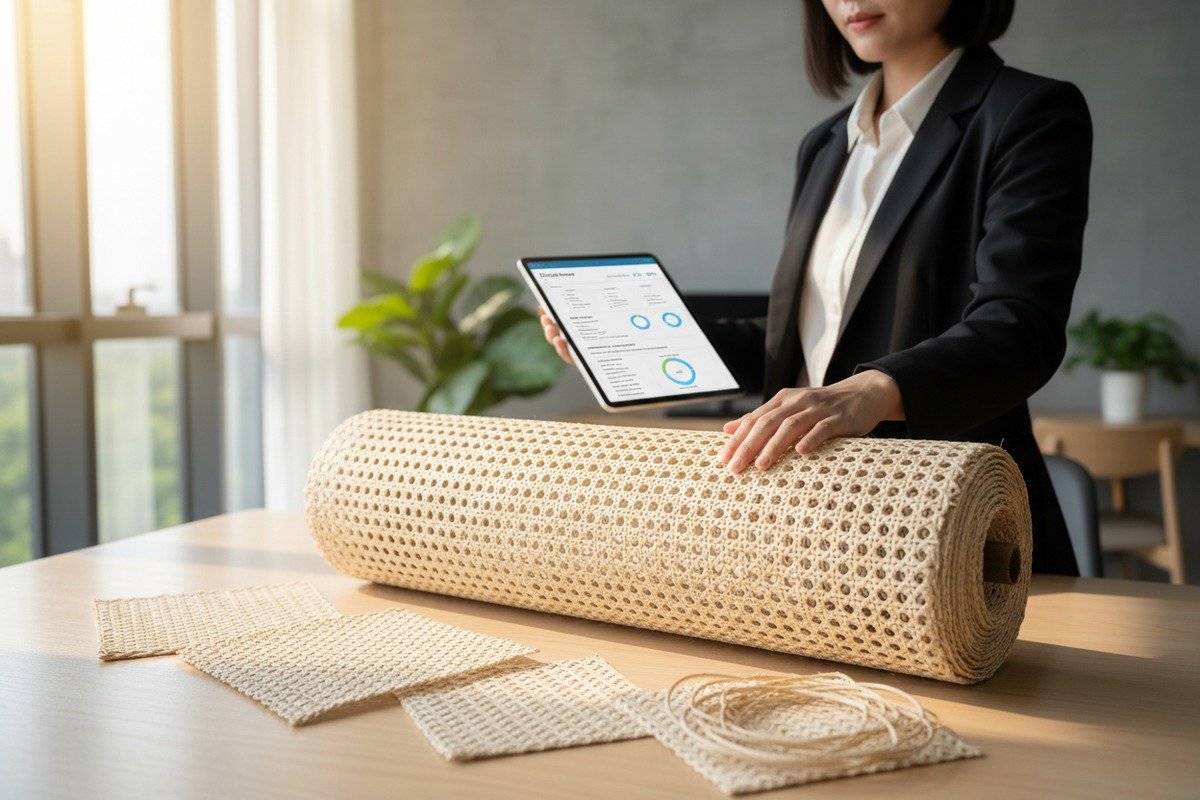
Every week, our sales team fields calls from buyers who got burned by their previous rattan supplier — wrong weave density, moldy rolls on arrival, or prices that doubled overnight.
The most common pitfalls when sourcing rattan cane webbing include inconsistent quality across batches, inflated pricing from middlemen, shipping damage due to poor packaging, and unreliable supply chains. Avoiding these traps requires understanding the production process, vetting suppliers thoroughly, and establishing clear quality standards before placing orders.
In this guide, we break down each major sourcing challenge and share practical solutions drawn from years of processing and exporting rattan materials across the globe tropical forests across Southeast Asia 1. Let’s walk through them one by one.
How can I ensure the rattan cane webbing quality stays consistent across my bulk orders?
Wir haben versendet Rattan-Rohrgeflecht 2 to over 20 countries, and the number one complaint we hear from new clients is about quality swings between their first order and their third.
To ensure consistent quality in bulk rattan cane webbing orders, you need to establish clear material specifications, request pre-shipment samples from each production batch, and work with a supplier who controls the raw material sorting process from the very beginning of the supply chain.
Why Does Quality Vary So Much?
Rattan ist eine natürliches Material 3. It grows in tropical forests across Southeast Asia, mainly in Indonesia, Malaysia, and the Philippines. Different species, different harvest seasons, and different maturation stages all affect the final product supply chain management 4. A rattan palm harvested at five years will produce different cane than one harvested at seven years. The color, flexibility, and thickness all change.
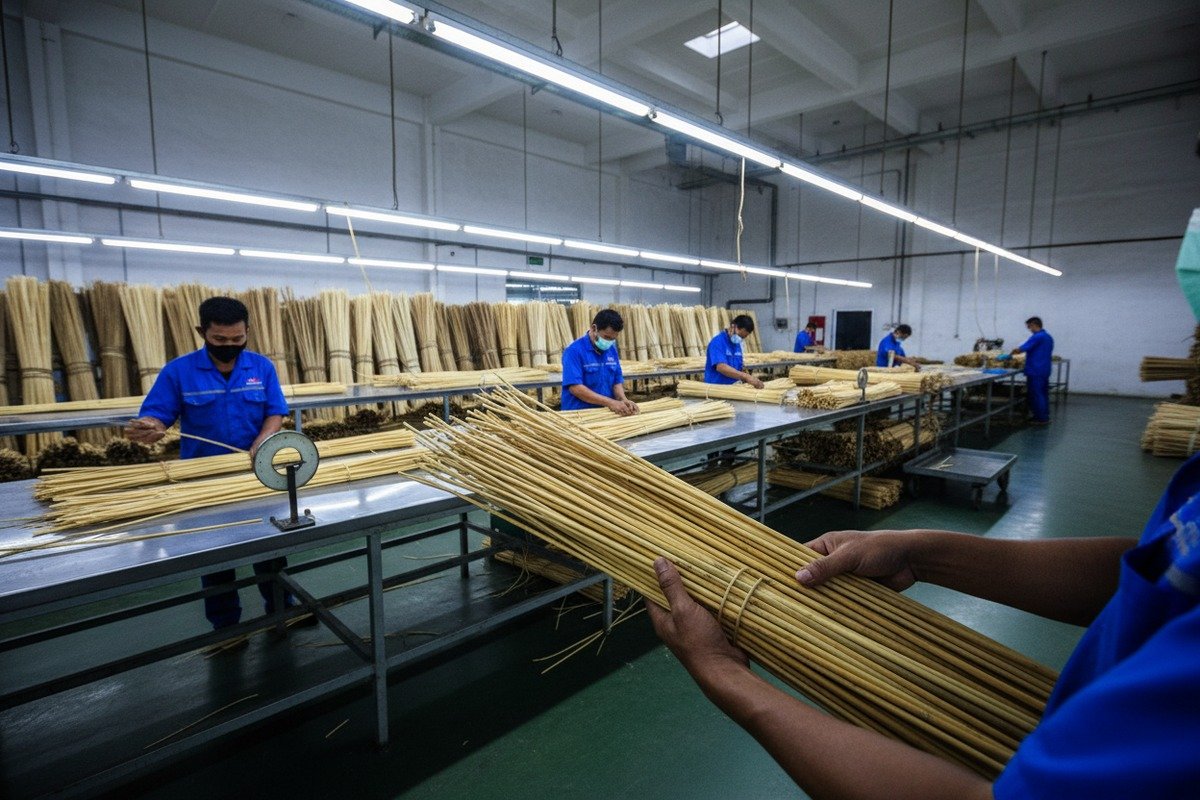
On our production lines in Indonesia, we sort raw rattan into grades before any processing begins. This single step eliminates most downstream quality issues. But many factories skip this step to save time. The result? Buyers receive rolls with mixed strand thicknesses, uneven color, and weak spots that break during installation.
The 11-Step Production Process
Most buyers don't realize that rattan cane webbing goes through at least 11 production steps. Each step is a potential failure point.
| Schritt | Process | Common Quality Risk |
|---|---|---|
| 1 | Raw material sorting | Mixed species or grades |
| 2 | Bark separation | Uneven strand width |
| 3 | Rattan thinning | Inconsistent thickness |
| 4 | Bleaching / dyeing | Color variation between batches |
| 5 | Trocknen | Over-drying causes brittleness |
| 6 | Strand selection | Weak strands not removed |
| 7 | Weben | Loose or uneven weave pattern |
| 8 | Trimming | Rough edges left untreated |
| 9 | Quality inspection | Skipped under time pressure |
| 10 | Rolling / cutting | Incorrect dimensions |
| 11 | Verpackung | Insufficient moisture protection |
What You Should Specify in Your Order
Be precise. Don't just say "open weave rattan webbing." Specify the mesh size, strand width, color range, and roll dimensions. Ask for a physical sample before each production run — not just a photo. Photos hide a lot.
Here is a simple quality checklist we recommend to our clients:
- Strand thickness tolerance: ±0.2 mm
- Color consistency: match to approved swatch
- Weave tension: no visible sag or loose strands
- Roll edges: clean cut, no fraying
- Feuchtigkeitsgehalt 5: below 14%
Natürlich vs. Synthetisch: Wissen Sie, was Sie kaufen
Some buyers confuse natural rattan cane webbing with PE (polyethylene) cane webbing 6 or plastic rattan. These are very different materials. Natural cane webbing has a warm, fibrous texture with organic color variations. It suits indoor furniture and decorative panels. PE cane webbing mimics the look but offers weather resistance for outdoor use. Plastic rattan rolls feature patterns like chevron or basketweave in a durable synthetic material.
Choosing the wrong type leads to product failures. Natural cane in an outdoor setting will degrade quickly. Synthetic cane on a high-end indoor piece looks cheap. Always confirm the material type with your supplier before ordering.
Why is my current rattan webbing price higher than the factory-direct rates in China?
Our clients in the Netherlands and Australia often ask us this exact question after discovering our price list — some were paying 30% to 50% more through their existing supply chain.
Your rattan webbing price is likely higher because you are buying through one or more intermediaries — trading companies, local distributors, or online platforms — each adding a margin. Factory-direct sourcing from a vertically integrated supplier with its own processing facilities eliminates these markups and gives you access to true production-cost pricing.
Where the Hidden Costs Live
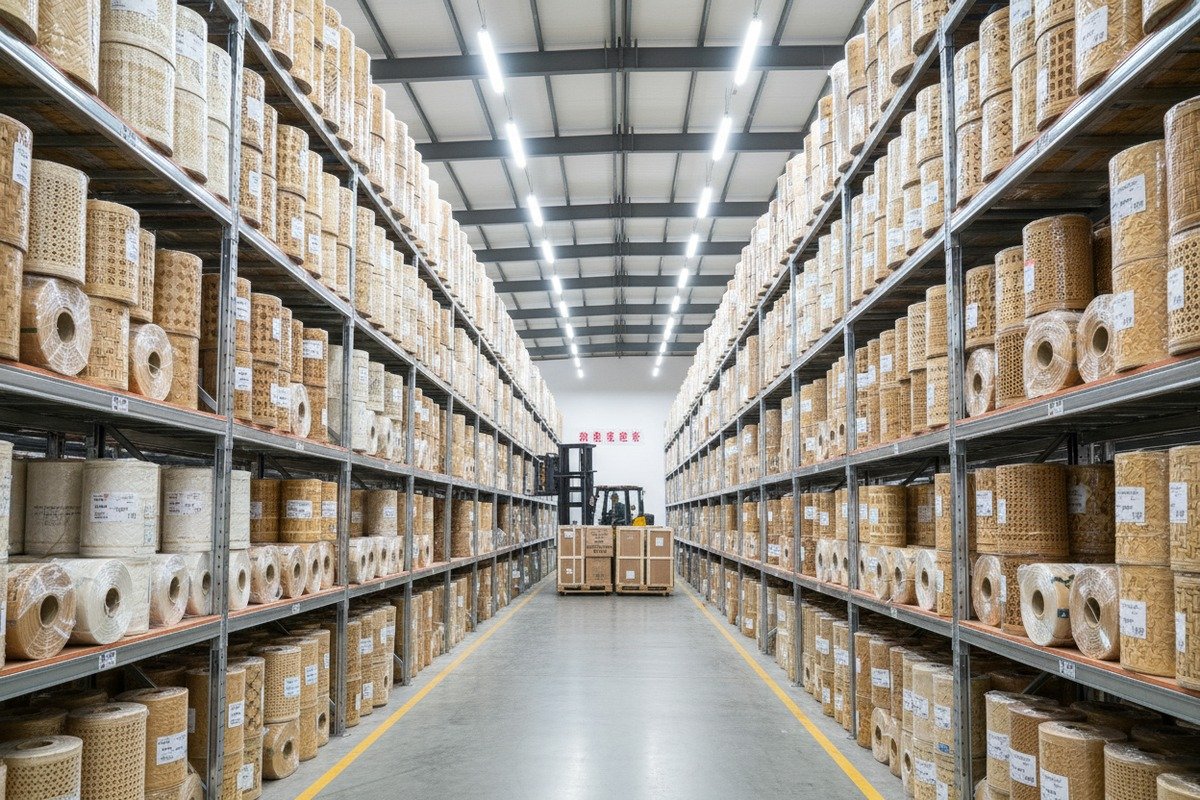
The rattan supply chain is long. Raw rattan is harvested in Indonesia or Malaysia. It gets processed — sometimes in the country of origin, sometimes shipped to China for weaving and finishing. Then it moves through exporters, trading companies, and importers before reaching your warehouse.
Each hand that touches the product adds cost. We invested in our own rattan processing facility in Indonesia specifically to control the upstream supply chain. This means we buy raw material at source, process it in our own factory, and export directly from our Foshan headquarters. That vertikale Integration 7 is why our pricing stays competitive.
Price Breakdown: Middleman vs. Factory-Direct
| Kostenkomponente | Through Middleman | Factory-Direct (Seafan Rattan) |
|---|---|---|
| Raw material | $X | $X |
| Processing | +15-20% markup | At cost |
| Trading company margin | +10-25% | Eliminated |
| Local distributor margin | +15-30% | Eliminated |
| Shipping coordination | Fragmented, higher rates | Consolidated, bulk rates |
| Quality control | Inkonsistent | In-house at every step |
The "X" values vary by order size and material type, but the pattern is clear. Every intermediary layer inflates your landed cost.
Bulk Pricing and Minimum Orders
Most wholesale suppliers require minimum orders of 2 to 5 rolls. That's standard. But pricing also depends heavily on volume. A buyer ordering 50 rolls gets a very different rate than someone ordering 5.
Here's something many buyers miss: even if you need smaller quantities, a one-stop supplier with a full product range lets you consolidate orders. Instead of buying rattan webbing from one source, rattan poles from another, and woven panels from a third, you combine everything into one shipment. This lowers your per-unit shipping cost and often unlocks better pricing tiers.
Tariffs and Trade Dynamics
Tariffs change. Global trade conditions shift. Buyers sourcing from Southeast Asia through a Chinese finishing and export hub need to understand current duty rates for their destination country. We help our clients navigate this by providing proper HS codes and commercial documentation. Some buyers have saved significantly by structuring their orders to qualify for preferential trade agreements.
The Real Question: Total Landed Cost
Don't compare unit prices in isolation. Calculate your total landed cost: product price + shipping + insurance + customs duties + local delivery. A slightly higher unit price from a reliable supplier who packs properly and ships on time often ends up cheaper than a "bargain" that arrives damaged or late.
What can I do to prevent my rattan rolls from getting damaged during international shipping?
We learned this lesson the hard way in our early export years. A full container of rattan cane webbing arrived in Spain with mold spots on 20% of the rolls. The cause? Insufficient moisture protection during a 35-day sea voyage.
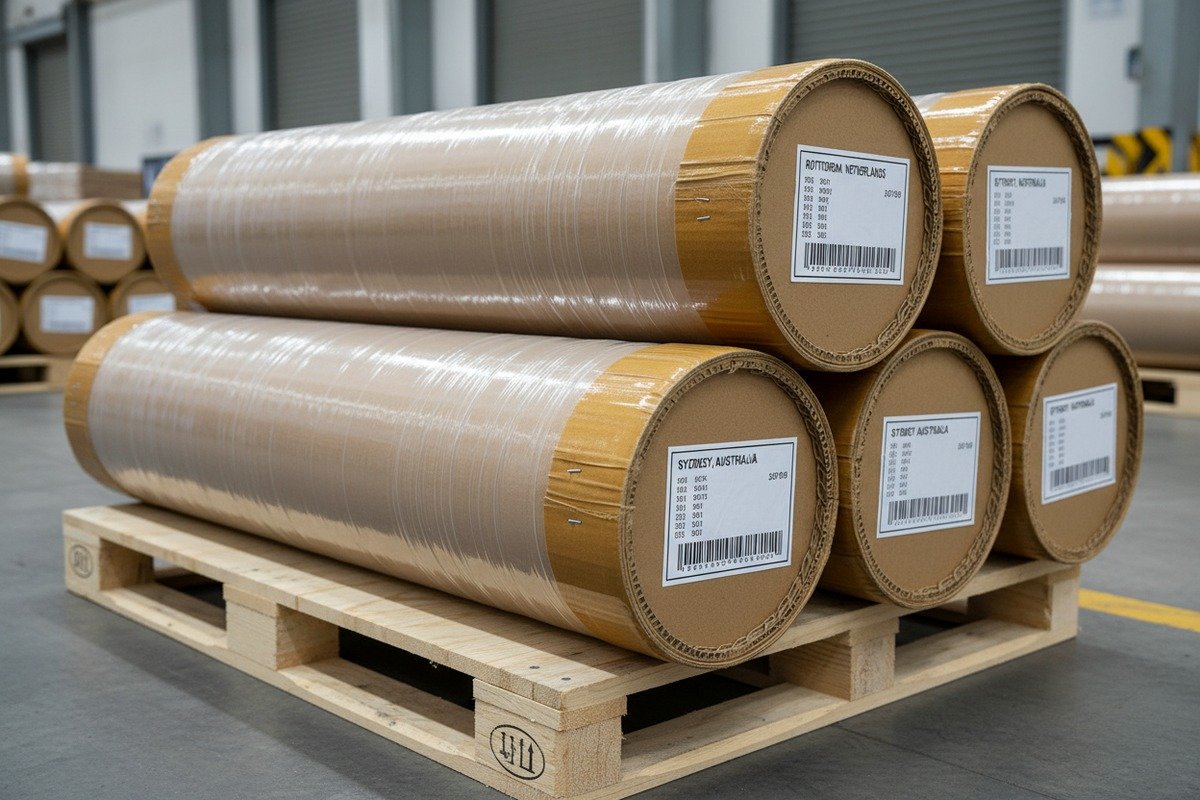
To prevent shipping damage to rattan rolls, ensure they are dried to below 14% moisture content before packing, wrapped in plastic film and moisture-absorbing paper, placed in rigid cartons or crates, and loaded with proper ventilation spacing inside the container. Silica gel packets inside packaging provide additional protection.
The Three Enemies of Rattan in Transit
Rattan is an organic material. During international shipping, it faces three primary threats:
- Moisture and mold. Sea containers experience temperature swings that cause condensation. Trapped moisture leads to mold growth within days.
- Mechanical damage. Rolls get crushed, bent, or deformed when improperly stacked or when containers shift during transit.
- Pest contamination. Untreated natural rattan can harbor insects that multiply in warm, enclosed shipping containers.
Our Packaging Protocol
After that Spain incident, we completely redesigned our packaging process. Here is what we do now for every export shipment:
| Packaging Layer | Zweck | Verwendetes Material |
|---|---|---|
| Innenverpackung | Moisture barrier | Plastic film (PE shrink wrap) |
| Cushioning layer | Shock absorption | Recycled newspaper or kraft paper |
| Silica gel packets 8 | Humidity control | Industrial-grade desiccant |
| Outer packaging | Structural protection | Double-wall corrugated carton or wooden crate |
| Container prep | Condensation prevention | Container liner + desiccant poles |
Moisture Content Matters
Before any roll leaves our warehouse, we check its moisture content. Natural rattan should be dried to below 14%. Above that, mold risk increases sharply. We use handheld moisture meters — they cost under $50 and save thousands in rejected shipments.
If your current supplier doesn't measure moisture content before packing, that's a red flag. Ask for moisture readings as part of your quality control documentation.
Fumigation and Pest Treatment
Many destination countries require Begasungszertifikate 9 for natural plant materials. We fumigate all natural rattan products before shipping and provide ISPM-15 compliant documentation 10. Skipping this step doesn't just risk pest damage — it can get your entire shipment held at customs.
Best Practices für die Containerbeladung
How rolls are loaded inside the container matters as much as how they are packaged. Heavy items go on the bottom. Rattan rolls should never be placed directly against container walls, which are the coldest surfaces and the primary source of condensation. Leave at least 10 cm of clearance. Use airbags or dunnage between stacks to prevent shifting.
We photograph every container loading for our clients. This creates accountability and gives you documentation in case you need to file a shipping insurance claim.
Was tun, wenn Schäden auftreten
Even with perfect packaging, things can go wrong. Storms, port delays, and mishandling happen. The key is having a clear agreement with your supplier about damage claims. Ask these questions before your first order:
- What is your damage claim process?
- Do you carry cargo insurance?
- Will you replace damaged goods in the next shipment?
- How quickly do you respond to damage reports?
A good supplier answers these questions upfront, not after the problem occurs.
How do I find a rattan supplier that can guarantee a stable supply for my furniture manufacturing?
When our team visits furniture factories in Turkey and the Netherlands, we hear the same frustration: production lines stopped because their rattan supplier couldn't deliver on time.
To find a rattan supplier with stable supply, look for one that owns or directly controls its raw material sourcing, operates its own processing facilities, maintains buffer inventory, has a proven track record of multi-year client relationships, and can provide references from existing furniture manufacturing clients in your region.
Why Supply Instability Is So Common
Rattan is not like steel or plastic. You cannot simply ramp up production when demand spikes. Rattan palms take 5 to 7 years to mature. Harvesting depends on weather, local regulations, and the availability of skilled labor in remote tropical forests. A bad rainy season in Kalimantan can delay harvests by months.
This is precisely why we invested in our own processing facility in Indonesia. We maintain direct relationships with harvesting communities and keep buffer stocks of raw material. When other suppliers run dry during peak season, our production continues.
Worauf Sie bei einem Lieferanten achten sollten
Not all suppliers are equal. Here are the key factors to evaluate:
Vertical integration. Does the supplier control the raw material sourcing, or do they buy from middlemen? A supplier who owns upstream operations is far less likely to face supply disruptions.
Product range. A supplier with a full range of rattan materials — cane webbing, rattan poles, woven panels, PE rattan, bleached rattan — has deeper industry roots and more diversified sourcing channels. Our 30+ partner factories in Foshan give us redundancy. If one factory has a capacity issue, we shift production to another.
Track record. Ask for client references. How long have their existing clients been ordering? High reorder rates indicate reliability. On B2B platforms, look for suppliers with 10+ years of operation and consistently high ratings.
Communication. A supplier who responds within hours and communicates proactively about potential delays is worth more than one who offers the lowest price but disappears when problems arise. Our clients on WhatsApp get real-time updates on their order status, production progress, and shipping schedules.
Warnsignale, auf die Sie achten sollten
- Supplier cannot name their raw material source
- No factory photos or video tours available
- Unwilling to provide samples before bulk order
- No clear lead time commitments in writing
- History of order cancellations or partial shipments
Aufbau einer langfristigen Partnerschaft
The best supplier relationships are partnerships, not transactions. Share your annual demand forecast. Give your supplier visibility into your production schedule. This allows them to reserve raw material and production capacity for your orders.
We offer annual supply agreements to our key clients. These agreements lock in pricing for the year and guarantee priority production scheduling. In return, the client commits to minimum annual volumes. Both sides benefit from predictability.
Diversification vs. Consolidation
Some buyers spread their orders across multiple suppliers to reduce risk. This seems logical but often backfires. Managing three suppliers means three sets of quality standards, three shipping schedules, and three relationships to maintain. In practice, consolidating with one strong, vertically integrated supplier delivers better consistency, simpler logistics, and stronger pricing.
The exception is if your volumes are extremely large — say, multiple containers per month. In that case, a primary supplier with a backup makes sense. But for most furniture manufacturers, one reliable partner is the better strategy.
Conclusion
Sourcing rattan cane webbing doesn't have to be painful. Focus on quality specifications, factory-direct pricing, proper packaging, and a vertically integrated supplier — and most common pitfalls disappear.
Fußnoten
1. Original URL was HTTP unknown; Wikipedia is an authoritative source for general information on rattan’s origin in Southeast Asian tropical forests. ↩︎
2. Bietet einen allgemeinen Überblick und eine Definition von Rattan-Rohrgeflecht. ↩︎
3. Explains rattan as a natural material, its origins, and historical uses. ↩︎
4. Provides a comprehensive definition and overview of supply chain management. ↩︎
5. Original URL was HTTP 404; Wikipedia provides a general and authoritative definition of moisture content. ↩︎
6. Describes PE cane webbing as a synthetic alternative for outdoor use. ↩︎
7. Original URL was HTTP 403; Wikipedia is an authoritative source for the definition and concept of vertical integration. ↩︎
8. Details the use of silica gel as desiccants for moisture control in shipping. ↩︎
9. Defines fumigation certificates and their importance in international shipping. ↩︎
10. Explains ISPM 15 standards for wood packaging in international trade. ↩︎


 English
  Español de México
  العربية
  Deutsch
  Français
  Русский