
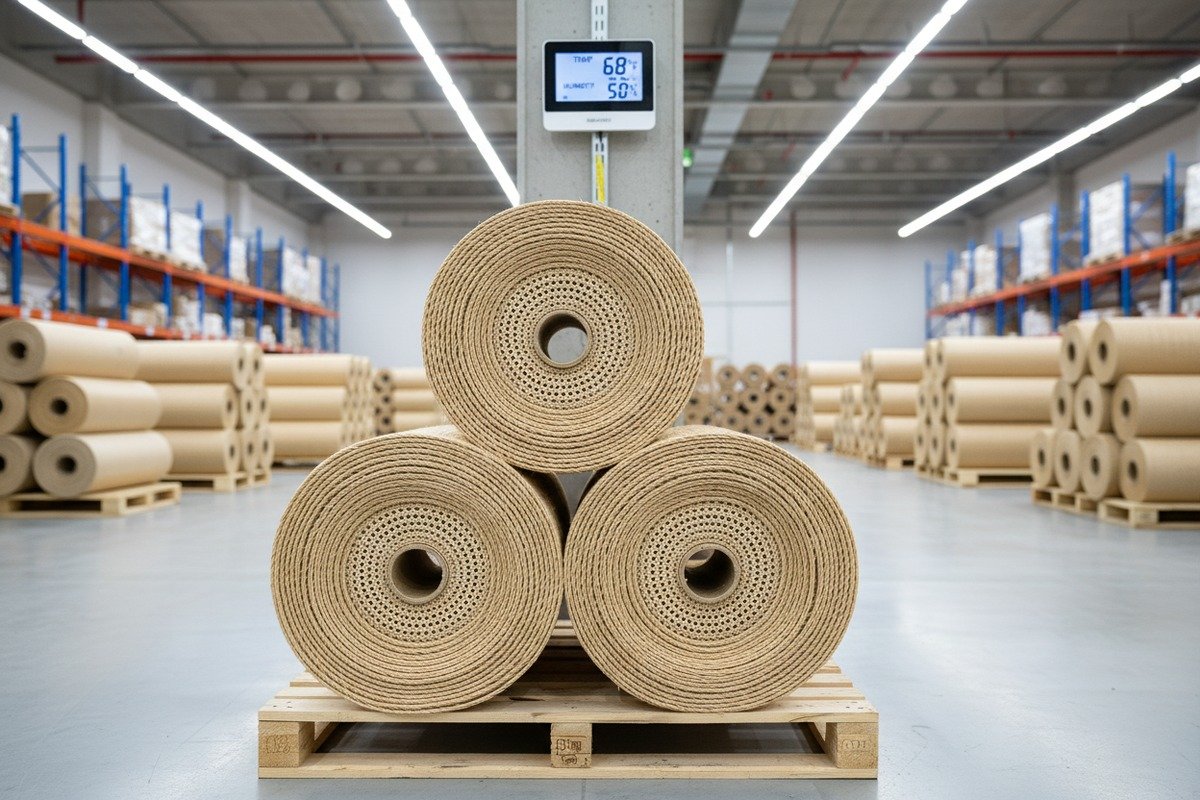
Every year, we see containers of Rattan-Rohrgeflecht 1 arrive at customer warehouses only to be ruined within weeks by poor storage conditions. Cracked fibers, mold patches, and warped rolls—these costly problems start with one simple oversight: ignoring temperature and humidity.
The ideal storage conditions for rattan cane webbing are 60–70°F (15–21°C) and 40–60% relative humidity. Keep the material in a cool, dry, well-ventilated indoor space away from direct sunlight. These ranges prevent both brittleness from dryness and mold growth from excess moisture.
Getting these numbers right is only the beginning moisture control 2. Below, we break down exactly how to set up your warehouse, what happens when you don’t, how to stack your bulk rolls, and what to demand from your rattan supplier.
How can I maintain the perfect temperature and humidity levels in my warehouse to protect my rattan cane webbing?
Over the past decade, our team at Seafan Rattan has shipped thousands of rattan rolls to factories in humid Southeast Asia and dry Middle Eastern climates alike. The single biggest complaint we hear? "The webbing looked perfect when it arrived, but it fell apart in storage."
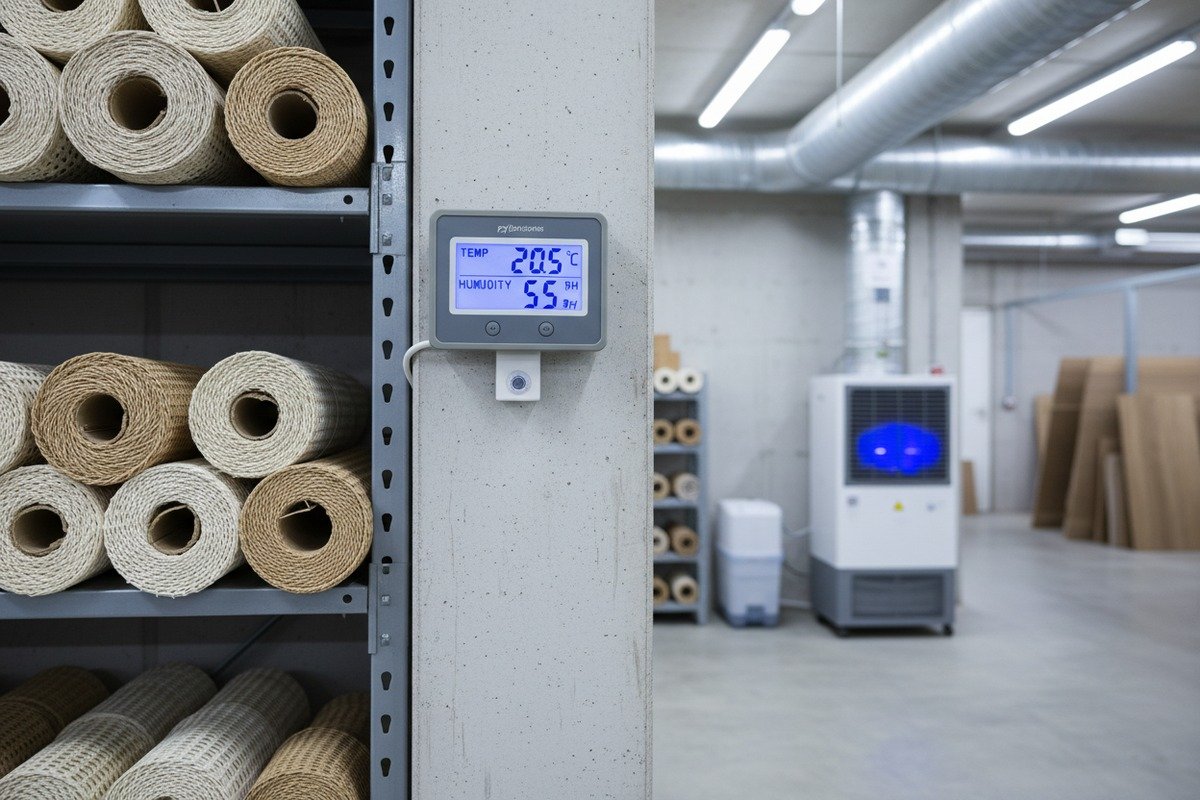
To maintain ideal conditions, install a combined HVAC and dehumidifier system that holds your warehouse between 60–70°F and 40–60% relative humidity. Use digital hygrometers at multiple points, ensure steady air circulation, and avoid placing rattan near exterior walls, windows, or heating ducts.
Why Rattan Is So Sensitive to Climate
Rattan cane webbing comes from the outer bark of the rattan palm 3. It is an organic, plant-based fiber. Like wood, it absorbs and releases moisture from the air. When the air is too dry, the fibers shrink and crack. When it is too humid, the fibers swell, soften, and invite mold.
This is not a slow process. In our testing, untreated natural cane webbing left in a 90°F room at 20% humidity began showing visible micro-cracks within 72 hours. On the other end, rolls stored in a damp basement at 80% humidity developed mold spots 4 in under two weeks.
Step-by-Step Climate Control Setup
Here is what we recommend to our factory clients:
- Install digital hygrometers. Place at least one per 500 square feet. Mount them at the height where your rattan is stored, not on the ceiling.
- Use a dehumidifier in humid climates. If your region regularly exceeds 60% RH, a commercial dehumidifier 5 is not optional—it is essential.
- Use a humidifier in dry climates. Winter heating or arid conditions can drop humidity below 30%. A whole-room humidifier 6 prevents brittleness.
- Maintain steady airflow. Use standing or ceiling fans. Stagnant air creates pockets of trapped moisture, especially between tightly packed rolls.
- Avoid direct sunlight. UV light fades and dries the fibers. Use blackout curtains or opaque roofing if your warehouse has skylights.
Ideal vs. Dangerous Conditions at a Glance
| Condition | Temperature | Relative Humidity 7 | Auswirkung auf Rattan |
|---|---|---|---|
| Ideal | 60–70°F (15–21°C) | 40–60% | Fibers stay flexible, no mold, no cracking |
| Too Hot & Dry | Above 85°F / Below 30% RH | Unter 30% | Shrinking, brittleness, strand breakage |
| Too Cold & Damp | Below 50°F / Above 70% RH | Über 70% | Mold, mildew, fiber swelling, discoloration |
| Fluctuating | Rapid shifts of ±15°F | Rapid shifts of ±20% RH | Warping, loosening of weave, structural fatigue |
The Acclimation Step Most Buyers Skip
When new rolls arrive at your warehouse, do not immediately stack them in tight rows. Let them acclimate to the room environment for 24 to 48 hours. Lay them loosely, spaced apart, so air can circulate around each roll. This allows the fibers to adjust gradually, which prevents sudden expansion or contraction that could loosen the weave pattern.
We always include this advice in our packing slips. It is a small step that saves big headaches later.
What are the risks to my rattan quality if I don't control the moisture levels during long-term storage?
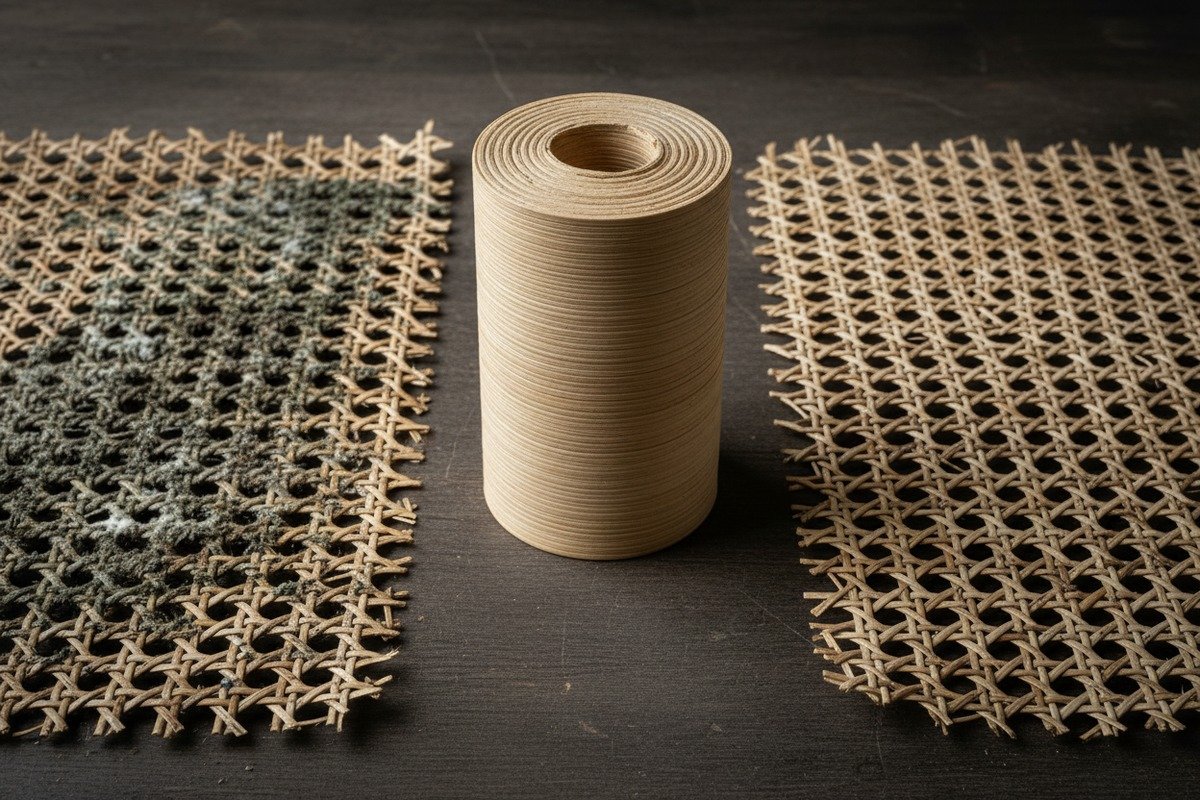
We have had clients send us photos of rattan rolls they stored for just three months in an unconditioned garage. The webbing was covered in black mold. The entire shipment—worth thousands of dollars—had to be discarded.
Without moisture control, rattan cane webbing faces two major risks: mold and mildew growth in high humidity above 60%, and irreversible brittleness and cracking in low humidity below 40%. Both degrade the fibers, ruin the weave integrity, and make the material unsuitable for furniture production.
High Humidity: The Mold Problem
Mold needs three things to grow: organic material, moisture, and warmth. Rattan provides two of those on its own. Add a storage environment above 65% relative humidity, and you have created a perfect breeding ground.
Mold does not just sit on the surface. It penetrates the fibers. Once rattan webbing is infected, cleaning only removes the visible mold. The spores remain inside the material. This means the webbing will smell musty, stain furniture frames, and re-grow mold under even slightly humid conditions after installation.
In our factories, we have strict incoming material inspections. If rattan raw material arrives from our Indonesian processing facility during the rainy season, it goes through a controlled drying room before it enters the weaving line. We cannot afford to let moisture-laden material contaminate a batch.
Low Humidity: The Brittleness Problem
Dry air is just as destructive, though in a different way. When humidity drops below 35–40%, the natural oils in rattan fibers begin to evaporate. The strands become rigid. They lose their characteristic flexibility.
Brittle rattan does not just look bad—it is functionally useless. When a furniture factory tries to stretch or staple brittle webbing onto a frame, the strands snap. This leads to waste, rework, and production delays.
The Hidden Cost of Temperature Swings
Even if your average temperature and humidity are acceptable, rapid fluctuations cause damage. Imagine a warehouse in a region with hot days and cold nights. The rattan expands during the day and contracts at night. Over weeks, this cycle loosens the weave, creates uneven tension, and weakens the entire sheet.
Risk Summary Table
| Risk Factor | Cause | Visible Symptoms | Impact on Production |
|---|---|---|---|
| Mold & Mildew | RH above 60–70%, poor airflow | Black/green spots, musty smell | Material rejected, total loss |
| Sprödigkeit | RH below 35%, extreme heat | Cracking, snapping strands | Cannot stretch or staple; waste |
| Warping | Rapid temperature fluctuations | Curling edges, uneven surface | Poor fit on frames, rework needed |
| Fading | Direct UV / sunlight exposure | Uneven color, bleached patches | Aesthetic defects, customer complaints |
| Insect Damage | Warm, stagnant, organic environment | Small holes, powdery residue | Structural weakness, contamination |
The Financial Reality
A standard bulk order of natural rattan cane webbing might cost your factory between $2,000 and $15,000. Losing even 10% of that stock to mold or brittleness eats directly into your margins. Proper storage equipment—a good dehumidifier, fans, and hygrometers—costs a fraction of one ruined shipment. The math is simple.
How should I properly stack and store my bulk rattan rolls to prevent mold or brittleness?
When we prepare shipments at our Foshan facility, every roll is carefully wrapped and labeled with storage instructions. But once it reaches your warehouse, how you stack and store those rolls determines whether they last for years or degrade in weeks.
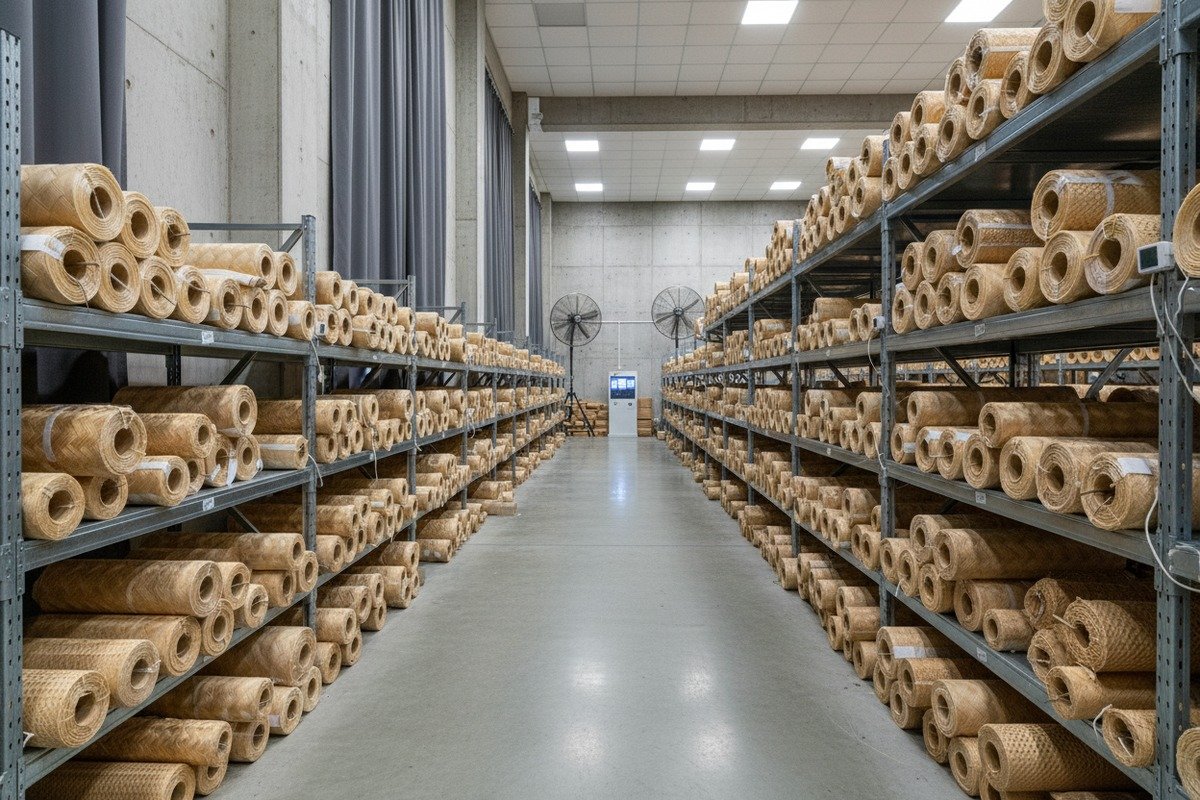
Store bulk rattan rolls vertically on raised pallets or shelving, spaced at least 4 inches apart for air circulation. Wrap each roll loosely in breathable, acid-free material like unbleached cotton—never plastic. Keep rolls away from walls, floors, and direct heat sources to prevent moisture trapping and uneven drying.
Vertical vs. Horizontal Storage
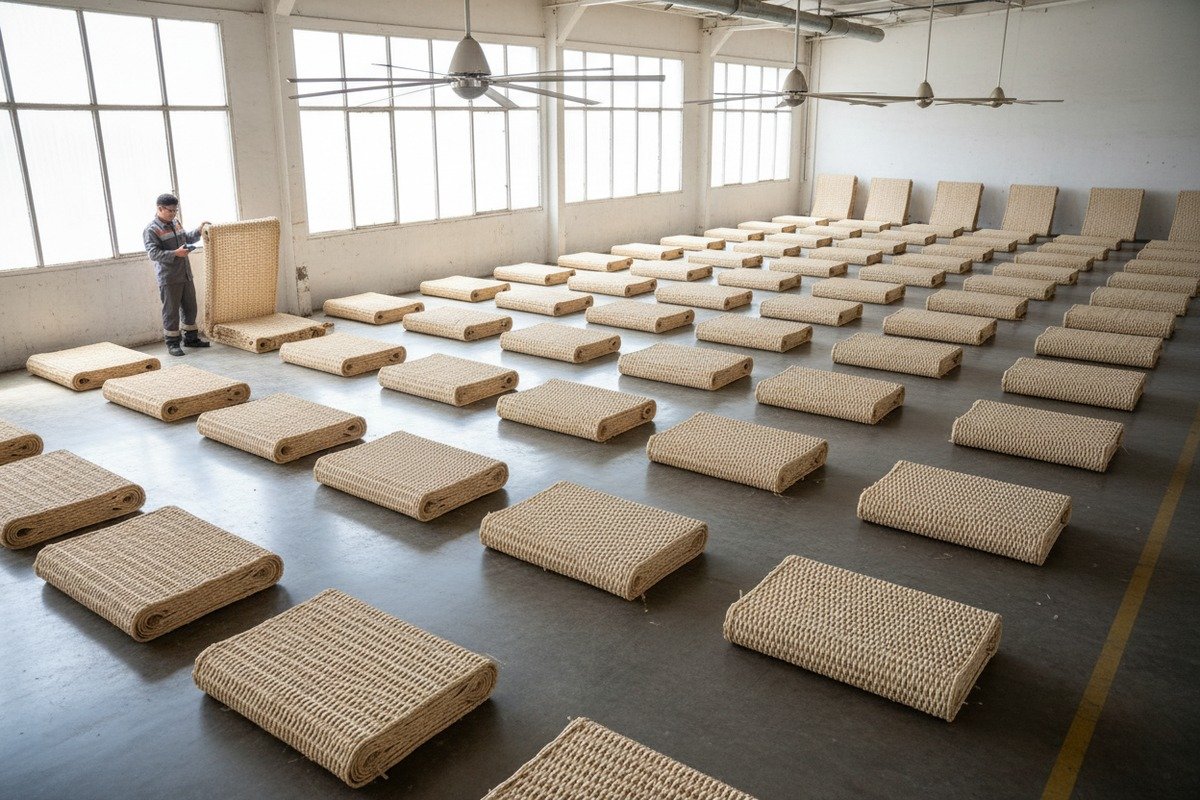
This is one of the most common mistakes we see. Many warehouses lay rattan rolls flat and stack them on top of each other. This creates three problems:
- Crushing pressure. The weight of upper rolls compresses the lower ones, flattening the weave and creating permanent creases.
- Trapped moisture. Air cannot circulate between flat-stacked rolls. Moisture collects in the contact zones.
- Uneven aging. The top roll dries faster than the bottom roll, leading to inconsistent quality within the same batch.
Vertical storage solves all three issues. Stand each roll on its end. Use shelving units or purpose-built racks. Make sure the bottom of each roll rests on a pallet or shelf—never directly on a concrete floor.
Wrapping Materials Matter
We strongly advise against wrapping rattan in plastic film for long-term storage. Plastic traps moisture inside, creating a miniature greenhouse effect. Even a small amount of residual moisture in the fibers becomes a mold incubator under plastic.
Instead, use breathable coverings:
- Unbleached cotton sheets — affordable, reusable, and allow airflow
- Acid-free tissue paper — good for high-value or specialty weave patterns
- Kraft paper — acceptable for short-term storage of a few weeks
Pest Prevention in Storage
Rattan is organic. Insects like Bohrkäfer 8 and certain moths are attracted to it. We recommend placing natural deterrents throughout your storage area:
- Cedar blocks every 3–4 feet along shelving
- Dried lavender sachets near roll clusters
- Periodic visual inspections for small holes or powdery residue
Chemical pesticides should be avoided. They can stain the webbing and leave odors that are difficult to remove, especially for furniture intended for homes.
Storage Best Practices Checklist
| Practice | Do This | Avoid This |
|---|---|---|
| Orientation | Store rolls vertically | Stacking flat on top of each other |
| Elevation | Use pallets or shelves, 6+ inches off floor | Placing directly on concrete or bare floor |
| Spacing | Leave 4+ inches between rolls | Pressing rolls tightly against each other |
| Covering | Breathable cotton or acid-free paper | Plastic wrap, sealed bags, or tarps |
| Location | Interior walls, away from windows/doors | Exterior walls, near heater ducts or skylights |
| Pest Control | Cedar blocks, lavender sachets, regular checks | Chemical sprays or mothballs |
| Inspection | Monthly check for mold, cracks, pests | "Set and forget" long-term storage |
Conditioning After Storage
Before using stored rattan webbing in production, let the rolls sit unwrapped in your workshop environment for a few hours. If the material feels slightly stiff, a light application of Leinöl 9 or mineral oil restores suppleness. Apply the oil only to completely dry material. Let it absorb for at least 48 hours before installation. This step is especially important for webbing that has been in storage for more than three months.
What storage standards should I look for when choosing a reliable rattan wholesaler for my factory?
Over the years, we have visited competitor warehouses and partner facilities across Asia, Europe, and the Middle East. The difference between a reliable rattan wholesaler and a careless one often shows up not in their sales pitch, but in their storage room.
A reliable rattan wholesaler should maintain climate-controlled warehousing at 60–70°F and 40–60% RH, use breathable packaging, store rolls vertically on raised platforms, and provide documentation of storage conditions. They should also offer material acclimation guidance and have clear quality inspection protocols before dispatch.
What to Ask Before You Place an Order
When evaluating a new rattan supplier, most purchasing managers focus on price and lead time. Those matter. But storage practices directly impact the quality of what arrives at your door. Here are the questions we suggest you ask:
- "What are your warehouse temperature and humidity settings?" A serious supplier will give you exact numbers. Vague answers like "room temperature" are a red flag.
- "How do you package rolls for long-term storage and transit?" Look for breathable wrapping, not sealed plastic.
- "Do you inspect material before shipping?" Ask for details. At our facility, every roll goes through a visual and touch inspection. We check for mold, cracks, color consistency, and weave integrity.
- "Can you provide photos or videos of your storage facility?" Transparency matters. We regularly share warehouse walkthrough videos with new clients.
- "What is your return or replacement policy for storage-related damage?" A supplier confident in their storage will stand behind their product.
Red Flags in a Supplier's Storage
Watch out for these warning signs:
- Rattan stored in open-air sheds or uncovered outdoor areas
- Rolls stacked horizontally in tall, compressed piles
- Plastic-wrapped bundles with visible condensation inside
- No climate monitoring equipment visible in the warehouse
- Musty or damp odor when you open sample rolls
- Inconsistent coloring within the same batch (sign of uneven drying or UV exposure)
What a Professional Rattan Warehouse Looks Like
At our main warehouse in Nanhai, Foshan, we keep natural rattan cane webbing in a dedicated climate-controlled section. The room stays between 18–22°C and 45–55% RH year-round. Rolls are stored vertically on industrial shelving, each wrapped in unbleached cotton cloth. We run ceiling fans 24 hours a day for air circulation. Cedar blocks are placed at regular intervals along the shelves.
Our Indonesian processing facility follows the same protocol, with the added step of a drying room for freshly harvested material. Raw rattan arrives with high moisture content from the tropical forest. It must be dried gradually—too fast and it cracks, too slow and it molds. This controlled drying is one of the most critical steps in the entire supply chain, and it happens long before the webbing ever reaches your factory.
Natural vs. Synthetic: Storage Tolerance Comparison
Some clients ask whether switching to synthetisches Rattan 10 solves storage problems entirely. Here is a fair comparison:
| Faktor | Natural Rattan Cane Webbing | Synthetic Rattan (PE Plastic) |
|---|---|---|
| Ideal Temp Range | 60–70°F (15–21°C) | Tolerates wider range (40–100°F) |
| Ideal Humidity | 40–60% RH | Not moisture-sensitive |
| Mold Risk | High if RH > 60% | Sehr gering |
| Brittleness Risk | High if RH < 35% | Low; UV degradation over years |
| Aesthetic | Warm, organic patina; darkens with age | Mimics natural look but lacks aging character |
| Eco Credentials | Fully natural, biodegradable | Kunststoffbasiert, nicht biologisch abbaubar |
| Storage Effort | High — requires climate control | Low — standard dry storage sufficient |
| Preispunkt | Mid to premium | Budget to mid |
Synthetic rattan is undeniably easier to store. But for premium furniture and interior design applications, natural cane webbing remains the gold standard. The authentic texture, the way it darkens gracefully over time, the organic warmth it adds to a piece—these qualities cannot be fully replicated by plastic.
The key takeaway: if you are buying natural rattan, your supplier's storage standards are non-negotiable. They directly determine the quality of the material that arrives at your production line.
Conclusion
Proper storage of rattan cane webbing comes down to stable climate, smart stacking, breathable packaging, and choosing a supplier who takes these standards seriously. Protect your investment at every step.
Fußnoten
1. Explains rattan, the natural material used for cane webbing. ↩︎
2. Emphasizes the importance of moisture control to prevent mold and damage. ↩︎
3. Describes rattan as a climbing palm, the source of the material. ↩︎
4. Discusses mold growth and its appearance due to moisture. ↩︎
5. Replaced HTTP 404 link with an authoritative .gov source from ENERGY STAR, which discusses various types of dehumidifiers including those relevant to commercial applications and energy efficiency. ↩︎
6. Replaced HTTP 404 link with an authoritative .gov source from the EPA, providing information on the use, care, and health aspects of home humidifiers, including central (whole-room) systems. ↩︎
7. Provides a scientific definition of relative humidity. ↩︎
8. Describes powderpost beetles, their damage, and habits in wood. ↩︎
9. Replaced HTTP 403 link with an authoritative Wikipedia page that offers a comprehensive overview of linseed oil, its properties, and various applications, aligning with the general nature of the anchor text. ↩︎
10. Defines synthetic rattan as a material used in wicker furniture. ↩︎
 English
  Español de México
  العربية
  Deutsch
  Français
  Русский