
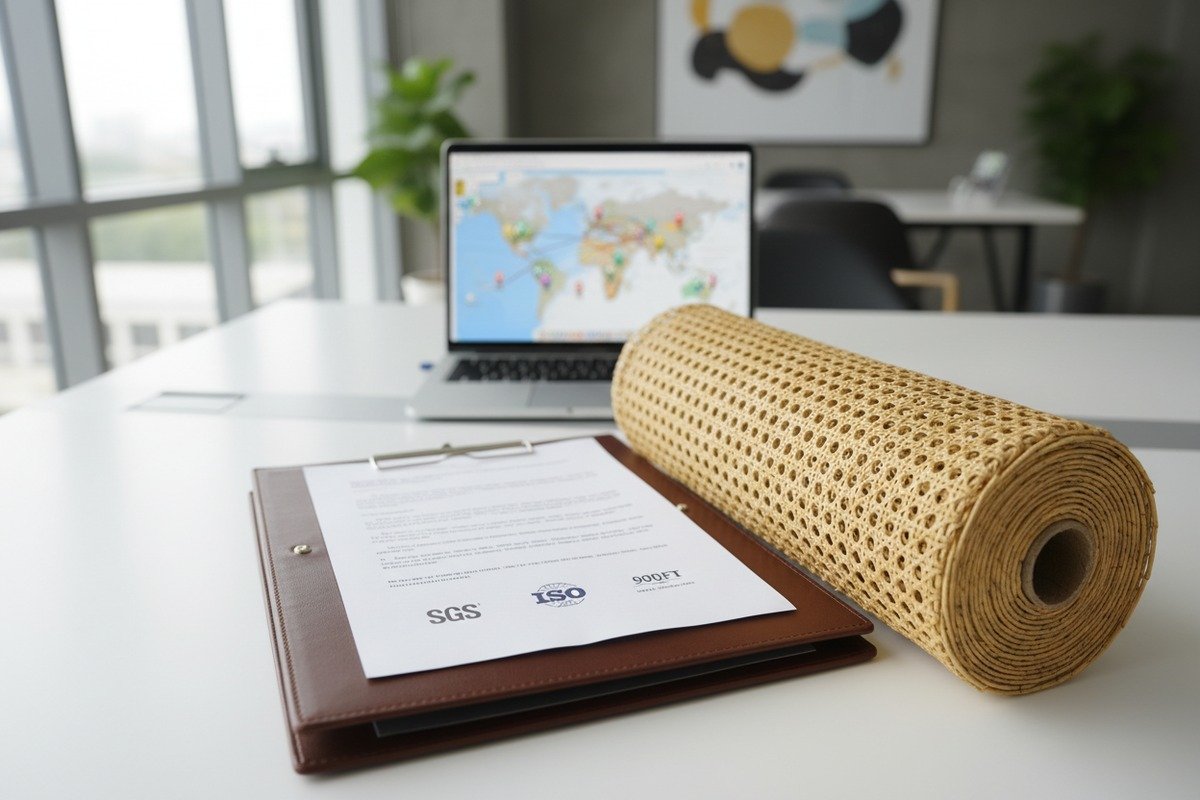
Every year, we see containers of rattan cane webbing rejected at ports because buyers skipped one critical document ISPM 15 standards 1. The cost of getting certifications wrong is not just financial—it can destroy supplier relationships and stall entire product lines.
International rattan cane webbing sourcing requires a combination of quality certifications including SGS testing reports, ISO 9001 quality management verification, REACH compliance for EU markets, phytosanitary certificates, fumigation documentation, and factory audit reports covering AQL inspection standards to ensure consistent material quality and regulatory compliance.
Navigating these certifications can feel overwhelming. This guide breaks down exactly which documents you need, why each one matters, and how to verify them before placing your next order.
What specific quality grade certifications should I demand for my rattan cane webbing orders?
Over the past decade, our quality control team in Foshan has refined a grading system that aligns with what international buyers actually need. The problem is that many importers still accept vague claims of "Grade A" without understanding what that label should guarantee.
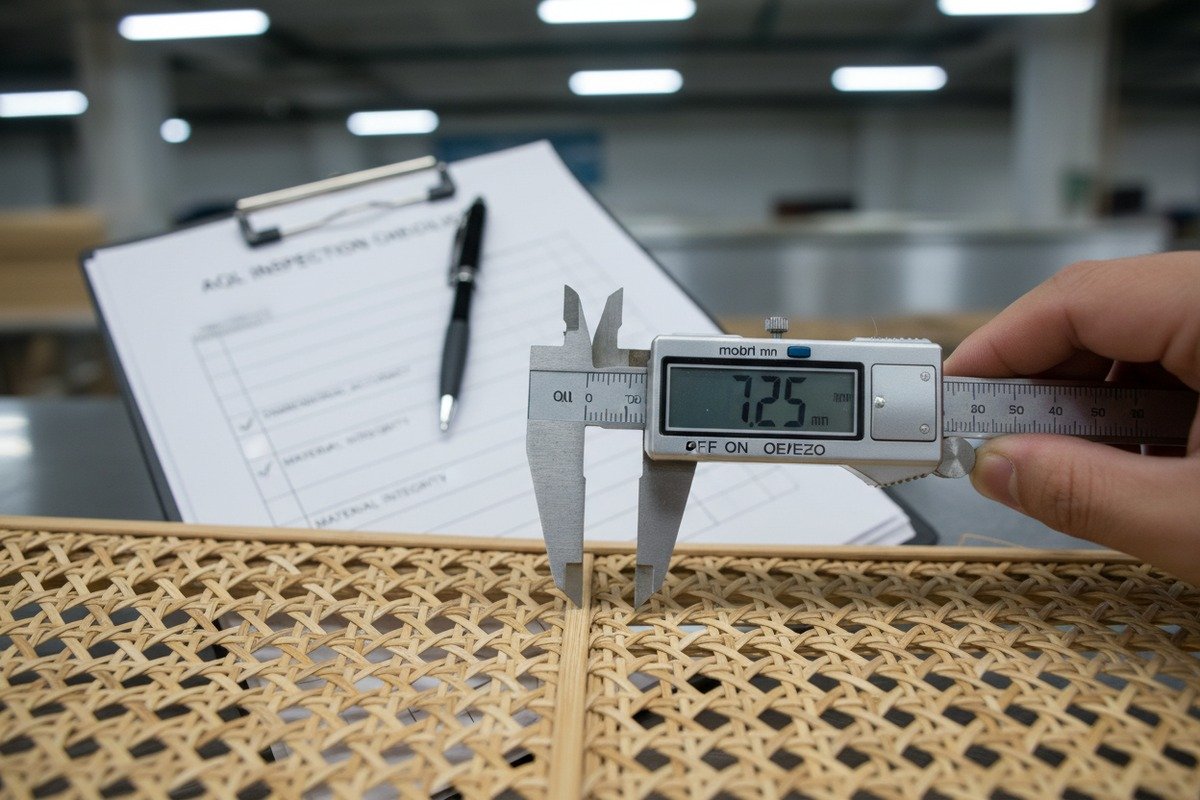
You should demand SGS testing reports for strength and chemical safety, ISO 9001 certification for quality management systems, AQL-based inspection reports covering incoming, in-process, and final quality checks, and specific grade documentation that defines strand diameter, weave density, color consistency, and moisture content.
Understanding Rattan Quality Grades
Quality grading for rattan cane webbing is not standardized across all producing countries. Indonesia, Vietnam, and China each use slightly different terminology. This creates confusion for buyers. In our own processing facility in Indonesia, we grade raw rattan before it even reaches our weaving lines in Foshan. The key is to understand what measurable criteria sit behind each grade label.
Grade A rattan should have uniform strand thickness, no visible cracks, consistent color, and a moisture content between 12% and 15%. Grade B may show minor color variation and slight irregularities. Grade C is typically used for budget products where appearance is less critical.
Key Quality Metrics to Verify
| Quality Metric | Klasse A Standard | Grade B Standard | Grade C Standard |
|---|---|---|---|
| Strand Diameter 2 Variation | ≤ 0.3mm | ≤ 0.5mm | ≤ 1.0mm |
| Feuchtigkeitsgehalt | 12–15% | 12–18% | 12–20% |
| Farbkonstanz | ≤ 5% variation | ≤ 15% variation | ≤ 30% variation |
| Zugfestigkeit | ≥ 45 MPa | ≥ 35 MPa | ≥ 25 MPa |
| Weave Density (per 10cm) | ± 1 strand | ± 2 strands | ± 3 strands |
SGS Testing and What It Covers
SGS is the most widely recognized third-party testing body 3 in our industry. When we prepare shipments for buyers in the Netherlands, Spain, or Australia, SGS reports are almost always requested. An SGS report for rattan webbing should cover tensile strength, flexibility under stress, chemical residue testing (including formaldehyde and heavy metals), and dimensional accuracy. Do not accept a generic SGS logo on a supplier's website. Ask for the specific test report number and verify it directly with SGS.
ISO 9001 and AQL Inspection Levels
ISO 9001 certification confirms that a factory has a documented quality management system 4. It does not guarantee product quality on its own. What it does guarantee is that the factory follows repeatable processes. In our three factories, we run four stages of quality control: IQC (Incoming Quality Control), IPQC (In-Process Quality Control), FQC (Final Quality Control), and OQC (Outgoing Quality Control). Each stage uses AQL sampling 5. For rattan webbing, we typically apply AQL 2.5 for major defects and AQL 4.0 for minor defects. Buyers should ask their supplier which AQL level they use and request the inspection data sheets.
REACH Compliance for EU-Bound Orders
If your rattan webbing enters the European Union, REACH-Konformität 6 is not optional. REACH regulates chemicals used in manufacturing. For natural rattan, the main concern is chemical treatments during processing—bleaching agents, anti-mildew treatments, and dyes. Our bleaching process uses hydrogen peroxide (H2O2), which is classified as safe and is the same compound found in household products. We avoid synthetic lacquers on premium natural webbing. However, if you source synthetic PE rattan, REACH testing becomes even more critical because of the plasticizers and UV stabilizers used.
CE Marking Considerations
CE marking applies when rattan webbing is used as a component in furniture sold within the EU. It is not always required for raw material rolls, but your furniture manufacturing clients may need to confirm that their components meet CE safety standards. Clarify the end use before assuming CE is unnecessary.
How can I confirm that my rattan supplier follows international environmental and sustainability standards?
Sustainability claims in the rattan industry are everywhere. When we first set up our own rattan processing facility in Indonesia, we quickly learned that the biggest misconception buyers have is about FSC certification 7 and rattan.
To confirm sustainability, verify your supplier's harvesting traceability records from origin forests, check for legal sourcing documentation similar to SVLK principles, examine their chemical processing methods (H2O2 bleaching versus synthetic chemicals), and confirm biodegradability claims. Note that FSC certification does not apply to rattan because rattan is a vine, not a timber species.
The FSC Myth in Rattan Sourcing
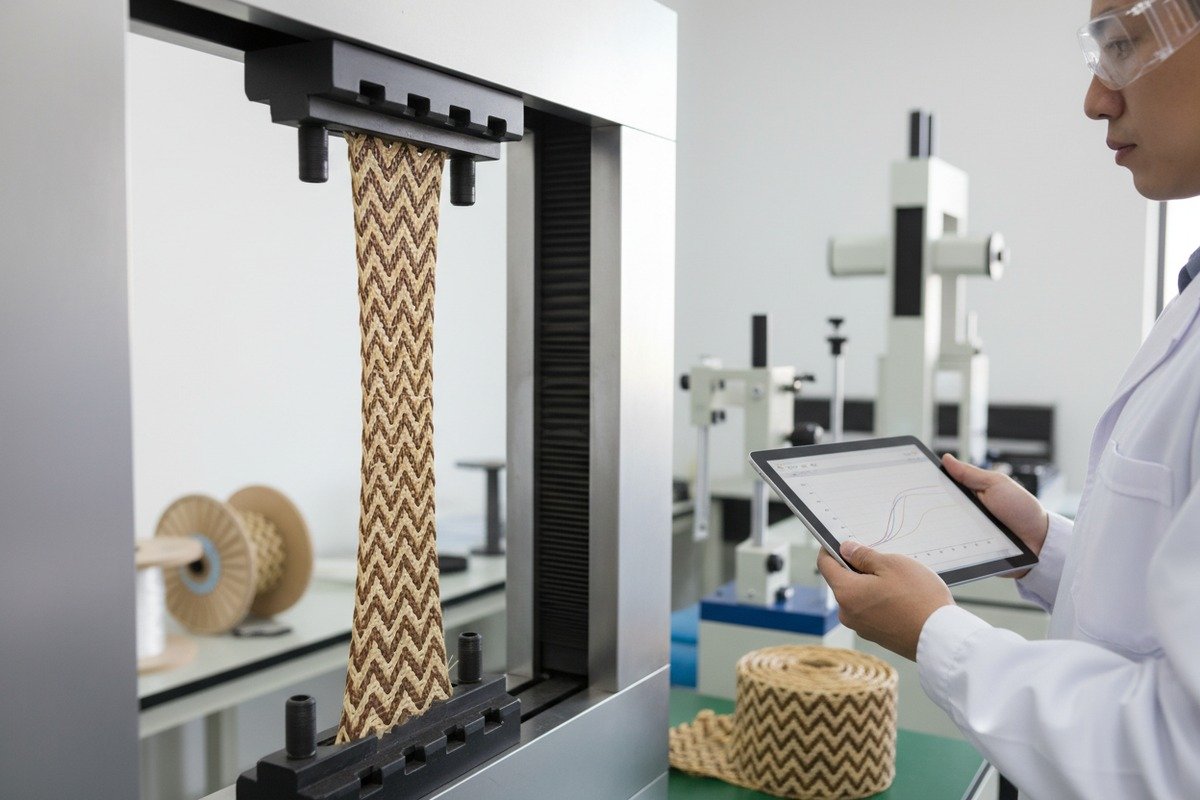
This is the single most misunderstood topic in rattan certification. FSC (Forest Stewardship Council) certifies responsibly managed forests for timber products. Rattan is a climbing palm vine. It is not a tree. It does not require felling trees. It grows in secondary forests and can be harvested without damaging the forest canopy. Because of this botanical classification, FSC certification is not applicable to rattan. If a supplier claims FSC certification for their natural rattan webbing, that is a red flag. It either means they do not understand the certification system, or they are misrepresenting their product.
What you should look for instead is harvest traceability. Where exactly was the rattan harvested? Which Indonesian province? Which community manages that forest area? These are the questions that matter.
Sustainable Harvesting Practices
Indonesia has over 200 rattan species and produces the world's finest quality. Sustainable harvesting means cutting mature vines while leaving younger growth to regenerate. The best suppliers work with local communities who have harvested rattan for generations. In our Indonesian facility, we source from secondary forests in Kalimantan and Sulawesi. The vines are cut, cleaned, and initially processed on-site before shipping to our Foshan facilities.
Chemical Processing and Environmental Impact
| Processing Step | Eco-Friendly Method | Concerning Method |
|---|---|---|
| Bleichen | Hydrogen peroxide (H2O2) bath | Chlorine-based bleaching |
| Anti-Mildew Treatment | Sulfur smoking (traditional) | Synthetic fungicide sprays |
| Coloring | Natural tanning from sun drying | Chemical dyes with heavy metals |
| Surface Finishing | No lacquer (natural matte) | Synthetic lacquer coating |
| Trocknen | Air drying / controlled kiln | No drying protocol (mold risk) |
When we process rattan for our premium natural webbing lines, the bleaching bath uses mainly H2O2. This is the same compound used in shampoo and wound cleaning—it breaks down into water and oxygen. We avoid synthetic lacquers entirely on natural rattan products. For buyers committed to circular economy principles, natural rattan webbing is inherently biodegradable and compostable. But ask your supplier to confirm whether any synthetic coatings have been applied, because those coatings can compromise biodegradability.
GRS for Synthetic Rattan
If you source synthetic PE rattan webbing, the relevant environmental certification is GRS (Global Recycled Standard 8). GRS verifies the recycled content in synthetic materials. Our synthetic rattan lines use PE materials, and for buyers who want recycled content, GRS documentation is the right standard to request. Do not confuse GRS with FSC—they serve completely different product categories.
Life Cycle Assessment and Carbon Footprint
A growing number of European and Australian buyers now ask for carbon footprint data. Full Life Cycle Assessments (LCA) are still rare in the rattan industry, but forward-thinking suppliers are starting to compile this data. At minimum, ask your supplier about their energy sources during processing, shipping distances, and packaging materials. These three factors account for most of rattan webbing's carbon footprint.
Which fumigation and phytosanitary documents are required for my international rattan imports?
One of the most painful lessons we learned early in our export journey was a full container held at a European port for three weeks because of a missing fumigation certificate. The storage fees alone cost more than the profit margin on that order.
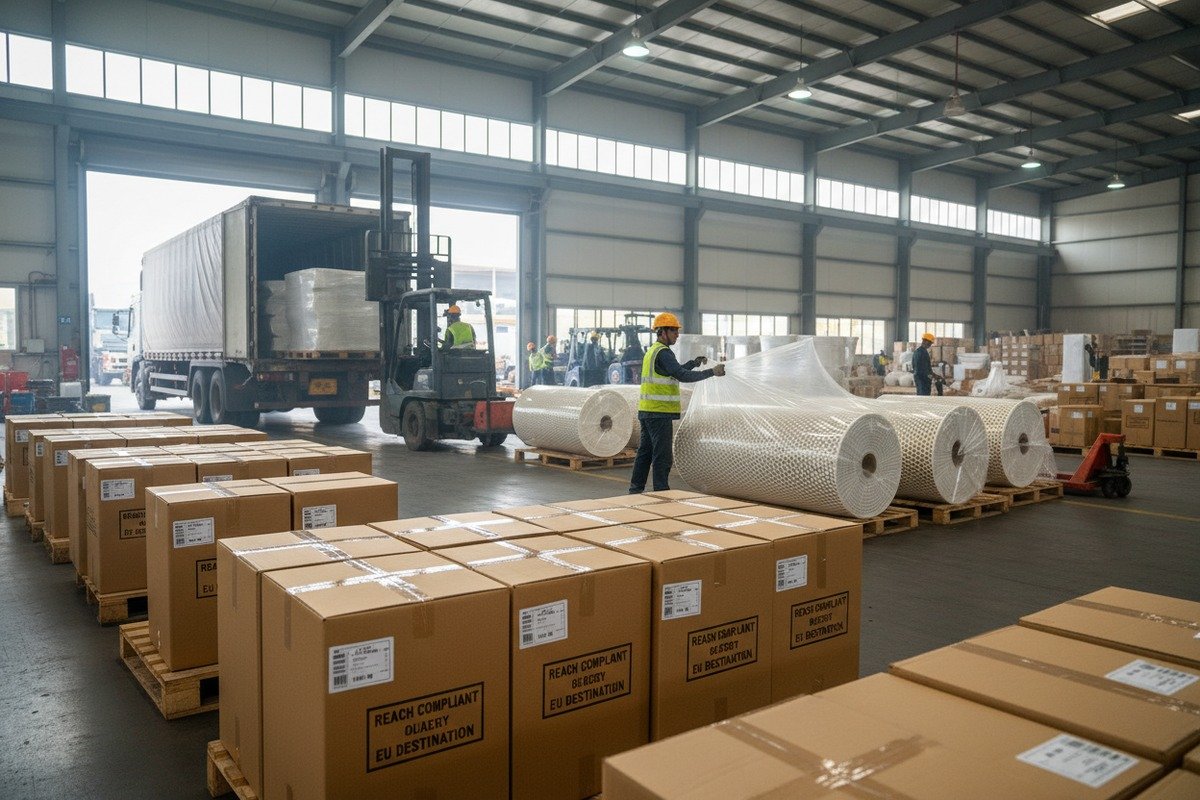
International rattan imports require a phytosanitary certificate issued by the exporting country's plant quarantine authority, a fumigation certificate (typically methyl bromide or heat treatment per ISPM 15 standards), a Certificate of Origin, and in many cases a pest-free declaration. Specific requirements vary by destination country, with the EU, US, and Australia having the strictest protocols.
Why Phytosanitary Certificates Matter
Rattan is a natural plant material. It can carry insects, fungi, mold spores, and larvae. Every importing country has plant quarantine laws designed to prevent foreign pests from entering their ecosystem. A phytosanitäres Zertifikat 9 confirms that the rattan has been inspected by the exporting country's official plant protection organization and found free of quarantine pests. In China, this certificate is issued by the General Administration of Customs (formerly CIQ). In Indonesia, it is issued by the Agricultural Quarantine Agency (Barantan).
Without this document, your shipment will be stopped at the port of entry. No exceptions.
Fumigation Methods and Documentation
| Fumigation Method | Chemical/Process | ISPM 15 Compliant | Allgemeine Verwendung |
|---|---|---|---|
| Methyl Bromide (MB) | Gas fumigation | Yes (with restrictions) | Widely accepted globally |
| Heat Treatment (HT) | 56°C core temp for 30 min | Ja | EU and Australia preferred |
| Phosphine | Gas fumigation | Country-specific | Some Asian markets |
| Sulfuryl Fluoride | Gas fumigation | Country-specific | US market alternative |
Methyl bromide has been the traditional fumigation method for rattan products. However, it is being phased out under the Montreal Protocol due to its ozone-depleting properties. Many EU buyers now specify heat treatment instead. When we prepare shipments for Australian clients, heat treatment is mandatory because Australia's biosecurity laws are among the strictest in the world.
The fumigation certificate must include the treatment method used, the chemical concentration, the exposure duration, the temperature during treatment, and the date of treatment. An expired fumigation certificate—typically older than 21 days in some markets—will be rejected.
Country-Specific Requirements
The EU requires phytosanitary certificates for all plant-based materials. The certificate must follow IPPC (International Plant Protection Convention) format. The US requires phytosanitary certificates and may also require additional APHIS (Animal and Plant Health Inspection Service) import permits depending on the rattan species. Australia requires both phytosanitary certificates and mandatory BICON (Biosecurity Import Conditions) compliance, which often means heat treatment at certified facilities.
Ursprungszeugnis
A Ursprungszeugnis 10 (CO) confirms where the rattan was processed. This matters for tariff classifications and trade agreements. If your rattan is harvested in Indonesia but processed and woven in China—as is the case with many of our products—the CO will reflect the country of final processing. Some buyers need this for preferential duty rates under free trade agreements. Always confirm with your customs broker which CO format they need: a general CO or a preferential CO linked to a specific trade agreement.
Praktische Tipps für Käufer
Request all fumigation and phytosanitary documents at least one week before the vessel's ETD (estimated time of departure). Do not wait until the goods arrive at your port to discover a document is missing. Ask your supplier to send scanned copies for pre-verification. Keep copies of all documents for at least five years, as some customs authorities conduct retroactive audits.
What factory audit reports should I review to guarantee consistent quality from my rattan manufacturer?
When buyers visit our facilities in Nanhai, Foshan, we always encourage them to look beyond the showroom. The real story of quality consistency lives on the production floor, in the warehouse, and in the documentation systems.
You should review BSCI or SMETA social compliance audit reports, ISO 9001 quality management system audits, pre-shipment inspection reports with AQL sampling data, raw material incoming inspection records, production process control documentation, and packaging drop-test and compression-test results to ensure your rattan manufacturer delivers consistent quality.

Types of Factory Audits
There are two main categories of factory audits: social compliance audits and quality system audits. Social compliance audits—such as BSCI (Business Social Compliance Initiative) and SMETA (Sedex Members Ethical Trade Audit)—evaluate working conditions, fair wages, safety protocols, and environmental practices. Quality system audits focus on production processes, equipment calibration, testing procedures, and defect management.
For rattan cane webbing, both types matter. Social compliance is increasingly required by large European and American retailers. Quality system audits directly affect the consistency of your product.
What to Look for in a Quality System Audit
A meaningful quality system audit for a rattan webbing manufacturer should cover several specific areas. First, raw material inspection: how does the factory grade incoming rattan canes? Do they test moisture content on arrival? Do they reject substandard batches? In our facilities, every incoming batch is checked for diameter consistency, moisture level, and surface condition before it enters the production line.
Second, in-process controls: during weaving, how does the factory monitor pattern accuracy and tension? Manual weaving requires skilled operators, and even small variations in hand tension can create inconsistent weave density. We use template gauges and periodic sampling during production runs to catch deviations early.
Third, final inspection: what AQL level does the factory apply? What defect classification system do they use?
AQL Inspection Framework for Rattan Webbing
| Fehlertyp | Beispiel | Classification | Typical AQL Level |
|---|---|---|---|
| Broken strands in weave | Missing or snapped rattan strand | Major | 2.5 |
| Inconsistent pattern repeat | Shifted hexagonal or diamond motif | Major | 2.5 |
| Color variation beyond spec | Dark spots or uneven bleaching | Minor | 4.0 |
| Edge fraying | Loose strands at roll edges | Minor | 4.0 |
| Moisture above 18% | Risk of mold during transit | Critical | 0 (zero acceptance) |
| Insect damage | Visible bore holes or larvae | Critical | 0 (zero acceptance) |
Critical defects should have zero acceptance. This means if even one sample in the inspection batch shows insect damage or dangerously high moisture, the entire lot must be held for re-inspection or rejection. Major defects at AQL 2.5 allow a small number of imperfections based on statistical sampling. Minor defects at AQL 4.0 permit slightly more variation, which is reasonable for a natural handcrafted material.
Packaging and Transit Quality
One area that many buyers overlook is packaging testing. Rattan webbing is lightweight but sensitive to crushing, moisture, and contamination during ocean freight. A good factory audit should include packaging specifications: roll wrapping materials, carton compression strength, moisture barrier performance, and loading patterns inside containers. We use moisture-absorbing desiccant packs inside each carton and stretch-wrap pallets to prevent shifting during transit. Ask your supplier for their packaging specifications and any drop-test or compression-test data.
Requesting and Verifying Audit Reports
Do not accept audit reports at face value. Check the audit date—reports older than 12 months may not reflect current factory conditions. Verify the auditing body's accreditation. For social compliance, BSCI and SMETA audits should be conducted by recognized firms. For quality audits, look for reports from accredited bodies under UKAS (United Kingdom Accreditation Service) or IAF (International Accreditation Forum) member organizations.
If your supplier has never undergone a third-party audit, that does not automatically disqualify them. Many excellent small-scale rattan workshops in Indonesia and Vietnam operate without formal audit certifications. In those cases, request a virtual factory tour, ask for production photos and videos, and start with a small trial order to evaluate quality firsthand before committing to large volumes. We regularly invite buyers to our factories or provide detailed video walkthroughs for clients who cannot travel.
Conclusion
Getting rattan certifications right protects your supply chain, your reputation, and your bottom line. Use the frameworks above to build a clear documentation checklist before your next sourcing decision.
Fußnoten
1. Provides information on international standards for wood packaging material. ↩︎
2. Provides general information on rattan characteristics and properties. ↩︎
3. Replaced with an accessible page from standards.gov, an authoritative government source, explaining third-party conformity assessment, including testing. ↩︎
4. Defines what a quality management system entails. ↩︎
5. Explains the statistical method for quality control inspections. ↩︎
6. Replaced with an accessible and authoritative page from the European Commission’s environment section, providing an overview of the REACH regulation. ↩︎
7. Explains the purpose and scope of FSC certification. ↩︎
8. Describes the standard for verifying recycled content in products. ↩︎
9. Explains the official document for plant health in international trade. ↩︎
10. Defines the document used to certify the origin of goods. ↩︎

 English
  Español de México
  العربية
  Deutsch
  Français
  Русский