
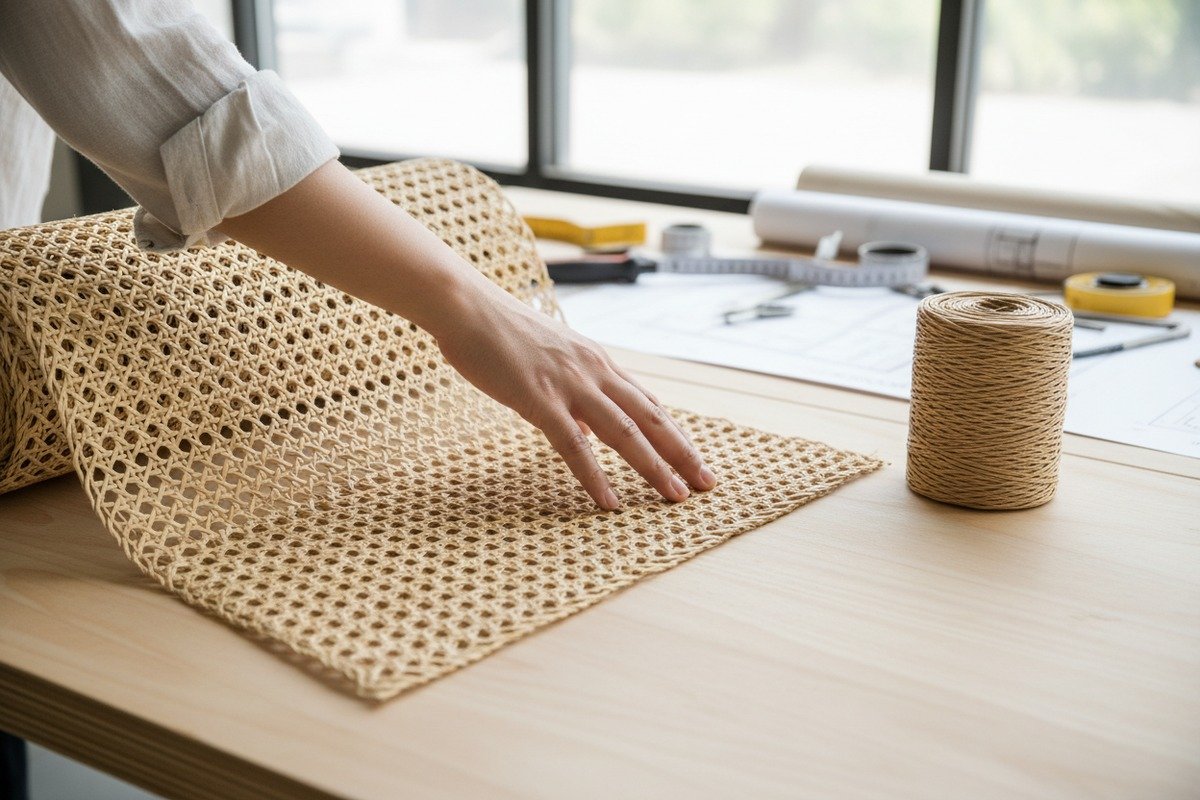
Every week at our Foshan warehouse, clients ask us the same question about webbing durability rattan plant fibers 1. They hold a roll of paper webbing 2 in one hand and natural rattan cane webbing 3 in the other, and they genuinely cannot tell which will outlast the other.
Natural rattan cane webbing offers superior structural strength for everyday furniture use due to the inherent toughness of rattan plant fibers. However, high-quality paper webbing like Danish cord can actually outlast natural cane in certain applications, lasting 30–40 years compared to rattan’s 15–20 years indoors, depending on care and use conditions.
This is not a simple either-or debate. Both materials have real advantages and real weaknesses PE plastic rattan webbing 4. In this guide, we break down lifespan, weight capacity, outdoor performance, and maintenance so you can pick the right webbing for your project with confidence.
How long can I expect my furniture to last if I choose natural rattan cane webbing over paper?
Our production team in Indonesia has processed tens of thousands of rattan cane webbing rolls over the past decade. We see the raw material at every stage, from freshly peeled rattan skin to finished rolls ready for export. Yet one thing still surprises many of our B2B clients: natural rattan cane webbing does not always outlast paper webbing.
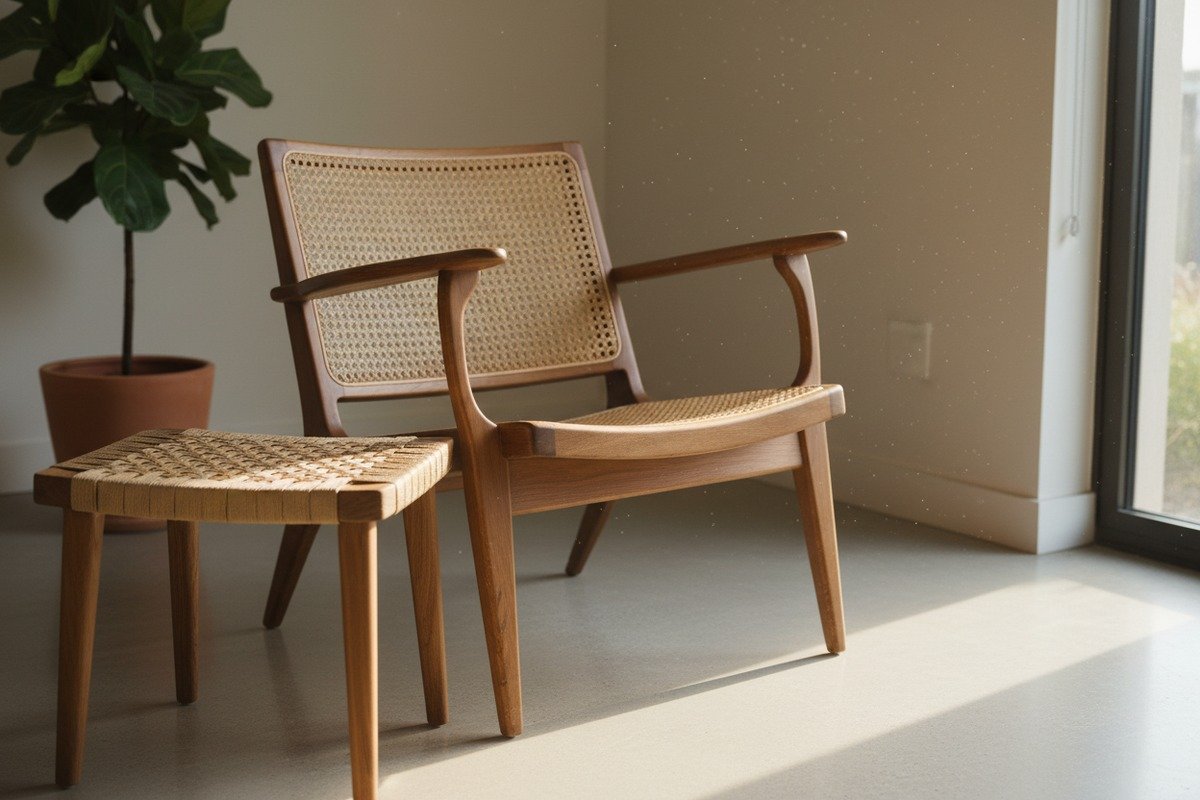
With proper indoor care, natural rattan cane webbing typically lasts 15–20 years before showing significant wear. High-quality paper webbing, such as tightly twisted Danish cord, can last 30–40 years in seating applications because its engineered fiber construction resists gradual stretching better than natural cane over decades of use.
Understanding Lifespan Factors
Lifespan depends on three things: material composition, environment, and usage intensity. Natural rattan cane webbing comes from the outer bark of the rattan palm. This bark is naturally tough. It resists mold and termites when dried correctly. Our Indonesian factory uses a controlled drying process with no chemical preservatives, which gives the cane a clean, food-safe finish that lasts.
Paper webbing, on the other hand, is made from tightly twisted paper fibers. Some versions use multi-ply construction 5. Others add fiber reinforcement. The best paper cords are specifically engineered for tension retention 6. They do not sag easily.
Real-World Lifespan Comparison
Here is a practical breakdown of what we have observed and what industry data supports:
| Faktor | Natural Rattan Cane Webbing | Paper Webbing (Danish Cord 7) |
|---|---|---|
| Average Indoor Lifespan | 15–20 years | 30–40 years |
| Primary Failure Mode | Gradual stretching, brittleness | Localized strand breakage |
| Patina Over Time | Warm, aged golden tone | Golden amber hue |
| Repair Ease | Difficult; break can propagate | Easier; localized damage stays contained |
| Maintenance Frequency | Annual conditioning recommended | Minimal; occasional gentle cleaning |
Why Paper Can Outlast Cane
This surprises many people. The key reason is fiber engineering. Natural rattan is strong, but it is also organic. Over years of compression from body weight, rattan fibers slowly lose elasticity. They stretch. They thin. Eventually, the weave sags.
Paper cord, especially high-quality twisted varieties, is designed to hold tension. The twist locks fibers together. When one strand breaks, the damage stays local. It does not unravel across the whole seat. We have seen 35-year-old Danish cord chairs in European showrooms that still look tight and clean.
When Rattan Wins on Lifespan
Rattan cane webbing wins in specific contexts. For cabinet panels, headboard inserts, and decorative applications where there is no constant weight load, rattan can last generations. We have shipped radio weave cane webbing to furniture restorers in the Netherlands who use it to repair antique chairs from the 1800s. The original cane lasted over a century because it bore minimal stress.
The takeaway is simple. For seating under daily load, paper cord can outlast cane. For decorative or low-stress structural use, rattan cane is practically timeless.
Can I trust paper webbing to hold the same weight as my natural rattan cane materials?
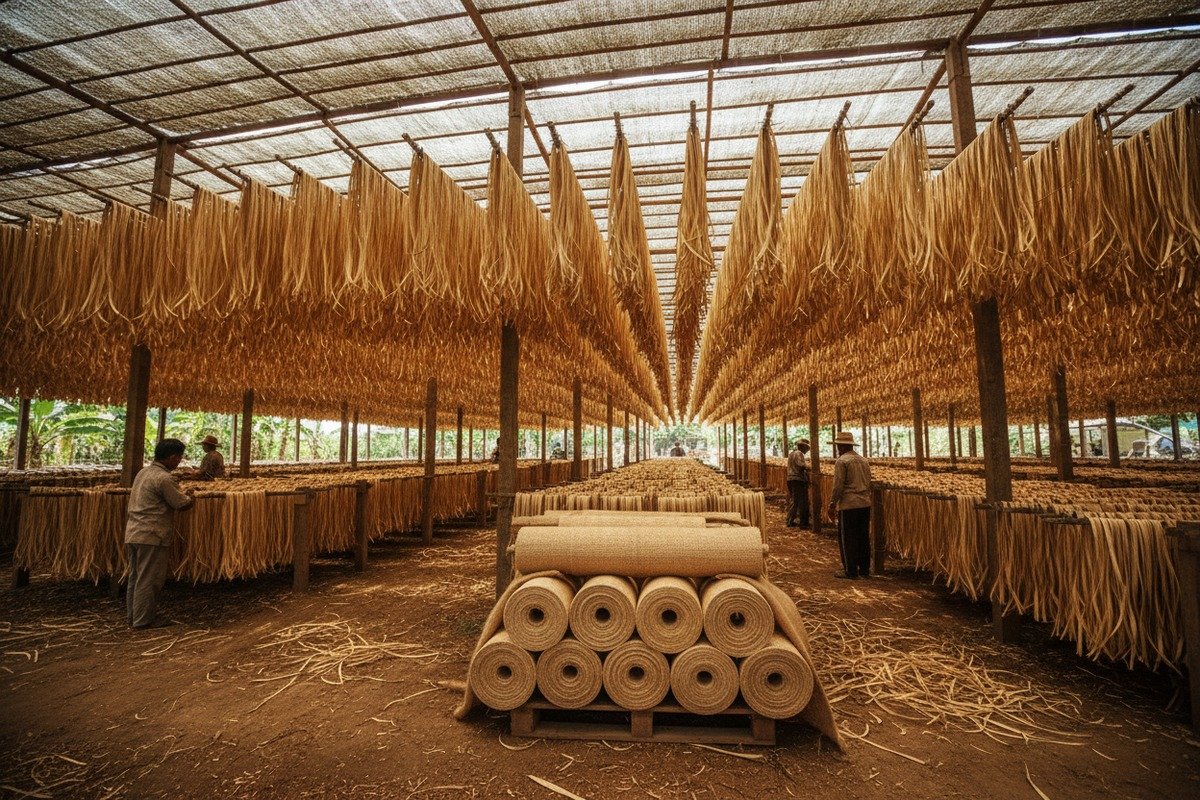
When we run quality tests on our rattan cane webbing before export, Zugfestigkeit 8 is one of the first things we measure. Our factory team checks every batch because our B2B clients—furniture factories in the US, Australia, and Europe—need materials that can handle real-world weight. So, can paper webbing match that performance?
Paper webbing cannot match the raw tensile strength of natural rattan cane webbing for heavy structural use. Rattan's plant fibers provide exceptional rigidity and load-bearing capacity. However, for standard seating, high-quality paper cord handles adult body weight reliably because its twisted multi-ply construction distributes force evenly across the weave.
Breaking Down Weight-Bearing Performance
Weight capacity is not just about the strength of a single strand. It is about how the whole weave distributes force. A tightly woven rattan cane sheet spreads weight across hundreds of intersecting strips. Each strip is made from the outer skin of the rattan palm, which evolved to support a climbing vine in tropical forests. That biological origin gives it remarkable strength-to-weight ratio 9.
Paper webbing works differently. Each cord is a bundle of twisted paper fibers. The twist adds strength. Think of how a rope is stronger than its individual threads. Multi-ply paper cords can support significant weight because the twist locks the fibers under tension.
Structural Strength Comparison
| Weight Scenario | Natural Rattan Cane Webbing | Papiergeflecht |
|---|---|---|
| Light decorative load (under 5 kg) | Ausgezeichnet | Ausgezeichnet |
| Standard adult seating (60–90 kg) | Ausgezeichnet | Good to Excellent (depends on cord quality) |
| Heavy daily use (90+ kg, frequent sitting/standing) | Sehr gut | Moderate; may stretch over time |
| Sudden impact (dropping into chair) | Good but can crack | Better elasticity absorbs impact |
| Static structural panel (cabinet door, headboard) | Ausgezeichnet | Good for decorative; not ideal for structural |
The Elasticity Factor
Here is something our clients often overlook. Natural rattan cane is stiff. That stiffness gives it a firm, supportive feel. But stiff materials can be brittle under sudden force. If someone drops into a rattan-caned chair aggressively, the cane can crack or split at stress points.
Paper cord has more give. Its twisted fibers stretch slightly under sudden impact and then return to shape. This elasticity makes it more forgiving in casual, everyday use. For a family dining chair that gets bumped, pushed, and sat in heavily every day, paper cord handles the abuse surprisingly well.
When Natural Rattan Is the Clear Winner
For furniture frames that need rigid panel inserts—think woven cabinet doors, room dividers, or bed headboards—rattan cane webbing is the better choice. These applications need stiffness, not elasticity. The cane holds its shape flat. It does not bow or flex. And because these panels bear minimal weight, the material lasts indefinitely.
We supply hexagonal open-mesh rattan webbing and dense square basketweave to furniture factories across Europe and the Middle East for exactly these applications. The material performs beautifully in rigid frames where it is secured with spline or staples and never bears sitting weight.
The Bottom Line on Weight
If your project involves seating, both materials work. But choose paper cord for chairs that face heavy daily use and sudden impacts. Choose rattan cane for panels, decorative inserts, and applications where rigidity matters more than flexibility.
Will my outdoor furniture projects maintain their integrity better with natural rattan or paper?
This is the question where we have to be the most honest with our clients. We export rattan cane webbing to over a dozen countries, from the humid tropics of Thailand to the dry heat of Saudi Arabia. And the truth is, neither natural rattan cane nor paper webbing is a great choice for outdoor furniture without serious caveats.
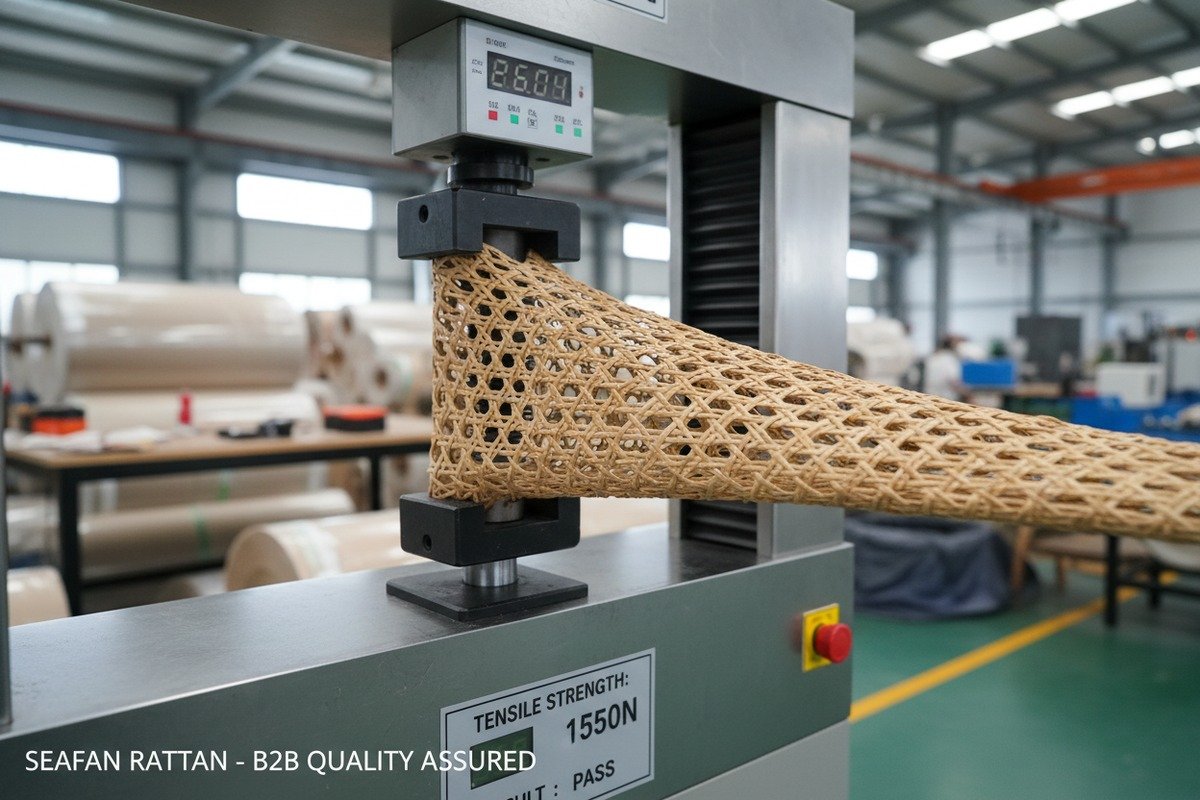
Neither natural rattan cane webbing nor paper webbing is ideal for outdoor use. Rattan is highly vulnerable to moisture, leading to warping, mold, and rot. Paper webbing lacks water resistance and degrades quickly outdoors. For outdoor furniture projects, synthetic alternatives like PE plastic rattan webbing offer the woven aesthetic with weather-proof durability.
Why Natural Rattan Fails Outdoors
Rattan cane webbing is made from plant material. Plant material absorbs water. When rattan gets wet repeatedly, it swells, softens, and eventually rots. Mold grows in the fibers. The weave loosens. UV rays from sunlight bleach the color and make the strands brittle over months.
Our team has tested rattan cane samples outdoors in Foshan's subtropical climate. Within three to four months of direct sun and rain exposure, the webbing showed visible degradation. The color faded from golden straw to dull gray. The strands became stiff and cracked when bent.
Why Paper Webbing Also Fails Outdoors
Paper webbing is even worse outdoors. Despite treatment for flexibility and tear resistance, paper is fundamentally a cellulose product 10. Water breaks down cellulose. Even high-quality paper cord will swell, weaken, and disintegrate after repeated rain exposure. UV damage accelerates the breakdown.
We have had clients ask if they can coat paper webbing with waterproof sealant. While sealant adds a temporary barrier, it changes the texture and appearance of the cord. It also cracks over time, letting moisture in. The result is a patchy, peeling surface that looks worse than no treatment at all.
Outdoor Durability Comparison
| Outdoor Factor | Natural Rattan Cane Webbing | Papiergeflecht | Synthetisches PE-Rattan |
|---|---|---|---|
| Rain Resistance | Poor; absorbs water, rots | Very Poor; cellulose breaks down | Excellent; waterproof |
| UV-Beständigkeit | Low; bleaches and becomes brittle | Low; degrades and discolors | High; UV-stabilized |
| Mold/Mildew Resistance | Moderate when dry; poor when wet | Schlecht | Ausgezeichnet |
| Temperature Tolerance | Sensitive to extremes | Sensitive to heat and moisture | Wide range tolerance |
| Aesthetic After 6 Months Outdoors | Faded, cracked, mold spots | Swollen, discolored, weakened | Looks like new |
| Empfohlene Verwendung | Nur für den Innenbereich | Nur für den Innenbereich | Innen und Außen |
The Synthetic Alternative
We produce synthetic PE rattan webbing at our partner factories in Foshan. This material mimics the look of natural rattan—including chevron wave patterns and classic radio weave designs—but it is made from durable plastic. It resists water, UV light, mold, and insects. It lasts outdoors for years with minimal maintenance.
For clients who want the natural woven look on a patio set or outdoor lounge, we always recommend synthetic. It is not a compromise. It is the correct material for the job.
Covered Outdoor Spaces: A Gray Area
Some clients use natural rattan cane webbing on covered porches or screened patios. In dry climates, this can work. The key is zero direct water contact and good airflow. If the webbing never gets rained on and the humidity stays below 60%, natural rattan can survive outdoors for a few years. But it will still age faster than it would indoors.
Paper webbing should never be used in any outdoor setting, covered or not. Humidity alone is enough to weaken the fibers over time.
How do I prevent my natural rattan cane webbing from sagging or breaking over time?
We include a care guide with every shipment of rattan cane webbing that leaves our warehouse. Still, our customer service team gets maintenance questions every week. The most common complaint is sagging. Clients install beautiful cane webbing on a chair seat, and six months later, it dips in the center like a hammock.
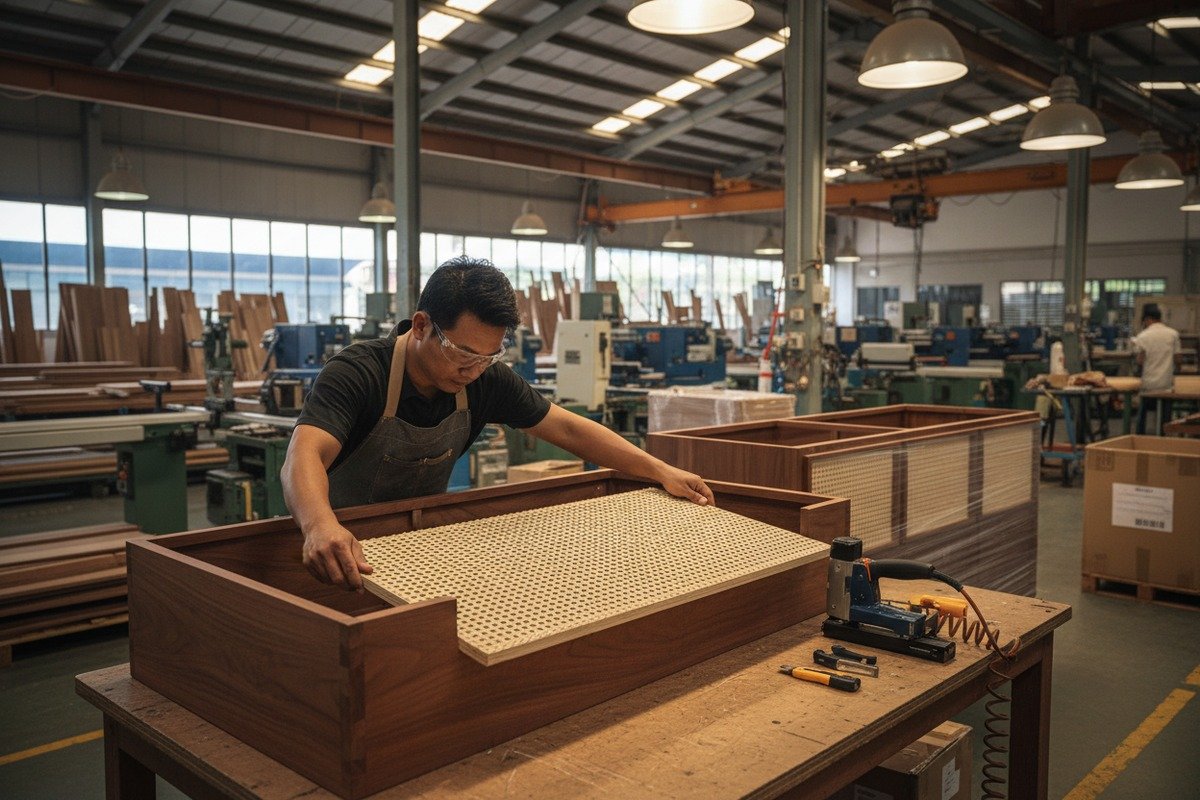
To prevent natural rattan cane webbing from sagging or breaking, always soak the cane in water for two to three hours before installation so it tightens as it dries. Keep finished furniture indoors in a dry, well-ventilated space. Avoid prolonged heavy loads on single spots, and lightly mist the underside annually to restore flexibility and tension.
The Golden Rule: Install It Wet
This is the single most important step. Natural rattan cane webbing must be soaked before installation. When you submerge the webbing in warm water for two to three hours, the fibers absorb moisture and become pliable. You can stretch the webbing tightly across the frame without cracking it. Then, as the cane dries over 24 to 48 hours, it shrinks slightly and pulls itself drum-tight.
If you skip the soaking step, you cannot pull the cane tight enough. It will start loose and only get looser over time. This is the number one cause of premature sagging that we see from clients who are new to working with rattan cane.
Step-by-Step Maintenance Guide
Here is the routine we recommend to our furniture factory clients and wholesalers:
Wöchentlich: Dust with a soft brush or vacuum with a brush attachment. Dirt and debris in the weave holes can dry out the fibers and cause cracking.
Monatlich: Wipe gently with a barely damp cloth. Do not soak or saturate the webbing after installation. Just a light wipe to remove surface grime.
Jährlich: Mist the underside of the cane webbing lightly with water using a spray bottle. Let it air dry completely. This brief moisture exposure restores some flexibility to the fibers and refreshes the tension. Do this on a dry day with good airflow.
As needed: If you notice a strand beginning to fray or crack, address it immediately. A single broken strand in natural rattan cane can propagate. The weave pattern interlocks, so one break puts extra stress on neighboring strands. Unlike paper cord, where damage stays localized, rattan breaks can cascade into a larger section failure.
Environmental Conditions for Longevity
The environment matters as much as maintenance. Here is what to control:
| Umweltfaktor | Ideal Range | Risk If Outside Range |
|---|---|---|
| Indoor Humidity | 40–60% | Below 30%: cane dries, cracks. Above 70%: mold, softening |
| Temperature | 18–28°C (65–82°F) | Extreme heat dries fibers; extreme cold makes cane brittle |
| Direct Sunlight | Avoid prolonged exposure | UV bleaches color, degrades fibers over months |
| Airflow | Good ventilation | Stagnant air with high humidity promotes mold growth |
| Water Contact | None after installation | Repeated wetting causes swelling, warping, and eventual rot |
Protecting Against Pests
Natural rattan is a wood product. In certain climates, wood-boring insects can attack untreated cane. Our Indonesian factory uses a controlled kiln-drying process that eliminates larvae and reduces moisture content to levels that discourage infestation. But once the cane is installed in a humid environment, pests can return.
If you are in a tropical or subtropical region, consider applying a light, natural insect-repellent oil to the finished piece. Neem oil works well. It does not darken the cane significantly and it deters most common wood-boring insects.
When Sagging Is Already Present
If your rattan cane seat has already sagged, you may be able to restore some tension. Flip the chair upside down. Apply a generous misting of warm water to the underside of the cane. Let it dry completely in a well-ventilated area, preferably with a fan. The cane will shrink as it dries and may pull back to a usable tension.
This is not a permanent fix. If the cane has been sagging for years, the fibers have permanently stretched. Full replacement is the only real solution at that point. But for moderate, recent sagging, the water-and-dry method works surprisingly well. We have seen furniture restorers in Spain use this technique successfully on chairs that were just starting to dip.
Paper Webbing Maintenance Is Different
For comparison, paper webbing requires almost no moisture at all. Never mist it. Never soak it. Clean stains by gently dabbing—never rubbing—with a barely damp cloth. Avoid all harsh detergents and chemical cleaners. The simplicity of paper cord maintenance is one of its biggest selling points for busy commercial environments like restaurants and hotels.
Conclusion
Choosing between paper webbing and natural rattan cane webbing depends on your specific project. Both materials have genuine strengths. Pick the one that matches your load requirements, environment, and maintenance capacity. When in doubt, reach out to a supplier who works with both materials daily.
Fußnoten
1. Explains the botanical origin and material source of rattan. ↩︎
2. Provides a general description and uses of paper webbing material. ↩︎
3. Explains the origin and basic nature of natural cane webbing. ↩︎
4. Describes PE plastic webbing as a synthetic, weather-resistant alternative. ↩︎
5. Describes Danish cord as a three-ply material, illustrating multi-ply concept. ↩︎
6. Explains how Danish Cord’s twisted fibers are suitable for weaving, implying tension retention. ↩︎
7. Describes Danish cord’s composition as twisted paper fibers. ↩︎
8. Replaced HTTP 404 with an authoritative definition of tensile strength. ↩︎
9. Defines this key engineering metric for material efficiency. ↩︎
10. Defines cellulose as a fundamental organic polymer in plants. ↩︎


 English
  Español de México
  العربية
  Deutsch
  Français
  Русский