
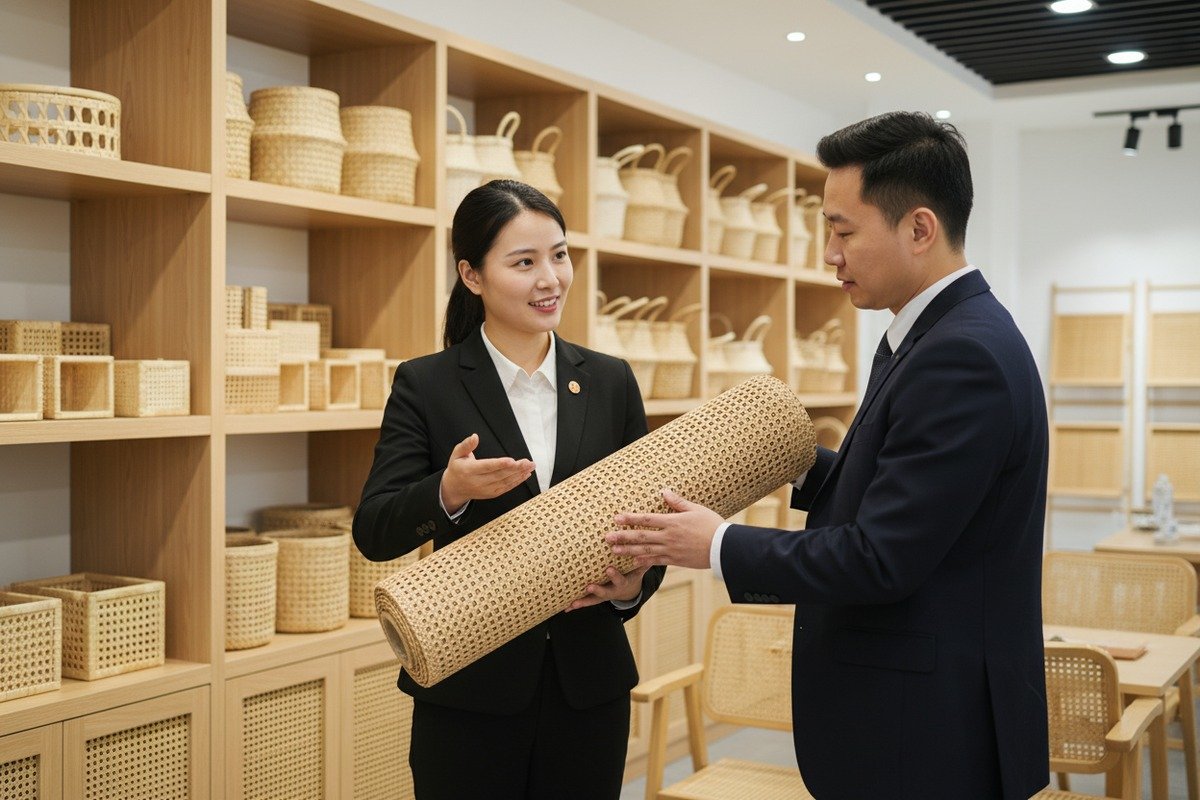
Every year, we see new buyers burned by inconsistent rattan shipments—wrong weave density, faded color, or rolls that crack within weeks of delivery.
An experienced natural rattan cane webbing supplier delivers consistent Grade A quality, competitive bulk pricing, custom sizing, and reliable logistics because they control the full production chain—from raw rattan harvesting through weaving, finishing, and export-ready packaging—eliminating the costly guesswork that comes with sourcing from unverified middlemen.
Below, we break down the four biggest questions B2B buyers ask before committing to a rattan webbing supplier. Each section draws on real production-floor experience to give you clear, actionable answers.
How do I ensure consistent Grade A quality for my natural rattan cane webbing imports?
One batch arrives golden and flexible. The next is brittle and dark. We have spent years solving this exact problem across our three factories—and it starts long before the weaving loom.
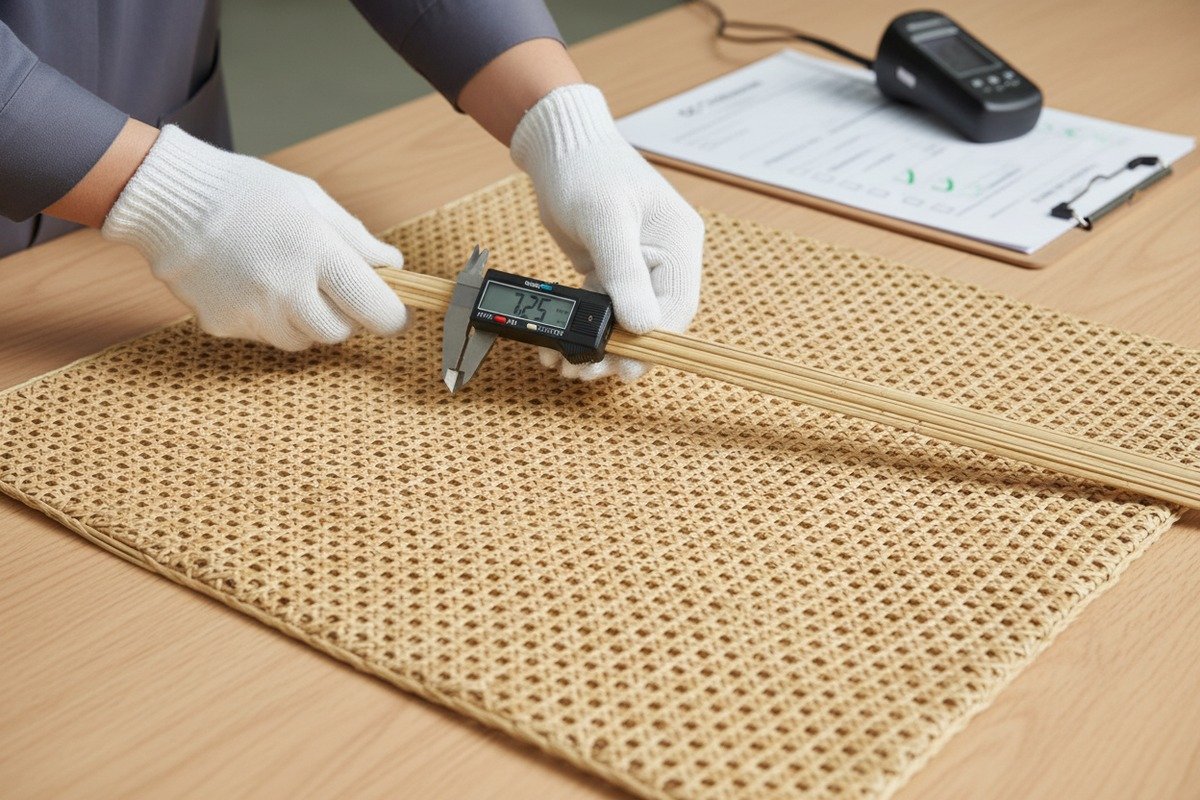
To ensure consistent Grade A quality, work with a supplier who controls raw material selection, standardizes drying and treatment processes, and performs multi-point inspections at every production stage—from peeled rattan strips to finished rolls—so every shipment matches your approved sample in color, thickness, and tensile strength.
Was macht Rattan "Grad A" aus?
Not all rattan is equal. Grade A natural rattan cane webbing must meet strict criteria before it leaves the production floor. The rattan palm species 1, its maturity at harvest, and the strip's position on the outer bark all affect the final product. In our Indonesian processing facility, we sort raw cane into grades before any weaving begins. Strips with knots, uneven thickness, or discoloration are diverted to lower-grade batches.
Here is what separates Grade A from lower grades:
| Qualitätsfaktor | Klasse A Standard | Common Lower-Grade Issue |
|---|---|---|
| Streifendicke | Uniform 0.4–0.6 mm | Varies within same roll |
| Farbkonstanz | Even golden-tan, minimal spotting | Dark patches, green streaks |
| Zugfestigkeit | Bends 180° without cracking | Snaps or splinters under light flex |
| Weave Density | Tight, uniform pattern spacing | Loose gaps, uneven cells |
| Feuchtigkeitsgehalt | 8–12% after kiln drying | Over 15%, risk of mold in transit |
Why Batch Consistency Is Hard Without Process Control
Natural rattan is an organic material 2. No two palms are identical. That is the core challenge. Without a standardized process, every production run becomes a gamble. When we first started exporting rattan webbing to European furniture makers over a decade ago, we learned that the drying stage 3 alone could ruin a perfect batch. Too fast, and the strips become brittle. Too slow, and mold develops before packaging.
Today, our quality protocol includes three checkpoints. quality control in manufacturing 4 First, raw cane inspection at the Indonesian facility. Second, mid-production checks during weaving for pattern accuracy and tension. Third, a final roll-by-roll review before shrink-wrapping. Each checkpoint follows a written standard that references the buyer's approved sample.
The Hidden Cost of Inconsistent Quality
Buyers who chase the lowest price often pay more in the long run. A furniture factory in the Netherlands once told us they lost an entire container of cabinets because the rattan webbing sagged after installation. The root cause was strips harvested too young—thin walls, low fiber density. Replacing that webbing cost more than the original material and labor combined.
For purchasing managers like Ranoo who demand specific sizing and Grade A standards, asking for a supplier's quality control documentation is non-negotiable. Request the inspection checklist. Ask for photos from each checkpoint. If the supplier cannot provide these, that silence tells you everything.
How can an experienced supplier help me lower my procurement costs for bulk rattan materials?
Cutting costs without cutting quality is the balancing act every procurement manager faces. Over the past fifteen years shipping rattan to more than a dozen countries, we have mapped exactly where the real savings hide.
An experienced supplier lowers your procurement costs by consolidating your full rattan product range into one order, optimizing container loading to reduce per-unit freight, offering volume-tiered pricing from their own facilities, and eliminating middleman markups—savings that can reach 15–25% compared to sourcing through fragmented trading companies.
The One-Stop Advantage
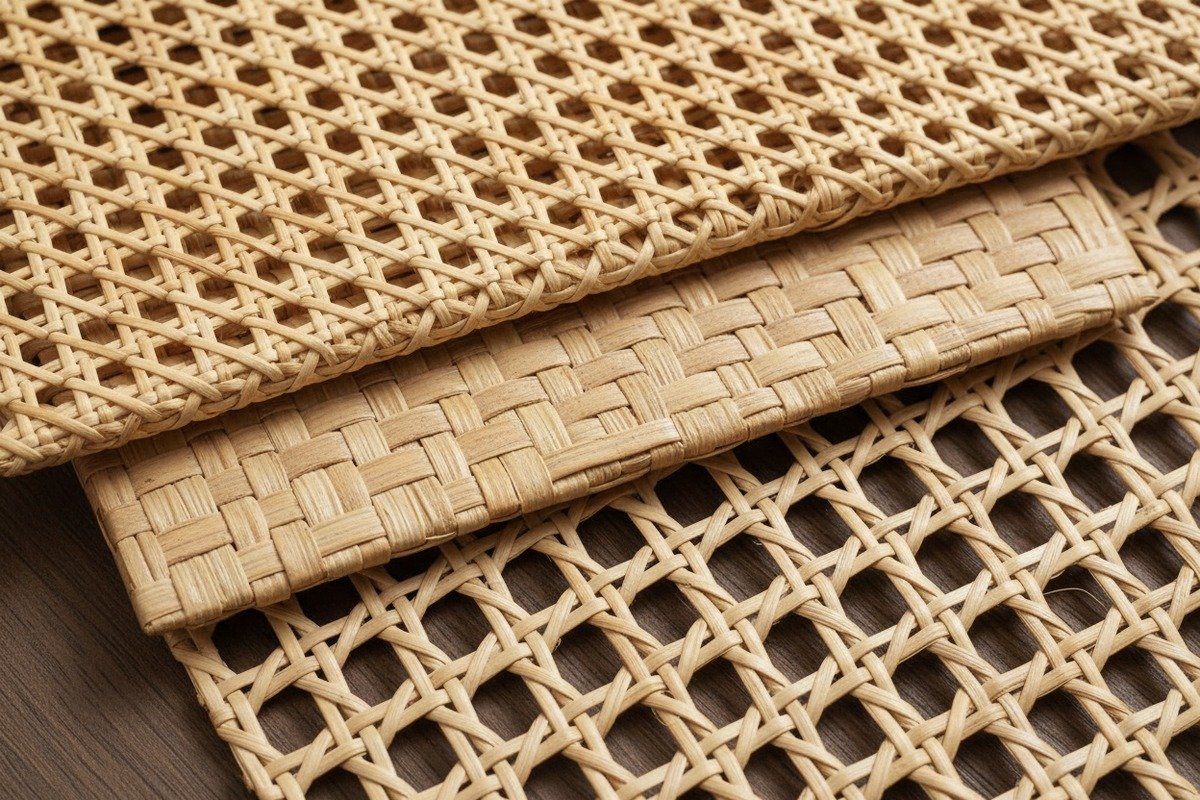
Most rattan buyers need more than one product. You might need open hexagonal cane webbing 5 for chair backs, close-woven webbing for cabinet doors, and raw rattan poles for frames. When each product comes from a different supplier, you pay separate shipping fees, handle multiple invoices, and coordinate different lead times.
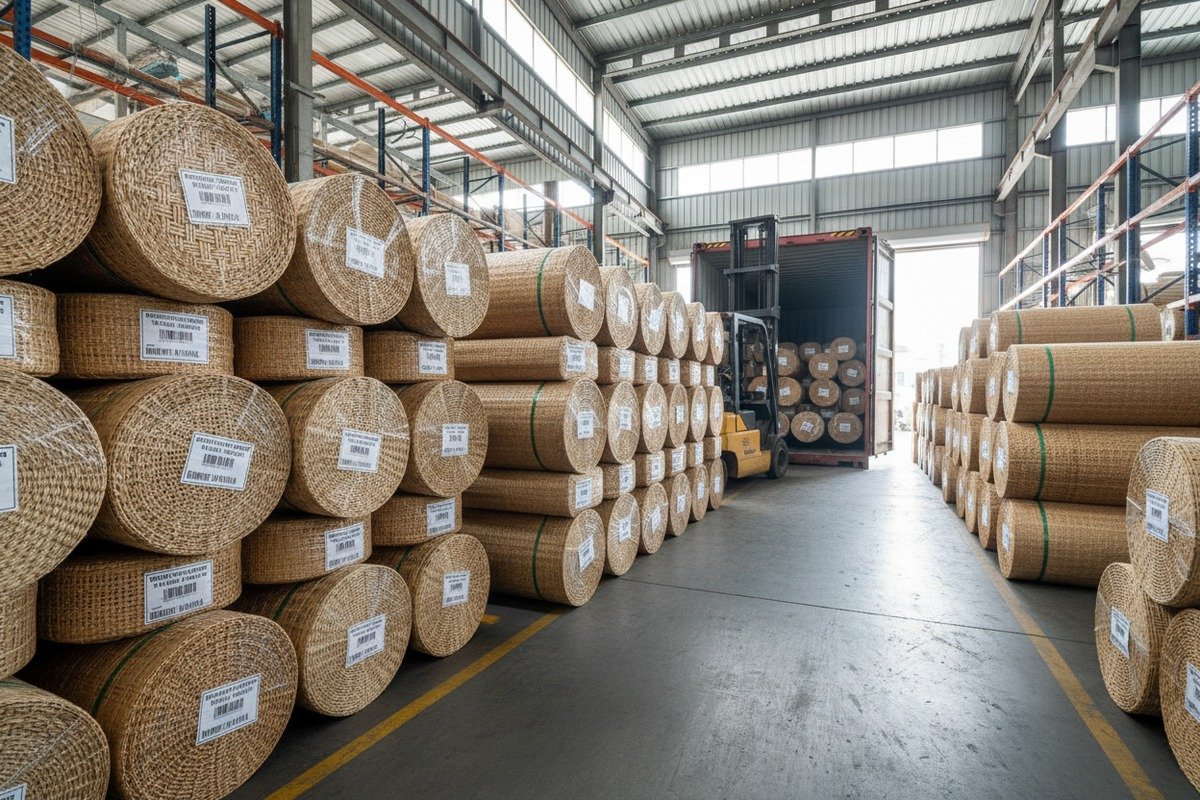
Our Foshan headquarters works with over 30 partner factories plus our own three facilities. That means one purchase order, one quality standard, one container, one customs declaration. The logistics savings alone often cover the cost difference between cheap and premium material.
Where the Real Price Differences Live
The table below shows a simplified cost breakdown comparing single-source experienced suppliers against multi-source procurement:
| Kostenkomponente | Experienced One-Stop Supplier | Multiple Fragmented Suppliers |
|---|---|---|
| Unit Material Price | Competitive (factory-direct) | Varies, often marked up |
| Shipping / Container Use | Optimized, mixed-load | Partial containers, wasted space |
| Qualitätsablehnungsrate | 1–3% | 8–15% |
| Customs Documentation | Single set | Multiple sets, higher broker fees |
| Communication Overhead | One point of contact | 3–5 contacts, time zones |
| Hidden Reorder Costs | Selten | Frequent due to inconsistency |
Volume Pricing and MOQ Strategy
We set Mindestbestellmengen 6 not to block small buyers, but to hit the production efficiency that makes low pricing possible. When our weaving looms run a 500-meter batch of one pattern, the setup cost per meter drops sharply. A 50-meter order of the same pattern costs more per meter simply because the loom changeover time stays the same.
For buyers placing regular quarterly orders, we offer annual pricing agreements. This locks in your cost and protects you from raw material price swings. Indonesian rattan prices fluctuate with harvest seasons and export regulations 7. An experienced supplier absorbs some of that volatility because they maintain buffer inventory at the processing facility.
Smart procurement managers also ask about packaging optimization. Standard rattan rolls fit specific container configurations. When rolls are cut to non-standard lengths, you waste container space. We advise buyers on the most freight-efficient roll dimensions before production begins—a small detail that saves real money at scale.
Why should I source from a supplier with a direct rattan processing facility in Indonesia?
When a client in Australia asked why our lead time was two weeks shorter than competitors, the answer was simple—we do not wait for someone else's factory schedule. Our own rattan processing facility in Indonesia gives us control that resellers simply cannot match.
Sourcing from a supplier with a direct Indonesian rattan processing facility ensures access to premium raw materials at origin, shorter lead times through in-house production control, full traceability from harvest to shipment, and the ability to customize weave patterns and strip dimensions without relying on third-party subcontractors.
Indonesia: The World's Rattan Heartland
Indonesia produces the majority of the world's kommerziellen Rattans 8. The tropical climate, rich biodiversity, and generations of harvesting expertise make Indonesian rattan the preferred choice for high-end furniture manufacturers. The rattan palms here reach full maturity, producing thicker, more resilient outer bark. This translates directly into stronger, more flexible webbing strips.
Vietnamese rattan is a viable alternative for budget-conscious projects. However, for buyers targeting the European, American, or Australian premium furniture market, Indonesian-origin material consistently wins on fiber density and finish quality.
What "Direct Facility" Really Means for Buyers
Many suppliers claim Indonesian sourcing. Few actually own or operate a facility there. The difference matters. When we process rattan in our own Indonesian plant, we control:
- Harvest timing. We select mature canes, not young growth pushed by subcontractors trying to fill quotas.
- Strip peeling standards. Our workers follow thickness gauges, not rough estimates.
- Drying protocols. We kiln-dry to target moisture levels based on the destination country's climate.
- Immediate grading. Sorting happens at origin, so only Grade A material enters the weaving stage.
A reseller buying from multiple Indonesian workshops cannot enforce these standards uniformly. They get what they get. We get what we specify.
Indonesian vs. Vietnamese Rattan at a Glance
| Attribute | Indonesisches Rattan | Vietnamesisches Rattan |
|---|---|---|
| Faserdichte | High (mature palms) | Mittel |
| Typical Market | Premium / high-end | Budget / mid-range |
| Color After Processing | Warm golden-tan | Lighter, sometimes pale |
| Flexibilität | Excellent, bends without cracking | Good, slightly less resilient |
| Preisspanne | Höher | More economical |
| Am besten geeignet für | European/US furniture, restoration | Cost-driven bulk projects |
Traceability and Sustainability
Eco-conscious buyers increasingly require proof of responsible sourcing 9. Our Indonesian facility maintains harvest records tied to specific plantation zones. This traceability supports buyers who need sustainability documentation for retail partners or government tenders. Rattan is inherently renewable—it grows rapidly compared to hardwood—but only responsible harvesting protects long-term supply. We rotate harvest zones and work with local farming communities to ensure regrowth cycles are respected.
When you source through a middleman with no facility presence, traceability becomes a paper exercise at best. Direct facility ownership turns sustainability from a marketing claim into a verifiable fact.
How can I find a reliable partner to handle my custom sizing and private-label rattan needs?
A Turkish furniture brand once asked us for a non-standard 45 cm wide roll with a diamond weave pattern in a bleached white finish, packed under their own brand label. Their previous supplier said it was impossible. We shipped the first order within four weeks.
To find a reliable custom sizing and private-label rattan partner, look for a supplier with in-house weaving capabilities, flexible loom configurations, experience producing brand-specific packaging, and a proven track record of fulfilling OEM orders across multiple markets—not just a catalog of standard products.
Why Customization Demands In-House Production
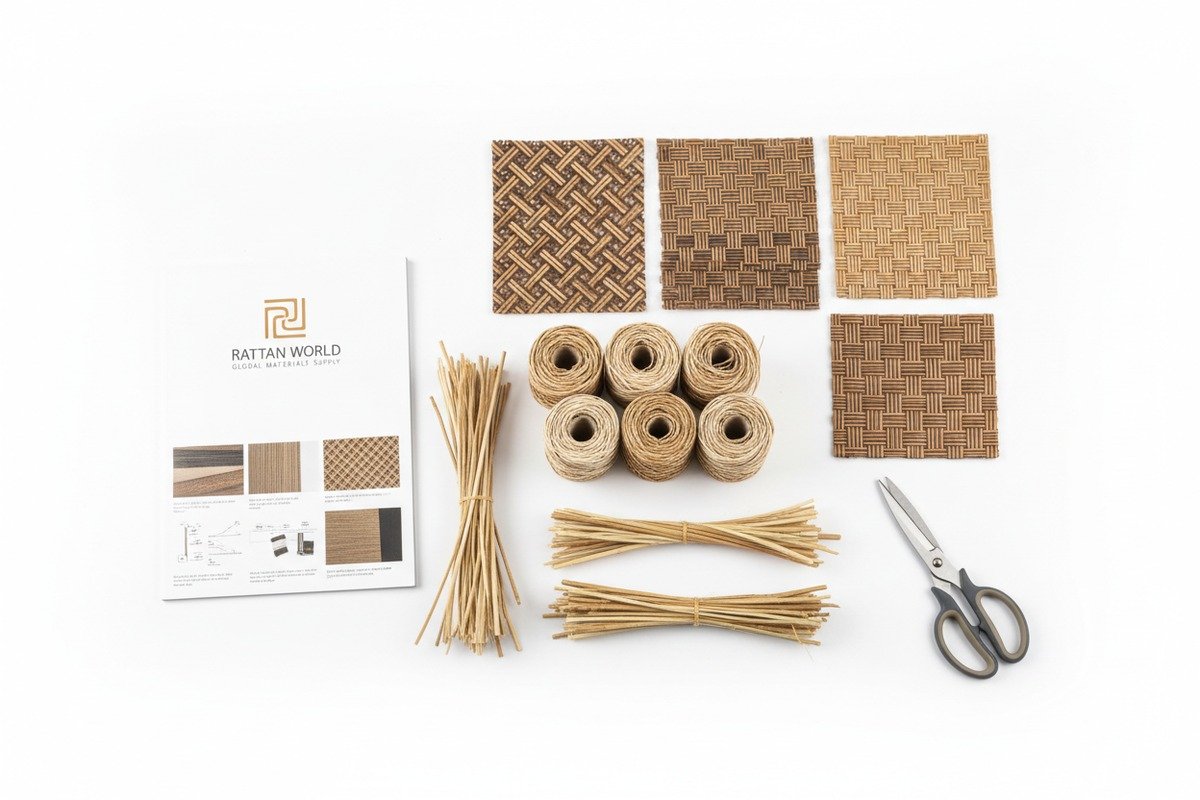
Standard rattan cane webbing comes in common widths—typically 45 cm, 60 cm, and 90 cm—with a few popular patterns like open hexagonal, close weave, and radio weave. But the modern furniture market is anything but standard. Designers want specific cell sizes. Architects need exact roll widths for built-in cabinetry. Wholesalers want private-label branding on every roll to protect their market position.
A supplier who buys finished webbing from third parties cannot modify it. They sell what exists. In contrast, our weaving looms in Foshan and our Indonesian processing line are set up for pattern and width changes. We adjust the reed spacing, the strip count, and the tension settings to match your specification sheet.
The Private-Label Process Step by Step
Private-label service goes beyond slapping a sticker on the packaging. Here is the workflow we follow:
- Specification review. You send dimensions, pattern, finish (natural, bleached, stained), and packaging design files.
- Sample production. We produce a physical sample within 7–10 days and ship it for approval.
- Bulk production. Once approved, weaving begins. Standard custom orders take 20–30 days depending on volume.
- Qualitätskontrolle. Every roll is checked against the approved sample.
- Branded packaging. Rolls are wrapped with your labels, barcodes, and care instructions.
- Shipping documentation. All export papers list your brand as the product origin for seamless import clearance.
What to Ask Before Committing
Not every supplier can deliver on custom promises. Before signing a contract, ask these questions:
- Can you produce a sample in my exact width and pattern within two weeks?
- Do you own or directly control the weaving equipment?
- What is the minimum order quantity for a custom specification?
- Can you show me private-label packaging you have done for other clients?
- How do you handle reorders—do you keep my specifications on file?
If the answers are vague or delayed, move on. A capable partner responds with specifics, timelines, and reference photos—because they have done it before.
Common Customization Requests We Fulfill
Buyers across our export markets request a wide range of customizations. The most frequent include bleached white finishes for Scandinavian-style furniture, narrow 30 cm rolls for cabinet door panels, extra-wide 120 cm sheets for headboard projects, and specialty weave patterns such as the octagonal open cane for vintage chair restoration. Each request follows the same disciplined sample-approval-production cycle to guarantee the final product matches expectations.
The growth of private-label rattan brands, especially in Europe and North America, means customization is no longer a luxury—it is a baseline expectation. Experienced suppliers treat it as standard operating procedure, not a special favor.
Conclusion
Choosing an experienced natural rattan cane webbing supplier protects your quality, your margins, and your brand reputation across every shipment and every reorder cycle.
Fußnoten
1. Wikipedia provides a comprehensive overview of rattan palm species and is an authoritative source. ↩︎
2. Understand rattan’s properties as a natural, environmentally-friendly organic material. ↩︎
3. This article details the ‘Drying and Treatment’ stage within the rattan processing lifecycle. ↩︎
4. SafetyCulture offers a comprehensive guide to quality control in manufacturing, including definitions and importance. ↩︎
5. See examples and applications of open hexagonal cane webbing patterns. ↩︎
6. Slimstock provides a clear and informative explanation of Minimum Order Quantity (MOQ), its formula, benefits, and tips. ↩︎
7. Review general information on international export regulations and trade compliance. ↩︎
8. Rattanland provides an overview of the rattan industry, including its commercial applications and global trade. ↩︎
9. Understand the principles and importance of responsible sourcing in supply chains. ↩︎

 English
  Español de México
  العربية
  Deutsch
  Français
  Русский