
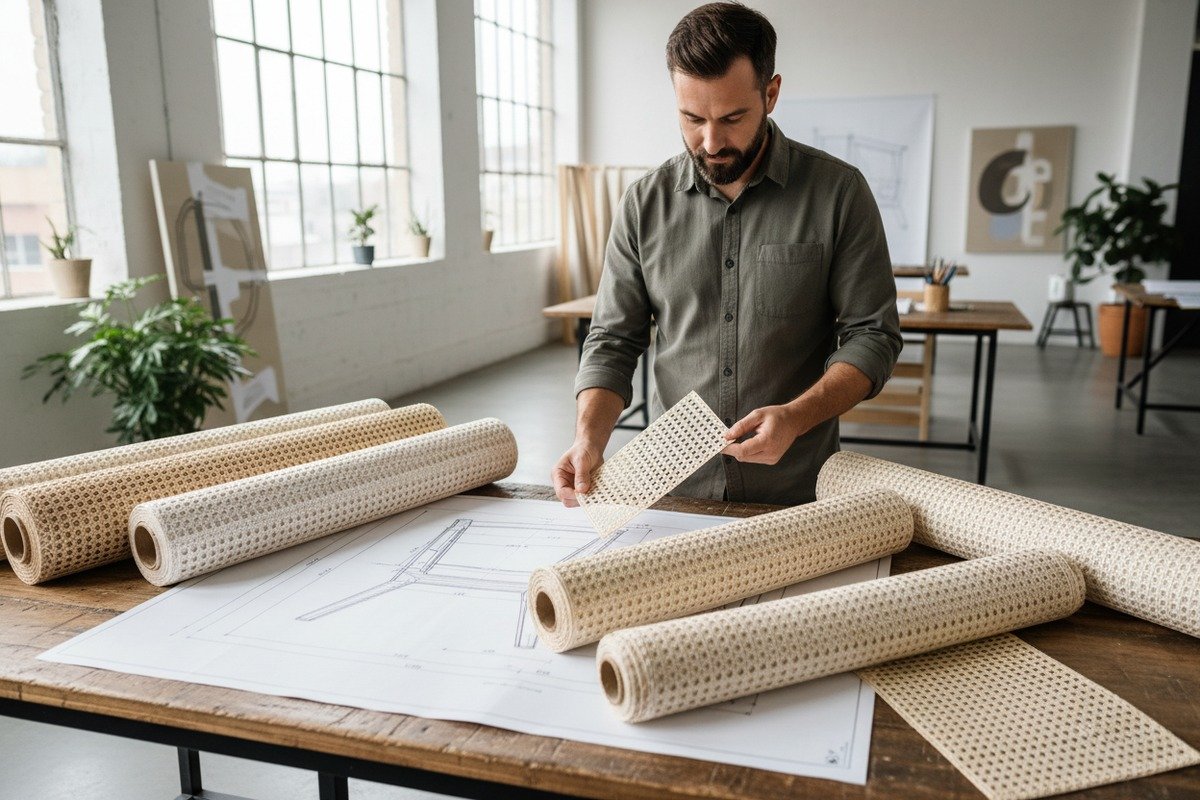
1. Chaque semaine, notre équipe commerciale à Foshan reçoit des appels d'acheteurs novices qui se sentent dépassés par la grande variété d'options—et à juste titre, car un mauvais choix peut bloquer toute une série de production de meubles. cannage rotin 1 2. Ce guide vous présente les quatre questions les plus importantes que tout acheteur novice devrait poser. Chaque section détaille les aspects pratiques afin que vous puissiez passer votre première commande en gros en toute confiance.
Lors de l'achat de cannage en rotin naturel pour la première fois, vous devez évaluer la qualité, le motif de tissage, les dimensions du rouleau, la fiabilité du fournisseur, les normes d'emballage et la structure des prix. Priorisez la commande d'échantillons en premier, confirmez que le matériau convient à une utilisation en intérieur et faites correspondre le tissage à votre design de meuble spécifique avant de vous engager dans des quantités en vrac.
3. Nous avons vu des dizaines de nouveaux acheteurs recevoir leur première expédition et avoir du mal à comprendre pourquoi un rouleau semble impeccable tandis qu'un autre est rugueux et inégal. Le problème remonte généralement à une mauvaise compréhension.
Comment choisir le bon grade de qualité de cannage en rotin naturel pour mes créations de meubles ?
4. avant de passer la commande. la qualité 25. Qu'est-ce qui définit une qualité de grade ?.
Choisissez la bonne qualité en inspectant l'uniformité des brins, la douceur de la surface, la flexibilité et la consistance de la couleur. Le rotin de qualité A présente une épaisseur uniforme, aucun nodule visible et une grande ténacité. Demandez toujours des échantillons physiques à votre fournisseur et testez leur résistance à la flexion et la densité du tressage avant de commander en gros.
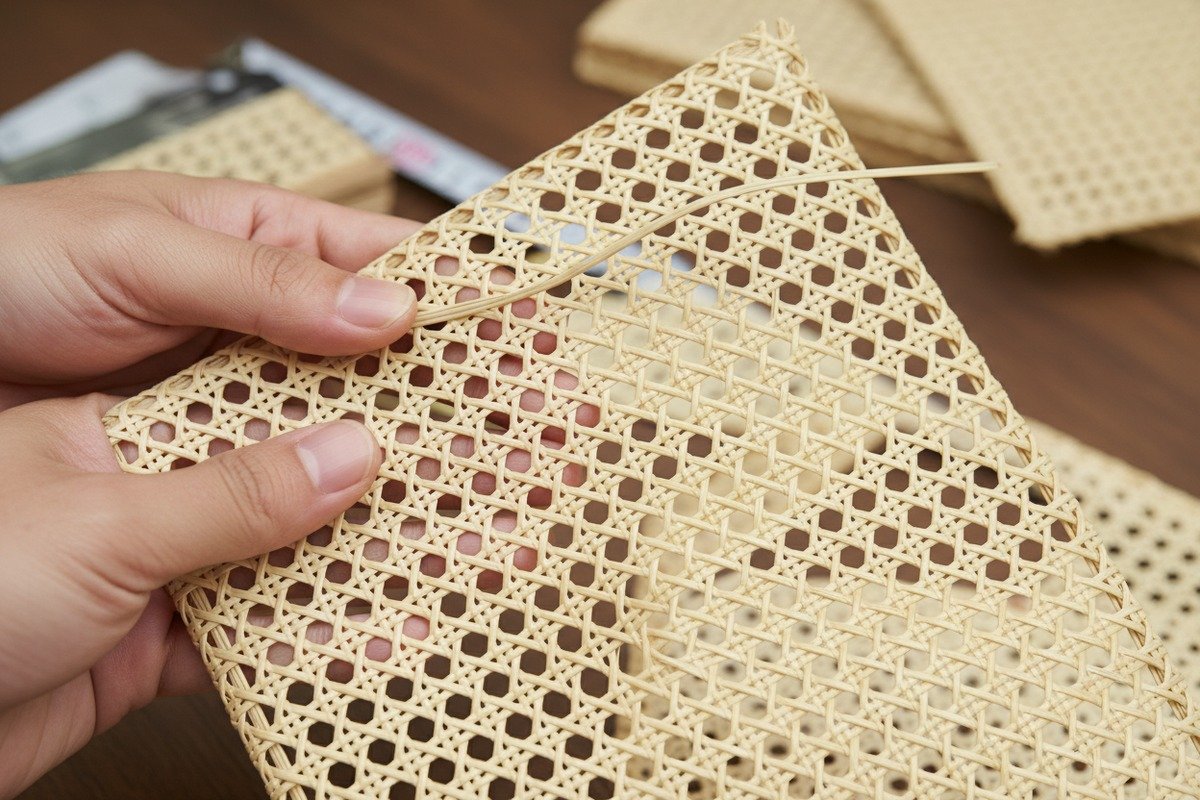
6. Le cannage en rotin naturel est fabriqué à partir de l'écorce extérieure—appelée la peau—du
7. . La peau est strippée, triée par diamètre, polie, puis tissée. Chacune de ces étapes affecte la qualité finale. Un bon grade signifie que le rotin brut a été récolté à la bonne maturité, trié avec soin et poli sans laisser de rugosités. palmier rotin 3. 8. Dans notre usine de traitement du rotin en Indonésie, nous trions les rotins bruts en plusieurs catégories de diamètres avant même le début du tissage. Cette étape de tri est essentielle. Si les diamètres des rotins sont mélangés, le cannage fini aura des largeurs de brins incohérentes. Le tissage semblera inégal et la feuille ne reposera pas à plat sur le cadre de votre meuble.
9. Voici les éléments spécifiques à rechercher lorsque vous évaluez des échantillons :.
Indicateurs clés de qualité à vérifier
10. Épaisseur uniforme.
- 11. Tenez la feuille à la lumière. Les brins doivent apparaître de la même largeur sur toute la surface. 12. Passez vos doigts le long des brins. Le matériau de grade A est poli. Vous ne devriez pas sentir de bosses ou de zones rugueuses.
- Lissage de la surface. 13. Pliez doucement un brin. Le rotin de première qualité fléchit sans se fissurer. Le matériau de faible qualité se casse facilement.
- Flexibilité. 14. Le rotin naturel varie du beige clair au beige sable. La couleur doit être uniforme sur tout le rouleau. Les taches sombres ou les zones verdâtres indiquent un mauvais séchage ou stockage.
- Cohérence des couleurs. 15. Le tissage doit être serré et uniforme. Les espaces entre les intersections signalent un travail bâclé.
- Tension du tissage. The weave should be tight and uniform. Gaps between intersections signal sloppy craftsmanship.
Tableau comparatif des grades de qualité
| Indicateur de qualité | Grade A (Premium) | Grade B (Standard) | Grade C (Économique) |
|---|---|---|---|
| Épaisseur des brins | Très uniforme | Légère variation | Variation notable |
| Finition de surface | Lisse, poli | Petits défauts de surface | Nodules visibles |
| Flexibilité | Bends without cracking | Légère rigidité | Fissures sous pression |
| Cohérence des couleurs | Ton uniforme partout | Petites taches de couleur | Irrégulier, marbré |
| Usage typique | Meubles haut de gamme, exportation | Production moyenne | Articles économiques, pratique |
Pourquoi les matières premières vietnamiennes et indonésiennes se démarquent
D'après notre expérience d'exportation dans plus d'une douzaine de pays, les acheteurs qui spécifient du rotin d'origine vietnamienne ou indonésienne signalent systématiquement une satisfaction plus élevée. Le climat tropical de ces régions produit un rotin d'une ténacité naturellement élevée et d'un grain fin. Notre propre usine indonésienne nous permet de contrôler la qualité de la récolte au rouleau fini, ce qui est difficile à garantir lorsque l'on s'approvisionne auprès de plusieurs intermédiaires.
La règle de l'échantillon d'abord
Ne sautez jamais les échantillons. Même si un fournisseur a d'excellentes critiques, les matériaux naturels varient d'un lot à l'autre. Commandez un paquet d'échantillons ; la plupart des fournisseurs réputés proposent de petites coupes à bas prix. Testez l'échantillon sur votre cadre de meuble réel. Vérifiez son aspect après trempage et séchage. Ce petit investissement vous évite des erreurs coûteuses sur une commande de conteneur complet.
Quelles tailles de rouleaux et quels motifs de tissage spécifiques dois-je demander pour ma première commande en gros ?
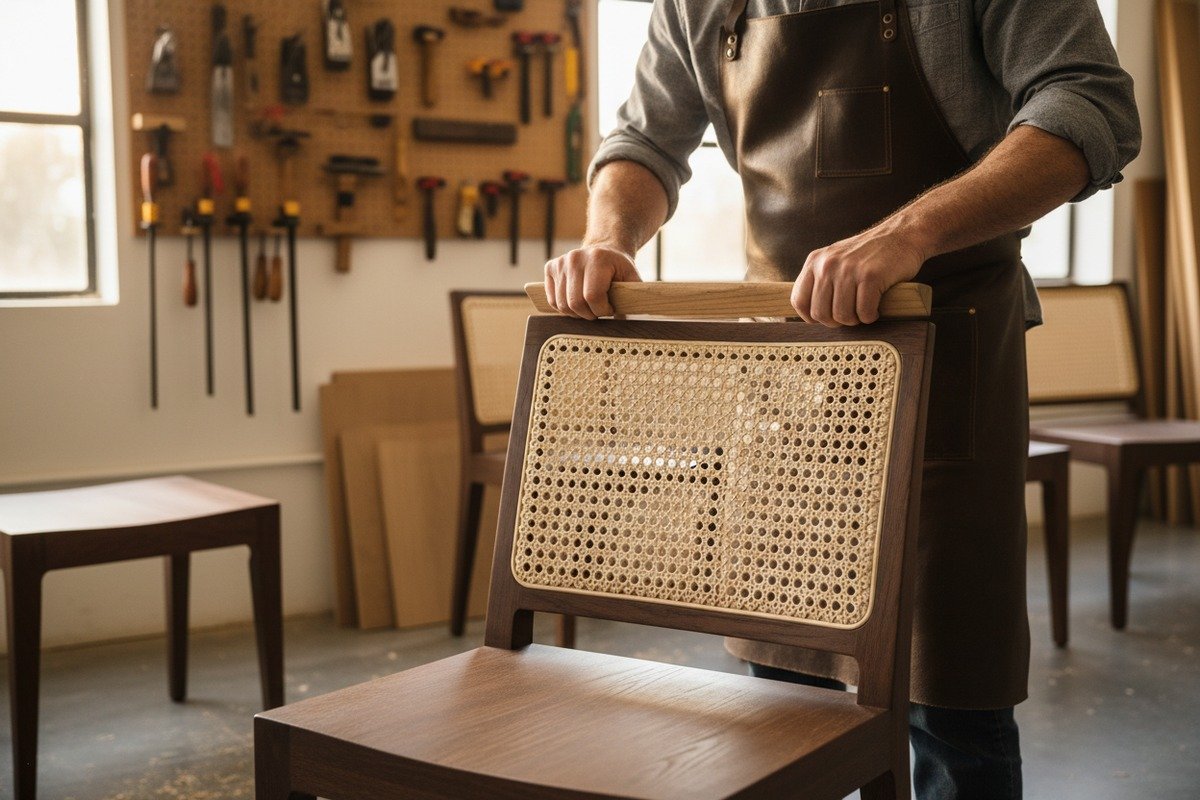
Lorsque notre équipe s'entretient avec un nouveau client, la première question que nous posons toujours est : qu'est-ce que vous construisez exactement ? Un siège de chaise de salle à manger nécessite un tissage et une largeur différents de ceux d'un panneau de porte d'armoire. Se tromper sur ce point signifie du gaspillage de matériel et des ouvriers frustrés sur votre chaîne de production.
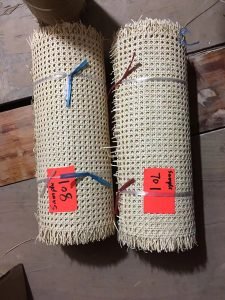
Pour votre première commande en gros, demandez des largeurs de rouleau standard de 24 pouces (60 cm) ou 27 pouces (70 cm) en longueurs de 50 pieds. Commencez avec le tissage octogonal fin de 1/2 pouce, le motif le plus polyvalent et le plus populaire au monde. Adaptez l'ouverture du tissage à votre style de mobilier : hexagonal ouvert pour les designs classiques, tissage serré pour les pièces modernes.
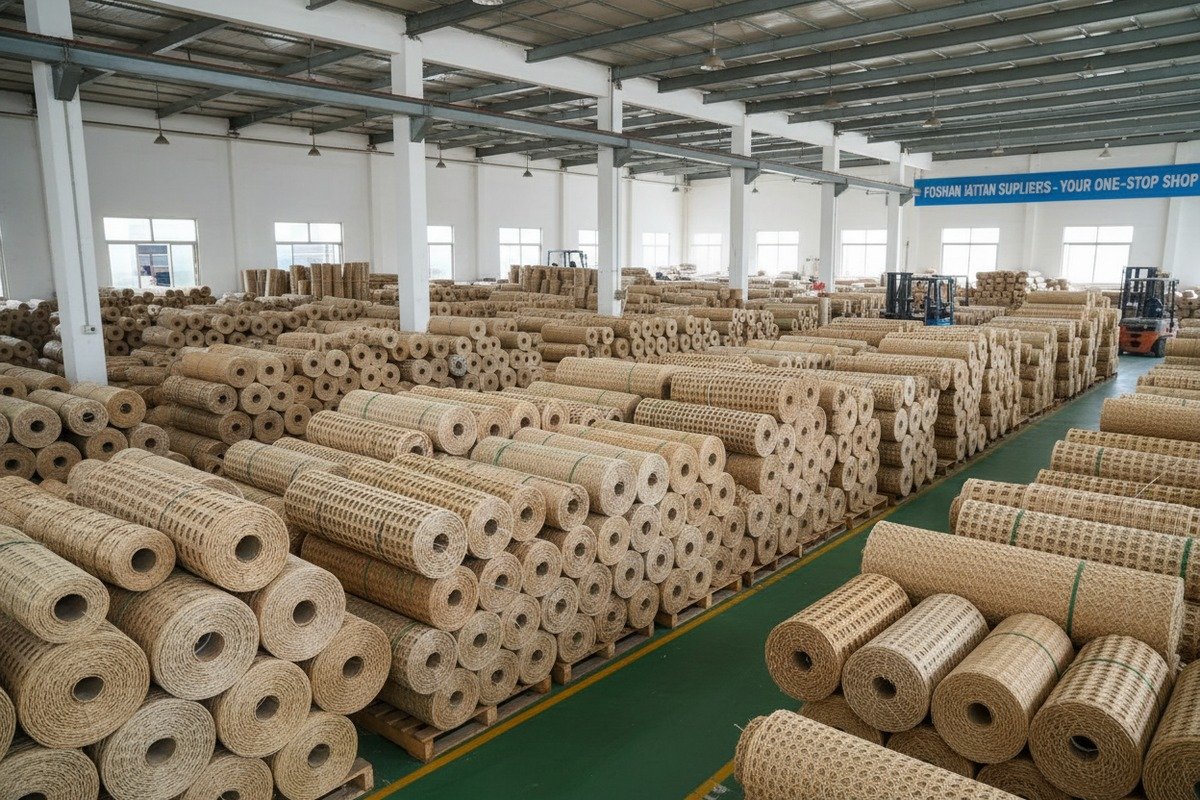
Comprendre les motifs de tissage courants
Le cannage en rotin naturel est disponible en plusieurs motifs de tissage standard. Chacun a un aspect distinct et des propriétés fonctionnelles différentes. Voici ce que vous devez savoir sur les options les plus populaires :
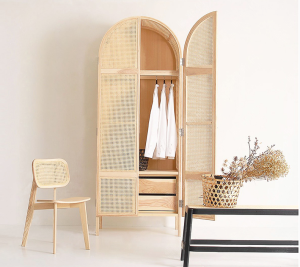
- Fin 1/2" Octogonal (Cane Ouverte). C'est la référence. Il présente un design ouvert classique avec de petites formes octogonales. Il convient aux sièges de chaises, aux portes d'armoires, aux têtes de lit et aux séparateurs de pièces. Il permet la circulation de l'air et a un aspect intemporel.
- Hexagonal. Légèrement plus ouvert qu'octogonal. Il crée un motif en nid d'abeille. Populaire pour les designs bohèmes et modernes du milieu du siècle. Il est plus léger et plus respirant.
- Radio Carré. Un motif en grille avec des ouvertures carrées. Les lignes épurées conviennent aux meubles contemporains. Moins courant mais en demande croissante.
- Tissage Serré (Tissage Panier). Pas d'espaces entre les brins. Crée une surface solide. Idéal pour les pièces modernes et minimalistes où vous souhaitez de la texture sans transparence.
- Tissage Diamant. Un motif décoratif avec des motifs en forme de losange. Souvent utilisé comme panneaux d'accentuation plutôt que comme remplacement complet de siège.
Guide de sélection des motifs de tissage
| Motif de tissage | Niveau d'ouverture | Idéal pour | Association de style | Rang de popularité |
|---|---|---|---|---|
| Fin 1/2" Octogonal | Moyennement ouvert | Chaises, armoires, têtes de lit | Classique, polyvalent | #1 mondialement |
| Hexagonal 4 | Ouvert | Paravents, meubles bohèmes | Bohème, milieu du siècle | #2 |
| Radio carrée 5 | Moyennement ouvert | Étagères, panneaux modernes | Contemporain | #3 |
| Serré 6 | Fermé | Façades de meubles, panneaux de tiroirs | Moderne, minimaliste | #4 |
| Tissage diamant 7 | Décoratif | Panneaux d'accent, décoration murale | Artisanal, rustique | #5 |
Choisir la bonne taille de rouleau
Les rouleaux standard sont disponibles dans les dimensions courantes suivantes :
- Largeur : 19 pouces (48 cm), 24 pouces (60 cm) ou 27 pouces (70 cm)
- Longueur : Généralement 50 pieds (15 mètres) par rouleau
Pour votre première commande, nous vous recommandons généralement de commencer avec des rouleaux de 24 pouces. Cette largeur convient à la plupart des sièges de chaise standard et aux petites portes d'armoire sans découpes excessives. Si vous fabriquez des pièces plus grandes comme des têtes de lit ou des séparateurs de pièce, optez pour des rouleaux de 27 pouces.
Mesurez toujours précisément l'ouverture de votre cadre. Ajoutez ensuite 2 à 4 pouces sur tous les côtés. Cette marge supplémentaire vous laisse de la place pour l'agrafe, la colle ou l'insertion dans une rainure avec une feuillure. Couper trop près de la taille est l'une des erreurs les plus courantes commises par les acheteurs novices.
Combien de rouleaux commander au début ?
Si vous testez un nouveau fournisseur ou un nouveau motif, commandez 3 à 5 rouleaux. Cela vous donne suffisamment de matériel pour exécuter un petit lot de production, identifier les problèmes et confirmer que la sangle fonctionne avec votre processus. Une fois satisfait, passez à une commande de conteneur complet pour le meilleur prix unitaire.
Nous aidons souvent les clients pour la première fois à calculer les besoins en matériaux en fonction des dimensions de leurs meubles. Une formule simple : mesurez l'ouverture du cadre en pieds carrés, ajoutez 15 % pour les déchets et la coupe, puis multipliez par votre quantité de production. Cela vous indique le métrage carré total, et à partir de là, le nombre de rouleaux.
Comment puis-je m'assurer que mon fournisseur maintient une qualité constante et un emballage durable pour mon envoi ?
L'une des plus grandes frustrations que nous entendons de la part de nouveaux clients est la suivante : l'échantillon était parfait, mais lorsque la commande complète est arrivée, la qualité a baissé et plusieurs rouleaux ont été endommagés pendant le transport. Cela arrive plus souvent qu'il ne le devrait, et c'est presque toujours évitable.
Assurez une qualité constante en établissant des spécifications claires par écrit, en demandant des photos avant expédition et en exigeant des contrôles de qualité par des tiers pour les grosses commandes. Pour l'emballage, insistez sur un emballage résistant à l'humidité, des mandrins en carton rigide et des cartons extérieurs ou des caisses en bois solides pour éviter l'écrasement et les dommages causés par l'eau pendant le transport international.
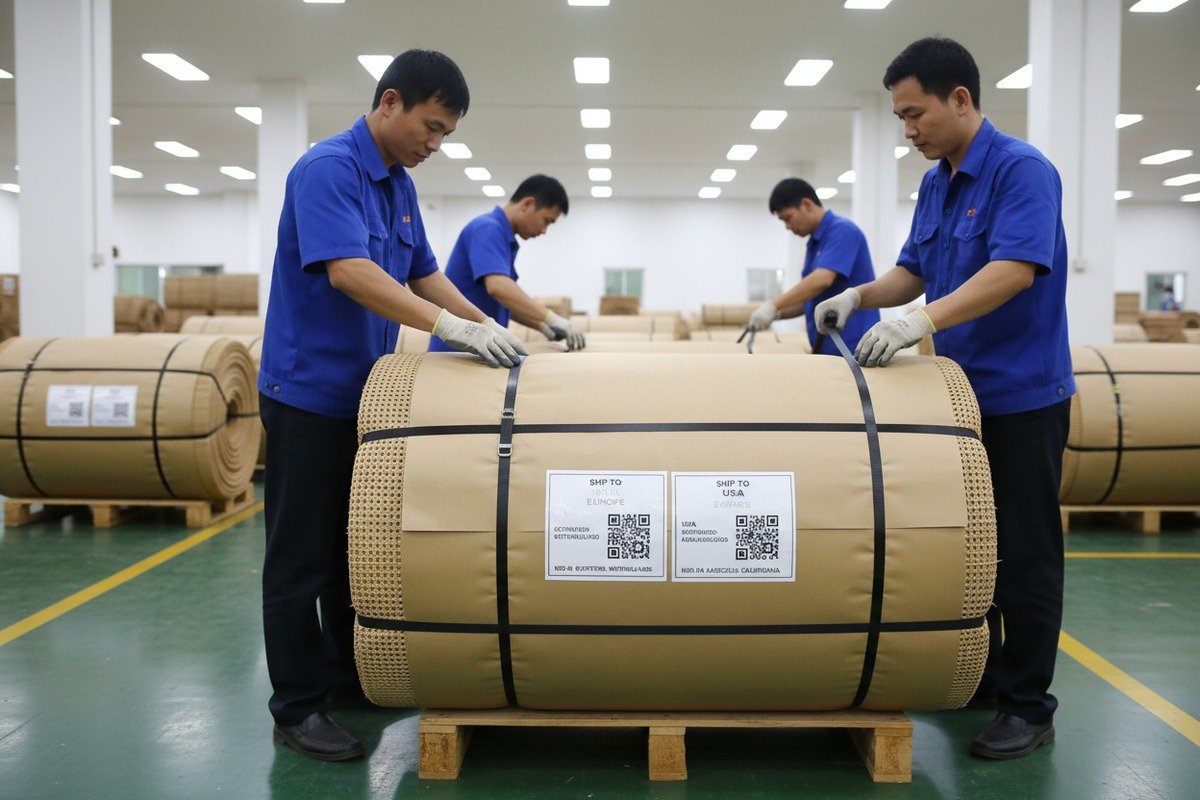
Définir des normes de qualité écrites
Avant de passer une commande en gros, mettez vos exigences de qualité par écrit. Ce n'est pas facultatif, c'est essentiel. Votre document de spécifications doit inclure :
- Nom exact du motif de tissage et largeur des brins
- Gamme de couleurs acceptable (fournir un échantillon ou une référence photo)
- Norme de flexibilité minimale (par exemple, "les brins doivent se plier à 90 degrés sans se fissurer")
- Tolérance maximale de défauts (par exemple, "pas plus de 2 imperfections mineures par mètre linéaire")
- Dimensions du rouleau avec variance acceptable (par exemple, "largeur de 24 pouces ±0,5 pouce")
Dans nos usines, nous utilisons des fiches de spécifications écrites pour chaque commande. Lorsque les deux parties s'accordent sur des normes mesurables, les litiges diminuent considérablement. Des termes vagues comme "bonne qualité" signifient différentes choses pour différentes personnes. Soyez précis.
Processus d'inspection avant expédition
Demandez à votre fournisseur de vous envoyer des photos et des vidéos d'inspection avant que les marchandises ne quittent l'usine. Un fournisseur fiable vous montrera :
- Gros plans du motif de tissage
- Photos de rouleaux entiers montrant la cohérence des couleurs
- Photos de mesures avec une règle ou un mètre ruban
- Photos de l'emballage montrant comment les rouleaux sont emballés et mis en boîte
Pour les commandes d'une valeur supérieure à un certain montant, disons 5 000 € ou plus, envisagez d'engager une société d'inspection tierce. Des services tels que SGS, Bureau Veritas, ou des sociétés d'inspection locales en Chine et en Indonésie peuvent visiter l'usine, vérifier un échantillon aléatoire de rouleaux par rapport à vos spécifications et émettre un rapport de réussite/échec avant l'expédition.
Emballage qui protège votre investissement
Le rotin naturel est sensible à l'humidité. Si les rouleaux sont mouillés pendant transport maritime 9, le matériau peut développer de la moisissure, se déformer ou se décolorer. Un emballage approprié est votre police d'assurance.
Voici ce qu'il faut exiger :
- Emballage intérieur : Chaque rouleau doit être enveloppé dans un film plastique résistant à l'humidité ou dans des sacs en polyéthylène scellés.
- Noyau en carton : Les rouleaux doivent être enroulés autour d'un tube rigide en carton ou en plastique pour éviter qu'ils ne soient écrasés.
- Carton extérieur : Les rouleaux doivent être emballés dans des cartons ondulés à double paroi.
- Palette ou caisse : Pour les chargements complets de conteneurs, les cartons doivent être placés sur des palettes en bois et filmés. Pour les chargements partiels de conteneurs, les caisses en bois offrent une meilleure protection.
- Sachets de gel de silice : Inclure des sachets dessiccants à l'intérieur de l'emballage scellé pour absorber l'humidité résiduelle. Des sachets de gel de silice 10
Tableau de contrôle de l'emballage
| Élément d'emballage | Objectif | Requis pour |
|---|---|---|
| Film plastique résistant à l'humidité | Empêche la moisissure et les dégâts des eaux | Toutes les expéditions |
| Noyau en carton rigide | Maintient la forme du rouleau | Tous les rouleaux |
| Carton ondulé double paroi | Protège contre les chocs | Toutes les expéditions |
| Palette en bois + film étirable | Stabilise les cartons dans le conteneur | FCL (conteneur complet) |
| Caisse en bois | Protection maximale | LCL (moins d'un conteneur) |
| Dessiccant de gel de silice | Absorbe l'humidité à l'intérieur de l'emballage | Expéditions maritimes |
Construire une relation fournisseur à long terme
La cohérence vient des relations, pas seulement des contrats. Après votre première commande réussie, maintenez une communication régulière avec votre fournisseur. Partagez vos commentaires, positifs comme négatifs. Un bon fournisseur s'adapte et s'améliore. Un mauvais invente des excuses.
Nous encourageons nos clients à visiter nos installations lorsque cela est possible. Voir l'atelier de production, rencontrer l'équipe de contrôle qualité et comprendre le flux de travail renforce la confiance des deux côtés. Si une visite en personne n'est pas réalisable, des appels vidéo réguliers pendant la production offrent une transparence similaire.
De plus, renseignez-vous auprès de votre fournisseur sur l'origine de ses matières premières. Contrôle-t-il son propre approvisionnement en rotin, ou achète-t-il auprès de courtiers ? Les fournisseurs qui possèdent ou gèrent directement leur traitement du rotin, comme nous le faisons avec notre installation indonésienne, peuvent offrir une qualité plus constante car ils contrôlent toute la chaîne, de la récolte au produit fini.
Comment puis-je concilier des prix compétitifs avec des normes de matériaux haut de gamme pour mon entreprise ?
Nos clients nous disent souvent que leur plus grand casse-tête n'est pas de trouver du rotin, mais de trouver du rotin qui répond à leurs normes de qualité sans dépasser leur budget. La tension entre le prix et la qualité est réelle, surtout lorsque vous êtes en concurrence avec d'autres revendeurs ou fabricants de meubles sur votre marché.
Équilibrez des prix compétitifs avec des normes haut de gamme en commandant en gros pour bénéficier de remises sur volume, en choisissant le bon niveau de qualité pour chaque catégorie de produits, en comparant les coûts de revient (pas seulement les prix unitaires) et en établissant des relations directes avec les fabricants qui contrôlent leur propre chaîne d'approvisionnement. Évitez les offres les moins chères, elles entraînent souvent des coûts cachés en défauts et remplacements.
Pourquoi le prix le plus bas est rarement la meilleure affaire
Il est tentant d'opter pour le devis le plus bas. Mais dans le rotin naturel, un prix plancher signifie presque toujours que des compromis ont été faits. Peut-être que le cannage n'a pas été correctement trié. Peut-être que l'étape de polissage a été sautée. Peut-être que le tressage est lâche. Vous vous retrouvez avec des rouleaux qui semblent acceptables sur les photos mais qui se désagrègent en production.
Nous avons eu des clients qui sont venus nous voir après une mauvaise expérience avec un fournisseur économique. Ils ont acheté 200 rouleaux à bas prix, mais 30% présentaient des défauts : tressage lâche, rugosités ou différences de couleur. Ils ont dû jeter ces rouleaux et en recommander. Le coût total a fini par être plus élevé que s'ils avaient acheté du matériel de qualité A dès le départ.
Comprendre votre structure de coûts
Votre coût réel n'est pas seulement le prix au mètre carré. C'est le coût débarqué — ce que vous payez réellement une fois que les marchandises sont sur votre chaîne de production. Cela comprend :
- Prix unitaire par rouleau
- Expédition (fret maritime, fret aérien ou courrier)
- Droits de douane et taxes d'importation
- Frais d'inspection (le cas échéant)
- Déchets dus aux défauts ou à la coupe
- Coûts de remplacement des rouleaux rejetés
Lorsque vous comparez deux fournisseurs, calculez le coût débarqué complet pour chacun. Un fournisseur avec un prix unitaire légèrement plus élevé mais une meilleure qualité et un meilleur emballage peut vous faire économiser de l'argent globalement car vous gaspillez moins de rouleaux et passez moins de temps au tri de la qualité.
Stratégie de qualité par niveaux
Tous les produits de votre catalogue n'ont pas besoin de rotin de qualité A. Une approche intelligente consiste à faire correspondre les niveaux de qualité aux niveaux de produits :
- Ligne de meubles haut de gamme : Utilisez la qualité A pour une apparence impeccable et une durabilité maximale.
- Produits de milieu de gamme : La qualité B convient bien. Les imperfections mineures sont acceptables et invisibles une fois installées.
- Articles économiques ou d'entraînement : La qualité C convient pour le prototypage, les échantillons ou les lignes de produits à faible coût.
Cette approche à plusieurs niveaux vous permet de proposer des produits à différents prix tout en maintenant vos coûts de matériaux globaux compétitifs.
Commande en gros et remises sur volume
La façon la plus efficace de réduire votre coût par unité est de commander en plus grandes quantités. La plupart des fournisseurs, y compris nous, proposent des prix échelonnés en fonction du volume de commande. Voici un exemple typique :
| Taille de la commande | Prix approximatif par pied carré | Économies par rapport à une petite commande |
|---|---|---|
| 1 à 10 rouleaux (échantillon/test) | $1,20 $ – $1,50 $ | Ligne de base |
| 11 à 50 rouleaux (petite commande en gros) | 0,90 $ – 1,10 $ | Économies de 20 à 30 % |
| 51 à 200 rouleaux (commande en gros standard) | $0,70 $ – $0,90 $ | Économies de 35 à 45 % |
| 200+ rouleaux (chargement de conteneur) | $0,50 $ – $0,70 $ | Économies de 50 à 60 % |
Ces chiffres varient en fonction du motif de tissage, de la taille du rouleau et de la source. Mais le principe reste le même : plus les commandes sont importantes, meilleurs sont les prix. Si votre trésorerie ne permet pas un conteneur complet, envisagez de vous associer à un autre acheteur ou de programmer des commandes trimestrielles.
Fabricant direct vs. société commerciale
Acheter directement auprès d'un fabricant — plutôt que par l'intermédiaire d'une société commerciale ou d'une plateforme de vente au détail — vous offre deux avantages. Premièrement, vous évitez la majoration de l'intermédiaire, qui ajoute généralement 15 à 30 % à votre coût. Deuxièmement, vous bénéficiez d'un accès direct à l'équipe de production, ce qui signifie une communication plus rapide, une personnalisation plus facile et un meilleur contrôle de la qualité.
Chez Seafan Rattan, nous exploitons nos propres usines et installations de traitement. Lorsqu'un client a besoin d'une largeur personnalisée, d'un traitement de couleur spécifique ou d'un emballage ajusté, notre équipe de production met en œuvre le changement directement. Il n'y a pas de jeu de téléphone par l'intermédiaire d'un courtier.
Conseils de négociation pour les acheteurs novices
- Commencez par une commande d'essai. Montrez que vous êtes sérieux au sujet d'un partenariat à long terme, pas seulement d'un achat unique. Les fournisseurs investissent plus d'efforts dans les relations.
- Renseignez-vous sur la flexibilité des MOQ. Les quantités minimales de commande sont souvent négociables, surtout si vous vous engagez à passer des commandes répétées.
- Demandez une liste de prix pour plusieurs qualités. Comparez les prix des grades A, B et C côte à côte.
- Tenez compte des conditions de paiement. Certains fournisseurs offrent de meilleurs prix pour un paiement anticipé. D'autres offrent des conditions de crédit pour les clients fidèles.
- Regroupez les produits. Si vous avez besoin de plusieurs motifs de tissage ou de produits en rotin, les combiner en une seule commande peut permettre d'obtenir de meilleurs prix dans l'ensemble.
Conclusion
Acheter du cannage en rotin naturel pour la première fois ne doit pas être stressant. Concentrez-vous sur les grades de qualité, la bonne taille, la fiabilité du fournisseur et des prix intelligents, et votre première commande posera une base solide pour un succès à long terme.
Notes de bas de page
1. Explique ce qu'est le rotin et ses utilisations. ↩︎
2. Définit les grades de qualité du rotin et leur importance. ↩︎
3. Fournit des informations sur la plante source du rotin. ↩︎
4. Détaille un motif de tissage spécifique du rotin. ↩︎
5. Explique un motif de tissage du rotin distinct en forme de grille. ↩︎
6. Décrit un motif de tissage du rotin sans espaces. ↩︎
7. Illustre un motif de tissage décoratif du rotin. ↩︎
8. Décrit un motif de tissage du rotin populaire et polyvalent. ↩︎
9. Explique la méthode de transport des marchandises par voie maritime. ↩︎
10. Explique la fonction des dessicants dans l'emballage. ↩︎
 English
  Español de México
  العربية
  Deutsch
  Français
  Русский