
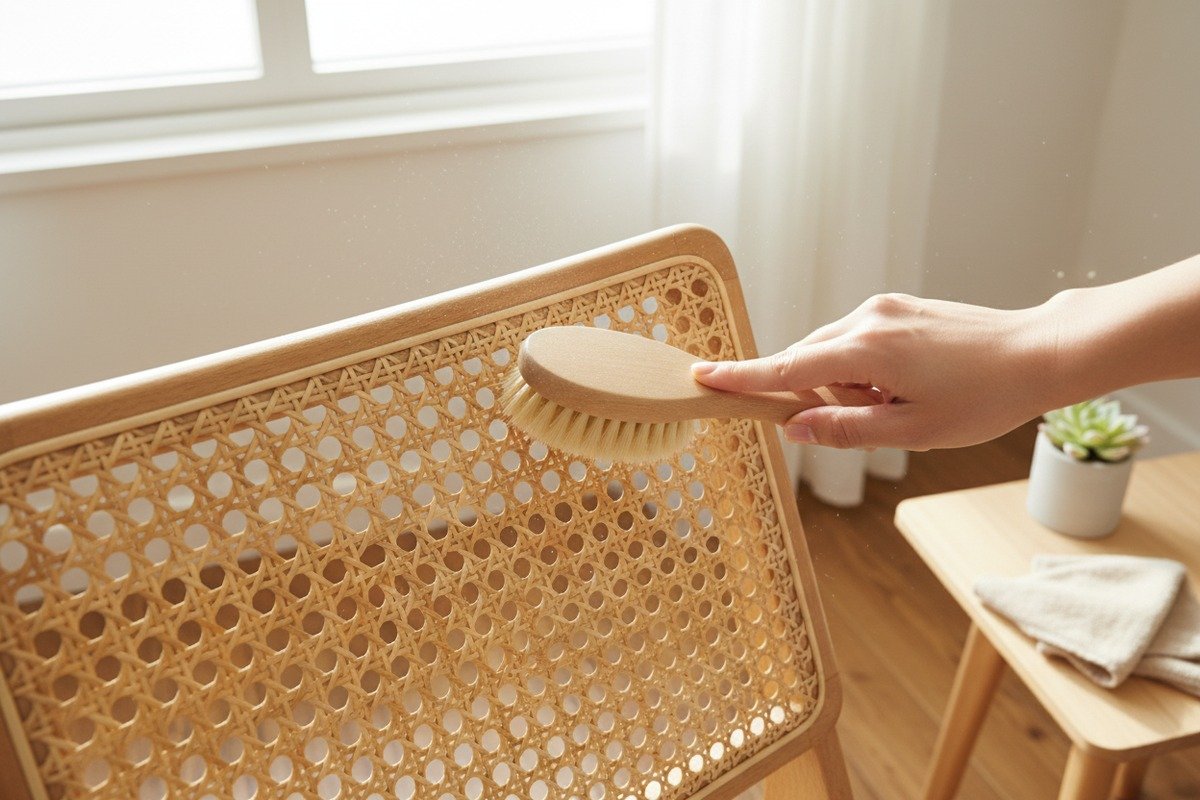
La poussière s'accumule rapidement dans le rotin tressé, et une fois qu'elle s'incruste en profondeur, elle attire l'humidité, la moisissure et une décoloration permanente qu'aucun frottement ne peut corriger.
Pour nettoyer le cannage en rotin quotidiennement, utilisez une brosse à poils doux, un chiffon microfibre sec ou un aspirateur muni d'une brosse pour enlever délicatement la poussière du tissage. Évitez l'eau lors des routines quotidiennes. Réservez le nettoyage humide pour les sessions hebdomadaires ou mensuelles, et laissez toujours sécher complètement à l'air pour éviter d'endommager les fibres.
Ayant expédié des sangles en rotin à des usines de meubles aux Pays-Bas, en Australie, en Thaïlande et aux États-Unis pendant des années, notre équipe chez Seafan Rattan a vu d'innombrables cas où de magnifiques panneaux de rotin se sont détériorés simplement par manque de soins quotidiens. Ce guide vous propose une routine pratique et sans tracas qui gardera votre rotin frais chaque jour. Commençons par les bons outils.
Quels outils devrais-je utiliser pour dépoussiérer quotidiennement mon cannage en rotin ?
Lorsque nous avons commencé à conseiller nos clients en gros sur l'entretien, la question numéro un était toujours de savoir quels outils fonctionnaient réellement sans rayer ou accrocher le tissage délicat.
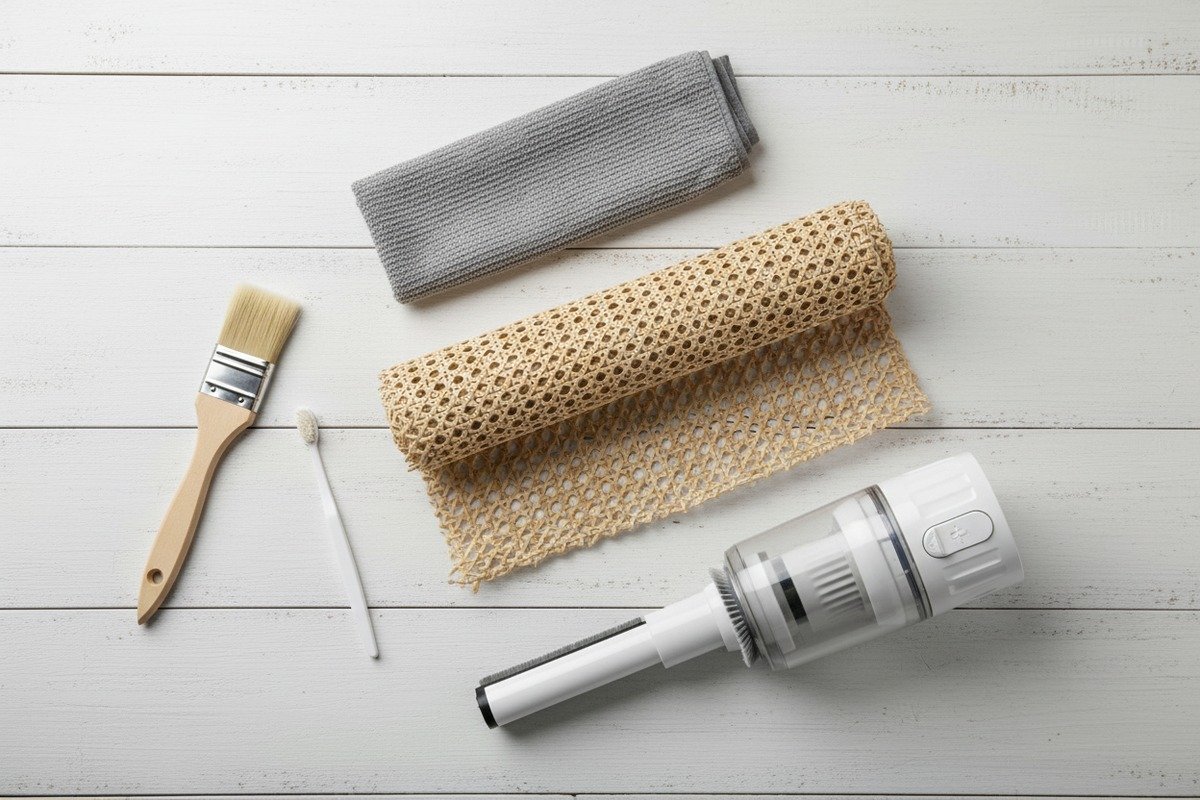
Pour le dépoussiérage quotidien, utilisez une brosse à poils souples, un chiffon en microfibre propre et sec, ou un aspirateur muni d'un embout brosse souple. Une vieille brosse à dents souple ou un petit pinceau fonctionne bien pour les recoins difficiles d'accès. Évitez les brosses rigides, les tampons abrasifs ou tout outil qui pourrait accrocher et tirer les brins de rotin individuels.
Pourquoi le choix des outils est plus important que vous ne le pensez
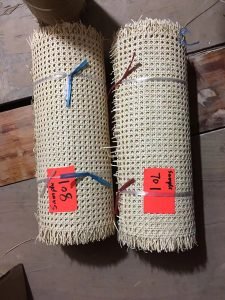
Tissage de rotin 1 — qu'il s'agisse du tissage hexagonal classique à mailles ouvertes ou d'un tissage carré dense en panier — présente de minuscules interstices où la poussière aime se cacher. Le mauvais outil pousse la saleté plus profondément au lieu de l'enlever. Une brosse à poils rigides peut également effilocher ou casser des brins de rotin individuels, surtout sur rotin naturel 2 qui a séché avec le temps.
Depuis notre usine de production à Foshan, nous testons quotidiennement différents motifs de tissage. Les tissages plus serrés piègent les particules plus fines. Les tissages ouverts attrapent les débris plus gros. Chacun nécessite une approche légèrement différente.
Votre kit d'outils essentiel pour un usage quotidien
Voici une comparaison simple des outils les plus couramment recommandés :
| Outil | Idéal pour | À éviter si… |
|---|---|---|
| Brosse à poils souples | Poussière de surface générale sur tous les motifs de tissage | Les poils sont rigides ou synthétiques durs |
| Sec chiffon en microfibre 3 | Surfaces planes, nettoyages légers | Le chiffon est mouillé ou humide |
| Aspirateur (embout doux) | Crevasses profondes, accumulation de poussière importante | L'aspiration est trop forte pour un tissage délicat |
| Brosse à dents souple | Coins serrés, bords décoratifs | Les poils sont de grade moyen ou dur |
| Pinceau propre (1 à 2 pouces) | Motifs complexes en losange ou hexagonaux | Résidu de peinture restant sur les poils |
| Bombe d'air comprimé | Sections intérieures difficiles d'accès | Utilisé trop près (peut détacher les brins) |
Étape par étape : La routine quotidienne de dépoussiérage en 5 minutes
- Commencez par le haut. Tenez votre pièce en rotin légèrement inclinée si possible. La gravité aide la poussière à tomber.
- Brossez d'abord. Utilisez votre brosse à poils doux dans le sens du tissage. Des coups courts et doux sont les plus efficaces.
- Ciblez les crevasses. Passez à une brosse à dents ou un petit pinceau pour les intersections serrées du motif de tissage.
- Aspirer une seconde fois. Passez la brosse douce sur toute la surface à faible aspiration. Cela attrape ce que la brosse a manqué.
- Essuyage final. Un chiffon microfibre sec ramasse les fines particules restantes.
Cette routine prend moins de cinq minutes. Faites-le quotidiennement, ou au minimum un jour sur deux, et vous prévenez le type de saleté incrustée qui entraîne la décoloration et la moisissure.
Naturel vs. Synthétique : L'outil change-t-il ?
Oui, légèrement. Le rotin naturel — celui que nous traitons à partir de matières premières dans notre usine indonésienne — est plus fragile lorsqu'il est sec. Utilisez strictement des outils doux. Rotin synthétique 4 (à base de résine) est plus tolérant. Vous pouvez utiliser des brosses légèrement plus fermes. Mais pour le dépoussiérage quotidien, les outils doux conviennent parfaitement aux deux types.
Une chose que nos clients des marchés humides comme la Thaïlande et les Philippines ont apprise : même si le rotin synthétique résiste mieux à l'humidité, la poussière s'accumule toujours de la même manière. Le dépoussiérage sec quotidien est non négociable pour les deux.
Comment puis-je utiliser l'eau en toute sécurité pour nettoyer mes meubles en rotin sans les endommager ?
Après des années de traitement et d'exportation de rouleaux d'osier de rotin dans plus d'une douzaine de pays, notre équipe a constaté la même erreur répétée : des propriétaires bien intentionnés trempent leur rotin, et les fibres gonflent, se déforment et finissent par se fissurer.
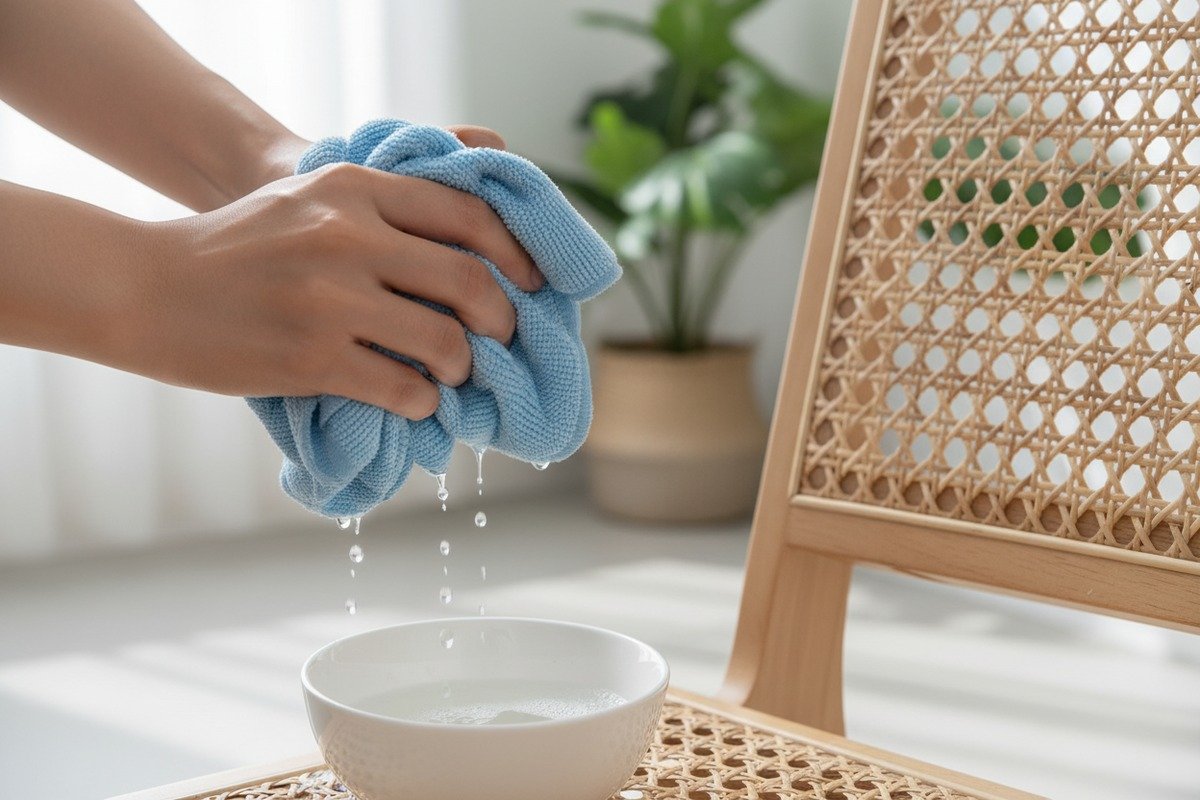
Utilisez l'eau avec parcimonie et uniquement pour un nettoyage périodique, pas quotidien. Humidifiez un chiffon en microfibre avec une solution savonneuse douce (quelques gouttes de liquide vaisselle dans de l'eau tiède), essorez-le soigneusement et essuyez délicatement la surface. Ne jamais tremper ou saturer le rotin naturel. Toujours laisser sécher à l'air libre complètement pendant au moins 48 heures avant utilisation.
La règle d'or : Humide, jamais mouillé
C'est le principe le plus important. Le rotin naturel est un fibre végétale 5. Il absorbe l'eau. Lorsqu'il en absorbe trop, les fibres se dilatent. Comme elles sèchent de manière inégale, elles se déforment, se fissurent ou développent de la moisissure à l'intérieur du tissage, là où vous ne pouvez pas la voir.
Un chiffon humide signifie que vous avez essoré chaque goutte possible. Si vous pressez le chiffon et que de l'eau s'écoule, il est encore trop mouillé.
Quand utiliser de l'eau ?
Réservez le nettoyage humide pour des sessions hebdomadaires ou bihebdomadaires — pas pour votre routine quotidienne. Les soins quotidiens doivent toujours être complètement secs. Voici un programme simple :
| Type de nettoyage | Fréquence | Eau autorisée ? | Method |
|---|---|---|---|
| Dépoussiérage quotidien | Tous les jours | Non | Brosse sèche, chiffon ou aspirateur |
| Nettoyage de surface léger | Hebdomadaire | Humidité minimale seulement | Chiffon essoré avec du savon doux |
| Nettoyage en profondeur | Mensuel | Chiffon humide, application prudente | Solution de savon doux 6, brosse douce pour les crevasses |
| Traitement des moisissures/mildious | Au besoin | Oui, ciblé uniquement | Vinaigre dilué ou peroxyde d'hydrogène, application localisée |
Préparation de votre solution de nettoyage
Mélangez 3 cuillères à soupe de savon à vaisselle doux dans 1 gallon d'eau tiède. Ce ratio est suffisamment doux pour le rotin naturel. Pour une alternative naturelle, mélangez à parts égales vinaigre blanc 7 et eau. Les deux solutions nettoient la saleté de surface sans décaper les huiles naturelles du rotin.
Évitez l'eau chaude. Elle peut faire gonfler les fibres trop rapidement. L'eau tiède est idéale.
La phase de séchage est critique
Après tout nettoyage humide, placez le meuble dans un endroit bien ventilé. Pas en plein soleil — cela provoque la décoloration et la fragilité. Pas près d'un radiateur — cela provoque des fissures. Juste une bonne circulation d'air.
Laissez passer au moins 48 heures avant de vous asseoir ou d'utiliser la pièce. Cela empêche les fibres humides de s'étirer sous le poids. Certains de nos clients en Espagne et en Australie, où le climat est chaud et sec, signalent un séchage plus rapide. Mais dans les régions humides, la patience est essentielle.
Qu'en est-il du rotin synthétique ?
Le rotin en résine synthétique est beaucoup plus tolérant à l'eau. Vous pouvez le rincer à l'extérieur, le frotter avec une brosse douce et le laisser sécher à l'égouttement. C'est l'une des raisons pour lesquelles le rotin synthétique est tendance pour les meubles d'extérieur. Mais si votre pièce a des panneaux de cannage en rotin naturel insérés dans un cadre synthétique — ce qui est courant dans les meubles de milieu et haut de gamme — traitez les sections de rotin avec la même prudence que les pièces entièrement naturelles.
Quelle est la meilleure méthode pour enlever les petites taches de mon rotin tressé ?
L'élimination des taches est là où les choses deviennent délicates. Dans notre atelier de Nanhai, nous voyons du rotin brut dans toutes les conditions — et une fois qu'une tache s'incruste profondément dans les fibres naturelles, son élimination devient un pari entre le nettoyage et l'aggravation des dommages.
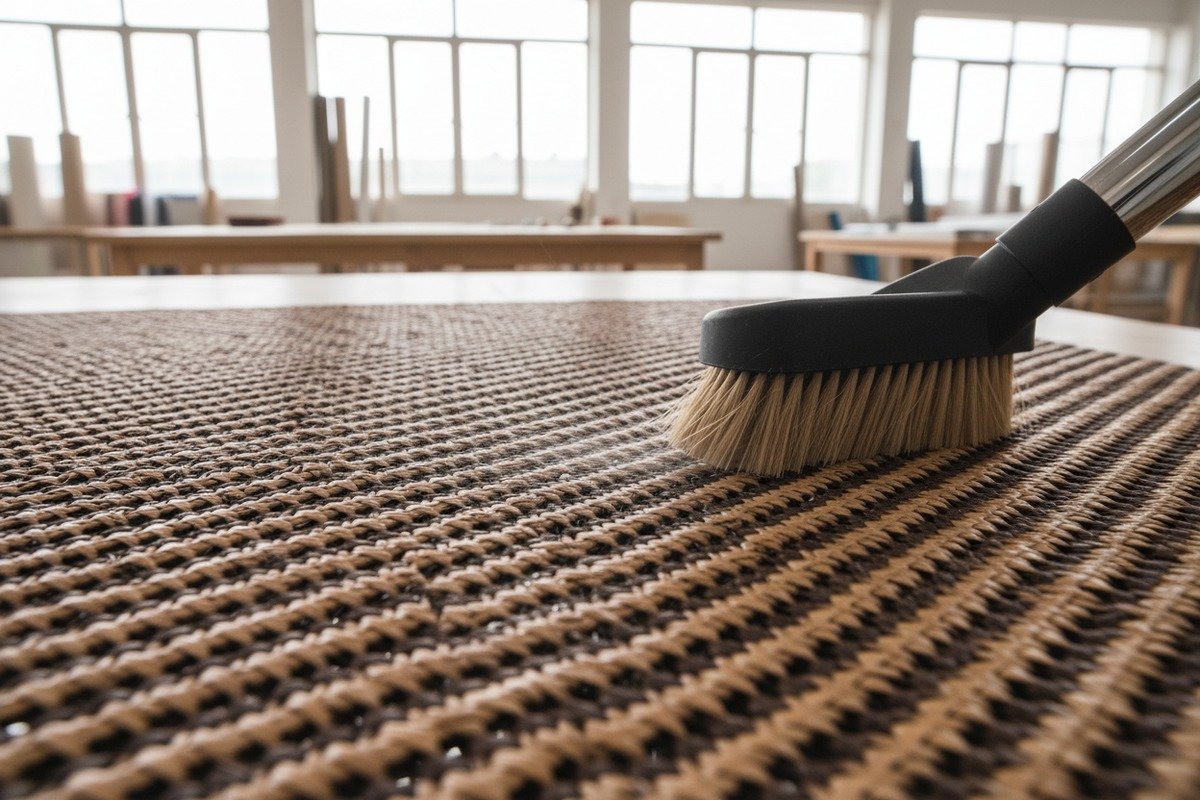
Pour les petites taches sur le rotin, appliquez une pâte de bicarbonate de soude et d'eau directement sur la tache. Laissez agir pendant 15 minutes, puis frottez doucement avec une brosse à dents souple et essuyez avec un chiffon à peine humide. Pour les taches de moisissure, utilisez une solution à parts égales de vinaigre blanc et d'eau, ou du peroxyde d'hydrogène dilué pour les taches tenaces.
Agissez rapidement — le timing est essentiel
Plus tôt vous traitez une tache, plus elle s'enlève facilement. Les déversements frais restent à la surface du rotin. Les vieilles taches pénètrent dans le cœur poreux de la fibre. Un déversement de café nettoyé en quelques minutes ne laisse aucune trace. Le même déversement laissé toute une nuit peut laisser une ombre permanente.
Gardez un petit kit de nettoyage près de vos meubles en rotin. Un chiffon doux, une brosse à dents, du bicarbonate de soude et du vinaigre blanc — c'est tout ce dont vous avez besoin pour 90% des situations de taches.
Solutions spécifiques aux taches
Différentes taches répondent à différents traitements. Voici une référence pratique :
| Type de tache | Solution recommandée | Méthode d'application | Attention |
|---|---|---|---|
| Nourriture / boisson | Pâte de bicarbonate de soude 8 (bicarbonate de soude + eau) | Appliquer sur la tache, attendre 15 min, frotter doucement avec une brosse à dents | Ne pas frotter agressivement — cela étale la tache |
| Graisse / huile | Maïs ou poudre de talc | Saupoudrer sur la tache, laisser absorber 30 min, brosser | Répéter si nécessaire ; éviter d'abord les nettoyants liquides |
| Moisissure / mildiou | Parties égales de vinaigre blanc et d'eau | Vaporiser ou tamponner sur la zone affectée, laisser agir 10 min, essuyer | Testez d'abord sur une zone cachée ; l'odeur du vinaigre s'estompe |
| Encre | Alcool à friction sur un coton-tige | Tamponnez doucement, ne frottez pas | Peut éclaircir la couleur naturelle du rotin en cas d'utilisation excessive |
| Marques d'eau | Huile de citron appliquée avec un chiffon doux | Lustrez doucement en mouvement circulaire | Petite quantité seulement ; l'excès attire la poussière |
| Moisissure tenace | 1 tasse d'eau de Javel + 1 gallon d'eau | Application localisée avec un coton-tige uniquement | Rincez immédiatement ; l'eau de Javel peut endommager définitivement les fibres |
Le débat sur l'eau de Javel
C'est l'un des sujets les plus débattus parmi les professionnels de l'entretien du rotin. L'eau de Javel est efficace contre la moisissure. Sans aucun doute. Une solution de 1 tasse d'eau de Javel pour 1 gallon d'eau tue les spores de moisissure au contact.
Mais voici le risque : si vous ne rincez pas complètement et immédiatement l'eau de Javel, elle continue de ronger les fibres naturelles. Nous avons vu des panneaux ruinés par de l'eau de Javel laissée en place quelques minutes trop longtemps. La canne devient blanche, cassante et se brise sous la pression.
Notre recommandation ? Utilisez d'abord du peroxyde d'hydrogène. Il est plus doux. Appliquez-le avec un coton-tige directement sur la tache de moisissure. Laissez-le bouillonner pendant cinq minutes. Essuyez. Si cela ne fonctionne pas, essayez la solution de vinaigre. Réservez l'eau de Javel en dernier recours absolu, et utilisez-la uniquement en petites quantités contrôlées avec un rinçage immédiat.
Prévention plutôt que guérison
La meilleure méthode pour éliminer les taches est la prévention. Le dépoussiérage quotidien maintient la trame ouverte et respirante. Une bonne circulation de l'air autour des meubles décourage la moisissure. Placer les meubles en rotin loin des zones de cuisine ou de salle à manger à fort passage réduit le risque de déversement de nourriture.
Nos clients qui gèrent des showrooms de meubles aux Pays-Bas et aux États-Unis signalent de manière constante que les pièces exposées dans des pièces bien ventilées et à faible humidité restent propres avec presque aucun effort au-delà du dépoussiérage quotidien.
Comment puis-je maintenir la brillance naturelle de mon cannage en rotin grâce à un entretien régulier ?
Lorsque le cannage de rotin quitte notre chaîne de traitement en Indonésie, il a un beau lustre naturel – une lueur dorée chaude qui provient des huiles naturelles du rotin. Pour maintenir cette brillance au fil des ans, un conditionnement simple et constant est nécessaire.
Maintenez la brillance naturelle de la cannage en rotin en appliquant une fine couche d'huile de lin bouillie ou d'huile minérale tous les un à trois mois à l'aide d'un chiffon doux. Lustrez doucement après application. Entre les applications d'huile, gardez le rotin à l'abri de la lumière directe du soleil et de l'humidité extrême pour éviter le dessèchement, la décoloration et la fragilité des fibres.

Comprendre pourquoi le rotin perd sa brillance
Le rotin naturel contient des huiles et de l'humidité internes. Avec le temps, l'exposition à l'air sec, au soleil et aux variations de température extrait ces huiles. La surface devient terne, crayeuse et finalement cassante. Ce n'est pas un dommage – c'est une déshydratation. Et c'est complètement réversible avec un conditionnement régulier.
Pensez-y comme aux soins de la peau. Sans hydratant, la peau se dessèche. Sans huile, le rotin se dessèche. Le principe est identique.
Choisir la bonne huile
Il y a un débat en cours sur la meilleure huile. Voici ce que nous avons observé au cours de milliers d'expéditions et de retours clients :
Huile de lin bouillie est le choix le plus populaire parmi les restaurateurs de meubles et les bricoleurs. Il pénètre profondément dans la fibre du rotin, nourrit de l'intérieur et sèche pour un fini satiné subtil. Il faut plusieurs heures pour sécher complètement – prévoyez 4 à 6 heures dans un espace ventilé.
Huile minérale est plus léger. Il reste plus en surface, donnant un éclat immédiat. Il est inodore et facile à appliquer. Mais il ne pénètre pas aussi profondément, vous devrez donc peut-être le réappliquer plus fréquemment.
Huile de citron donne un parfum agréable et un poli brillant. Cependant, il peut attirer la poussière s'il est trop appliqué. Utilisez-le avec parcimonie comme touche finale, pas comme conditionneur principal.
Comment appliquer l'huile correctement
- Dépoussiérez soigneusement le rotin au préalable. L'huile appliquée sur la poussière crée une couche collante et sale.
- Versez une petite quantité d'huile sur un chiffon doux et non pelucheux.
- Frottez l'huile dans le tissage dans le sens des brins de rotin. Utilisez une pression douce et uniforme.
- Laissez l'huile pénétrer pendant 15 à 20 minutes.
- Lustrez avec un chiffon propre et sec pour enlever l'excédent.
- Laissez la pièce reposer intacte pendant au moins 4 à 6 heures.
Fréquence d'huilage : Mensuelle ou Trimestrielle ?
Cela dépend de votre environnement. Dans les climats secs — comme certaines régions d'Espagne, d'Australie ou du Moyen-Orient — un huilage mensuel maintient le rotin souple. Dans les climats modérés ou humides, tous les deux à trois mois suffisent. Le sur-huilage est une préoccupation réelle. L'excès d'huile reste en surface et attire la poussière, ce qui va à l'encontre du but recherché.
Contrôles environnementaux pour une brillance à long terme
L'huile seule ne suffit pas. L'endroit où vous placez le rotin est tout aussi important.
- Évitez la lumière directe du soleil. Les rayons UV décolorent et dessèchent le rotin naturel. Utilisez des rideaux ou des stores pendant les heures de fort ensoleillement.
- Contrôlez l'humidité. Visez 40% à 60% d'humidité relative 9. Trop sec provoque des craquelures. Trop humide provoque des moisissures. Un simple déshumidificateur ou humidificateur d'air résout la plupart des problèmes.
- Assurez une bonne circulation de l'air. L'air stagnant autour du rotin crée des poches d'humidité. Gardez les meubles à quelques centimètres des murs.
Certains de nos clients grossistes recommandent désormais à leurs clients finaux d'investir dans un petit hygromètre — un indicateur d'humidité — placé près de leurs meubles en rotin. Il coûte très peu cher et élimine les incertitudes liées à la gestion de l'environnement.
Conseils de stockage saisonnier
Si vous stockez des meubles en rotin saisonnièrement — ce qui est courant pour les pièces d'extérieur ou de véranda — enveloppez-les lâchement dans un tissu de coton respirant. N'utilisez jamais de plastique. Le plastique piège l'humidité et crée un incubateur de moisissures. Stockez dans un endroit frais et sec. Appliquez une légère couche d'huile avant le stockage pour sceller l'humidité.
Conclusion
L'entretien quotidien du rotin est simple : dépoussiérez délicatement, évitez l'eau, agissez rapidement sur les taches et nourrissez régulièrement. Ces petites habitudes protègent votre investissement et gardent la belle toile de rotin naturelle pendant des années.
Notes de bas de page
1. Définit la toile de rotin, son origine et son processus de production. ↩︎
2. Discute des caractéristiques et propriétés du rotin naturel. ↩︎
3. Explique ce qu'est la microfibre, sa composition et ses applications de nettoyage. ↩︎
4. Explique de quoi est fait le rotin synthétique et ses propriétés. ↩︎
5. Définit les fibres végétales, leurs types et des exemples. ↩︎
6. Fournit des instructions pour préparer une solution de nettoyage simple à l'eau savonneuse. ↩︎
7. Explique les propriétés nettoyantes et antibactériennes du vinaigre blanc. ↩︎
8. Détaille diverses utilisations du bicarbonate de soude pour le nettoyage, y compris des applications en pâte. ↩︎
9. Remplacé HTTP 404 par une URL faisant autorité définissant l'humidité relative. ↩︎
10. Décrit les utilisations et l'application de l'huile de lin bouillie pour la finition et la protection du bois. ↩︎

 English
  Español de México
  العربية
  Deutsch
  Français
  Русский