
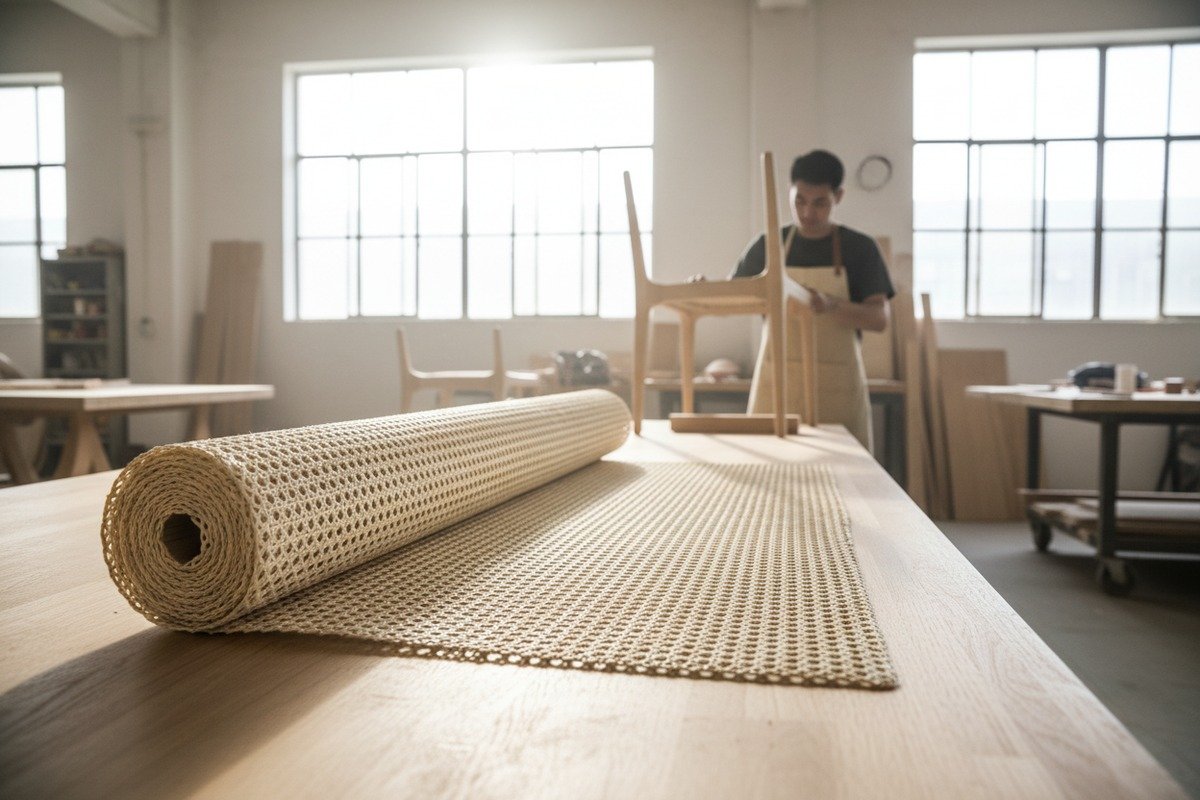
Every year, our production facility in Indonesia processes thousands of rolls of cannage rotin 1, and the single most common request from our furniture factory clients? “Can you bleach it lighter?” The demand for that clean, airy, modern look has skyrocketed. But here is the problem many buyers discover too late: not all bleaching is equal, and the wrong process can quietly destroy the very quality you are paying for.
Bleaching lightens rattan cane webbing for a refined, modern aesthetic, but it can reduce flexibility, increase brittleness, and cause color inconsistency if harsh chemicals are used. Chemical-free or eco-friendly bleaching methods preserve structural integrity, breathability, and long-term durability far more effectively than traditional harsh treatments.
Below, we break down exactly how bleaching impacts rattan quality across four critical areas that matter most to furniture manufacturers and material wholesalers. Whether you are sourcing bulk rolls or designing a new product line, this guide will help you make smarter decisions.
Will the bleaching process make my rattan cane webbing more brittle over time?
This is the question we hear most often from our clients in the Netherlands and Australia, especially those building indoor furniture lines meant to last a decade or more. They love the bright, clean look. But they worry about returns and warranty claims down the road.
Yes, harsh chemical bleaching can make rattan cane webbing more brittle over time by stripping natural oils and altering the cellular structure of the fibers. However, chemical-free bleaching methods like steaming or natural whitening agents significantly reduce this risk and maintain the rattan's original pliability for years.
How Bleaching Changes Rattan at the Fiber Level
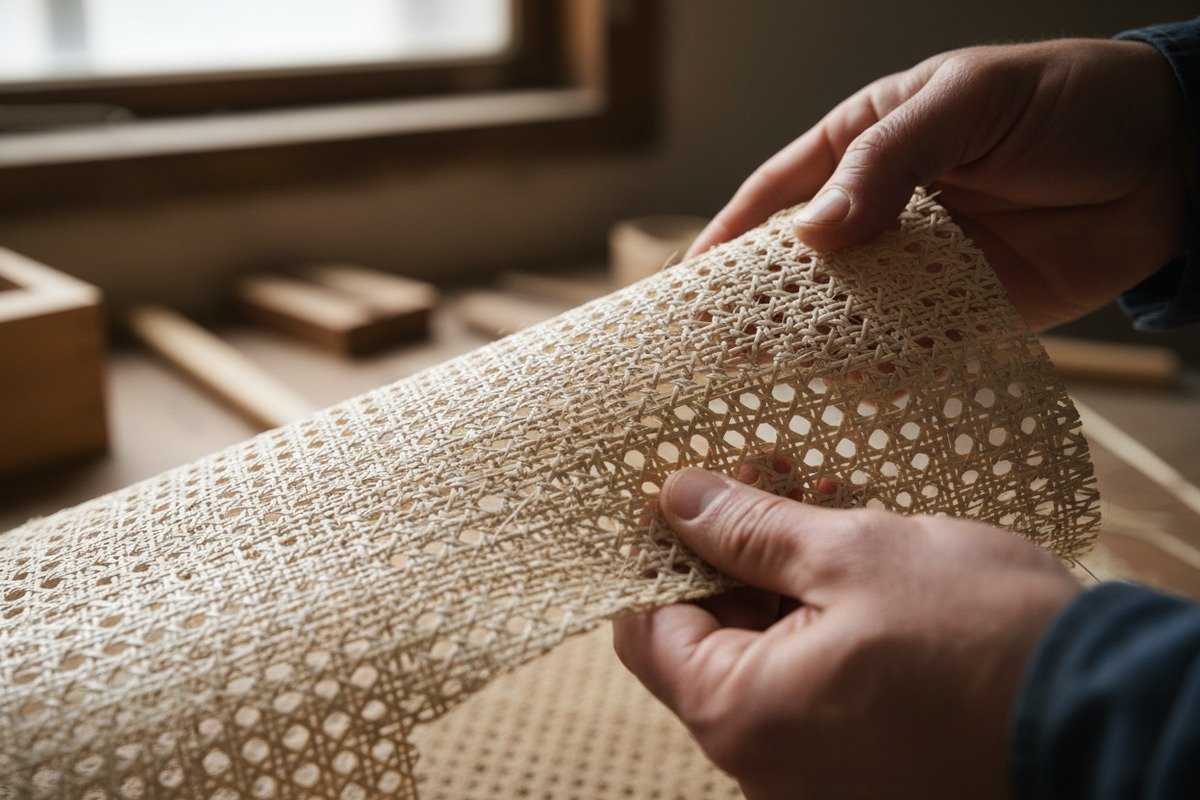
Rattan cane webbing is made from the outer skin of rattan vines, a member of the palm family. This outer skin contains holocellulose, lignin, and natural oils 2. These components give rattan its signature flexibility and resilience. When you bleach rattan using strong chemical agents like le peroxyde d'hydrogène 3 at high concentrations or chlorine-based solutions, you break down some of these components. The holocellulose structure weakens. Natural oils evaporate. What is left is a lighter, whiter fiber that looks beautiful but has lost some of its internal reinforcement.
Think of it like hair. Bleach your hair once gently, and it stays soft. Bleach it repeatedly with strong chemicals, and it becomes dry and snaps easily. Rattan fibers respond in a similar way.
The Role of Oil Curing Before Bleaching
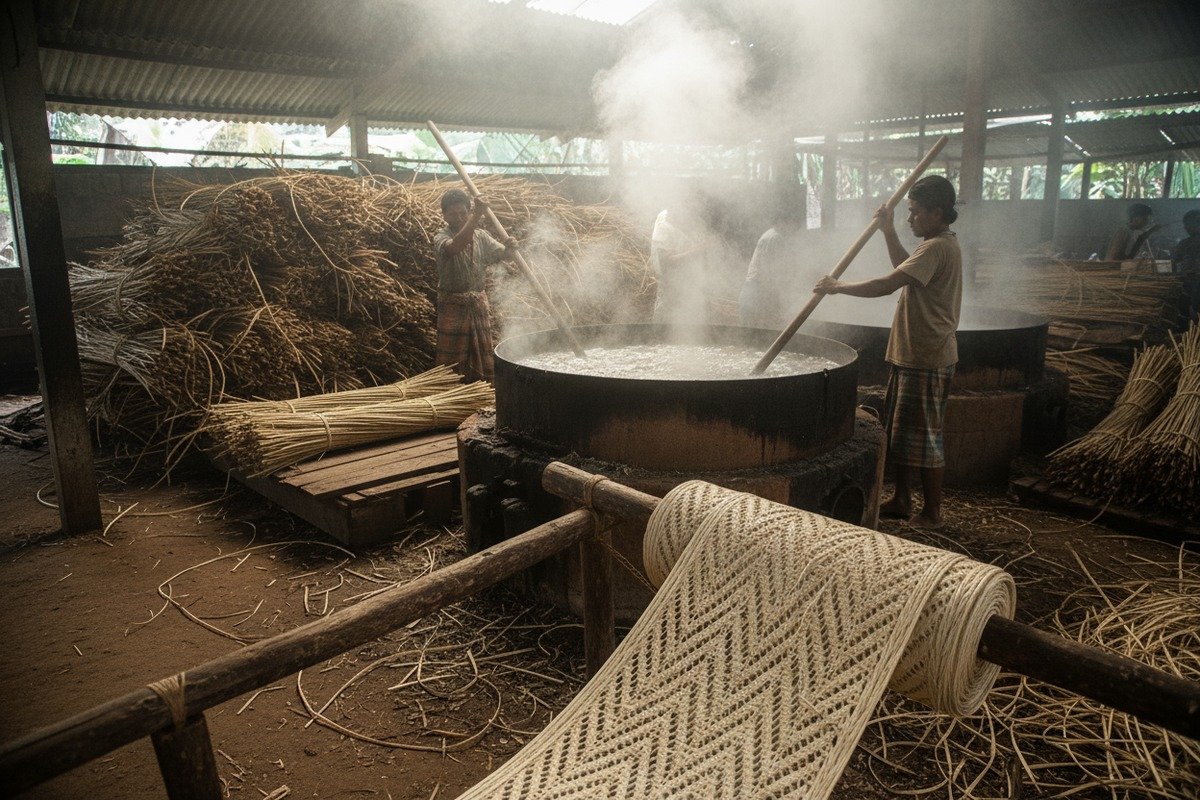
In our Indonesian processing facility, we follow a traditional sequence. First, raw rattan is boiled in oil for 10 to 20 minutes. This oil-curing step 4 removes impurities, adds a protective layer, and prepares the fiber for further treatment. When bleaching happens after proper oil curing, the rattan retains more of its natural flexibility. Skipping this step—or rushing it—leads to significantly more brittle results after bleaching.
Chemical vs. Chemical-Free: A Direct Comparison
| Facteur | Harsh Chemical Bleaching | Chemical-Free Bleaching (Steaming/Natural Agents) |
|---|---|---|
| Brittleness risk | High — fibers dry out and crack | Low — natural oils largely preserved |
| Color result | Very white, sometimes uneven | Soft white to cream, more consistent |
| Fiber strength 5 retention | 60–75% of original | 85–95% of original |
| Off-gassing risk | Yes, especially indoors | Minimal à inexistant |
| Coût | Lower upfront | Slightly higher but fewer returns |
What This Means for Your Products
If you are a furniture factory or wholesaler, brittleness translates directly into product failure. Chairs crack. Headboards split. Cabinet panels warp and break. Our recommendation, based on processing over 15 years of rattan, is simple: always ask your supplier what bleaching method they use. If they cannot answer clearly, that is a red flag. At our facility, we default to steaming and natural whitening agents for all premium-grade orders because the long-term quality difference is measurable and significant.
How can I ensure color consistency across my bulk orders of bleached rattan?
When we ship a 500-roll order to a furniture material wholesaler in Spain or a factory in the USA, one complaint can unravel the entire relationship: "The color does not match." Inconsistent bleaching is one of the biggest pain points in the chaîne d'approvisionnement en rotin 6. It causes delays, disputes, and expensive rework.
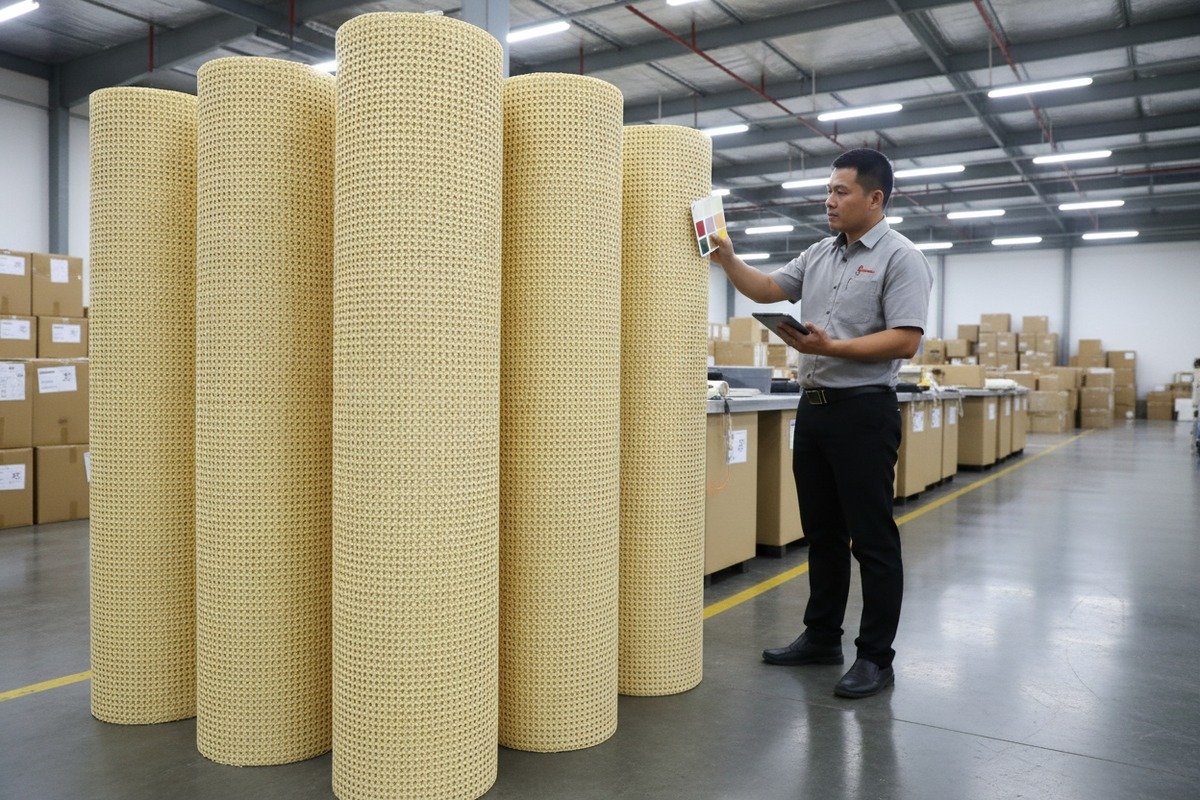
Ensuring color consistency in bulk bleached rattan requires rigorous raw material grading, controlled bleaching parameters (time, temperature, agent concentration), and post-bleaching quality inspection. Working with a supplier who operates their own processing facility—rather than sourcing from multiple small workshops—dramatically reduces batch-to-batch variation.
Pourquoi la variation de couleur se produit
Rattan is a natural material. Every vine grows differently. Some sections are denser. Some absorb moisture faster. Some have thicker outer skin. When you bleach a batch, denser fibers bleach slower. Thinner fibers bleach faster. The result? Spots, streaks, and noticeable shade differences between rolls—or even within a single roll. This is not a defect of the bleaching agent. It is a characteristic of natural materials that must be managed through process control.
Our Grading and Sorting Process
At our factory, we sort raw rattan into three density grades before any bleaching begins. Each grade gets a slightly different treatment time. This is extra work, but it is the only reliable way to achieve consistent results across hundreds of rolls.
| Process Step | Objectif | Impact on Color Consistency |
|---|---|---|
| Raw material grading 7 | Sort by fiber density and thickness | Ensures uniform bleaching absorption |
| Controlled soaking time | Adjust duration per grade | Prevents over-bleaching thin fibers |
| Temperature monitoring | Maintain stable treatment heat | Avoids uneven chemical reaction |
| Post-bleach inspection | Visual and tactile quality check | Catches outlier rolls before packing |
| Second drying and grading | Final sort by shade | Groups matching rolls for single orders |
Tips for Buyers Ordering Bulk Bleached Rattan
First, always request a sample roll before confirming a large order. Compare it under natural daylight, not fluorescent warehouse lights. Second, specify your acceptable color range in writing. Terms like "light white" or "cream" mean different things to different people. If possible, provide a physical swatch or a Pantone reference 8. Third, ask your supplier if they process all rolls in the same facility and the same batch. When a supplier sources from five different small workshops, consistency is nearly impossible to guarantee.
We also recommend ordering a small buffer quantity—typically 5 to 10% extra—because even with excellent process control, natural material will always have slight variations. Having extra rolls on hand prevents production stoppages if one or two rolls fall outside your target shade.
Advanced Techniques for Premium Consistency
Some manufacturers, including our facility, use steaming-based bleaching in climate-controlled rooms. This eliminates two major variables: ambient humidity and temperature fluctuation. The result is a tighter color range across the entire batch. It costs more to operate, but for clients selling high-end furniture in European or Australian markets, the premium is worth it. Their end customers expect perfection, and so do they.
Does bleaching affect the flexibility of the rattan when I use it for my furniture designs?
Our team often works directly with furniture designers in Turkey, Greece, and the Middle East who want bleached rattan for modern, minimalist pieces. The first prototype looks perfect. But then they try to bend the webbing around a tight curve or stretch it over a frame, and it cracks. That moment of frustration usually leads to a phone call to our technical team.
Bleaching does affect rattan flexibility, but the degree depends entirely on the method used. Harsh chemical bleaching strips natural oils and weakens fiber bonds, reducing pliability by up to 25–40%. Chemical-free methods like steaming preserve most of the rattan's original flexibility, making it suitable for curved and complex furniture designs.
Understanding Rattan's Natural Flexibility
Rattan gets its flexibility from three things: natural oils within the fibers, the intact holocellulose structure, and proper moisture content. Fresh, unbleached rattan cane has a light buttery tan color and bends easily without cracking. When bleaching removes or degrades any of these three elements, flexibility drops. The more aggressive the bleaching, the bigger the loss.
How Different Bleaching Methods Compare on Flexibility
| Bleaching Method | Flexibility Retained | Idéal pour | Limitations |
|---|---|---|---|
| Chlorine-based chemical | 60–75% | Flat panel applications | Cracks on tight curves |
| Hydrogen peroxide (high concentration) | 65–80% | Moderate bending | Requires careful post-conditioning |
| Steaming with natural agents | 85–95% | Curved frames, complex shapes | Slightly less white than chemical |
| No bleaching (natural) | 100% | All applications | Darkens over time |
Practical Implications for Furniture Design
If your design requires rattan to wrap around a curved chair back or a rounded headboard, flexibility is not optional—it is critical. We have seen cases where a factory ordered chemically bleached rattan, tried to apply it to a curved frame, and lost 15% of the material to cracking during installation. That is wasted material, wasted labor, and delayed delivery.
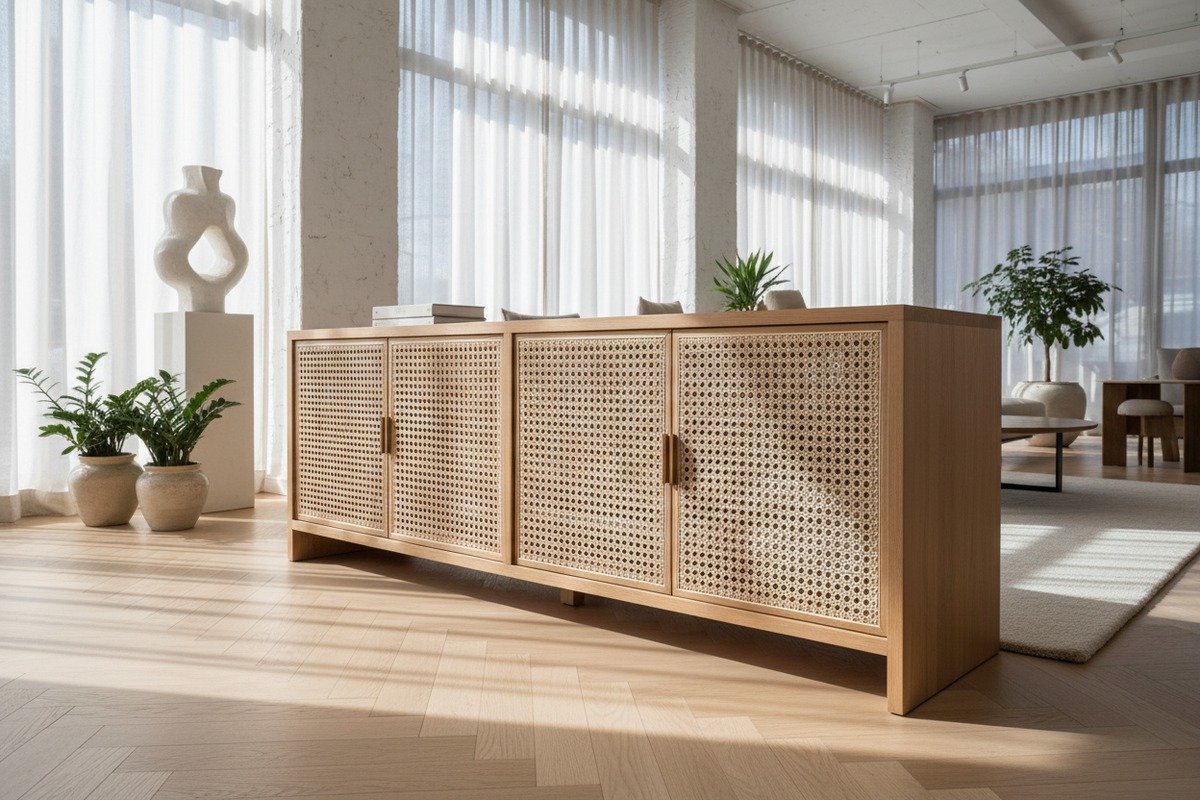
For flat applications like cabinet door inserts, wall panels, or room dividers, chemically bleached rattan can work fine. The material lies flat and does not need to bend. But for any design with curves, arches, or tension-mounted applications, we strongly recommend chemical-free bleached rattan or, at minimum, rattan that has been properly oil-cured before bleaching.
Post-Bleaching Conditioning
Even with chemical-free bleaching, rattan benefits from post-treatment conditioning. At our facility, we apply a light coat of mineral oil or linseed oil 9 after bleaching and before the final drying stage. This restores surface moisture, improves pliability, and creates a subtle protective layer. We advise our clients to do the same if they store bleached rattan for extended periods before use. A simple wipe with diluted oil on the underside of the webbing, followed by 2 to 4 hours of air drying, can make a noticeable difference in workability.
The Designer's Dilemma: Color vs. Function
Many designers want the whitest possible rattan. But the whitest result usually comes from the harshest bleaching. This is the core trade-off. Our advice is to start with a realistic color expectation. A soft cream or warm white achieved through steaming will always outperform a stark bleached white in terms of flexibility, durability, and long-term appearance. We show our clients comparison samples side by side, and most choose the slightly warmer tone once they feel the flexibility difference in their hands.
Can I still guarantee a long lifespan for my products if I use bleached rattan materials?
We have had honest conversations with our wholesale clients in the USA and Australia about this exact question. They are building brands. They want to promise their customers that a rattan chair or cabinet will last. Using bleached material feels like a risk. But it does not have to be.
Yes, you can guarantee a long product lifespan with bleached rattan materials, provided the bleaching uses chemical-free or mild methods, the rattan is properly oil-cured before treatment, and the finished product receives appropriate protective finishes like UV sealers and light oil applications. Properly treated bleached rattan can last as long as natural rattan.
What Determines Rattan Lifespan?
Lifespan depends on four factors: the quality of the raw material, the processing method, the end-use environment, and the care routine. Bleaching is just one variable in this equation. A poorly processed natural rattan product can fail faster than a well-processed bleached one. The key is controlling all four factors, not avoiding bleaching altogether.
Bleaching and Pest Resistance
One often-overlooked benefit of bleaching is that it improves resistance to fungi and insects. The traditional oil-curing and bleaching process was originally developed not for aesthetics but for preservation. Rattan in tropical climates is vulnerable to mold, beetles, and other pests. The combination of oil curing and bleaching creates an environment that is hostile to these organisms. According to research supported by INBAR (International Network for Bamboo and Rattan) 10, properly treated rattan shows significantly improved durability and fetches higher prices in international markets because of its extended usability.
Indoor vs. Outdoor Lifespan Considerations
The environment where your product lives matters enormously. Indoors, bleached rattan can last for many years with minimal care. The main enemy indoors is dry air from heating systems, which can cause the fibers to lose moisture and crack. A light oil application once or twice a year prevents this.
Outdoors, bleached rattan faces two additional threats: UV light and moisture. UV exposure causes yellowing and surface degradation. Moisture cycles—wetting and drying—cause swelling and shrinking that weaken the weave over time. For outdoor products, a UV-resistant sealer is non-negotiable. We recommend our clients apply a clear UV-blocking finish before selling any bleached rattan product intended for patio or outdoor use.
Maintenance Recommendations for End Users
| Tâche d'entretien | Fréquence | Products to Use | Objectif |
|---|---|---|---|
| Dépoussiérage léger | Hebdomadaire | Soft cloth or soft brush | Remove surface debris |
| Conditionnement à l'huile | Every 6–12 months | Diluted linseed oil or Murphy's oil soap | Restore moisture and flexibility |
| UV sealer application | Annually (outdoor only) | Clear UV-resistant spray or brush-on | Prevent yellowing and cracking |
| Nettoyage en profondeur | Au besoin | Water with mild vinegar solution | Remove stains and mildew |
| Éviter la lumière directe du soleil | Ongoing | Curtains, shade, or repositioning | Minimize UV damage |
Real-World Durability: What We See From Our Clients
Several of our long-term clients in Europe have been using our chemical-free bleached rattan webbing for over eight years in their product lines. Their furniture is still in service. The webbing has not cracked, and the color has shifted only slightly toward a warm cream—a change most end users actually prefer. The secret? Proper processing at the source and clear care instructions provided with every product.
We also hear from DIY customers who bleach or stain rattan at home for refurbishing vintage pieces. Results vary widely. Without controlled conditions and proper post-treatment, home-bleached rattan tends to yellow faster and lose flexibility within two to three years. This reinforces the value of factory-processed bleaching where every variable is managed.
Pairing Bleached Rattan With the Right Design Palette
Longevity is not just physical—it is also visual. Bleached rattan pairs beautifully with white, cream, and light wood tones like oak and ash. It fits seamlessly into Scandinavian, coastal, and modern minimalist interiors. Natural rattan, on the other hand, complements darker woods like walnut and mahogany. Choosing the right pairing ensures the product stays visually relevant and does not feel dated, which extends its perceived lifespan in the consumer's home.
Conclusion
Bleaching rattan cane webbing is not inherently harmful—it is about choosing the right method. Chemical-free processes preserve strength, flexibility, and longevity while delivering the modern aesthetic your customers want. Partner with a supplier who controls the entire process, from raw material grading to final inspection.
Notes de bas de page
1. Wikipedia provides a comprehensive and authoritative overview of caning, which includes rattan cane webbing, in the context of furniture. ↩︎
2. Provides scientific details on the chemical composition of rattan fibers. ↩︎
3. Wikipedia offers a comprehensive and authoritative explanation of hydrogen peroxide, its chemical properties, and its uses as a bleaching agent. ↩︎
4. Describes the traditional oil curing process for rattan and its benefits. ↩︎
5. Defines fiber strength and its importance in material quality and performance. ↩︎
6. Provides an analysis of the rattan market chain and its dynamics. ↩︎
7. Explains raw material grading as a critical quality control process. ↩︎
8. Provides a comprehensive overview of the Pantone Color Matching System. ↩︎
9. This article directly compares mineral oil and linseed oil for wood treatment, detailing their differences, properties, and applications, which is relevant to the context of treating natural fibers like rattan. ↩︎
10. Provides information about the International Network for Bamboo and Rattan (INBAR). ↩︎

 English
  Español de México
  العربية
  Deutsch
  Français
  Русский