
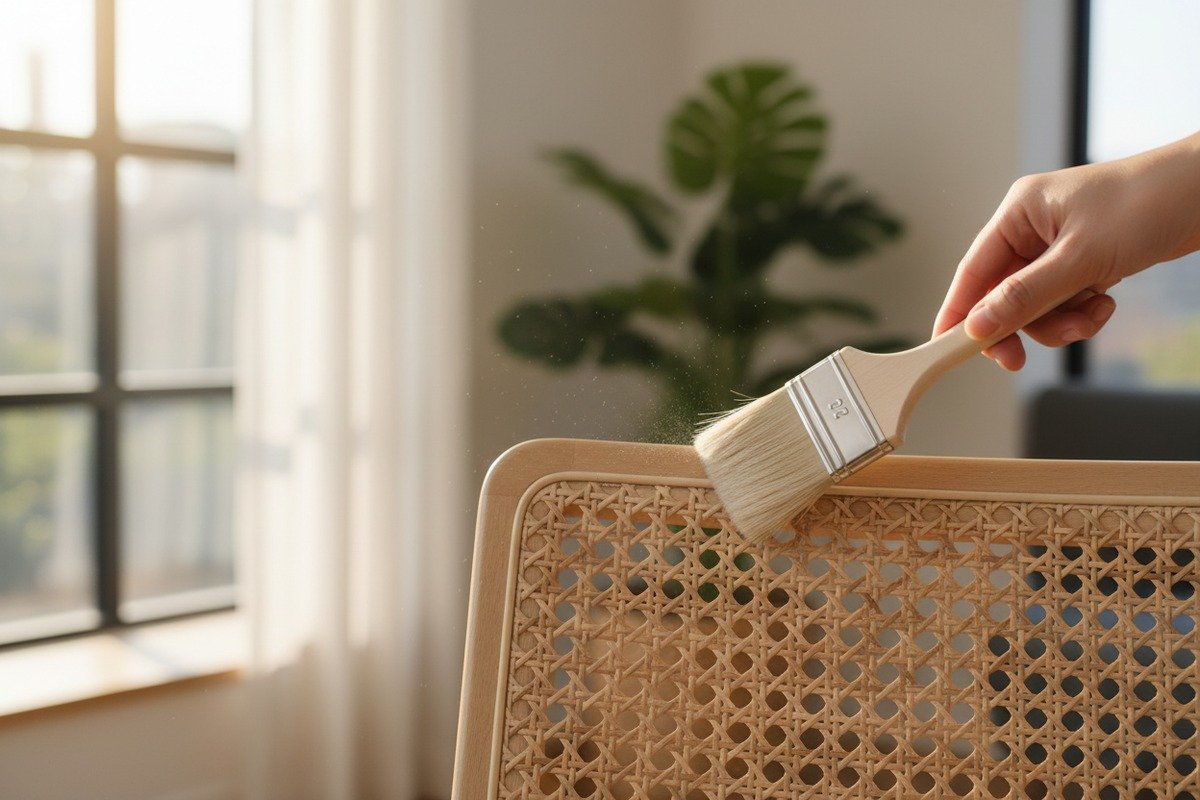
Dust settles fast on cannage rotin 1, and over the years running our rattan processing facilities in Indonesia and Foshan, we have seen countless beautiful pieces ruined simply because owners did not know how to dust them properly. The tiny open weave pattern that makes rotin naturel 2 so charming is the same feature that traps dust, pet hair, and pollen deep inside its fibers. Left unchecked, that buildup turns into grime, attracts moisture, and slowly breaks down the cane until it cracks or develops mold.
To clean dust from natural rattan cane webbing daily, use a soft-bristled brush, feather duster, or vacuum with a brush attachment to gently sweep dust from the surface and crevices. Avoid water and harsh chemicals during daily cleaning, and always brush along the weave direction to protect fibers.
Below, we break down the safest tools, prevention strategies, techniques for reaching trapped dust, and a daily routine that keeps your rattan looking fresh for years. Each section draws from what we have learned producing and exporting rattan webbing to over a dozen countries worldwide.
What are the safest tools I can use to remove daily dust from my natural rattan webbing?
When we ship our rattan cane webbing rolls to furniture factories in the Netherlands, Australia, and the US, we always include care notes because the wrong tool can destroy the fibers in weeks. Many buyers assume any brush or cloth will work, but natural rattan is porous and surprisingly delicate compared to its synthetic counterpart.
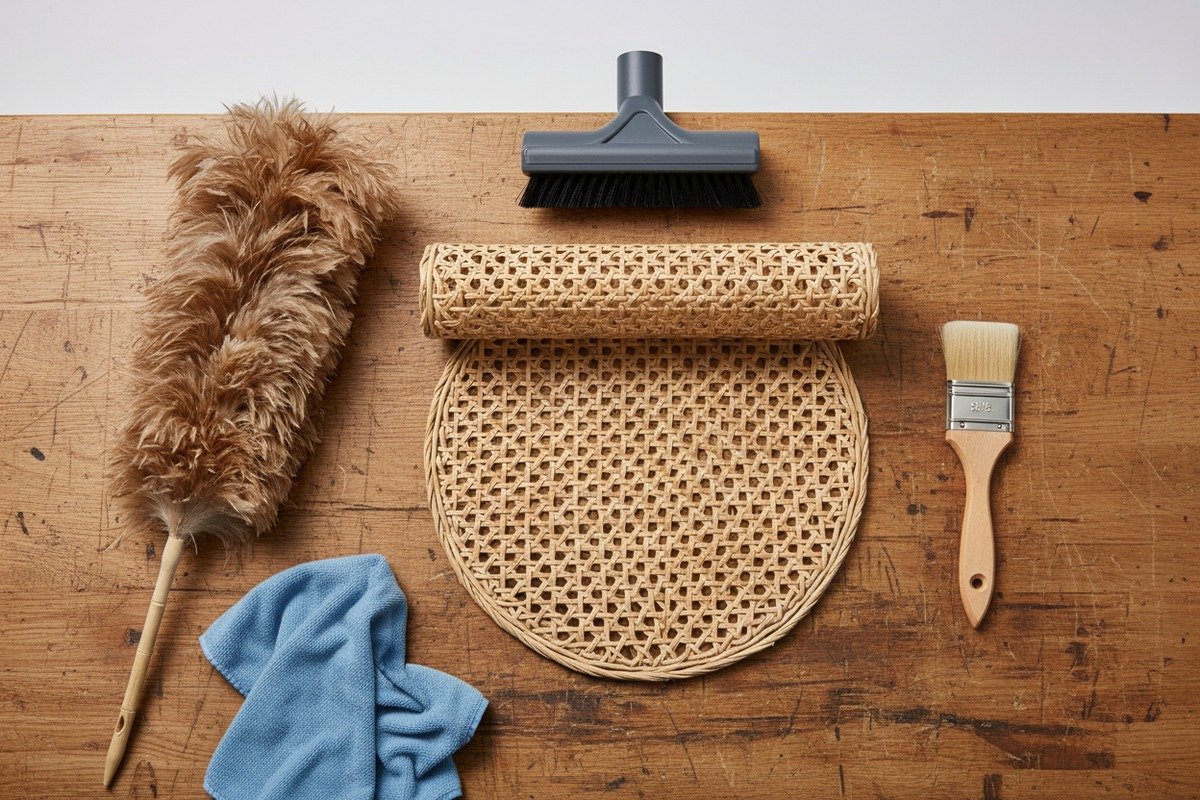
The safest tools for daily dusting of natural rattan webbing are a soft-bristled brush, a feather duster, a microfiber cloth, and a vacuum cleaner fitted with an upholstery or soft brush attachment. These tools lift dust without scratching, fraying, or compressing the natural cane fibers.
Why Tool Choice Matters for Natural Rattan
Natural rattan is not like wood or metal. It is a palm vine with a porous surface. Rough tools create micro-scratches that trap even more dust. Stiff-bristled brushes can snap thin cane strands, especially in open hexagonal or octagonal weave patterns. Our quality control team tests every tool type on Grade A webbing before recommending it to clients, and we consistently find that softer is always better.
Recommended Tools at a Glance
| Outil | Idéal pour | Niveau de risque | Daily Use? |
|---|---|---|---|
| Soft-bristled paintbrush | Crevices, tight weave grooves | Très faible | Oui |
| Feather duster 3 | Broad surface sweeping | Très faible | Oui |
| Microfiber cloth 4 (dry) | Flat cane surfaces, tabletops | Faible | Oui |
| Vacuum with brush attachment | All-over dust removal, open weaves | Faible | Oui |
| Soft toothbrush | Small spots, joints, edges | Faible | Yes (spot use) |
| Lint roller | Flat webbing panels, pet hair | Faible | Oui |
| Compressed air canister | Deep crevices, decorative panels | Moyen | Occasional |
| Damp cloth | Sticky residue only | Élevé | Non |
How to Use Each Tool Correctly
A feather duster works well for a quick once-over each morning. Hold the duster lightly and sweep along the direction of the weave. Do not press down hard. For chairs with cane seats, flip the chair upside down first and tap the underside gently. This dislodges particles that have settled through the weave.
A vacuum cleaner 5 is the most efficient option for weekly thorough dusting. Always use the lowest suction setting. High suction can pull loose strands out of the weave, especially on vintage or older webbing. Attach the soft brush nozzle and move it slowly across the surface.
For tight spots, nothing beats a clean, soft-bristled paintbrush. We keep several sizes in our showroom—a 1-inch brush for joints and a 3-inch brush for panels. An old makeup brush also works well for delicate areas.
One tool we advise against is a stiff scrub brush. Even a medium-stiff bristle can lift splinters from the rattan surface. Paper towels are also a poor choice because they shed fibers that stick inside the weave and create more mess.
A Note on Anti-Static Options
Static cling 6 attracts dust to rattan faster than you might expect, especially in air-conditioned rooms. A light wipe with an anti-static cloth once a week can reduce how much dust settles between daily cleanings. This is a simple step that many of our wholesale clients in the Middle East and Europe have adopted with good results.
How do I prevent dust buildup in my rattan cane without using harsh chemicals?
From our production lines in Foshan, we process thousands of square meters of rattan webbing each month, and we know firsthand that prevention is easier than cure. Many clients ask us about cleaning products, but for daily care, the best approach is stopping dust from accumulating in the first place—without reaching for chemical sprays.
You can prevent dust buildup on natural rattan cane by placing furniture away from high-traffic air paths, using anti-static cloths weekly, maintaining indoor humidity between 40–60%, and establishing a quick daily brush-down routine. These steps reduce static attraction and airborne particle settlement without any chemical use.
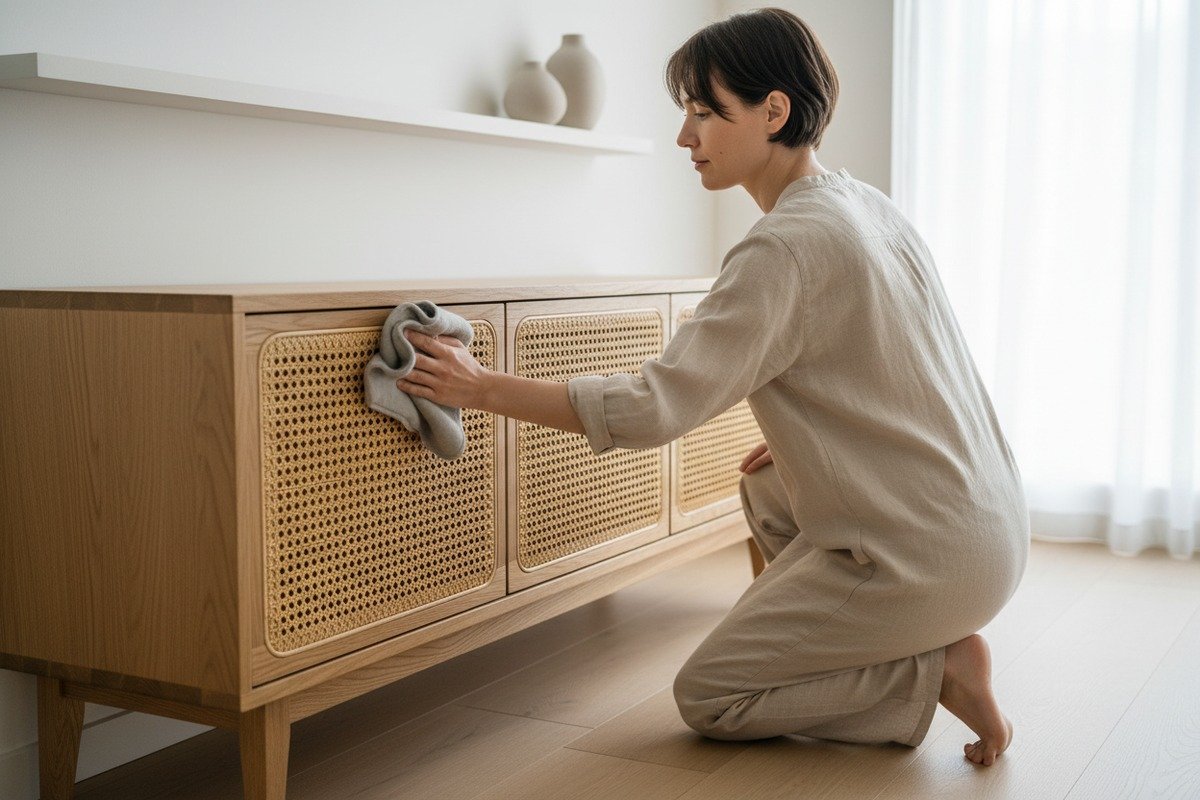
Placement and Environment Control
Where you put your rattan furniture makes a big difference. Pieces near open windows, doorways, or HVAC vents collect dust two to three times faster than those in calmer areas of a room. If possible, position rattan screens and chairs away from direct airflow.
Humidity matters too. In very dry environments, rattan becomes brittle and static-prone. Static electricity pulls dust particles toward the surface like a magnet. A room humidifier set between 40% and 60% d'humidité relative 7 keeps the cane flexible and reduces static buildup. Our clients in Saudi Arabia and the UAE find this step essential.
Protective Barriers That Work
Cushions and fabric covers on rattan chair seats reduce dust contact with the webbing underneath. When you remove cushions weekly for washing, take a moment to brush the exposed cane. This simple habit prevents months of hidden dust accumulation.
For decorative rattan panels or headboards, consider a very light coat of natural furniture wax or diluted de l'huile de lin 8 applied once every few months. This creates a thin barrier that makes dust easier to wipe away during daily cleaning. However, never apply oil daily—it traps dust rather than repelling it if over-applied.
Prevention vs. Reaction: A Comparison
| Approach | Time Per Day | Utilisation de produits chimiques | Effectiveness | Fiber Safety |
|---|---|---|---|---|
| Daily dry brushing | 2–3 minutes | Aucun | Élevé | Very Safe |
| Anti-static cloth weekly | 5 minutes/week | Aucun | Élevé | Very Safe |
| Humidity control (40–60%) | Passive | Aucun | Moyen-élevé | Very Safe |
| Strategic furniture placement | Installation unique | Aucun | Moyen | Very Safe |
| Chemical dust repellent spray | 5 minutes/week | Oui | Moyen | Risky |
| Damp cloth wiping daily | 5 minutes | Minimal | Moyen | Unsafe long-term |
Natural Alternatives to Chemical Cleaners
If you do encounter light grime during daily dusting, a barely damp microfiber cloth is your safest option. "Barely damp" means you wring it until no water drips at all. Wipe and then immediately dry the area with a second cloth.
For monthly deeper cleaning, a mixture of mild dish soap and warm water—just a few drops per bucket—handles most buildup. Vinegar diluted 1:1 with water can address light staining. But these are not daily methods. Daily care should remain completely dry.
We always tell our B2B clients: if you train end users to spend just two minutes a day with a dry brush, they will almost never need any cleaning solution at all.
What is the most effective way to reach dust trapped inside my intricate rattan weave?
Producing rattan webbing in patterns like hexagonal open cane 9, tight diamond motifs, and classic basketweave means we understand exactly where dust hides. Every weave pattern has its own dust traps, and the more intricate the design, the harder it is to reach those spots with a standard duster.
The most effective way to reach trapped dust inside intricate rattan weave is to tap the underside of the webbing first to loosen particles, then use a soft-bristled brush or old toothbrush to sweep dust out of each crevice, followed by a vacuum with a brush attachment to capture the loosened debris.
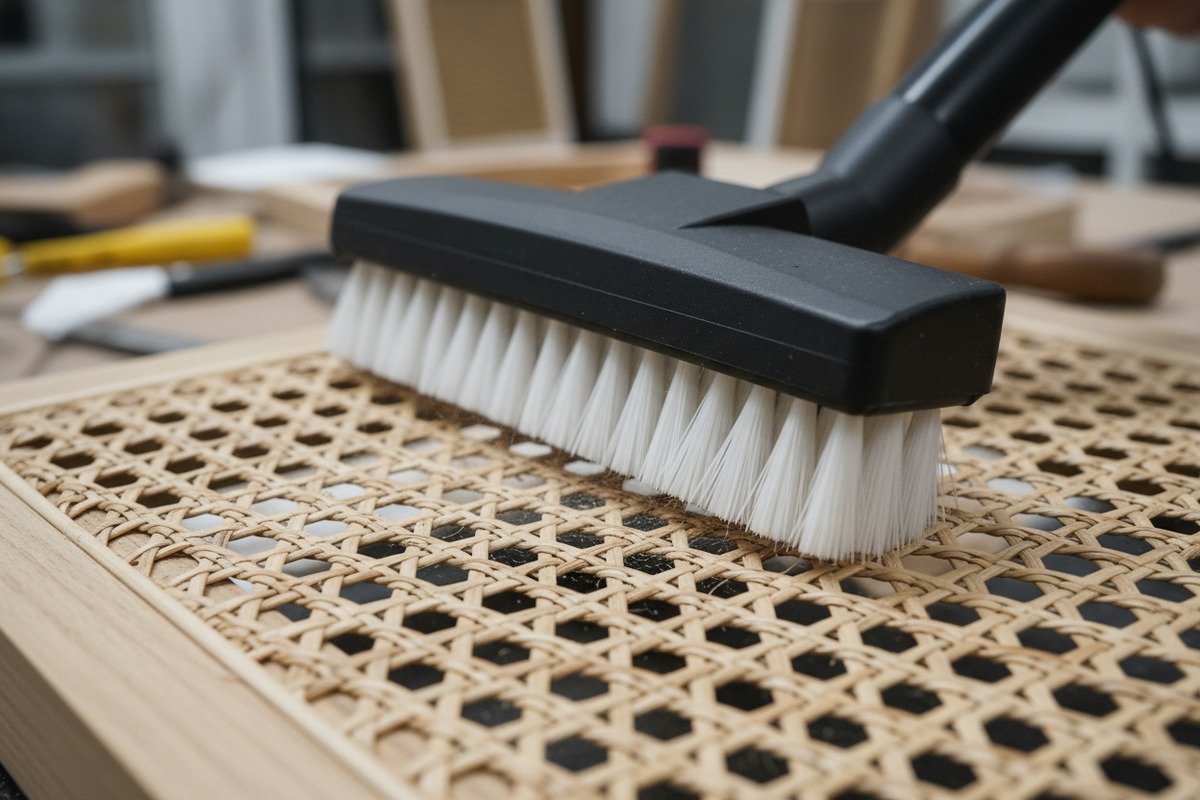
The Tap-Brush-Vacuum Method
This three-step process is what we recommend to every furniture factory and retailer we supply. It works on all weave patterns, from open hexagonal cane to dense basketweave.
Step 1: Tap. Turn the piece over or access the back side. Gently tap the underside with your open palm or a soft rubber mallet. This shakes dust loose from deep within the weave without forcing it further in.
Step 2: Brush. With the piece right-side up, use a soft-bristled brush 10 and work from one edge to the other. Follow the direction of the weave. For hexagonal open cane, angle the brush to reach inside each hexagonal opening. For tight basketweave, use a smaller brush like a clean toothbrush to get between the woven strands.
Step 3: Vacuum. Run the vacuum with a soft brush attachment over the entire surface to pick up everything you have just loosened. Keep suction low.
Pattern-Specific Tips
| Motif de tissage | Dust Trap Location | Best Brush Size | Extra Tip |
|---|---|---|---|
| Hexagonal open cane | Inside each hexagon cell | 1-inch paintbrush | Angle brush at 45° into openings |
| Motif losange | Intersection points of diamond shapes | Toothbrush | Work in small circular motions |
| Tissage serré en panier | Between overlapping strands | Narrow artist brush | Brush along the "over-under" direction |
| Open square grid | Corners of each square | 1-inch paintbrush | Tap first—grid traps less dust |
| Sheet/panel webbing | Flat surface and edges | 3-inch soft brush | Roll a lint roller after brushing |
Compressed Air: Use With Caution
Some people suggest using compressed air canisters to blast dust out of tight weaves. This can work, but it comes with a warning. High-pressure air can push dust deeper into the rattan pores rather than removing it. It can also loosen glued joints on furniture frames. If you do use compressed air, hold the nozzle at least 6 inches away and use short, gentle bursts.
Our warehouse staff in Foshan occasionally use a low-pressure air compressor for cleaning display pieces, but they always follow up with a brush and vacuum. Compressed air alone is not enough.
Hair Dryer Trick for Stubborn Spots
A hair dryer on the cool setting can help dislodge dust from very tight spots. Hold it about 8 inches from the surface and let the airflow push dust out of the weave while you hold a damp microfiber cloth on the other side to catch it. Never use the hot setting—heat can dry out the rattan and cause it to crack.
Do Not Forget the Edges
Rattan webbing rolls and sheets often have slightly frayed edges where dust collects heavily. When we cut webbing to size at our factory, those cut edges are especially prone to dust trapping. A gentle brush along the edge, moving outward from the center, keeps these areas clean without unraveling the weave further.
For furniture pieces where webbing meets the wood frame, use a toothbrush to clean the groove where cane is tucked into the spline channel. This joint collects compressed dust that hardens over time if neglected.
How can I ensure my daily cleaning routine preserves the long-term quality of my rattan materials?
Over three decades of supplying rattan webbing to markets across Europe, the Middle East, and Southeast Asia, we have gathered feedback from hundreds of end users about what keeps rattan lasting and what destroys it. The single biggest factor in long-term quality is not any special product—it is consistency and gentleness in daily care.
To preserve the long-term quality of your rattan materials through daily cleaning, always use dry methods, brush along the weave direction, avoid lifting or bending the cane unnecessarily, keep the piece away from direct sunlight and moisture, and apply a light natural oil conditioning treatment once every three to six months.
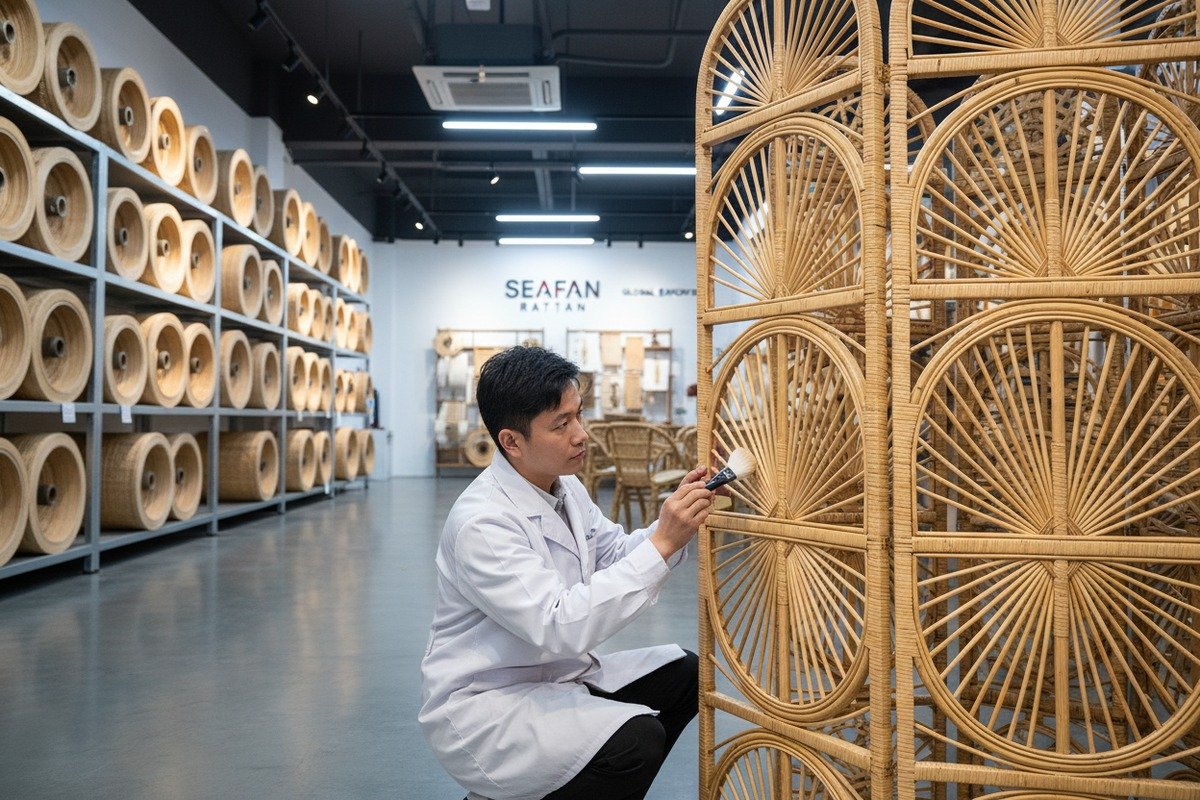
The Golden Rules of Daily Rattan Care
There are five rules we print on every care card that ships with our products:
- Keep it dry. Never use water for daily cleaning. Water causes natural rattan to swell, and repeated swelling and drying cycles lead to cracking and splitting.
- Brush with the weave. Always move your brush or cloth in the same direction as the woven pattern. Going against the weave lifts fibers and creates rough spots.
- Be gentle. Light pressure is all you need. Pressing hard compresses the cane and can deform the weave pattern over time.
- Stay consistent. Two minutes of daily dusting prevents 80–90% of the buildup that leads to deep cleaning needs.
- Rotate exposure. If your rattan piece sits near a window, rotate it periodically so one side does not dry out faster than the other.
Daily vs. Weekly vs. Monthly Care Schedule
Building a routine is essential. Here is the schedule we recommend to our wholesale clients for their end-user care guides:
| Fréquence | Tâche | Outils nécessaires | Temps requis |
|---|---|---|---|
| Daily | Light brush or feather duster sweep | Soft brush, feather duster | 2–3 minutes |
| Daily | Lint roller on flat panels (if needed) | Lint roller | 1 minute |
| Hebdomadaire | Vacuum with brush attachment, full surface | Vacuum, brush nozzle | 5–10 minutes |
| Hebdomadaire | Anti-static cloth wipe | Anti-static cloth | 3 minutes |
| Mensuel | Tap-brush-vacuum deep dust removal | Brush, vacuum, soft mallet | 15–20 minutes |
| Tous les 3 à 6 mois | Light oil conditioning (diluted linseed oil) | Soft cloth, linseed oil | 20–30 minutes |
| Annually | Full inspection for cracks, mold, loose weave | Eyes, hands | 10 minutes |
Oil Conditioning for Dust Resistance
A thin coat of diluted linseed oil or natural furniture oil does two things. First, it nourishes the rattan fibers and keeps them supple, which prevents cracking. Second, it creates a subtle surface layer that makes dust easier to wipe off during daily cleaning.
Mix one part linseed oil with two parts mineral spirits or turpentine. Apply with a soft cloth in thin, even strokes. Let it absorb for 15 minutes, then wipe off any excess with a clean dry cloth. Allow the piece to air-dry in a shaded, well-ventilated area for at least 24 hours before use.
We have seen rattan furniture last for generations when owners follow this oil treatment schedule. Without it, heavily used pieces start showing fraying and brittleness within one to two years.
Common Mistakes That Shorten Rattan Life
Many well-meaning owners damage their rattan by over-caring for it. Here are mistakes we see repeatedly:
- Using wet wipes daily. This introduces moisture into the cane every day, causing gradual warping.
- Placing rattan in direct sunlight. UV rays bleach the color and dry out the fibers, making them brittle.
- Dragging furniture across floors. Always lift rattan pieces when moving them. Dragging loosens joints and frays the bottom edges.
- Applying bleach to natural rattan. Bleach is only safe for synthetic rattan. On natural cane, it destroys the fiber structure entirely.
- Over-oiling. Too much oil attracts dust rather than repelling it. A light coat every few months is plenty.
When to Seek Professional Help
If your daily cleaning reveals cracks, loose strands, or mold spots, it is time to go beyond dusting. Minor cracks can be addressed by lightly misting the area with water, reshaping, and letting it dry slowly in the shade. But significant damage—large splits, widespread mold, or structural looseness—should be handled by a professional cane repair specialist.
We offer repair guidance to our B2B clients and can source replacement webbing in matching patterns. If you are a furniture factory or materials wholesaler, having a repair protocol ready for your customers builds trust and reduces returns.
Conclusion
Daily dust removal from natural rattan cane webbing is simple when you use the right tools and stay consistent. Stick to dry methods, brush gently along the weave, and treat your rattan with occasional oil conditioning. Your pieces will stay beautiful for generations.
Notes de bas de page
1. Original domain’s working page explaining rattan cane webbing. ↩︎
2. Describes the properties, characteristics, and benefits of natural rattan. ↩︎
3. Authoritative Wikipedia page for feather duster. ↩︎
4. Details how microfiber cloths work and their benefits for effective cleaning. ↩︎
5. Explains the basic mechanism and components of a vacuum cleaner. ↩︎
6. Defines static cling as a phenomenon caused by static electricity. ↩︎
7. Authoritative Wikipedia page defining relative humidity. ↩︎
8. Authoritative Wikipedia page with a section on linseed oil as a wood finish. ↩︎
9. Describes hexagonal open cane as a common rattan weave pattern. ↩︎
10. Explains the purpose and advantages of soft-bristled brushes for delicate cleaning. ↩︎

 English
  Español de México
  العربية
  Deutsch
  Français
  Русский