
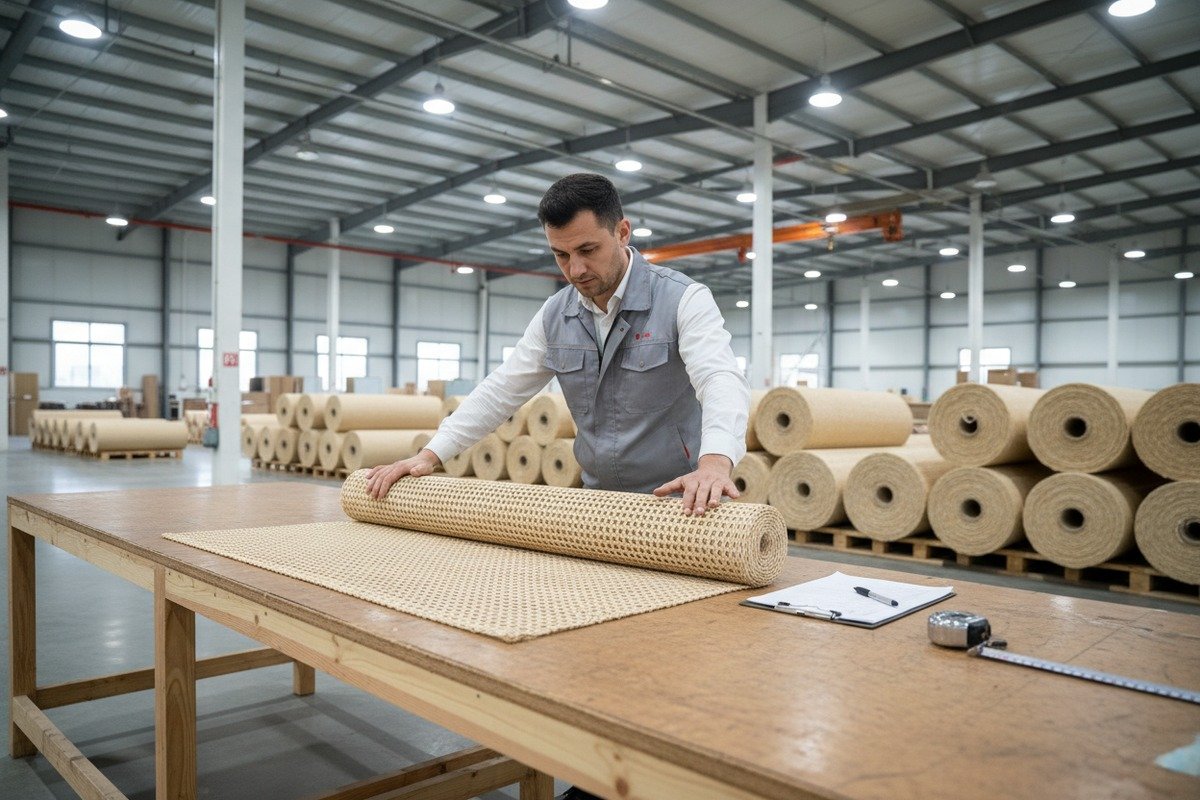
Every year, our warehouse team in Foshan handles thousands of rattan webbing rolls before they ship worldwide. Yet even with our strict in-house controls, we know the moment a roll arrives at your facility is the true test. One warped roll or a batch of uneven mesh can stall an entire furniture production line 1 — and that is a costly nightmare no buyer should face.
To inspect rattan cane webbing quality upon delivery, check for Grade A peel purity, uniform weave tension, correct roll dimensions and mesh size, consistent color without discoloration, strand flexibility without cracking, and intact packaging free from moisture damage or crushing.
This guide walks you through every step of a proper delivery inspection. We will cover grading standards, visual defect identification, dimensional verification, and packaging checks. Each section includes practical checklists and tables so you can spot problems before they become expensive mistakes.
How do I verify that my rattan cane webbing meets Grade A quality standards?
When we sort and grade rattan peel at our processing facility in Indonesia, each strand passes through trained hands before it ever reaches a loom. Grade A peel purity 2 But grading happens at the source — and you need to know how to confirm that what arrives at your door truly matches what you ordered.
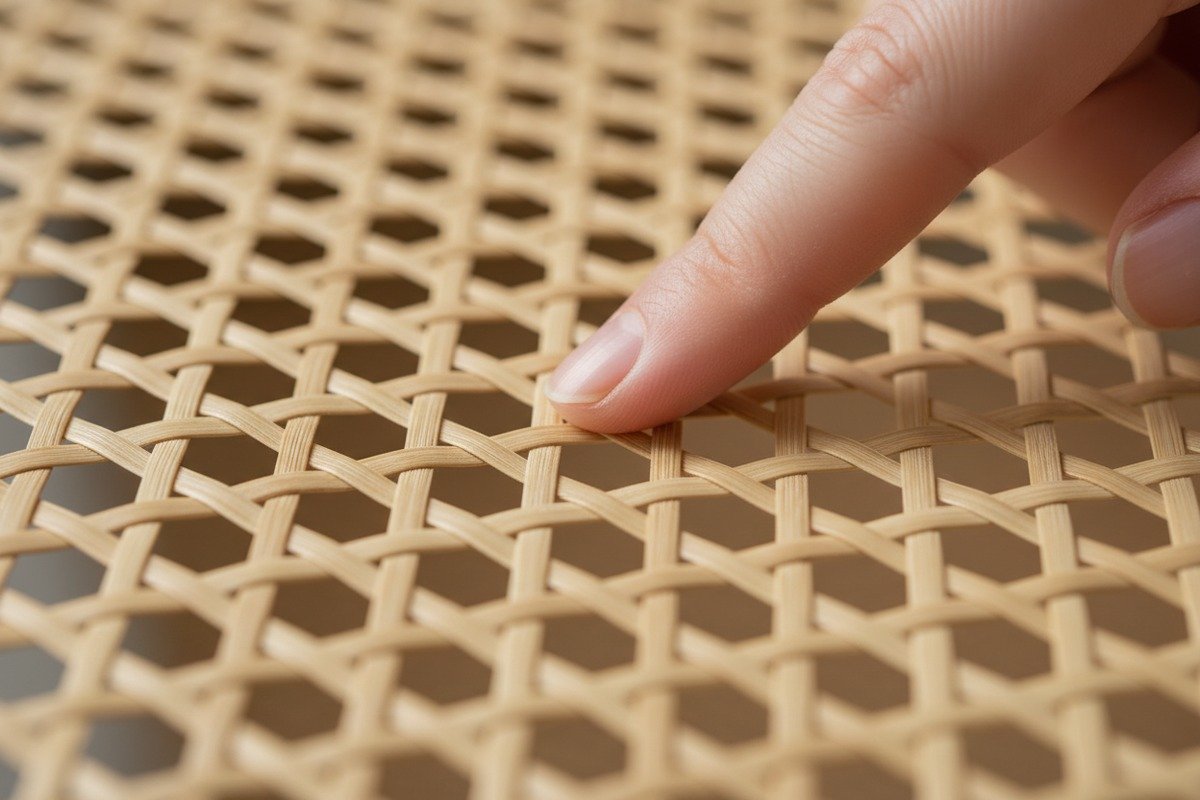
Grade A rattan cane webbing should have zero visible impurities, no nodules or bark remnants on the peel surface, uniform strand thickness, a smooth polished finish, and a light buttery tan color that indicates proper drying and minimal chemical treatment.
Understanding the Four-Tier Grading System
Rattan cane webbing is typically graded into four categories: A, B, C, and D. This grading happens after the outer peel is stripped from the rattan vine and before the strands are woven. The grade is determined by peel purity, surface smoothness, color consistency, and the absence of natural defects like nodules or dark spots.
Grade A means the peel is clean. No bark fragments. No dark patches. No rough textures. When you run your fingers along a Grade A strand, it should feel polished and even. Grades B through D allow increasing levels of impurities and surface flaws, which lowers price but also reduces the finished appearance of your furniture or décor project.
| Note | Peel Purity | Finition de surface | Cohérence des couleurs | Utilisation typique |
|---|---|---|---|---|
| A | No impurities or nodules | Lisse, poli | Uniform light tan | Premium furniture, visible panels |
| B | Minor impurities (1–2 per meter) | Mostly smooth | Légère variation de couleur | Mid-range furniture, semi-visible areas |
| C | Moderate impurities | Quelques zones rugueuses | Variation notable | 3. Meubles d'entrée de gamme, panneaux dissimulés |
| D | Frequent impurities | Rough, unpolished | Significant variation | Craft use, non-structural |
The Pinch-and-Flex Test
Pick a strand from the edge of the roll. Pinch it between your thumb and forefinger. A Grade A strand feels dense and firm — not hollow or papery. Now flex it gently into a curve. It should bend smoothly without cracking or splintering. If the strand snaps or you hear a dry cracking sound, the material is either over-dried, poorly processed, or a lower grade disguised as Grade A.
High-quality rattan fibers are 3 to 5 times heavier than low-grade alternatives. You can feel this weight difference even in a small sample. If a full roll feels surprisingly light for its stated dimensions, that is an immediate red flag.
Color as a Quality Indicator
Fresh, properly processed Grade A webbing has a light buttery tan color — think of pale straw or light honey. If the color is too white, the material was likely over-bleached. If it is dark or has grey patches, the rattan may have been improperly dried or stored in humid conditions before weaving. Bleached rattan webbing should still maintain a natural warmth and not appear stark or chalky.
Our experience shipping to markets in the Netherlands, the US, and Australia has shown that color disputes are among the top three reasons for quality complaints. Always compare the delivered roll against a retained sample or approved color swatch from your supplier.
Smell and Moisture Check
Grade A rattan should smell earthy and natural — like dried wood or bamboo. A strong chemical odor suggests excessive use of oxidizing agents or preservatives 3 beyond the standard 2–5% treatment level. A musty or sour smell indicates mold from improper drying. Upon unboxing, the webbing should feel dry to the touch. Natural rattan ideally has a la teneur en humidité 4 below 12%. If you have a pin-type moisture meter, spot-check several areas of the roll. Excess moisture leads to warping, mold growth, and premature degradation.
What visual defects should I look for to ensure my weaving is consistent?
On our production floor, every woven roll goes through a post-weave visual scan before it is cleared for packing. We catch defects daily — and we want you to catch them too if anything slips through. Knowing exactly what to look for saves time, money, and difficult back-and-forth with your supplier.
Look for loose or broken strands, uneven mesh openings, visible splicing gaps, sharp protruding points, chips or cracks on the surface, discoloration patches, glue residue from repairs, and irregular selvage edges — any of these indicate weaving inconsistency or post-weave repair failures.
Weave Tension and Mesh Uniformity
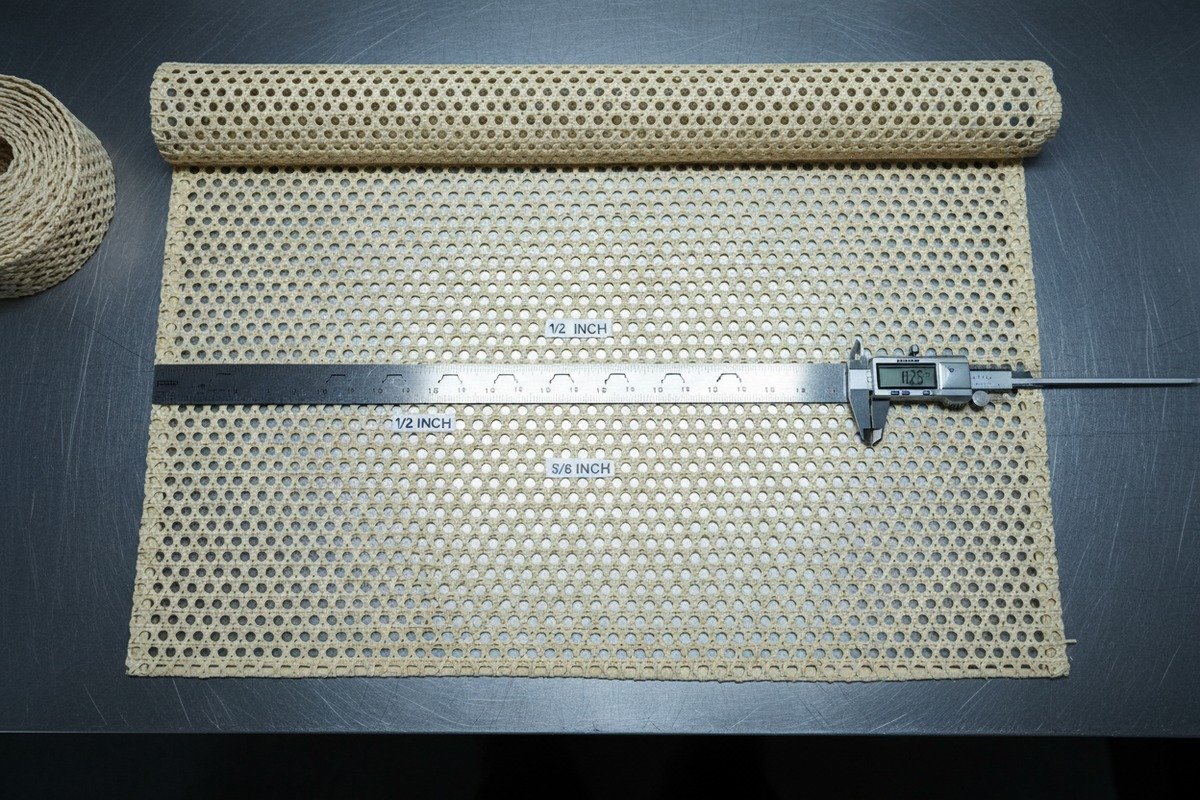
Consistent weave tension is the foundation of quality webbing. Unroll about one meter of the roll on a flat, clean surface. Look at the openings in the mesh. For a standard half-inch open mesh (radio weave), every opening should be roughly the same size. Hold the webbing up to the light. If you see some openings that are significantly larger or smaller than others, the weaving tension was inconsistent.
Tight "flying thread" weaving — where the horizontal and vertical strands interlock snugly — is a hallmark of machine-woven precision. But even machine-woven webbing requires human oversight. When we run our looms, an operator monitors tension throughout the process. Without that monitoring, you get loose patches that will sag under use.
Common Defect Types and Severity
Not all defects are equal. Some are cosmetic and minor. Others compromise structural integrity. Here is a practical breakdown:
| Defect Type | Description | Gravité | Action |
|---|---|---|---|
| Loose strand | A single strand not secured in the weave | Minor if isolated | Accept with note; reject if multiple |
| Broken strand | A strand snapped mid-weave | Major | Reject the affected section |
| Splicing gap | Visible gap where two strands were joined | Minor to Major | Accept if tight; reject if gap > 2mm |
| Sharp point | A cut strand end protruding above the surface | Major (safety risk) | Reject; risk of injury during handling |
| Chip or crack | Surface damage on a strand | Major if deep | Reject if crack goes through the strand |
| Glue residue | Visible adhesive from repair work | Minor (cosmetic) | Accept for concealed use; reject for visible panels |
| Discoloration patch | A section darker or lighter than surrounding area | Minor to Major | Accept minor variation; reject stark contrast |
| Irregular selvage | Uneven or fraying edge | Major | Reject; edge will unravel during installation |
Real-World Defect Rates
In a well-documented 2015 inspection case of 50 rattan furniture pieces, inspectors found 9 major and 9 minor defects — an 18% total defect rate. The issues included weaving inconsistencies, rattan chips, and sharp protruding points. This kind of rate is unacceptable for Grade A product.
When reviewing your delivery, apply AQL (Acceptable Quality Limit) sampling 6. For a shipment of 100 rolls, inspect at least 8 to 13 rolls at random. If your agreed AQL is 2.5% for major defects, even 1 major defect in a 13-roll sample means the batch fails. Document every defect with photos and notes. This record is essential for claims.
Post-Weave Repairs: What to Watch For
At our facility, post-weave repair is one of the most labor-intensive steps. A single worker can finish only about one roll per day when performing detailed repairs — re-threading loose strands, trimming sharp ends, and smoothing rough patches. If a supplier skips this step to save labor, you will see it immediately: rough edges, untrimmed splice points, and uneven surfaces.
Run your palm flat across the webbing surface. It should feel smooth and uniform. If you catch on anything — a raised point, a rough bump, an edge that pokes — that section was not properly finished. For premium applications like visible furniture panels or wall décor, this is a deal-breaker.
How can I confirm that the roll dimensions and mesh size match my order?
We have seen orders delayed by weeks because a buyer assumed the dimensions were correct and cut panels before measuring. In our export operations to over a dozen countries, dimension mismatches account for a surprising portion of disputes — second only to color issues.
Confirm roll dimensions by measuring the full width and unrolled length against your purchase order, verifying the mesh opening size with a ruler or caliper at multiple points, and checking that strand thickness is uniform across the roll to ensure the webbing fits your intended application.
Measuring Width and Length
Lay the roll flat and measure the width at three points: both ends and the center. Rattan is a natural material, so slight variation is normal — but the width should not deviate more than 5mm from the stated specification. If your order calls for 60cm width, readings of 59.5cm to 60.5cm are acceptable. Anything beyond that range suggests the weaving frame was improperly set.
For length, most suppliers sell by the meter or yard. Unroll and measure. Some rolls will be slightly over-length as a buffer, which is standard practice. But a roll that is short — even by 10cm — is a legitimate complaint, especially when you are cutting panels to exact sizes for furniture production.
Mesh Size Verification
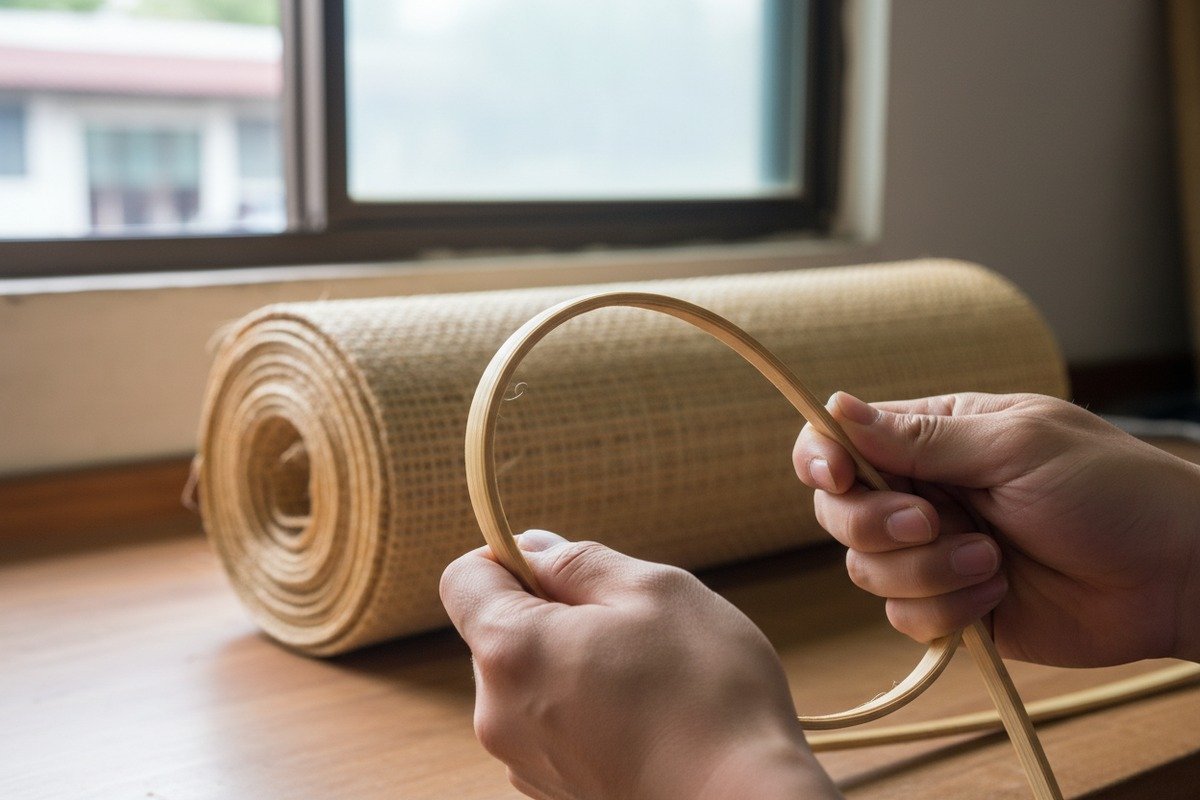
Mesh size refers to the dimensions of the openings in the woven pattern. For the classic hexagonal radio weave 7, the standard mesh opening is approximately half an inch (12–13mm). For square basketweave patterns, mesh sizes vary by product line.
Use a small ruler or pied à coulisse numérique 8. Measure at least 10 openings in different areas of the roll. Record the measurements. Here is a reference table for common patterns:
| Motif de tissage | Standard Mesh Opening | Tolérance acceptable | Notes |
|---|---|---|---|
| Hexagonal radio weave | 12–13mm | ±1mm | Most common pattern for furniture |
| Tissage carré | 8–10mm | ±1mm | Denser, used for seat panels |
| Géométrique en losange | 15–18mm | ±1.5mm | Decorative, less structural |
| Close weave (no open mesh) | N/A (solid) | N/A | Used for cladding and screens |
If the mesh openings are consistently oversized, the strands were stretched too thin during weaving — this weakens the webbing. If the openings are too small, the weave is too tight, which wastes material and makes the roll heavier and more rigid than intended.
Strand Thickness and Weight
Strand thickness directly affects the appearance and strength of the finished product. For natural rattan cane webbing, a standard strand is typically 2.5mm to 3.5mm wide, depending on the product specification. Measure several strands with a caliper.
Weight is another useful proxy for quality. Weigh the entire roll on a shipping scale and compare it to the supplier's stated weight. A roll that is significantly lighter than expected may contain thinner strands, fewer weave passes, or lower-grade material. High-quality fibers weigh 3 to 5 times more than low-grade alternatives, so weight discrepancies can reveal substitution.
Cross-Referencing Your Purchase Order
Keep your commande 9, proforma invoice, and any approved sample records on hand during inspection. Compare every measurable specification:
- Largeur du rouleau
- Longueur du rouleau
- Taille de l'ouverture du maillage
- Épaisseur des brins
- Pattern type
- Color reference
- Grade designation
If any specification does not match, document the discrepancy immediately. Take clear photos with a ruler or caliper visible in the frame. Send these to your supplier within the claim window — typically 7 to 14 days after delivery.
What should I check in the packaging to ensure my rattan wasn't damaged during transit?
Our logistics team wraps every roll with specific layering — plastic film, cardboard core, and outer carton — because we have learned from hard experience what happens when packaging fails. A container crossing the Pacific encounters humidity shifts, temperature swings, and rough handling. Poor packaging turns good rattan into waste.
Check that outer cartons are undamaged and dry, inner plastic wrapping is intact without tears or condensation, the cardboard core is not crushed or bent, rolls are not compressed or deformed, and there is no evidence of mold, water staining, or pest infestation on the webbing itself.
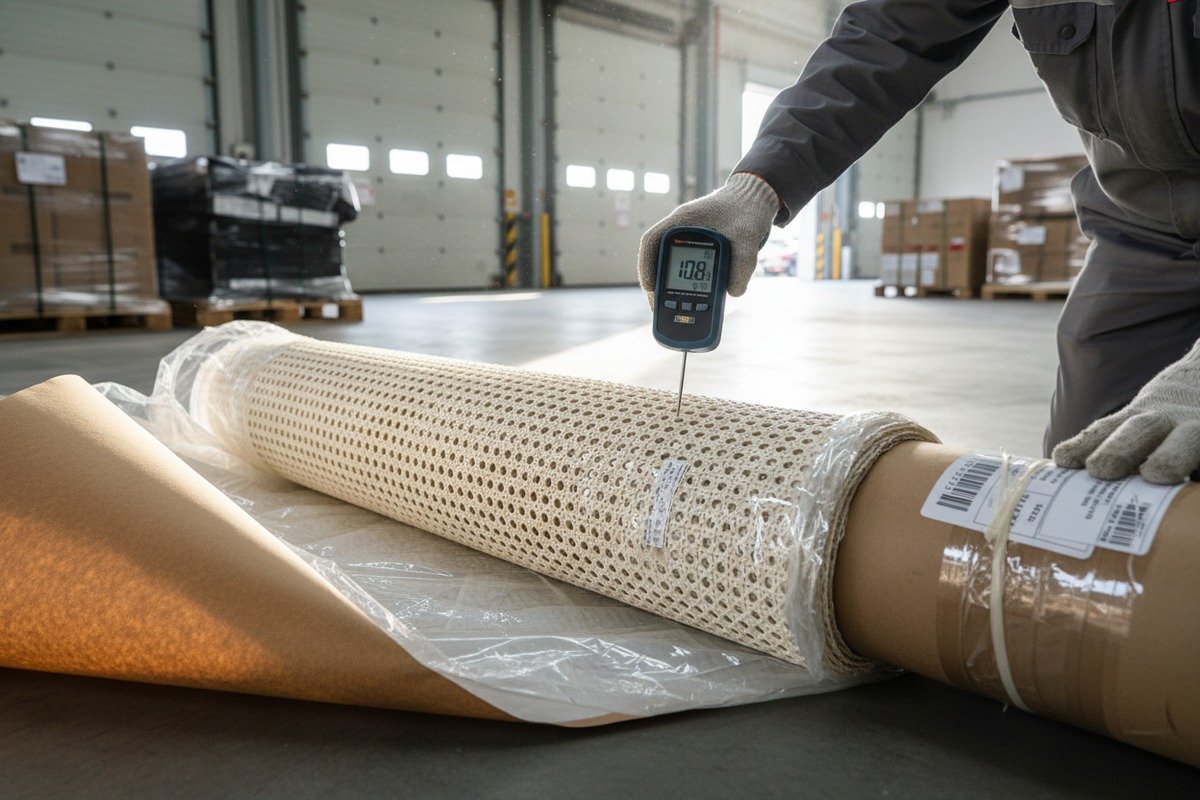
Outer Packaging Assessment
Start from the outside. Before you even open the carton, look at its condition. Is it crushed, torn, or water-stained? Dark patches on cardboard indicate the box got wet at some point during transit. Crushed corners suggest the pallet was improperly stacked or subjected to heavy loads on top.
If you received the shipment on pallets, check if the stretch wrap is intact. Broken stretch wrap means the cartons shifted during transport, increasing the risk of roll deformation. Note any damage on the bill of lading or delivery receipt before signing.
Inner Wrapping and Moisture Barriers
Inside the carton, each roll should be individually wrapped in plastic film — usually polyethylene or PVC shrink wrap. This layer is the primary moisture barrier. If the plastic is torn, punctured, or shows condensation droplets on the inside, moisture has reached the rattan.
Condensation inside the plastic is particularly dangerous. It creates a microclimate where mold spores thrive. In our experience shipping to humid climates like Thailand and the Philippines, we add des sachets de gel de silice déshydratant 10 inside the wrapping as an extra precaution. Check if these packets are present and whether they have changed color — most silica gels turn from blue to pink when saturated.
Roll Condition Inside the Packaging
Once unwrapped, inspect the roll itself. Place it on a flat surface and look at its shape. A properly stored roll should be uniformly cylindrical. If it has flat spots, the roll was compressed during storage or transit. If the edges are splayed or the roll is oval instead of round, excessive weight was placed on it.
Check the cardboard tube at the core. If it is bent or collapsed, the entire roll may have a permanent curve that makes it difficult to lay flat during installation. For furniture applications, this curvature translates directly into wasted material and extra labor.
Signs of Mold, Pests, and Water Damage
Mold appears as white, green, or black fuzzy spots on the rattan surface. It can also appear as dark staining that does not wipe off. Smell the webbing — a musty, damp odor is a clear indicator even before visible mold appears.
Water damage shows as discoloration, warping, or a swollen, spongy feel in the strands. Pest damage is less common but possible, especially with natural materials shipped from tropical regions. Look for small holes, fine sawdust-like powder, or tiny insect casings.
Documentation for Claims
If you find any transit damage, document everything immediately. Here is a checklist:
- Photograph the outer carton damage before opening
- Photograph the inner wrapping condition
- Photograph every defective or damaged roll with close-ups
- Note the carton number, roll number, and shipment reference
- Measure moisture content if possible
- Keep all packaging materials for the supplier or insurer to inspect
File your claim within the window specified in your purchase agreement. Include your photo log, written descriptions, and reference to the agreed quality standards. A clear, well-documented claim gets resolved faster than a vague complaint.
Conclusion
A thorough delivery inspection protects your investment and your production schedule. Use the grading checks, defect spotting techniques, dimensional verification steps, and packaging assessments in this guide every time a shipment arrives. Quality starts at the source — but accountability ends at your receiving dock.
Notes de bas de page
1. Explains the coordination of a business’ entire production flow, from sourcing to delivery. ↩︎
2. Details the classification of rattan based on appearance, strength, and surface quality. ↩︎
3. The source mentions ‘bleaching agents’ like ‘hydrogen peroxide’ (an oxidizing agent) used for rattan treatment, aligning with the anchor text and article context about color. ↩︎
4. Defines moisture content in wood and acceptable levels for various applications. ↩︎
5. The source explicitly outlines ‘Rattan Quality Categories’ including Grade A, B, C, and implies D, fitting a four-tier system. ↩︎
6. Wikipedia is an authoritative source that provides a comprehensive definition of Acceptable Quality Limit (AQL) and its application in quality control. ↩︎
7. Describes the open hexagonal pattern common in rattan webbing for furniture and decor. ↩︎
8. Provides a guide on what a digital caliper is and how it is used for precision measurements. ↩︎
9. Wikipedia is an authoritative source that provides a clear and concise definition of a purchase order. ↩︎
10. Wikipedia is an authoritative source that defines silica gel and its use in desiccant packets to absorb moisture. ↩︎

 English
  Español de México
  العربية
  Deutsch
  Français
  Русский