
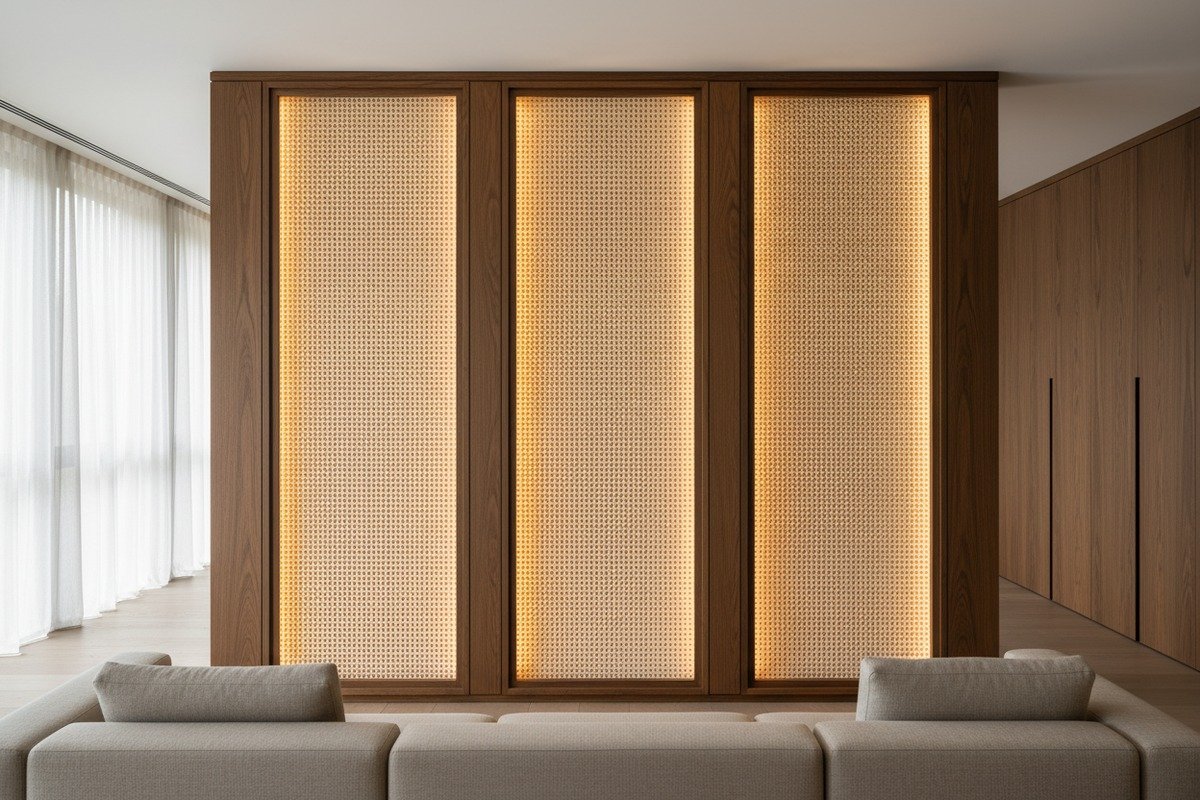
Every week, our production team in Foshan ships rolls of cannage rotin 1 to clients who once only used it for furniture — and now, more and more of them are asking about wall decoration projects. Plain, lifeless walls are a problem in many homes and commercial spaces Pressed cane webbing 2. They drain personality from a room and make interiors feel flat. Rattan cane webbing solves this beautifully.
You can use rattan cane webbing for wall decoration by framing it into panels, attaching it inside picture frames, creating woven art pieces, building headboard features, or layering it with LED backlighting. The key steps include soaking natural cane for pliability, securing it to a frame with staples or glue, trimming excess material, and hanging the finished piece on your wall.
This guide walks you through every step. From choosing the right grade to installing panels and keeping them looking great for years. Let’s start with the basics.
How can I properly install rattan cane webbing on my interior walls?
When we ship rattan cane webbing to furniture factories and wholesalers across the US and Europe, we always include handling tips — because improper installation is the number one reason people get disappointing results. The material is forgiving, but it does demand a few key steps to look professional on your wall.
To properly install rattan cane webbing on interior walls, soak natural cane in warm water for 10 to 30 minutes, stretch it taut across a wooden frame, staple from the center outward every two inches, trim the excess with a utility knife, and hang the framed panel using wall brackets or French cleats.
Gather Your Tools First
Before you touch the cane, lay out everything you need. A clean workspace prevents wrinkles and damage. Here is a quick checklist:
| Outil / Matériau | Objectif | Estimated Cost |
|---|---|---|
| Rattan cane webbing roll | Main decorative material | $10–$50 per roll |
| Wooden frame (pine or oak) | Structural support for the panel | $5–$20 |
| Staple gun with 6mm staples 3 | Securing cane to frame edges | $15–$30 |
| Utility knife 4 or sharp scissors | Trimming excess webbing | $3–$8 |
| Wood glue or hot glue gun | Reinforcing edges and seams | $5–$10 |
| Sandpaper (120–220 grit) | Smoothing frame edges | $2–$5 |
| Spray bottle with warm water | Soaking and re-moistening cane | $1–$3 |
| Wall brackets or French cleats 5 | Hanging finished panel | $5–$15 |
Processus d'installation étape par étape
Step 1: Prepare the frame. Sand all edges smooth. Paint or stain the frame if you want contrast — matte black frames give a modern edge, while natural wood keeps things warm and bohemian.
Step 2: Cut the webbing. Measure the frame opening. Cut the cane webbing at least two inches larger on each side. This extra material gives you grip for stretching.
Step 3: Soak the cane. If you are using natural rattan cane webbing, submerge it in warm water for 15 to 30 minutes. This makes the fibers pliable and easy to stretch. Pressed cane or synthetic rattan does not need soaking — it is ready to use out of the roll. From our experience processing natural cane 6 at our Indonesian facility, lukewarm water works best. Hot water can weaken the fibers over time.
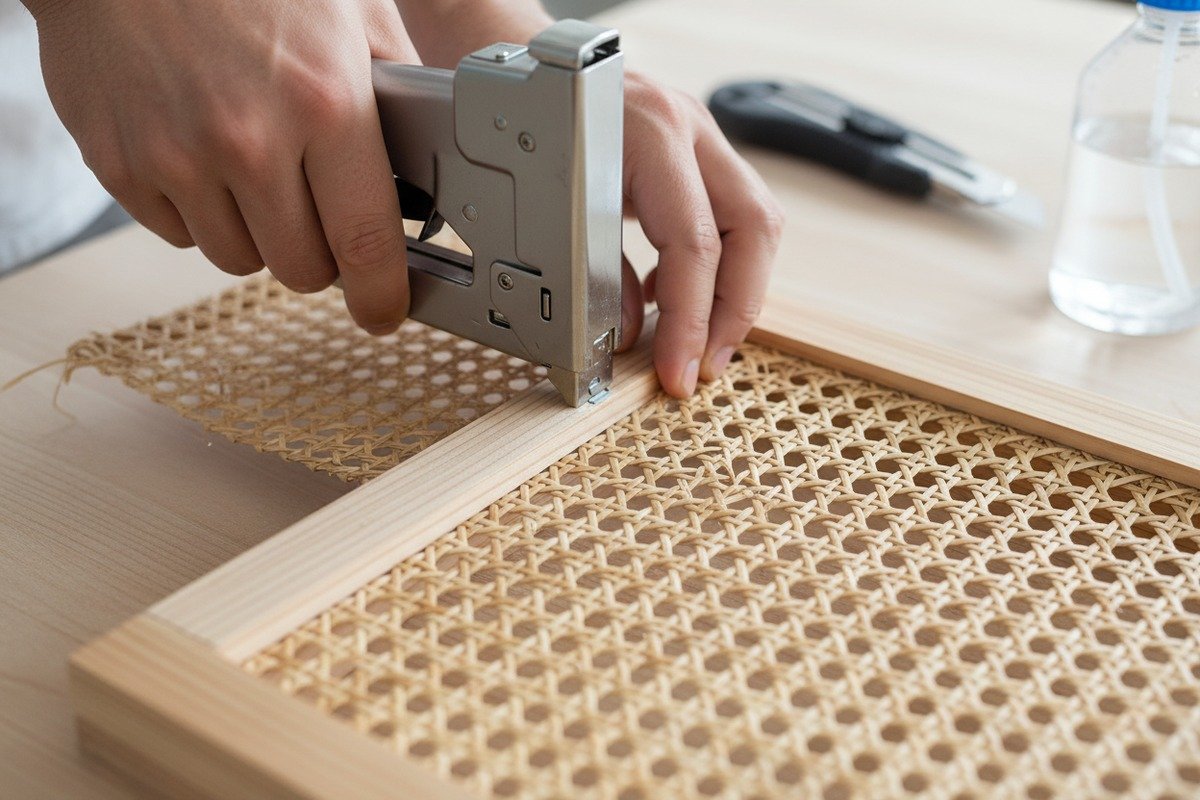
Step 4: Position and staple. Lay the damp cane over the back of the frame. Start stapling at the center of one side. Pull the cane taut to the opposite side and staple the center there. Repeat for the remaining two sides. Then work outward from each center point, placing staples every 1.5 to 2 inches. This center-out method prevents sagging and wrinkles.
Step 5: Trim and seal. Once all edges are stapled, use a utility knife to trim the excess webbing close to the staple line. Apply a thin bead of wood glue over the stapled edge for extra hold. Let it dry for at least one hour.
Step 6: Hang it. Attach wall brackets or a French cleat to the back of the frame. Mark your wall, drill if needed, and hang. For larger panels, use two brackets for stability.
Erreurs courantes à éviter
Do not skip soaking. Dry natural cane cracks under tension. Do not staple too close to the edge of the frame — it can split thin wood. And do not rush the drying process. Natural cane tightens as it dries, which gives you that perfect drum-tight finish. If you pull it too tight while wet, it may tear when it shrinks.
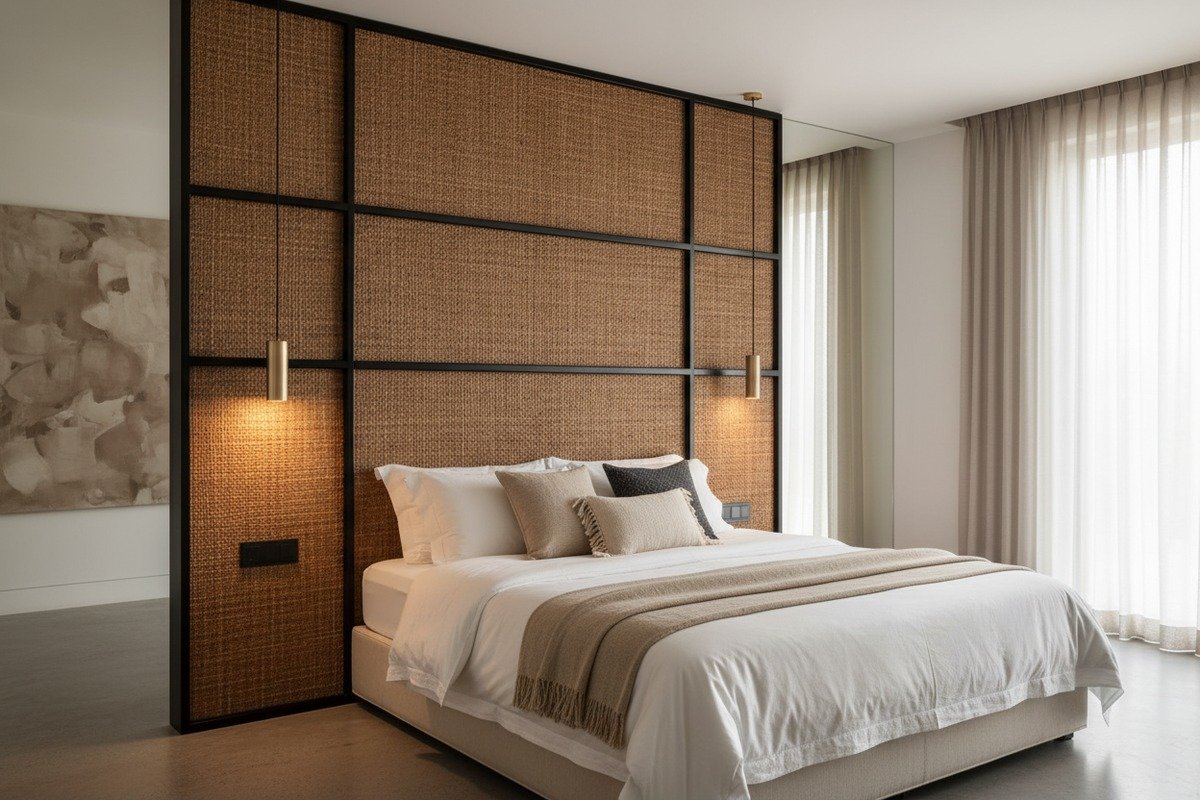
For those working with large walls, you may need to seam two sheets together. Overlap them by half an inch, staple both layers, and glue the seam flat. Our clients who build headboard panels for queen or king beds use this technique regularly.
How do I choose the best rattan webbing grade for my wall decoration project?
Over the years, our team has graded and sorted millions of meters of rattan cane webbing across three factories. We have seen firsthand how the wrong grade can ruin an otherwise beautiful wall project. Choosing well is not complicated, but it does require understanding a few key differences.
The best rattan webbing grade for wall decoration depends on your aesthetic goals and budget. Grade A natural cane offers the cleanest weave and fewest imperfections, ideal for visible wall panels. Grade B works well for painted or covered projects. Synthetic and pressed cane suit high-humidity areas where natural rattan may warp.
Understanding Rattan Webbing Types
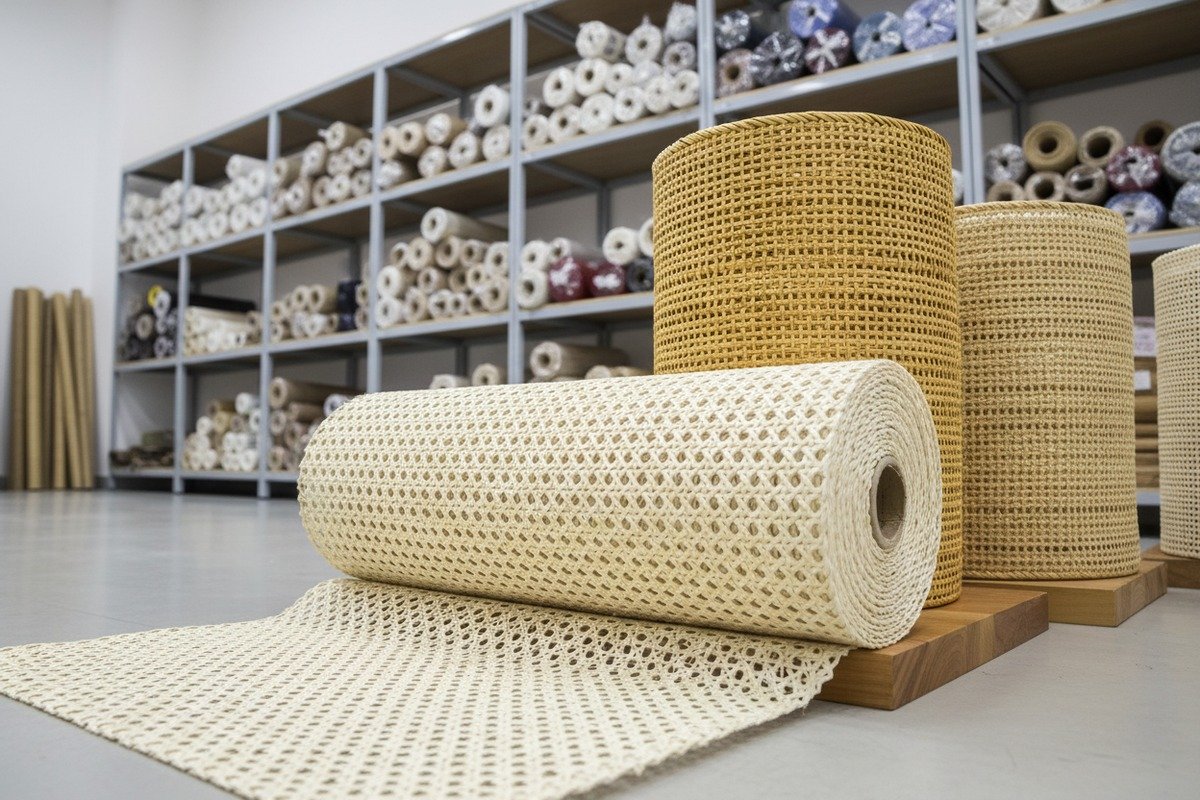
There are three main categories of rattan cane webbing. Each serves a different purpose.
Natural cane webbing is hand-woven from real rattan palm strips. It has an organic, slightly irregular texture that interior designers love. It needs soaking before use and performs best in dry, indoor environments.
Pressed cane webbing is made by machine-pressing natural rattan into a uniform sheet. It is more consistent than hand-woven cane but has less character. It does not need soaking and is easier to cut and attach.
Bande de rotin synthétique is made from plastic resin engineered to mimic natural rattan. It resists moisture, UV light, and insects. It works well for outdoor walls, bathrooms, or commercial spaces with high humidity.
Tableau comparatif des qualités
| Caractéristique | Grade A Natural | Grade B Natural | Pressed Cane | Rotin synthétique |
|---|---|---|---|---|
| Cohérence du tissage | Very uniform | Minor irregularities | Machine-uniform | Machine-uniform |
| Variation de couleur | Minimal | Modéré | Minimal | Aucun |
| Trempage requis | Yes (15–30 min) | Yes (15–30 min) | Non | Non |
| Meilleure utilisation | Visible wall panels, frames | Painted panels, hidden areas | Quick DIY projects | Humid or outdoor areas |
| Price per meter | $$ | $ | $$ | $$$ |
| Durabilité | 3–5 years indoors | 2–4 years indoors | 4–6 years indoors | 7–10+ years |
| Aesthetic feel | Artisanal, warm | Rustic, raw | Clean, modern | Consistent, less organic |
How to Pick the Right Grade for Your Project
Ask yourself three questions. First, will the webbing be fully visible or partly hidden? For open-face wall panels and framed art, Grade A natural cane is the best choice. Its clean weave and consistent color make it look polished without any paint or covering.
Second, what is your budget? Grade B natural cane costs less and works perfectly when you plan to paint the webbing, layer it behind glass, or use it in a less prominent area like a hallway or closet door.
Third, what is the environment? Our clients in the Middle East and Southeast Asia often choose synthetic rattan for wall projects in humid climates. Natural cane absorbs moisture and can warp or grow mold if it stays damp. Synthetic avoids this entirely.
Le motif compte aussi
Beyond grading, pattern choice changes the entire look. The classic le nid d'abeille hexagonal ouvert 7 — sometimes called "radio weave" — lets light pass through and creates beautiful shadow effects, especially with LED backlighting. A dense square basketweave feels more substantial and works better for large statement walls. Diamond motifs add geometric interest for modern or Scandinavian interiors.
When we advise our wholesale clients, we suggest ordering samples of two or three patterns before committing to a bulk roll. A small swatch held against your wall in natural light tells you more than any product photo can.
What are the most creative ways I can use rattan webbing for wall panels?
In our showroom in Nanhai, Foshan, we keep a wall of finished samples — and visitors always spend the most time in front of the creative wall panel section. Rattan cane webbing is not just a material you staple to a frame. It is a canvas for genuine design expression. The problem is that most people stop at the basic panel and never explore what else is possible.
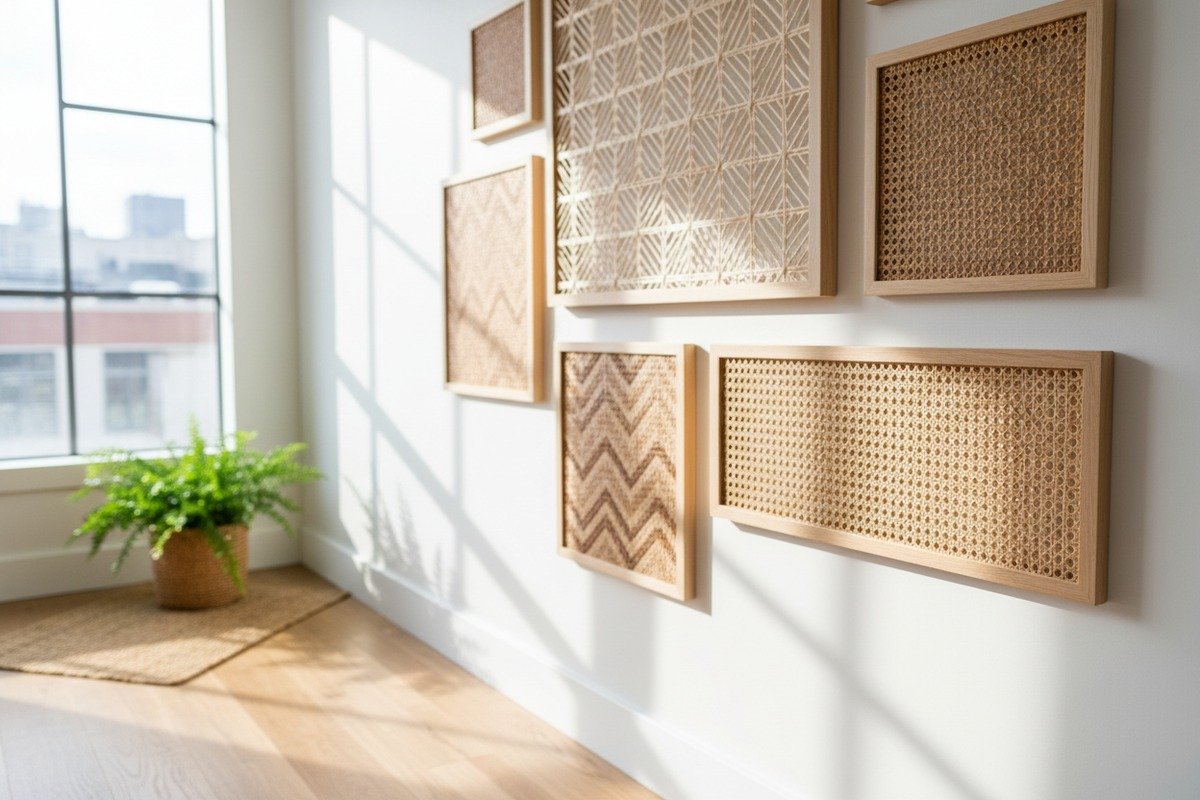
The most creative uses for rattan webbing wall panels include backlit LED panels that cast woven shadow patterns, modular grid systems with interchangeable seasonal decor, mixed-media art combining cane with copper or gold leaf, acoustic overlay panels for sound absorption, and integrated wall organizers with pockets for plants or photos.
Backlit Rattan Panels
This is one of the hottest trends we see among our hotel and resort clients. Mount a rattan panel about two inches off the wall using spacer blocks. Place warm-white LED strip lights 9 behind the panel along the frame edges. When lit, the open weave casts intricate shadow patterns across the wall and ceiling. The hexagonal open-mesh pattern works best for this because it allows the most light through.
The effect is soft and ambient. It transforms a hallway or bedroom wall into a statement feature for under $50 in materials.
Modular Wall Art Systems
Instead of one large panel, create a set of smaller squares or rectangles — say, 12 x 12 inches each. Frame each one individually. Arrange them in a grid on your wall with one to two inches of spacing between them. You can swap individual tiles seasonally. Add dried botanicals behind one panel in autumn. Tuck fairy lights behind another in winter. This system keeps your wall decor fresh without replacing anything permanently.
Mixed-Media Woven Art
This intermediate project combines rattan cane with metallic elements for real visual depth. Start with a wooden frame. Drill evenly spaced holes along the top and bottom rails. Thread long cane strips vertically through the holes. Then weave horizontal strips through them in a classic over-under pattern. Once the base weave is done, apply copper leaf or gold foil to select strands using adhesive sizing. The metallic highlights catch light differently throughout the day, giving the piece a dynamic, living quality.
Functional Wall Panels
Rattan webbing is not just decorative. Attach small hooks to a framed panel and you have a jewelry organizer. Sew fabric pockets onto the back of an open-weave panel and you have a wall-mounted planter holder. In our experience working with building material suppliers, functional wall panels sell especially well in small apartments where storage is limited.
Five Creative Project Ideas at a Glance
| Project | Difficulté | Time | Key Materials | Best Room |
|---|---|---|---|---|
| Backlit LED panel | Débutant | 1–2 hours | Cane webbing, LED strips, spacer blocks | Bedroom, hallway |
| Modular tile grid | Débutant | 2–3 hours | Small frames, cane squares, hooks | Living room, office |
| Mixed-media woven art | Intermédiaire | 3–4 hours | Cane strips, copper/gold leaf, frame with drilled holes | Dining room, entryway |
| Acoustic overlay panel | Intermédiaire | 2–3 hours | Acoustic foam, cane webbing, large frame | Home office, studio |
| Wall organizer with pockets | Débutant | 1–2 hours | Cane panel, fabric, small hooks | Bedroom, bathroom |
Trending Styles for 2025–2026
The boho revival continues strong. Cane webbing paired with earthy tones, jute rugs, and terracotta pots creates that "quiet luxury" feel popular in Airbnb renovations. But we also see a maximalist push — oversized panels painted matte black for a modern edge. On social platforms, cane-fronted closet doors and kitchen cabinet inserts are gaining traction fast. Our production data shows that orders for wall-specific cane webbing have grown steadily each year since 2021.
Sustainability drives much of this demand. Buyers prefer natural rattan over plastic alternatives. Thrift store frames upcycled with fresh cane webbing are a staple of DIY content online. The average project cost stays between $20 and $100, making it one of the most affordable ways to transform a room.
How do I maintain the durability and color of my rattan wall decorations?
One question we hear constantly from our wholesale clients — especially those reselling to end consumers — is about longevity. They want to promise their customers that rattan wall decor lasts. And it does, but only with proper care. Neglected rattan dries out, cracks, and fades. That is avoidable.
To maintain the durability and color of rattan wall decorations, keep them away from direct sunlight and high humidity. Dust regularly with a soft brush or vacuum on low suction. Apply a light coat of linseed oil or clear matte sealant once or twice a year. Seal all cut edges during installation to prevent fraying.
The Enemies of Rattan
Natural rattan has three main enemies: direct sunlight, excessive moisture, and neglect. UV light bleaches the warm golden tones to a pale, washed-out yellow. Moisture causes fibers to swell, warp, and eventually grow mold. And dust buildup in the open weave dulls the texture and makes it look dingy within months.
Understanding these threats is half the battle. The other half is simple, consistent maintenance.
Weekly and Seasonal Care Routine
Hebdomadaire : Use a soft-bristle brush or a vacuum cleaner with a brush attachment on the lowest suction setting. Gently sweep across the weave to remove dust. Do not press hard — the cane strands are strong but can shift out of alignment with excessive force.
Every 3–6 months: Wipe the surface with a slightly damp cloth (not wet). This removes accumulated grime without over-moisturizing the fibers. Let the piece air-dry completely before returning it to the wall.
Once a year: Apply a thin coat of boiled de l'huile de lin 10 or a water-based clear matte polyurethane. Use a small brush and work it into the weave. This seals the fibers, preserves the natural color, and adds a subtle sheen. Let it dry for 24 hours in a well-ventilated area. Some of our clients in the Netherlands use beeswax-based furniture polish instead — it works just as well and smells better.
What to Do When Damage Happens
Fraying edges are the most common issue. Prevent this during installation by sealing all cut edges with a thin line of clear-drying glue. If fraying appears later, apply a small dot of hot glue or clear nail polish to the loose strand and press it flat.
Cracking usually means the cane has dried out too much. You can sometimes revive brittle areas by lightly misting with water and then applying oil once the surface dries. However, if the cracks are deep, that section may need replacement.
Color fading from sunlight is mostly irreversible. Prevention is better than cure. Hang rattan panels on walls that do not receive direct afternoon sun. If that is not possible, use UV-protective window film on nearby glass.
Durability Expectations by Type
For realistic expectations, here is what we tell our clients based on years of product feedback:
| Type de rotin | Indoor Lifespan (with care) | Main Risk | Best Preventive Measure |
|---|---|---|---|
| Grade A natural cane | 4–6 years | Drying and cracking | Annual linseed oil application |
| Grade B natural cane | 3–4 years | Fraying and color loss | Edge sealing + UV avoidance |
| Pressed cane | 5–7 ans | Delamination | Avoid moisture contact |
| Rotin synthétique | 8–12+ years | UV fading (outdoor) | UV-resistant coating |
A Note on Humidity
We export to countries with vastly different climates — from dry desert markets in Saudi Arabia to tropical environments in Thailand and the Philippines. For dry climates, we recommend annual oiling without exception. For humid climates, we recommend synthetic or pressed cane and a dehumidifier in the room where the panels hang. Natural cane in a bathroom or kitchen near steam is a recipe for warping. Save it for living rooms, bedrooms, and hallways where moisture stays low.
With simple, consistent care, rattan cane webbing wall decorations stay beautiful for years. The effort is minimal — a few minutes each week and one afternoon each year. The reward is a warm, textured wall that only looks better as it ages gracefully.
Conclusion
Rattan cane webbing turns blank walls into warm, textured focal points — affordably and beautifully. Choose the right grade, install it properly, get creative with your design, and maintain it with simple care. Your walls will thank you for years to come.
Notes de bas de page
1. Defines rattan cane webbing as a natural, eco-friendly material. ↩︎
2. Defines pressed cane webbing as machine-pressed natural cane fibers. ↩︎
3. Offers a general definition and uses of staples as fasteners. ↩︎
4. The OSHA Education Center provides authoritative safety guidelines for using utility knives. ↩︎
5. Wikipedia offers a comprehensive and authoritative definition and explanation of French cleats. ↩︎
6. Explains natural cane as the outer skin of the rattan plant. ↩︎
7. Describes hexagonal mesh as a popular rattan weaving pattern. ↩︎
8. Explains synthetic rattan as a man-made fiber mimicking natural rattan. ↩︎
9. Provides a general overview of LED strip lights and their operation. ↩︎
10. Details linseed oil as a popular wood finish for protection and aesthetics. ↩︎

 English
  Español de México
  العربية
  Deutsch
  Français
  Русский