
Are you a crafter or furniture restorer looking for insights into rattan cane strips? Many find it challenging to select, prepare, and successfully use these versatile natural materials.
Working with rattan cane strips for crafts involves understanding their origin, proper preparation through soaking and shaping, and secure attachment methods. We at SeaFan Rattan provide high-quality natural cane, along with innovative plastic alternatives, to ensure your creative projects thrive.
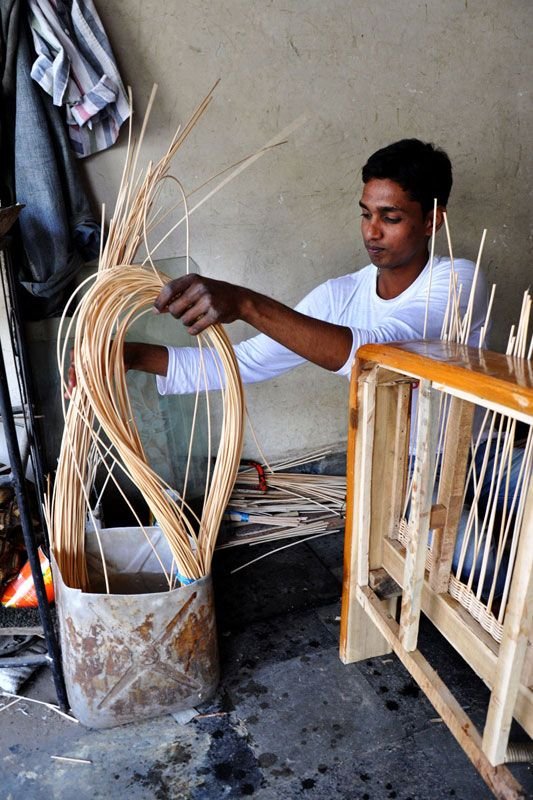
At SeaFan Rattan, my experience goes back to 1995. I have seen how much people love working with rattan. It is a beautiful material. I want to share my knowledge. I want to help you master rattan cane strips for your crafts and furniture projects.
What are cane strips?
Are you curious about the core material for classic woven patterns in crafts and furniture? Understanding what cane strips1 are is the first step in successful creation.
Cane strips are thin, flexible fibers taken from the outer, shiny bark of the rattan vine. They are known for their smooth surface and durability. Crafters use them for hand-weaving intricate patterns, such as chair seats, basketry, and decorative panels.
[^1]](https://rattanwholesaler.com/wp-content/uploads/2025/08/Pictureppppppppp1.png "Detailed image showing the smooth texture and tight weave of [cane strips](https://leisuretouchrattan.com/everything-about-rattan-cane-webbing/)[^1] in a chair seat")
When I explain rattan materials2, I always start by telling people what cane strips1 are. Cane strips are not the whole rattan plant. Rattan is the general name for the long, woody vine. Cane strips are made from the outer skin of this rattan vine. We peel this skin off the rattan poles. This outer skin is very tough and smooth. It is called cane. Then we cut it into thin strips of different widths. This gives us what we call rattan chair cane. It is designed for hand-weaving. This is different from rattan core, which comes from the inner part of the rattan pole and is more porous. Cane strips are perfect for intricate craft projects. They are also ideal for traditional chair caning patterns3, where you weave individual strands through pre-drilled holes.
Rattan is an eco-friendly product. It is a natural material, which means its supply can sometimes be short. We have four grades of rattan material: A, B, C, and D. For cane strips1 used in weaving, the appearance is important. So, usually, you would use Qualité A ou B4 for cane strips1. These grades have a clean, light color. Grade C is strong, but it might have green peel. This makes it less popular for crafts where the natural color shows. However, if you plan to dye or paint your woven piece a dark color, Grade C can be a cheaper and strong option for the strips. Grade D is usually too weak for weaving use; it is mostly for decoration where appearance is key but strength is not. My factory, Baizhao Rattan Cane Webbing Factory, has worked with these materials since 1995. We take care to process the cane strips1 so they are ready for weavers around the world.
How to shape a rattan cane?
Do you want to create curved or custom shapes for your rattan craft projects? Knowing the right techniques for shaping rattan cane5 makes your designs possible.
Shaping rattan cane requires soaking it in water to make it pliable and easy to bend. For simple curves, slow, steady pressure works. For more defined shapes or sharper bends, applying heat from a steamer or heat gun helps set the rattan permanently.
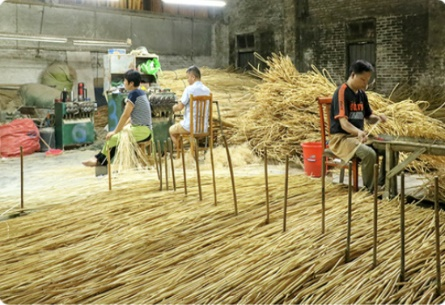
Shaping rattan cane for crafts or furniture is a skill I have seen perfected over many years. When working with whole rattan poles, or even thicker rattan core, the key is to make the material flexible first. You do this by soaking the rattan in water. For cane strips, a good soak makes them pliable for weaving, but for shaping a curve in a longer piece of cane, you might need a longer soak or even steam.
For most shaping, I recommend using warmth and moisture. You soak the rattan first. Then, you can gently bend it around a form or jig. For small curves in cane strips, simply soaking them in warm water for about 30 minutes makes them easy to work with. For more substantial bends, especially with rattan poles or thicker cane, steam is best. We use steam boxes in our factories to make rattan very flexible. You can also use a heat gun carefully, moving it constantly over the area you want to bend. This intense heat with the moisture makes the rattan fibers soft. Then you can slowly bend the rattan into the desired shape. You must hold it in that shape until it cools and dries. This sets the shape permanently. Remember to be patient. Bending too fast will cause the rattan to crack or break. The quality of the rattan matters here. A good Grade A or B rattan pole or cane will bend more smoothly than a lower grade. This process is crucial for making curved chair backs or decorative elements in craft projects.
- Steps for Shaping Rattan Cane:
- 1. Soak First: Immerse rattan in warm water. This makes it flexible.
- 2. Gentle Bending: For small curves, slowly bend around a form or jig.
- 3. Heat for Harder Bends: Use a steamer or heat gun for tighter curves.
- Apply heat evenly while bending slowly.
- 4. Set the Shape: Hold the rattan in its new shape until it cools and dries completely.
- Patience is Key: Avoid forcing the bend to prevent breakage.
How long to soak cane strips to weave?
Are you preparing to weave natural cane strips into a beautiful design? Knowing the correct soaking time is vital for making your material flexible and preventing breakage.
To prepare cane strips for weaving, soak them in warm water for about 30 minutes. This makes them pliable and easy to work with. Thicker strips or cooler water might need slightly longer soaking, but avoid over-soaking to maintain material integrity.
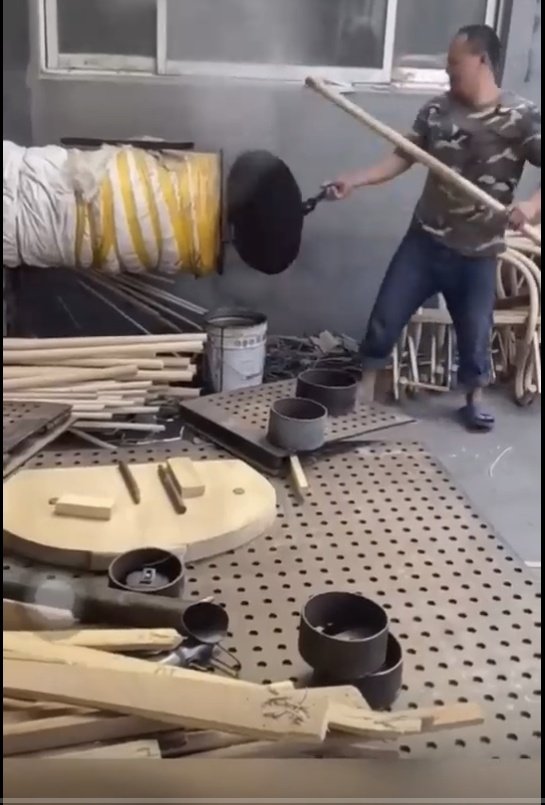
One of the most common questions I get from crafters and furniture restorers is about soaking cane strips. It is a critical step for success. If cane strips are too dry, they will break easily when you try to bend or weave them. If they are too wet, they can become mushy or lose their strength.
For standard natural rattan cane strips used in weaving, I recommend soaking them in warm water. About 30 minutes is usually enough. The warm water helps the fibers become soft and flexible. This makes them easy to maneuver without snapping. If you are using thicker cane strips, or if the water is colder, you might need to soak them for a bit longer, maybe up to an hour. However, do not leave them soaking for many hours or overnight. Over-soaking can weaken the cane and make it hard to work with, causing it to shred. When the strips are properly soaked, they feel soft and supple. They can bend easily without cracking. This applies to natural cane. Our plastic rattan cane webbing, which we developed since 2018 as costs for natural rattan rose, does not need soaking. It is already flexible and ready to use, offering an easier option for some projects. Proper soaking for natural cane ensures a tight, strong weave that will last.
- Soaking Guidelines for Natural Cane Strips:
- Purpose: To make strips pliable, reduce breakage, allow for tightening post-drying.
- Water Temperature: Use warm water for best results.
- Duration: Approximately 30 minutes for standard strips.
- Adjustments:
- Thicker strips: May need slightly longer.
- Cooler water: May need longer soaking time.
- Avoid Over-Soaking: Can weaken the material or make it mushy.
- Plastic Rattan: Does not require soaking.
How to adhere rattan to furniture?
You have woven or prepared your rattan cane strips for a furniture piece. Now, you need to know how to secure it firmly for a durable and professional finish.
Adhering rattan cane to furniture depends on its form. Woven cane webbing is typically secured into a routed groove using a rattan core (spline) and glue. Individual cane strips, for hand-caning, are woven through drilled holes and fastened with knots or pegs, often finished with a small molding.
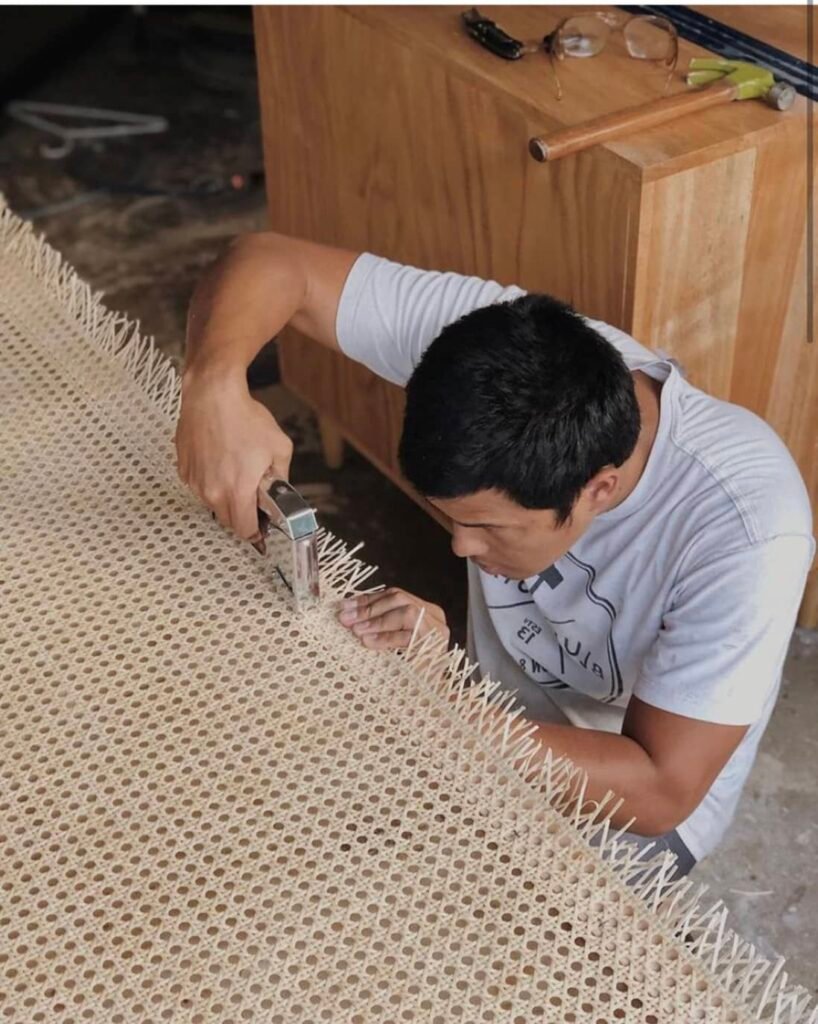
Adhering rattan to furniture is something I have seen done in many ways over the years. The method depends on the form of rattan you are using. For crafted items, you might be using individual cane strips for hand-caning, or woven rattan cane webbing.
For individual cane strips used in traditional chair caning, the process involves weaving the strips directly through a series of pre-drilled holes in the furniture frame. You start from the center and move outwards, creating specific patterns. At the end of each strip, you tuck the end through a nearby hole and secure it with a small wooden peg or a knot. Once all layers are woven, the tension from the dried cane creates a strong seat.
For projects using rattan cane webbing (which is pre-woven from many cane strips), the most common method uses a routed groove on the furniture frame. You first soak the webbing. Then, you gently lay the wet webbing over the opening. You press the edges of the webbing into the groove. A rattan core, also called a spline, is then hammered into the groove over the webbing. This locks the webbing in place. I always recommend using a strong woodworking glue in the groove before you put in the spline. This combination of spline and glue provides a very secure hold. After the spline is in, you trim any extra webbing for a clean look. For other rattan materials, such as rattan poles that are part of the frame, they are typically joined using screws, dowels, and strong adhesives. My factories supply all these materials, ensuring our customers like Jacky have the right elements for strong and beautiful furniture.
- Adhering Methods for Rattan:
- Individual Cane Strips (Hand-Caning):
- Weave through pre-drilled holes in furniture frame.
- Secure ends with small wooden pegs or knots.
- Finish with trim if desired.
- Rattan Cane Webbing (Pre-Woven):
- 1. Prepare: Soak webbing until pliable.
- 2. Placement: Lay wet webbing over furniture opening with a routed groove.
- 3. Secure: Press webbing into groove. Apply woodworking glue.
- 4. Spline: Insert rattan core (spline) firmly into the groove over the webbing.
- 5. Finish: Trim excess webbing.
- Rattan Poles (Structural):
- Typically joined with screws, dowels, or strong adhesives.
- Individual Cane Strips (Hand-Caning):
Can rattan be painted or stained?
You have completed your rattan craft or furniture piece. Now you want to personalize it with color. Can rattan materials take paint or stain effectively?
Yes, natural rattan can easily be painted or stained to match any aesthetic, providing great customization opportunities. Painting offers opaque color, while staining lets the natural texture show through. For quick color solutions, our pre-colored plastic rattan webbing is also available.
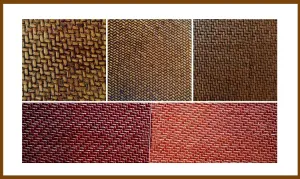
Many crafters and furniture designers, like Peter, want to customize their rattan pieces. They often ask if rattan can be painted or stained. The good news is, yes, natural rattan takes paint and stain very well! This flexibility allows for endless creative possibilities.
To paint natural rattan, first make sure the surface is clean and dry. Light sanding can help the paint stick better. Then, apply a primer. After the primer dries, you can apply your chosen paint. I recommend using multiple thin coats instead of one thick coat. This prevents drips and gives a smoother finish. For staining, prepare the rattan by cleaning it well. Then, apply your stain evenly. Rattan is porous, so it will absorb the stain. You can apply more coats for a darker color. After staining, always apply a clear topcoat or sealant. This protects the finish and makes it more durable. My personal experience shows that Grade C natural rattan, with its lower cost and potential green peel, is an excellent candidate for dark stains or paints. The finish covers any natural imperfections, giving you a strong, affordable base for a dark-colored piece.
The story changes with our Plastic Rattan Cane Webbing. We developed this material, especially since 2018, as a response to the high cost and shortage of natural rattan raw material. Our plastic webbing comes in many pre-developed colors and patterns. This means you do not have to paint or stain it. If you need a specific color, you can choose it directly from our wide range. This saves crafters and designers time and effort. It also provides a consistent color that does not fade as easily as some painted or stained natural materials, especially if used in the outdoor environment. From 2025, our outdoor plastic rattan cane webbing will be even more advanced, offering robust colorfastness for exterior use. So, whether you prefer the hands-on approach of painting natural rattan or the convenience of pre-colored plastic, we have options for your craft projects.
- Painting Natural Rattan:
- Preparation: Clean and dry surface, light sanding.
- Process: Apply primer, then multiple thin coats of paint.
- Result: Opaque, customizable color.
- Utility: Good for Grade C rattan to hide imperfections.
- Staining Natural Rattan:
- Preparation: Clean surface.
- Process: Apply stain evenly; multiple coats for darker color. Protect with a sealant.
- Result: Highlights natural texture, changes hue.
- Plastic Rattan Cane Webbing:
- Advantage: Available in many pre-developed colors and patterns.
- Benefit: No need to paint or stain, saves time, consistent color.
- Future (2025): Outdoor plastic webbing with robust colorfastness.
Conclusion
Working with rattan cane strips for crafts involves knowing the material, precise preparation, secure adherence, and versatile finishing options. We provide quality natural and plastic rattan to support your creativity.
-
Explore this link to understand the versatility of cane strips in various crafting projects. ↩ ↩ ↩ ↩ ↩
-
Learn about the various rattan materials and their applications in furniture and crafts. ↩
-
Find out more about traditional chair caning patterns and how to create them effectively. ↩
-
Discover the quality differences between rattan grades and how they affect your crafting choices. ↩
-
Explore expert techniques for shaping rattan cane to enhance your crafting skills and achieve beautiful designs. ↩


 English
  Español de México
  العربية
  Deutsch
  Français
  Русский