
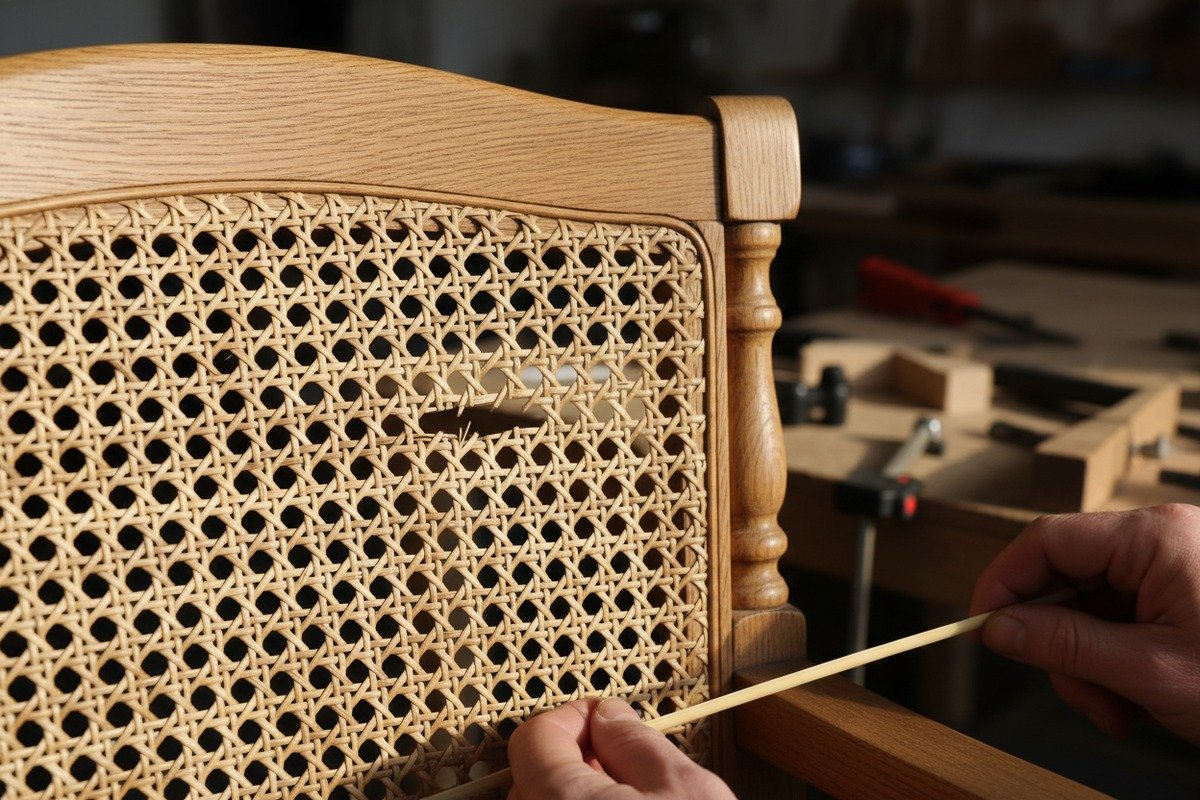
Every week, our customer service team receives photos from buyers showing small tears or broken strands in rattan cane webbing panels Open hexagonal (honeycomb) 1. The damage looks minor. The instinct is to patch it and move on. But that quick fix often leads to bigger problems down the road.
Yes, you can repair partial breaks in natural rattan cane webbing using patching techniques for small holes or loose strands. However, experts widely recommend full panel replacement for lasting structural integrity, as rattan webbing relies on uniform tension across the entire sheet to perform properly.
In this guide, we will walk you through when a partial repair makes sense, when full replacement is the smarter choice, and how to handle both Close weave (basketweave) 2. Whether you run a furniture factory or a material supply business, this article gives you the practical knowledge you need.
How can I effectively mend small breaks in my natural rattan cane webbing?
Through years of supplying rattan webbing to furniture factories across Europe and Southeast Asia, our team has seen every type of damage imaginable Tissage radio 3. A single broken strand can spiral into a full panel failure if handled wrong.
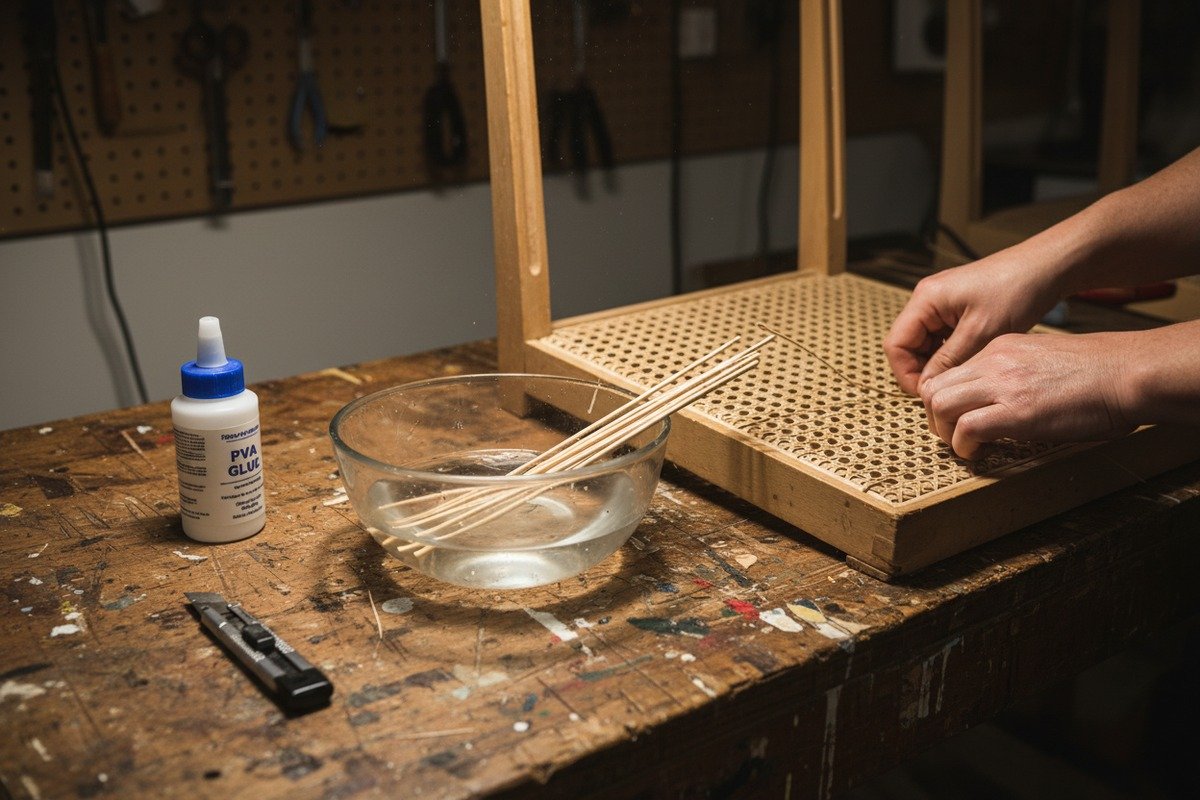
To mend small breaks effectively, isolate the damaged strands, soak replacement rattan in water for 20–30 minutes, then carefully weave new strands into the existing pattern. Secure them with white PVA glue and allow 24 hours of drying time before applying any load.
First, Assess the Type of Damage
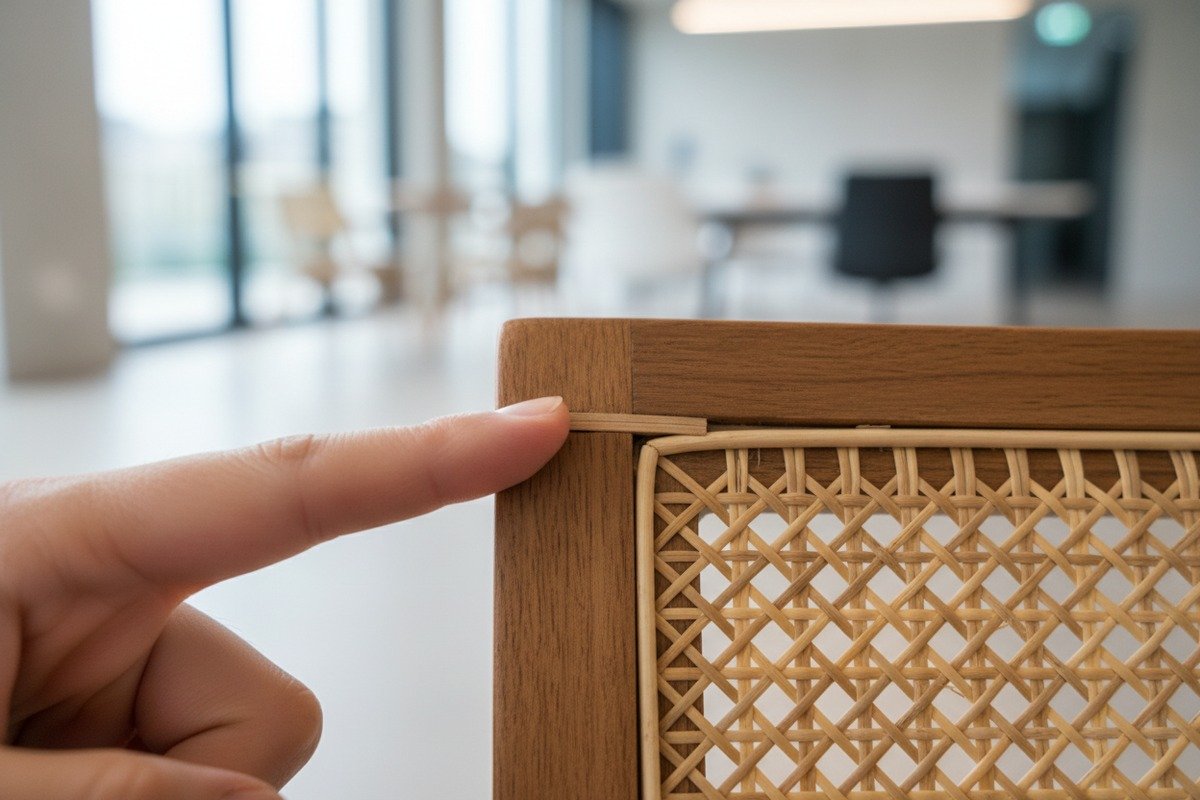
Before touching any tools, look closely at your rattan panel. Not all breaks are the same. You need to identify whether you have a pressed cane (sheet webbing in a groove) or hand-woven cane 4 (individual strands woven through holes). Most of what we supply is pressed cane webbing 5, which is the more common type used in modern furniture production.
Check for these signs:
- A groove running around the perimeter means it is pressed cane.
- Individual strands threaded through drilled holes means hand-caned.
- A small hole or tear under one inch is a candidate for patching.
- Multiple broken strands or sagging means the panel needs full replacement.
Step-by-Step Patching for Small Breaks
Here is the process our factory technicians recommend for minor damage:
- Nettoyez la zone. Remove dust and residue with a damp cloth. Dirty surfaces prevent good adhesion.
- Soak replacement strands. Cut matching rattan strands and soak them in warm water for 20–30 minutes. This makes them flexible.
- Remove broken strands. Use a sharp cutter 6 to carefully cut away only the damaged portion. Do not pull, as this can unravel surrounding weave.
- Weave in new strands. Follow the original pattern exactly. Tuck the ends under adjacent strands for a secure hold.
- Appliquer de la colle. Use a small amount of white PVA glue 7 at each junction point. Avoid over-gluing, which traps moisture and causes brittleness.
- Let it dry. Allow a full 24 hours before the piece bears any weight.
When Patching Works and When It Doesn't
| Scenario | Patch Viable? | Action recommandée |
|---|---|---|
| Single broken strand, low-use item | Oui | Weave and glue replacement strand |
| Hole smaller than 1 inch | Oui | Patch with matching rattan mesh |
| Multiple broken strands in one area | Non | Replace full panel |
| Sagging or loss of tension across panel | Non | Replace full panel |
| Damage near groove edge (pressed cane) | Non | Replace full panel |
The key takeaway is this: patching works for cosmetic fixes on decorative pieces. For chairs, stools, or anything bearing weight, a patch will likely fail because rattan webbing depends on even tension across the entire sheet. One weak spot transfers stress to surrounding strands, and they break next.
Reinforcing From the Underside
One technique that extends the life of a small repair is adding a discreet backing material underneath. A thin piece of matching cane mesh, glued to the underside of the repaired area, distributes stress more evenly. This is not a permanent solution, but it can buy time for seasonal furniture or display pieces that do not bear heavy loads.
Is it more cost-effective for my business to repair or replace damaged rattan?
When we discuss bulk orders with our wholesale clients in the Netherlands, Australia, or the Middle East, this question comes up constantly. Nobody wants to waste material. But nobody wants callbacks from unhappy end customers either.
For most businesses, replacing damaged rattan cane webbing is more cost-effective than repairing it. Repair labor costs typically exceed the material cost of a new sheet, and repaired panels have a significantly higher failure rate, leading to warranty claims and lost customer trust.
Breaking Down the Real Costs
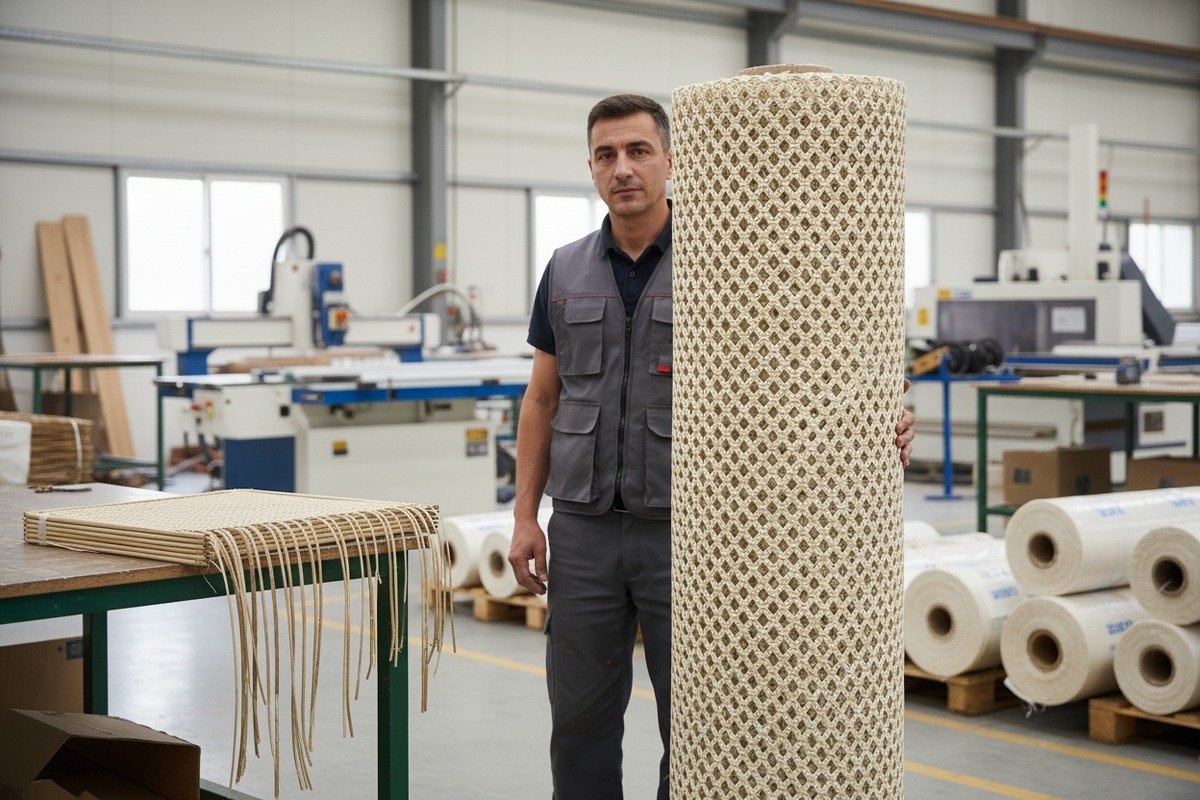
Let us look at this from a production standpoint. The raw material cost of a standard pressed cane webbing sheet is relatively low, especially when purchased at wholesale volume. The labor cost to carefully patch, weave, and glue a repair often exceeds the cost of simply installing a fresh panel.
Here is a comparison based on typical scenarios we see from our furniture factory clients:
| Facteur de coût | Repair (Per Panel) | Full Replacement (Per Panel) |
|---|---|---|
| Material cost | $2–5 (strands + glue) | $8–15 (full sheet + spline) |
| Labor time | 45–90 minutes | 20–35 minutes |
| Estimated labor cost | $15–30 | $7–12 |
| Failure rate within 6 months | 30–50% | Under 5% |
| Customer complaint risk | Élevé | Très faible |
| Total effective cost | $17–35 + risk | $15–27 |
The Hidden Cost of Callbacks
This is where the math really matters. When a repaired panel fails in the field, your business absorbs the cost of the complaint, the return shipping, and the second repair or replacement. For a furniture wholesaler serving retail chains, even a small batch of failures can damage a supplier relationship that took years to build.
One of our long-term clients in Turkey shared that switching from a repair-first policy to a replace-first policy for any panel with more than one broken strand reduced their after-sales complaints by over 60% in a single year. The upfront cost was slightly higher. The total cost was much lower.
When Repair Still Makes Business Sense
There are situations where repair is the right call. Antique or vintage furniture with original cane webbing may have historical value that justifies the extra labor. Custom one-off pieces with unusual weave patterns may be difficult to source replacements for quickly. And sample pieces or showroom displays that do not bear weight can be patched without risk.
But for production runs, retail inventory, or any piece that will be sat on, leaned on, or used daily, replacement wins every time.
What materials do I need to match my existing rattan webbing for a seamless repair?
Matching rattan is one of the trickiest parts of any repair. At our processing facility in Indonesia, we grade and sort rattan by species, diameter, color tone, and weave density. Even small mismatches are visible to the trained eye — and to picky end customers.
To match existing rattan webbing, you need the same weave pattern, strand width, mesh opening size, and color tone. Measure your groove width for the correct spline size, and obtain natural rattan strands or a webbing sheet from the same species and grade as the original panel.
Identifying Your Current Weave Pattern
Tissage de rotin naturel 8 comes in many weave patterns. The most common ones we ship to our global clients include:
- Open hexagonal (honeycomb) — the classic cane chair look with six-sided openings.
- Close weave (basketweave) — a tight, dense pattern with minimal gaps.
- Tissage radio — a sunburst or radiating pattern, often decorative.
- Square open mesh — simple grid pattern with uniform square openings.
- Diamond weave — diagonal pattern creating diamond-shaped openings.
You must match the exact pattern. Even a slight difference in opening size will be noticeable. Take a close-up photo of the existing weave and compare it side by side with supplier samples before ordering.
Key Measurements to Take
| Measurement | How to Measure | Pourquoi c'est important |
|---|---|---|
| Strand width | Use calipers on a single strand | Must match for visual consistency |
| Taille de l'ouverture du maillage | Measure the gap between strands | Determines weave density and pattern |
| Largeur de la rainure | Insert a ruler or caliper into the channel | Spline must fit snugly; common sizes are 1/4 inch |
| Profondeur de la rainure | Use a thin probe or toothpick | Determines how much cane is pressed in |
| Panel dimensions | Measure length and width of groove opening | Cut webbing 1–2 inches oversized on each side |
Color Matching Challenges
New rattan is lighter than aged rattan. This is the biggest challenge in partial repairs. Over time, natural rattan darkens due to UV exposure 9, oils from handling, and applied finishes. A fresh strand next to a five-year-old panel will stand out.
Here are three approaches to bridge the color gap:
- De-wax and stain. Remove the natural waxy coating on new rattan with a de-waxing solution, then apply a wood stain that matches the aged tone. Test on a scrap piece first.
- Light sanding. Gently sand the new rattan with fine-grit sandpaper (220+) to open the pores, then apply a diluted wood dye.
- Natural aging. For non-urgent projects, expose the new rattan to indirect sunlight for several weeks. It will darken naturally, though this is slow and imprecise.
For full panel replacements, color matching is less critical since the entire surface is uniform. This is yet another reason why replacing beats patching for visible furniture pieces.
Sourcing the Right Materials
When ordering replacement materials, specify the following to your supplier:
- Rattan species (if known)
- Weave pattern name or a reference photo
- Strand diameter in millimeters
- Desired color (natural, bleached, or stained)
- Spline diameter to match your groove
- Quantity in square meters or linear meters
Our team always recommends ordering a sample swatch before committing to a bulk purchase. A $5 sample can save you from a $500 mistake.
How can I prevent my rattan cane webbing from cracking or breaking in the future?
Prevention is something we talk about with every new wholesale client during onboarding. When our team ships rattan webbing rolls to Spain or the USA, we include handling and storage guidelines because we know that most damage happens after the material leaves our warehouse.
Prevent rattan cane webbing from cracking by maintaining consistent indoor humidity between 40–60%, avoiding direct sunlight and heat sources, cleaning with mild soap and a damp cloth only, and never applying varnish or shellac that traps moisture and causes brittleness over time.
Understanding Why Rattan Breaks
Natural rattan is a plant fiber. It absorbs and releases moisture from the surrounding air. This is what keeps it flexible. When the environment is too dry, the fibers shrink, become rigid, and crack. When it is too wet, mold can develop. The sweet spot is a stable humidity between 40% and 60%.
Here are the most common causes of rattan damage:
- Low humidity. Central heating in winter dries indoor air below 30%, making rattan brittle.
- Direct sunlight. UV rays break down the natural fibers and cause uneven drying.
- Heat sources. Placing rattan furniture near radiators, fireplaces, or heating vents accelerates drying.
- Improper cleaning. Soaking rattan or using harsh chemical cleaners strips natural oils.
- Sealing with varnish. Varnish and shellac prevent the rattan from breathing, trapping moisture inside and causing internal rot or surface cracking.
- Impact damage. Dropping heavy objects on webbing or pressing sharp items through the mesh.
Maintenance Best Practices
Regular, simple care extends the life of rattan webbing dramatically. Here is what we recommend to all our clients:
- Dust weekly with a soft brush or vacuum with a brush attachment.
- Clean monthly with a cloth dampened in mild soapy water. Wring the cloth well — no dripping.
- Humidify in winter. Use a room humidifier or place a bowl of water near rattan furniture.
- Rotate furniture. If a piece sits near a window, rotate it seasonally to ensure even UV exposure.
- Apply lemon oil sparingly. Once or twice a year, a light coat of lemon oil or boiled linseed oil keeps fibers supple without sealing them.
Storage Tips for Wholesalers and Factories
If you stock rattan webbing in a warehouse, storage conditions matter just as much as end-use conditions. We ship our rolls in protective packaging, but once opened, the material is exposed.
- Store rolls horizontally on racks, not standing upright, to prevent edge crushing.
- Keep the storage area ventilated and between 15–25°C.
- Avoid stacking heavy items on top of webbing rolls.
- Use the oldest stock first (FIFO rotation) to prevent long-term drying.
- If your warehouse is in a dry climate, consider a light misting system or dehumidifier set to maintain 45–55% d'humidité relative 10.
The Long Game: Choosing the Right Grade
Prevention also starts at the sourcing stage. Higher-grade rattan with consistent strand diameter and fewer natural imperfections resists cracking better than budget-grade material. At our facility, we sort rattan into Grade A, B, and C based on strand uniformity, color consistency, and flexibility. Grade A costs more upfront but generates fewer complaints and returns over the product lifecycle.
For furniture factories producing mid-range to high-end pieces, the slight premium for Grade A rattan pays for itself in reduced warranty costs and better customer reviews.
Conclusion
Partial breaks in natural rattan cane webbing can be repaired for minor, cosmetic damage. But for weight-bearing furniture and commercial applications, full panel replacement remains the most reliable and cost-effective solution. Proper material matching, correct technique, and ongoing humidity control will keep your rattan looking and performing its best for years.
Notes de bas de page
1. Informative page discussing cane webbing, including the classic hexagonal design. ↩︎
2. Explains the characteristics of close weave patterns, offering privacy and a substantial appearance. ↩︎
3. Describes the distinctive 1×1 weave pattern of radio weave cane webbing. ↩︎
4. Explains the traditional craft of hand-woven cane and its characteristics in furniture. ↩︎
5. Defines pressed cane webbing and its common applications in furniture manufacturing. ↩︎
6. Provides safety guidelines and proper usage for utility knives in various tasks. ↩︎
7. Authoritative Wikipedia page explaining Polyvinyl acetate (PVA), also known as white glue. ↩︎
8. Explains the origins, characteristics, and uses of natural rattan cane webbing. ↩︎
9. Authoritative government source (EPA) on the health effects of UV radiation. ↩︎
10. Explains how relative humidity affects materials, causing stress and damage. ↩︎

 English
  Español de México
  العربية
  Deutsch
  Français
  Русский