
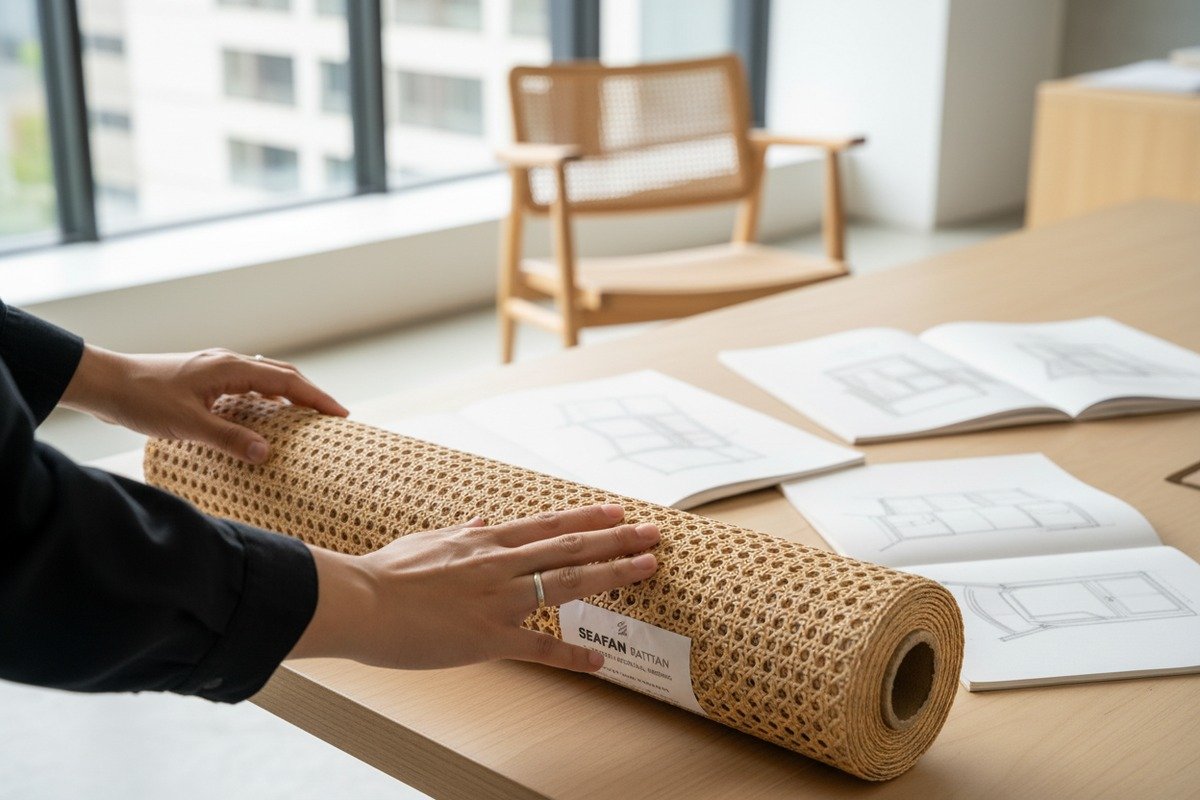
Every year, our production facility in Indonesia processes thousands of rattan cane webbing rolls, and the most common question we hear from buyers is simple: how long will it last UV Light 1? The answer is never straightforward. We have seen beautifully woven rattan panels last over two decades on indoor furniture, yet identical material degrade within a single monsoon season when left outside unprotected. This gap frustrates purchasing managers who need reliable numbers for their product warranties and marketing claims.
The lifespan of natural rattan cane webbing depends on five core factors: environmental exposure (UV, humidity, temperature), material quality grade, weave density, maintenance routines, and whether it is used indoors or outdoors. With proper care indoors, high-grade rattan webbing can last 20 to 30 years, while outdoor use without protection may shorten it to just 3 to 5 years.
Below, we break down each major factor so you can make smarter sourcing decisions and give your own customers clear guidance. Let’s start with the environment.
How does the humidity and sunlight in my region impact the durability of my natural rattan cane?
When we ship rattan cane webbing to buyers in the Netherlands versus Saudi Arabia, we already know the material will face completely different challenges. One region brings relentless moisture; the other brings intense UV. Both environments can cut the lifespan of the same roll of webbing in half if the end user is not prepared.
High humidity promotes mold, mildew, and fiber rot in natural rattan cane, while prolonged sunlight exposure causes fading, drying, and brittleness. Regions with stable, moderate indoor climates preserve rattan best. Extreme moisture or UV can reduce webbing lifespan from decades to just a few years without protective measures.
How UV Light Breaks Down Rattan Fibers
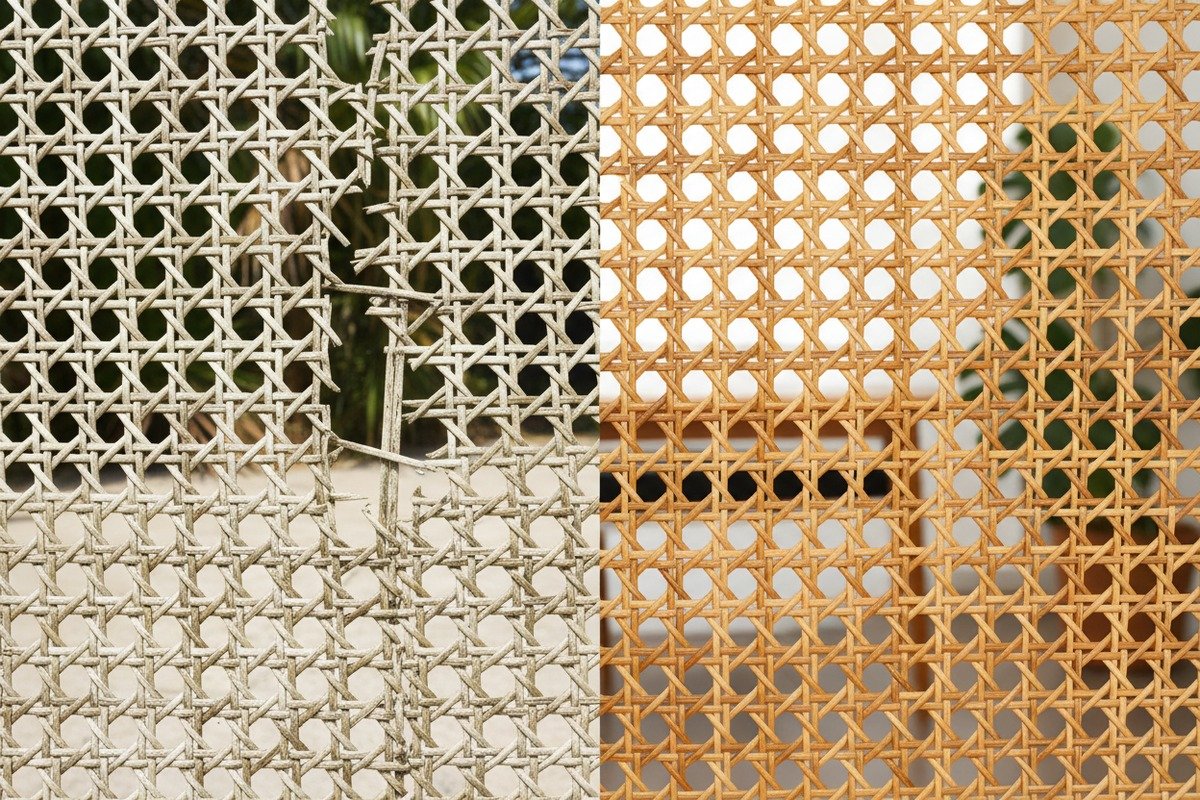
Sunlight is one of the most aggressive enemies of le cannage en rotin naturel 2. The UV rays penetrate the thin, porous surface of the cane and break down the lignin that holds the plant fibers together. Over weeks and months, the webbing fades from a warm honey tone to a pale, washed-out color. More importantly, the fibers lose flexibility. They become stiff and brittle. Small cracks appear first. Then the weave starts to snap under normal stress.
In our testing at the Foshan facility, samples left under direct tropical sunlight for 90 days showed a 40% reduction in résistance à la traction 3. Indoor samples in the same building, shielded from windows, showed less than 5% change. The difference is dramatic.
How Moisture and Humidity Cause Decay
Rattan cane is a natural plant material. It absorbs water. In regions with d'humidité relative 4 consistently above 70%, the fibers swell. When the humidity drops, they contract. This cycle of expansion and contraction loosens the weave over time. Worse, damp rattan is a breeding ground for moisissure et mildiou 5. These fungi eat into the fibers and cause dark staining, foul odors, and structural weakness.
We have received feedback from buyers in Southeast Asia who store rattan rolls in poorly ventilated warehouses. Within a few months, entire batches developed black mold spots. The material was unsalvageable.
Regional Impact Comparison
| Climate Type | Risque principal | Estimated Lifespan (Indoor, No Care) | Estimated Lifespan (Indoor, With Care) |
|---|---|---|---|
| Tropical (high humidity + strong UV) | Mold, fading, brittleness | 5–8 ans | 12–18 ans |
| Arid / Desert (low humidity + intense UV) | Drying, cracking, fading | 4–7 years | 10–15 ans |
| Temperate (moderate humidity + mild UV) | Gradual drying | 10–15 ans | 20–30 ans |
| Cold / Continental (low humidity + seasonal extremes) | Cracking from temperature swings | 8–12 years | 15–25 years |
Practical Steps for Different Regions
If your market is in a humid tropical zone, advise your end customers to keep rattan furniture in air-conditioned or well-ventilated rooms. A dehumidifier nearby helps. For arid regions, periodic light misting and oiling prevents the fibers from drying out completely. In temperate climates, the main concern is occasional direct sunlight through windows. Simple curtains or repositioning furniture away from south-facing glass makes a significant difference.
Temperature swings also matter. Rattan fibers expand and contract with heat and cold. If your buyer stores rattan furniture in an unheated garage during winter, expect cracking. Stable indoor temperatures between 15°C and 30°C are ideal.
What maintenance routines should I follow to prevent my rattan webbing from becoming brittle over time?
We often tell our wholesale buyers that selling rattan is only half the job. The other half is educating their customers on care. Our after-sales team tracks the most common complaints, and brittleness ranks at the top. The good news is that preventing it takes very little effort once you know the routine.
To prevent brittleness, clean rattan webbing regularly with a soft brush or vacuum, wipe it with a slightly damp cloth monthly, and apply linseed oil or mineral oil every 6 to 12 months. Avoid soaking, harsh chemicals, and prolonged dryness. A consistent care routine keeps fibers flexible and can extend webbing lifespan to 20–30 years indoors.
Step-by-Step Cleaning
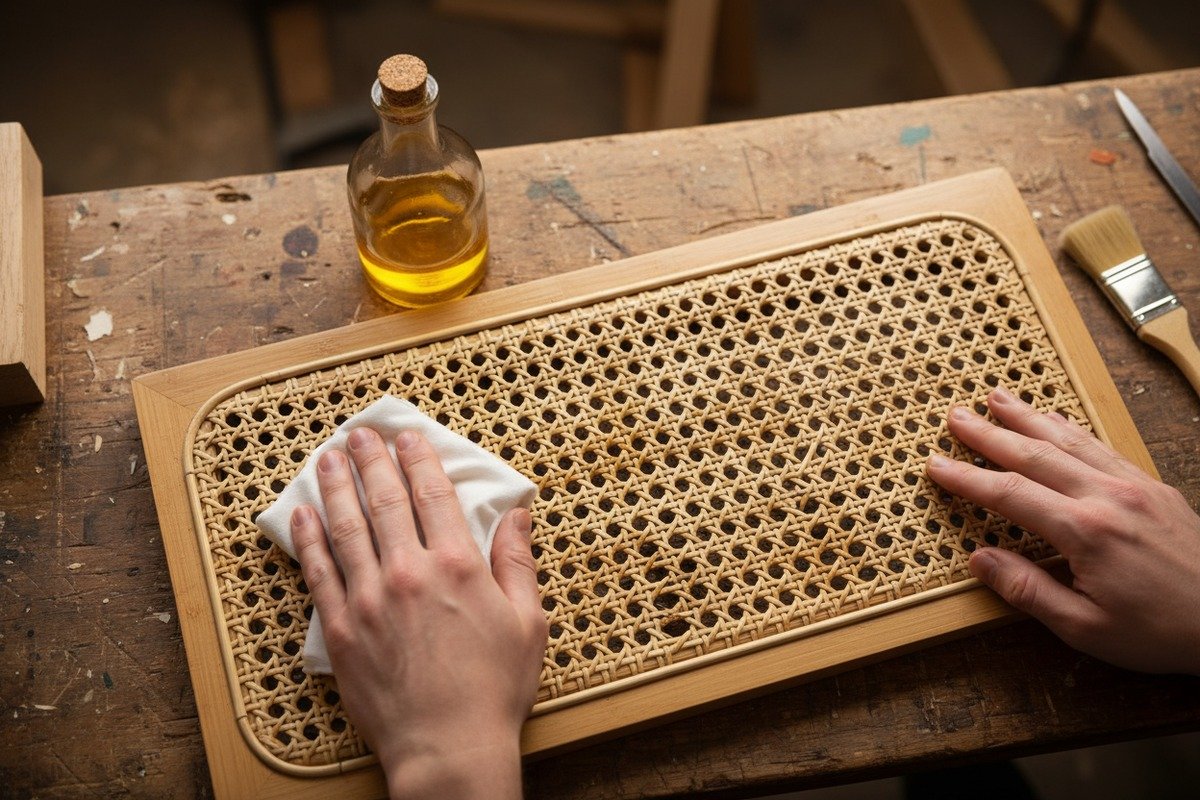
Dust is the silent enemy of rattan webbing. Fine particles settle into the weave and act like sandpaper when the furniture flexes. Over time, this abrasion weakens the fibers at every crossing point. A weekly pass with a soft-bristle brush or a vacuum with a brush attachment removes most surface dust. For deeper cleaning once a month, use a lightly dampened cloth. Wring it out thoroughly. You want the cloth barely moist, not wet. Wipe along the direction of the weave, not against it.
Never soak rattan webbing in water. Submerging it causes the fibers to swell unevenly, which loosens the weave structure and invites mold as it dries. If you need to remove a stubborn stain, a solution of mild soap and warm water applied with a soft cloth works well. Rinse the cloth, wipe again, and let the piece air-dry in a well-ventilated area.
Conditioning and Oiling
Dry fibers crack. It is that simple. Natural rattan loses its internal moisture content over time, especially in air-conditioned or heated rooms. Conditioning replaces that lost moisture and keeps the cane pliable.
Huile de lin 6 is the most traditional option. It penetrates the fibers, adds a subtle warm glow, and provides mild protection against insects. Huile minérale 7 is a lighter alternative that does not darken the rattan as much. Murphy's Oil Soap, diluted according to directions, is another popular choice among our European buyers.
Apply oil with a soft cloth. Use a thin, even coat. Let it absorb for 15 to 20 minutes. Then wipe off any excess. Over-oiling can make the surface sticky and attract more dust. Less is more.
Recommended Maintenance Schedule
| Tâche | Fréquence | Outils nécessaires | Temps requis |
|---|---|---|---|
| Dust removal (brush/vacuum) | Hebdomadaire | Brosse douce ou aspirateur avec embout brosse | 5 minutes |
| Damp cloth wipe | Mensuel | Slightly damp lint-free cloth | 10 minutes |
| Conditionnement à l'huile | Every 6–12 months | Linseed oil, mineral oil, or Murphy's Oil Soap; soft cloth | 20–30 minutes |
| Inspection for mold or cracks | Quarterly | Visual check; flashlight for hidden areas | 5 minutes |
| Deep clean (stain removal) | Au besoin | Mild soap solution, soft cloth, ventilated drying area | 30–45 minutes |
Ce qu'il faut éviter
Harsh chemical cleaners are a common mistake. Bleach, ammonia-based sprays, and solvent-based products strip the natural oils from rattan and weaken the fibers at a molecular level. We have seen samples treated with bleach become so brittle they snapped under finger pressure after just two weeks.
Also avoid placing rattan webbing furniture near heating vents, radiators, or fireplaces. Constant dry heat accelerates moisture loss in the fibers faster than any other factor. If you must place rattan near a heat source, increase oiling frequency to every three to four months.
A Note on Salt Water
An old technique from Southeast Asian craftsmen is to wipe rattan with a lightly salted water solution once or twice a year. The salt helps deter les insectes xylophages 8 and adds a slight stiffness that some users prefer. We recommend dissolving one tablespoon of salt in one liter of warm water, applying it with a cloth, and allowing it to air dry completely. This works best in tropical climates where insect activity is high.
How does the quality grade of the rattan I source affect the overall lifespan of my finished products?
Our grading team in Indonesia inspects every batch of raw rattan before it enters the weaving process. The difference between Grade A and a lower grade is not just cosmetic. It determines how that webbing will perform five, ten, or twenty years down the line. When buyers push for the lowest price, we always remind them that the cheapest material often becomes the most expensive mistake.
Higher-grade rattan cane webbing features uniform fiber thickness, tight and consistent weave patterns, and proper treatments like fumigation and preservation coating. These factors directly extend product lifespan to 20–30 years indoors. Lower grades with loose joints, uneven fibers, and no treatment may degrade in as little as 3–5 years, even with good care.
What Defines Quality Grade in Rattan Webbing
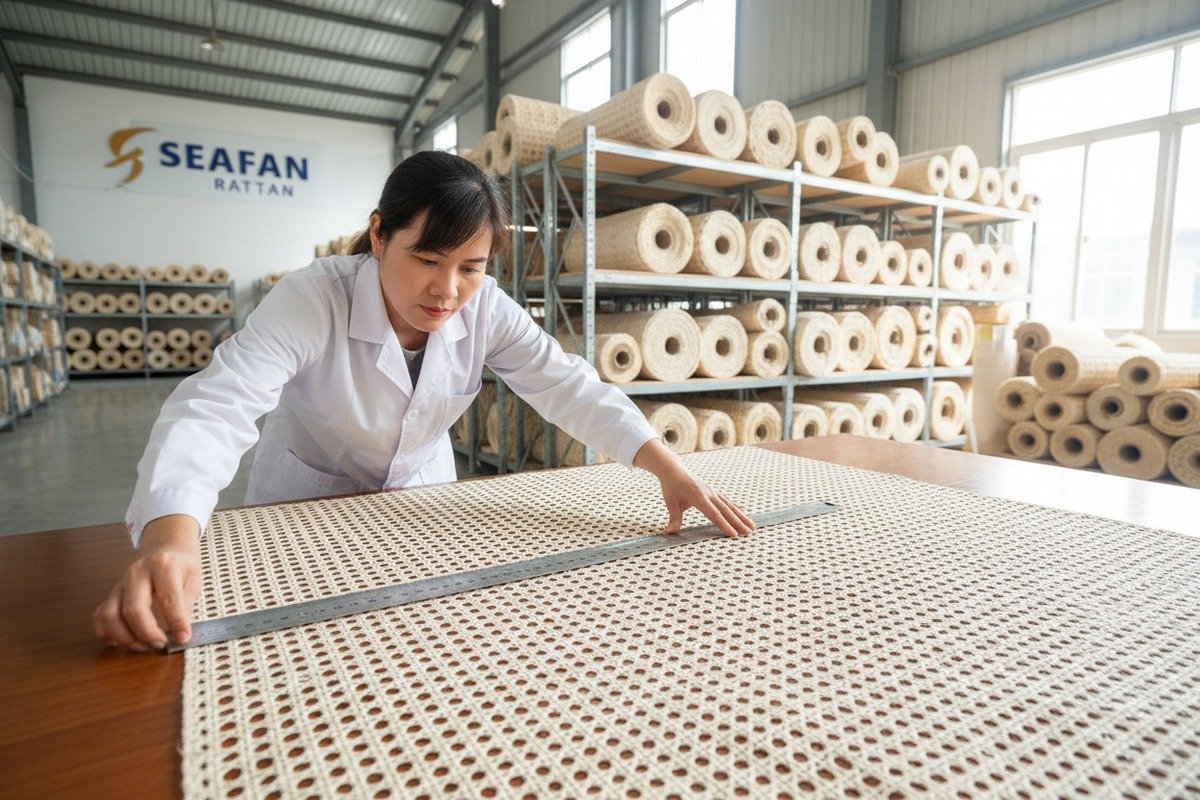
Not all rattan is equal. The palmier rotin 9 grows in tropical forests across Southeast Asia, and the age, species, and harvesting method all affect the final fiber quality. Young rattan vines produce softer, more porous cores. Mature vines yield denser, more resilient fibers. At our processing facility, we sort raw cane by diameter consistency, surface smoothness, and natural color uniformity before any weaving begins.
The weave itself matters enormously. A tight, even weave distributes stress across more contact points. When someone sits on a rattan-backed chair, the load spreads evenly. A loose or uneven weave concentrates force on fewer joints, which is where breakage starts. We have seen poorly woven webbing sag within six months of installation, while our tightly woven Grade A panels hold shape for years.
Treatment and Processing
Post-weaving treatment separates premium webbing from commodity product. Our standard process includes:
- Fumigation — Eliminates insect larvae and eggs embedded in the natural fibers. Without this step, wood-boring beetles can hollow out the cane from the inside, causing sudden failure.
- Preservation coating — A thin application of anti-fungal and anti-moisture agent that protects against mold without changing the natural appearance.
- Color stabilization — Light processing that evens out natural color variations and slows the darkening process that occurs with age.
Untreated rattan may look identical to treated rattan on delivery day. The difference shows up months or years later when the untreated batch develops insect holes, mold spots, or premature brittleness.
Tableau comparatif des qualités
| Caractéristique | Grade A (Premium) | Grade B (Standard) | Grade C (Économique) |
|---|---|---|---|
| Fiber uniformity | Highly consistent diameter and color | Minor variations in thickness | Noticeable irregularities |
| Serrage du tissage | Tight, no visible gaps | Mostly tight, occasional loose spots | Loose in multiple areas |
| Finition de surface | Smooth, minimal nodes | Quelques zones rugueuses | Rough, frequent nodes |
| Fumigation 10 | Yes, certified | Sometimes | Rarement |
| Preservation coating | Oui | Optional | Non |
| Expected indoor lifespan | 20–30 ans | 10–18 years | 3–8 years |
| Typical use case | High-end furniture, export market | Mid-range domestic furniture | Disposable decor, short-term use |
How to Spot Premium Webbing
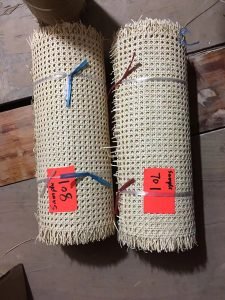
When evaluating a supplier's sample, run your fingers across the surface. Premium webbing feels smooth and slightly waxy from natural oils or treatment coatings. The weave should be tight enough that you cannot easily push individual strands sideways. Hold it up to light. Uniform gaps in the weave pattern indicate machine precision and good raw material sorting. Irregular or oversized gaps suggest rushed production or low-grade cane.
Check the edges of the roll. Fraying is normal to a small degree, but excessive loose fibers at the edges indicate poor cane quality or improper cutting. Ask the supplier for fumigation certificates and treatment documentation. Reputable suppliers provide these without hesitation.
The Cost-Benefit Reality
Yes, Grade A costs more per square meter. But consider the full picture. A furniture factory that uses Grade C webbing will face higher warranty claims, more negative reviews, and faster product replacement cycles. The upfront savings disappear quickly. From our experience supplying markets in the US, Australia, and Europe, buyers who invest in Grade A webbing report significantly fewer quality complaints and stronger repeat business from their own customers.
Why is the choice of indoor versus outdoor application critical for the longevity of my rattan materials?
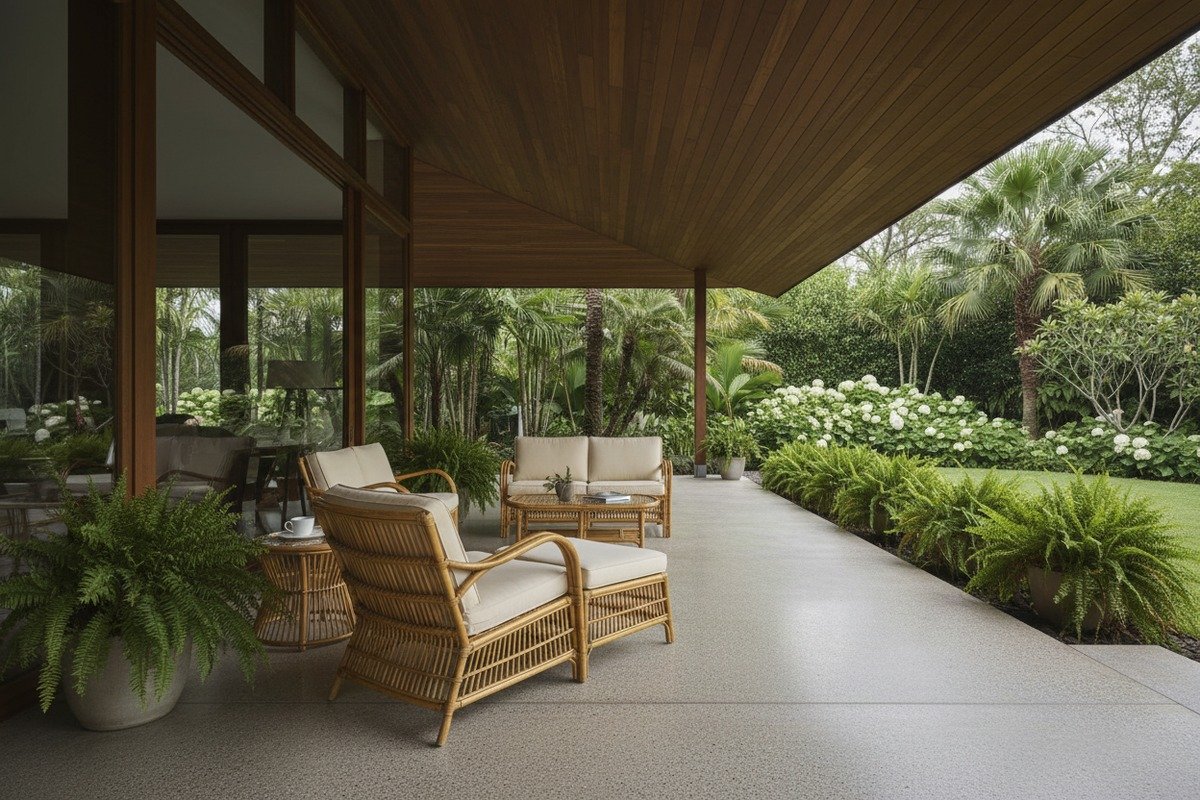
We process both natural and synthetic rattan at our facilities, and the single biggest factor determining which type a buyer should choose is where the finished product will live. Our export team has handled cases where beautiful natural rattan chairs were placed on an open patio in Greece. Within one rainy season, the webbing was ruined. That scenario is entirely preventable with the right guidance at the sourcing stage.
Indoor use is critical for natural rattan cane webbing longevity because controlled environments protect it from rain, direct UV, and temperature extremes. Indoors, well-maintained natural rattan can last 20–30 years. Outdoor exposure subjects it to moisture, sun, wind, and pests simultaneously, often reducing lifespan to 2–5 years without heavy protective intervention.
Why Outdoors Is So Destructive
Outdoor environments combine every threat to natural rattan at once. Rain soaks the porous fibers. Sun bakes them dry the next day. Humidity rises at night. Wind carries abrasive dust. Insects are more active. Temperature can swing 20°C or more in a single day. Each of these factors alone is manageable. Together, they create a cycle of damage that accelerates exponentially.
A natural rattan panel on a covered porch might survive a few years with regular oiling and seasonal covering. The same panel on an open deck in a coastal climate might not last a single year. The salt air adds another layer of corrosion to the fibers.
Natural vs. Synthetic for Outdoor Use
This is where the debate gets practical. Synthetic PE rattan was engineered specifically for outdoor use. It resists UV, does not absorb moisture, and is immune to insects and mold. In third-party testing, high-quality PE rattan showed no mold growth after 28 days in high-humidity chambers and maintained structural integrity at -20°C under 5 kg/m² snow loads. Natural rattan cannot match these numbers outdoors.
However, synthetic rattan lacks the organic warmth, breathability, and artisan character that natural rattan provides. For many furniture brands targeting the premium segment, there is no substitute for the real thing. The solution is not to avoid natural rattan but to use it where it performs best: indoors.
The Hybrid Approach
A growing trend we see among our European and Australian buyers is hybrid construction. They pair natural rattan cane webbing with aluminum or stainless steel frames designed for semi-outdoor spaces like covered patios, sunrooms, and conservatories. The metal frame handles the structural load and resists corrosion. The natural rattan provides the visual appeal. A removable or replaceable webbing panel means the owner can swap in fresh rattan every few years without replacing the entire piece.
This approach balances aesthetics, durability, and cost. It also aligns with the sustainability narrative that drives much of the current rattan market, since natural rattan is a renewable resource harvested from managed forests.
When Natural Rattan Can Work Outdoors
There are narrow scenarios where natural rattan performs acceptably outside. Fully covered areas with no direct rain or sun exposure—think a deep veranda in a temperate climate—can extend webbing life to 5–8 years with diligent care. Seasonal use is another option. Some of our buyers in Russia and Northern Europe use natural rattan furniture on patios only during summer months and store it indoors from October through April. This halves the environmental exposure and significantly extends lifespan.
But if a product will sit outside year-round without protection, we always recommend synthetic alternatives. It is better to set honest expectations than to deal with warranty claims and lost customer trust.
Indoor Best Practices for Maximum Lifespan
Even indoors, placement matters. Keep rattan webbing away from windows that receive strong afternoon sun. Use curtains, blinds, or UV-filtering window film. Maintain relative humidity between 40% and 60%. Avoid placing rattan directly against exterior walls in cold climates, where condensation can form. These small adjustments compound over years to deliver the 20–30 year lifespan that premium natural rattan is capable of achieving.
Conclusion
Natural rattan cane webbing is a remarkable material, but its lifespan depends entirely on the choices made during sourcing, installation, and ongoing care. Choose high-grade, properly treated webbing. Use it indoors whenever possible. Follow a simple maintenance routine. These three decisions alone can turn a 5-year product into a 25-year investment.
Notes de bas de page
1. Explains how UV radiation degrades lignin in natural fibers, leading to discoloration and strength loss. ↩︎
2. Provides a comprehensive overview of rattan, its species, and uses. ↩︎
3. Provides scientific data on the tensile properties of rattan strips used in furniture. ↩︎
4. Provides a clear and authoritative definition of relative humidity. ↩︎
5. Explains how high humidity, warm temperatures, and poor ventilation encourage mold growth on natural fibers. ↩︎
6. Provides a comprehensive overview of linseed oil, its composition, properties, and applications in wood finishing. ↩︎
7. Discusses mineral oil’s use as a non-toxic, food-safe wood finish that conditions and protects. ↩︎
8. Details the impact of Bostrichid Powderpost Beetles on rattan furniture and prevention methods. ↩︎
9. Provides information on rattan as climbing palms, their species, and geographical distribution. ↩︎
10. Explains approved fumigation treatments for timber and timber products to mitigate pest risks. ↩︎
 English
  Español de México
  العربية
  Deutsch
  Français
  Русский