
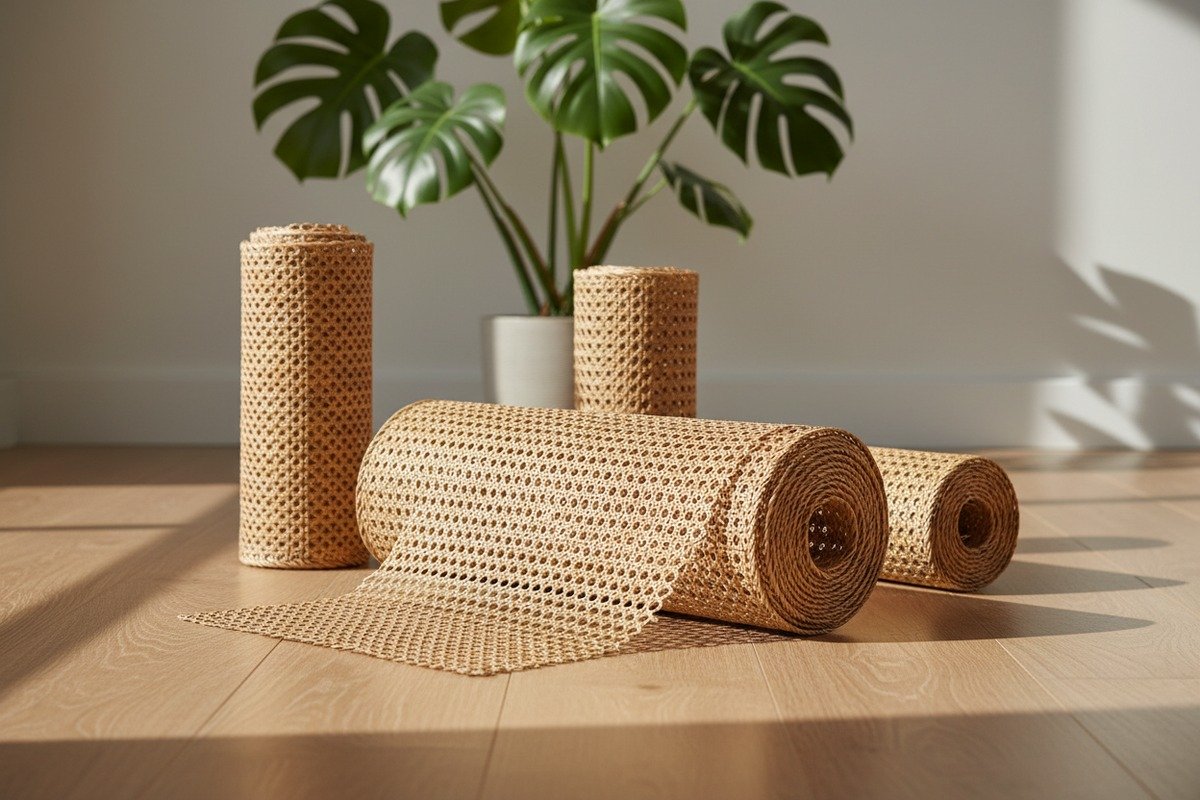
Every year, our production floor in Foshan processes thousands of rolls of cannage rotin 1, and the question we hear most from B2B buyers across Europe and the Middle East is straightforward: is this material truly sustainable, or is it just marketing? The concern is real. Furniture factories and wholesalers face growing pressure from end consumers who demand proof that the materials in their products do not harm the planet fully biodegradable 2. Greenwashing has made everyone skeptical. And yet, when we trace rattan’s journey from the Indonesian rainforest canopy to a finished weave on our factory rollers, the environmental story holds up under scrutiny.
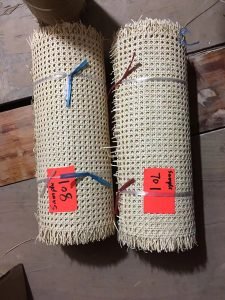
Natural rattan cane webbing is eco-friendly because it comes from a rapidly renewable climbing palm that matures in 2 to 7 years, biodegrades completely without releasing toxins, requires minimal chemical processing, supports tropical forest ecosystems, and offers a durable alternative to petroleum-based synthetic weaves.
Below, we break down the specific environmental claims behind rattan webbing volatile organic compounds (VOC) 3. Each section tackles a question our wholesale partners and furniture factory buyers ask us regularly, backed by what we see firsthand in our Indonesian rattan processing facility and across our supply chain.
How does the harvesting of natural rattan support my commitment to forest conservation?
When we first invested in our own rattan processing facility in Indonesia, one fact surprised us: the local communities harvesting rattan had a direct financial reason to keep the forest standing rather than clear it for palm oil or timber.
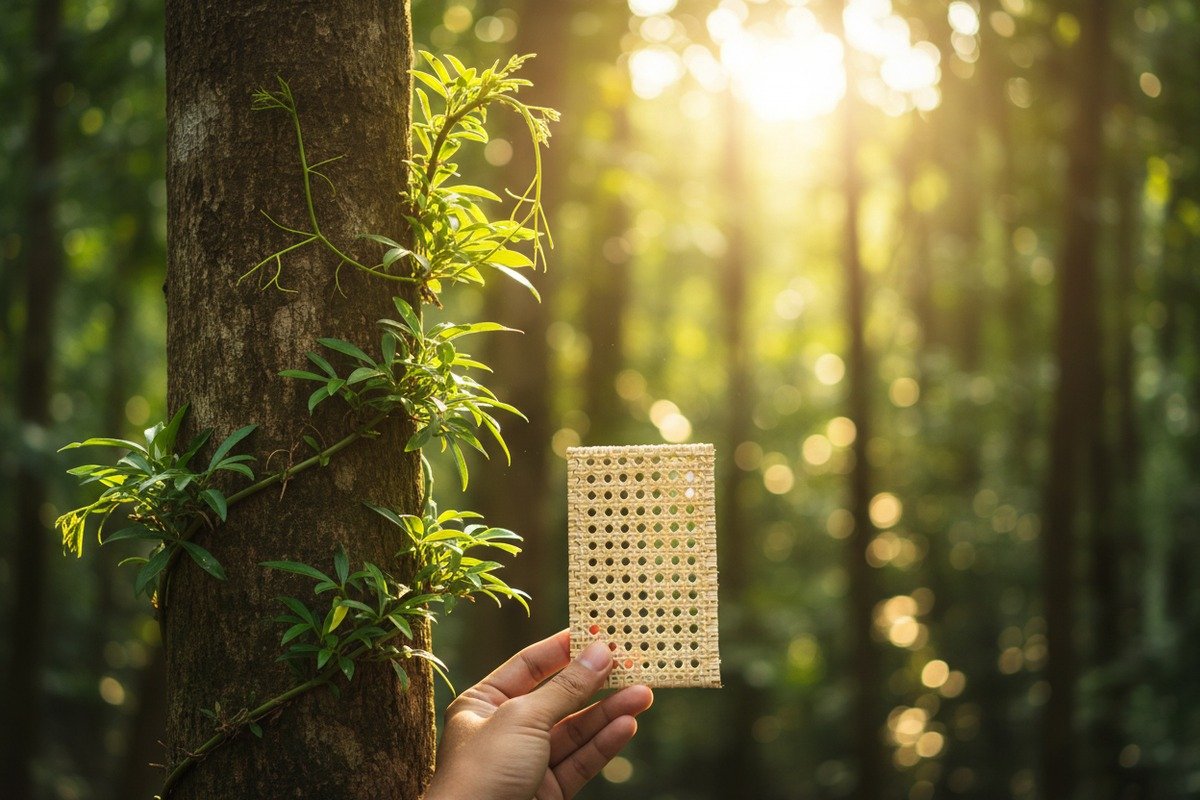
Harvesting natural rattan supports forest conservation because rattan is a non-timber forest product. It grows as a climbing vine inside existing rainforests, so harvesters must preserve the surrounding trees. This creates economic incentives for local communities to protect forest ecosystems rather than convert them to farmland.

Rattan Grows Inside the Forest, Not Instead of It
Unlike teak or mahogany, rattan does not require cleared land. It is a climbing palm that wraps around existing trees to reach sunlight. The host trees must remain alive for rattan to thrive. This biological fact turns rattan harvesting into a form of forest stewardship. Communities that earn income from rattan have a measurable reason to resist deforestation.
In regions across Kalimantan, Sulawesi, and Sumatra, rattan collection has been a generational livelihood. Our Indonesian sourcing teams work with these communities, and we see the pattern clearly: where rattan trade is active, forest cover tends to stay intact.
Rapid Renewability Reduces Pressure on Forests
Rattan matures far faster than hardwood timber. A rattan vine can be harvested in as little as 2 to 7 years, compared to 25 to 80 years for most tropical hardwoods. This fast turnaround means the same plot of forest can produce rattan repeatedly without ever being logged.
| Facteur | Rotin naturel | Tropical Hardwood Timber |
|---|---|---|
| Time to harvest maturity | 2–7 ans | 25–80 years |
| Requires forest clearing | Non | Yes (often) |
| Classified as non-timber forest product 4 | Oui | Non |
| Supports canopy biodiversity | Oui | Reduces it |
| Regrows after harvest | Yes, from same root | Requires replanting |
Carbon Sequestration and Biodiversity
Rattan plants absorb atmospheric carbon dioxide as they grow. Because they grow quickly and densely inside forest ecosystems, they contribute meaningfully to carbon sequestration 5. The intact forests they depend on also shelter thousands of species of birds, insects, and mammals. tropical forest ecosystems 6
However, it is important to be honest about limitations. Not all rattan is harvested responsibly. In some unmanaged regions, overharvesting has depleted wild rattan stocks. This is why we prioritize working with established community networks and track the origin of our raw materials. Responsible sourcing is not automatic. It requires effort and relationships built over years.
The Livelihoods Argument
When rattan provides stable income, families do not need to turn to slash-and-burn agriculture 7. This social dimension is often overlooked, but it is one of the strongest links between rattan trade and forest conservation. At our partner communities in Indonesia, rattan harvesting supports hundreds of families. The work is manual, skilled, and deeply tied to local knowledge of the forest.
Can I rely on the biodegradability of rattan webbing to reduce my business's environmental impact?
On our production lines, we handle both natural rattan cane webbing and synthetic PE rattan every day. The end-of-life difference between these two materials is dramatic, and it matters more than most buyers initially realize.
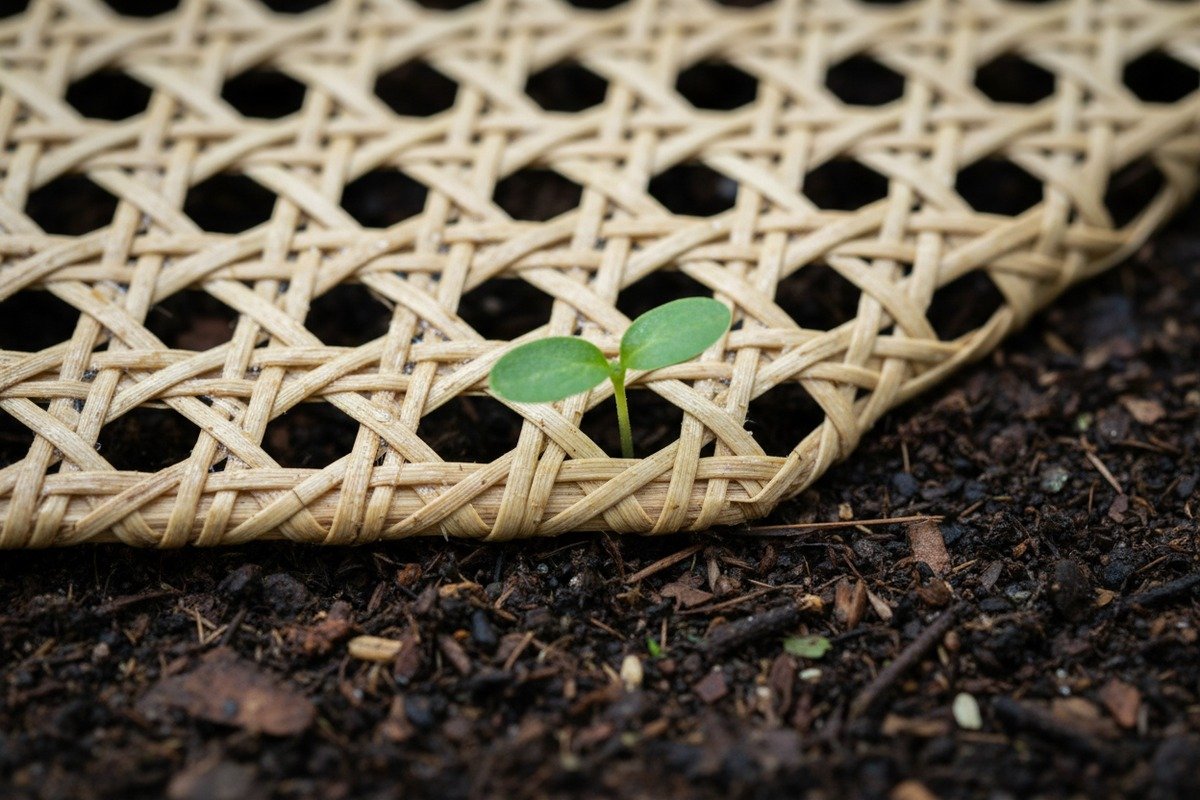
Yes, natural rattan cane webbing is fully biodegradable. When it reaches the end of its useful life, it decomposes naturally into organic matter without leaving behind microplastics, toxic residues, or persistent pollutants. This makes it a genuinely circular material that returns to the earth cleanly.
What Biodegradable Actually Means for Rattan
Biodegradability is not just a buzzword. It means microorganisms in soil can break down the material into water, carbon dioxide, and biomass. Natural rattan cane webbing is made from plant fiber — the peeled outer bark of the rattan palm. It contains cellulose, hemicellulose, and lignin 8. These are the same organic compounds found in wood and leaves. Soil bacteria and fungi break them down readily.
Synthetic rattan, by contrast, is made from polyethylene (PE) or polypropylene (PP). These are petroleum-derived plastics. They do not biodegrade in any meaningful timeframe. Instead, they fragment into microplastiques 9 that persist in soil and waterways for hundreds of years.
The Lifecycle Comparison
| Lifecycle Stage | Cannage en rotin naturel | Rotin synthétique PE |
|---|---|---|
| Raw material origin | Renewable plant fiber | Petroleum (fossil fuel) |
| Manufacturing energy | Low (handweaving or simple machine peeling) | High (extrusion, molding) |
| Additifs chimiques | None or minimal | UV stabilizers, plasticizers, colorants |
| End-of-life decomposition | Full biodegradation (months to a few years) | No biodegradation (hundreds of years) |
| Microplastic release | Zéro | Yes, ongoing |
| Compostable | Oui | Non |
Durability Does Not Conflict with Biodegradability
A common concern from our furniture factory buyers is this: if rattan is biodegradable, does that mean it falls apart quickly? No. Biodegradation requires specific conditions — moisture, soil contact, microbial activity. Inside a home, on a chair seat or cabinet door, rattan cane webbing is protected from these conditions. With basic care, it lasts for decades. We have seen restored furniture with original rattan webbing that is 40 or 50 years old.
The key is that when rattan is eventually discarded, it does not become permanent waste. It re-enters the natural cycle. This is the essence of a circular material. Your furniture factory clients can market this honestly. End consumers increasingly value products that do not create long-term pollution.
Practical Implications for Your Supply Chain
If your business serves the European or Australian market, you already know that extended producer responsibility (EPR) regulations are tightening. Materials that are difficult to recycle or that generate microplastics face increasing scrutiny. Natural rattan cane webbing sidesteps these concerns entirely. It is compostable, non-toxic, and leaves no harmful residue. For procurement managers building a sustainability narrative, this is a concrete, verifiable claim.
Are there any harmful chemicals used in the processing of the rattan cane I source?
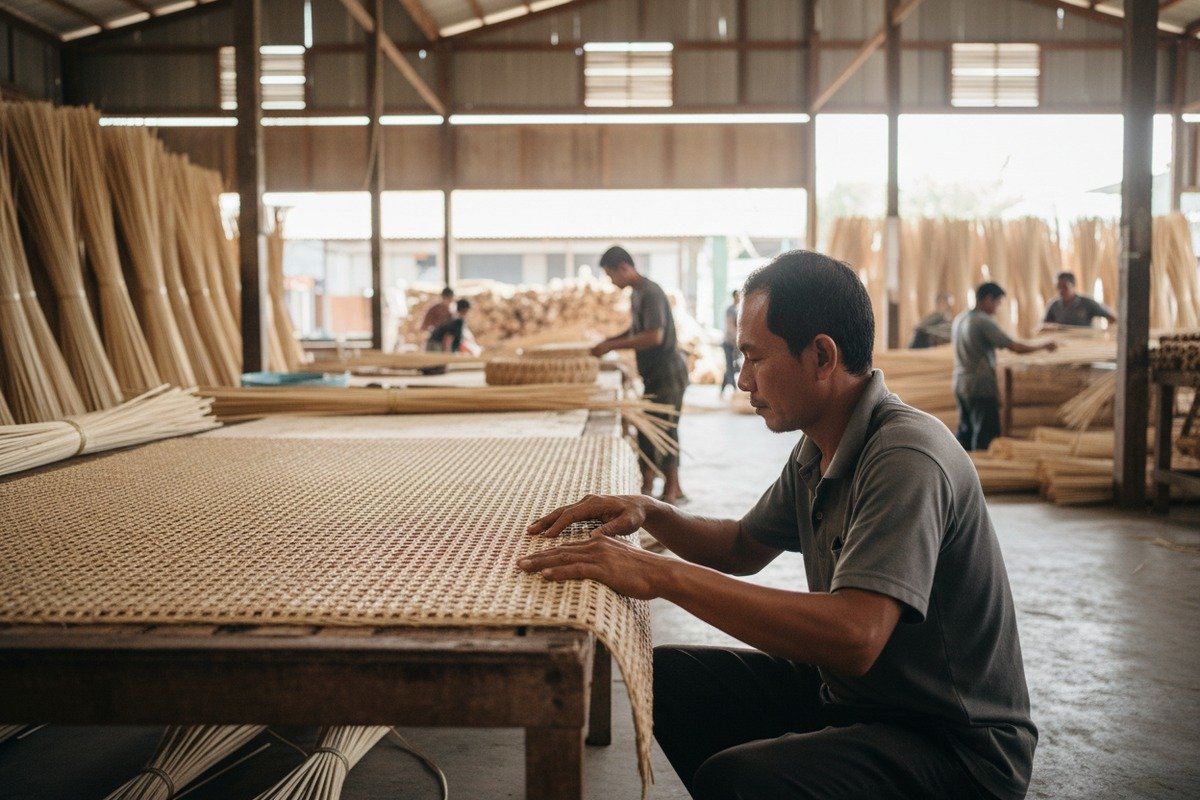
When buyers visit our Foshan facility or our Indonesian processing plant for the first time, they often expect to see chemical vats and heavy machinery. What they find instead is far simpler, and that simplicity is a core part of rattan's environmental advantage.
Natural rattan cane webbing processing involves minimal to no harmful chemicals. The outer bark is peeled mechanically or by hand, then dried, sorted, and woven. Unlike synthetic alternatives, natural rattan does not require plasticizers, UV stabilizers, petroleum-based coatings, or chemical adhesives during standard production.
The Standard Processing Steps
The journey from raw rattan vine to finished cane webbing is straightforward. First, the rattan vine is harvested from the forest. Then the thorny outer sheath is stripped away. The smooth outer bark — this is the "cane" — is peeled off in long strips. These strips are dried in the sun or in low-temperature drying rooms. After drying, the cane is sorted by width and quality grade. Finally, it is woven into webbing, either by hand on traditional looms or by machine.
At no point in this standard process are synthetic chemicals required. No formaldehyde. No volatile organic compounds (VOCs). No petroleum-based finishes.
What About Bleaching and Dyeing?
Some rattan cane webbing is bleached to achieve a lighter, more uniform color. Our bleached rattan varieties use a mild le peroxyde d'hydrogène 10 or sulfur-based bleaching process. These are far less harmful than chlorine-based bleaching used in some textile industries. The bleached cane is then thoroughly washed and dried.
Dyeing is also possible but less common in wholesale rattan webbing. When it is done, water-based dyes are the standard. We avoid heavy-metal dyes and solvent-based colorants in our production.
How This Compares to Synthetic Rattan Production
| Processing Aspect | Rotin naturel | Synthetic PE/PP Rattan |
|---|---|---|
| Base material extraction | Manual harvesting from forest | Petroleum drilling and refining |
| Chemical additives in production | None (standard) or mild bleach | UV stabilizers, plasticizers, flame retardants |
| Energy intensity | Low (sun-drying, hand/machine weaving) | High (extrusion at 150–250°C) |
| VOC emissions during manufacturing | Négligeable | Present |
| Surface coatings required | Optional natural oil finish | Often coated with synthetic lacquers |
| Worker exposure to toxins | Minimal | Modéré à élevé |
A Note on Transparency
We believe it is important to be transparent about one thing: not every rattan supplier follows the same standards. Some operations may use chemical treatments to speed up processing or to control pests during storage. This is why working with a supplier who controls their own processing — as we do with our Indonesian facility — matters. We can trace the material from forest to finished roll and confirm what has and has not been applied to it.
For procurement managers who need to meet safety and environmental standards in markets like the EU, USA, or Australia, this traceability is not optional. It is essential. When you source Grade A natural rattan cane webbing from a controlled supply chain, you can confidently state that your material is free from harmful chemical additives.
Finishing Considerations for Furniture Factories
If your factory applies a finish to the rattan webbing after installation (for example, on a chair seat or cabinet panel), we recommend natural oils like linseed oil or tung oil. These are non-toxic, food-safe, and enhance the cane's natural color without introducing synthetic chemicals. Water-based polyurethane is another acceptable option for clients who need additional protection without heavy chemical loads.
Why should I choose natural rattan over synthetic alternatives for my sustainable furniture projects?
Our export records tell a clear story. Over the past three years, orders for natural rattan cane webbing from eco-focused furniture brands in the Netherlands, Australia, and the USA have grown steadily, while interest in synthetic alternatives has plateaued among sustainability-conscious buyers.
You should choose natural rattan over synthetic alternatives because it is renewable, biodegradable, chemical-free, and carbon-sequestering — qualities that synthetic PE and PP rattan cannot match. While synthetics offer weather resistance for outdoor use, natural rattan delivers genuine environmental credentials for indoor furniture projects where sustainability claims must be verifiable.
The Core Environmental Argument
The choice between natural and synthetic rattan is, at its heart, a choice between a plant and a plastic. Natural rattan grows in a forest, absorbs CO2, supports biodiversity, requires almost no energy to process, and returns to the earth at the end of its life. Synthetic rattan starts as crude oil, requires energy-intensive manufacturing, releases emissions during production, and persists as waste for centuries.
For furniture projects marketed as sustainable, eco-friendly, or green, only natural rattan can back up those claims under scrutiny. Synthetic rattan may look similar, but its environmental profile is fundamentally different.
Where Synthetics Have a Legitimate Advantage
Honesty strengthens your brand more than exaggeration. Synthetic rattan does have real advantages in specific applications:
- Meubles d'extérieur: Natural rattan is sensitive to moisture, UV exposure, and temperature swings. It can crack, warp, or develop mold in outdoor environments. Synthetic PE rattan is engineered to resist all of these conditions.
- High-traffic commercial spaces: Restaurants, hotels, and poolside furniture benefit from the durability and cleanability of synthetic weaves.
- Cost-sensitive projects: Synthetic rattan is generally cheaper per square meter than Grade A natural rattan cane webbing.
If your project is outdoor or high-moisture, synthetic may be the practical choice. But if your project is indoor furniture — chairs, cabinets, headboards, room dividers, wall panels, light fixtures — natural rattan is the superior option for both aesthetics and sustainability.
The Trend Is Moving Toward Natural
The 2024–2026 design landscape shows a strong resurgence in natural materials. Mid-century modern, boho, farmhouse, and coastal styles all feature natural rattan prominently. Designers are pairing rattan cane webbing with metal frames, leather accents, and glass surfaces for contemporary contrast. The material has moved far beyond traditional chair seats. It now appears in drawer fronts, accent walls, ceiling panels, freestanding screens, and pendant light fixtures.
For furniture factories and material wholesalers, this trend means growing demand for natural rattan in rolls and sheets for custom applications. The DIY market has also expanded, with end consumers purchasing rattan webbing for home renovation projects — a shift accelerated by post-pandemic interest in hands-on home improvement.
Durability and the Long-Term Value Proposition
Natural rattan is lightweight yet remarkably strong. Its natural flexibility allows it to absorb stress without cracking, which is why woven rattan seats can support body weight for decades. This durability reduces the replacement cycle, which in turn reduces material consumption and waste.
With simple care — occasional dusting, avoiding direct water exposure, maintaining adequate ventilation — natural rattan webbing remains beautiful and functional for a very long time. This longevity aligns with the principles of a circular economy: use materials longer, repair when possible, and compost at end of life.
Making the Case to Your Customers
If you are a wholesaler or procurement manager supplying furniture makers, here is the practical takeaway. Natural rattan cane webbing lets your downstream customers make honest environmental claims. It is renewable. It is biodegradable. It is non-toxic. It sequesters carbon. These are not aspirational statements — they are material facts. In a market where consumers increasingly verify sustainability claims, that distinction matters.
Conclusion
Natural rattan cane webbing earns its eco-friendly reputation through measurable, verifiable qualities — rapid renewability, full biodegradability, minimal chemical processing, and genuine support for forest ecosystems and local livelihoods.
Notes de bas de page
1. Provides a detailed explanation of rattan cane webbing, its origins, and characteristics. ↩︎
2. Replaced HTTP 404 with an authoritative source (Britannica) defining biodegradability and its environmental significance. ↩︎
3. Defines VOCs as chemicals emitted as gases from solids or liquids, with potential health effects. ↩︎
4. Defines non-wood forest products (NWFPs) and their importance for livelihoods and conservation. ↩︎
5. Replaced HTTP 404 with an authoritative .gov source (U.S. Geological Survey) providing an overview of carbon sequestration. ↩︎
6. Replaced HTTP 404 with an authoritative source on the importance and ecosystem services of tropical forests from the American Geophysical Union. ↩︎
7. Explains slash-and-burn agriculture, its methods, and environmental impacts. ↩︎
8. Explains these components as key structural elements of plant cell walls. ↩︎
9. Provides a definition of microplastics and their environmental impact on marine life. ↩︎
10. Details the uses of hydrogen peroxide, including as a bleaching agent and disinfectant. ↩︎

 English
  Español de México
  العربية
  Deutsch
  Français
  Русский