
Каждую неделю наши производственные цеха в Фошане и Индонезии производят контейнеры с обрезками ротанга, и годами мы задавались тем же вопросом, который вы задаете прямо сейчас.
Лучший экологичный способ утилизации натурального ротангового плетения — это компостирование, переработка в новые изделия или естественное разложение. Поскольку ротанг является растительным волокном на 100%, он разлагается в почве в течение нескольких месяцев, не выделяя вредных загрязняющих веществ, что делает его гораздо более экологичным, чем отправка на свалку.
Ниже мы рассмотрим все практические варианты — от компостирования на заднем дворе до программ утилизации в промышленных масштабах — чтобы вы могли выбрать метод, который подходит вашей ситуации. растительное волокно 1. Давайте погрузимся.
Можно ли безопасно компостировать обрезки натурального ротанга?
Когда мы впервые начали тестировать компостирование на нашем предприятии по переработке ротанга в Индонезии, мы были удивлены, как быстро необработанная ротанговая сетка исчезала в почве. топливные брикеты из биомассы 2.
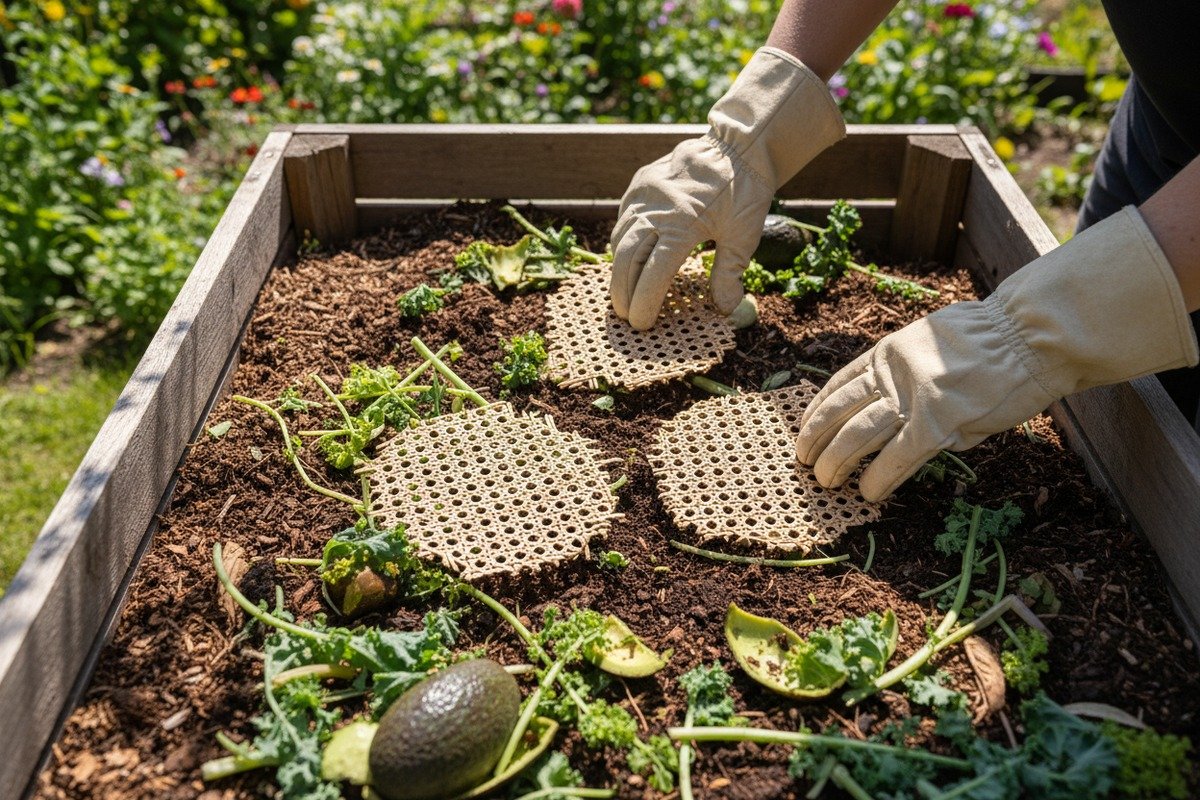
Да, вы можете безопасно компостировать обрезки натурального ротанга. Необработанный ротанг — это растительное волокно, которое разлагается в обычной компостной куче в течение трех-шести месяцев. Сначала измельчите или нарежьте сетку на мелкие кусочки, смешайте ее с богатым азотом зеленым материалом и поддерживайте влажность кучи.
Почему ротанг так хорошо компостируется
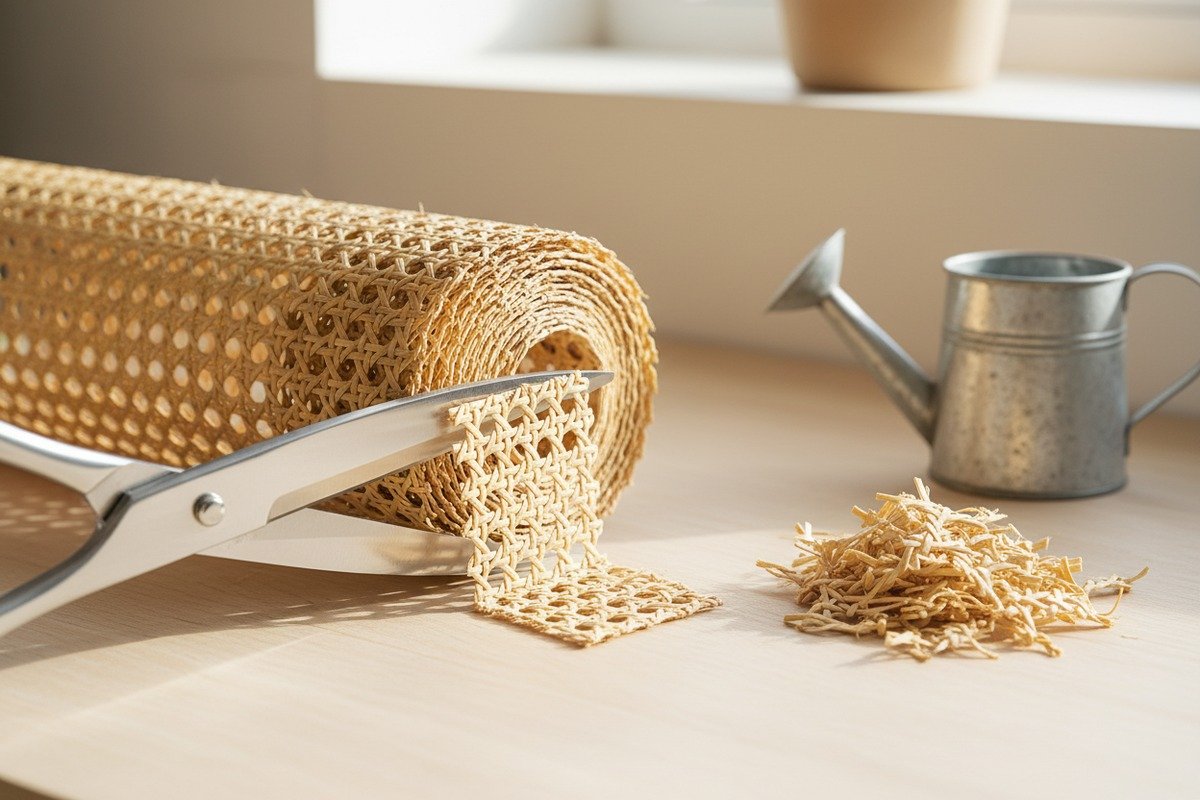
Ротанговая сетка изготавливается из внутренней сердцевины или внешней оболочки ротанговых лиан. Эти лианы — пальмы. Они быстро растут в тропических лесах. Волокна являются богатыми целлюлозой 3, что именно любят есть микробы компостирования. В отличие от синтетического ротанга на основе пластика, натуральный ротанг не содержит нефтепродуктов. Он не оставит остатков микропластика 4 в вашей почве.
По нашему опыту отправки покупателям в Нидерланды и Австралию, многие из них управляют небольшими мебельными мастерскими. Они говорят нам, что обрезки сетки идут прямо в их садовые компостные ящики. Ключ — подготовка.
Пошаговое руководство по домашнему компостированию
- Измельчите или нарежьте обрезки ротанга на куски размером менее 5 см. Более мелкие куски разлагаются быстрее.
- Удалите любые покрытия. Если на плетении есть лак, краска или синтетический клей, сначала соскребите или отшлифуйте их.
- Уложите слоями. Ротанг считается "коричневым" (богатым углеродом) материалом. Чередуйте с "зелеными" слоями, такими как овощные отходы или скошенная трава.
- Увлажните кучу. Ротанг сухой. Добавьте воды, чтобы куча напоминала отжатую губку.
- Переворачивайте каждые две недели. Кислород ускоряет разложение.
- Подождите от трех до шести месяцев. Вы увидите, как волокна ротанга рассыпаются в темный, землистый компост.
Остерегайтесь химических остатков
Наша производственная линия иногда использует серное копчение или кипячение в легком дизельном топливе для консервации необработанного ротанга перед плетением. Эти методы обработки могут оставлять следы остатков. Если ваше плетение из ротанга прошло интенсивную химическую обработку, компостирование может загрязнить почву. В этом случае промышленное компостирование при более высоких температурах безопаснее, чем куча на заднем дворе.
| Фактор | Необработанный ротанг | Обработанный ротанг (сера / дизель) |
|---|---|---|
| Можно компостировать дома? | Да | Не рекомендуется |
| Можно компостировать в промышленных условиях? | Да | Да, при контролируемых температурах |
| Время разложения | 3–6 месяцев | 6–12 месяцев |
| Риск загрязнения почвы | Очень низкий | Умеренная |
| Требуется предварительная обработка | Только измельчение | Стирка + измельчение |
Краткое примечание об объеме
Если вы энтузиаст или небольшая мастерская по ремонту мебели, домашнее компостирование легко справится с вашими отходами. Но если вы управляете производственным предприятием, как наше — где мы обрабатываем тысячи квадратных метров ротанговой сетки в месяц — вам потребуется другой подход. Это подводит нас к следующему разделу.
Как мне следует поступить с крупномасштабной утилизацией отходов ротанга на моем производственном предприятии?
Работа трех фабрик — двух в Фошане и одной в Индонезии — научила нас тому, что отходы ротанга накапливаются быстрее, чем большинство людей ожидают, а игнорирование их стоит денег и места.
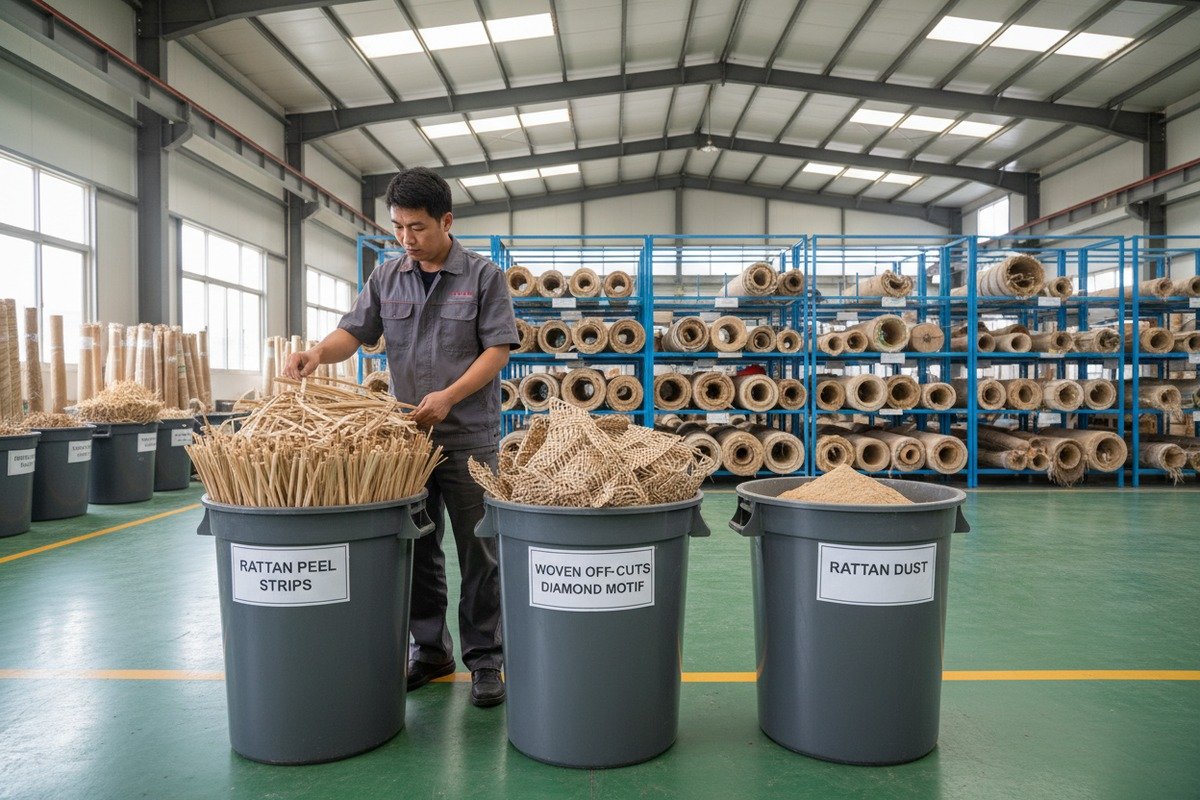
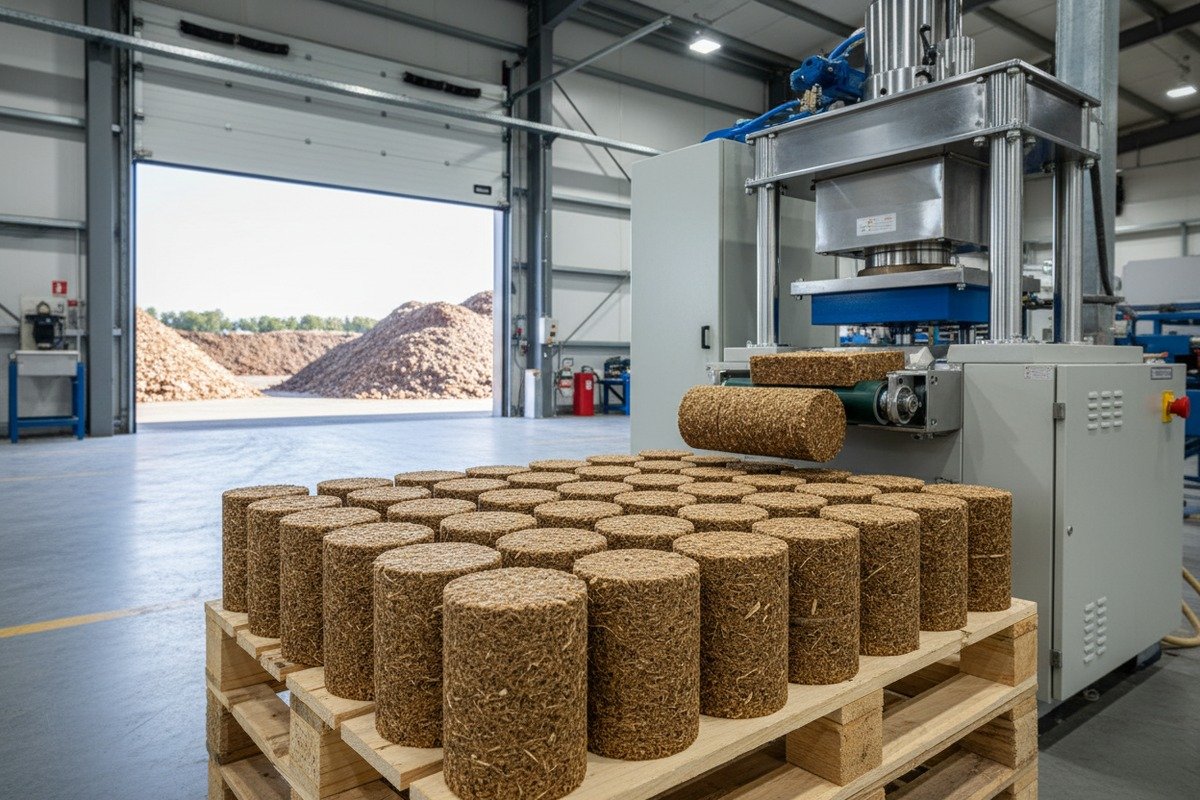
Для крупномасштабной утилизации классифицируйте отходы ротанга на обрезки для плетения, полоски коры и пыль. Затем направьте каждый тип по наиболее подходящему каналу: гибкие обрезки перерабатывайте в новые плетеные изделия, спрессовывайте пыль в брикеты для биотоплива, а оставшийся материал отправляйте на промышленное компостирование. Эта система может сократить объем ваших отходов на 50–70 процентов.
Знайте свои типы отходов
Не все ротанговые отходы одинаковы. С нашего заводского цеха мы ежедневно видим три основные категории. Понимание каждой из них поможет вам выбрать правильный путь утилизации.
| Тип отходов | Описание | Лучший способ утилизации |
|---|---|---|
| Обрезки плетения | Гибкие, цилиндрические волокна; остатки производства тесьмы | Переработка в корзины, связующий материал или изделия для рукоделия |
| Отходы от очистки | Плоские полоски шириной 3–5 мм, прочные и долговечные | Повторное вплетение в мелкие аксессуары или продажа в магазины для рукоделия |
| Пыль и частицы | Мелкий порошок от шлифовки, измельчения или резки | Прессование в брикеты из биомассы или добавление в промышленный компост |
Организация станции сортировки
Первый шаг прост. Разместите три маркированных контейнера на каждом рабочем месте. Обучите работников отделять обрезки по мере их образования. Это займет около недели, чтобы войти в привычку. После сортировки каждый контейнер следует по своему маршруту.
Энергия биомассы из ротанговой пыли
Ротанговая пыль слишком мелкая, чтобы ее было легко плести или компостировать. Но она хорошо горит. На нашем индонезийском предприятии мы экспериментировали с прессованием ротанговой пыли в небольшие брикеты. Эти брикеты могут служить топливом для котлов или сушильных печей. Это превращает проблему утилизации в источник энергии. Некоторые предприятия в округе Чиребон, Индонезия, сократили соотношение отходов, отправляемых на свалку, более чем на 50 процентов, используя этот подход.
Избегайте сжигания обработанного ротанга
Открытое сжигание заманчиво, когда накапливаются отходы. Но мы настоятельно не рекомендуем этого делать. Ротанг, обработанный серой или пропитанный химическими консервантами, выделяет вредные пары при сжигании на открытом воздухе. Если вам необходимо использовать термическую переработку, делайте это в контролируемой печи для биомассы с надлежащей фильтрацией выбросов.
Партнерство с местными переработчиками
В регионах, таких как Юго-Восточная Азия, небольшие ремесленные предприятия активно закупают обрезки ротанга. Мы продаем наши обрезки плетения местным мастерам по изготовлению корзин недалеко от наших партнерских фабрик в Фошане. Это создает дополнительный источник дохода и предотвращает попадание материалов на свалки. Даже в Европе и США растут сообщества эко-ремесленников. Узнайте в местном управлении по обращению с отходами о программах переработки волокна.
Экономика сокращения отходов
Многие управляющие предприятиями рассматривают утилизацию отходов только как центр затрат. Но пилотные программы в Индонезии показывают, что классифицированные отходы ротанга создают реальную экономическую ценность. Ремесленные изделия, изготовленные из обрезков плетения, продаются с наценкой. Брикеты из биомассы компенсируют затраты на топливо. Промышленный компост можно продавать фермам. Первоначальные инвестиции в инфраструктуру сортировки окупаются в течение одного-двух лет для предприятия среднего размера.
Можно ли переработать или повторно использовать старую ротанговую сетку для изготовления новых мебельных компонентов?
Один из наших постоянных покупателей в Таиланде, менеджер по закупкам по имени Рану, однажды спросил нас, можно ли изношенные панели из тростникового плетения превратить во что-то полезное, а не выбрасывать. Ответ его удивил.
Да, старую ротанговую тесьму можно переработать в новые мебельные компоненты, декоративные элементы или изделия ручной работы. Замочите изношенные полоски тесьмы в растворе NaOH (100 г на кг ротанга в 5 литрах воды в течение 72 часов), чтобы смягчить и восстановить гибкость. Обновленные полоски затем можно заново вплести в сиденья, каркасы корзин или обмотки.

Метод замачивания в NaOH
NaOH (гидроксид натрия) 6 — это распространенное, доступное химическое вещество. Когда вы замачиваете жесткие, старые полоски ротанга в ванне с NaOH, щелочной раствор разрушает затвердевшие поверхностные слои и восстанавливает гибкость. Вот что показали наши тесты:
| Дозировка NaOH (на кг ротанга) | Время замачивания | Результат |
|---|---|---|
| 80 г в 5 л воды | 72 часа | Полоски остаются жесткими; ограниченная гибкость |
| 100 г на 5 л воды | 72 часа | Полоски становятся мягкими, гибкими, коричнево-желтого цвета; идеально подходят для повторного плетения |
| 120 г на 5 л воды | 72 часа | Полоски становятся слишком мягкими; волокна начинают разрушаться |
Оптимальное количество — 100 г на килограмм. После замачивания тщательно промойте полоски чистой водой. Высушите их на воздухе в течение двух-трех дней. Затем они готовы к повторному использованию.
Что можно сделать?
Возможности зависят от состояния исходного плетения. Вот несколько идей, которые мы видели у наших клиентов:
- Замена сидений стульев. Переплетенные полоски подходят для стандартных каркасов плетеных стульев.
- Декоративные настенные панели. Старое плетение с винтажной патиной отлично смотрится как настенное искусство.
- Абажуры. Оберните размягченные полоски вокруг проволочных каркасов.
- Плетение корзин. Небольшие обрезки становятся ручками, ободками или целыми небольшими корзинами.
- Переплет и обмотка. Тонкие полоски заменяют шпагат для связывания пучков, использования в саду или упаковки подарков.
Соображения качества
Не вся старая тесьма стоит того, чтобы ее перерабатывать. Если ротанг имеет сильную плесень, повреждения насекомыми или тяжелые синтетические покрытия, переработка нецелесообразна. В таких случаях компостирование или промышленная утилизация — лучший путь. Но для тесьмы, которая просто изношена, выцвела или затвердела от времени, метод с NaOH дает ей вторую жизнь.
Самостоятельная переработка против профессиональной
Для индивидуальных потребителей или небольших мастерских самостоятельная переработка проста и дешева. Вам понадобится пластиковый таз, NaOH (продается в хозяйственных магазинах), вода и перчатки. Для фабрик, перерабатывающих большие объемы, профессиональные линии переработки с ваннами для замачивания и сушильными стойками делают процесс эффективным. Несколько мебельных брендов в Европе сейчас продают линейки продуктов из "восстановленного ротанга" и взимают дополнительную плату за историю устойчивости.
Продажа ваших обрезков
Если переработка не для вас, продайте обрезки. Ремесленные сообщества на таких платформах, как Etsy, активно ищут натуральные обрезки ротанга. В нашем бизнесе мы связываем покупателей, которым нужна тесьма класса А, с пониманием того, что обрезки могут быть перепроданы более мелким ремесленным мастерским. Выигрывают все.
Является ли натуральный ротанг действительно более биоразлагаемым, чем синтетические материалы, которые я использую?
На наших фабриках мы производим как натуральную ротанговую тесьму, так и синтетический ротанговый мат. Мы на собственном опыте видим, насколько по-разному ведут себя эти два материала по окончании срока службы.
Натуральный ротанг значительно более биоразлагаем, чем синтетические аналоги. Он разлагается в почве в течение трех-шести месяцев, не оставляя микропластика или долгосрочных загрязнителей. Синтетический ротанг, обычно изготавливаемый из полиэтилена (ПЭ) или полипропилена (ПП), может разлагаться от 100 до 500 лет и выделяет микропластик на протяжении всего процесса.
Наука, стоящая за биоразложением
Натуральный ротанг — это целлюлоза. Почвенные бактерии и грибы едят целлюлозу. Все просто. Процесс производит воду, углекислый газ и органические вещества. Никаких токсинов. Никаких остатков, которые сохраняются веками.
Синтетический ротанг — это пластик. Пластиковые полимеры 7 устойчивы к биологическому разложению. Ультрафиолетовое излучение и механические нагрузки в конечном итоге расщепляют синтетический ротанг на все более мелкие частицы. Но эти фрагменты не исчезают. Они становятся микропластиком 8 который попадает в почву, воду и пищевые цепи.
Сравнительная таблица
| Свойство | Натуральный ротанг | Синтетический ротанг (ПЭ/ПП) |
|---|---|---|
| Основной материал | Растительная целлюлоза | Полимер на нефтяной основе |
| Время биоразложения | 3–6 месяцев (необработанный) | 100–500 лет |
| Выделение микропластика | Нет | Да, на протяжении всего разложения |
| Компостируемый | Да (в домашних или промышленных условиях) | Нет |
| Перерабатываемый | Да (апсайклинг или компостирование) | Ограниченное (специализированная переработка пластика) |
| Требуется химическая обработка | Минимальный | Высокие (экструзия, УФ-стабилизаторы, красители) |
| Углеродный след при утилизации | Очень низкий | Высокий |
Но как насчет долговечности?
Вот где дебаты становятся интереснее. Синтетический ротанг служит дольше на открытом воздухе. Он устойчив к дождю, УФ-излучению и насекомым. Натуральный ротанг требует ухода — он может трескаться в сухом климате и плесневеть во влажном. Некоторые из наших покупателей в Саудовской Аравии и Дубае предпочитают синтетический ротанг для уличной мебели из-за сильного солнечного воздействия.
Однако долговечность не меняет уравнение утилизации. Когда синтетический ротанг наконец достигает конца срока службы, он становится проблемой утилизации, которая длится веками. Натуральный ротанг, даже если его приходится заменять раньше, быстро и чисто возвращается в землю.
Фактор отделки
Важный нюанс: сильно обработанное изделие из натурального ротанга не так биоразлагаемо, как необработанное. Полиуретановые покрытия, синтетические лаки и химические красители создают барьер, замедляющий разложение. Они также могут выделять химические вещества в компост. Когда мы поставляем отбеленную ротанговую тесьму нашим европейским клиентам, мы используем отбеливание перекисью водорода, а не хлорсодержащими методами. Это сохраняет материал пригодным для компостирования.
Общая картина
После 2020 года сертификаты устойчивого развития 9 подталкивают мебельную промышленность к использованию натуральных волокон. Возобновляемость ротанга является основным преимуществом. Ротанговые лианы собирают путем обрезки, а не путем вырубки деревьев. Они отрастают. Леса остаются нетронутыми. И когда продукт достигает конца своего жизненного цикла, он возвращается в почву. Такой полный жизненный цикл синтетические материалы просто не могут повторить.
Для менеджеров по закупкам, таких как Рану и других, с которыми мы работаем в Таиланде, Индии и на Филиппинах, это преимущество жизненного цикла становится все более решающим фактором. Их конечные клиенты хотят знать, что стул, который они покупают сегодня, не будет загрязнять планету через сто лет.
Заключение
Натуральное ротанговое плетение предоставляет вам простые, эффективные и экологически чистые варианты утилизации — компостируйте его, перерабатывайте или позвольте ему естественным образом вернуться в землю.
Сноски
1. Дает полное определение и обзор растительных волокон, их состава и преимуществ. ↩︎
2. Исходный URL вел на несуществующий PDF-файл; заменен авторитетной веб-страницей. ↩︎
3. Академический обзор, обсуждающий критическую роль целлюлозных материалов в процессе компостирования. ↩︎
4. Авторитетный источник по загрязнению почвы микропластиком и его долгосрочным экологическим последствиям. ↩︎
5. Определяет и описывает натуральное ротанговое плетение, подчеркивая его экологичность. ↩︎
6. Полная запись в Википедии, подробно описывающая применение и свойства гидроксида натрия. ↩︎
7. Академический обзорный материал, обсуждающий биоразложение различных пластиковых полимеров. ↩︎
8. Авторитетная информация от ЮНЕП о микропластике, его воздействии на окружающую среду и источниках. ↩︎
9. Фокусируется на сертификации устойчивости, особенно в мебельной промышленности. ↩︎
 English
  Español de México
  العربية
  Deutsch
  Français
  Русский