
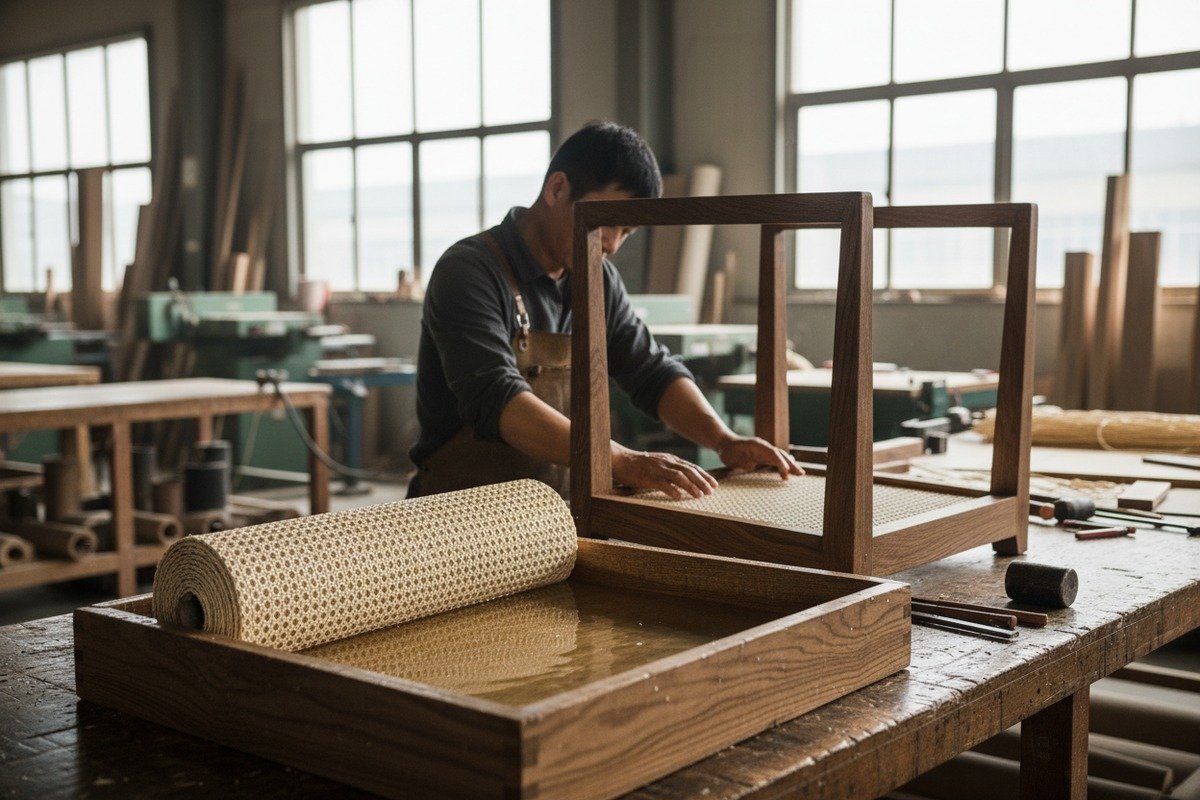
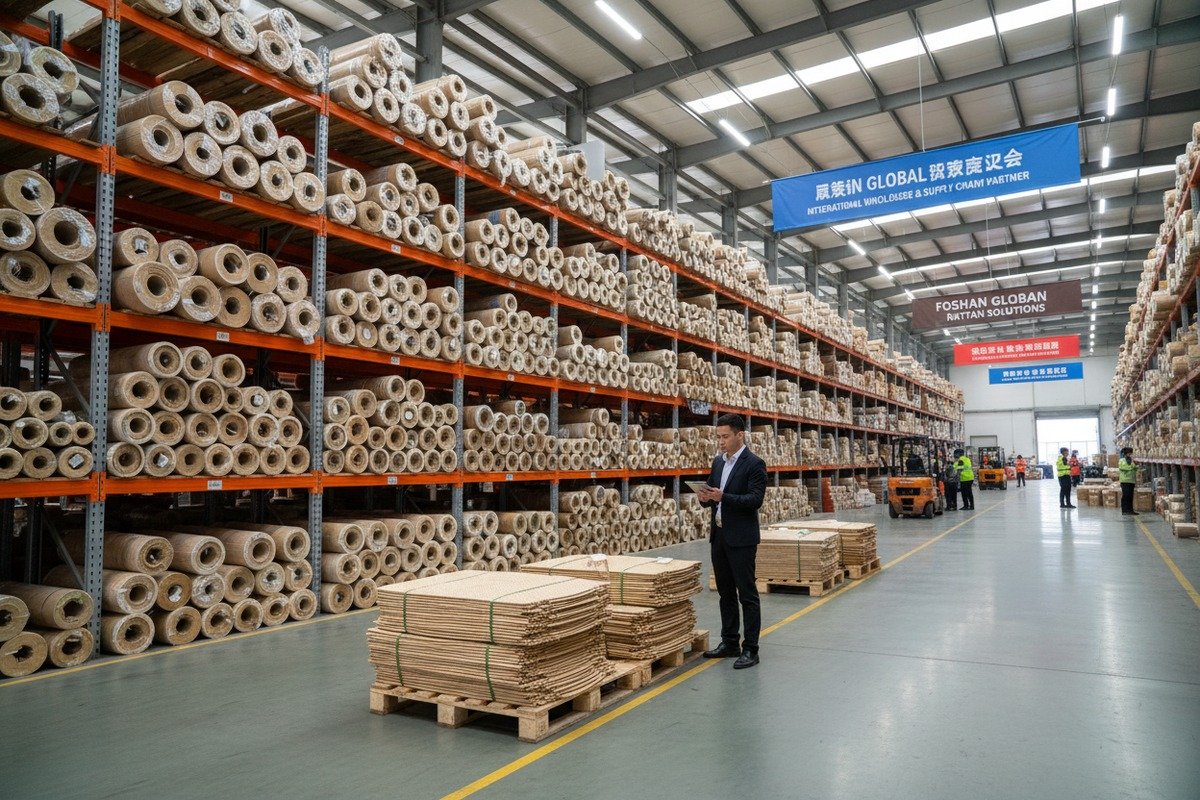
Несоответствующие материалы, провисающая тесьма и треснувшие рамы — это кошмары, которые мы видим каждую неделю на нашем производстве в Фошане.
Чтобы соединить ротанговую сетку с деревянными рамами, замочите сетку в теплой воде на 15–30 минут, обрежьте ее на 2–3 см больше рамы, закрепите с помощью скоб, шпунтов или клея в зависимости от типа вашей рамы и дайте ей высохнуть естественным образом для достижения плотного и долговечного результата.
Это руководство проведет вас через установку, выбор древесины 1, методы натяжения и выбор узора плетения. Независимо от того, управляете ли вы мебельной фабрикой или оптовым бизнесом по продаже материалов, ниже вы найдете практические ответы.
Как правильно установить ротанговую сетку в деревянные рамы мебели?
Мы отправляем ротанговую тесьму в более чем 20 стран, и самый частый вопрос, который задают наши клиенты перед первым заказом, касается установки. Неправильные методы приводят к отходам, разочарованию и недовольным конечным потребителям.
Чтобы правильно установить ротанговую сетку, замочите ее в теплой воде на 15–30 минут, натяните на деревянную раму, начиная с центра, закрепите скобами или системой шпунта и паза, обрежьте излишки и дайте ей высохнуть естественным образом, чтобы она натянулась.
Шаг 1: Подготовьте материалы
Прежде чем прикасаться к тесьме, подготовьте рабочее место. Положите деревянную раму ровно на чистую поверхность. Закрепите ее зажимами, если это возможно. Это предотвратит деформацию во время склеивания. Измерьте внутренние размеры проема рамы. Затем отрежьте ротанговую тесьму на 2–3 см больше с каждой стороны. Этот дополнительный материал дает вам пространство для захвата, регулировки и закрепления.
Шаг 2: Замочите тесьму
Погрузите отрезанный кусок в теплую воду. Держите 15–30 минут. Вода размягчает натуральные волокна тростника 2 и делает их гибкими. Не замачивайте дольше 30 минут. Чрезмерное замачивание ослабляет нити и может затемнить цвет. На нашей фабрике мы используем таймер, чтобы поддерживать постоянство партий.
Шаг 3: Выберите метод крепления
Существует пять основных способов крепления тесьмы к раме. Каждый подходит для разных типов проектов.
| Метод | Лучше всего подходит для | Уровень навыков | Необходимые инструменты |
|---|---|---|---|
| Обернуть, приклеить и прибить | Новички, плоские рамы | Легко | Степлер, столярный клей |
| Заднее крепление с отделкой | Задние стенки шкафа, дверные панели | Легко–Средне | Степлер, полоски отделки, гвозди |
| Установка в паз | Профессиональная мебель | Средний | Стамеска или фрезер, отделка, гвозди |
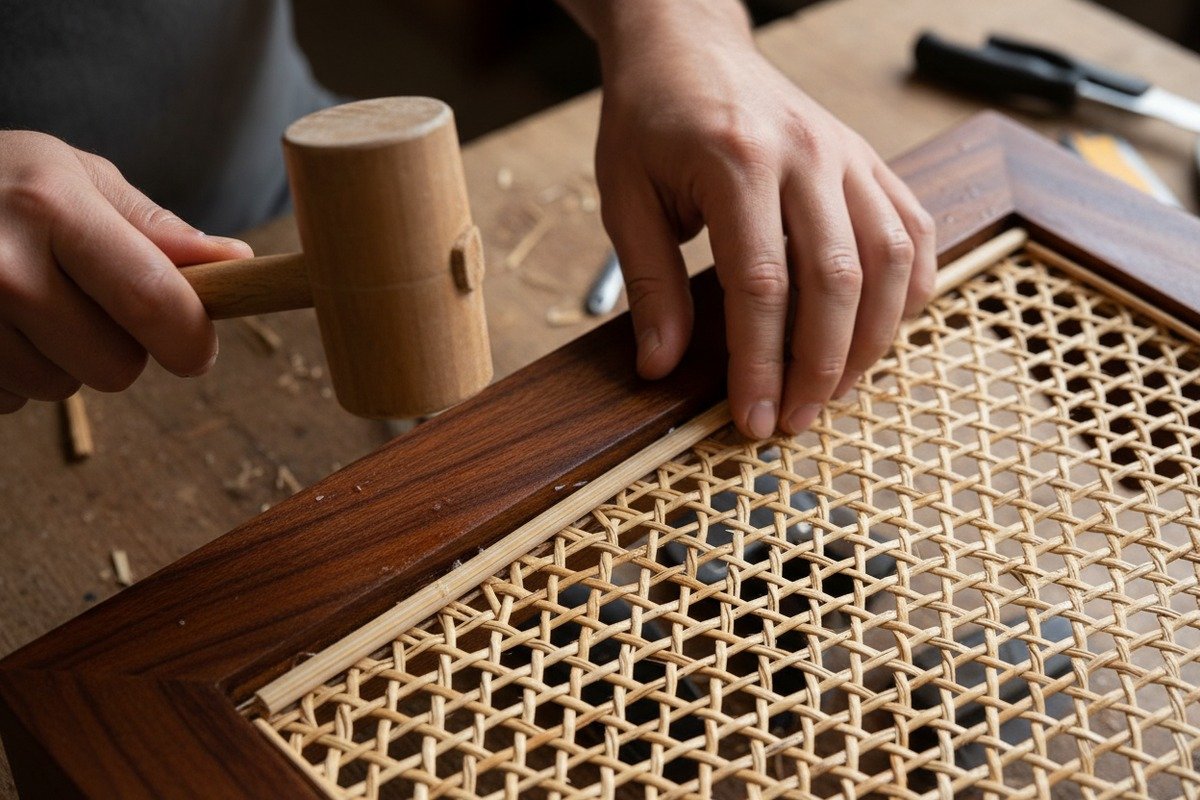
| Фрезеровка паза с шипом 3 | Элитные стулья, прочные панели | Средне–Трудно | Фрезер, тростниковый шип, столярный клей, молоток |
| Прямое приклеивание панели | Плоские декоративные панели | Средний | Контактный клей |
Запрет метод обертывания, склеивания и скрепления скобами самый быстрый. Поместите влажную тесьму поверх отверстия рамы. Загните края вокруг верхней части рамы. Нанесите тонкую линию столярного клея. Затем скрепите скобами от центра наружу. Это обеспечивает равномерное натяжение и предотвращает образование складок.
Запрет паз для фрезера с методом шнура обеспечивает наилучшие результаты для стульев и элитной мебели. Вокруг отверстия рамы прорезается паз. Вставьте влажную тесьму в паз. Затем с помощью молотка вставьте ротанговый шнур поверх. Добавьте тонкую полоску древесного клея для дополнительной фиксации.
Шаг 4: Обрезка и отделка
После закрепления обрежьте излишки тесьмы острым канцелярским ножом. Режьте близко к линии скоб или пазу. Если вы хотите более аккуратный вид, добавьте декоративную деревянную отделку поверх необработанных краев. Это скроет скобы и придаст изделию законченный вид.
Шаг 5: Естественная сушка
Дайте тесьме высохнуть в прохладном помещении с рассеянным светом. При высыхании ротанг сжимается. Это естественное сжатие создает идеально натянутую поверхность. Никогда не используйте тепловую пушку и не помещайте изделие под прямые солнечные лучи. Принудительная сушка вызывает деформацию и растрескивание.
Какие типы древесины наиболее совместимы с моими проектами из ротанговой тесьмы?
Когда мы подбираем древесину для образцов рам на нашем предприятии в Фошане, порода дерева имеет такое же значение, как и качество тесьмы. Красивое плетение на плохой раме — залог возвратов.
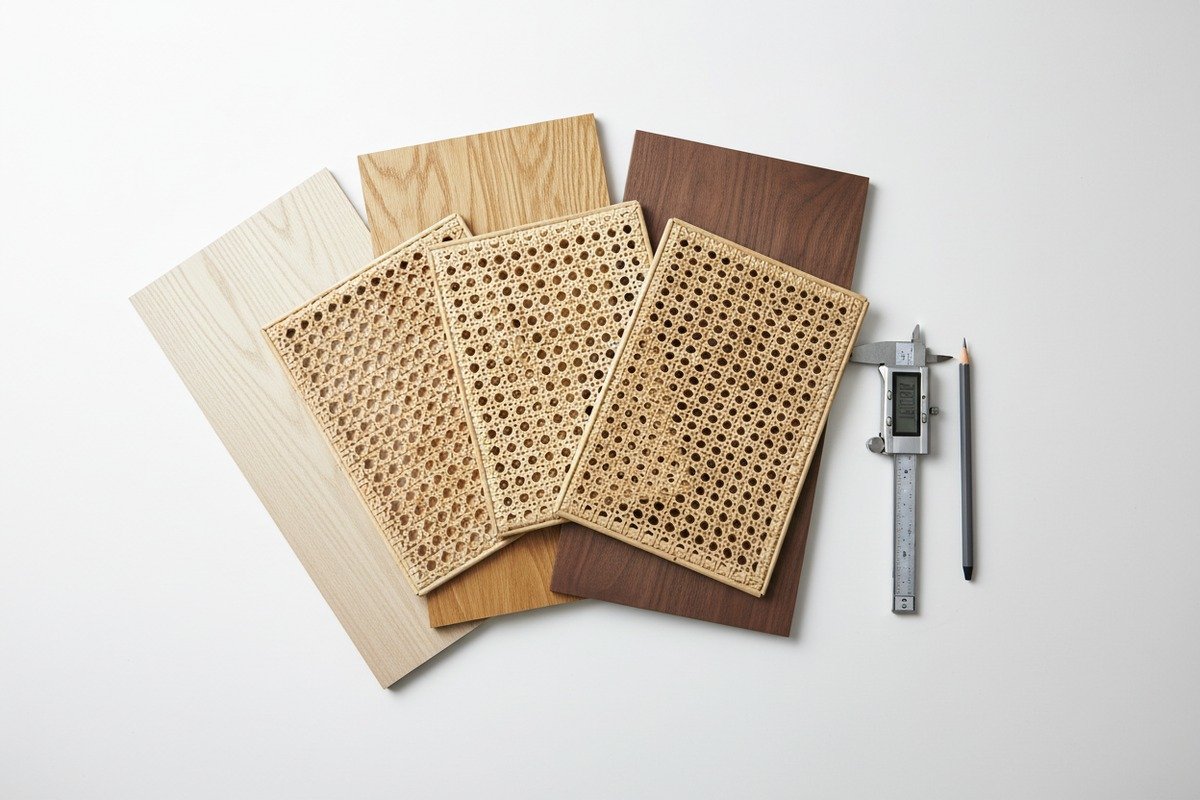
Твердые породы дерева, такие как дуб, ясень, бук и тик, наиболее совместимы с проектами из ротанговой сетки, поскольку они прочно удерживают скобы, чисто принимают фрезерованные пазы и устойчивы к деформации. Более светлые породы дерева, такие как клен или береза, создают современный контраст, а более темные породы дерева, такие как орех, создают более богатую, традиционную эстетику.
Почему выбор древесины имеет значение
Ротанговая тесьма оказывает постоянное натяжение на раму. Если древесина слишком мягкая, скобы вырываются. Если она легко деформируется, тесьма ослабевает. Если текстура слишком грубая, она рвет ротанг там, где он оборачивается вокруг краев. Правильная древесина противостоит всем трем проблемам.
Твердые породы против мягких пород
Твердые породы являются явным победителем для большинства проектов с ротангом. твердость по Янке 5 Они плотные, стабильные и долговечные. Мягкие породы, такие как сосна, могут подойти для декоративных панелей с низким натяжением, но они не идеальны для стульев или предметов частого использования.
| Порода древесины | Твердость (Янка) | Лучшее использование с ротангом | Эстетическое соответствие |
|---|---|---|---|
| Дуб | 1 290 фунтов силы | Каркасы стульев, дверцы шкафов | Классическая, теплая текстура дерева |
| Ясень | 1 320 фунтов силы | Обеденные стулья, изголовья кроватей | Светлый, чистый вид |
| Бук | 1 300 фунтов силы | Каркасы из гнутого дерева, панели | Гладкая, тонкая текстура дерева |
| Тик | 1 070 фунтов силы | Уличная мебель | Насыщенный золотистый оттенок |
| Грецкий орех | 1 010 фунтов силы | Акцентные панели, боковые шкафы | Темный, роскошный |
| Клен | 1 450 фунтов силы | Современные дверцы шкафа | Светлый, современный |
| Сосна | 690 фунтов силы | Декоративные панели с низким натяжением | Рустикальный, бюджетный |
Соответствие цвета и тона
Натуральная ротанговая сетка имеет светло-бежевый или соломенно-желтый оттенок. Она прекрасно сочетается практически с любой древесиной. Однако уровень контраста меняет настроение изделия.
Светлые породы дерева, такие как береза и клен, создают Скандинавский, минималистичный ощущение. Тона мягко смешиваются. Темные породы дерева, такие как орех и красное дерево, создают высококонтрастный, традиционный ощущение. Плетеная текстура ротанга выделяется на богатом фоне. Средние породы дерева, такие как дуб и тик, находятся посередине, предлагая теплое, сбалансированное внешний вид, который подходит для большинства интерьеров.
Соображения по устойчивому развитию
Для улучшения экологичного дизайна сочетайте ротанговую сетку с восстановленной древесиной, бамбуком или рамами из древесины, сертифицированной FSC 6. Многие из наших европейских клиентов, особенно из Нидерландов и Испании, специально запрашивают экологически чистые материалы. Ротанг уже является быстрорастущим, возобновляемым ресурсом. Сочетание его с древесиной, добытой ответственным способом, завершает экологичную историю.
Избегайте этих распространенных ошибок
Не используйте необработанную мягкую древесину для наружных ротанговых изделий. Она впитывает влагу и разбухает, ослабляя плетение. Не сочетайте ротанг с сильно лакированной или окрашенной древесиной, если вы планируете использовать клей — клей не будет должным образом связываться. Сначала отшлифуйте контактные поверхности.
Как мне убедиться, что мое ротанговое плетение остается тугим и долговечным на деревянной раме?
Ослабленное плетение — это жалоба, которую мы слышим чаще всего от покупателей, совершающих покупку впервые. Обработав тысячи заказов на трех наших фабриках, мы узнали, что плотность зависит от подготовки, метода и последующего ухода, а не только от качества материала.
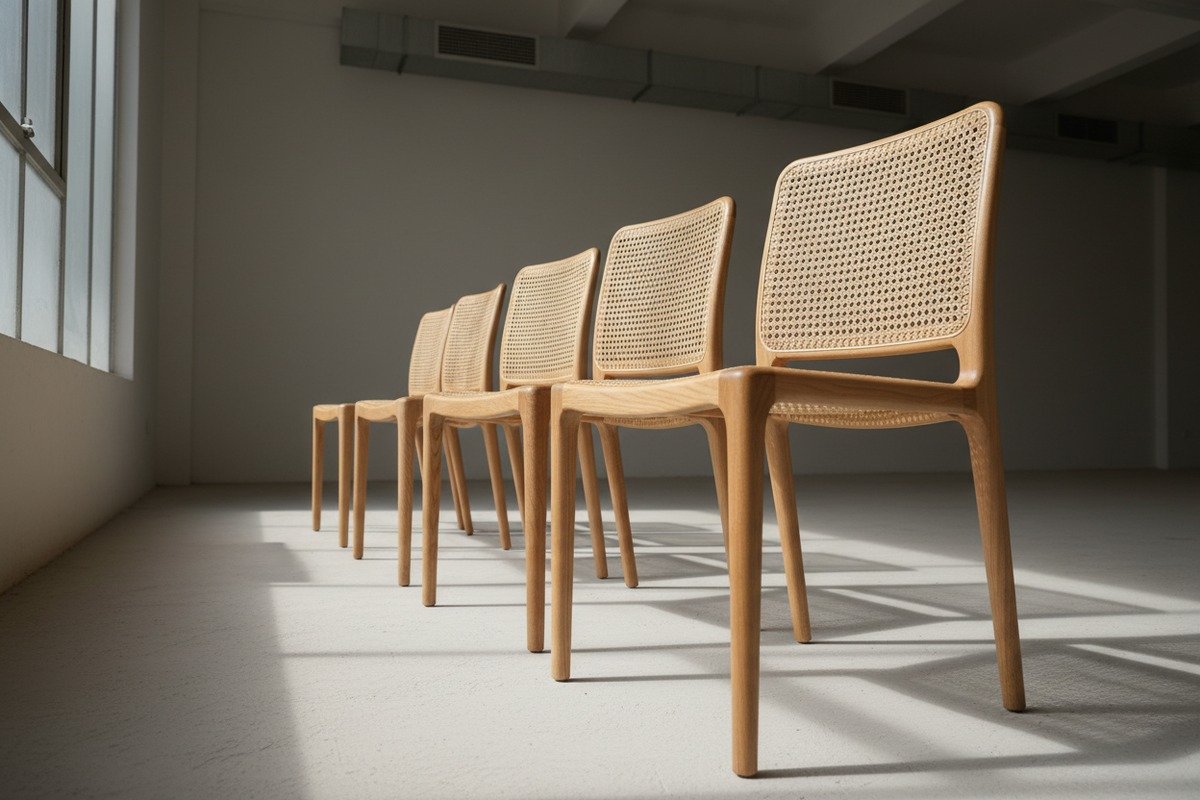
Чтобы ротанговая сетка оставалась тугой и долговечной, всегда замачивайте ее перед установкой, закрепляйте от центра наружу с равномерным натяжением, используйте метод паза и шпунта для изделий, подверженных интенсивной эксплуатации, дайте ей высохнуть естественным образом и поддерживайте ее, оберегая от избыточной влажности и прямого нагрева.
Наука, стоящая за плотностью
Ротанг — это натуральное волокно. При замачивании он впитывает воду и расширяется. Когда он высыхает, он сжимается. Это сжатие стягивает тесьму после установки. Если вы пропустите этап замачивания, вы полностью упустите этот естественный эффект натяжения. Тесьма остается свободной с первого дня.
Натяжение при установке
Начните закреплять тесьму в центре одной стороны. Аккуратно потяните и прибейте скобами или вдавите в паз. Перейдите на противоположную сторону, снова потяните и закрепите. Затем сделайте оставшиеся две стороны. Работайте от центра к углам. Такой перекрестный подход равномерно распределяет натяжение. Если начать с угла, тесьма сминается и морщится посередине.
Выбор правильного метода крепления для долговечности
Не все методы одинаковы по долговечности.
| Метод крепления | Сохранение натяжения | Рейтинг долговечности | Рекомендуемое использование |
|---|---|---|---|
| Только скобы | Умеренная | ★★★☆☆ | Декоративные панели, предметы легкого использования |
| Клей + скобы | Хорошая | ★★★★☆ | Дверцы шкафов, изголовья кроватей |
| Паз + рейка | Отличная | ★★★★★ | Сиденья стульев, мебель интенсивного использования |
| Контактный клей | Переменный | ★★★☆☆ | Плоские панели (чувствительные к влажности) |
Для всего, что несет вес — например, сиденья обеденного стула — мы всегда рекомендуем метод паза и шпунта. Он механически фиксирует тесьму. Даже если клей ослабнет со временем, шпунт удержит.
Распространенные причины провисания
Провисание происходит по конкретным, предотвратимым причинам. Тесьма не была достаточно долго замочена. Каркас не был ровным во время установки. Скобы были расположены слишком далеко друг от друга. Древесина была слишком мягкой, чтобы удерживать крепеж. Или готовое изделие подвергалось воздействию высокой влажности или прямого тепла.
Советы по долгосрочному уходу
Держите ротанговую тесьму подальше от длительного прямого солнечного света. УФ-лучи со временем высушивают волокна и делают их хрупкими. В сухом климате слегка опрыскивайте тесьму водой раз в несколько месяцев. Это сохранит ее эластичность. Во влажном климате обеспечьте хорошую циркуляцию воздуха вокруг изделия. Скопившаяся влага может ослабить клеевые соединения.
Если секция провисла после многих лет использования, ее часто можно подтянуть. Опрыскайте область теплой водой, дайте ей впитаться в течение нескольких минут и снова дайте высохнуть. Волокна сожмутся и снова натянутся.
Примечание о синтетике и натуральных материалах
Наша синтетические ротанговые циновки 7— который имитирует натуральный ротанг с прочными пластиковыми волокнами — не требует замачивания и не подвержен воздействию влажности. Он сохраняет свое натяжение постоянно. Однако ему не хватает органического тепла и тонких вариаций, которые делают натуральный ротанг таким привлекательным. Выбор зависит от приоритетов вашего проекта: долговечность и устойчивость к погодным условиям — в пользу синтетики; эстетика и экологичность — в пользу натуральных материалов.
Как выбрать правильный узор плетения, который дополнит дизайн моей деревянной рамы?
Выбор узора плетения — это место, где функция встречается с искусством. На нашем производстве мы видим, как клиенты больше всего мучаются над этим выбором. Узор меняет весь характер готового изделия.
Выберите узор плетения из ротанга в зависимости от стиля рамы и предполагаемого использования: классическая шестиугольная сетка подходит для дизайнов середины века и бохо, плотное квадратное плетение в корзинку дополняет современные и минималистичные рамы, а замысловатые ромбовидные мотивы лучше всего сочетаются с традиционной или эффектной мебелью.
Понимание распространенных узоров плетения
Ротанговая тесьма бывает разных узоров, но на рынке доминируют три.
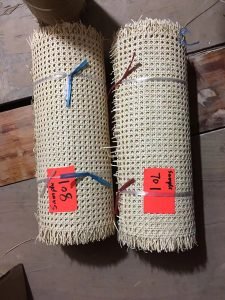
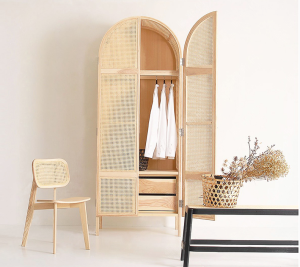
Шестиугольная открытая сетка (радиальное плетение) имеет воздушный шестиугольный узор. Свет легко проходит сквозь него. Это делает его идеальным для дверц шкафов, перегородок и абажуров. Он имеет отчетливое ощущение середины века.
Квадратное плетение "корзинка" использует плотный, сетчатый узор. Он более плотный и прочный. Этот узор хорошо подходит для сидений и спинок стульев, где требуется как визуальная солидность, так и структурная поддержка.
Ромбовидный мотив создает сложный геометрический узор. Это самый декоративный из трех и прекрасно сочетается с витиеватыми или традиционными деревянными рамами.
Сочетание узора с стилем рамы
Язык дизайна рамы должен направлять ваш выбор узора. Изящная рама с прямыми краями и минимальной детализацией требует простого узора. Витиеватая резная рама может выдержать более сложную плетенку.
Вот краткий справочник:
| Стиль рамы | Рекомендуемый рисунок | Эффект |
|---|---|---|
| Мид-сенчури модерн | Шестиугольная сетка 8 | Воздушный, ретро, легкий |
| Скандинавский минимализм | Квадратное плетение "корзинка" 9 | Чистый, сдержанный |
| Богемный / эклектичный | Шестиугольная сетка | Расслабленный, текстурный |
| Традиционный / классический | Ромбовидный мотив | Элегантный, детализированный |
| Промышленный | Плотное квадратное плетение | Контраст с металлическими акцентами |
| Прибрежный / тропический | Открытое шестиугольное или свободное плетение | Легкий, естественный |
Учитывайте применение
Функция изделия также сужает ваш выбор. Сиденья стульев требуют плотного, прочного плетения. Декоративная панель за изголовьем кровати может использовать любой открытый узор. Дверцы шкафов выигрывают от полуоткрытых узоров, обеспечивающих циркуляцию воздуха — это важно для хранения вещей, требующих вентиляции.
Эффекты света и тени
Один креативный трюк, который мы видим у все большего числа дизайнеров: светодиодная лента за панелями из ротанга с открытой сеткой. Шестиугольный узор отбрасывает красивые геометрические тени на окружающие стены. Это превращает простой шкаф или перегородку в элемент атмосферного освещения. Эффект лучше всего работает с открытым плетением и не работает с плотными узорами, блокирующими свет.
Отбеленный против натурального цвета
Наша отбеленная сетка из ротанга предлагает более светлый, более однородный вид. Она особенно хорошо сочетается с окрашенными в белый цвет или светлыми рамами для создания чистого, прибрежного образа. Натуральная неотбеленная сетка имеет больше цветовых вариаций — соломенно-желтый, теплый бежевый, кремовые оттенки. Эти органические вариации добавляют характер и подходят для деревенских или богемных рам.
Масштаб узора и размер рамы
Большие рамы могут выдержать смелые, широкоузорные плетения, не выглядя перегруженными. Маленькие рамы — как отдельные дверцы шкафа — лучше смотрятся с более тонкими, плотными узорами. Большая шестиугольная сетка на маленькой дверце может выглядеть непропорционально. Масштаб имеет значение.
Если сомневаетесь, закажите образцы. Мы всегда призываем наших оптовых клиентов запрашивать небольшие образцы различных узоров, прежде чем оформлять крупный заказ. Прикладывание сетки к вашей фактической раме — самый надежный способ оценить сочетание.
Заключение
Сочетание ротанговой тесьмы с деревянными рамами сводится к четырем вещам: правильная установка, подходящая древесина, хорошее натяжение и соответствующий узор плетения. Если вы сделаете все правильно, ваш проект будет выглядеть профессионально и прослужит долгие годы.
Сноски
1. Обсуждаются критические факторы при выборе древесины для мебельных проектов. ↩︎
2. Предоставляется исчерпывающая информация о природных свойствах и применении ротанга. ↩︎
3. Объясняется техника шпунтового соединения, используемая в деревообработке для прочности. ↩︎
4. Дается определение ротанговой тесьмы и описывается процесс ее производства. ↩︎
5. Объясняется шкала Янка для измерения твердости и износостойкости древесины. ↩︎
6. Дается определение древесины с сертификатом FSC и ее важность для устойчивого снабжения. ↩︎
7. Объясняется, что такое синтетический ротанг и его состав из пластиковых смол. ↩︎
8. Исходный URL теперь работает и содержит ротанговую тесьму с открытым шестиугольным плетением. ↩︎
9. Предоставляется информация о техниках плетения корзин, включая квадратные узоры. ↩︎
 English
  Español de México
  العربية
  Deutsch
  Français
  Русский