
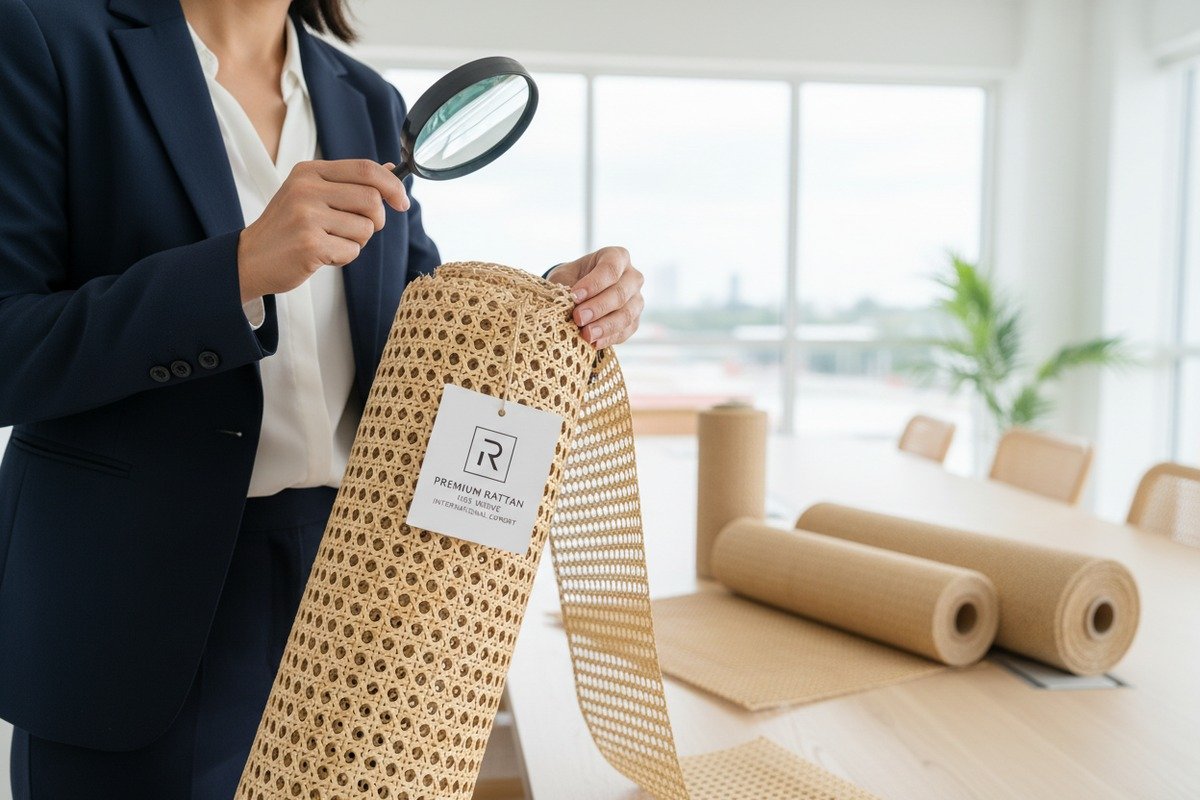
Каждый год мы отправляем тысячи ротанговая сетка 1 rolls from our factories in Foshan and Indonesia to brands across 30+ countries. One question keeps coming up from purchasing managers and wholesalers alike: can I put my own brand on this material and get it packaged exactly how I want FSC (Лесной попечительский совет) 2? The frustration is real—generic rolls with no branding, flimsy packaging that arrives damaged, and sizes that never quite fit your production line. These pain points cost you time, money, and customers.
Yes, OEM private labeling and custom packaging are fully available for rattan cane webbing. Reputable suppliers offer branded labels, custom roll sizes, tailored weave patterns, and protective packaging solutions. Whether you need natural or synthetic rattan, you can specify widths, lengths, colors, certifications, and branded packaging to match your exact business requirements.
Below, we break down every aspect of customizing your rattan cane webbing—from private labels and packaging to tailored dimensions and OEM partnerships Global Recycled Standard 3. Let’s get into the details so you can make an informed sourcing decision.
How can I customize the private labeling on my rattan cane webbing rolls?
When we started offering private labeling five years ago, fewer than 10% of our buyers asked for it. Today, nearly half of all orders from furniture material wholesalers include some form of branding. The market has shifted. If your rattan rolls look the same as every competitor's product on the shelf, you lose the chance to build recognition and trust with your end customers.
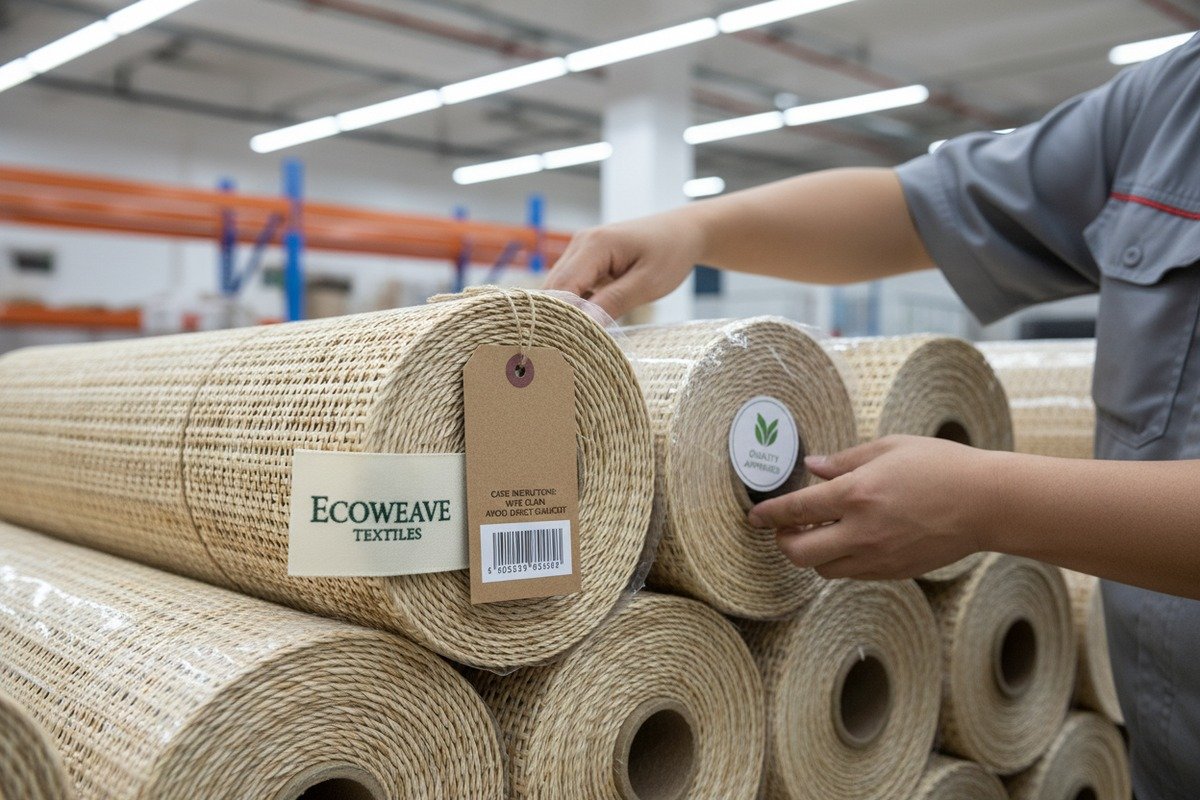
You can customize private labeling on rattan cane webbing by adding your brand logo, product tags, barcodes, care instructions, and custom stickers to each roll. Most suppliers support printed labels, woven tags, and branded wrap bands, allowing you to build a consistent brand identity across all your rattan materials.
What Private Label Elements Can You Add?
Private labeling goes far beyond slapping a sticker on a roll. Here is what you can typically request from a capable rattan webbing supplier:
- Brand logo labels — Printed or woven tags attached to each roll end.
- Custom barcodes and SKU numbers — For seamless inventory management on your side.
- Care instruction cards — Telling end users how to maintain the rattan (avoid direct sunlight, wipe with damp cloth, etc.).
- Color-coded wrap bands — Different colors for different weave patterns or grades.
- Подвесные бирки — Paper or cardboard tags with your brand story, material origin, or certifications.
How the Labeling Process Works
From our production line, the process is straightforward. First, you send your logo files and label design. Our design team adjusts them for print. We produce a sample label set and ship it for your approval. Once approved, we print in bulk and apply labels during the final packaging stage. The whole approval cycle usually takes 5–7 business days.
Label Options Comparison
| Label Type | Материал | Уровень затрат | Лучше всего подходит для |
|---|---|---|---|
| Printed adhesive sticker | Paper / Vinyl | Низкий | Budget brands, large volume |
| Woven fabric tag | Polyester / Cotton | Средний | Premium brands, furniture makers |
| Hang tag with string | Cardstock / Kraft paper | Низкий – Средний | Retail display, wholesalers |
| Branded wrap band | Kraft paper / Plastic | Низкий | Roll identification, warehouse use |
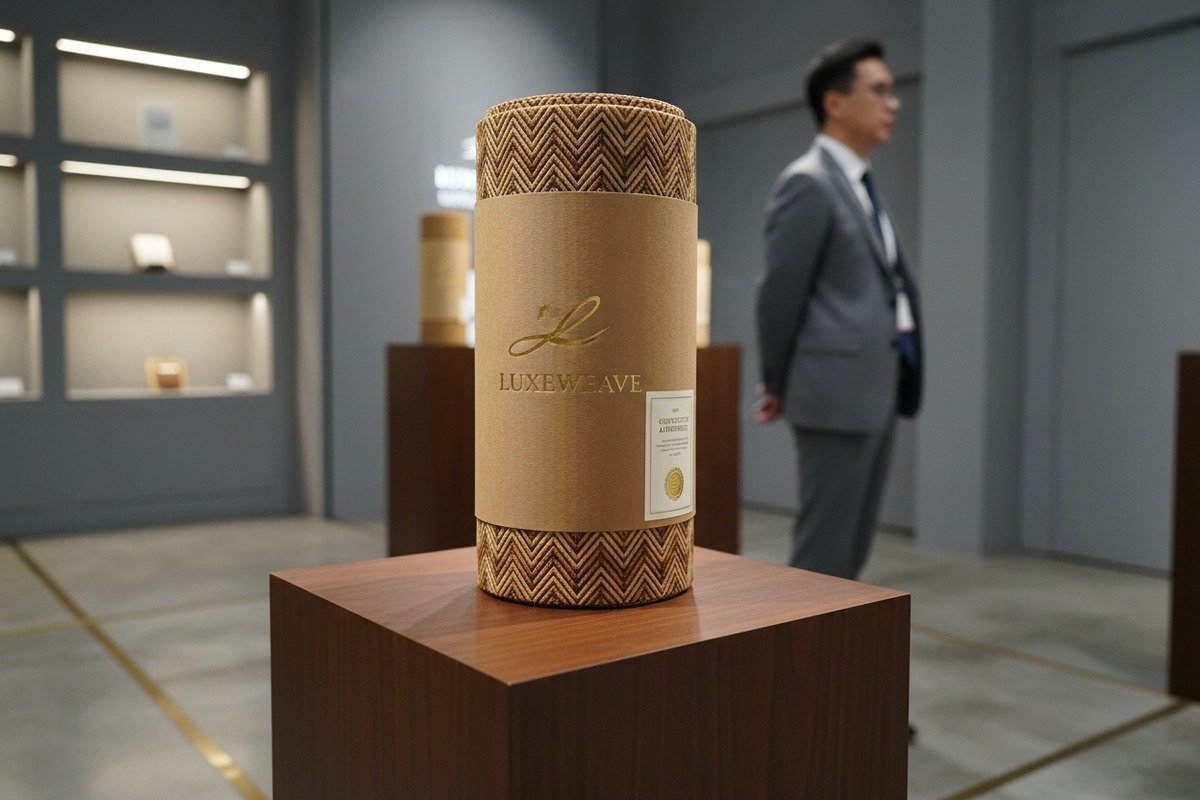
| Embossed cardboard sleeve | Thick cardboard | Высокий | Luxury positioning, showroom display |
Tips for a Successful Private Label
Keep your design simple. A clean logo, readable barcode, and brief care note are enough. Too much text on a small tag looks cluttered. Also, confirm the label attachment method. Adhesive stickers work fine for plastic-wrapped rolls, but woven tags need to be sewn or tied to the roll edge. We always recommend ordering a sample batch of 10–20 labeled rolls before committing to a full production run. This lets you test how the labels hold up during shipping and handling.
One more thing worth noting: if you sell into the EU or US, your labels may need to include material composition and country of origin 4. We can help format this information correctly to meet import regulations.
What options do I have for custom packaging to ensure my rattan arrives safely?
In our warehouse, we have seen what happens when rattan cane webbing travels 8,000 kilometers in poor packaging. Crushed edges. Mold from moisture. Broken weave strands. The damage is not just cosmetic—it means rejected shipments and lost revenue for your business. Custom packaging is not a luxury. It is a necessity.
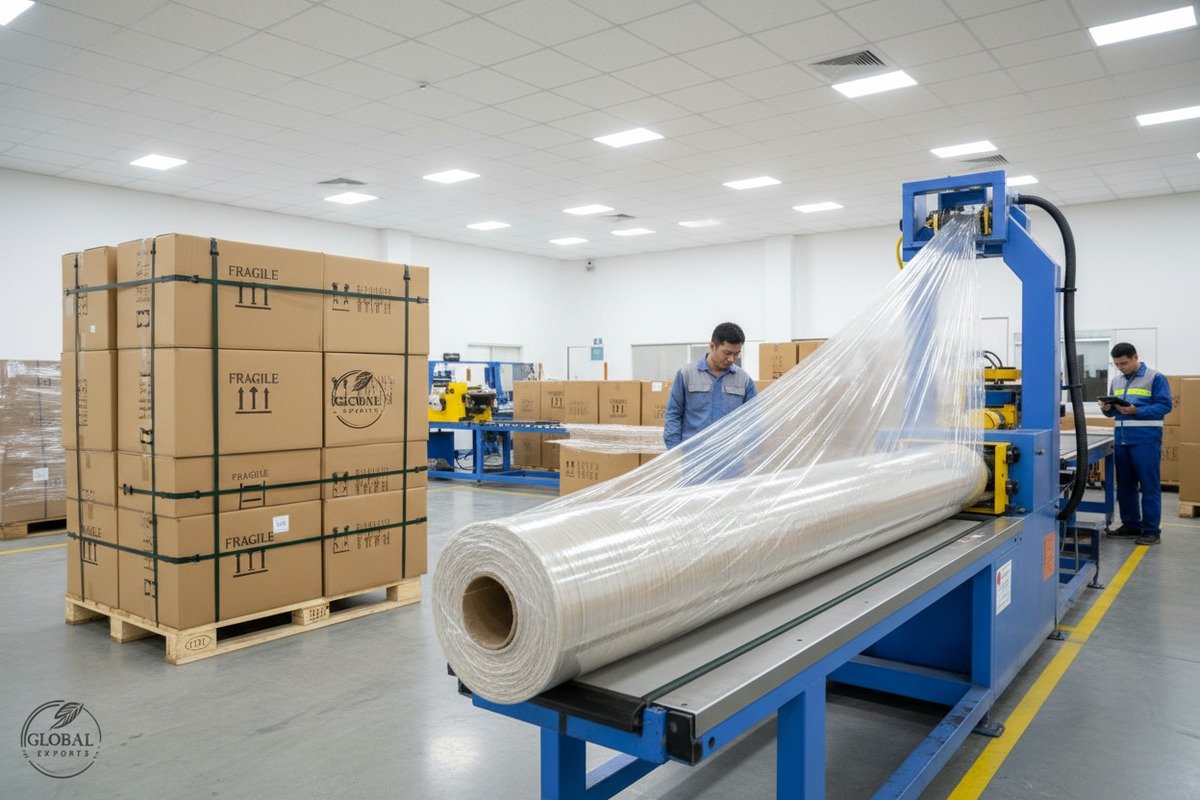
Custom packaging options for rattan cane webbing include shrink-wrap protection, reinforced cardboard tubes, moisture-barrier poly bags, branded outer cartons, and foam-padded crates. These solutions protect against crushing, humidity, and transit damage while also presenting your brand professionally to end buyers.
Why Standard Packaging Falls Short
Standard packaging usually means a basic plastic wrap around the roll and a plain brown carton. This works for short domestic shipments. But for international ocean freight, where containers face temperature swings and humidity, standard packaging invites trouble. Natural rattan absorbs moisture. If the packaging does not block humidity, mold can grow within weeks.
Packaging Options Breakdown
| Packaging Type | Уровень защиты | Экологичный | Лучший сценарий использования |
|---|---|---|---|
| Shrink-wrap film | Средний | Нет | Short-distance shipping, domestic |
| PE moisture-barrier bag | Высокий | Recyclable options | Ocean freight, humid climates |
| Kraft paper wrap + cardboard tube | Средний–Высокий | Да | Eco-conscious brands, retail |
| Reinforced double-wall carton | Высокий | Да | Heavy rolls, stacked pallets |
| Wooden crate with foam padding | Очень высокая | Частично | Fragile weaves, high-value orders |
| Branded printed carton | Средний–Высокий | Да | Retail-ready, brand presentation |
Custom Branding on Packaging
Beyond protection, packaging is a branding tool. We print your logo, product name, and handling instructions directly on the outer carton. Some buyers request color-matched cartons. Others want a QR code on the box that links to their product catalog. All of these are doable.
For furniture material wholesalers who resell to smaller workshops, branded packaging builds credibility. Your customers see a professional, consistent brand when the shipment arrives. This matters more than most people think.
Moisture and Mold Prevention
Our factory in Indonesia processes raw rattan in a tropical environment. We have learned the hard way how critical moisture control is. Here is what we do:
- Kiln-dry the rattan before weaving to reduce internal moisture below 12%.
- Wrap each roll in a PE moisture-barrier bag with пакеты с силикагелем 6 inside.
- Seal the outer carton with moisture-resistant tape.
- Add desiccant packs inside the carton for extra protection on long voyages.
These steps add a small cost per roll, but they virtually eliminate mold complaints. We have reduced damage-related returns by over 85% since implementing this system three years ago.
Eco-Friendly Packaging Trends
Many of our European buyers now request fully recyclable or biodegradable packaging. We offer kraft paper wraps, soy-based ink printing on cartons, and cornstarch-based shrink alternatives. If sustainability is part of your brand promise, your packaging should reflect that. We can provide documentation showing the packaging materials meet EU sustainability directives, which is useful for your marketing as well.
Can I order specific widths and lengths tailored to my furniture production needs?
On our production floor, we weave rattan cane webbing in over 15 standard widths. But standard does not always fit. A furniture factory in the Netherlands once told us they were cutting 20% of every roll to waste because the width was 10cm too wide for their chair backs. That is money thrown away on every single unit produced. Custom sizing solves this problem completely.
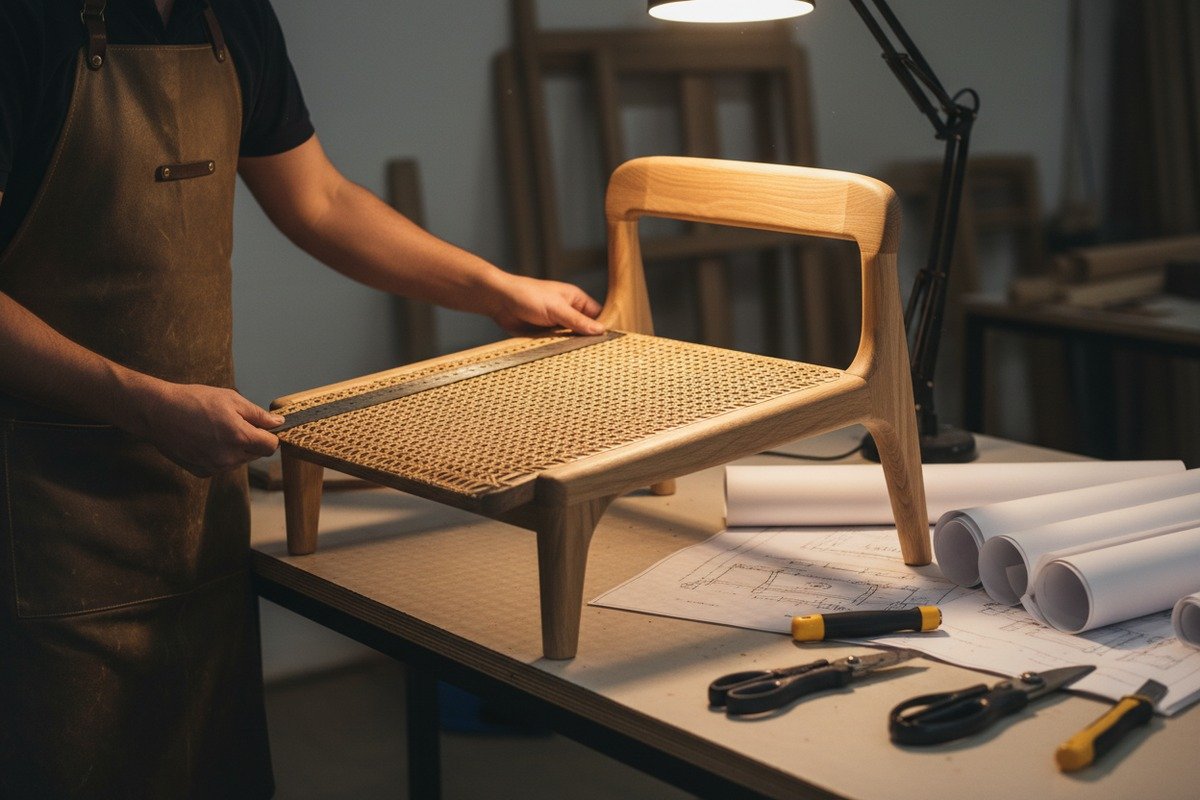
Yes, you can order rattan cane webbing in specific widths and lengths tailored to your production. Suppliers typically offer widths from 30cm to 120cm and roll lengths from 5m to 30m or more. Custom-cut options reduce material waste, lower per-unit costs, and streamline your furniture manufacturing workflow.
Standard vs. Custom Sizing
Most suppliers stock standard rolls. These are fine for general use, DIY projects, or small workshops. But if you run a furniture production line, precision matters. Here is a comparison:
| Характеристика | Стандартные рулоны | Custom-Sized Rolls |
|---|---|---|
| Диапазон ширины | 40cm, 60cm, 90cm, 120cm | Any width from 30cm to 150cm |
| Length per roll | 15m (fixed) | 5m, 10m, 15m, 20m, 30m+ |
| Отходы материала | 10–25% typical | Under 5% with proper sizing |
| Срок выполнения | Immediate (in stock) | 7–21 days (production) |
| Минимальный объем заказа | 1 рулон | 20–50 rolls per size |
| Cost per meter | Стандартные цены | Slightly higher or equal at volume |
Popular Custom Sizes by Application
Different furniture types demand different dimensions. Here is what we see most often from our buyers:
- Chair caning (seat and back): 45cm or 50cm width, 10m rolls.
- Cabinet door panels: 60cm width, 5m rolls.
- Headboard panels: 90cm or 100cm width, 15m rolls.
- Room dividers and screens: 120cm width, 20m rolls.
- Architectural wall cladding: 150cm width, 30m rolls.
Weave Patterns and Custom Dimensions
Width and length are only part of the equation. The weave pattern also affects how the material is cut and used. An open hexagonal radio weave has a different stretch behavior than a tight square basketweave. When you order custom sizes, let your supplier know which weave pattern you need. This ensures the roll dimensions account for any stretch or shrinkage during installation.
For example, our open radio weave stretches about 3–5% when pulled taut over a frame. If your finished panel needs to be exactly 50cm wide, we cut the roll at 48cm to account for this stretch. These small details make a big difference on the production line.
How to Place a Custom Size Order
The process is simple. Send us your required dimensions—width, length, weave pattern, and material type (natural or synthetic). We confirm feasibility within 24 hours. If the size is within our loom capacity, we produce a sample roll for your approval. After you sign off, bulk production begins. Typical lead time for custom sizes is 14–21 days depending on volume.
We also offer pre-cut sheets for buyers who do not want to cut on-site. These are flat panels cut to exact dimensions, stacked, and wrapped individually. Pre-cut sheets cost slightly more per unit but save significant labor time at your factory.
What are the requirements for starting an OEM partnership for my rattan brand?
Over the past decade, we have helped more than 200 brands launch their own rattan product lines through OEM partnerships. Some of these brands started with just a single SKU—one weave pattern, one size, one color. Today, several of them carry 30+ rattan products under their own name. The starting point does not have to be complicated. But there are real requirements you need to know before reaching out to a factory.
To start an OEM partnership for your rattan brand, you typically need a clear product specification, a minimum order quantity of 20–50 rolls per SKU, your brand assets (logo, label designs), and an understanding of required certifications like GRS, SGS, or REACH. Most suppliers also request a signed OEM agreement covering quality standards, pricing, and lead times.
Step-by-Step OEM Partnership Process
Starting an OEM relationship is not a mystery. Here is the typical workflow we follow with new brand partners:
- Initial inquiry — You send your product requirements: weave pattern, material (natural or synthetic), color, dimensions, and estimated volume.
- Feasibility review — We confirm whether our looms and raw material stock can meet your specs. This takes 1–2 business days.
- Sample production — We produce 2–3 sample rolls with your specified weave, color, and finish. Sample lead time is 7–10 days.
- Sample approval — You review samples, test them in your production or with your end customers, and provide feedback.
- OEM agreement signing — We formalize pricing, MOQs, quality benchmarks, lead times, payment terms, and IP protection.
- Bulk production — Full production begins. Typical lead time is 4–6 weeks for standard orders, 6–10 weeks for large or complex orders.
- Контроль качества — We conduct in-house QC checks. You can also arrange third-party inspection (SGS, Bureau Veritas, etc.).
- Labeling and packaging — Your private labels, tags, and branded packaging are applied.
- Shipping — We arrange FOB, CIF, or DDP shipping 7 based on your preference.
Certifications That Matter
If you sell into regulated markets like the EU, US, or Australia, certifications are not optional. They are a must. Here are the key ones:
- GRS (Global Recycled Standard) — Proves recycled content claims for synthetic rattan.
- Тестирование SGS — Third-party quality and safety testing recognized worldwide.
- RoHS compliance — Restricts hazardous substances in products sold in the EU.
- Соответствие REACH — Ensures chemicals used in processing meet EU safety standards.
- FSC (Лесной попечительский совет) — Relevant if you market your rattan as sustainably sourced.
Our factories hold GRS, SGS, RoHS, and REACH certifications. We can provide copies of all certificates for your import documentation.
Common OEM Partnership Mistakes to Avoid
Many first-time buyers rush into OEM partnerships without doing enough homework. Here are pitfalls we have seen:
- Skipping the sample stage — Never go straight to bulk. Always test samples first.
- Ignoring MOQ realities — If a factory says the MOQ is 50 rolls per SKU, plan your product line accordingly. Do not spread across too many SKUs with tiny quantities.
- Not defining quality benchmarks — Put acceptable defect rates in writing. We use AQL 2.5 8 as the standard for rattan webbing.
- Overlooking lead time buffers — Raw rattan supply from Indonesia can be affected by weather and harvest cycles. Build in a 2-week buffer for your production schedule.
- Forgetting IP protection — If you have a unique weave pattern or design, include a non-disclosure clause in your OEM agreement.
Natural vs. Synthetic: Choosing the Right Material for Your OEM Line
This decision affects everything—pricing, target market, care requirements, and certifications. Here is a quick comparison to guide your choice:
| Фактор | Натуральный ротанг | Синтетический ротанг |
|---|---|---|
| Источник | Indonesian rattan palm | Plastic (PE, PP, PVC) |
| Эстетика | Теплый, органичный, ремесленный | Mimics natural look, uniform |
| Долговечность | High (indoors), moderate (outdoors) | Very high (all environments) |
| Устойчивость к влажности | Низкая–умеренная | Высокий |
| Color options | Natural, bleached, stained | Wide palette (20+ colors) |
| Certifications needed | FSC, SGS | GRS, RoHS, REACH |
| Ценовой диапазон | Mid–High | Low–Mid |
| Лучше всего подходит для | Premium furniture, indoor decor | Outdoor furniture, high-humidity areas |
Many of our OEM partners actually carry both lines—natural rattan for their premium indoor collections and synthetic for outdoor or commercial hospitality projects. This dual approach covers more market segments without doubling your supplier base.
Digital Prototyping and 3D Visualization
A growing trend we have adopted is digital prototyping. Before we weave a single strand, we can generate 3D renders of your custom weave pattern and show you how it looks on a furniture panel or architectural wall. This saves time and money. You no longer need to wait for physical samples to visualize the end result. Several of our European and US partners now use these renders for pre-sales, showing their customers the finished product before placing bulk orders with us.
Modularity and Repairability
Another emerging concept in OEM rattan products is designing for repairability. Instead of replacing an entire piece of furniture when the webbing wears out, your products can feature easily removable and replaceable rattan panels. We can supply replacement panel kits under your brand—complete with pre-cut webbing, spline, and installation instructions. This extends product lifespan, reduces waste, and gives your brand a sustainability advantage that resonates with today's environmentally conscious consumers.
Заключение
OEM private labeling 10 and custom packaging for rattan cane webbing are not just possible—they are standard practice among serious suppliers. From branded labels and protective moisture-barrier packaging to precision-cut dimensions and full OEM partnerships, you have every tool available to build a distinctive rattan brand. The key is choosing a supplier with the factory capacity, certifications, and experience to deliver consistently. If you are ready to explore these options, reach out with your specifications and let the conversation begin.
Сноски
1. Provides a clear definition and production process of cane webbing. ↩︎
2. Official website explaining the mission and work of the Forest Stewardship Council. ↩︎
3. Replaced with the official Global Recycled Standard page from Textile Exchange, the standard’s promoter. ↩︎
4. Explains the concept and importance of country of origin labeling. ↩︎
5. Replaced with a comprehensive and authoritative Wikipedia page. ↩︎
6. Explains how silica gel packets work to absorb moisture and their uses. ↩︎
7. Explains common Incoterms and their implications for international trade. ↩︎
8. Explains the AQL 2.5 standard and its role in quality control processes. ↩︎
9. Provides a comprehensive explanation of the EU REACH regulation and its requirements. ↩︎
10. Explains the distinction between OEM and private labeling models. ↩︎
 English
  Español de México
  العربية
  Deutsch
  Français
  Русский