

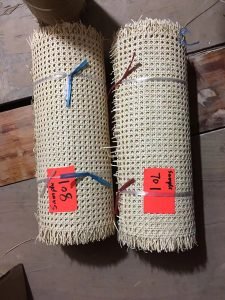
Every week, our production team in Foshan sees customers struggle with ротанговая сетка 1 installation. They buy beautiful webbing but end up with sagging panels, cracked cane, or messy edges. The frustration is real — and completely avoidable.
To attach rattan cane webbing to a wooden frame, soak the webbing in warm water for about 30 minutes, cut it 2–3 cm larger than the frame, then secure it using staples, wood glue, or a spline groove method. The webbing tightens naturally as it dries.
Below, we walk through every step of this process — from soaking times and securing methods to trimming techniques spline groove method 2. Whether you run a furniture factory or you are a DIY enthusiast, these methods will give you clean, professional results every time.
How long should I soak my rattan cane webbing before I start the installation?
Getting the soak time wrong is the most common mistake we see from buyers placing their first orders. Our warehouse staff in Indonesia test every batch for flexibility, so we know exactly how cane behaves when it hits water.
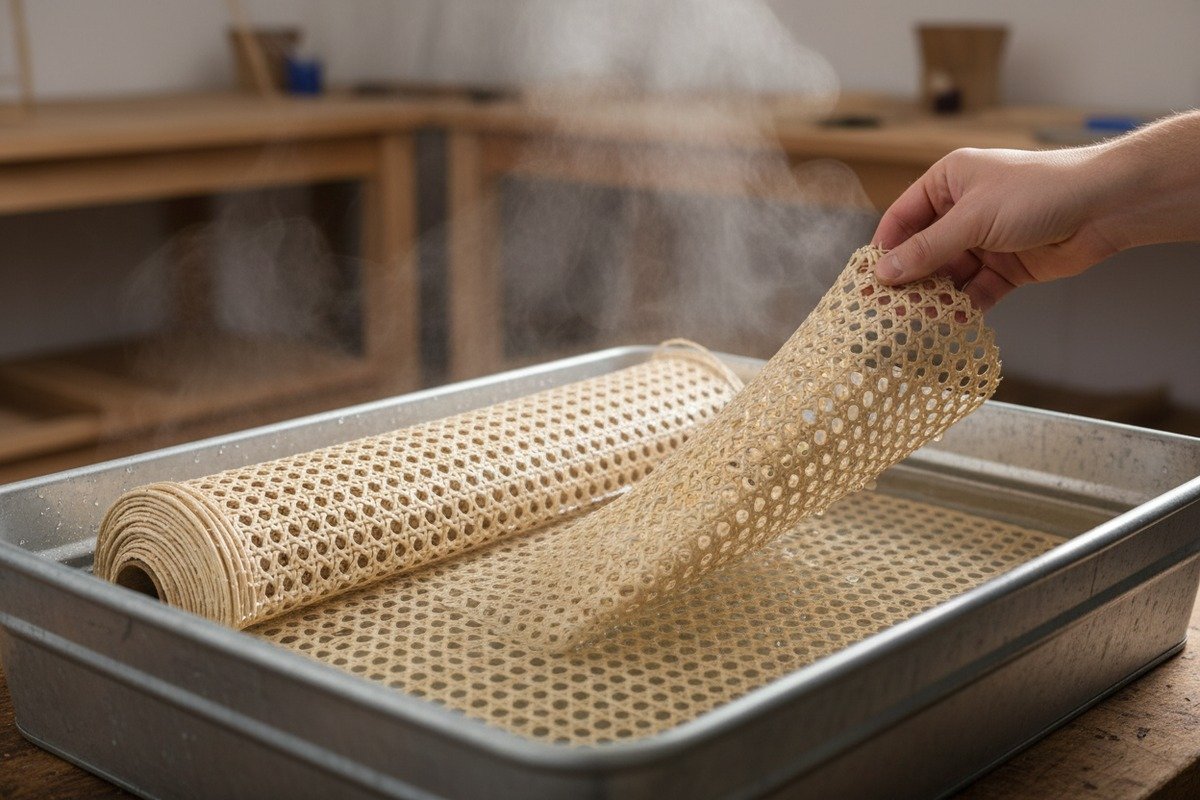
Soak natural rattan cane webbing in warm water for approximately 30 minutes before installation. This makes the cane pliable and prevents cracking. Avoid soaking longer than 30 minutes, as over-soaking weakens the fibers and can cause discoloration.
Why Soaking Matters
Dry rattan cane is brittle. If you try to bend or stretch it without soaking, the individual strands will snap. Warm water relaxes the natural fibers 3 and makes the entire sheet flexible enough to wrap, press, or stretch across a frame.
Think of it like pasta. Dry spaghetti breaks in half if you bend it. Cook it in warm water, and it becomes soft and workable. Rattan behaves the same way.
The Right Water Temperature
Use warm water — not boiling, not cold. Water that is comfortably warm to the touch works best. Boiling water can damage the natural proteins in the cane. Cold water takes much longer to penetrate the fibers.
Soaking Time Guidelines
| Webbing Type | Recommended Soak Time | Notes |
|---|---|---|
| Natural rattan cane 4 (standard thickness) | 25–30 minutes | Most common for furniture projects |
| Fine or thin cane webbing | 10–15 minutes | Thinner strands absorb water faster |
| Bleached rattan cane webbing | 15–20 minutes | Bleaching slightly changes fiber structure |
| Synthetic rattan matting | No soaking needed | Plastic does not absorb water |
What Happens If You Over-Soak?
Over-soaking is a real risk. After 30 minutes, the cane starts to lose structural integrity. The strands become overly soft and can tear easily during stretching. The color also darkens unevenly, which ruins the aesthetic of the finished piece.
We always tell our wholesale clients to set a timer. It sounds simple, but it prevents a lot of wasted material.
Test a Small Piece First
If you are working with a new type of webbing for the first time, cut a small scrap piece and soak it separately. Watch how it reacts. Check its pliability at the 10-minute, 20-minute, and 30-minute marks. This gives you a feel for the specific material before committing your full sheet.
After soaking, lay the webbing flat on a clean surface and gently blot excess water with a towel. You want it damp, not dripping. Now it is ready for installation.
Should I use staples or a spline groove to secure the rattan to my wooden frame?
When we ship rattan cane webbing to furniture factories across Europe and the Middle East, the first question their production managers ask is about the best attachment method. The answer depends on the frame design and the finish you want.
Use staples for quick, reversible installations on simple frames. Use a spline groove method for a cleaner, more refined finish. You can also combine both — staple first for holding power, then reinforce with wood glue for long-term durability.
Five Proven Methods
There is no single correct approach. Over the years, our factory team has tested and refined five methods that cover different frame types and skill levels.
Method 1: Wrap, Glue, and Staple. This is the simplest method. Wrap the damp webbing over the edges of the timber frame. Apply wood glue 5 to the frame surface, press the webbing down, and reinforce with staples 6 every few inches. Best for beginners and simple rectangular frames.
Method 2: Rear-Mounted with Trim. Stretch the webbing flat on the back of the frame. Glue and staple it in place. Then attach a small timber trim piece on the front to hide the raw edges. This gives you a clean front face with no visible fasteners.
Method 3: Rebated Frame with Trim. Cut a rebate — a recessed channel — along the inside edge of the frame. Fit the webbing into this recess. Glue and nail a trim piece over it. This method integrates the webbing into the frame for a seamless, professional look.
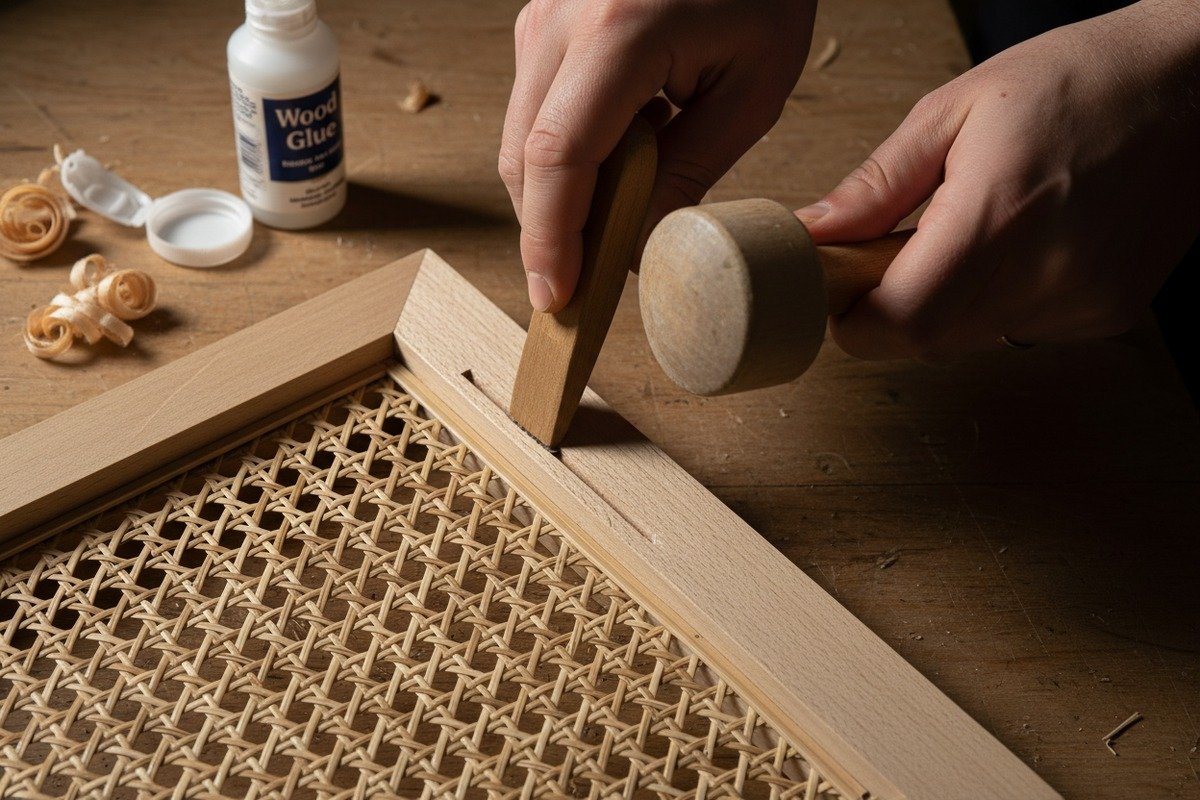
Method 4: Routed Groove with Spline. Use a router to cut a groove along the frame. Press the webbing into the groove. Apply glue and tap a cane spline into the groove using a mallet. This is the most sophisticated approach and produces the cleanest finish.
Method 5: Direct Panel Adhesive. Apply contact adhesive 7 to both the panel surface and the back of the webbing. Let both dry to a tacky stage. Press the webbing onto the panel carefully. This method works for flat panels like cabinet doors, not open frames. Do not wet the cane for this method — apply it dry.
Method Comparison
| Метод | Skill Level | Tools Needed | Best For | Reversible? |
|---|---|---|---|---|
| Wrap, Glue, and Staple | Beginner | Staple gun, wood glue | Simple frames, DIY projects | Partially |
| Rear-Mounted with Trim | Intermediate | Staple gun, trim pieces, glue | Frames where front face must look clean | Да |
| Rebated Frame with Trim | Intermediate | Chisel or router, glue, nails | Professional furniture making | Нет |
| Routed Groove with Spline | Advanced | Router, spline, mallet, glue | High-end furniture, restoration | Нет |
| Direct Panel Adhesive | Beginner | Contact adhesive | Flat panels, cabinet doors | Нет |
Stapling Best Practices
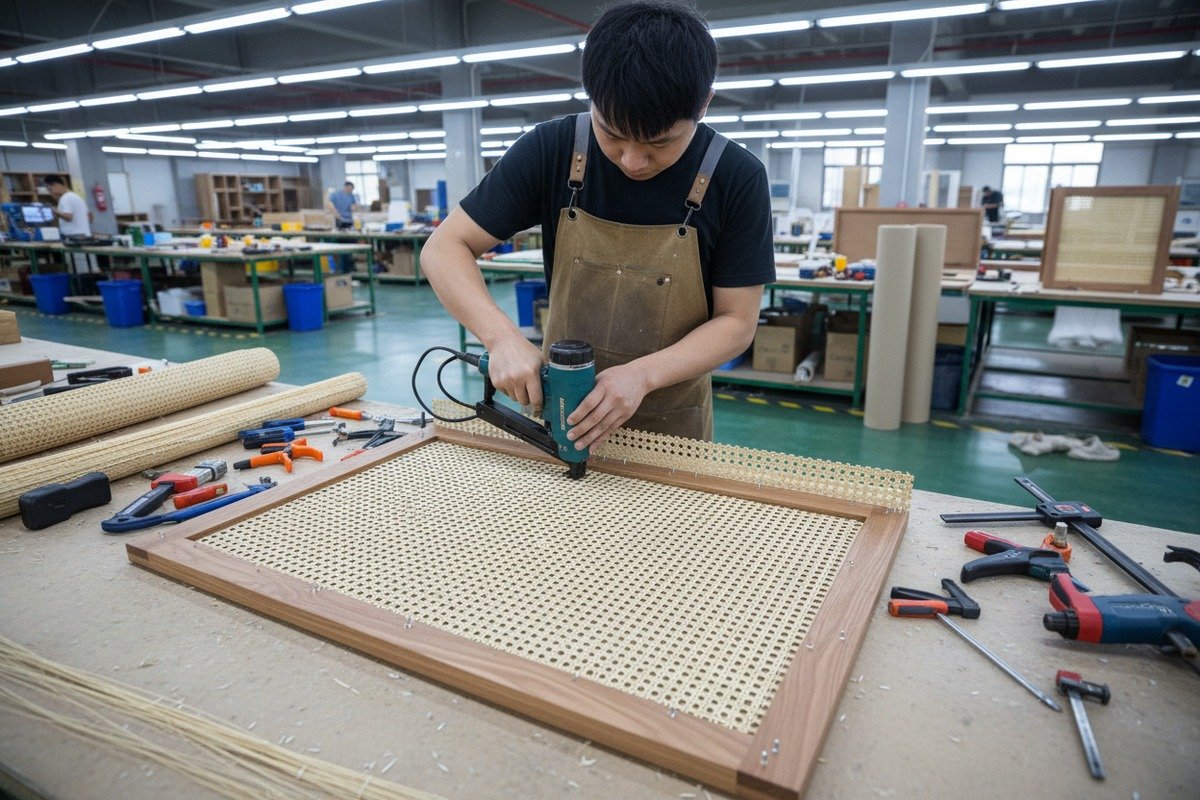
Start from the center of one side and work outward toward the corners. This distributes tension evenly across the webbing. Space your staples every 2–3 inches along the edge. Pull the webbing snug but not extremely tight — remember, it will shrink as it dries.
Work one side at a time. Secure the top center first. Then move to the bottom center and pull the webbing taut before stapling. Next, do the left and right sides. Finally, fold and staple the corners neatly.
Spline Groove Best Practices
If your frame already has a routed groove, this method is ideal. Cut the webbing slightly larger than the groove opening. Press the webbing into the groove with your fingers first. Then apply wood glue inside the groove and tap the cane spline into place using a rubber mallet. Go slowly and check alignment as you work around all four sides.
The spline locks everything in place. Once the glue dries, the webbing is held firmly and the spline creates a clean visual border.
Hybrid Approaches
Many of our clients in the Netherlands and Australia combine staples with glue. They staple first for immediate holding power, then apply additional wood glue along the edges and seams. This hybrid approach is especially useful for high-traffic furniture like dining chair seats and headboards.
How can I make sure my rattan webbing stays tight and doesn't sag over time?
Sagging is the number one complaint we hear from end users — and it almost always traces back to the installation process, not the material itself. Through years of quality control at our facilities, we have identified the key factors that determine long-term tension.
To keep rattan webbing tight, install it while damp so it shrinks and tightens as it dries. Secure it firmly with staples or a spline groove. Dry the piece in a cool, well-ventilated area, and keep the frame flat and clamped during the curing process to prevent warping.
The Science Behind Shrinkage
Natural rattan cane contains moisture. When you soak the webbing before installation, you add even more. As the cane dries, the water evaporates and the fibers contract. This contraction is what pulls the webbing tight across the frame — like a drum skin.
This is why you install the webbing damp but not dripping. You want enough moisture in the fibers to allow for meaningful shrinkage. If you install dry cane, it has no room to tighten.
Proper Drying Conditions
Drying conditions matter more than most people realize. Here are the key rules:
- Dry in a cool room. Heat causes rapid, uneven drying. This leads to warping and uneven tension.
- Ensure good airflow. Open windows or use a fan on low speed. Stagnant air traps moisture and slows drying.
- Keep the frame flat. Lay the finished piece on a flat surface. Clamp it if possible. This prevents the frame from bowing as the cane shrinks.
- Wait at least 24 hours. Do not move or hang the piece until the webbing is completely dry.
Common Causes of Sagging
| Cause | Why It Happens | How to Prevent It |
|---|---|---|
| Insufficient tension during installation | Webbing was not pulled snug before securing | Pull from the center outward and check tension on each side |
| Over-soaking | Fibers weakened by excessive water exposure | Limit soak time to 30 minutes maximum |
| Rapid drying near heat source | Uneven shrinkage causes loose spots | Dry in a cool, ventilated area away from direct heat |
| Inadequate fastening | Too few staples or weak adhesive bond | Use staples every 2–3 inches and reinforce with glue |
| Frame warping | Wood bows due to moisture or weight | Clamp the frame flat during the entire drying period |
| Humidity exposure over time | Prolonged high humidity relaxes dried fibers | Apply a light sealant or keep furniture in climate-controlled rooms |
Long-Term Maintenance Tips
Once your rattan webbing is installed and dry, a few simple habits will keep it tight for years.
First, avoid placing rattan furniture in direct sunlight for prolonged periods. UV rays 8 break down natural fibers over time. Second, keep the furniture away from constant humidity — bathrooms and outdoor covered patios are risky environments for natural cane.
If you notice slight sagging after a few years, you can often re-tighten the webbing by lightly misting the cane with water from a spray bottle. Let it dry naturally. The fibers will contract again, restoring some of the original tension.
Pre-Finishing the Frame
One overlooked detail: finish your wooden frame completely before attaching the webbing. Sand it, stain it, paint it — whatever your design requires. Doing this after the cane is attached is extremely difficult and risks damaging the webbing with chemicals or sandpaper. A finished frame also provides a smoother surface for adhesive bonding.
What tools do I need to trim the excess rattan for a clean and professional look?
After shipping millions of meters of cane webbing from our factories in Foshan and Indonesia, we always include trimming guidance in our packaging inserts. The right cutting tools make the difference between a polished finish and a ragged edge.
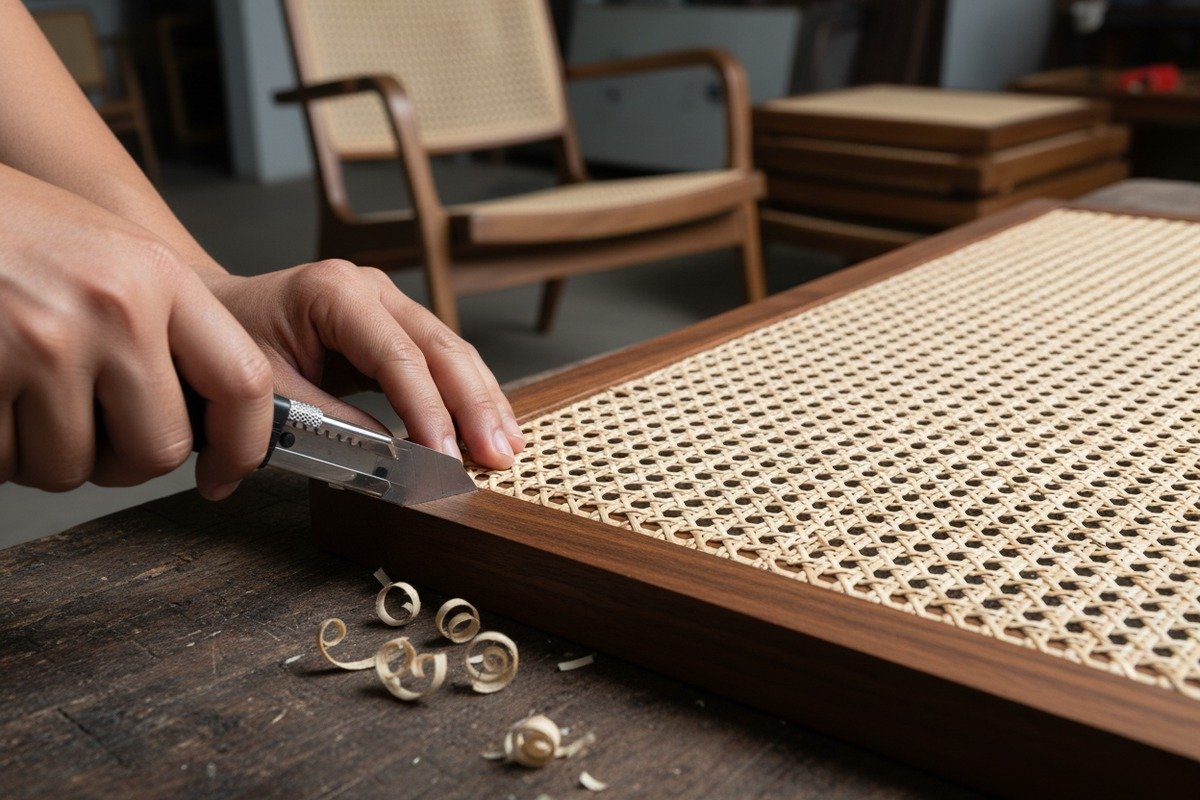
To trim excess rattan cane webbing cleanly, use sharp scissors for general cuts and a precision utility knife for flush trimming along frame edges. A metal straightedge guides straight cuts. For spline groove installations, a flush-cut chisel or craft knife works best to remove material at the groove line.
Essential Trimming Tools
Not every project requires the same tools. Here is what you need based on your installation method.
For wrap-and-staple projects, a pair of sharp fabric scissors handles most of the cutting. Cut along the outer edge of the frame, leaving the stapled portion hidden underneath or behind a trim piece.
For spline groove installations, a sharp utility knife 9 is essential. Run the blade along the outside edge of the groove to cut the webbing flush. A fresh blade matters — dull blades will pull and tear the cane instead of cutting it cleanly.
A metal ruler or straightedge is useful for guiding long, straight cuts. Hold it firmly against the frame edge and draw the blade along it. This prevents the knife from wandering and creating an uneven line.
Step-by-Step Trimming Process
- Wait for the glue to set. Do not trim immediately after installation. Let the adhesive cure for at least a few hours. Cutting too early can shift the webbing.
- Use a fresh blade. Replace your utility knife blade before starting. Rattan dulls blades quickly.
- Cut from the front. Always trim from the visible side of the frame. This ensures the cut edge faces outward and looks clean.
- Work in short strokes. Do not try to cut a full side in one pass. Use short, controlled strokes along the edge.
- Sand lightly if needed. After cutting, you may feel small rough spots along the edge. A fine-grit sandpaper 10 (220 grit) or a small sanding block can smooth these out without damaging the webbing.
Dealing with Corners
Corners are the trickiest part of trimming. For wrap-style installations, fold the corner neatly — like wrapping a gift — before stapling. Trim the excess fabric before folding to reduce bulk. For groove installations, the spline handles the corner tension, and you simply need to cut the webbing flush with the groove edge at each corner point.
Reinforcing After Trimming
After trimming, apply a thin line of wood glue along any cut edges that are exposed. This seals the fibers and prevents them from fraying over time. This is especially important for natural rattan, which can unravel at cut points if left unsealed.
For high-end projects, some of our clients apply a clear wood finish or light varnish over the trimmed edges. This adds an extra layer of protection and gives the edges a slightly polished appearance.
Weave Direction Matters
Before you even begin trimming, pay attention to the direction of the cane weave. When positioning the webbing on the frame, align the weave pattern so it runs parallel or perpendicular to the frame edges — not at an angle. Consistent weave direction creates a uniform appearance and makes trimming easier because you are cutting along the grain of the weave rather than across it.
If you cut against the weave at odd angles, the strands can separate and fray. Aligning the weave before securing the webbing saves you significant cleanup work during the trimming phase.
Заключение
Attaching rattan cane webbing to a wooden frame is straightforward when you follow the right steps. Soak properly, secure firmly, dry slowly, and trim carefully. Visit www.rattanwholesaler.com for premium webbing and expert guidance.
Сноски
1. Explains what rattan cane webbing is and its characteristics. ↩︎
2. Explains how splines are used in woodworking for strength and alignment. ↩︎
3. Provides a general overview of natural fibers and their properties. ↩︎
4. Describes the characteristics and origin of natural rattan cane. ↩︎
5. Provides a comprehensive guide to different types and uses of wood glue. ↩︎
6. Details types of staples commonly used in upholstery and furniture. ↩︎
7. Explains the adhesion mechanism and properties of contact adhesives. ↩︎
8. Explains how UV radiation damages various materials and its effects. ↩︎
9. Provides a comprehensive overview of utility knives and their various uses. ↩︎
10. Explains the uses and applications of fine-grit sandpaper in various projects. ↩︎

 English
  Español de México
  العربية
  Deutsch
  Français
  Русский