

Every week, our sales team fields dozens of calls from furniture factories and wholesalers who ordered the wrong ротанговая сетка 1 width. They end up with rolls that are too narrow to cover the frame or so wide that half the material goes to waste. The frustration is real — and expensive.
To choose the right natural rattan cane webbing width, measure your furniture frame’s opening, add 3–5 cm per side for installation overlap, and then select the closest standard roll width — commonly 18″, 24″, or 36″ — that covers your dimensions with minimal trimming and waste.
This guide walks you through standard widths, waste reduction, structural considerations, and aesthetic matching furniture frame’s opening 2. Let’s get into the details so you can order with confidence.
What standard rattan webbing widths should I consider for my specific furniture dimensions?
One of the most common questions we hear from our B2B clients across the US, Europe, and Southeast Asia is about which width to pick first. The answer depends entirely on what you are building.
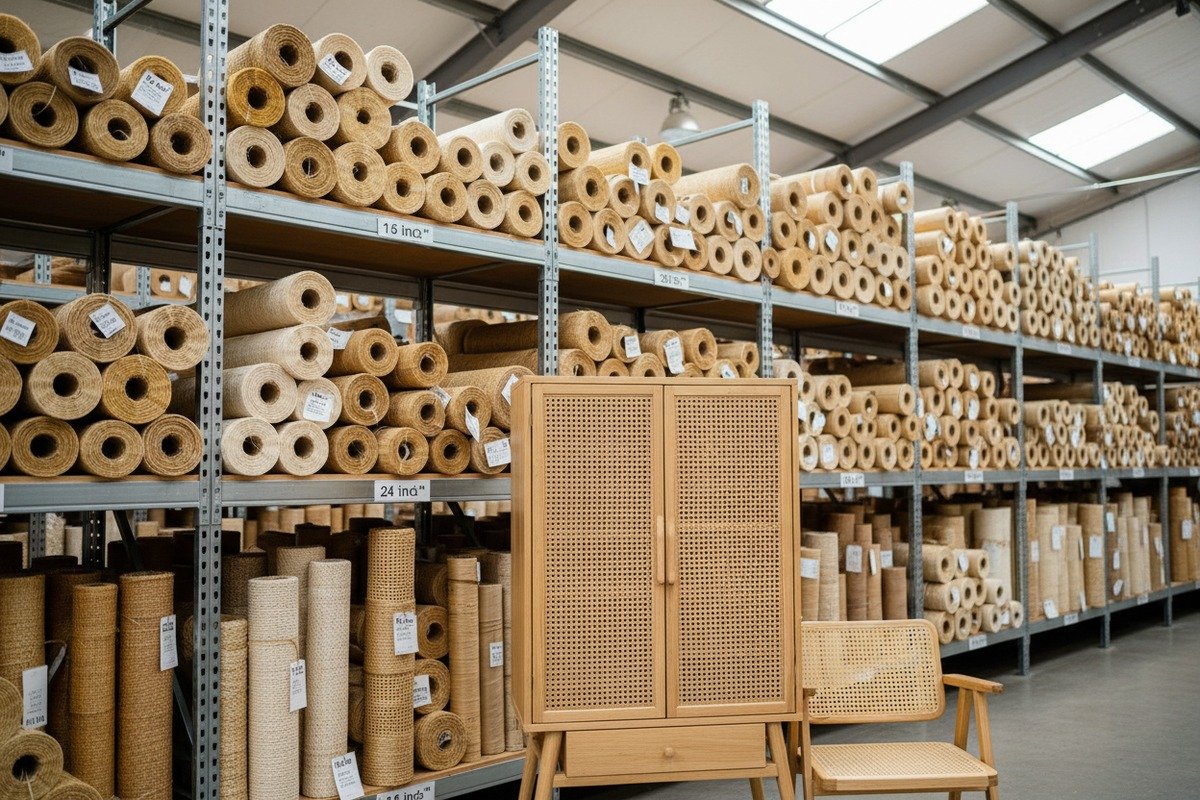
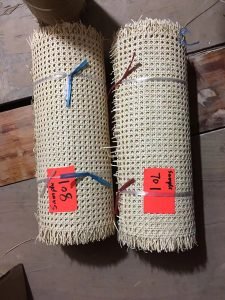
Standard rattan cane webbing widths range from 11.5" (30 cm) to 39.5" (100 cm), with popular sizes at 18", 24", and 36". Chairs typically need 18–24" widths, cabinet doors use 24–31.5", and headboards or large panels require 36" or wider rolls.
Common Widths and Their Furniture Applications
In our production facility, we stock a full range of widths because different furniture types demand different coverage. Here is a breakdown that our factory team uses daily when advising clients:
| Стандартная ширина | Metric Equivalent | Best Used For |
|---|---|---|
| 11.5" | 30 см | Small chair backs, accent panels, lampshades |
| 15.5" | 40 см | Narrow cabinet door inserts, decorative screens |
| 18" | 45 см | Dining chair seats, side chair backs |
| 20" | 51 cm | Medium chair seats, drawer fronts |
| 24" | 60 см | Wide chair seats, cabinet doors, side panels |
| 27.5" | 70 cm | Larger cabinet fronts, room divider panels |
| 31.5" | 80 cm | Wardrobe doors, wide decorative panels |
| 36" | 90 см | Headboards, bed footboards, large cabinets |
| 39.5" | 100 cm | King-size headboards, oversized panels |
How to Match Width to Your Frame Opening
Start with the frame opening. Measure the width and the height. Then add 3–5 cm on each side. This extra margin serves two purposes. First, it gives you material to grip and stretch during installation. Second, it allows for tucking into grooves or stapling to the backside of the frame.
For example, if your chair seat opening is 16" wide, you need at least 18.4" of webbing (16" + 1.2" on each side). The closest standard roll is 18" or 20". In our experience shipping to furniture factories in the Netherlands and Australia, most clients prefer to round up slightly. A 20" roll gives more working room and avoids a too-tight fit.
Rolls vs. Sheets
We supply both rolled and flat-sheet formats. Rolls are standard for production lines because they allow continuous cutting. Sheets work better for small-batch or custom projects. Keep in mind that rolled webbing may have a slight curve memory. Soaking it before use removes this curl and makes it flat.
Pattern Matters Too
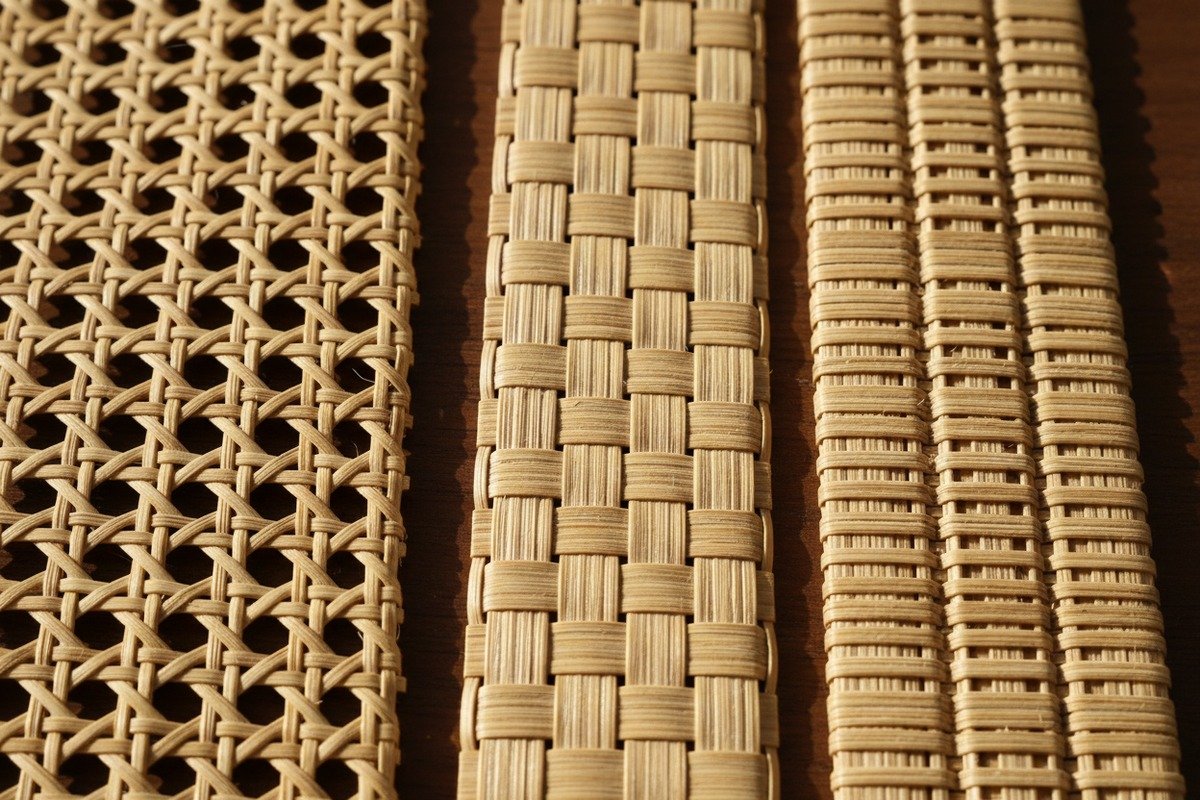
Different weave patterns come in different width availabilities. The hexagonal open weave 3 — the most popular pattern — is available across all standard widths. Плетение "радио" 4 and closed weave options sometimes have limited width ranges. Always confirm pattern availability in your desired width before placing a bulk order.
How can I choose the right roll width to minimize material waste in my production line?
Отходы материала 5 is a cost problem we understand deeply. Running three factories, including our own rattan processing plant in Indonesia, we see firsthand how poor width selection eats into margins.
To minimize waste, map all your furniture frame openings, group them by similar dimensions, and select the fewest standard roll widths that cover the most products. Buying one versatile width like 24" often reduces offcut waste by 15–25% compared to stocking multiple narrow rolls.
Step 1: Audit Your Product Line
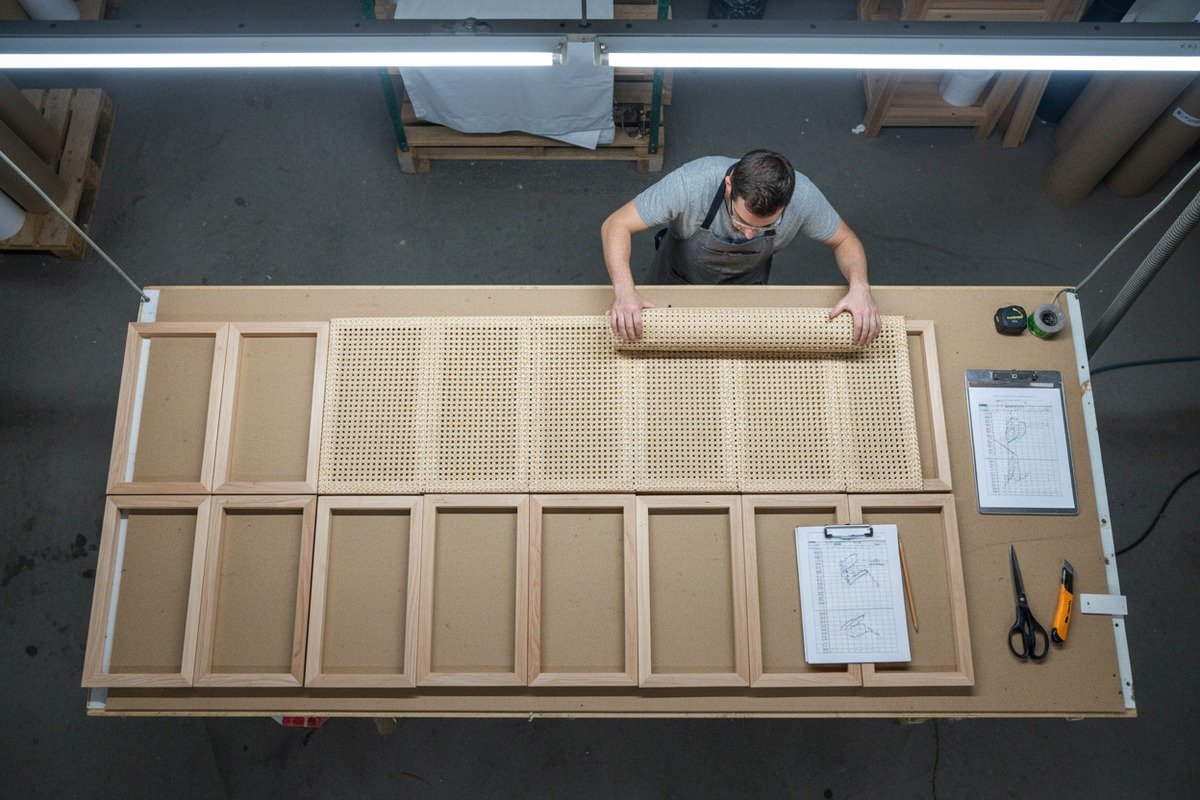
Before ordering, list every product that uses rattan webbing. Write down the frame opening dimensions for each. Then sort them from smallest to largest. You will likely see clusters. Maybe 60% of your products have openings between 20" and 24". That tells you a 24" roll is your workhorse width.
Step 2: Calculate Yield Per Roll
Here is a simple yield calculation we share with our wholesale clients:
| Frame Opening Width | Roll Width Selected | Usable Width After Trimming | Waste Per Cut |
|---|---|---|---|
| 16" | 18" | 16" + margins | ~1" total |
| 16" | 24" | 16" + margins | ~5.6" total |
| 22" | 24" | 22" + margins | ~0.4" total |
| 22" | 36" | 22" + margins | ~11.6" total |
| 34" | 36" | 34" + margins | ~0.4" total |
The table makes it obvious. A 24" roll for a 16" opening wastes over 5 inches per cut. Over 1,000 cuts in a production run, that adds up fast. But a 24" roll for a 22" opening is nearly perfect.
Step 3: Consider Multi-Width Stocking
Most of our furniture factory clients in Turkey, Spain, and the US stock two or three widths. A common combination is 18", 24", and 36". This covers small chairs, medium cabinets, and large headboards without excessive waste.
Step 4: Use Offcuts Wisely
Even with careful planning, some waste is unavoidable. Smart factories repurpose narrow offcuts for small decorative panels, coasters, or sample swatches. Our team in Foshan often suggests this to clients who order in bulk — it turns waste into value.
Ordering in Bulk vs. Custom Cuts
We offer both options. Bulk standard-width rolls are more cost-effective, typically ranging from $4 to $17 per roll depending on length and grade. Custom-cut widths cost more per unit but eliminate almost all waste. For high-volume production, standard rolls win on price. For boutique or luxury lines, custom cuts can be worth the premium.
Which cane webbing width will provide the best structural support for my chair or cabinet frames?
Structural integrity 6 is something we test constantly. When a chair seat sags after six months, the blame often falls on the wrong webbing width or grade — not the weave quality itself.
For load-bearing surfaces like chair seats, select a width that covers the entire frame opening in one piece, using AAA-grade rattan with a tight weave pattern. Single-piece coverage eliminates seams, which are the weakest point in any cane webbing installation.
Why Single-Piece Coverage Matters
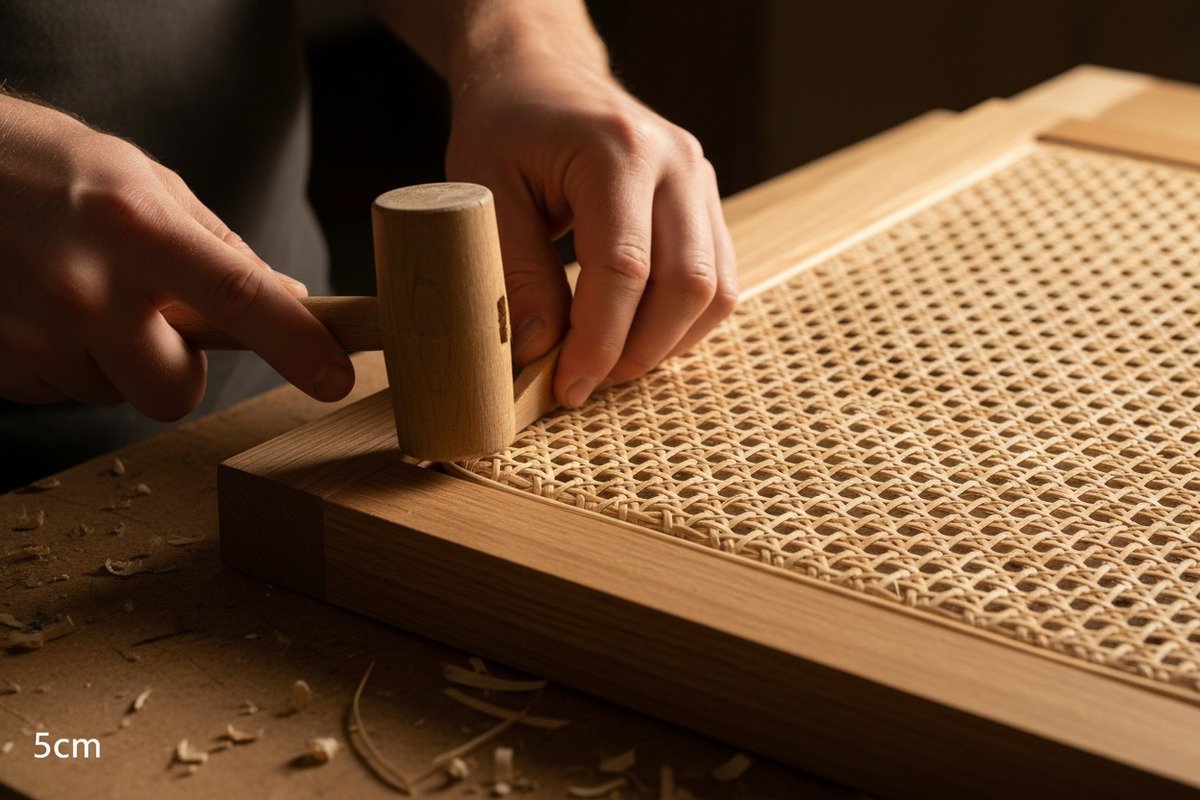
Seams in rattan webbing create stress points. When someone sits on a chair, the weight distributes across the entire woven surface. If there is a seam in the middle, that joint absorbs disproportionate force. Over time, it stretches, loosens, or tears. Our recommendation to every client: always choose a roll width that covers the frame opening in one continuous piece.
Grade Selection for Structural Applications
Not all rattan webbing is created equal. The grade of the material directly impacts how well it holds up under load.
| Сорт | Типичное использование | Expected Lifespan (Indoor) | Load Suitability |
|---|---|---|---|
| AAA Premium | Chair seats, high-traffic furniture | 15–20 лет | Excellent — handles daily sitting |
| AA Standard | Дверцы шкафов, декоративные панели | 10–15 years | Good — light structural use |
| A Basic | Wall decor, lampshades, screens | 5–10 лет | Limited — decorative only |
For any furniture where someone will sit, lean, or press against the webbing, AAA grade is the right choice. Our Indonesian processing facility grades every batch before shipping. We reject material with inconsistent strand thickness because those weak spots fail first under stress.
Weave Pattern and Strength
The hexagonal open weave is beautiful but has larger openings between strands. This makes it slightly less rigid than a closed weave or a tight radio weave. For chair seats, a radio weave (6×6 pattern) offers a denser surface that distributes weight more evenly.
For cabinet doors that bear no body weight, any pattern works. The choice becomes purely aesthetic.
Installation and Tension
Proper tension during installation is just as important as the width. Soak the webbing in water for 15–30 minutes before stretching it across the frame. Pull it taut and secure it with staples, nails, or a spline pressed into a channel groove 7 (typically 5/16" wide and 5/16" deep). As the rattan dries, it contracts and tightens further. This natural shrinkage creates a drum-tight surface that supports weight effectively.
Over-soaking — beyond 60 minutes — can weaken the fibers. We advise our clients to test a small piece first if they are unsure about timing. Warm water speeds the process but cool water is gentler on the fibers.
How do I ensure the rattan width I select matches the aesthetic proportions of my furniture design?
When our design team works with luxury hospitality projects in Dubai or boutique furniture brands in the US, the conversation always comes back to proportion. A beautiful rattan weave in the wrong width can make an elegant cabinet look clumsy.
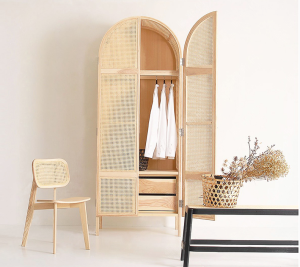
The rattan webbing width should complement the furniture frame's visual proportions — narrow widths (11.5"–18") suit delicate or small-scale pieces, while wider widths (24"–36") create a balanced look on larger surfaces like headboards, sideboards, and full cabinet fronts.
The Rule of Visual Balance
Think of the rattan panel as a window in the furniture frame. If the frame border is thick and heavy, a small rattan panel looks lost. If the frame is thin and sleek, a massive rattan panel overwhelms the wood. The goal is balance.
A general rule we follow in our product development: the rattan panel should occupy 60–75% of the total visual surface of the furniture face. This leaves enough frame border to define the shape without overpowering the natural weave texture.
Weave Scale and Furniture Size
The scale of the weave pattern also plays a role. A large hexagonal weave with wide openings looks stunning on a big headboard but appears coarse on a small cabinet door. Conversely, a fine tight weave on a king-size headboard might look flat and lose its textural charm from a distance.
Here is how we guide our clients:
- Small furniture (accent pieces, side tables): Fine weave + narrow width (11.5"–18")
- Medium furniture (dining chairs, nightstands, narrow cabinets): Medium weave + mid width (18"–24")
- Large furniture (headboards, wardrobes, room dividers): Open or bold weave + wide width (24"–39.5")
Color and Finish Considerations
Natural rattan has a warm, golden-tan tone. Semi-bleached rattan is lighter and works better with white or pale wood frames. The width you choose interacts with color too. A wider panel of natural rattan creates a stronger warm tone impact on the room. A narrow strip is more subtle.
For lighter interiors trending in Scandinavian and mid-century modern design 9, our semi-bleached option in 24" or 36" width is the most requested product. It provides the natural texture without the heavy golden warmth.
Practical Tip: Mock It Up First
Before committing to a large order, we always recommend that our clients cut a paper template to the intended rattan panel size and tape it to the furniture frame. Step back and look at it from a normal viewing distance. Does the proportion feel right? This five-minute test saves thousands of dollars in wrong orders.
Trend Watch: Wide Hexagonal Weaves
The current market trend leans toward wide hexagonal weaves in the 24"–36" range. DIY restoration and mid-century modern revivals are driving this demand. On platforms like Etsy, "big sale" bundles of wide rattan webbing are among the top sellers. Sustainability-conscious buyers also prefer wider single-piece panels because they require fewer cuts, less waste, and showcase the handwoven craftsmanship more prominently.
Our clients in the Netherlands and Australia have seen strong demand for 36" rolls in particular, used for bed headboards and large sideboard doors. This width offers maximum design impact while still fitting through standard shipping and handling channels.
Заключение
Choosing the right rattan cane webbing width comes down to four things: accurate measurement, waste planning, structural needs, and visual proportion. Get these right, and your furniture projects will look professional and last for years.
Сноски
1. Explains what rattan cane webbing is and its source. ↩︎
2. Provides clear instructions on how to measure the frame opening for cane webbing. ↩︎
3. Describes the characteristics of open hexagonal rattan webbing. ↩︎
4. Describes radio box weave cane webbing and its characteristics. ↩︎
5. Explains lean manufacturing principles for waste reduction in production. ↩︎
6. Defines furniture structural integrity and its contributing factors. ↩︎
7. Details the process of pressing spline into a channel groove for installation. ↩︎
8. Explains rattan grading, including premium (Grade A) characteristics. ↩︎
9. Replaced with an authoritative Wikipedia page providing a comprehensive overview of mid-century modern design. ↩︎
 English
  Español de México
  العربية
  Deutsch
  Français
  Русский