

Every year, our sales team fields hundreds of inquiries from furniture factories frustrated by inconsistent rattan webbing quality, late shipments, and suppliers who vanish after the first order.
To find and verify a reliable rattan cane webbing supplier, start by researching B2B directories and factory websites. Then shortlist candidates by production experience and capacity. Request physical samples, inspect weave consistency, confirm sustainability sourcing, and negotiate MOQs before committing to bulk orders.
This guide walks you through every step. We will cover where to source, how to check quality grades, what questions to ask, and how to compare prices without sacrificing durability supply chain stability 1. Let’s dig in.
Where can I find a reliable rattan cane webbing manufacturer that handles large-scale wholesale orders?
When we first started exporting ротанговая сетка 2 over 25 years ago, finding a manufacturer who could handle bulk was a challenge even for us inside the industry.
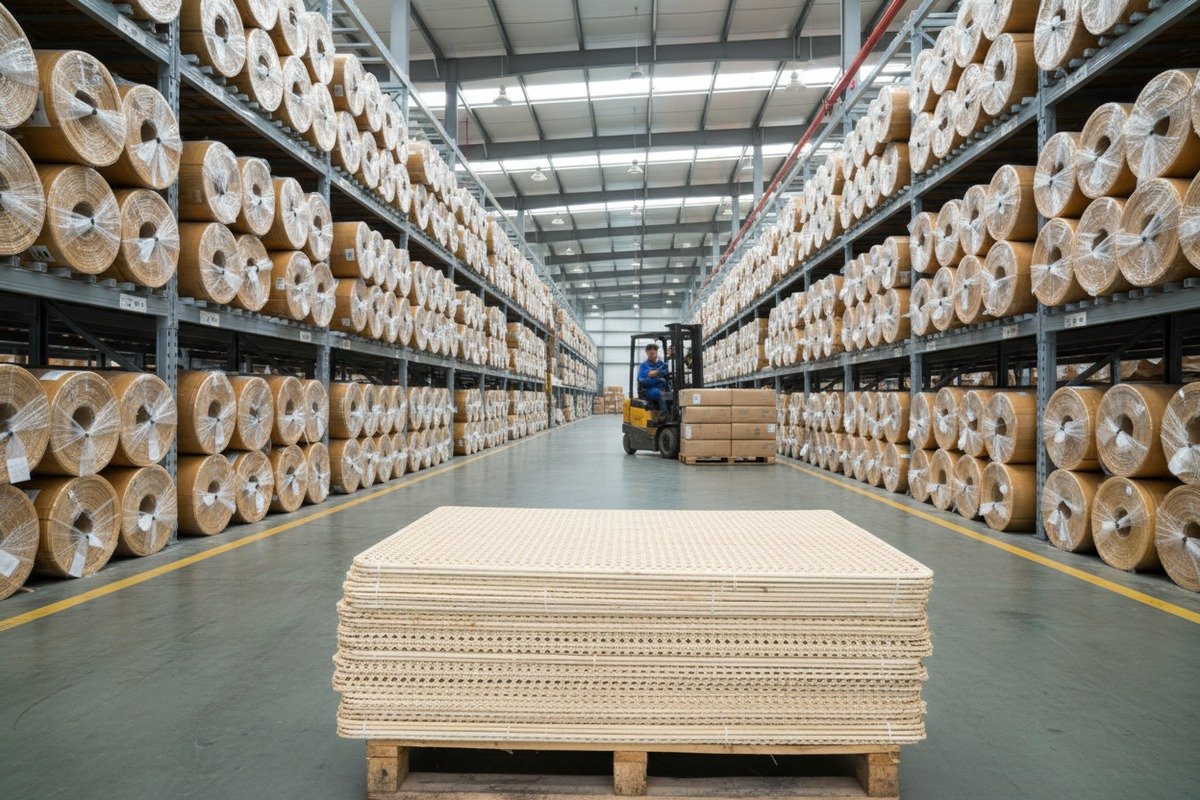
You can find reliable large-scale rattan cane webbing manufacturers through B2B platforms like Made-in-China and Alibaba, direct factory websites, trade shows, and industry referrals. Focus on suppliers based in China's Guangdong, Fujian, and Zhejiang provinces or those with integrated Indonesian raw material processing facilities.
Start With B2B Directories
Online directories remain the fastest way to build a shortlist. Made-in-China 3 alone lists over 41 rattan cane webbing suppliers. Alibaba 4 adds even more. Filter by "verified supplier," "trade assurance," and "gold member" to narrow your search. But keep in mind—these badges show the supplier paid for verification, not that their product is perfect. Always follow up with your own due diligence.
Go Direct to Factory Websites
Many serious manufacturers maintain their own websites. For example, our site at www.rattanwholesaler.com lets buyers browse the full product catalog, check factory photos, and request samples directly. A supplier with a professional, detailed website often signals a real factory rather than a middleman trading company.
Key Sourcing Regions
Not all regions offer the same advantages. Here is a breakdown:
| Регион | Strengths | Considerations |
|---|---|---|
| China (Guangdong, Fujian, Zhejiang) | Massive production capacity, competitive pricing, wide pattern variety | Quality can vary; verify factory vs. trader |
| Индонезия | Origin of необработанный ротанг 5, eco-sourced materials, lower raw material cost | Longer lead times, fewer finished product options |
| Egypt | Flexible MOQs, 12+ standard patterns, growing wholesale market | Smaller scale, limited customization |
| Southeast Asia (Vietnam, Philippines) | Artisanal quality, handwoven options | Higher per-unit cost, limited bulk capacity |
| Австралия | Premium handwoven, niche market appeal | Very high price, minimal bulk availability |
Trade Shows and Industry Networks
Кантонская ярмарка 6 in Guangzhou and CIFF (China International Furniture Fair) regularly feature rattan webbing manufacturers. Walking a factory's booth in person gives you a feel for their product range and team professionalism. If you cannot attend, ask your shortlisted suppliers for references. A confident manufacturer will gladly connect you with existing clients.
Watch Out for Middlemen
One common pitfall: many "suppliers" on B2B платформы 7 are actually trading companies. They source from multiple small workshops and mark up prices. Signs of a trader include vague factory addresses, no production photos, and an unusually wide product range spanning unrelated categories. A real rattan factory will show you machines, raw material storage, and weaving floors.
Our own operation includes three self-invested factories and over 30 partner factories in Foshan. We also run our own rattan processing facility in Indonesia. That vertical integration is what lets us control quality from raw cane to finished roll. When evaluating a supplier, look for similar depth in their supply chain.
How do I verify the quality and grading of rattan webbing to ensure it meets my factory's production standards?
Наша команда контроля качества 8 inspects every batch before it leaves our warehouse, and we have learned through thousands of shipments exactly what separates Grade A webbing from subpar material.
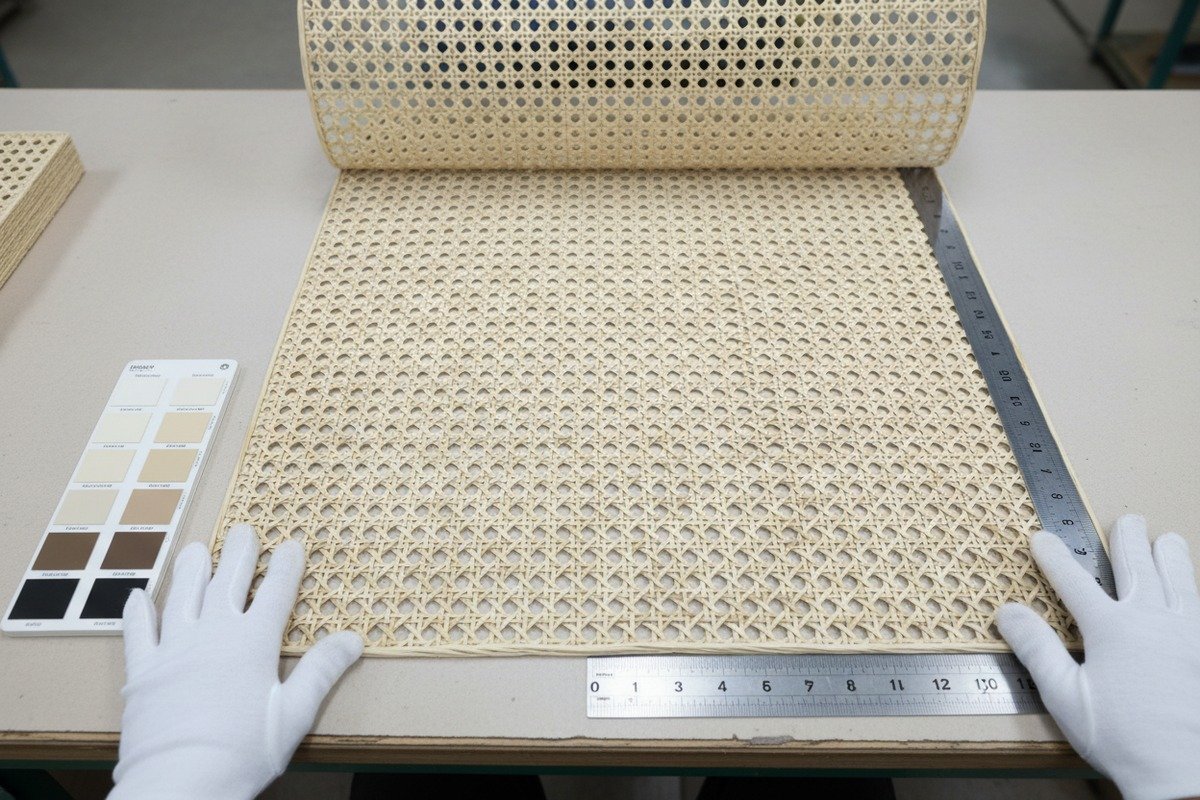
Verify rattan webbing quality by requesting physical samples first. Inspect for consistent weave tension, uniform strand thickness, absence of mold or dark spots, and flexibility without cracking. Confirm the grade—full core, half core, or peel—and test for moisture resistance, especially if the webbing is for humid or outdoor environments.
Understanding Rattan Grades and Types
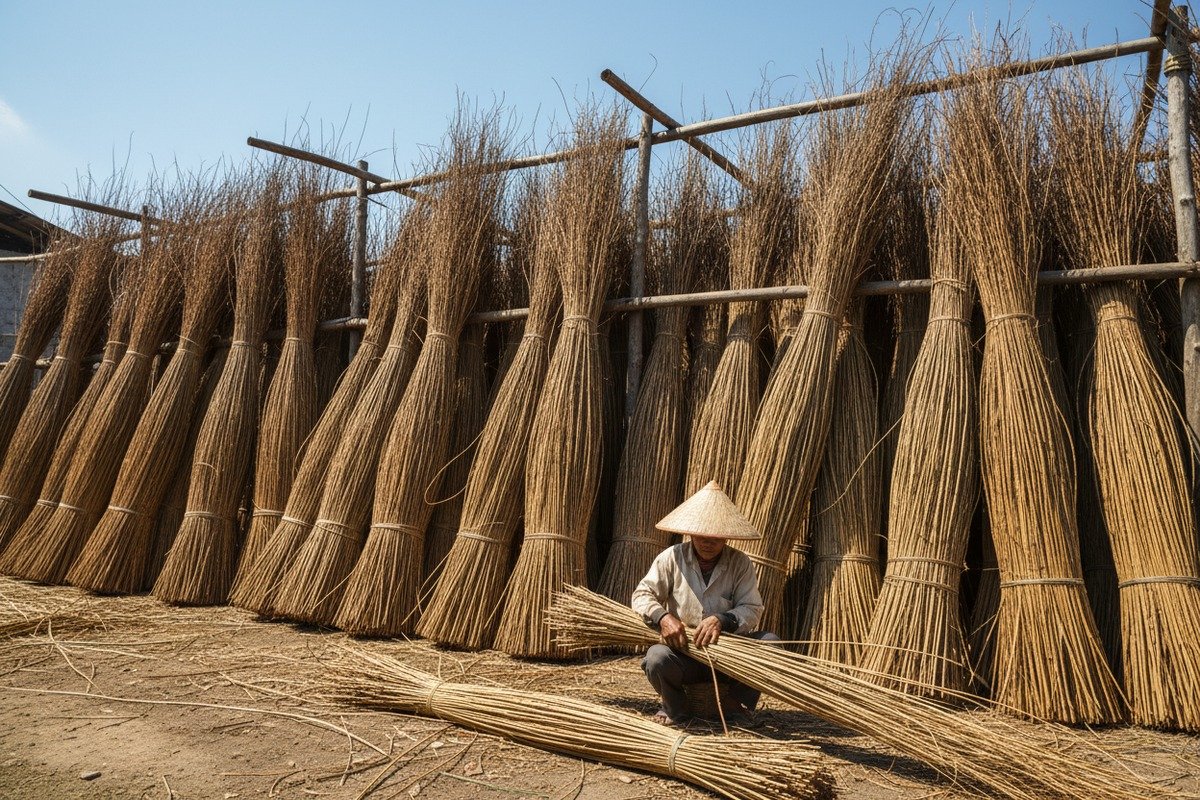
Rattan cane webbing comes in several material types. Natural webbing uses real rattan core or peel, woven into sheets. Synthetic webbing uses plastic, paper, or cotton blends designed to mimic rattan's look. Each serves a different purpose.
Natural rattan delivers that warm, earthy, artisanal aesthetic. The color palette ranges from light beige to straw yellow and cream. The texture is matte, fibrous, with organic variations in each strand. This is the go-to choice for bohemian, mid-century, and Scandinavian furniture designs.
Synthetic rattan, on the other hand, offers weather resistance and color consistency. Plastic cane webbing has gained traction since 2016, with full color options now standard in 2025. It mimics the organic look of natural wood fibers while surviving rain, humidity, and UV exposure.
Key Quality Markers to Check
Here is what to inspect when you receive samples:
| Quality Marker | На что обратить внимание | Тревожный сигнал |
|---|---|---|
| Однородность плетения | Even spacing, uniform tension across the sheet | Loose strands, uneven gaps, sagging sections |
| Толщина нити | Uniform diameter throughout the roll | Thin spots that may break under tension |
| Однородность цвета | Natural variation is fine; extreme dark patches are not | Mold spots, chemical staining, bleach burns |
| Гибкость | Should bend without cracking at room temperature | Brittle snapping, dry or over-processed fibers |
| Влажность | Slightly pliable; not damp or overly dry | Musty smell (mold risk), excessive dryness (cracking risk) |
| Обработка края | Clean, straight cut edges on rolls | Frayed or unraveling edges |
Natural vs. Synthetic: A Practical Comparison
This is where buyer opinions diverge sharply. Natural rattan purists value the authentic look and eco-friendly credentials. Indonesian-sourced rattan from responsibly managed plantations carries real sustainability weight. But natural rattan is fragile in humid or outdoor settings. It can warp, crack, or develop mold if not properly treated.
Synthetic rattan solves those problems. Plastic cane webbing in chevron wave designs and tight basketweave patterns holds up beautifully outdoors. It is also cheaper per square meter. However, some furniture brands and designers consider it less "premium." Their end customers want the real thing.
Our recommendation depends on your end use. For indoor furniture—chairs, cabinets, headboards—natural rattan in Grade A full core or peel is ideal. For outdoor items or high-humidity environments, consider synthetic options or bleached natural rattan with protective coatings.
Run Simple Tests
You do not need a lab for basic quality checks. Try these:
- Bend test: Fold a small piece at a 90-degree angle. Quality rattan flexes without breaking.
- Scratch test: Run your fingernail along a strand. It should feel smooth and not flake.
- Water test: Place a small piece in water for 30 minutes. It should swell slightly but not disintegrate or release color.
- Smell test: Fresh rattan smells faintly earthy. A chemical or musty smell signals problems.
If a supplier refuses to send samples, walk away. Every reputable manufacturer—including us—offers trade samples. We ship sample pieces to buyers in the Netherlands, Spain, USA, Australia, and beyond before any bulk order is confirmed.
What specific questions should I ask to check a rattan supplier's factory capacity and supply chain stability?
In our decades of serving over 10,000 clients worldwide, we have seen how a few pointed questions during the first call can save buyers months of headaches down the line.
Ask about monthly production capacity in tons or square meters, number of weaving machines, raw material sourcing origins, average lead times, MOQ flexibility, warehouse stock levels, and how they handle peak-season demand surges. Also request references from existing long-term clients in your region.
Чек-лист основных вопросов
Do not rely on vague answers. Push for specifics. Here are the questions that matter most, organized by category:
Production Capacity
- How many weaving machines do you operate?
- What is your monthly output in tons or square meters?
- Can you show me photos or videos of your production floor?
- How many workers are on your weaving lines?
For context, a well-equipped rattan webbing factory runs 100+ machines and produces thousands of tons per month. Our own facilities, for instance, operate 165+ machines with a monthly capacity of 3,500 tons. If a supplier claims similar numbers but cannot show you the factory floor, be cautious.
Raw Material Supply Chain
- Where do you source your raw rattan?
- Do you own or invest in processing facilities at the origin?
- How do you ensure consistent raw material supply during rainy seasons?
- Do you stock raw materials, or do you purchase per order?
This line of questioning reveals whether the supplier controls their own upstream supply. A manufacturer with their own rattan processing plant in Indonesia—like we operate—has far more stability than one who buys on the spot market. Spot buyers face price swings and shortages, especially between November and March.
Lead Times and Flexibility
- What is your standard lead time for a 20-foot container order?
- How does lead time change during peak season (typically Q3–Q4)?
- Can you hold safety stock for regular buyers?
- What is your minimum order quantity, and is it negotiable for first orders?
Quality Control Process
- Do you have in-house QC inspectors?
- At what stages do you inspect—raw material, mid-production, pre-shipment?
- Can I arrange a third-party inspection before shipment?
- Do you hold any certifications (ISO 9, FSC, SGS)?
Red Flags in Supplier Responses
| Response You Hear | What It Likely Means | Your Next Step |
|---|---|---|
| "We can produce anything you need" | Probably a trader, not a specialist | Ask for photos of their specific rattan production lines |
| "Lead time is 3 days for any order" | Unrealistic for custom or large orders | Request a realistic timeline with milestones |
| "We don't send samples" | Lack of confidence in product quality | Move on to another supplier |
| "Price depends on market" without a range | Poor cost control or speculative pricing | Ask for a formal quotation with validity period |
| "We export everywhere" with no specifics | Unverified claim | Request shipment records or client references by country |
Verify With a Factory Tour
If possible, visit the factory. If not, request a live video tour via WeChat or WhatsApp. Watch for organized raw material storage, clean production areas, labeled quality grades, and finished goods warehouses with proper humidity control. A messy factory floor often means messy quality control.
When we welcome buyers to our Foshan headquarters, they see the full chain—from raw rattan logs to woven rolls ready for shipping. That transparency builds trust faster than any sales pitch.
How can I compare wholesale prices between different rattan suppliers while maintaining high material durability?
We price our rattan webbing across three tiers—high-end, mid-range, and budget-friendly—because we know that a purchasing manager's job is to balance cost and quality, not simply choose the cheapest option.
Compare wholesale rattan prices by requesting detailed quotations from at least three to five suppliers for the same specifications—material type, weave pattern, width, grade, and order volume. Factor in shipping costs, MOQ requirements, payment terms, sample quality results, and defect rates rather than comparing unit price alone.
Why Unit Price Alone Is Misleading
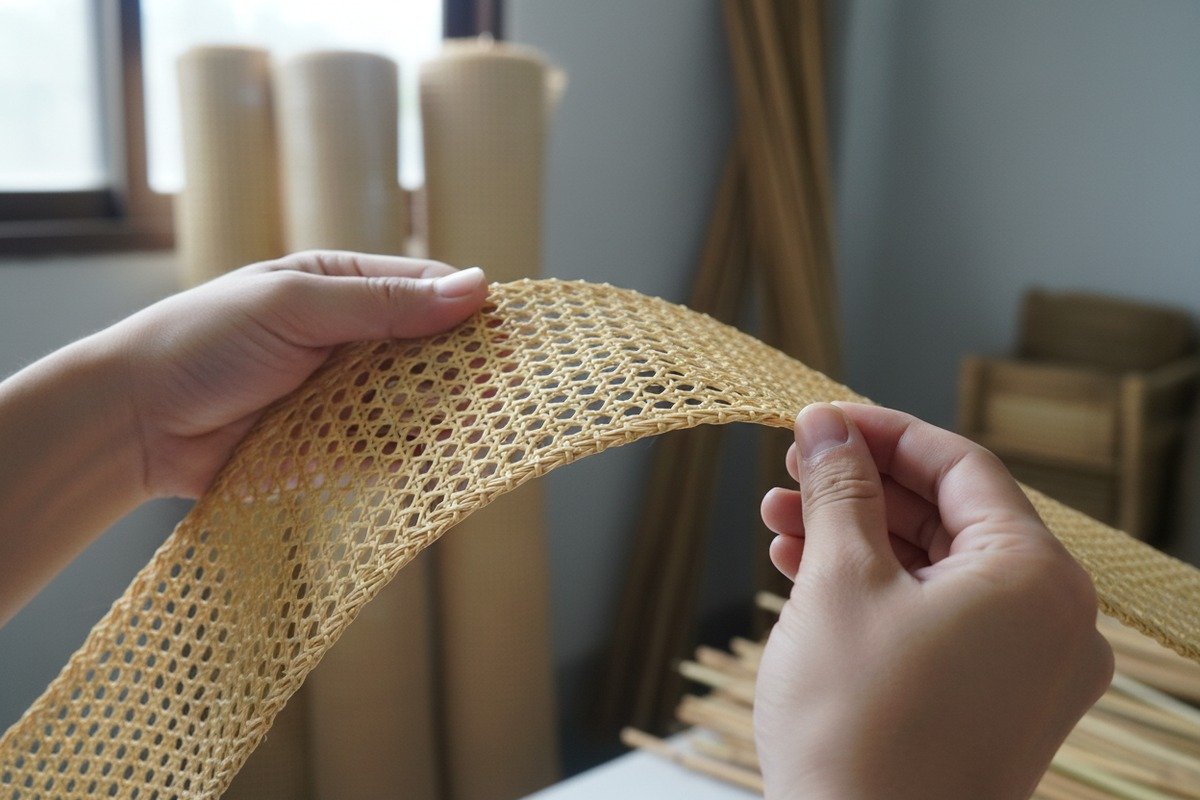
A roll of natural hexagonal open-mesh rattan webbing priced at $3.50 per meter from Supplier A and $4.20 from Supplier B looks like an easy choice. But what if Supplier A's webbing has a 12% defect rate while Supplier B's sits at 2%? Suddenly that $0.70 saving per meter costs you far more in wasted material, rework, and delayed production.
We tell every new client the same thing: compare total cost of ownership 10, not sticker price.
Build a Standardized Comparison Sheet
When you contact multiple suppliers, send the exact same specifications to each. This ensures you are comparing like for like. Include:
- Material type (natural core, natural peel, synthetic plastic, paper, cotton blend)
- Weave pattern (hexagonal/radio, square basketweave, herringbone, diamond, octagon, 3×3 closed)
- Width and length per roll (standard ranges: 14–48 inches; custom up to 1.5m)
- Grade (Grade A, Grade B, mixed)
- Order volume (number of rolls or square meters)
- Destination port
Sample Price Comparison Framework
Here is a simplified example of how to structure your comparison:
| Фактор | Supplier A (China) | Supplier B (Indonesia) | Supplier C (Egypt) |
|---|---|---|---|
| Материал | Natural core, Grade A | Natural core, Grade A | Natural core, Grade B+ |
| Узор плетения | Hexagonal open mesh | Hexagonal open mesh | Hexagonal open mesh |
| Ширина | 24 inches | 24 inches | 24 inches |
| Unit price (per meter) | $4.00 | $3.60 | $3.20 |
| Минимальный объем заказа | 500 meters | 1,000 meters | 200 meters |
| Срок выполнения | 15 days | 30 days | 20 days |
| Shipping to US (per CBM) | $85 | $120 | $110 |
| Sample defect rate | 2% | 5% | 8% |
| Условия оплаты | 30% deposit, 70% before shipment | 50% deposit | 100% upfront |
| Effective cost per usable meter | $4.08 | $3.79 | $3.48 + higher waste |
This kind of side-by-side view makes the real cost differences visible. Notice how Supplier C's low unit price is offset by a higher defect rate and stricter payment terms.
Negotiation Tips That Work
- Volume discounts: Most factories offer 5–15% discounts at container-load quantities. Ask for tiered pricing at 1,000, 5,000, and 10,000 meter breakpoints.
- Payment terms: A supplier willing to offer 30/70 terms (30% deposit, balance before shipment) shows financial stability. Avoid suppliers demanding 100% upfront on a first order.
- Long-term contracts: If you commit to quarterly orders, negotiate a fixed price for 6–12 months. This protects you from raw material price swings.
- Bundling: If you need multiple products—rattan webbing, rattan poles, woven panels—buying from a one-stop supplier like us often unlocks better combined pricing than sourcing each from a different vendor.
Do Not Sacrifice Durability for Price
Budget-friendly rattan webbing has its place. But if you are building furniture for export to Europe or North America, your end customers expect materials that last. Cheap rattan with inconsistent weave tension will unravel within months. Thin strands snap under normal use. And poorly dried material develops mold in transit.
Invest in Grade A material from a supplier who controls their drying, grading, and storage processes. The upfront cost difference of $0.50–$1.00 per meter is nothing compared to a product recall or a lost wholesale account.
Заключение
Finding a reliable rattan cane webbing supplier takes research, sample testing, pointed questions, and honest price comparison—but the effort protects your production line and your reputation.
Сноски
1. Provides strategies and solutions for building a stable supply chain. ↩︎
2. Explains what rattan cane webbing is and its origins. ↩︎
3. Official website of a major B2B marketplace for Chinese products. ↩︎
4. Official website of Alibaba Group, a leading B2B e-commerce company. ↩︎
5. Authoritative source with detailed information on rattan, including its raw form and processing. ↩︎
6. Official website of the China Import and Export Fair, a major trade show. ↩︎
7. Comprehensive explanation of B2B marketplaces. ↩︎
8. Defines quality control and its importance in ensuring product standards. ↩︎
9. Official website of the International Organization for Standardization. ↩︎
10. Defines total cost of ownership (TCO) as a comprehensive financial estimate. ↩︎

 English
  Español de México
  العربية
  Deutsch
  Français
  Русский