
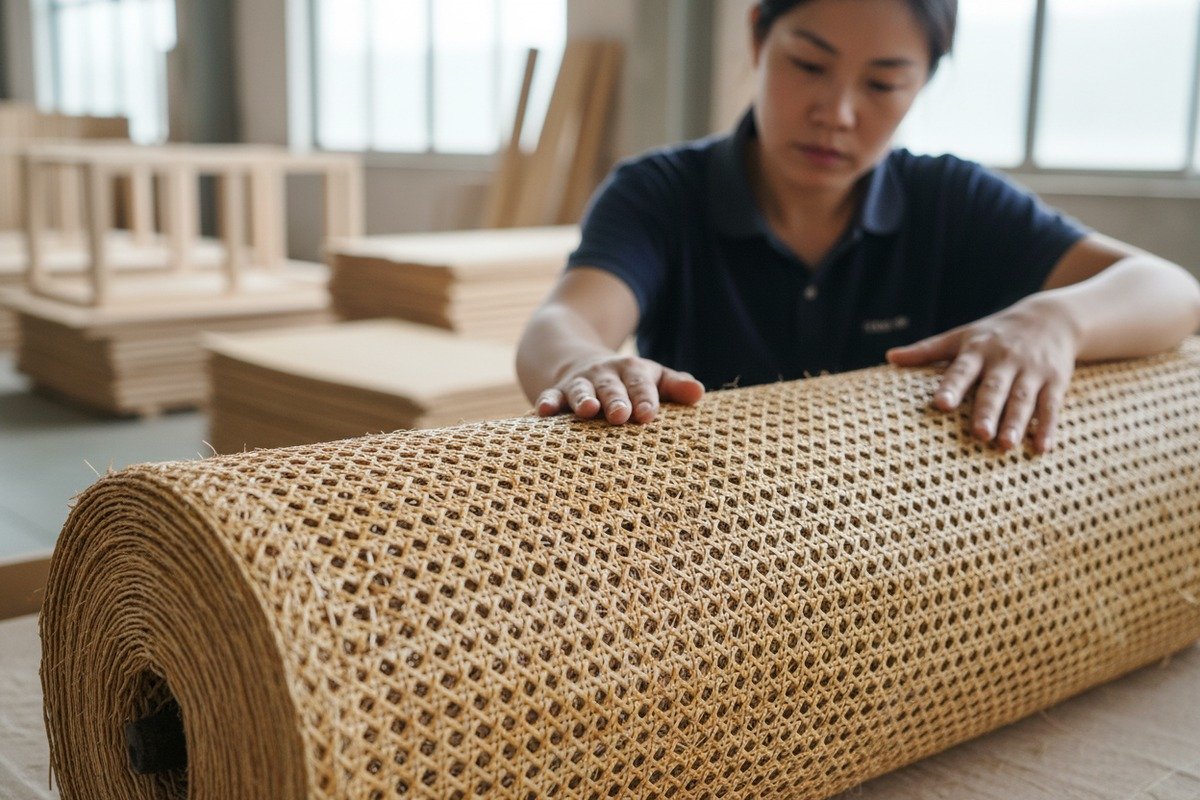
Каждую неделю наши команда контроля качества 1 in Foshan rejects batches of rattan cane webbing that look real but aren’t. Buyers who receive fake or blended material lose money and trust rattan palm’s natural growth conditions 2. The problem is growing as synthetic copies flood the market with convincing appearances.
You can identify genuine natural rattan cane webbing by examining its organic color variations, slightly irregular surface texture, visible nodes on the back of the roll, matte finish without plastic sheen, and natural fiber edges that fray softly rather than melt or curl like synthetic alternatives.
This guide walks you through a complete visual inspection checklist тропические леса Юго-Восточной Азии 3. Each section below covers one specific area to examine, with real comparisons and practical tips from years of sourcing and processing rattan at our factories in Indonesia and China.
How can I tell if the color variations in my rattan webbing are natural or artificial?
One thing we see constantly when shipping samples to clients in the Netherlands and Australia is confusion about color polyethylene or polypropylene 4. Buyers expect perfect uniformity. But when the color is too perfect, that is actually the first warning sign of a fake product.
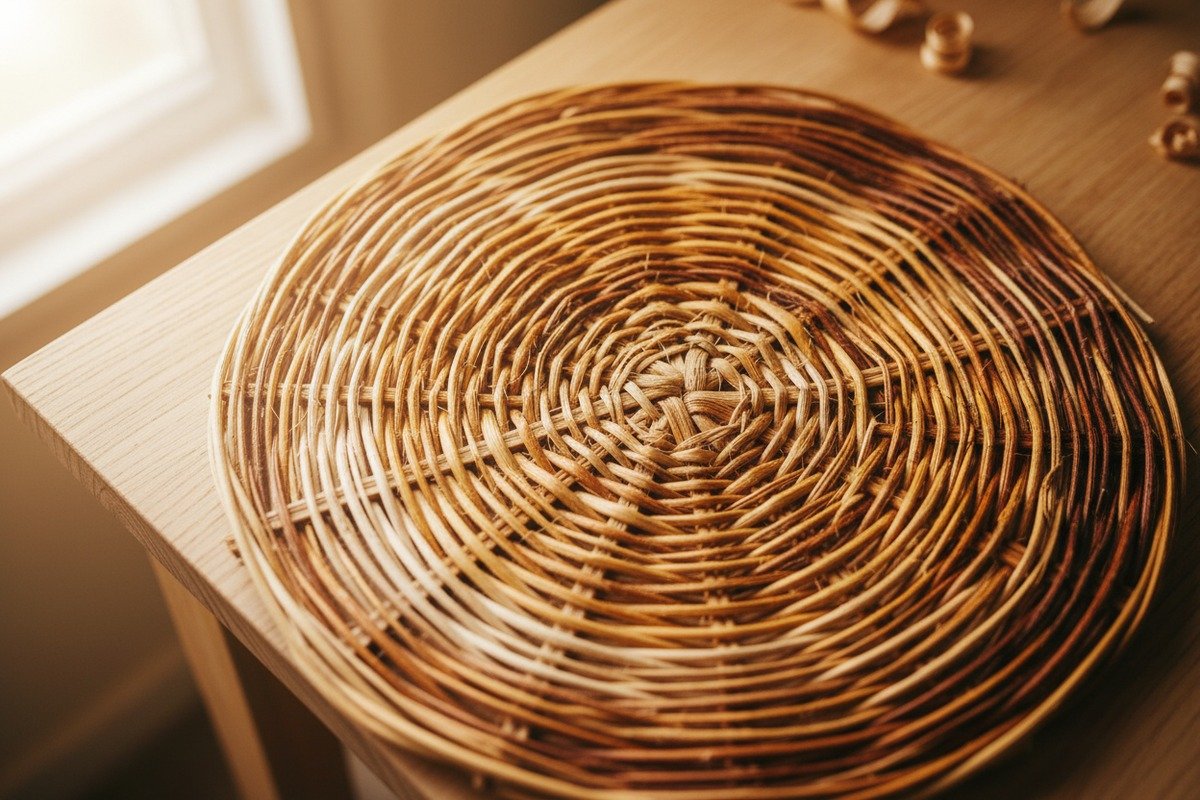
Natural rattan cane webbing displays subtle, organic color variations ranging from pale straw and light honey to warm golden-brown tones. These gentle shifts come from the rattan palm's natural growth conditions. Artificial coloring produces a flat, uniform tone with no depth or variation across the sheet.
Why Natural Color Varies
Ротанг — это вьющаяся пальма 5. It grows in tropical forests across Southeast Asia, primarily Indonesia. The outer bark — which is what cane webbing is made from — absorbs different amounts of sunlight depending on where each vine grew. Some sections face more sun. Others stay shaded. This creates a range of tones within a single vine.
When our Indonesian processing facility peels the bark and splits it into thin strips, we sort strands by color grade. But even within the same grade, you will see slight shifts. A pale straw strand may sit next to a slightly warmer honey-toned one. This is normal. This is real.
What Artificial Color Looks Like
Synthetic rattan webbing uses пластиковые полимеры 6 — usually polyethylene or polypropylene. Manufacturers dye these materials to a single, consistent shade. The result is a flat color. No depth. No warmth. If you hold a synthetic sheet at an angle under natural light, the color stays exactly the same everywhere.
Bleached natural rattan is a middle ground. Our bleached rolls start as real rattan and undergo a chemical whitening process. They still show minor color differences, but the range narrows significantly. Some buyers mistake bleached natural for synthetic because of its lighter, more even tone.
Color Comparison Table
| Характеристика | Genuine Natural Rattan | Bleached Natural Rattan | Синтетическая пластиковая трость |
|---|---|---|---|
| Base color | Golden-brown, honey, straw | Pale cream to light straw | Uniform beige or tan |
| Вариативность цвета | Subtle, organic shifts | Minimal but present | None or machine-printed |
| Depth under light | Warm glow, slight translucency | Mild warm glow | Flat, no depth |
| Поведение при старении | Develops rich patina over time | Yellows slightly | Fades or stays the same |
| UV reaction | Darkens naturally | Yellows unevenly | Degrades, may crack |
A Quick Field Test
Hold the webbing near a window with natural daylight. Tilt it slowly at different angles. Genuine rattan changes tone slightly — you will see warmer and cooler spots. Synthetic material stays dead flat. If the color looks like it came from a printer, it probably did.
Also, look at a single strand closely. Real rattan strands have a gradient along their length. One end may be slightly lighter than the other. Synthetic strands are identical from end to end.
What specific surface textures should I look for to confirm my cane webbing is real plant fiber?
When we train new quality inspectors at our Foshan headquarters, the first thing we teach them is to use their eyes before their hands. Surface texture tells you almost everything about whether a piece of rattan cane webbing is genuine plant fiber or a plastic imitation.
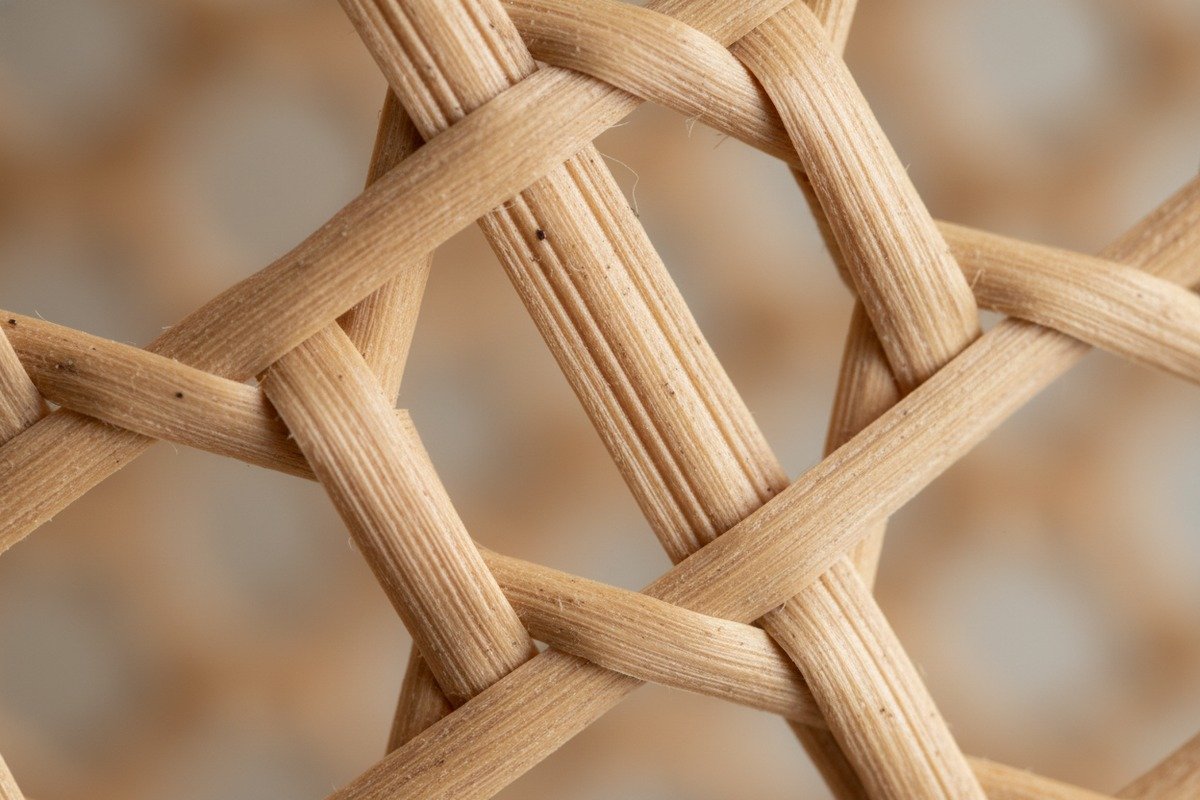
Real rattan cane webbing has a slightly coarse, fibrous surface with visible grain lines running along each strand. You can see tiny natural imperfections — small ridges, faint lines, and occasional dark specks. Synthetic webbing feels and looks perfectly smooth with no visible grain structure.
Understanding Rattan's Grain
Rattan outer bark is made of long, parallel plant fibers 7. When split into thin strips for weaving, these fibers create a visible grain pattern. Think of it like wood grain, but finer and more linear. Under natural light, you can see these lines clearly. They run the full length of each strand.
This grain is the fingerprint of authenticity. No synthetic process truly replicates it. Plastic extrusion 8 creates a smooth, featureless surface. Some higher-end synthetics add embossed texture to mimic grain, but the pattern repeats too perfectly. Real grain is never perfectly repetitive.
What to Look for Under Magnification
You do not need a microscope. A phone camera with zoom works well. Focus on one strand and look for these features:
- Longitudinal lines: Fine parallel grooves running the length of the strand.
- Micro-flaws: Tiny dark spots, slight color patches, or hairline cracks in the surface layer.
- Matte finish: Real rattan bark has a natural low sheen. It does not reflect light sharply.
- Fiber ends: At cut points, you may see tiny fibers poking out. Plastic cuts clean with no fiber separation.
Surface Texture Comparison Table
| Texture Feature | Genuine Natural Rattan | Синтетическая ротанговая тесьма |
|---|---|---|
| Ощущение поверхности | Slightly rough, fibrous | Smooth, sometimes waxy |
| Grain visibility | Clear longitudinal lines | None or embossed pattern |
| Light reflection | Matte, soft glow | Shiny or plastic sheen |
| Imperfections | Random natural marks | None or repeating pattern |
| Cut edge fibers | Visible plant fibers | Clean plastic edge |
| Strand flexibility | Bends with slight resistance | Bends uniformly or feels stiff |
The Role of Processing
In our rattan processing factory, the outer bark goes through several steps: peeling, splitting, drying, and sometimes light sanding. Each step affects texture. Lightly processed rattan keeps more of its natural coarseness. Heavily processed or polished rattan may feel smoother but still shows grain.
Some buyers worry that smooth rattan means it is fake. That is not always the case. Premium Grade A rattan from Tohiti species is naturally smoother than lower grades. But even the smoothest real rattan still has visible grain when examined closely.
Moisture and Texture Connection
Here is a useful trick we share with our wholesale clients. Lightly mist a small section of the webbing with water. Real rattan absorbs the moisture within seconds. The surface darkens slightly and becomes more pliable. Synthetic webbing beads water or stays unchanged. This moisture test connects directly to texture — genuine plant fiber has microscopic pores that absorb liquid. Plastic does not.
Can I identify authentic rattan by checking the joints and knots on the back of the roll?
When our export team packs rolls for shipment to clients in Turkey and Spain, we always advise them to flip the roll over first. The back side of rattan webbing reveals details that the front is designed to hide. It is your best inspection surface for authenticity.
Yes, checking the back of a rattan webbing roll is one of the most reliable visual identification methods. Genuine rattan shows natural nodes — small, slightly raised bumps where leaves once grew on the vine. These nodes are irregular, smoothly integrated, and impossible for synthetic materials to replicate authentically.
What Are Rattan Nodes?
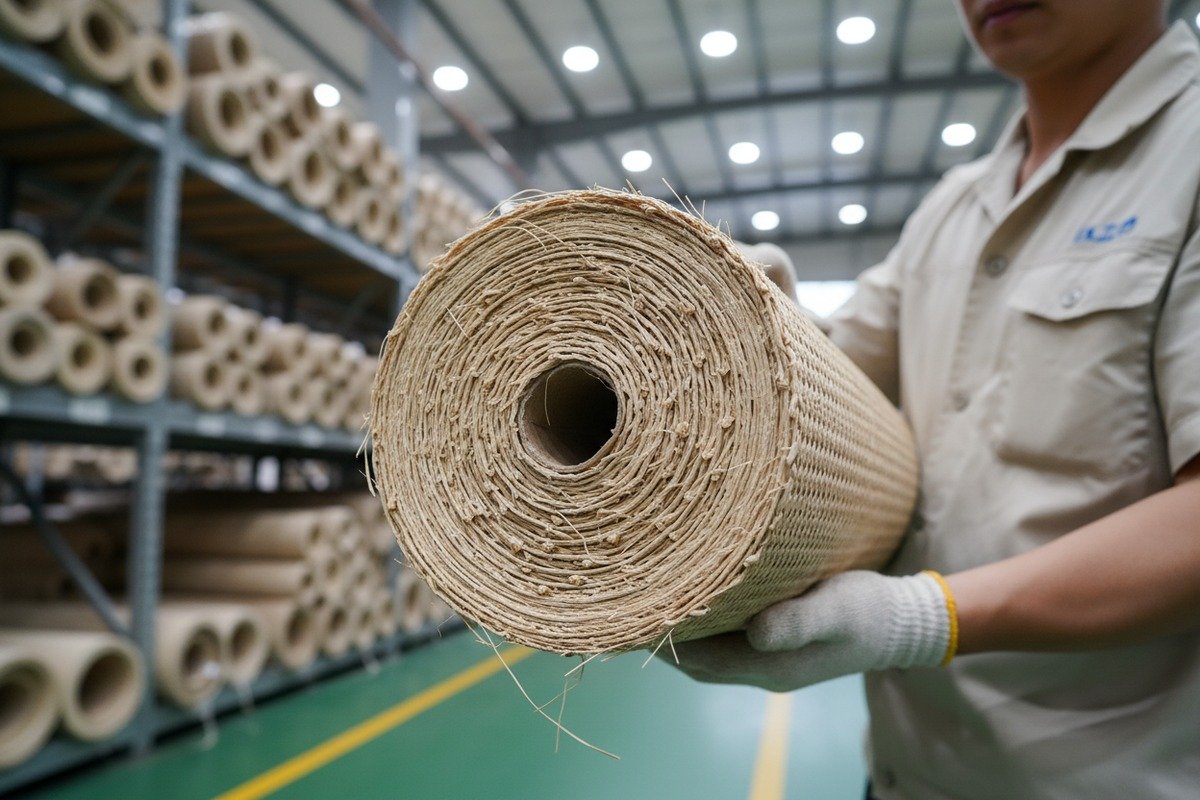
Rattan is a vine. Like bamboo, it has nodes — growth points where leaves and branches emerge. When the outer bark is peeled and split into strips, these nodes become visible as small raised areas or slight bumps along each strand. They are a direct biological marker 9.
On a genuine rattan webbing roll, you will find nodes scattered at irregular intervals. Some strands may have two or three nodes. Others may have none. The placement is random because it follows the natural growth pattern of the vine. High-quality webbing uses strands with fewer nodes, as excessive nodes can disrupt the weave pattern.
How Nodes Look on Real vs. Fake Webbing
On genuine rattan, nodes appear as:
- Small, oval-shaped bumps (1–3 mm wide).
- Slightly darker in color than surrounding bark.
- Smoothly blended into the strand surface.
- Irregularly spaced — no two strands match.
On synthetic webbing, you will either see:
- No nodes at all (completely smooth strands).
- Machine-stamped bumps that repeat at exact intervals.
- Bumps with no color change or texture difference.
Inspecting the Weave Joints
Beyond nodes, look at where strands overlap on the back. In genuine handwoven or machine-woven natural rattan, the overlap points have a slight three-dimensional quality. The strands sit on top of each other with natural friction. You can see how the weave interlocks.
Synthetic webbing often has overlap points that look fused or glued. The strands may appear to merge together slightly, especially in heat-welded plastic products. This melting point is a dead giveaway.
Node Quality Grading
| Node Characteristic | Класс А (Премиум) | Класс B (Стандарт) | Low Quality / Suspect |
|---|---|---|---|
| Node count per strand | 0–1 | 2–3 | 4+ or none at all |
| Интеграция узлов | Fully smooth | Slight bump | Raised, disrupts weave |
| Color at node | Barely different | Slightly darker | Very dark or painted |
| Spacing pattern | Random | Random | Repeating or absent |
| Weave disruption | Нет | Минимальный | Pattern breaks visible |
The Back Tells the Truth
Professional furniture restorers know this rule well. The front of webbing can be coated, finished, or styled to look real. But the back is raw. It shows the true material. When you receive a roll from a new supplier, always start your inspection on the reverse side.
At our warehouse, we keep sample cards from every batch. Each card shows the front and back of the webbing under magnification. This helps our clients in the US and Australia compare new shipments against approved standards. If the back suddenly looks too clean or too perfect, we flag that batch immediately.
How do I distinguish natural rattan from synthetic plastic webbing just by looking at the edges?
Over the years, we have shipped rattan cane webbing to more than twenty countries. One of the most common questions from new purchasing managers arrives after they receive samples from multiple suppliers. They hold two sheets side by side and ask: how do I know which one is real? The edge is where we always tell them to start.
Natural rattan webbing edges show soft, fibrous fraying where individual plant strands are exposed. The cut ends reveal visible fibers that separate gently. Synthetic webbing edges are clean-cut, may appear slightly melted or sealed, and show no fiber separation — just smooth, uniform plastic ends.
Reading the Edge Like a Label
The edge of a rattan webbing roll or sheet is essentially an unfinished cross-section. It reveals the internal structure of the material. For genuine rattan, this means you see real plant anatomy. For synthetic, you see processed polymer.
Here is what to look for on each edge strand:
Natural rattan edge characteristics:
- Fibrous ends that look slightly feathered.
- Visible layering within each strand (bark has thin layers).
- Slightly irregular cut lines — no two strands cut identically.
- Light color at the cut point, sometimes lighter than the surface.
- No melting, no glossy spots, no sealed edges.
Synthetic webbing edge characteristics:
- Clean, sharp cuts with no fiber separation.
- Possible slight melting or rounding at the ends.
- Uniform color all the way through the cross-section.
- Sometimes a visible hollow core (extruded plastic tubes).
- A faint plastic smell if you bring your nose close.
The Fray Test
Pull gently on a single strand at the edge of the webbing. Genuine rattan will start to peel or split along its grain — similar to how wood splinters. The strand separates into thinner fibers. This happens because rattan bark is made of layered cellulose fibers bonded naturally 10.
Synthetic strands stretch. They may deform, thin out, or snap cleanly. They do not split into smaller fibers. This is one of the simplest and most reliable visual-physical tests you can perform.
Edge Quality and Roll Width
Roll width matters for edge inspection. Standard widths include 18 inches, 24 inches, and 36 inches. On wider rolls, the edges may be trimmed more carefully by the manufacturer. Our 24-inch rolls — the most popular size for furniture factories — are cut with precision saws that leave clean but still fibrous edges on natural material.
What About the Weave Border?
Many premium rattan webbing rolls have a finished border — a tighter weave or binding along the long edges. This helps prevent unraveling during shipping and installation. On genuine rattan, this border uses the same natural material. Inspect where the border strand meets the main weave. You should see the same grain, the same color range, and the same node characteristics.
On cheaper products or fakes, the border may use a different material. We have seen synthetic borders attached to partially natural webbing. This is a blended product, not a genuine natural one. Always check border strands against interior strands for consistency.
Why Edges Matter for Wholesale Buyers
For purchasing managers ordering large quantities, edge quality is also a quality control metric. Excessive fraying means the rattan was too dry during cutting. No fraying at all might mean it is not real. The sweet spot is slight, controlled fiber exposure at the cut edge. This tells you the material is genuine, properly moistured, and cleanly processed.
At our factories, we monitor cutting blade sharpness daily. A dull blade tears rattan instead of cutting it, creating excessive fraying. A sharp blade on real rattan creates a clean cut with just a hint of fiber at the ends. This detail is small, but it separates professional-grade product from cheap imports with inconsistent quality.
Заключение
Identifying genuine natural rattan cane webbing comes down to four visual checks: color variation, surface texture, back-side nodes, and edge fiber structure. Trust your eyes and use these methods before every purchase.
Сноски
1. Replaced with an authoritative Wikipedia page defining quality control, which encompasses the role of a quality control team. ↩︎
2. Replaced with an authoritative Wikipedia page on rattan, detailing its natural habitat and growth characteristics. ↩︎
3. Identifies the primary geographical habitat and biodiversity of rattan. ↩︎
4. Compares the properties of common plastics used in synthetic rattan. ↩︎
5. Provides a botanical classification and description of rattan’s growth habit. ↩︎
6. Defines the fundamental material composition of synthetic rattan products. ↩︎
7. Replaced with an authoritative Wikipedia page on cellulose fibers, which are long and parallel in plant structures. ↩︎
8. Describes a common manufacturing process for synthetic plastic materials. ↩︎
9. Replaced with a working URL from the same domain, News-Medical, defining what a biomarker is. ↩︎
10. Details the natural bonding that contributes to rattan’s fibrous edges. ↩︎


 English
  Español de México
  العربية
  Deutsch
  Français
  Русский