
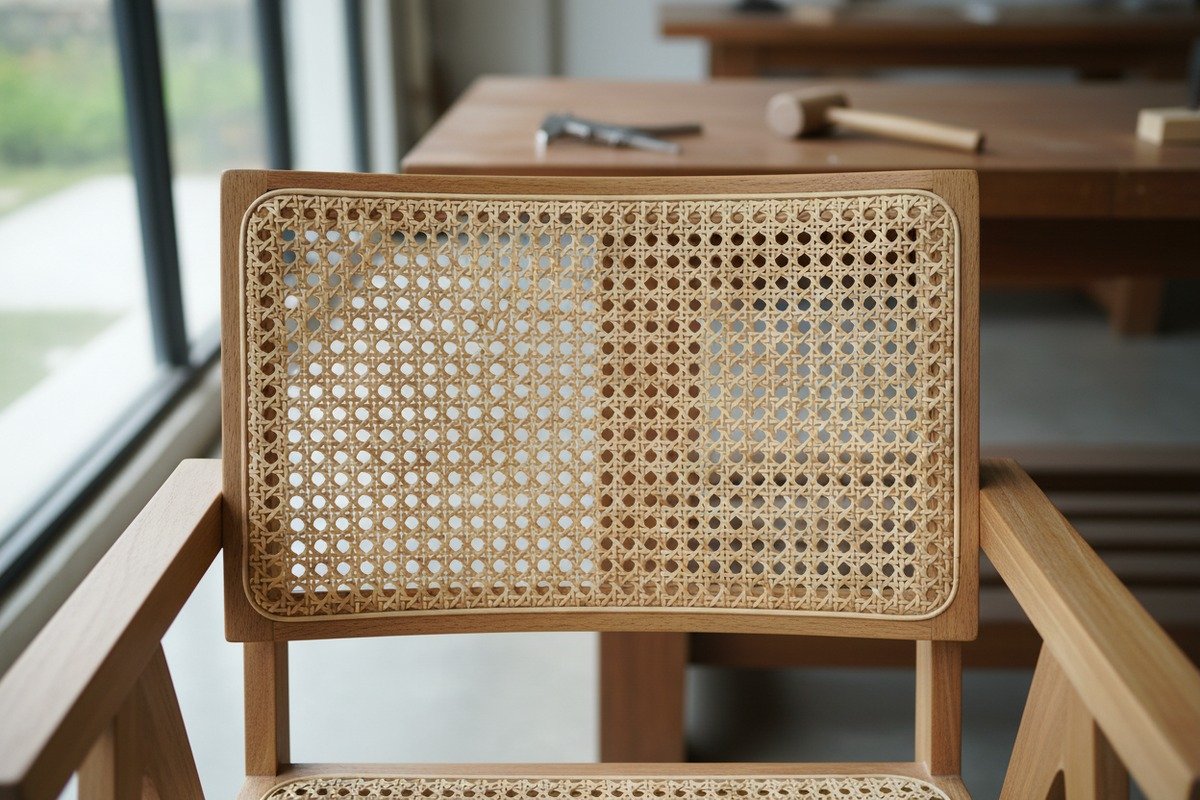
Every week, our customer service team fields the same frustrated question from furniture makers and wholesalers around the world. They installed beautiful натурального ротангового плетения 1 — and within days, it sagged.
To keep natural rattan cane webbing flat and wrinkle-free after installation, you must soak it properly before mounting, apply even tension during stapling, control the drying environment, and use Grade A quality cane. These four steps work together to ensure a tight, professional finish that lasts.
This article breaks down each step in detail. Whether you run a furniture factory in Thailand or a material supply shop in Europe, the techniques below will save you time, money, and rework. Let’s walk through the process from soaking to final drying.
How long should I soak my natural rattan cane webbing before installation to prevent future sagging?
One of the most common mistakes we see from first-time buyers at our warehouse is skipping the soak — or soaking for too long. Both extremes cause problems that show up days after installation.
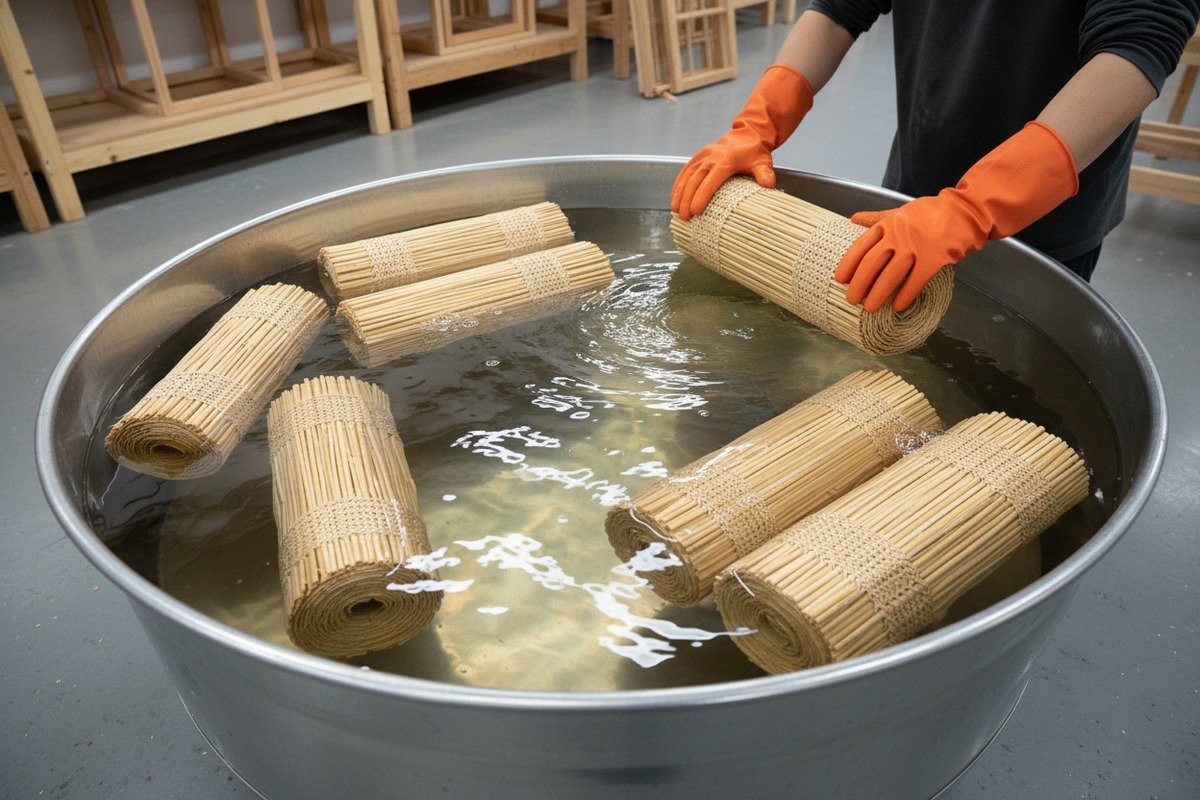
Soak natural rattan cane webbing in warm water for 30 to 60 minutes before installation. This makes the fibers pliable enough to stretch and position without cracking. As the cane dries post-installation, it contracts and tightens naturally, creating a drum-tight, wrinkle-free surface.
Почему замачивание имеет значение
Rattan cane comes from tropical jungle environments 2. It thrives in humidity. Once harvested, processed, and shipped, the material loses much of its original moisture. Dry cane is stiff and brittle. If you try to stretch it over a frame without soaking, it will crack or resist proper tensioning.
Soaking reintroduces moisture into the fibers. The cane becomes flexible and forgiving. You can pull it, reposition it, and smooth out wrinkles during installation. Then, as it dries, it shrinks. That shrinkage is your best friend — it pulls the weave tight against the frame.
The Right Water Temperature
Use warm water, not hot. Hot water can weaken the натуральные волокна 3 and strip away oils that keep the cane supple. Cold water works, but it takes much longer to penetrate the fibers. Warm water — around 30 to 40°C — is the sweet spot.
How Long Is Too Long?
Over-soaking is a real risk. If you leave cane webbing in water for more than 90 minutes, the fibers absorb too much moisture. This leads to excessive expansion. When it dries, the shrinkage may be uneven, causing warping or distortion instead of a smooth, flat surface.
| Soak Duration | Result | Recommended? |
|---|---|---|
| Under 15 minutes | Cane still stiff, hard to work with | Нет |
| 30–60 минут | Pliable, easy to stretch, dries tight | Да |
| 60–90 minutes | Very flexible, slightly higher risk of over-expansion | Use with caution |
| Over 90 minutes | Over-saturated, uneven drying and potential warping | Нет |
Acclimate Before You Soak
Here is a tip many people overlook. Before soaking, let the dry cane webbing sit in the installation room for 24 to 48 hours. This allows the material to adjust to the local temperature and humidity. When we ship rolls from our factory in Foshan to clients in dry climates like Saudi Arabia or Spain, the material arrives with a содержание влаги 4 suited to our humid warehouse. A sudden soak without acclimation can shock the fibers.
Acclimation gives the cane a baseline. The soak then adds controlled moisture on top of that baseline. The result is more predictable shrinkage and a flatter finish.
A Quick Test
After soaking, bend a small corner of the webbing gently. It should flex without cracking or feeling mushy. If it cracks, soak it longer. If it feels overly soft and limp, you have gone too far. Aim for the texture of a firm, damp towel.
What techniques can I use to ensure my rattan webbing stays tight and wrinkle-free during the stapling process?
Through years of training our factory workers and advising wholesale clients, we have learned that installation technique matters just as much as material quality. A perfectly soaked piece of Grade A cane can still wrinkle if you staple it wrong.
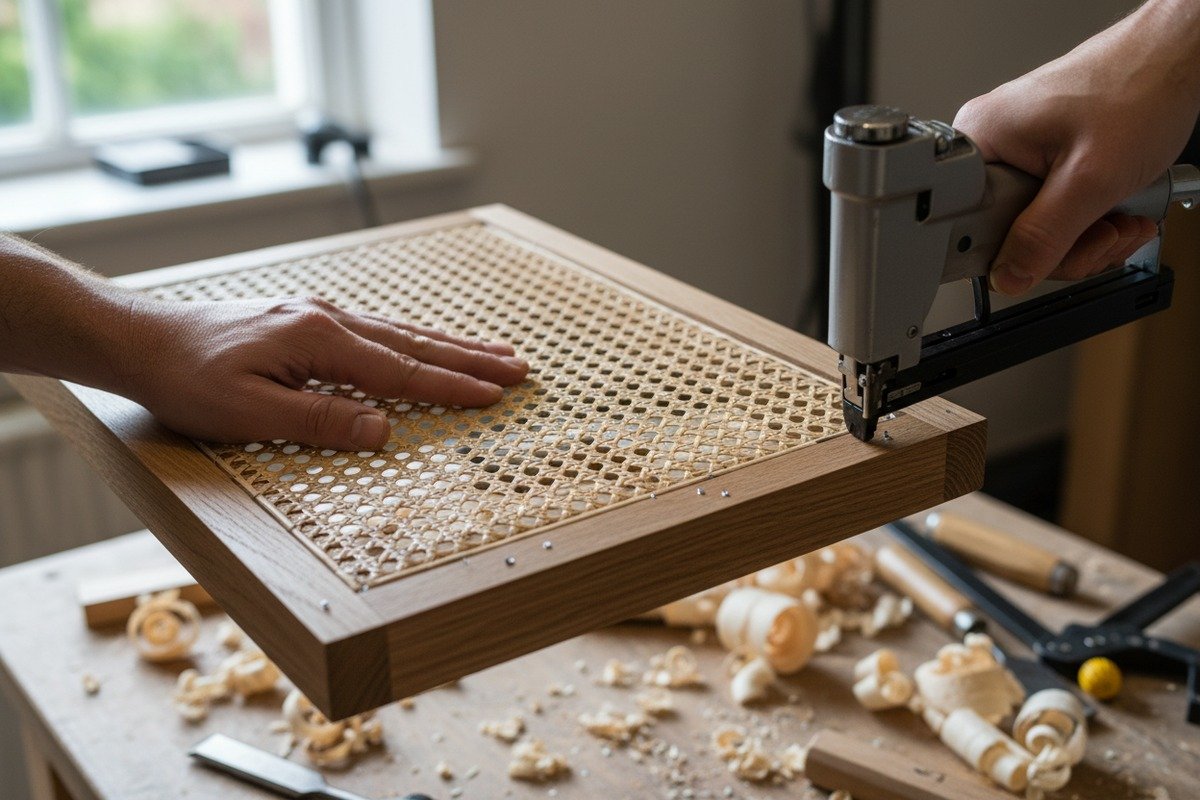
To keep rattan webbing tight during stapling, start from the center of one edge and work outward. Pull the cane firmly but evenly across the frame, securing opposite sides first. Use a staple gun with appropriate staple size, and maintain consistent tension throughout to avoid puckering or sagging.
The Center-Out Method
Never start stapling from a corner. Corners create uneven tension that radiates across the entire panel. Instead, secure the center of one edge first. Then move to the center of the opposite edge, pulling the cane taut. Next, do the same for the remaining two edges. Once all four center points are secured, work outward toward the corners, alternating sides.
This method distributes tension evenly. It is the same principle used in stretching canvas for painting 5. Even, balanced force from the center prevents any one area from bunching or sagging.
Choosing the Right Staple Size
The staple must be long enough to grip the wood frame securely but not so long that it splits thin frames. For most furniture applications, 8mm to 10mm staples work well. If the frame is softwood, go slightly longer. Hardwood frames hold shorter staples better.
| Frame Material | Recommended Staple Length | Примечания |
|---|---|---|
| Softwood (pine, poplar) | 10–12 mm | Softer wood needs longer staples for grip |
| Hardwood (oak, beech) | 8–10 mm | Dense wood holds staples firmly |
| MDF or plywood | 10 mm | Ensure staples penetrate fully without splitting |
How Much Tension Is Enough?
This is the question we hear most from new clients. Pull the cane just until you see the weave pattern straighten and align uniformly. You should not see any ripples or waves in the surface. But do not pull so hard that the weave distorts or the holes in the pattern stretch into ovals.
A good visual check: hold a straightedge across the surface. The cane should sit flat against the straightedge with no gaps or bulges.
The Dado and Spline Technique
For a cleaner, more professional finish — especially on cabinet doors and headboards — consider the dado and spline method instead of surface stapling. This involves routing a groove (dado) around the frame opening, pressing the cane webbing into the groove, and then locking it in place with a wooden spline and glue.
This method hides the attachment point entirely. It also distributes holding force along the entire perimeter rather than at individual staple points. The result is more uniform tension and a sleeker appearance.
Avoiding Common Mistakes
Do not rush. Let the soaked cane relax on the frame for a minute before stapling. This lets it settle into position naturally. Also, keep a spray bottle nearby. If the cane starts to dry during a long installation, give it a light mist to maintain flexibility.
Work in a room with moderate humidity. Very dry rooms will cause the cane to dry too fast during installation, making it stiff before you finish stapling.
How do I manage the drying environment to keep my installed rattan flat as it shrinks?
When our export team ships rattan cane webbing to clients in the Netherlands or Australia, we always include guidance on post-installation drying. Many beautiful installations are ruined not by poor stapling but by careless drying conditions.
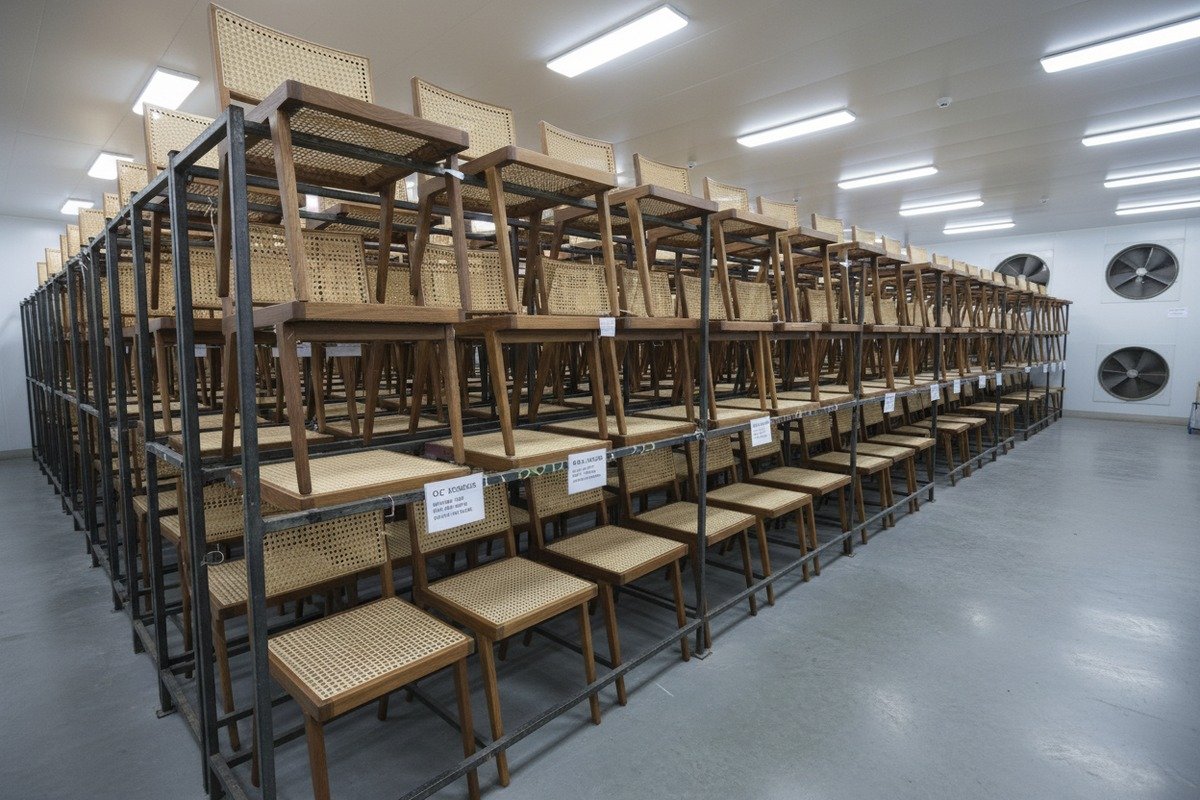
After installation, let the rattan cane webbing dry naturally in a cool, well-ventilated room away from direct sunlight, heaters, and air conditioning vents. Controlled, even drying allows the cane to shrink uniformly, producing a flat, drum-tight surface without cracks or warping.
The Science Behind Drying
Rattan cane is hygroscopic 6. It absorbs and releases moisture constantly. When you install wet cane, it begins losing moisture to the surrounding air. As it loses moisture, the fibers contract. If this contraction happens evenly across the entire surface, you get a beautifully flat panel. If it happens unevenly — one side drying faster than the other — you get wrinkles, waves, and distortion.
The goal is simple: create conditions that promote slow, even drying.
What to Avoid During Drying
Direct sunlight is the biggest enemy. A sunbeam hitting one section of your freshly installed cane will dry that area much faster than the shaded areas. The result is uneven tension and visible warping.
Heaters, radiators, and air conditioning vents create the same problem. They push dry air directly at the cane, accelerating moisture loss in localized areas.
| Drying Hazard | Why It Causes Problems | Решение |
|---|---|---|
| Direct sunlight | Uneven heating causes localized fast drying | Close curtains or blinds during drying period |
| Heaters and radiators | Blasts of dry heat remove moisture too quickly | Move furniture away from heat sources |
| Air conditioning vents | Directed airflow dries one area faster | Redirect vents or cover them temporarily |
| Very low humidity rooms | Overall rapid moisture loss causes brittleness | Use a humidifier to maintain 40–60% humidity |
| Sealed rooms with no airflow | Trapped moisture promotes mold | Open a window or use a gentle fan on low |
Ideal Drying Conditions
Aim for a room temperature between 18°C and 25°C. Humidity should be between 40% and 60%. Good air circulation is essential, but avoid direct drafts on the cane. A ceiling fan on a low setting works well. Open a window on the opposite side of the room from the installed piece.
Drying typically takes 12 to 24 hours depending on the thickness of the cane and the ambient conditions. You will know the cane is dry when it feels firm to the touch and produces a slight "tap" sound when you flick it with your finger.
Long-Term Environmental Management
Once the cane is dry, your job is not done. Ongoing environmental management is crucial.
During winter, indoor heating systems drop humidity dramatically. This can cause already-installed cane to become brittle and crack. A увлажнитель для всей комнаты 7 solves this. In our experience shipping to clients in Russia and northern Europe, this single step prevents most post-installation complaints.
In summer, high humidity can cause installed cane to absorb moisture and sag. Air conditioning or dehumidifiers keep levels in check.
Conditioning After Drying
Once the cane has fully dried and tightened, apply a light coat of oil to the underside. Lemon oil, orange oil 8, or diluted Murphy's Oil Soap all work well. This conditions the fibers and slows future moisture exchange with the environment. Do this every six months for best results.
Wipe the oil on with a lint-free cloth. Use a light hand — you want to nourish the fibers, not saturate them. Let the oil absorb for several hours before putting the furniture into regular use.
Fixing Minor Sagging Later
If the cane sags slightly over time, you can sometimes restore tension without re-installation. Lightly mist the back side of the cane with water from a spray bottle. Let it air dry naturally. As it dries, the fibers contract again. Follow up with a light coat of lemon or orange oil.
This only works if there are no broken strands in the weave. If the cane is damaged, replacement is the better option.
Why is choosing Grade A rattan essential for my project to maintain a smooth and professional finish?
Running three factories — including our own rattan processing facility in Indonesia — gives us a front-row seat to the quality spectrum. We see every grade, from pristine Grade A to reject-level material. The difference is not cosmetic. It is structural.
Grade A rattan cane webbing features uniform fiber thickness, consistent weave density, and minimal natural defects. These qualities ensure the webbing stretches, shrinks, and holds tension evenly across the entire surface, which is essential for achieving and maintaining a flat, wrinkle-free finish over time.
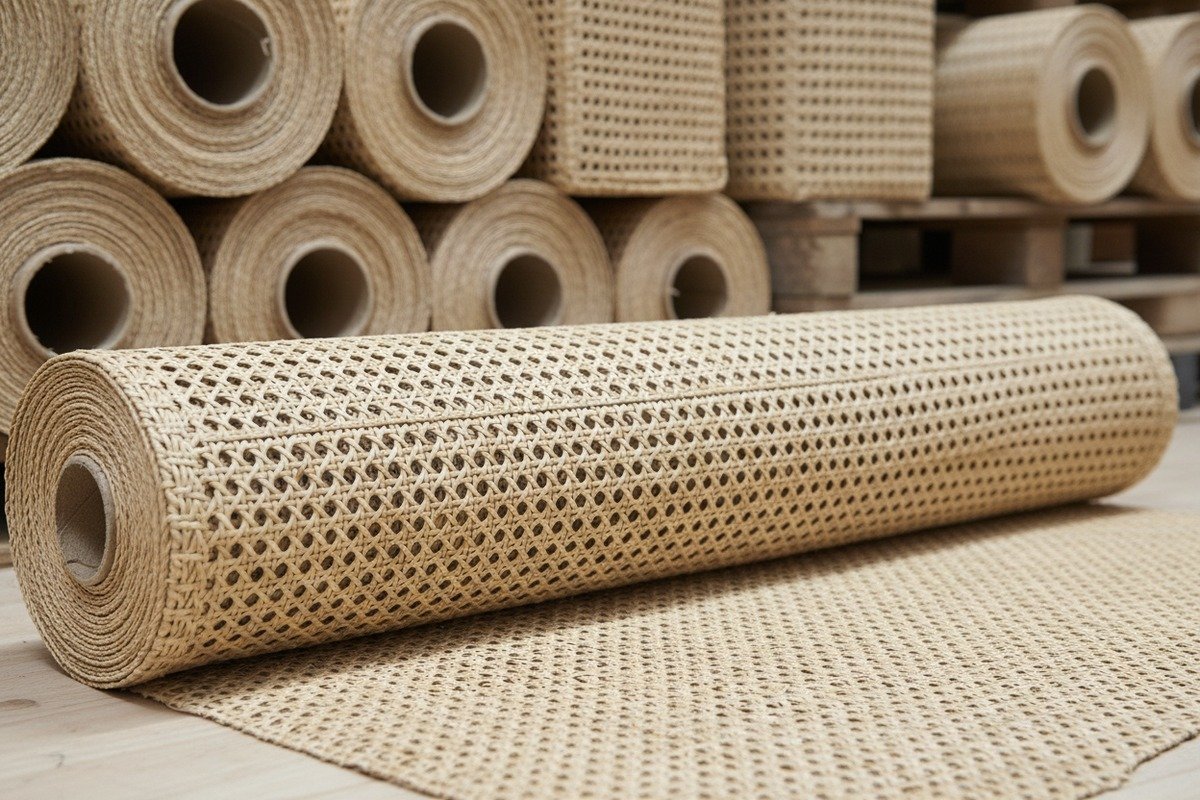
Что делает ротанг "классом А"?
Grade A is not just a marketing label. It refers to specific, measurable characteristics of the raw rattan cane and the finished woven webbing. The fibers are harvested from mature rattan palms, which produce thicker, more consistent strands. The weaving is done under strict quality control with even spacing and uniform tension.
Lower grades use younger or thinner cane. The fibers vary in diameter. Some strands are knotty or cracked. The weave may have gaps or inconsistent patterns. These imperfections are not just visual — they create weak points where the webbing stretches unevenly, leading to sagging and wrinkling.
Сравнение классов
| Характеристика | Сорт А | Сорт B | Сорт C |
|---|---|---|---|
| Fiber thickness | Uniform throughout | Небольшое отклонение | Noticeable variation |
| Weave density | Consistent, tight | Mostly consistent | Uneven in places |
| Surface defects | Minimal to none | Occasional knots or marks | Frequent imperfections |
| Однородность цвета | Ровный, естественный тон | Небольшие различия в цвете | Patchy or blotchy |
| Tensile strength | High, even pull resistance | Умеренная | Variable, weaker spots |
| Post-installation flatness | Отличная | Good with careful installation | Difficult to achieve |
| Price point | Премиум | Средний | Бюджет |
Why Quality Affects Flatness
Think of rattan webbing as a network of tiny ropes woven together. If every rope has the same diameter and flexibility, they all respond to moisture and tension the same way. When you soak them, they expand evenly. When they dry, they contract evenly. The result is a perfectly flat surface.
Now imagine some of those ropes are thin and some are thick. The thin ones stretch more during installation. They also shrink more during drying. The thick ones resist stretching and shrink less. This mismatch creates pockets of slack and tension across the surface — visible as wrinkles and waves.
The Hidden Cost of Cheap Cane
Budget-grade cane is tempting. It can be 30% to 50% cheaper per roll. But the hidden costs add up quickly. Furniture factories that use Grade C cane report higher reject rates, more rework, and more customer complaints. The labor cost of re-doing a sagging panel often exceeds the savings on cheaper material.
Our clients who are purchasing managers — people like Ranoo in Thailand who manage large orders — have learned this through experience. Quality consistency is their top concern. They need every roll to perform the same way every time. Grade A delivers that consistency. Lower grades are a gamble.
Sourcing Tips
When evaluating a supplier, ask for samples before placing a bulk order. Inspect the weave under bright light. Look for uniform spacing, consistent fiber color, and no visible cracks or thin spots. Bend a corner gently — Grade A cane should flex smoothly without snapping or splintering.
Also ask about the source of the raw cane. Индонезийский ротанг 9 is generally considered the gold standard due to the country's ideal growing conditions and long tradition of cane processing. Our facility in Indonesia gives us direct control over raw material selection, which is how we maintain consistent Grade A output across production runs.
Соответствие сорта применению
Not every project demands Grade A. For backing panels that will not be visible, Grade B or even Grade C may suffice. But for any surface that will be seen and touched — chair seats, headboards, cabinet doors, room dividers — Grade A is non-negotiable if you want a flat, professional result that lasts.
Заключение
Keeping natural rattan cane webbing flat and wrinkle-free comes down to four pillars: proper soaking, careful stapling, controlled drying, and Grade A material. Master these, and every installation will look professional.
Сноски
1. Provides a comprehensive overview of rattan cane webbing. ↩︎
2. Explains the natural habitat and characteristics of rattan. ↩︎
3. Replaced with an authoritative Wikipedia page defining natural fibers. ↩︎
4. Explains the importance of moisture absorption in natural fibers. ↩︎
5. Replaced with an authoritative educational resource from Khan Academy on stretching canvas. ↩︎
6. Explains the moisture absorption properties of natural fibers. ↩︎
7. Details the benefits and function of whole-house humidifiers. ↩︎
8. Explains the use of citrus oils for wood conditioning and polishing. ↩︎
9. Highlights Indonesia’s role in rattan production and sustainability. ↩︎
10. Replaced with an authoritative academic source defining Grade A rattan quality. ↩︎


 English
  Español de México
  العربية
  Deutsch
  Français
  Русский