
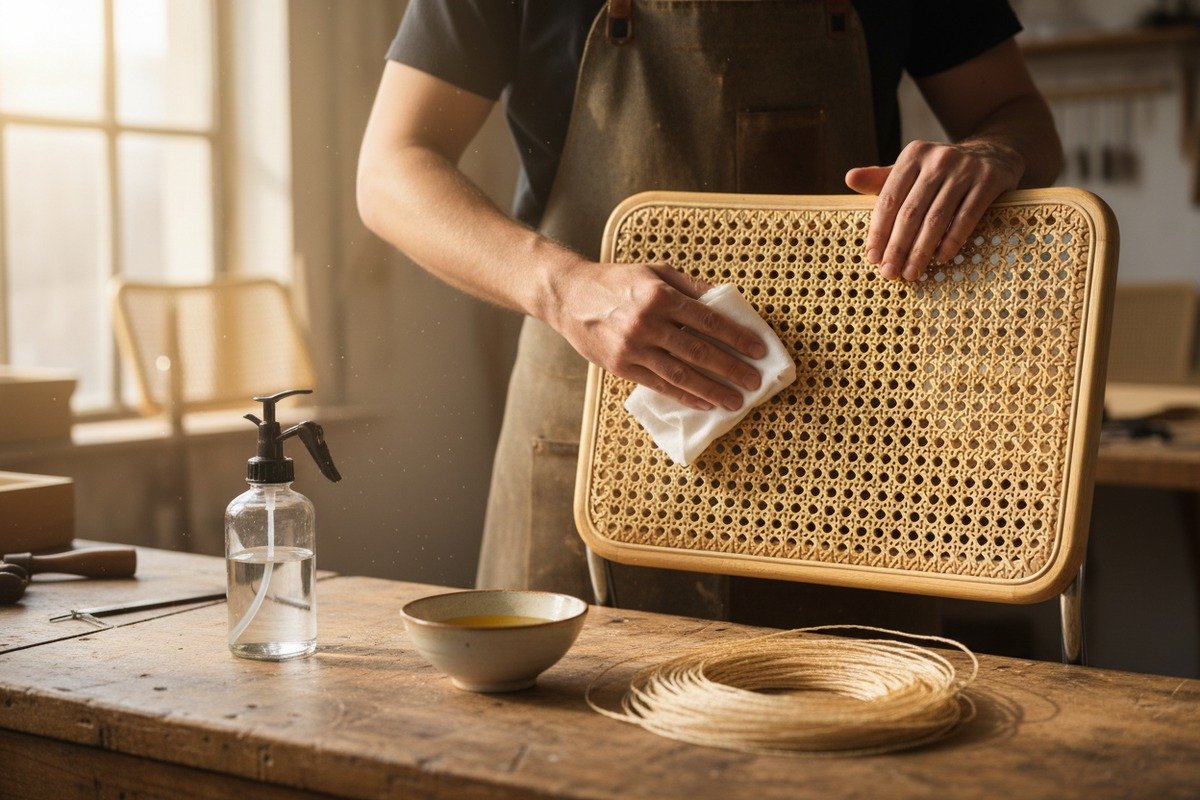
Every week, our customer service team fields questions from furniture makers and wholesalers dealing with the same frustrating problem: ротанговая сетка 1 that has dried out, cracked, and lost its beauty. It’s a headache that costs real money.
To repair dry and cracked natural rattan cane webbing, rehydrate the material with warm water or a damp cloth, apply natural oils like linseed or lemon oil to restore flexibility, glue small splits with waterproof adhesive, and replace severely damaged sections with new pre-soaked cane webbing secured by a spline.
This guide walks you through each step. Whether you need a quick patch or a full replacement, the methods below will help you restore your rattan furniture to its former strength. Let’s start with the most important factor: moisture.
How can I restore moisture to my dry rattan webbing to prevent further cracking?
When we ship our rattan webbing rolls from our Foshan warehouse to dry climates like the Middle East or inland Australia, we always remind clients about humidity. Rattan is a living fiber. Without moisture, it dies. The cracking you see is the material crying out for hydration.
To restore moisture to dry rattan webbing, mist it lightly with warm water, lay a damp cloth over the surface for 15–20 minutes, and then apply a thin coat of boiled linseed oil or lemon oil. This rehydrates the fibers and restores pliability without oversaturating the cane.
Why Rattan Dries Out
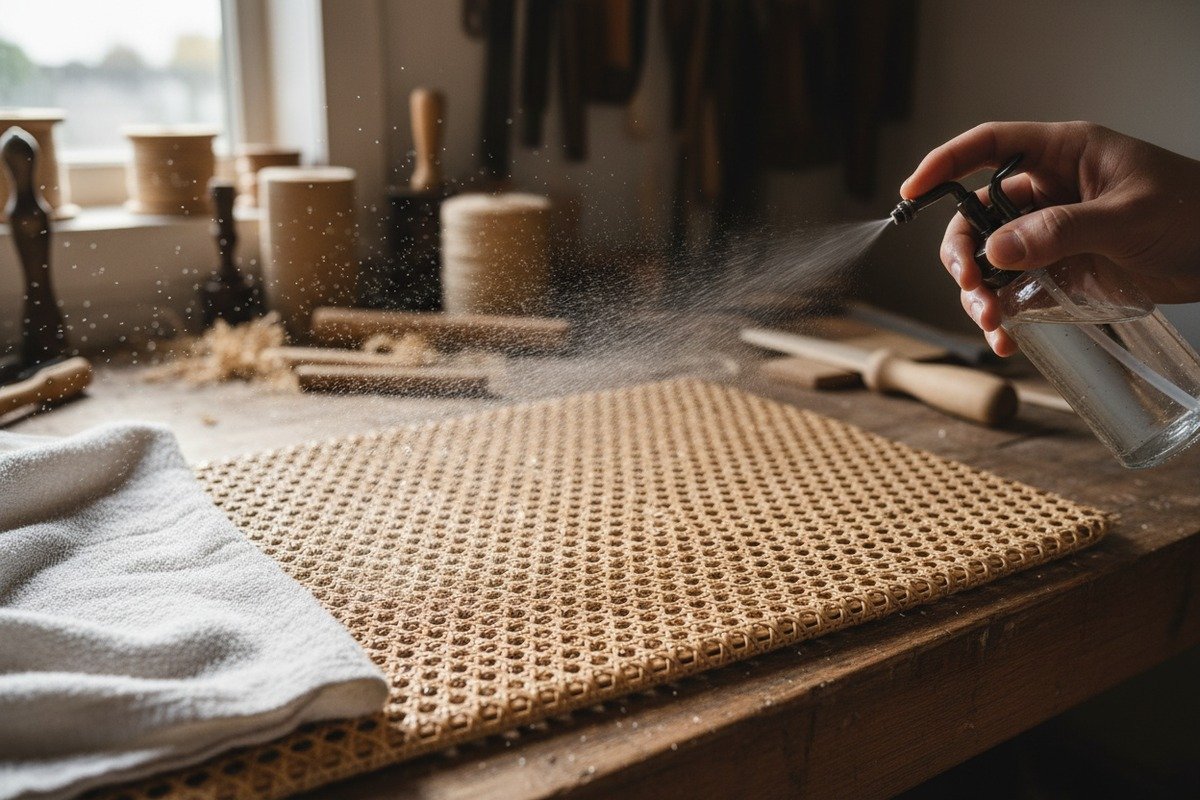
Rattan cane is a natural palm fiber 2. It absorbs and releases moisture from the surrounding air. In environments with low humidity 3—below 35%—the fibers lose water content rapidly. They shrink, stiffen, and eventually crack. Direct sunlight accelerates this process. So does forced-air heating in winter.
From our experience exporting to the Netherlands and Spain, we've noticed that rattan stored in climate-controlled warehouses performs far better than material left in unheated storage. The difference in lifespan can be years.
Step-by-Step Rehydration Process
Here is a simple method that works for most dry rattan webbing:
- Clean first. Use a soft brush and a mild soap-water solution to remove dust and grime. Dirt blocks moisture absorption.
- Mist lightly. Use a spray bottle filled with warm water. Mist the entire surface evenly. Do not soak it.
- Apply a damp cloth. Lay a slightly damp towel over the webbing for 15–20 minutes. This allows slow, deep hydration.
- Remove the cloth and let it air dry partially. The cane should feel slightly flexible, not wet.
- Apply oil. Use a lint-free cloth to rub a thin layer of кипяченое льняное масло 4, orange oil, or lemon oil into the cane. Let it absorb for at least two hours.
Choosing the Right Oil
Not all oils work the same way. Here is a comparison to help you pick the best option:
| Oil Type | Moisture Retention | Время сушки | Best For |
|---|---|---|---|
| Boiled Linseed Oil | Высокий | 12–24 hours | Deep restoration of very dry cane |
| Lemon Oil | Средний | 2–4 hours | Light maintenance and pleasant scent |
| Orange Oil | Средний | 2–4 hours | Cleaning and mild conditioning |
| Beeswax (paste) | Низкий – Средний | 1–2 hours | Surface protection with subtle sheen |
Avoid mineral oil and petroleum-based products 5. They can clog the fibers and prevent the rattan from breathing. This is a point we stress to every buyer who purchases our raw cane webbing.
What to Avoid
Never soak the entire piece of furniture in water. Oversaturation warps the wood frame and loosens the spline joints. A light mist and a damp cloth are enough. Also, never use a steam cleaner directly on the webbing at full power. Gentle, controlled moisture is the key.
One more critical rule: do not apply shellac, varnish, or polyurethane coatings to rattan. These finishes seal the surface and prevent the cane from absorbing ambient humidity. Sealed rattan becomes brittle far faster than unfinished rattan. This is one of the most common mistakes we see from end users.
What are the best techniques for me to fix small splits in my natural cane furniture?
Our quality control team inspects thousands of meters of cane webbing every month. Even with the best material, small splits can happen over time—especially on furniture that sees daily use. The good news is that minor damage is easy to fix if you act early.
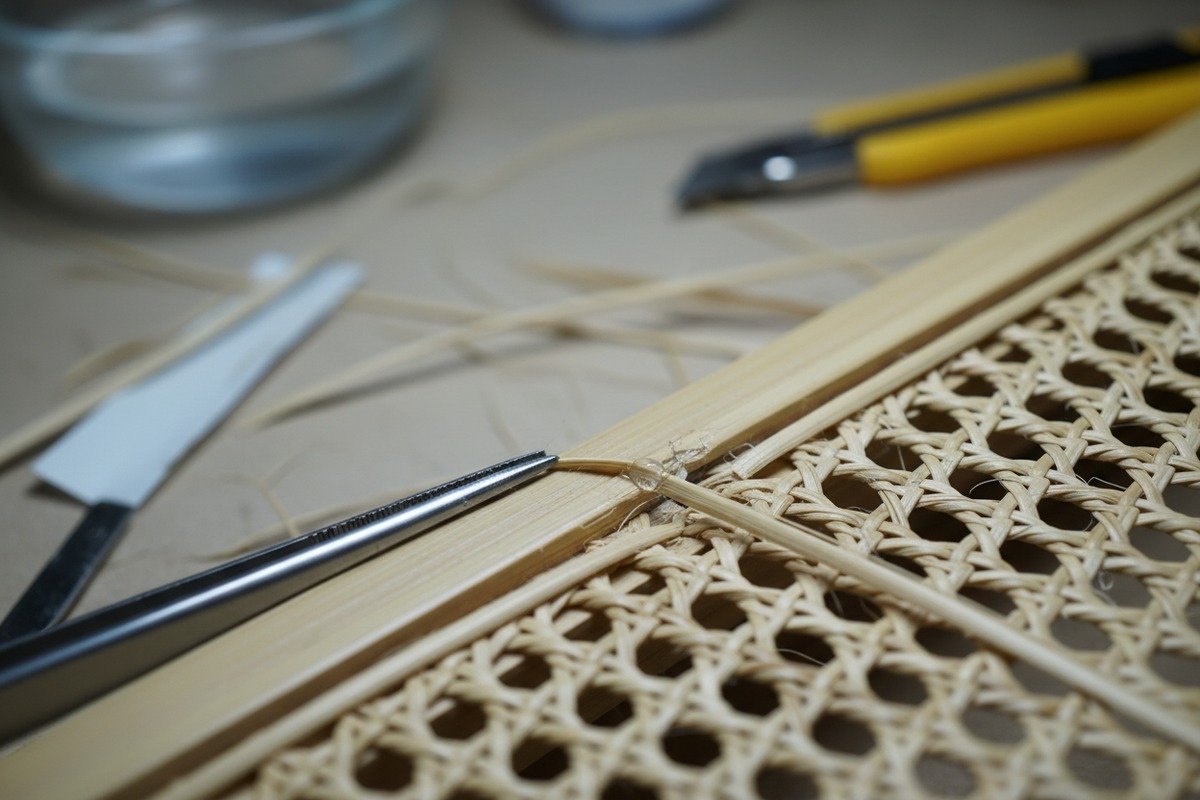
For small splits in natural cane furniture, soak a replacement rattan strand in lukewarm water for 30 minutes, apply waterproof super glue to the broken ends, weave the new strand into the existing pattern, and trim the excess. Hot glue or epoxy resin also works well for securing loose pieces in place.
Assess the Damage First
Before you grab glue, take a close look at the damage. Is it a single broken strand? A cluster of loose weaves? Or is the entire panel sagging? Your approach depends on the severity.
- One or two broken strands: Simple glue-and-weave repair.
- Several loose strands in one area: Patch repair with new cane.
- Widespread cracking and sagging: Full webbing replacement (covered in the next section).
The Strand Replacement Method
This technique works best for isolated breaks. Here is the process:
- Cut the broken strand cleanly at both sides of the break. Use sharp scissors or a utility knife.
- Soak a new rattan strand in lukewarm water for 30 minutes. This makes it flexible enough to weave.
- Apply a small bead of waterproof super glue 6 along the bottom of the new strand.
- Press the new strand onto the trimmed end of the old one. Hold firmly for 30 seconds.
- Weave the new strand over and under the perpendicular cane segments, following the original pattern.
- At the other end, glue the new strand to the remaining old strand. Trim any excess material.
- Pull gently to check tautness. The repair should sit flush with the surrounding weave.
Adhesive Options for Cane Repair
Different adhesives have different strengths. Here is a quick reference:
| Adhesive Type | Bond Strength | Время сушки | Waterproof? | Лучший сценарий использования |
|---|---|---|---|---|
| Waterproof Super Glue | Очень высокая | 3–5 минут | Да | Strand-to-strand bonding |
| Hot Glue (Glue Gun) | Высокий | 1–2 minutes | Умеренная | Securing loose pieces quickly |
| Epoxy Resin 7 | Очень высокая | 30–60 минут | Да | Filling gaps and molding repairs |
| PVA Wood Glue | Средний | 1–2 hours | Нет | Spline installation in grooves |
| General Purpose Adhesive | Средний | Varies | Varies | Light, non-structural fixes |
We always recommend waterproof super glue for strand repairs on seating surfaces. These areas bear body weight and encounter occasional spills. A non-waterproof bond will fail within weeks.
The Patch Method for Larger Areas
If a section of webbing has multiple broken strands but the frame is still sound, you can lay a patch of new woven cane over the damaged area. Cut a piece of pre-woven cane slightly larger than the damaged zone. Soak it in water, then position it over the break. Secure the edges with epoxy or by threading thin rattan strands through both layers. This is less elegant than strand-by-strand replacement, but it is faster and works well on the underside of chairs or in less visible areas.
A Hairdryer Trick for Stiff Cane
Sometimes the old cane around the break is too stiff to work with. In our repair workshops, we use a hairdryer on low heat—held about 15 centimeters away—to gently warm the area. This increases pliability just enough to reweave without snapping more strands. Be very careful. Too much heat will dry the cane further and cause more damage.
How do I maintain my rattan materials to ensure they don't become brittle over time?
Over the years, we've built relationships with furniture factories across Turkey, Greece, and the USA. The single biggest lesson we've learned from their feedback is this: prevention is always cheaper than repair. Proper maintenance can extend the life of rattan cane webbing by a decade or more.
To prevent rattan from becoming brittle, keep indoor humidity between 40–55%, avoid direct sunlight and heat sources, clean regularly with a damp cloth, apply a light coat of natural oil every 6–12 months, and never seal the cane with varnish or lacquer. Consistent environmental care is the most effective long-term strategy.
Control the Environment
Rattan's biggest enemy is not use—it's climate. Extreme dryness, temperature swings, and direct UV exposure all break down the natural fibers. Here's what you should control:
- Humidity: Keep it between 40% and 55%. Use a room humidifier in winter or in dry climates. A simple hygrometer on the wall tells you exactly where you stand.
- Temperature: Avoid placing rattan furniture near radiators, fireplaces, or heating vents. Even a few inches of distance makes a difference.
- Sunlight: Indirect light is fine. Direct sunlight fades the cane and accelerates drying. Use curtains or blinds during peak sun hours.
Build a Maintenance Schedule
Consistency matters more than intensity. A little care on a regular basis keeps rattan in excellent condition. Here is a recommended schedule:
| Задача | Частота | Необходимые инструменты | Purpose |
|---|---|---|---|
| Dust with a soft brush | Еженедельно | Щетка с мягкой щетиной или салфетка из микрофибры | Remove surface dust and particles |
| Wipe with a damp cloth | Каждые 2–4 недели | Lint-free cloth, warm water | Light rehydration and cleaning |
| Deep clean with mild soap | Каждые 3–6 месяцев | Soft brush, mild soap, water | Remove grime buildup |
| Apply natural oil | Каждые 6–12 месяцев | Lint-free cloth, linseed or lemon oil | Deep moisture conditioning |
| Inspect for loose strands | Every 3 months | Your eyes and hands | Catch damage before it spreads |
UV Protection Without Sealing
One question we get often from our wholesaler clients: "Can I spray something on the cane to protect it from the sun?" The answer is yes—but be careful. A clear, non-yellowing UV protective spray 8 designed for natural materials can help reduce sun damage. Apply it very lightly. The product must be breathable. It should not form a film that blocks moisture exchange.
Beeswax and carnauba wax are also good options. Apply a thin coat to the top surface only. Buff lightly with a soft cloth. This gives a subtle sheen and adds mild protection without sealing the pores.
Storage Best Practices
If you're storing rattan furniture or raw webbing rolls, climate matters even more. Basements are often too damp and cause mold. Attics are often too hot and too dry. A climate-controlled room at moderate temperature and humidity is ideal. Stack webbing rolls horizontally on a clean shelf. Avoid placing heavy objects on top of them—the weight can deform the weave pattern permanently.
When we pack our cane webbing for export, we use moisture-resistant packaging and include silica gel packets to buffer humidity during transit. This is something we've refined over years of shipping to diverse climates. If you're a wholesaler, consider how your own storage conditions affect the product your customers receive.
Recognize Early Warning Signs
Brittleness doesn't happen overnight. Watch for these signs:
- The cane sounds "crispy" when you press on it.
- Slight discoloration—yellowing or graying—on the surface.
- Fine hairline cracks visible under close inspection.
- Loose strands at the edges of the weave.
If you spot any of these, it's time for a moisture treatment and oil application. Acting early prevents full failure.
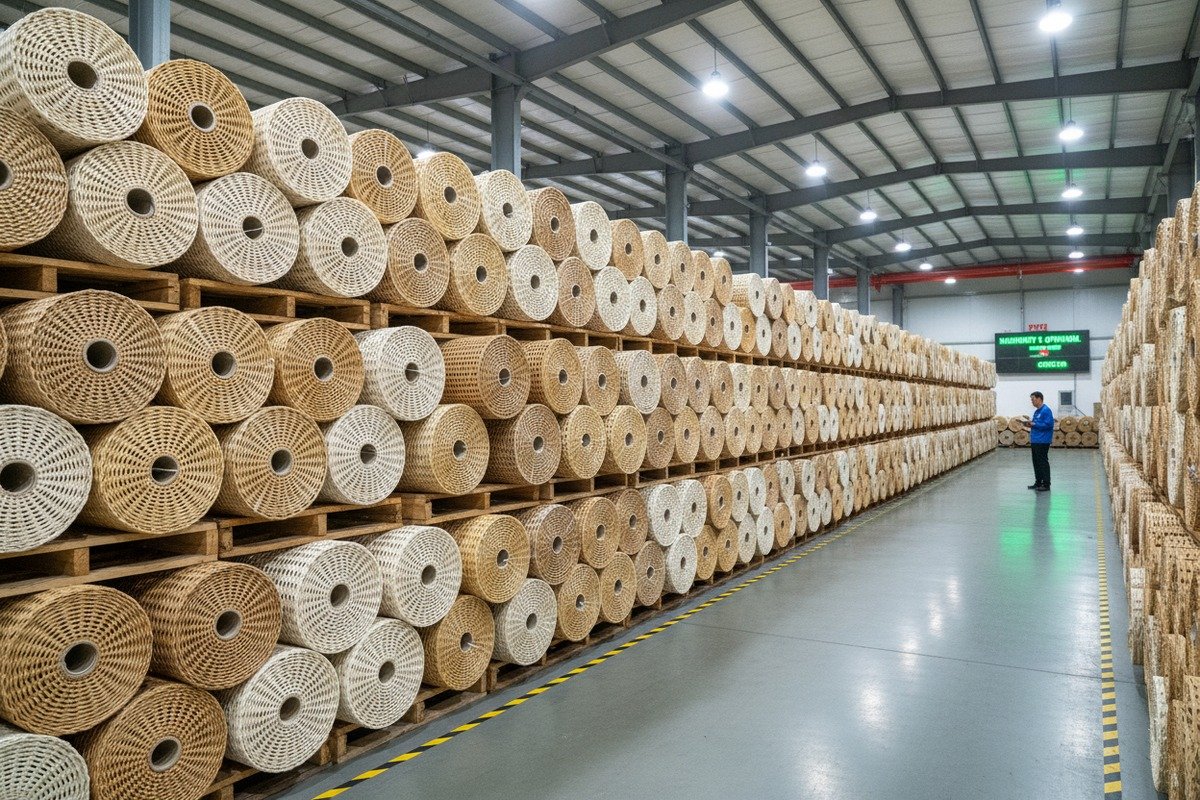
Sometimes, no amount of oil and glue can save badly deteriorated cane. When the webbing is extensively cracked, sagging, or full of holes, replacement is the only real option. From our production lines in Foshan and our rattan processing facility 10 in Indonesia, we see firsthand what makes the difference between cane that lasts and cane that doesn't.
For premium replacement cane webbing, source directly from specialized rattan wholesalers who offer Grade A natural cane in multiple weave patterns and widths. Look for suppliers with their own processing facilities, transparent grading systems, and experience exporting to your specific market for consistent quality and sizing.
Full Webbing Replacement: A Step-by-Step Overview
When the damage is too widespread for spot repairs, here is how to do a full replacement:
- Remove the old spline. Use a steamer with a narrow nozzle to inject steam into the groove around the seat frame. After 10–15 minutes, the adhesive softens. Pry the spline out from one corner using a caning chisel or small flat-blade screwdriver. Work gradually.
- Remove old webbing. Once the spline is out, the old cane should lift free. Scrape any remaining glue from the groove with an abrasive pad.
- Prepare new cane. Cut the new webbing one inch wider than the seat opening on all sides. Soak it and the new spline in water for 20–30 minutes.
- Position the webbing. Lay the new cane on the frame, shiny side up. Center it carefully.
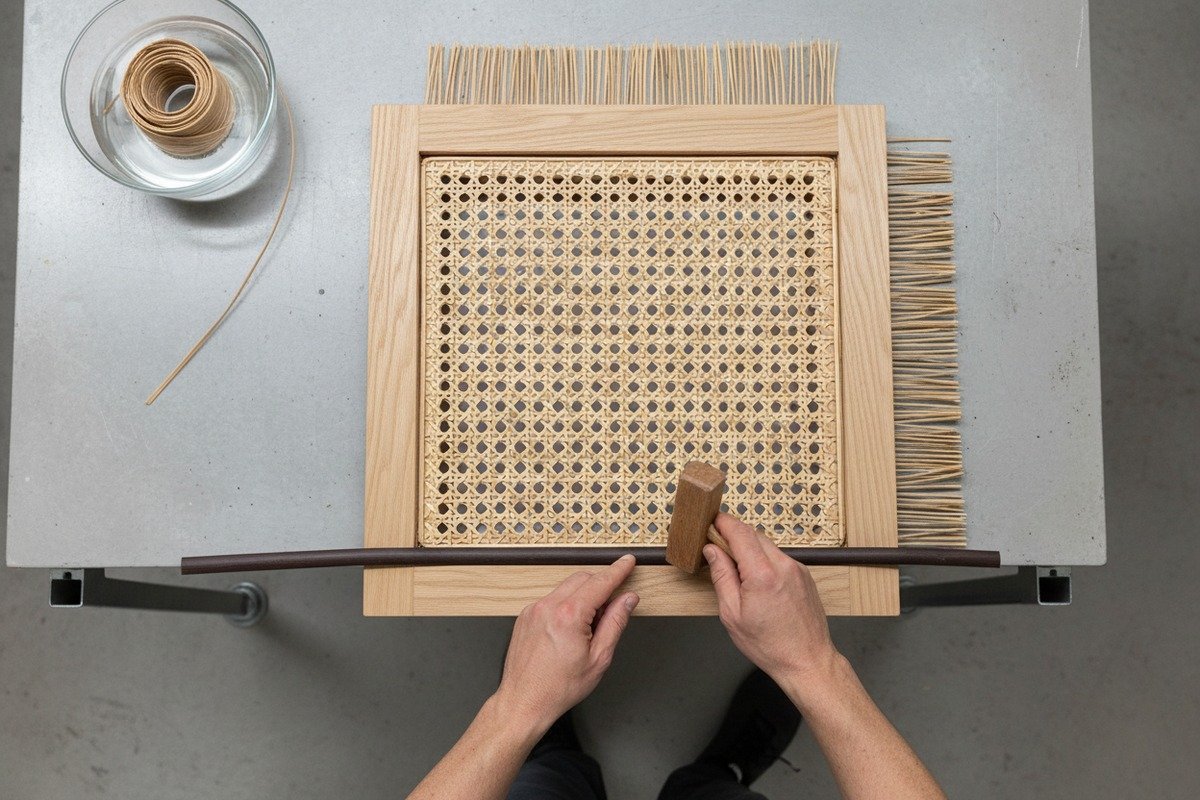
- Press into the groove. Starting at the front, use a cane webbing tool to push the cane into the groove about four inches at a time. Use temporary spline pieces to hold it. Do the back, then the sides.
- Trim the excess. Use a sharp utility knife blade to cut the cane just below the outer edge of the groove.
- Glue and insert the spline. Apply a thin bead of white PVA glue into the groove. Cut the spline at a 45-degree angle and tap it in with a soft mallet.
- Let it cure. Wait 24 hours. As the cane dries, it shrinks slightly and tightens into a firm, smooth seat.
What to Look for in Quality Replacement Cane
Not all cane webbing is equal. Here are the key factors that separate premium material from low-grade stock:
- Grade: Grade A cane has uniform color, consistent strand thickness, and no visible knots or breaks.
- Weave pattern: Common patterns include hexagonal open-work, tight basketweave, diamond motif, and simple open square grid. Match the original pattern for a seamless look.
- Width and roll size: Make sure the roll is wide enough to cover your seat with at least one inch of excess on each side.
- Processing: Properly processed rattan from dedicated facilities maintains better flexibility and longer shelf life.
Where to Source It
You have several options:
- Specialized rattan wholesalers like us at Seafan Rattan offer full product lines covering all major weave patterns in natural, bleached, and synthetic options. We ship globally to the Netherlands, Spain, the USA, Australia, and many other markets.
- Online marketplaces such as Alibaba connect you with Chinese and Indonesian suppliers. Look for verified sellers with factory audits.
- Local furniture restoration shops sometimes stock small quantities of cane webbing. Good for one-off repairs, but pricing is higher.
- Direct factory sourcing gives you the best price and the most control over specifications. This is the route most furniture factories and material wholesalers take.
If you are a purchasing manager or wholesaler, working with a supplier who operates their own rattan processing facility—rather than a middleman—gives you better quality control, more consistent sizing, and competitive pricing. We've invested in our own facility in Indonesia for exactly this reason. It lets us control the process from raw pole to finished webbing roll.
Matching the Right Webbing to Your Project
Consider the end use. A decorative cabinet door panel has different requirements than a dining chair seat. For seating, choose tighter weave patterns that distribute weight evenly. For decorative panels, open-work hexagonal cane adds visual interest and airflow.
When in doubt, request samples before placing a bulk order. Any reputable supplier will provide them. Test the flexibility, inspect the color consistency, and verify the weave density matches your needs.
Заключение
Repairing dry and cracked rattan cane webbing comes down to moisture, the right adhesive, proper technique, and quality replacement material. Take care of your rattan, and it will take care of you for decades.
Сноски
1. Defines the material and its origin. ↩︎
2. Explains rattan’s botanical classification as a palm fiber. ↩︎
3. Explains how low humidity causes wood (and rattan) to dry out and shrink. ↩︎
4. Explains what boiled linseed oil is and its properties for wood. ↩︎
5. Explains that these oils don’t dry and offer poor protection for wood fibers. ↩︎
6. Describes the properties and use of waterproof super glue for wood. ↩︎
7. Explains the versatility and applications of epoxy resin in furniture. ↩︎
8. Describes how UV protective sprays shield outdoor materials from sun damage. ↩︎
9. Specifies the ideal humidity range for preserving wood furniture and natural fibers. ↩︎
10. Describes the steps involved in processing rattan after harvest. ↩︎

 English
  Español de México
  العربية
  Deutsch
  Français
  Русский