
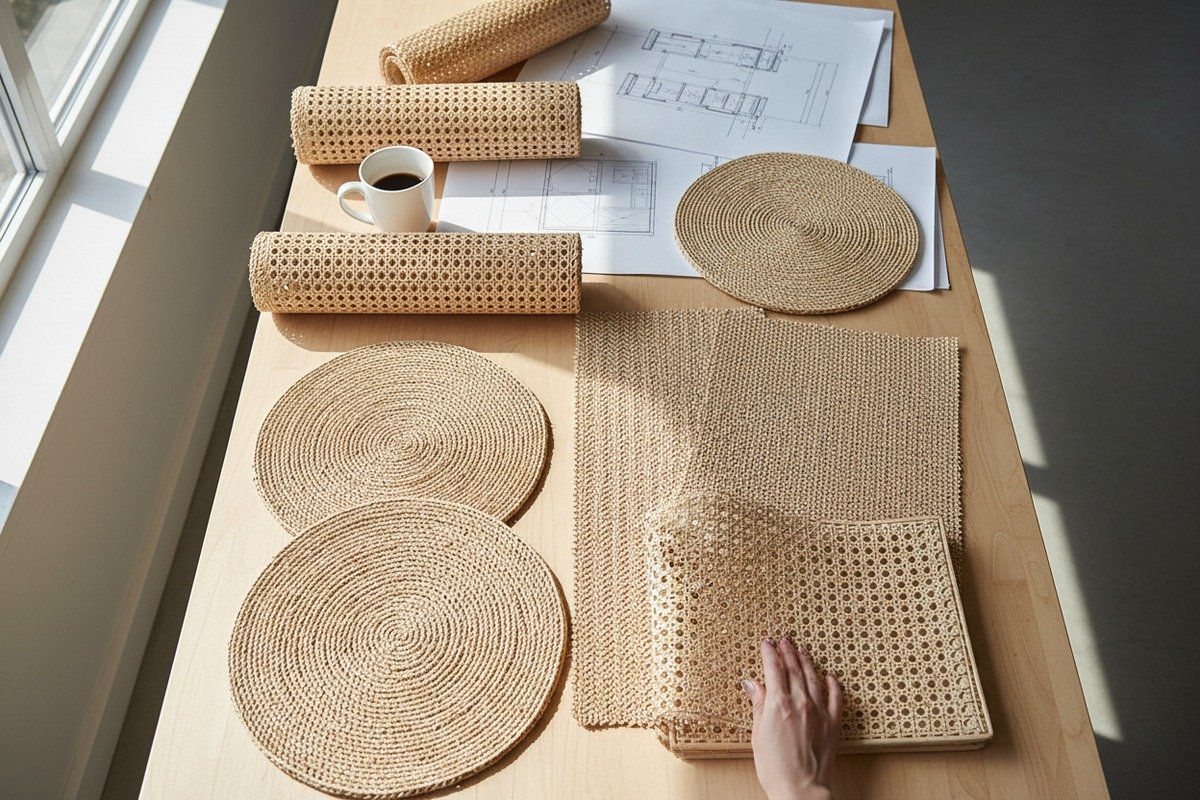
Every week at our Foshan warehouse, buyers ask us the same question: can rattan cane webbing come in patterns beyond the standard square grid?
Yes, natural rattan cane webbing can be customized with different weaving patterns. Manufacturers offer options including open hexagonal weave, close weave sheet cane, diamond weave, herringbone, French weave, and radio weave. Custom bespoke patterns are also possible through manual weaving techniques during production.
The world of rattan weaving patterns 1 is much wider than most buyers realize. Below, we break down the specific patterns available, how custom designs work, what impact they have on durability, and how to find a reliable wholesaler for your needs.
Which specific weaving patterns can I choose for my custom natural rattan cane webbing?
When our production team lays out sample boards for visiting buyers, the variety of weaving patterns often surprises even experienced furniture professionals.
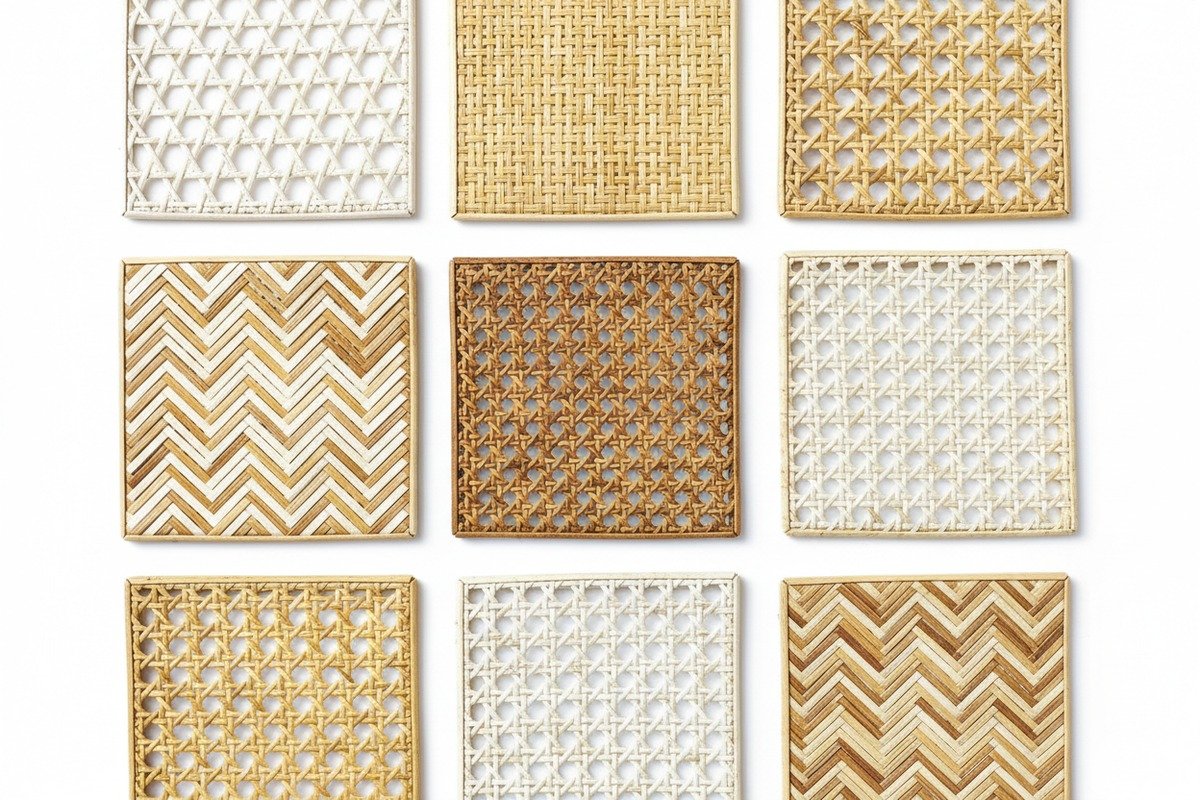
You can choose from at least nine established weaving patterns for natural rattan cane webbing: open weave (hexagonal), close weave (sheet cane), diamond weave, double cane weave, standard weave, French weave, herringbone, square grid, and radio weave. Each pattern creates a distinct visual texture and light-filtering effect.
Understanding the Most Popular Patterns
Let's start with the basics. The square grid pattern, also called radio cane, is the most widely used. radio weave 2 It features evenly spaced horizontal and vertical cane strips. This pattern is easy to align during installation, which makes it popular among furniture factories that value production speed.
The hexagonal open weave is the second most common. It starts with a square base, then workers insert additional cane strips at 45-degree angles. This creates the familiar six-sided honeycomb look. The extra manual insertion step makes it slightly more expensive than the square grid.
Beyond these two staples, there are several other patterns that we produce regularly at our facilities.
Pattern Comparison Table
| Pattern Name | Visual Style | Light Filtering | Complexity Level | Best Use Case |
|---|---|---|---|---|
| Square Grid (Radio) | Clean, minimal lines | Умеренная | Низкий | Cabinet doors, headboards |
| Hexagonal Open Weave | Honeycomb, airy | Высокий | Medium | Chair backs, room dividers |
| Close Weave (Sheet Cane) | Tight, solid surface | Низкий | Medium | Seat panels, drawer fronts |
| Diamond Weave 3 | Diagonal geometric | Умеренная | Medium-High | Decorative panels, accent walls |
| Елочка 4 | V-shaped zigzag | Low-Moderate | Высокий | Premium furniture, luxury interiors |
| French Weave 5 | Octagonal star motif | Высокий | Высокий | Vintage restoration, boutique pieces |
| Double Cane Weave | Layered, dense texture | Very Low | Высокий | Heavy-use seating, commercial furniture |
How Patterns Differ in Production
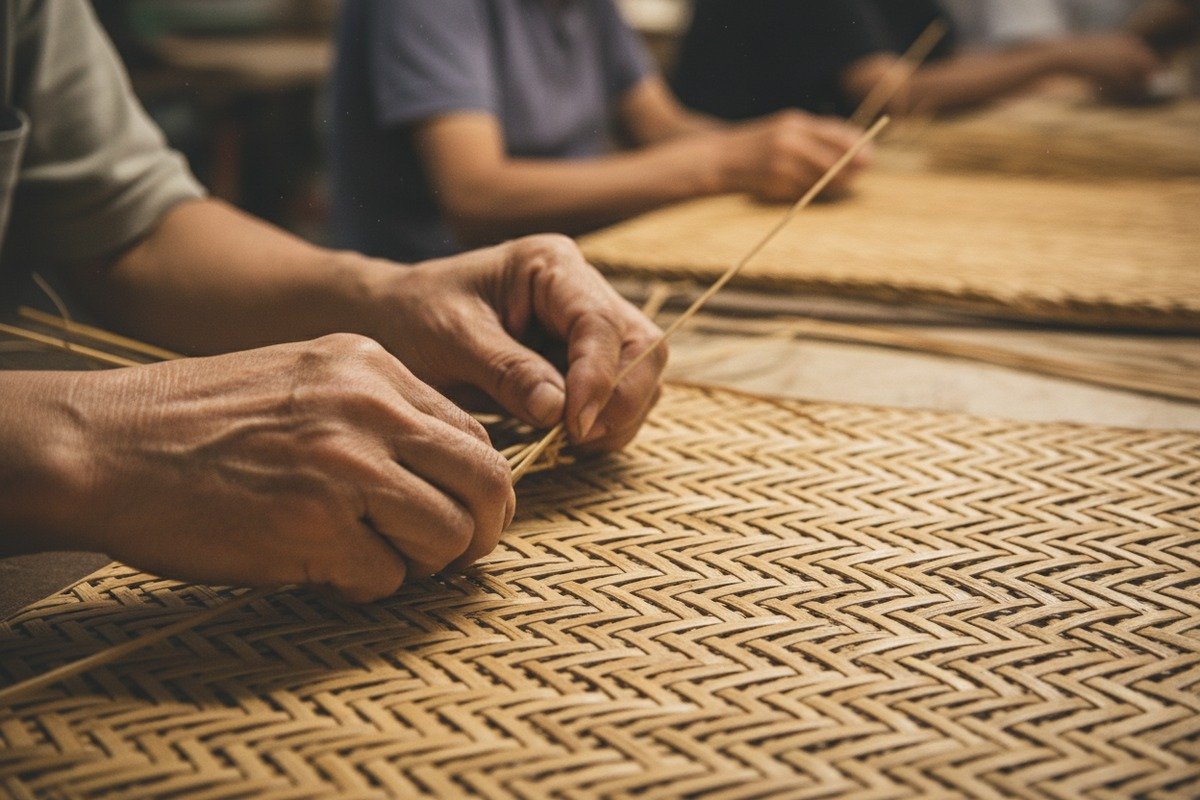
The complexity level matters for your budget. Simple patterns like the square grid require fewer weaving steps. Our workers can produce these faster, so the unit cost is lower. Complex patterns like herringbone or French weave demand skilled manual labor. Each strip must be placed at precise angles, and the tension must stay consistent across the entire sheet.
From our experience exporting to markets in the Netherlands, Spain, and the USA, the hexagonal and square patterns account for roughly 70% of all orders. However, we have seen a growing interest in diamond and herringbone patterns, especially from European buyers designing mid-century modern and bohemian-style furniture.
Material Variations Within Patterns
It is worth noting that the same pattern can look quite different depending on the cane width. Narrow strips create a more delicate, refined appearance. Wider strips produce a bolder, more rustic look. When you request a quote, always specify both the pattern and the preferred strip width.
Natural rattan also comes in slightly different tones. Bleached rattan produces a lighter, more uniform color. Unbleached rattan retains its warm, sandy tan hue with natural color variations. Both can be woven into any of the patterns listed above.
Can I request a unique weaving design that matches my furniture brand's aesthetic?
Our design team has worked with furniture brands across 15+ countries, and one trend is clear: more brands want exclusive patterns that set their products apart on retail floors.
Yes, you can request a unique weaving design. Reputable rattan manufacturers accept custom pattern specifications, including modified grid spacing, hybrid weave combinations, and brand-exclusive motifs. The process typically involves submitting a design reference, receiving a handwoven sample for approval, and then proceeding to bulk production.
The Custom Design Process Step by Step
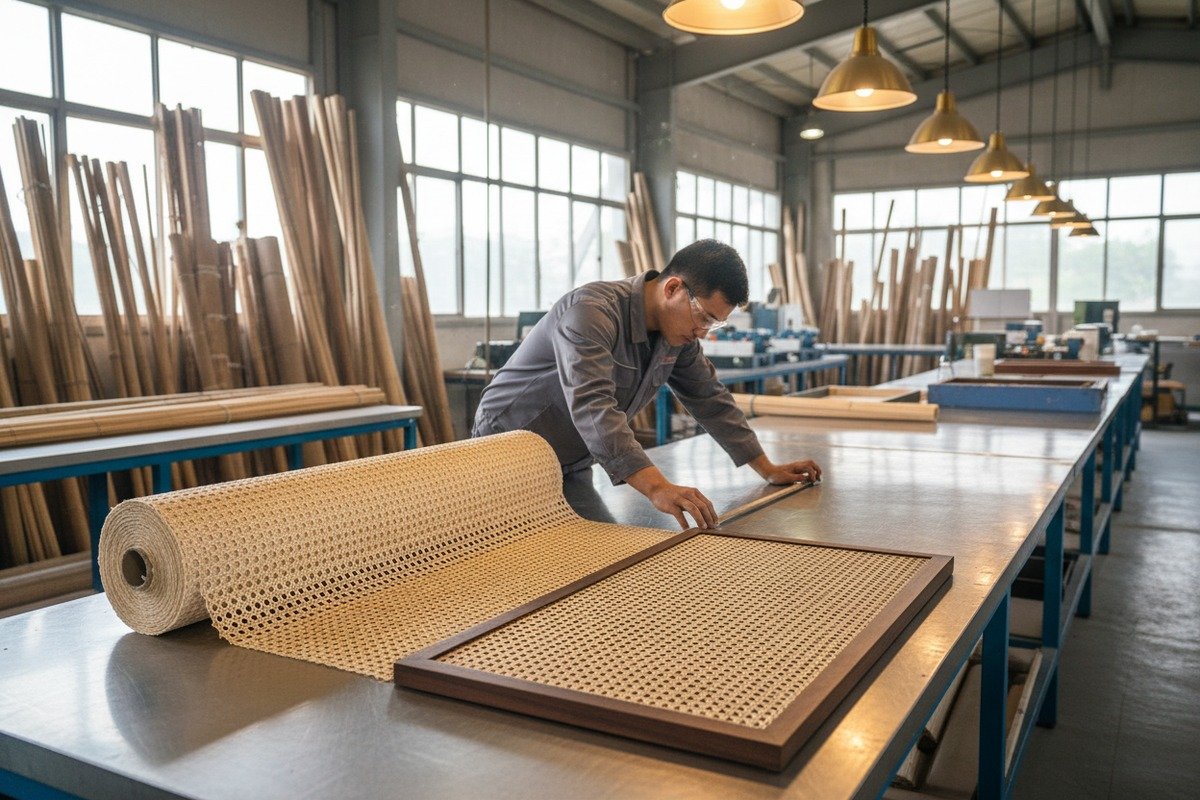
Here is how custom pattern development works at our facilities. First, you share a reference. This can be a sketch, a photograph, or even a competitor's product you want to improve upon. Our weaving technicians study the reference and determine if it is feasible with natural rattan cane.
Second, we create a small handwoven sample, usually around 30cm × 30cm. This sample lets you see and feel the pattern before committing to a large order. Sampling typically takes 7 to 14 days, depending on pattern complexity.
Third, after you approve the sample, we move to bulk production. For standard custom patterns, lead time ranges from 3 to 6 weeks for orders of 200 to 500 meters.
What Customization Options Are Available?
Beyond the weave pattern itself, there are several design variables you can control:
| Customization Element | Options Available | Impact on Price |
|---|---|---|
| Узор плетения | Standard, modified, or fully custom | Low to High |
| Cane strip width | 2mm, 3mm, 4mm, 5mm, or custom | Минимальный |
| Размер ячейки сетки | Tight, medium, open | Минимальный |
| Cane color/finish | Natural, bleached, smoked, stained | Low to Medium |
| Ширина рулона | 40cm, 60cm, 90cm, or custom | Низкий |
| Длина рулона | 5m, 10m, 15m, or custom | Минимальный |
Realistic Expectations for Custom Work
Let me be honest about limitations. Not every design that looks good on paper works with natural rattan. The material has physical constraints. Rattan cane strips can snap if bent too sharply. Very tight, intricate patterns may lose structural integrity over time. Our engineering team always advises on feasibility before we accept a custom order.
Some brands have come to us wanting patterns that mimic woven textiles or lace. In a few cases, we have achieved close approximations using a combination of fine-gauge cane and hybrid weaving techniques. In other cases, we have recommended synthetic rattan alternatives that can handle tighter bend radii.
Private Label and Exclusive Patterns
For buyers who want pattern exclusivity, we offer private-label arrangements. This means the custom pattern you develop with us will not be sold to other clients in your market. This is especially valuable for furniture brands competing in premium segments where design differentiation drives sales.
We currently maintain exclusive pattern agreements with several clients in Australia, Turkey, and the USA. These agreements typically require a minimum annual purchase commitment, which varies depending on pattern complexity and production volume.
One growing trend we are seeing, particularly from European designers, involves combining natural rattan weaving with painted or stained finishes. For example, a standard hexagonal weave dipped in matte black creates a striking modern aesthetic that contrasts beautifully with light wood frames. This kind of creative customization is entirely achievable.
How will a custom weaving pattern impact the overall durability and quality of my material?
During quality control inspections at our Indonesian processing facility, we test every pattern variation for tension, tear resistance, and flexibility — and the results differ more than you might expect.
A custom weaving pattern directly affects durability and quality. Tighter, denser weaves like close weave and herringbone offer greater structural strength and load-bearing capacity. Open weaves like hexagonal provide excellent breathability but lower tensile strength. The key is matching your pattern choice to the product's intended use and stress exposure.
Why Pattern Density Matters
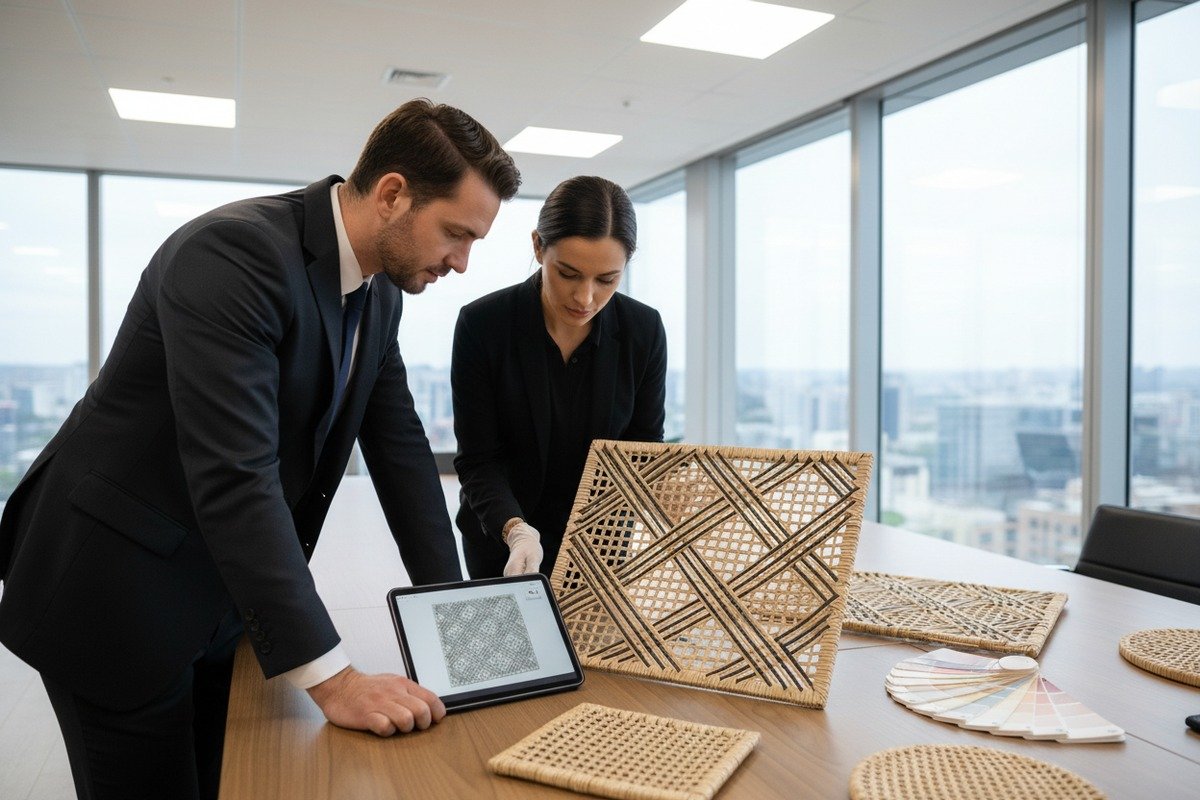
The density of a weave determines how well it distributes weight and resists tearing. Think of it this way: a close weave has more cane strips per square centimeter. More strips mean more contact points. More contact points mean better load distribution.
For seating applications, this is critical. A chair seat made with close weave sheet cane 7 can support significantly more weight over time than one made with an open hexagonal weave 8. If your furniture factory produces dining chairs or office seating, pattern density should be a top priority.
Durability by Pattern Type
| Тип узора | Tensile Strength 9 | Breathability | Recommended Use | Moisture Sensitivity |
|---|---|---|---|---|
| Close Weave (Sheet Cane) | Высокий | Низкий | Chair seats, heavy-use panels | Умеренная |
| Double Cane Weave | Very High | Very Low | Commercial seating, benches | Умеренная |
| Square Grid | Medium | Medium | Cabinet inserts, headboards | Умеренная |
| Diamond Weave | Medium-High | Medium | Decorative panels, light seating | Умеренная |
| Елочка | Высокий | Low-Medium | Premium furniture, backrests | Умеренная |
| Hexagonal Open Weave | Low-Medium | Высокий | Decorative accents, room dividers | Высокий |
| French Weave | Medium | Medium-High | Vintage furniture, display cabinets | Moderate-High |
The Role of Cane Preparation
Pattern is only one factor. The quality of the rattan cane itself plays an equally important role. At our rattan processing facility, we grade raw cane into categories based on fiber density, surface smoothness, and flexibility. Grade A cane — the type most of our international buyers require — has consistent diameter, no cracks, and high natural moisture content before drying.
Proper soaking is another critical step. Before weaving, natural rattan cane must be soaked in cool water for 10 to 15 minutes. This restores pliability and prevents cracking during the weaving process. Over-soaking, however, can weaken the fibers. Our technicians control soak times carefully to maintain optimal strength.
Indoor vs. Outdoor Considerations
Natural rattan cane webbing is inherently sensitive to moisture and UV exposure 10. Regardless of pattern, it performs best indoors or in covered outdoor areas. If your buyers need true outdoor durability, we recommend synthetic rattan alternatives that replicate the look of natural weaving patterns without the moisture vulnerability.
That said, some patterns handle environmental stress better than others. Tighter weaves tend to resist warping better because the interlocking strips hold each other in place. Open weaves are more prone to stretching and sagging in humid conditions.
Quality Control for Custom Patterns
When we produce custom patterns, our QC process includes three checkpoints. First, we verify raw material grade. Second, we inspect weave consistency at the midpoint of each roll. Third, we test a sample cut from every finished roll for tension and flexibility. This three-stage inspection ensures that custom patterns meet the same quality standards as our standard offerings.
For buyers concerned about consistency across large orders, we keep a master sample on file. Every batch is compared against this master to ensure visual and structural uniformity. This is especially important for custom patterns, where even slight variations in strip spacing can be noticeable.
What is the best way for me to source custom-woven rattan patterns from a reliable wholesaler?
Over the past decade, we have onboarded hundreds of new B2B clients, and the sourcing process can feel overwhelming when you are navigating it for the first time.
The best way to source custom-woven rattan patterns is to identify wholesalers with in-house weaving facilities, request physical samples before placing bulk orders, verify quality certifications, and establish clear communication on pattern specifications, MOQs, and lead times. Prioritize suppliers who offer a full product range and dedicated quality control processes.
Step 1: Identify the Right Type of Supplier
Not all rattan suppliers are the same. Some are traders who source from multiple small workshops. Others, like our operation at Seafan Rattan, own their own processing and weaving facilities. The difference matters because factory-direct suppliers have greater control over pattern customization, quality consistency, and pricing.
When searching on Google or Alibaba, look for suppliers who explicitly mention in-house production, multiple factory locations, or direct raw material sourcing. These are strong indicators of a vertically integrated supply chain.
Step 2: Evaluate Through Samples
Never place a bulk order based on photos alone. Request physical samples. A reliable wholesaler will send you cut pieces of their standard patterns and produce custom samples based on your specifications. Pay attention to the following when you receive samples:
- Cane quality: Look for smooth, crack-free strips with consistent color.
- Weave tightness: Check that strip spacing is uniform across the entire sample.
- Flexibility: Gently bend the sample. It should flex without cracking.
- Edge finishing: The edges of the webbing should be clean, not frayed or splitting.
Step 3: Clarify Specifications in Writing
Miscommunication is the number one cause of order disputes in international rattan trade. Before confirming any order, make sure the following details are documented in writing:
- Pattern name or reference image
- Cane strip width and opening size
- Roll dimensions (width × length)
- Cane color/finish
- Packaging requirements
- MOQ (Minimum Order Quantity)
- Lead time
- Payment terms
At our company, we provide a detailed specification sheet for every order. Both parties sign off before production begins. This eliminates ambiguity and protects everyone involved.
Step 4: Verify Quality and Reliability Indicators
Here are key factors to check when evaluating a potential rattan wholesaler:
| Reliability Indicator | What to Look For | Red Flag |
|---|---|---|
| Factory ownership | Self-owned or invested facilities | "We source from various suppliers" |
| Export experience | Named export countries, years in business | Vague claims with no specifics |
| Quality control | Documented QC process, sample policy | No samples available |
| Communication | Responsive, clear, uses WhatsApp/email | Slow replies, vague answers |
| Product range | Full category of rattan materials | Only one or two products |
| Packaging | Customizable, durable export packaging | Generic or flimsy packaging |
| References | Willing to share client testimonials | Refuses to provide references |
Step 5: Build a Long-Term Relationship
The best sourcing outcomes come from long-term partnerships, not one-off transactions. When you find a wholesaler that delivers consistent quality, invest in that relationship. Share your product roadmap. Let them know your seasonal demand patterns. This allows the supplier to plan production capacity and raw material purchasing in advance, which often results in better pricing and priority scheduling.
Many of our longest-standing clients started with a single trial order of 100 to 200 meters. Once they confirmed the quality met their standards, they scaled up to regular monthly orders. Some now purchase thousands of meters per quarter across multiple pattern types.
Common Sourcing Mistakes to Avoid
From our years in the export business, we see several recurring mistakes. First, choosing the cheapest quote without verifying quality. Low prices often mean lower-grade cane, inconsistent weaving, or poor packaging. Second, failing to order samples. Third, not specifying packaging requirements. Natural rattan is sensitive to moisture during shipping. Proper packaging — including moisture-barrier wrapping and sturdy cartons — is essential, especially for long-distance sea freight to markets like the USA, Australia, or Europe.
Finally, do not underestimate the value of visiting your supplier's facility, either in person or via video call. Seeing the production floor, meeting the weaving team, and walking through the QC process gives you confidence that your custom patterns will be produced to the standard you expect.
Заключение
Custom weaving patterns for natural rattan cane webbing are not only possible — they are a powerful way to differentiate your furniture products in competitive markets. Whether you need standard hexagonal, intricate herringbone, or a fully bespoke design, the right manufacturing partner makes all the difference. Reach out to us at www.rattanwholesaler.com to start your custom pattern journey today.
Сноски
1. Explains the different types and applications of rattan weave patterns. ↩︎
2. Describes the characteristics of radio weave cane webbing. ↩︎
3. Provides details on diamond weave rattan cane webbing. ↩︎
4. Describes the herringbone weave pattern in natural rattan. ↩︎
5. Discusses various traditional rattan weaving techniques. ↩︎
6. Explains rattan as source material for cane webbing. ↩︎
7. Details the characteristics and applications of close weave rattan. ↩︎
8. Describes the characteristics and uses of hexagonal rattan webbing. ↩︎
9. Authoritative Wikipedia page defining ultimate tensile strength. ↩︎
10. Explains the impact of UV exposure on material degradation. ↩︎
 English
  Español de México
  العربية
  Deutsch
  Français
  Русский