
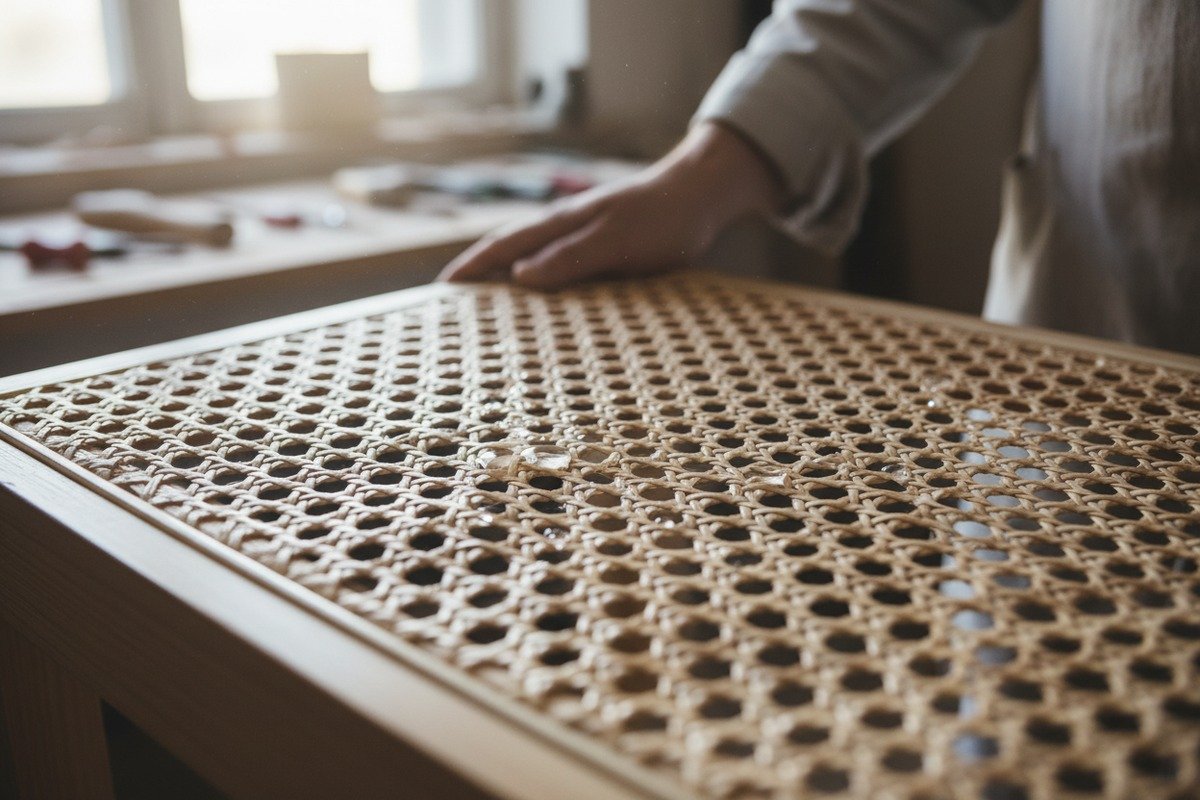
A spilled glass of water, a humid summer, or an unexpected leak — these small events can leave your beautiful rattan cane webbing sagging and misshapen natural fibers swell 1. Over the years, running three factories and processing thousands of rattan rolls through our facility in Indonesia, we have seen this worry come up again and again from our furniture factory clients and wholesaler partners. The panic is real. You invested in quality natural cane webbing, and now it looks loose and lifeless natural cellulose fibers 2. But is the damage truly done?
Yes, natural rattan cane webbing can often regain its original shape after getting damp. The natural fibers swell when wet and contract as they dry, which helps tighten the weave. However, full recovery depends on how long the material stayed damp, the severity of moisture exposure, and the drying method used.
The relationship between rattan and water is more nuanced than most people think. Below, we will walk through how to restore sagging webbing, what prolonged dampness really does to the fibers, how to dry it properly, and why rattan quality 3 matters more than you might expect. Let’s get into it.
How can I restore my sagging rattan webbing after it gets wet?
Finding your rattan webbing sagging after a moisture incident can be frustrating. When we ship cane webbing to furniture factories across the Netherlands, Australia, and the US, we always include care guidance — because this question comes up more than any other after the product is installed.
To restore sagging rattan webbing, lightly mist the affected area with warm water, allow the fibers to swell, then let it air-dry in a well-ventilated space. As the natural cane dries, it contracts and tightens. For deeper sags, gentle re-tensioning with temporary bracing during drying may be needed.
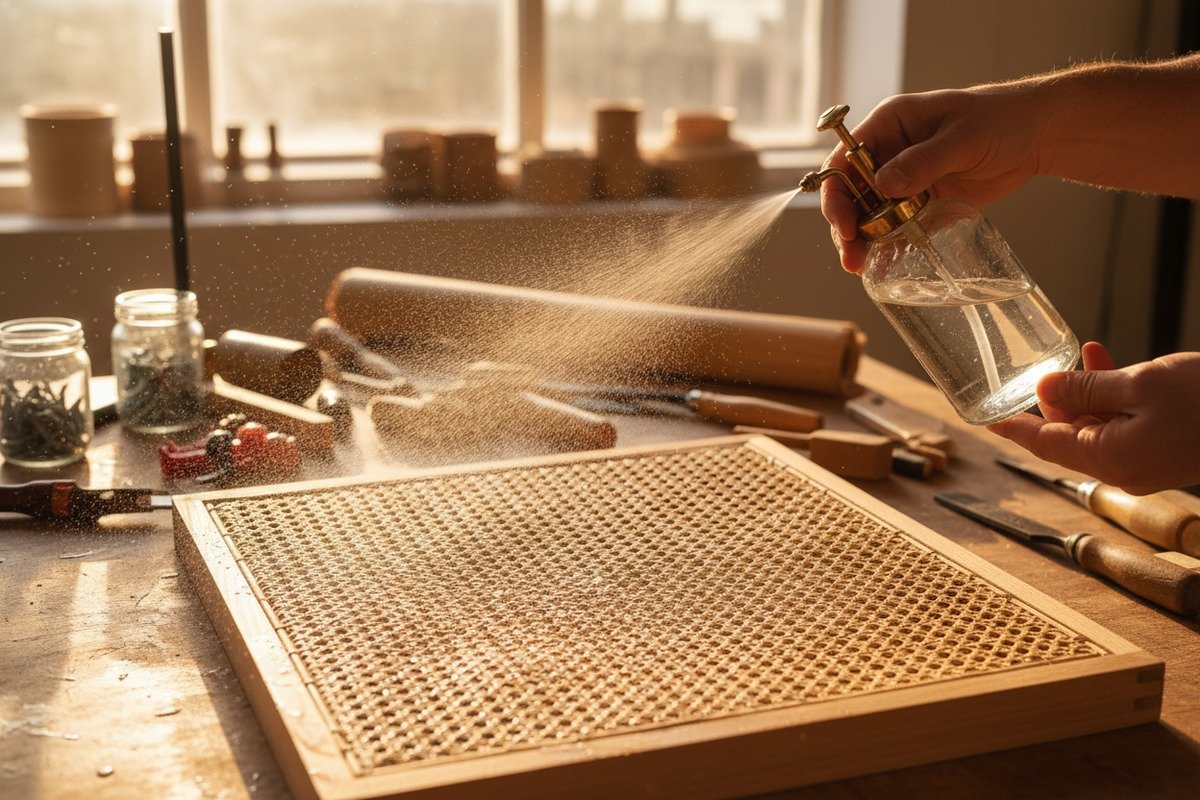
Запрет restoration process 4 is rooted in the same principle we use during installation. When we prepare cane webbing at our processing facility, we soak it in warm water to make the fibers pliable. Then, we stretch it into a frame. As it dries, it pulls tight. This same swell-and-contract cycle is what makes restoration possible after accidental dampness.
Step-by-Step Restoration Process
Here is a simple process you can follow at home or in your workshop:
- Remove excess moisture. Use a clean, dry towel to blot the wet area. Do not rub. Rubbing can distort the weave pattern.
- Mist with warm water. If the webbing has already dried in a sagging position, lightly re-wet it with a spray bottle filled with warm (not hot) water. This allows the fibers to swell again.
- Apply gentle tension. If possible, press the webbing flat or use a piece of cardboard behind it to create even tension while it dries.
- Air-dry completely. Place the piece in a room with good airflow. A fan on a low setting helps. Avoid direct sunlight or high heat, which can make the fibers brittle.
- Condition after drying. Once fully dry, a very light coat of natural rattan oil or wood conditioner helps replenish oils lost during the wetting cycle.
When Misting Alone Is Not Enough
Minor sags respond well to simple misting. But if the webbing has been soaking for hours, you may need a more hands-on approach. In our experience working with restoration clients in Spain and Greece, we have seen cases where the cane needed to be partially removed from the frame, re-soaked, re-stretched, and reinstalled. This is more labor-intensive but effective.
Restoration Success Factors
| Фактор | Impact on Recovery | Что делать |
|---|---|---|
| Duration of dampness | Short exposure = better recovery | Dry as soon as possible |
| Температура воды | Warm water softens fibers evenly | Use warm, not hot water for misting |
| Airflow during drying | Even airflow = even tightening | Use a fan on low, avoid direct heat |
| Age of rattan | Newer rattan recovers better | Condition older rattan before re-wetting |
| Узор плетения | Open hexagonal weaves dry faster | Adjust drying time based on pattern density |
The key takeaway here is speed. The faster you address the moisture, the better your odds of full recovery. Do not leave damp rattan sitting in a closed room for days. Act quickly, and the natural properties of the fiber will do most of the work for you.
Will my natural rattan cane webbing be permanently damaged if it stays damp for too long?
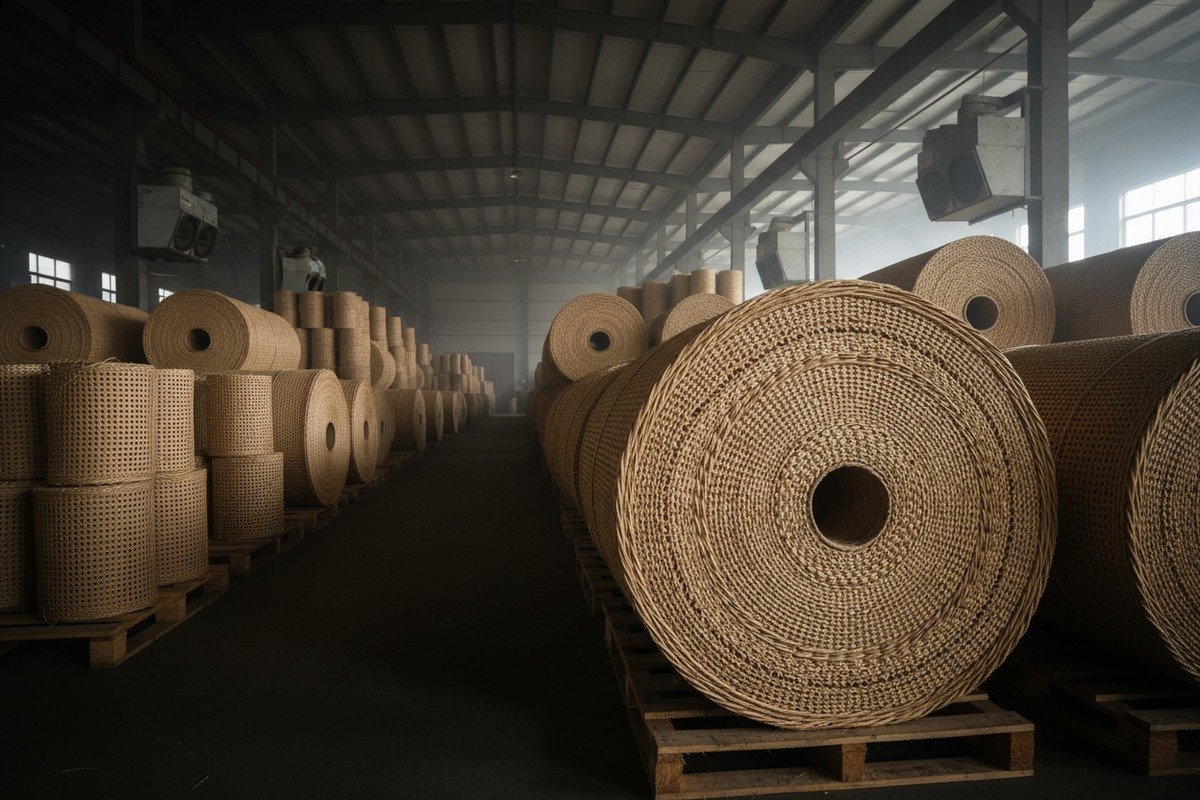
This is the question that keeps furniture factory managers up at night — especially those who store rattan materials in warehouses without climate control. We have learned this the hard way at our own storage facilities in Foshan, where summer humidity can spike without warning.
Prolonged dampness can permanently damage natural rattan cane webbing. Extended moisture exposure breaks down the fiber structure, causes irreversible stretching, and creates ideal conditions for mold and mildew growth. Once the fibers lose their internal cohesion, no amount of re-drying will restore the original shape.
There is a meaningful difference between "damp for a few hours" and "damp for several days." Understanding this distinction is critical for anyone who works with or sells natural cane webbing.
The Timeline of Moisture Damage
Not all moisture exposure is equal. Here is a general timeline based on what we have observed across thousands of shipments and client feedback:
| Duration of Dampness | Likely Outcome | Обратимость |
|---|---|---|
| Under 2 hours | Minor swelling, no visible sag | Fully reversible with air-drying |
| 2–12 hours | Noticeable sag, fiber softening | Mostly reversible with proper drying |
| 12–48 hours | Significant sag, early mold risk | Partially reversible; some permanent stretch |
| 48+ hours | Structural weakening, mold growth likely | Often irreversible; replacement may be needed |
| 1 week or more | Fiber breakdown, warping, mold established | Not reversible; replacement required |
What Happens Inside the Fiber
Rattan cane webbing is the outer bark of the rattan palm 5. It is made of natural cellulose fibers bound together by lignin. When water penetrates these fibers for too long, it disrupts the lignin bonds 6. Think of it like soaking a piece of cardboard — short exposure and it bounces back. Leave it submerged, and it falls apart.
The open hexagonal or octagonal weave patterns that make rattan so attractive also mean water can reach every strand quickly. This is normally an advantage for breathability. But during prolonged moisture events, it becomes a vulnerability.
Плесень: Безмолвный разрушитель
Mold is the real danger with extended dampness. Natural rattan has no built-in chemical resistance to fungal growth. In warm, humid conditions, споры плесени 7 can colonize rattan within 24 to 48 hours. Once mold penetrates the fiber surface, it is extremely difficult to remove completely. Even if you clean the visible mold, the root structures can remain inside the cane, weakening it from within.
At our Indonesian processing facility, we apply anti-mildew treatments to our rattan before it leaves the plant. This buys time, but it is not a permanent shield. No treatment replaces proper storage and handling.
Can You Save Severely Damaged Webbing?
In most cases, if rattan has been continuously damp for more than two days, you should assess it carefully. Look for these signs of permanent damage:
- The weave no longer holds tension, even after re-drying.
- The strands feel mushy or crumble when bent.
- Dark spots or fuzzy patches indicate active mold.
- The material has an unpleasant, musty odor that persists after drying.
If you see two or more of these signs, replacement is usually more cost-effective than restoration. We always advise our wholesale partners to keep a small reserve stock for exactly this reason.
What steps should I take to ensure my rattan webbing dries evenly without losing its shape?
Even drying is the difference between a successful restoration and a warped, uneven result. When we train new workers at our Foshan partner factories on cane webbing installation, drying technique is one of the first skills we emphasize. It matters just as much as the stretching.
To dry rattan webbing evenly, blot excess water with a towel first, then place the piece in a well-ventilated area away from direct sunlight and heat sources. Use a low-speed fan to circulate air around all surfaces. Maintain indoor humidity between 40% and 60% to prevent both over-drying and residual dampness.
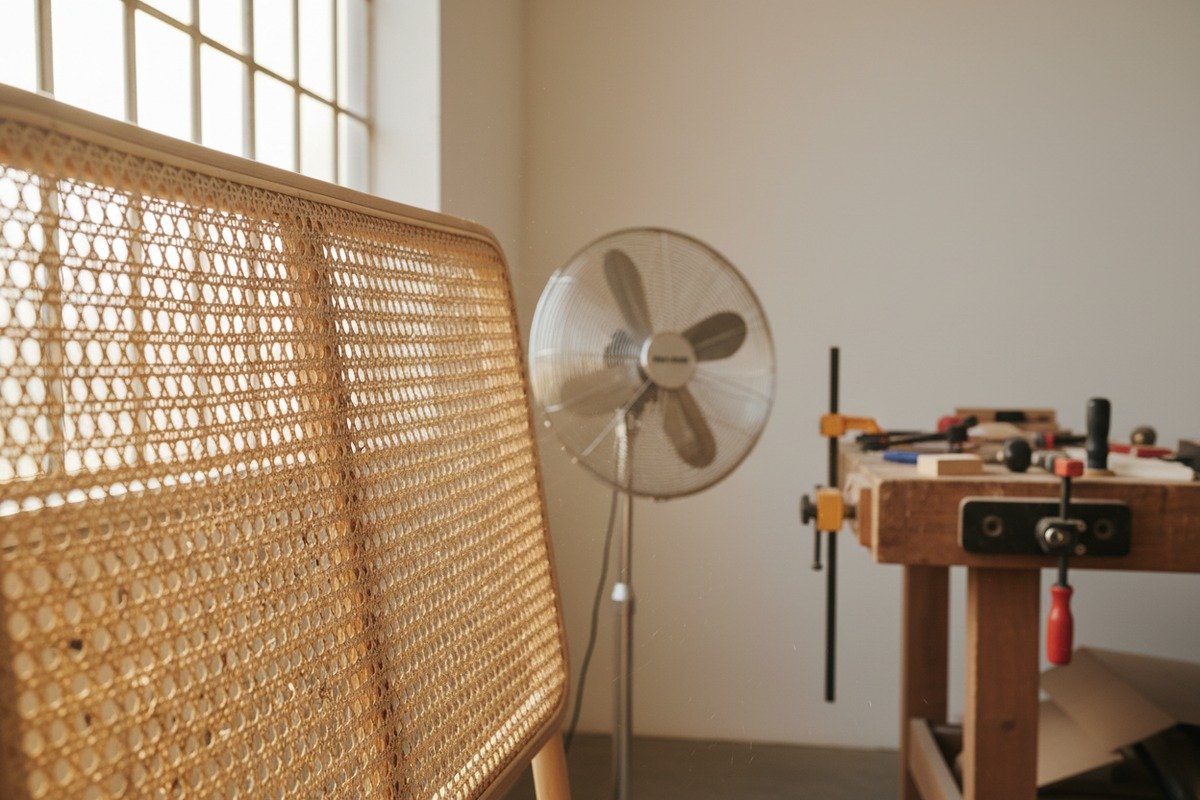
The way rattan dries determines its final shape. If one side dries faster than the other, the weave contracts unevenly. This creates puckers, waves, and distortions that are hard to fix after the fact. Controlled, even drying is essential.
The Golden Rules of Rattan Drying
Here are the principles we follow and recommend to every client:
1. Remove standing water immediately. Do not let puddles sit on the surface. Use a soft, absorbent cloth. Press, do not wipe.
2. Elevate the piece. If possible, raise the furniture so air circulates underneath the webbing. Rattan webbing on a chair seat, for example, should have airflow both above and below.
3. Avoid direct heat sources. Radiators, space heaters, and direct sunlight dry the top layer too fast. The surface tightens while the core stays damp. This causes cracking and splitting.
4. Use a fan, not a heater. A low-speed oscillating fan provides gentle, even air movement. This is the closest thing to natural breeze drying.
5. Rotate or reposition. If you are drying a flat sheet of rattan webbing, flip it every few hours so both sides dry at the same rate.
Humidity Control During Drying
Запрет влажности окружающей среды 8 in your drying space matters enormously. Here is a quick reference:
| Уровень влажности | Effect on Rattan Drying | Рекомендуемое действие |
|---|---|---|
| Ниже 30% | Dries too fast, risk of cracking | Use a humidifier or move to a different room |
| 30%–40% | Slightly fast, monitor closely | Check every 2 hours for even drying |
| 40%–60% | Ideal range for controlled drying | Maintain this range throughout the process |
| 60%–70% | Slow drying, slight mold risk | Increase airflow with a fan |
| Выше 70% | Very slow, high mold risk | Move to a drier room or use a dehumidifier |
For our warehouse in Foshan, we use industrial dehumidifiers during the summer monsoon season. Our clients in the Middle East — Dubai and Saudi Arabia — face the opposite challenge: air that is too dry. Both extremes cause problems.
What About Using a Hair Dryer?
We get this question a lot. A hair dryer on a low, cool setting can work for small spot repairs. Keep it at least 12 inches from the surface and keep it moving. Never hold it in one spot. Never use the high-heat setting. The risk of creating a dry, brittle patch surrounded by still-damp fibers is too high.
Post-Drying Conditioning
Once the rattan is fully dry — and you should wait at least 24 hours after it feels dry to the touch, since internal moisture can linger — apply a thin layer of natural rattan conditioner. This replaces the oils that water strips from the fiber. A well-conditioned strand is more flexible, more resistant to future moisture events, and ages more gracefully.
Some of our clients use льняное масло 9 or beeswax-based products. Both work. The key is to apply sparingly. Over-oiling can attract dust and darken the natural color of the cane.
Does the quality of the rattan I buy influence how well it recovers from moisture exposure?
This is a topic close to our hearts. We operate our own rattan processing facility in Indonesia, where we source, grade, and prepare raw rattan before it reaches our Foshan factories. The difference between grades is not just cosmetic. It directly affects how the material performs under stress — including moisture stress.
Absolutely. Higher-quality rattan cane webbing recovers significantly better from moisture exposure. Grade A rattan, harvested from mature palms at the optimal 5–7 year age, has denser fiber structure and stronger lignin bonds. This makes it more resilient to swelling, more responsive to drying contraction, and far less prone to permanent deformation.
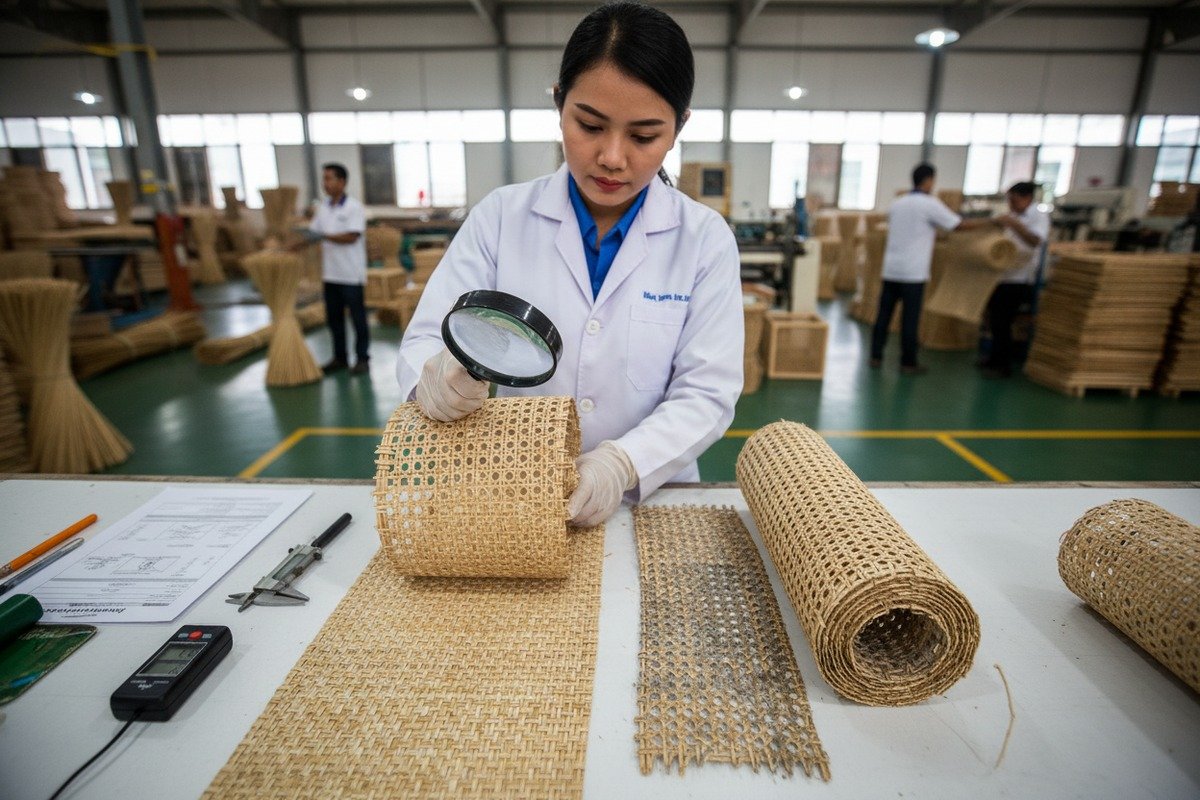
Not all rattan is created equal. And this is not marketing talk. It is material science. The quality of the raw rattan, the processing methods used, and the final treatment all play measurable roles in moisture resilience.
What Makes Rattan "High Quality"?
Several factors determine rattan quality. Here is what we evaluate at our Indonesian facility before any cane webbing reaches our production lines:
Maturity at harvest. Rattan palms harvested at 5–7 years of age have the densest fiber structure. Younger palms produce softer, more porous cane that absorbs water faster and recovers poorly.
Outer bark integrity. The outer bark — the glossy surface of the cane — is the most moisture-resistant part of the rattan strand. High-quality webbing preserves this layer intact. Lower grades may have nicks, splits, or thinned bark that allows water to penetrate more easily.
Consistency of strand width. Even strands create even tension in the weave. Uneven strands create weak points where moisture can pool and sagging starts first.
Processing method. Our facility uses controlled boiling and natural drying. Some lower-cost producers use chemical bleaching or accelerated drying, which can weaken the fiber before it even reaches the customer.
Grade Comparison: Moisture Recovery Performance
Based on our internal quality testing and field observations from clients across more than a dozen countries, here is how different grades compare:
| Качество | Плотность волокна | Moisture Absorption Rate | Shape Recovery After Dampness | Mold Resistance |
|---|---|---|---|---|
| Класс А (Премиум) | Высокий | Медленно | Excellent — returns to near-original shape | Good (with treatment) |
| Класс B (Стандарт) | Средний | Умеренная | Good — minor residual sag possible | Умеренная |
| Класс C (Эконом) | Низкий | Быстро | Fair — noticeable permanent stretch likely | Низкий |
| Ungraded / Mixed | Переменный | Непредсказуемый | Poor — inconsistent recovery across the piece | Очень низкий |
Скрытая стоимость дешевого ротанга
We understand that price matters. Many of our wholesale partners in Thailand, India, and the Philippines are working with tight margins. But we consistently see that clients who choose Grade C or ungraded rattan to save on upfront cost end up spending more on replacements, customer complaints, and warranty claims.
One of our long-time clients, a purchasing manager for a furniture factory in Thailand, switched from a budget supplier to our Grade A webbing two years ago. His rejection rate dropped from around 8% to under 1%. His end customers reported fewer sagging complaints. The slightly higher per-roll cost paid for itself within the first quarter.
Натуральный против синтетического: взгляд с точки зрения качества
Some buyers consider synthetic rattan as an alternative precisely because of moisture concerns. Synthetic webbing does hold its shape better in wet conditions. But it does not breathe the same way. It does not develop the warm patina that customers love. And it is not biodegradable.
For indoor applications — which is where natural cane webbing excels — investing in high-quality natural rattan gives you the best of both worlds: the organic look and feel your customers want, plus the moisture resilience to handle everyday life. The key is simply choosing the right grade and treating it properly.
Что спросить у вашего поставщика
If you are sourcing rattan cane webbing and moisture performance matters to you, ask these questions:
- What is the harvest age of the rattan used?
- Is the outer bark intact on all strands?
- What processing method is used — natural drying or chemical acceleration?
- Is anti-mildew treatment applied?
- Can you provide grade documentation or quality certificates?
At our facilities, we are happy to answer all of these. Transparency is how we build trust with partners who need consistent quality shipment after shipment.
Заключение
Natural rattan cane webbing is a remarkable material — flexible, beautiful, and more resilient than most people expect. With quick action, proper drying, and high-quality sourcing, damp rattan can absolutely regain its shape. Treat it well, and it will reward you for years.
Сноски
1. Found an authoritative review on the chemical and mechanistic factors of cellulosic fiber swelling in aqueous systems. ↩︎
2. Wikipedia article on cellulose fibers, their structure, and properties. ↩︎
3. Details rattan grading and factors influencing material quality and durability. ↩︎
4. Offers general information about cane webbing, which is relevant to restoration. ↩︎
5. Wikipedia page detailing Calamus rotang, the common rattan palm species. ↩︎
6. Wikipedia entry explaining lignin, its structure, and its role in plant cell walls. ↩︎
7. Replaced with an authoritative guide from the US EPA on mold, moisture, and homes, explaining mold growth conditions. ↩︎
8. Explains the ideal humidity range for wood and the effects of imbalanced humidity. ↩︎
9. Mentions linseed oil as a common ingredient in wood conditioners, alongside beeswax. ↩︎
10. Provides comprehensive information on natural rattan cane webbing, its origin, and uses. ↩︎

 English
  Español de México
  العربية
  Deutsch
  Français
  Русский