
Rattan Cane for Furniture Making: The Complete Guide to Crafting Timeless Pieces
What Is Rattan Cane?
Rattan cane is a naturally renewable climbing vine found mainly in tropical regions of Southeast Asia. Its strong yet flexible nature makes it ideal for furniture making, particularly for woven or curved designs.
Why Rattan Is the Go-To Choice for Furniture Makers
Rattan has been loved by artisans and homeowners for centuries. It’s lightweight, durable, and adds a natural warmth to any living space. Whether you’re creating chairs, tables, or decorative pieces, rattan cane gives your furniture a perfect blend of beauty and strength.
The Origin and Nature of Rattan
Where Rattan Comes From
Rattan grows naturally in countries like Indonesia, Malaysia, the Philippines, and Vietnam. It thrives in tropical rainforests and is harvested sustainably without cutting down trees.
How It Differs from Bamboo
Although both are similar in appearance, rattan is solid and more flexible than bamboo, which is hollow and rigid. This makes rattan easier to bend and shape during furniture construction.
Types of Rattan Used in Furniture
There are over 600 species of rattan, but only a few are suitable for furniture making — such as Calamus Manan и Calamus Tenuis, prized for their strength and smooth texture.
Benefits of Using Rattan Cane in Furniture Making
Strength and Durability
Rattan’s natural core is tough and can withstand heavy use. It’s perfect for both indoor and outdoor furniture.
Flexibility and Ease of Shaping
Once soaked or steamed, rattan becomes incredibly pliable. This flexibility allows artisans to create curved armrests, round chair backs, and intricate woven designs.
Lightweight but Sturdy
Despite being light, rattan furniture holds up well under weight and daily wear, making it ideal for frequent use in homes, cafes, and resorts.
Eco-Friendly and Sustainable
Rattan grows faster than most trees, regenerating in just 5–7 years. It supports sustainable forestry and provides income for rural communities.
Common Furniture Pieces Made with Rattan
Chairs and Sofas
The natural elasticity of rattan makes it comfortable and ergonomic — perfect for lounge chairs and sofa frames.
Tables and Storage Units
Rattan is used for crafting coffee tables, bedside tables, and storage baskets, often paired with glass or wood tops for a polished look.
Beds, Headboards, and Wardrobes
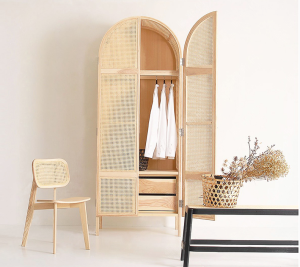
Rattan headboards and wardrobes add texture and warmth to bedrooms, combining traditional aesthetics with modern flair.
Outdoor and Patio Furniture
Synthetic rattan (resin or PE rattan) is commonly used outdoors due to its resistance to UV rays, water, and humidity.
The Furniture-Making Process with Rattan Cane
Harvesting and Preparation
Once harvested, rattan stems are stripped of bark and cut into lengths. The core is processed into canes, while the outer peel is used for weaving.
Stripping, Soaking, and Drying
To make it flexible, the cane is soaked in water and then dried in the sun. This process also prevents brittleness.
Weaving and Bending Techniques
Artisans skillfully weave the cane into patterns like hexagonal, diamond, or herringbone. Heated rattan can be bent into stylish curves and loops.
Finishing and Polishing
Finally, the furniture is sanded, stained, and varnished to enhance durability and give it a natural sheen.
Types of Rattan Cane Used in Furniture
- Natural Rattan: Biodegradable, eco-friendly, and best for indoor furniture.
- Synthetic Rattan (PE or PVC): Resistant to moisture and sunlight, ideal for outdoor settings.
- Core, Peel, and Split Rattan: Each serves a purpose — core for structure, peel for weaving, and split for detailed patterns.
Rattan Furniture Design Trends
Modern Bohemian Style
Rattan is central to the boho-chic aesthetic, featuring layered textures, neutral tones, and earthy charm.
Coastal and Tropical Vibes
Used alongside white walls, blue tones, and plants, rattan brings a breezy, tropical look to interiors.
Mixing Rattan with Metal or Glass
Combining natural rattan with steel frames or glass tops creates a contemporary, sophisticated appeal.
Minimalist and Scandinavian Designs
Rattan furniture fits perfectly with clean lines and minimalist home décor.
Caring for Rattan Furniture
Cleaning and Maintenance
Dust regularly and wipe with a damp cloth. Avoid harsh chemicals and keep rattan away from direct sunlight to prevent fading.
Preventing Cracks and Sagging
Do not expose to extreme humidity or dryness. Rehydrate with a light mist of water occasionally.
Repairing and Replacing Damaged Parts
Loose weaves can be re-wetted and reshaped; severely damaged sections can be replaced by skilled artisans.
Why Rattan Is Perfect for Handmade Furniture
Rattan furniture is a symbol of craftsmanship and cultural heritage. Every woven pattern tells a story of traditional skills passed down through generations. Each handmade piece is unique, durable, and built to last decades.
Cost and Market Overview
The cost of rattan cane depends on type, thickness, and source:
- Natural rattan: $3–$8 per meter
- Synthetic rattan: $6–$15 per meter
The market for rattan furniture is growing globally, with rising demand in Europe and North America due to eco-conscious trends.
Eco-Friendly and Sustainable Aspects
Rattan harvesting helps protect rainforests by providing economic alternatives to logging. Since it grows with minimal fertilizer or pesticides, it has a much smaller environmental footprint compared to wood.
Challenges in Rattan Furniture Production
Producers often face issues like inconsistent cane thickness, mold during storage, and fluctuating global demand. Proper curing, quality control, and reliable suppliers can help overcome these challenges.
Tips for Buying Rattan Cane for Furniture Making
- Buy from trusted suppliers or wholesalers with quality assurance.
- Always check for smooth texture, uniform color, and no signs of cracks.
- Choose the correct cane diameter based on your furniture type.
Заключение
Rattan cane remains one of the most versatile and eco-friendly materials for furniture making. Its timeless appeal, strength, and sustainability make it an ideal choice for both traditional and modern designs. Whether you’re a craftsman or a homeowner, investing in rattan furniture is a decision that blends style with conscience.
FAQs
1. Is rattan furniture durable enough for everyday use?
Yes, high-quality rattan furniture can last for decades with proper care.
2. How long does rattan furniture last?
On average, well-maintained rattan furniture lasts 10–20 years or more.
3. Can rattan furniture be used outdoors?
Synthetic rattan is best for outdoor use as it’s UV and water-resistant.
4. What’s the difference between rattan and wicker?
Rattan is the natural material, while wicker refers to the weaving technique used on materials like rattan, bamboo, or resin.
5. How do I maintain my rattan furniture?
Keep it dry, dust often, and avoid direct sunlight to prevent fading or cracking.

 English
  Español de México
  العربية
  Deutsch
  Français
  Русский