

Every year, our production team fields dozens of questions from lampshade factories asking which material gives them the best balance of beauty, cost, and sustainability.
Rattan cane webbing is one of the best materials for manufacturing lampshades, especially for eco-conscious interior applications. It offers natural light diffusion, renewable sourcing, biodegradability, and handcrafted aesthetic appeal. However, it is not universally superior—durability limitations and production scalability mean alternatives may suit certain use cases better.
Below, we break down the key questions lampshade manufacturers ask us most often—from quality control to shipping protection—so you can decide if ротанговая сетка 1 fits your production needs.
How do I ensure the rattan cane webbing quality is consistent enough for my lampshade production line?
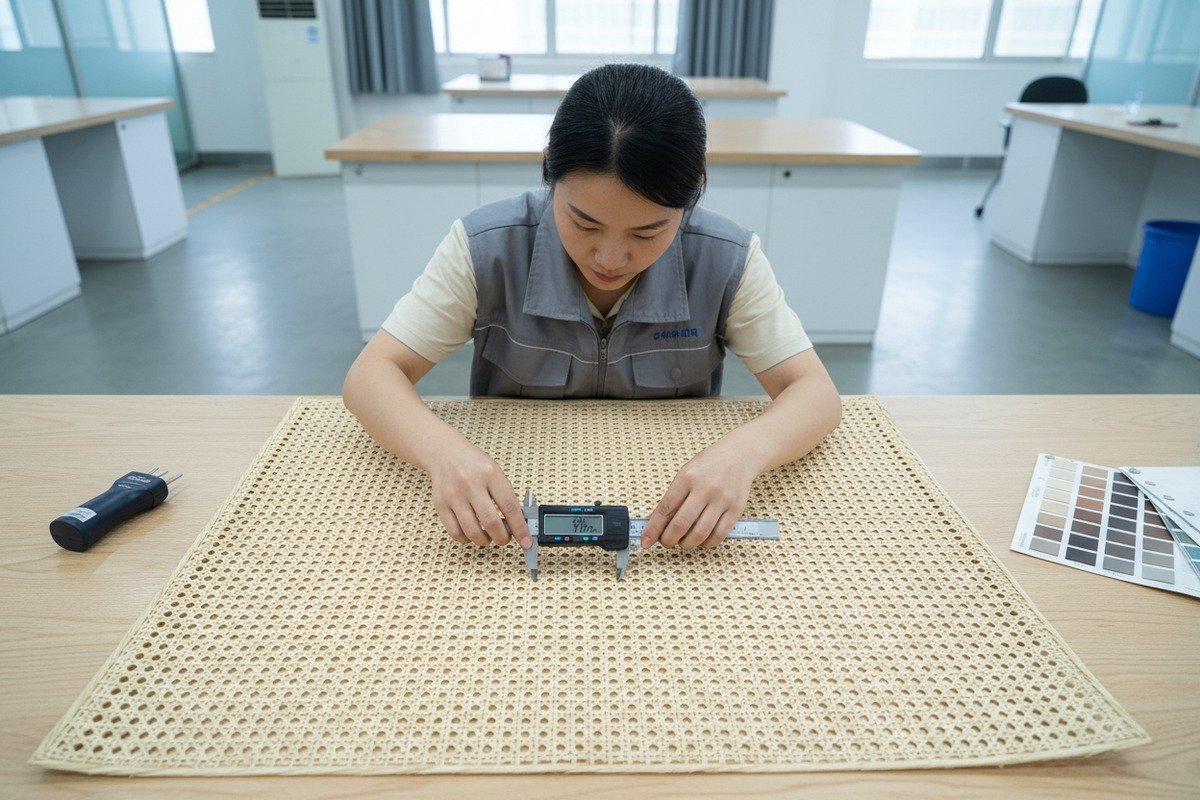
When we first started supplying webbing to lampshade factories in Europe and the US, inconsistent strand thickness was the number one complaint we heard процесс контроля качества 2. Batches would arrive looking slightly different in color or weave density, and production managers would lose hours sorting material before it hit the line.
To ensure consistent rattan cane webbing quality, you need to establish clear grading standards with your supplier, request pre-shipment samples from each batch, and conduct incoming inspections for strand width, weave density, color uniformity, and moisture content before material enters your production floor.
Why Consistency Matters More Than You Think
A single lampshade may use a small piece of webbing цепочки поставок 3. But when you produce hundreds or thousands of units per month, even small variations cause big problems. If one roll has a tighter weave than the next, light diffusion changes manufacturing costs 4. Your customers notice. Returns go up. Your brand reputation takes a hit.
At our factories in Foshan and Indonesia, we learned early that raw rattan varies by harvest season, vine age, and even the specific forest region. That is why we grade every roll before it ships. We measure strand width, count weave holes per square inch, and check moisture levels.
Key Quality Parameters to Track
Here is a simple table of the parameters we recommend every lampshade manufacturer track during incoming inspection:
| Параметр качества | Target Specification | Почему это важно |
|---|---|---|
| Strand Width | ±0.3 mm tolerance | Affects weave uniformity and light pattern |
| Weave Density | Consistent holes per 10 cm² | Determines light diffusion quality |
| Содержание влаги 5 | 8%–12% | Too dry = brittle; too wet = mold risk |
| Цветовой диапазон | Within agreed Pantone range | Ensures batch-to-batch visual consistency |
| Обработка поверхности | No cracks, splits, or dark spots | Prevents rejection at final QC |
Build a Sampling Protocol
Ask your supplier for a sample cut from the actual production batch—not a showroom sample. We send our clients a 30 cm × 30 cm swatch from each batch before we ship the full order. This costs almost nothing but saves thousands in rejected goods.
Moisture Content Is the Hidden Problem
Many manufacturers overlook moisture. Rattan is a natural fiber. If it absorbs too much humidity during storage or shipping, mold can develop within days. If it dries out too much, it becomes brittle and cracks during frame application. We keep our warehouse humidity between 55% and 65% year-round. Ask your supplier what their storage conditions are.
Work With a Supplier Who Understands Grading
Not all rattan is equal. Grade A webbing has uniform color, tight consistent weave, and no visible defects. Grade B may have minor color variation. Grade C is suitable for budget products. When your supplier cannot clearly explain their система классификации 6, that is a red flag.
Can I source different grades of rattan webbing from one supplier to match my various lampshade price points?
Our clients in the Netherlands and Australia often carry three product lines—premium, mid-range, and budget. They used to work with two or three different suppliers just to cover all their grades. That meant triple the communication, triple the logistics headaches, and triple the quality control effort.
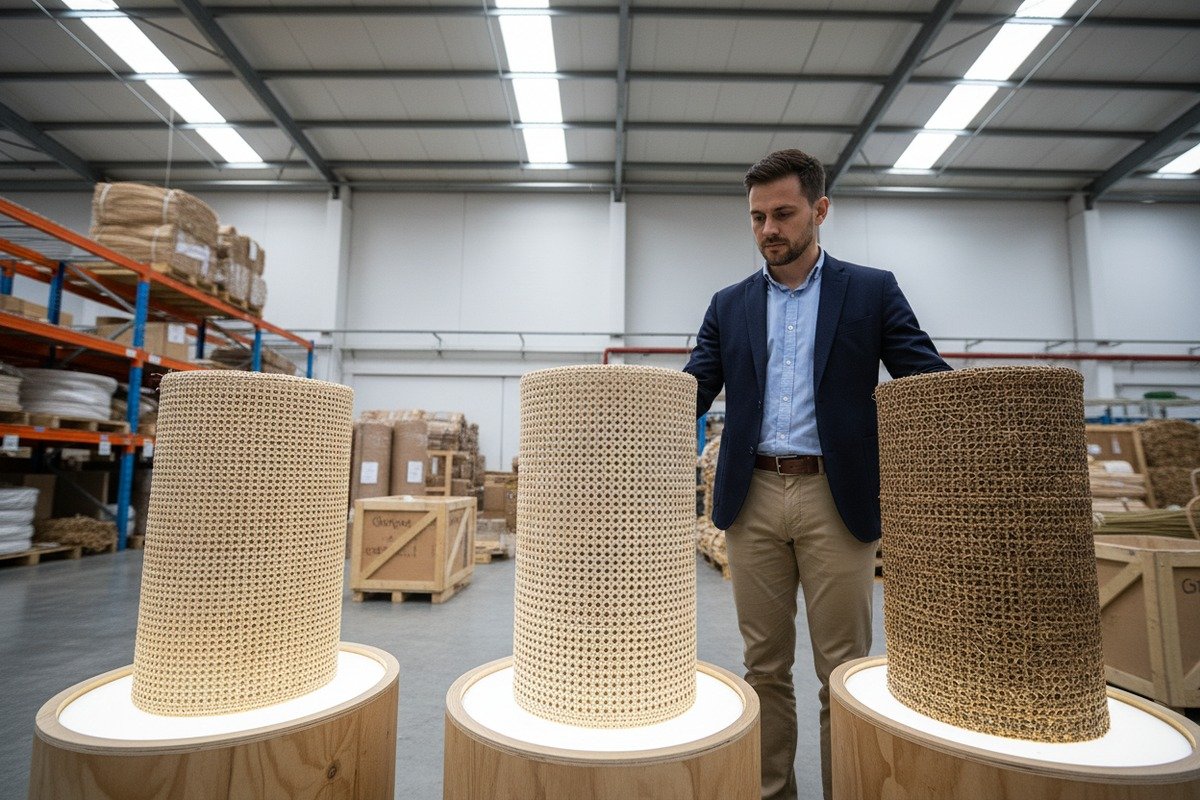
Yes, you can source multiple grades of rattan cane webbing from a single supplier. A well-established wholesaler with access to diverse raw materials and processing capabilities can offer Grade A, B, and C webbing, each with defined quality specifications, allowing you to match your different lampshade price points from one supply chain.
What Defines Each Grade?
The grading system we use at Seafan Rattan is straightforward. It covers visual quality, structural integrity, and weave precision. Here is how we break it down:
| Сорт | Однородность пряжи | Однородность цвета | Weave Precision | Typical Use Case |
|---|---|---|---|---|
| Сорт А | Excellent – less than 0.2 mm variation | Uniform, minimal natural variation | Tight, even weave, no skipped strands | Premium designer lampshades |
| Сорт B | Good – up to 0.5 mm variation | Slight natural color shifts acceptable | Minor weave irregularities allowed | Mid-range retail lampshades |
| Сорт C | Acceptable – up to 1.0 mm variation | Заметное изменение цвета | Visible but functional weave gaps | Budget or DIY-market lampshades |
Why Single-Supplier Sourcing Saves You Money
Working with one supplier for all grades gives you several advantages. First, you consolidate shipping. Instead of three separate container loads from three suppliers, you fill one container with mixed grades. Freight cost per unit drops.
Second, communication gets simpler. One account manager. One quality agreement. One set of specifications. When problems arise, you have a single point of contact.
Third, you gain negotiating power. Larger combined order volumes mean better per-meter pricing. We regularly offer volume discounts when clients order across multiple grades in a single purchase order.
Natural vs. Synthetic Options
Some lampshade manufacturers need weather-resistant shades for outdoor or semi-outdoor use. In those cases, synthetic PE rattan webbing is the right choice. Натуральный ротанг 7 works best indoors where it stays protected from rain and prolonged UV exposure. A good supplier should be able to offer both natural and synthetic options, giving you even more flexibility across your product lines.
Bleached and Dyed Variants
Beyond grading, consider finish options. Our bleached rattan cane webbing appeals to manufacturers targeting Scandinavian-inspired or coastal design markets. The lighter, more uniform tone of bleached webbing pairs well with minimalist lampshade frames. Dyed variants open up even more possibilities—darker stains for rustic collections, lighter tints for bohemian aesthetics.
The key is finding a supplier whose factory can handle these finish processes in-house. If your supplier outsources bleaching or dyeing, lead times increase and quality control becomes harder.
Will switching to rattan cane webbing help me lower my manufacturing costs without sacrificing my brand's quality?
We had a client in Spain who was spending heavily on imported linen fabric for their lampshade line. Their margins were shrinking because raw linen prices climbed three years in a row. They asked us a direct question: can rattan webbing cut our costs and still look premium?
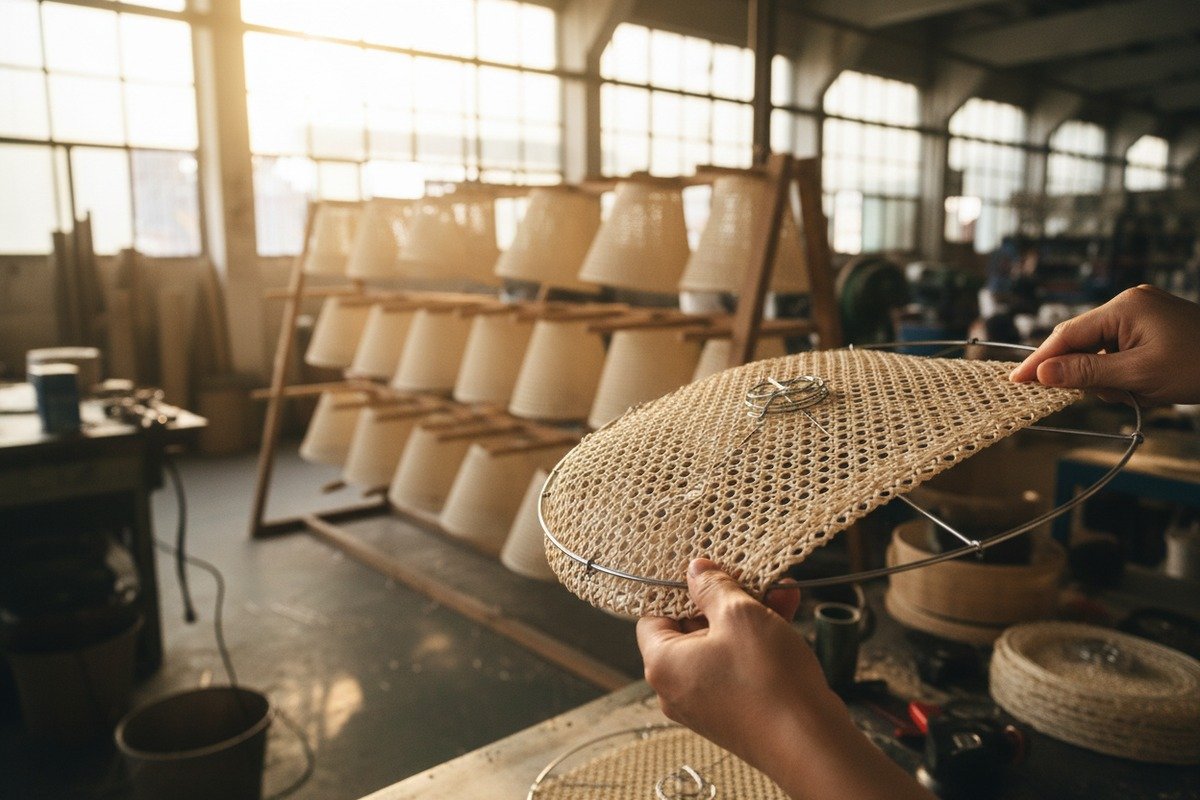
Switching to rattan cane webbing can lower your manufacturing costs by reducing raw material expense and simplifying assembly, while actually enhancing your brand's quality perception. Rattan's natural texture, trending aesthetic appeal, and eco-friendly credentials often position products at higher retail price points than synthetic alternatives.
The Real Cost Equation
Cost is never just about the price per meter of material. You need to consider waste, labor time, tooling, and the retail price your finished product commands. Rattan webbing often wins on several of these fronts.
Rattan is lightweight. It cuts easily with standard tools. It does not fray like fabric, so edge finishing is minimal. These factors reduce labor time per unit. On a production line making 500 lampshades per day, saving even 30 seconds per unit adds up fast.
Material Cost Comparison
Here is a comparison based on our recent export pricing and publicly available material costs:
| Материал | Approximate Cost per m² | Durability (Indoor) | Экологичность | Consumer Perception |
|---|---|---|---|---|
| Натуральная ротанговая тесьма | $4–$8 | Good (years with care) | High – renewable, biodegradable | Premium, artisanal, trendy |
| Linen Fabric | $8–$15 | Good but delicate | Moderate – water-intensive crop | Classic, refined |
| Synthetic Plastic Mesh | $2–$4 | Отличная | Low – non-biodegradable | Budget, generic |
| Metal Wire Frame Shade | $6–$12 | Отличная | Low – energy-intensive production | Industrial, modern |
| Бамбуковая сетка | $3–$6 | Хорошая | High – fast-growing | Natural, similar to rattan |
The Margin Advantage
Here is what many manufacturers miss. Rattan is ruling the 2025 design trend. Consumers actively seek out natural, handcrafted-looking home decor. A rattan lampshade can retail for 20% to 40% more than a plastic or fabric equivalent. Your material cost may be similar or slightly higher than synthetic alternatives, but your selling price jumps.
This means your margin per unit can actually increase when you switch to rattan, even if the raw material costs a bit more than plastic mesh.
Устойчивость как преимущество при продаже
Rattan regenerates within five to seven years. It is harvested by cutting the vine while leaving roots intact, so forests stay healthy. The processing is simple—peel the outer bark and cut into strips. Compare this to the chemical treatments needed for synthetic materials or the high water consumption of cotton and linen.
When your brand tells this story on packaging and marketing, it resonates. Eco-conscious buyers pay more. Retailers prefer stocking sustainable products. Your rattan lampshade becomes a story, not just a commodity.
Pair With LED for Maximum Impact
We always recommend our lampshade clients pair rattan webbing with LED bulbs 8. LEDs use up to 90% less energy than incandescent bulbs and produce far less heat. Less heat means less stress on the natural rattan fibers. The combination of natural material and energy-efficient lighting creates a genuinely sustainable product that marketing teams love to promote.
What are the best ways for me to protect my rattan webbing orders from damage during long-distance shipping to my factory?
One of the most frustrating calls we get is from a client who just opened a container and found cracked, moldy, or crushed webbing rolls. Shipping rattan from Southeast Asia or China to factories in Europe, the Middle East, or the Americas takes weeks on the ocean. A lot can go wrong if packaging is not done right.
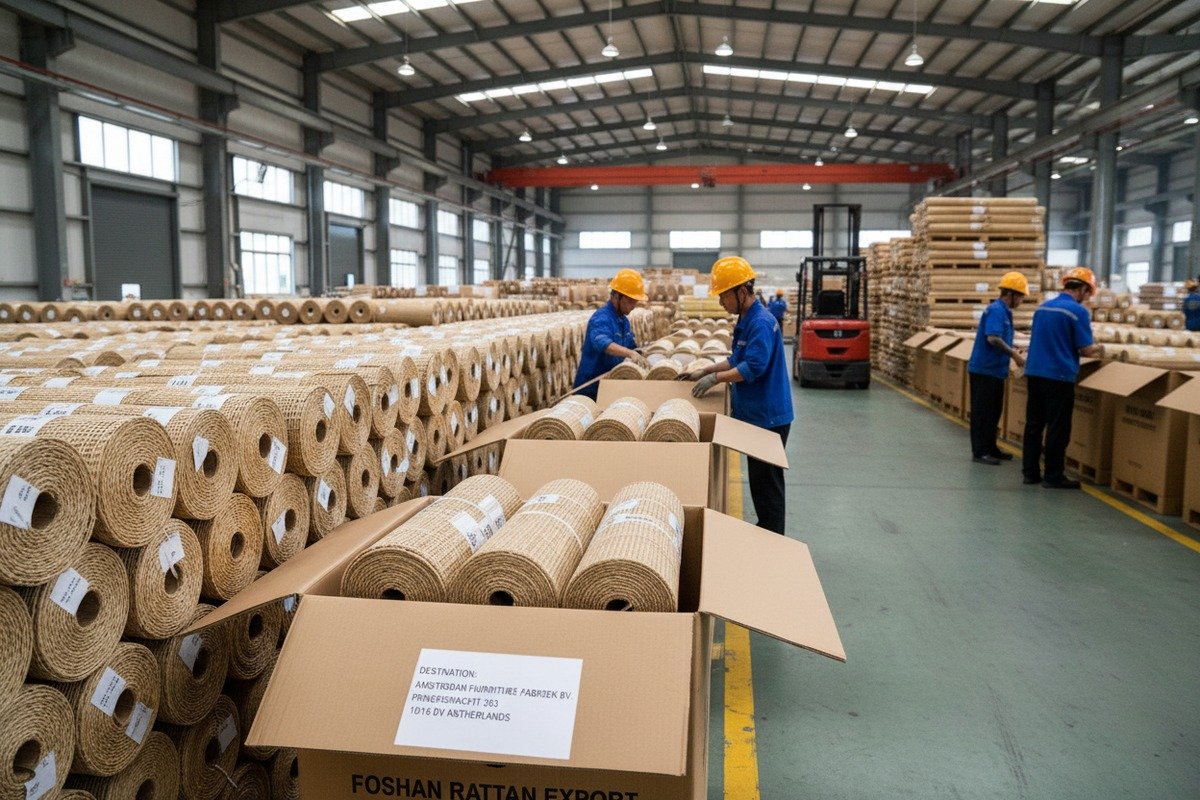
To protect rattan webbing during long-distance shipping, use moisture-barrier packaging with desiccant packs inside, wrap rolls in corrugated cardboard or foam sleeves to prevent crushing, secure pallets with strapping to avoid shifting, and request container ventilation or silica gel inserts to control humidity throughout transit.
Три врага ротанга в пути
Rattan has three enemies during shipping: moisture, compression, and friction. Understanding each one helps you demand the right packaging from your supplier.
Moisture causes mold. Ocean containers experience temperature swings as they move between climate zones. Warm, moist air inside a sealed container condenses on cooler surfaces. This "container rain" drips onto cargo. If rattan absorbs this moisture, mold can develop in as little as 48 hours.
Compression damages weave structure. If rolls are stacked too high or packed too tightly, the webbing at the bottom gets crushed. The weave deforms permanently. You cannot fix a crushed rattan roll—it is scrap.
Friction causes surface scratches and fiber breakage. During rough seas, cargo shifts. If rattan rolls rub against each other or against container walls without protective wrapping, the surface strands fray and break.
Our Packaging Standard
At our Foshan warehouse, we developed a packaging protocol over years of trial and error. Here is what we do for every export order:
First, each roll is wrapped in plastic film to create a moisture barrier. We place silica gel desiccant packs inside the wrapping—typically two packs per roll for standard sizes.
Second, each wrapped roll goes into a corrugated cardboard sleeve or a foam-padded tube. This absorbs impact and prevents friction damage.
Third, rolls are laid flat on pallets, never stacked more than three layers high. Each layer gets a cardboard separator. The pallet is strapped with polypropylene bands and stretch-wrapped as a unit.
Fourth, we line the container floor with moisture-absorbing mats. We also hang desiccant strips from the container ceiling to capture condensation before it drips.
What to Ask Your Supplier Before Shipping
Do not assume your supplier packages properly. Ask these questions before confirming any order:
- What moisture protection do you use inside each roll wrapping?
- How many rolls per pallet, and how many layers high?
- Do you use container desiccants or moisture-absorbing floor mats?
- Can you send photos of the loaded container before it seals?
If your supplier cannot answer these questions clearly, you are taking a risk. We send our clients a full photo report of the packing and container loading process for every shipment. It takes us 15 minutes. It saves our clients thousands in potential damage claims.
Inspect Immediately Upon Arrival
Even with perfect packaging, things happen. Inspect your rattan webbing within 24 hours of container arrival. Check for mold spots, crush marks, and broken strands. Document any damage with photos before unloading the full container. This documentation is critical if you need to file a shipping insurance claim 9.
Keep your factory storage area between 55% and 65% relative humidity. If your warehouse is too dry, mist the area lightly. If too humid, run dehumidifiers. Rattan's ideal moisture content for workability is 8% to 12%.
Заключение
Rattan cane webbing is an excellent lampshade material for manufacturers who value sustainability, natural aesthetics, and growing consumer demand—but consistent quality, smart sourcing, and proper shipping protection make all the difference.
Сноски
1. Defines rattan cane webbing and its natural origin. ↩︎
2. Replaced with a Wikipedia article providing a comprehensive overview of quality control. ↩︎
3. Provides a comprehensive definition and key components of supply chain management. ↩︎
4. Outlines key factors that influence overall manufacturing costs. ↩︎
5. Explains how humidity affects natural fibers and can lead to mold growth. ↩︎
6. Describes quality management systems, which include defining quality levels. ↩︎
7. Distinguishes natural rattan and highlights its suitability for indoor use. ↩︎
8. Highlights the energy efficiency and durability benefits of LED lighting technology. ↩︎
9. Explains essential elements and documentation required for filing a freight claim. ↩︎

 English
  Español de México
  العربية
  Deutsch
  Français
  Русский